
 Русский (RU)
 Українська (UK)
 Türkçe (TR)
 Italiano (IT)
 Français (FR)
 Português (PT)
 中文 (中国) (ZH)
 Español (ES)
 日本語 (JA)
 ไทย (TH)
 Deutsch (DE)
 Ελληνικά (EL)
 Polski (PL)
 Bahasa Indonesia (ID)
 Nederlands (NL)
 العربية (AR)
 한국어 (KO)

If you’re curious about how societies function, why people make certain decisions, or how governments, economies, and cultures shape the world, social sciences programs in Europe for high school students can help you explore those questions beyond the classroom while building critical thinking, research, and communication skills.
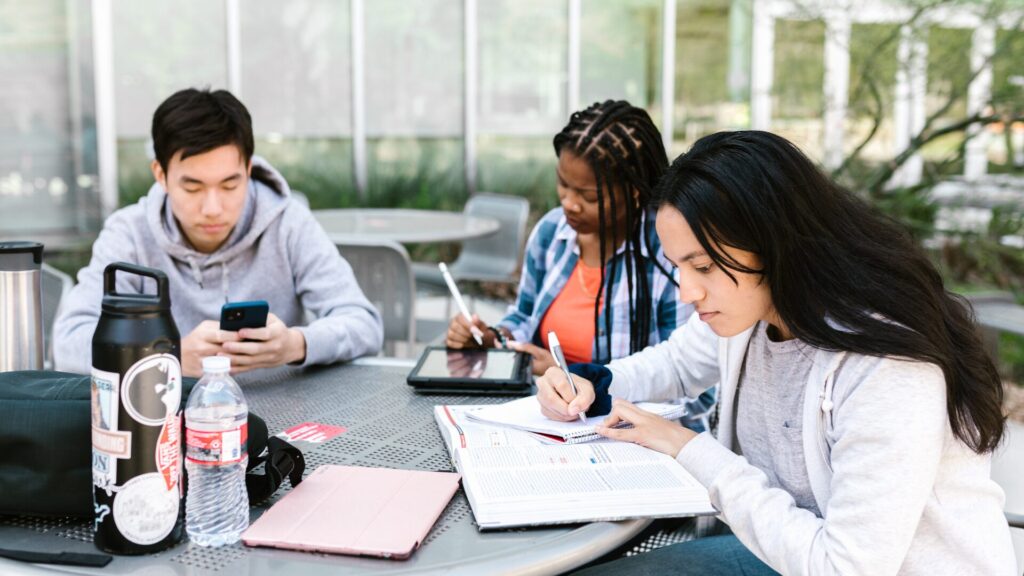
Imagine debating international policy in Oxford, analysing economic trends in London, exploring psychology through university-style seminars, or discussing global challenges with students from around the world. Many social sciences programs combine academic study with interactive workshops, group projects, case studies, and discussions that encourage you to think critically about complex issues. Some also include cultural excursions and opportunities to experience life in some of Europe’s most historic university cities.
What kinds of social sciences programs in Europe are available for high school students?
Finding the right social sciences program can be challenging because each one takes a different approach. Some focus on a single discipline, such as psychology or economics, while others take an interdisciplinary approach that combines politics, history, sociology, philosophy, and international relations. The best fit often depends on whether you want to specialise in one subject or explore how different social sciences connect.
Across Europe, universities and educational organisations offer programs covering topics such as political science, international relations, economics, psychology, sociology, public policy, history, and global affairs. Depending on the program, you might participate in debates, research projects, simulations, case-study discussions, or collaborative workshops that mirror the learning environment of a university classroom.
No matter which program you choose, you’ll be investing time in developing analytical skills, exploring complex global issues, and learning from diverse perspectives.
To help you find the right fit, we’ve compiled a list of 15 social sciences programs in Europe for high school students.
For subject-specific programs, you can check out psychology summer programs, economics summer programs, and law summer programs.
15 Social Sciences Programs in Europe for High School Students
1. Sciences Po Summer School – Pre-College Programmes
Location: Reims, France, for the on-campus programme, with cultural activities also held in Paris; an online programme is available to participants worldwide
Cost: €6,000 + a €50 non-refundable application fee
Dates: On-campus July 4-21; online June 29th – July 9th
Application Deadline: On-campus: April 1st; online: May 27th
Eligibility: Students currently enrolled in secondary school and still enrolled in Fall; on-campus applicants under 18 at the start of the programme; English proficiency verification required for non-native speakers; open to international students
Sciences Po Summer School is one of the more policy-focused social sciences programs in Europe for high school students, with coursework taught entirely in English by the university’s faculty. On the Reims campus, you attend 2.5-hour Master Classes that examine climate policy, UN peacekeeping, algorithmic governance, fundamental rights, and democratic challenges in Europe.
You prepare in small-group tutorials that build key concepts, guide required readings, and introduce the academic methodology used in higher education. You also select an elective in a discipline such as International Relations, Political Science, or Sociology, and take part in social and cultural activities in Reims and Paris. The experience sharpens critical thinking, debate, and analytical skills.
Why it stands out: It gives high school students a genuine taste of Sciences Po academics through faculty-led master classes, methodology tutorials, and disciplinary electives on a historic French campus alongside peers from over 65 nationalities.
2. Immerse Education’s Pre-University Summer School
Location: Cambridge, London, and Oxford
Cost/Stipend: Varies by format; summer school scholarship available through our bursary programme
Acceptance rate/cohort size: Selective, an average of 7 participants per class
Dates: Diverse cohort dates for 2 weeks
Application Deadline: Rolling admission
Eligibility: Teenagers worldwide aged 13 to 18 years old; open to international students
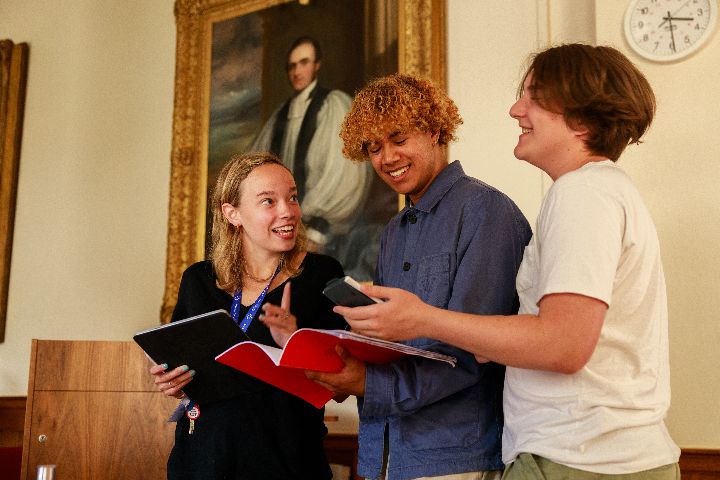
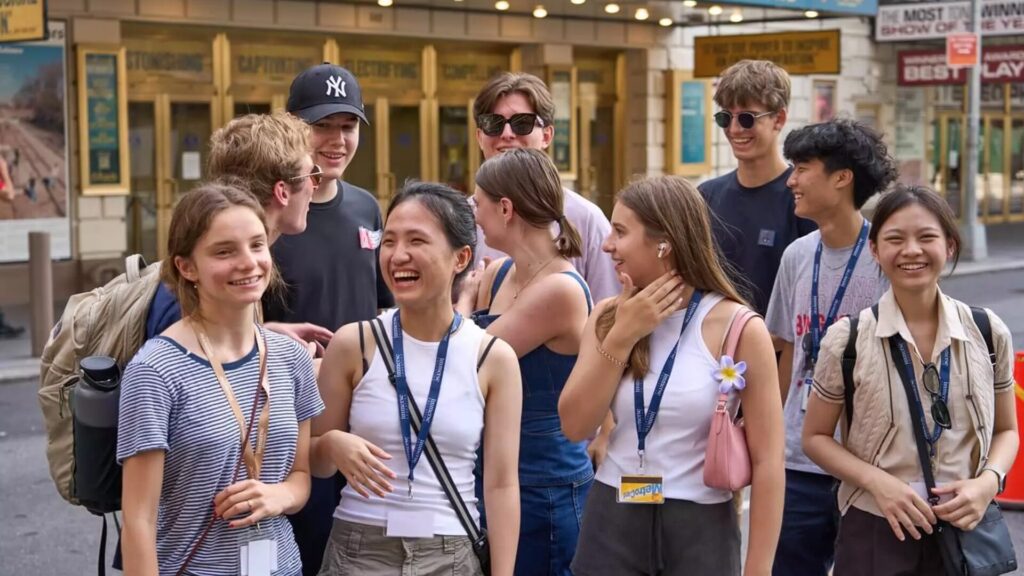
The Social Science Programme lets high school students experience university life firsthand. You will live on campus and study in small groups of a maximum of 12 students, and get to study at the best cities in the world. Participants can explore over different subjects related to social science, including Psychology, Economics, PPE, Criminology, History, International Relations, and more.
The courses are experiential and hands-on — you may find yourself participating in a moot court for law, or building creative writing portfolios and business case studies. By the end of the program, you’ll complete a personal project, receive written feedback, and receive a certificate of completion. You can find more details about the application here.
Why it stands out: You’ll study under expert academics, be guided daily by a university student mentor, complete a project you can show in future applications, and experience genuine university college life, with other campuses worldwide as alternatives.
3. University of Amsterdam Pre-University Honours Programme – International Relations
Location: University of Amsterdam, Amsterdam, Netherlands
Cost: €1,675 tuition fee + €800 housing fee + €25 application fee; scholarships are available
Dates: June 16-25
Application Deadline: February 15th
Eligibility: Current high school students aged 16+ interested in international relations and political science; open to international students
This program introduces students to the field of international relations through an interdisciplinary curriculum that draws on political science, history, and anthropology. You’ll examine topics such as globalisation, climate change, development, war, international organisations, and the role of state and non-state actors in world politics. Through lectures, discussions, and guest sessions led by academics and practitioners, you’ll engage with different theoretical perspectives while learning how scholars analyse international affairs.
Students study alongside peers from around the world, creating opportunities to discuss global issues from diverse cultural and political viewpoints. The program encourages you to develop informed opinions on complex international challenges while building the analytical and intercultural skills needed to navigate an increasingly interconnected world.
Why it stands out: Students explore international relations through an interdisciplinary lens while studying alongside a globally diverse cohort in Amsterdam.
4. King’s College London Pre-University Summer School – Social Sciences Courses
Location: King’s College London, London, United Kingdom
Cost: £3,195 for one week; £6,180 for two weeks; £9,375 for three weeks + £65 application fee
Dates: July 6-10; July 13-17; July 20-24; July 27-31
Application Deadline: April 27th
Eligibility: Students aged 16-17 with English proficiency at CEFR B2 level or equivalent; open to international students
This program allows students to select courses across a range of academic disciplines and combine multiple one-week modules to create a personalised learning experience. For students interested in the social sciences, the program provides exposure to university-style teaching, academic discussions, and critical thinking exercises that mirror the expectations of higher education.
You’ll learn alongside an international cohort of students while gaining insight into studying in London and navigating the transition from high school to university. Academic learning is complemented by extracurricular activities, campus experiences, and opportunities to connect with peers from around the world. The flexible structure allows students to tailor their summer experience by combining different subjects and extending their stay across multiple sessions.
Why it stands out: Students can customise their academic experience by combining multiple university-level courses across several weeks.
5. University of Oxford – UNIQ Social Sciences Courses
Location: Oxford, England, United Kingdom; in-person regional events also run at various locations across the UK
Cost: None
Dates: One-week, subject-specific summer residential in Oxford held on one of five weeks from late June to the end of July
Application Deadline: January 13th
Eligibility: UK state school or college student in the first year of further education (Year 12 in England and Wales, Year 13 in Northern Ireland, or S5 in Scotland); under 18 at the time of the residential, normally aged 16 or 17; normally six GCSEs with one or more at grade 7/A or above, or six National 5s with one or more at grade A in Scotland; settled UK and Islands resident expecting home fee status at the point of applying to higher education; not open to international students
In this program, you join the University of Oxford’s flagship access programme as a UK state school student in your first year of further education. You choose a subject-specific residential from social sciences options such as Law, Economics and Management, Philosophy, Politics and Economics, Geography, Human Sciences, Experimental Psychology, or Archaeology and Anthropology.
Across four nights in an Oxford college, you experience undergraduate-style teaching through seminars, lectures, and tutorials led by faculty staff, alongside bespoke application-preparation workshops. You analyse social, economic, and political questions using academic methods, debate ideas with tutors, and attend a closing mini conference. You also receive sustained online support for UCAS, admissions tests, and interviews to build a competitive Oxford application.
Why it stands out: It is a completely free, long-running Oxford access programme that pairs a residential in an Oxford college with sustained, stage-by-stage application support reserved for UK state school students from under-represented backgrounds.
6. The London School of Politics and Political Science – EC101: Introductory Microeconomics
Location: London School of Economics and Political Science (LSE), London, United Kingdom
Cost: £3,350 (Student rate) or £4,450 (Standard rate) for one session, + a £60 application fee; merit-based Academic Director’s Scholarships are available
Dates: June 22nd – July 10th or August 3-21
Application Deadline: Rolling admissions (first-come, first-served until filled)
Eligibility: Conditionally / Limited; only open to under-18 or high-school-age students who already hold a university offer; not open to regular high school students without a university offer; open to international students
This program introduces the core principles of microeconomics through topics such as consumer choice, supply and demand, production costs, market structures, government intervention, and market failure. You’ll learn how economists analyse real-world issues ranging from household spending decisions to the effects of monopolies, taxation, and public policy.
The course combines lectures, class discussions, and practical exercises that encourage students to apply economic theory to contemporary challenges and policy questions. By connecting economic theory to real-world decision-making, the program provides a strong foundation for further study in economics, politics, business, and related social sciences.
Why it stands out: Students learn economics at one of the world’s leading social science institutions while applying theory to real policy and market challenges.
7. Dublin City University Centre for Talented Youth Ireland – Summer Scholars Secondary School Programme
Location: Dublin City University, Glasnevin Campus, Dublin, Ireland
Cost/Stipend: €650; financial aid is available
Dates: Session 1: June 15-26; Session 2: July 6-17
Application Deadline: April 24th
Eligibility: Second level students aged 12-17 (1st-5th year); born after 1st August 2008; not open to international students
In this program, you spend two weeks studying a single subject intensively, roughly 45 hours, on DCU’s Glasnevin campus, with social-science options such as Psychology and Journalism anchoring the experience. In Psychology, you examine personality, child development, social psychology, learning, and research methods, then design and run your own empirical research project.
The Journalism course builds feature, news, and opinion writing while you analyse media bias, framing, fake news, and how online algorithms shape coverage. You work in small classes of 15–20 students with an instructor and teaching assistant at roughly a 5-to-1 ratio. You also join discussion groups, sports, and recreational activities that mirror genuine university life.
Why it stands out: It lets you trial a university-level social-science subject like Psychology or Journalism in a fast-paced, small-group setting at one of Ireland’s top universities, and it is open to any motivated 12–17-year-old rather than only students who pass a talent-search assessment.
8. University of Amsterdam Pre-University Honours Programme – Media, Journalism & Society
Location: University of Amsterdam, Amsterdam, Netherlands
Cost: €1,675 + €800 housing fee + + €25 application fee; scholarships are available
Dates: July 28th – August 6th
Application Deadline: February 15th
Eligibility: Current high school students aged 16+ interested in journalism, writing, the arts, social sciences, and current events; open to international students
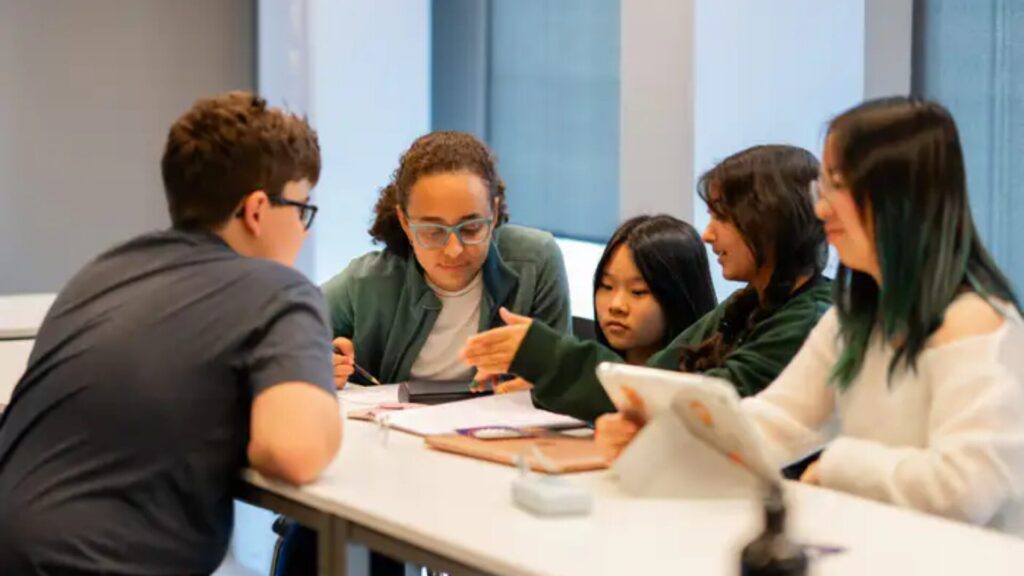
The Media, Journalism & Society programme adds a communication-focused option to the many social sciences programs in Europe for high school students, combining theoretical and practical perspectives on journalism, media studies, and contemporary social issues. You’ll explore media influence, news production, misinformation, and the relationship between journalism and society while developing a more critical understanding of the modern media landscape.
Through discussions, academic sessions, and hands-on activities, students learn how media organisations operate and how journalists investigate, interpret, and communicate information. Studying alongside an international cohort also provides opportunities to discuss current events from multiple cultural and political perspectives. The program encourages students to think critically about the information they consume while developing analytical and communication skills relevant to journalism, politics, and the social sciences.
Why it stands out: The program examines journalism and media through both practical and social science perspectives, with a strong focus on critical media literacy.
9. LUISS Guido Carli (Rome) – LUISS Summer School
Location: Rome, Italy – Luiss Campus, Viale Pola 12
Cost/Stipend: €1,200 course fee for Orientation 3 or €1,500 for Orientation 4; optional add-ons of accommodation €350, dinners €60, and shuttle service €40; a €100 early-enrollment reduction (March 31) and partnership discounts are available
Dates: Orientation 3 weeks are June 8-12, June 22-26, July 6-10, July 20-24, and August 31st – September 4th
Application Deadline: Rolling enrollment by week until each fills
Eligibility: High school students in their third-to-last year for Orientation 3 or their penultimate year for Orientation 4; accommodation service available only to participants who are at least 16 by the program start date; open to international students
In this program, you spend one intensive week on the Luiss campus in Rome exploring the social sciences alongside economics and law, sampling introductory modules drawn from each of the university’s degree programs. Through lectures, case studies, and guest talks, plus collaborative group work running roughly 9:30 a.m. to 5:30 p.m.
Monday through Thursday, you test your interest in fields such as political science while building analytical and decision-making skills. In two bilingual weeks introduced in the 2026 edition, part of the instruction is delivered in English for an international academic experience. On Friday mornings, you sit a 60-minute psycho-aptitude, problem-solving, and mathematics test.
Why it stands out: It pairs a non-selective week of social-science orientation with a graded final test that can earn up to six bonus points toward early admission to Luiss, linking exploration directly to a concrete university pathway.
10. Esade Ramon Llull University – Global Governance & Law Experience
Location: Barcelona, Spain
Cost: €4,627 without accommodation or €6,227 total with accommodation; financial aid and early bird discount are available
Dates: June 29th – July 17th
Application Deadline: May 15th
Eligibility: Pre-university students ages 15-17; demonstrate a good command of English; open to international students
In this program, you immerse yourself in an academic program focused on law, politics, international relations, and economics. You analyse the direct impact of current events on society and study how the global order operates. Throughout the coursework, you resolve real-life case studies and participate in a simulated United Nations session to understand diplomatic strategies.
You also engage in simulated trials to build foundational legal knowledge regarding criminal law and human rights frameworks. By navigating these practical scenarios, you develop critical professional skills in public speaking, negotiation, cross-cultural communication, and teamwork. You leave equipped with a multidisciplinary perspective on solving complex global challenges.
Why it stands out: It combines rigorous academic coursework in the social sciences with immersive, hands-on simulations like mock trials and Model United Nations sessions on a premier European business school campus.
11. University of Amsterdam Pre-University Honours Programme – Politics & Identity
Location: University of Amsterdam, Amsterdam, Netherlands
Cost: €1,675 tuition fee + €800 housing fee + €25 application fee; scholarships are available
Dates: July 28th – August 6th
Application Deadline: February 15th
Eligibility: Current high school students aged 16+ interested in identity politics, political science, and the social and behavioural sciences; open to international students
This course examines how factors such as culture, nationality, ethnicity, gender, and social identity influence political systems, policymaking, and civic participation. You’ll investigate how identities are formed, how they shape political conversations, and why identity has become an increasingly important topic in political science and public discourse. Through university-level discussions and interdisciplinary perspectives drawn from political science, sociology, and the behavioural sciences, students engage with complex questions about representation, power, and social change.
Studying alongside peers from around the world also provides opportunities to compare different political and cultural perspectives. The program encourages students to critically examine the connections between identity and politics while developing a deeper understanding of contemporary social and political challenges.
Why it stands out: The program focuses on the growing role of identity in politics, combining political science with perspectives from the social and behavioural sciences.
12. Bocconi Summer School for High School Students (International Politics Lab)
Location: Bocconi University, Milan, Italy
Cost: €2,700
Dates: July 6-17
Application Deadline: Typically early April
Eligibility: High school students (ages 15 and up) currently in their third-to-last or second-to-last year of high school; open to international students
In this program, you can choose two labs from a range of disciplines and spend each week focusing on a different area of study. In the International Politics lab, you’ll examine the origins, roles, and functions of international organisations and explore how global institutions influence international cooperation and trade. You’ll participate in a simulation where students form diplomatic delegations representing different countries and negotiate within the framework of an international organisation.
Through discussions, case studies, and collaborative activities, you’ll develop a deeper understanding of global governance, diplomacy, and international decision-making. The combination of political theory and hands-on negotiation exercises provides students with a practical introduction to international relations and global affairs.
Why it stands out: Students take part in diplomatic negotiation simulations that bring international politics and global governance to life.
13. Franklin University Switzerland – Sustainability, Eco-Resilience, and Climate Justice
Location: Franklin University Switzerland, Lugano, Switzerland
Cost: CHF 2,500 + CHF 50 application fee
Dates: July 13-24
Application Deadline: Rolling admissions
Eligibility: High school students aged 15-18 who have completed at least 10 years of schooling; a transcript and proof of English proficiency (e.g., TOEFL 80, IELTS 6.0, Duolingo 110) are required; open to international students
Franklin University Switzerland’s climate justice course gives social sciences programs in Europe for high school students a strong sustainability and public policy angle. You’ll examine biodiversity loss, pollution, environmental justice, sustainability, and community resilience while investigating how ecological systems, human behaviour, and government policies interact.
Experiential learning is a major component of the program, with visits to parks, vineyards, pollinator gardens, Lake Lugano, and other locations that showcase local sustainability initiatives. Students also participate in discussions about climate anxiety, resilience, and leadership while learning from experts and peers from around the world.
Why it stands out: Students explore climate change through both environmental and social justice perspectives while participating in field-based learning across Switzerland.
14. Bildung & Begabung – Deutsche SchülerAkademie
Location: Residential academies held at boarding schools across Germany, including Roßleben, Clemenswerth, Torgelow, Grovesmühle, Waldenburg, and Schwäbisch Gmünd, plus the Schülerakademie China in Coesfeld and the Quantum Akademie in Jülich
Cost/Stipend: €650 self-contribution for the SchülerAkademien, QuantenAkademie, or Schülerakademie China (partner programs range from €500 to €630; income-based reduction or full waiver is available
Dates: Individual 16-day academies running between June 28th and August 29th
Application Deadline: March 2nd
Eligibility: Students enrolled in one of the two years before the final school-leaving exam and at least grade 10 at a school leading to the German Hochschulreife or Fachhochschulreife; no older than 20 on July 1st of the program year; residence in Germany or attendance at a German-curriculum school abroad; not open to international students
In this program, you spend 16 days living and learning at a residential academy with other highly motivated students from across Germany, working in one course you choose from a slate that regularly spans social-science and humanities fields such as psychology, law, cultural studies, and philosophy.
In your chosen course, you tackle demanding questions through close reading, structured seminar discussion, empirical analysis, and a collaborative course documentation that you help present to the whole academy. You also propose or join participant-led sessions, sharing interests from languages to debate with the group. Alongside coursework, you take part in cross-course music, sport, and excursions that sharpen analytical reasoning, academic writing, and collaboration.
Why it stands out: It pairs university-level work in a self-selected social-science field with an intensive residential, interdisciplinary community that has anchored Germany’s gifted-education tradition since 1988.
15. IE University Pre-University Summer Program
Location: Segovia and Madrid, Spain
Cost: €5,900
Dates: Multiple two-week sessions from June 14th to July 31st
Application Deadline: Rolling admissions
Eligibility: High school students aged 15-17 or students under 18 graduating in the program year or the next year; open to international students
This program combines workshops, collaborative projects, design-thinking activities, sustainability challenges, and innovation-focused exercises to encourage students to tackle real-world issues. You’ll work in teams on hands-on projects, participate in a hackathon, explore topics such as sustainability, social impact, artificial intelligence, and systems thinking, and develop solutions to contemporary challenges.
Throughout the two weeks, students engage in mentoring sessions, storytelling workshops, presentation training, and activities that strengthen teamwork and leadership skills. The program is split between Segovia and Madrid, allowing participants to experience both a historic university town and Spain’s capital city. It emphasises innovation, social impact, and interdisciplinary problem-solving.
Why it stands out: Students combine leadership development, sustainability challenges, and a collaborative hackathon while studying across two Spanish cities.
Let Social Science Expand Your Perspective
Europe gives these programmes a wider lens: different cities, classmates, histories, political systems, and cultural assumptions all become part of the learning.
In these social sciences programs in Europe for high school students, you might study power in one session, identity in another, then test both through debate or fieldwork.
The value is in what stays with you afterward: better questions, calmer arguments, clearer opinions, and a stronger ability to understand people unlike yourself.
Continue that growth through our Personal Development blogs, where you can build confidence, communication, resilience, self-awareness, and decision-making beyond the classroom.