
 Русский (RU)
 Українська (UK)
 Türkçe (TR)
 Italiano (IT)
 Français (FR)
 Português (PT)
 中文 (中国) (ZH)
 Español (ES)
 日本語 (JA)
 ไทย (TH)
 Deutsch (DE)
 Ελληνικά (EL)
 Polski (PL)
 Bahasa Indonesia (ID)
 Nederlands (NL)
 العربية (AR)
 한국어 (KO)

If you’ve spent the last year hearing about ChatGPT, Grok, self-driving cars, or machine learning breakthroughs, you’re not alone. Artificial intelligence has quickly become one of the most influential technologies of our time, and AI summer programs in California for high school students can help you move beyond headlines to understand how these systems are built, trained, and applied across different fields.
Think about spending a few weeks learning how machines recognize patterns, how recommendation systems work, how large language models generate responses, or how developers build AI-powered applications. You’ll move beyond simply using AI and begin understanding the concepts, technologies, and decisions that make these systems possible.
Why pursue AI summer programs in California as a high schooler?
When people think about technology innovation, California is usually one of the first places that comes to mind. The state is home to Silicon Valley, major technology firms, influential startups, venture capital networks, and universities that have helped shape modern artificial intelligence research.
For students, this means learning in an environment where AI is not just being studied but actively developed and deployed. Programs often benefit from connections to researchers, engineers, entrepreneurs, and organizations working directly in the field. That exposure can provide valuable context for students considering future studies in computer science, engineering, mathematics, or data science.
These experiences will also add depth to a college application. Exploring AI through structured learning, projects, or mentorship shows initiative and a willingness to engage with emerging technologies beyond classroom requirements.
To help you find the right fit, we’ve compiled a list of 15 AI summer programs in California for high school students!
For adjacent opportunities, consider the online AI program.
Key Takeaways
- Costs range from free, as with UC Davis’s AIFS High School Summer AI Tech Camp and SJSU’s CyberAI Camp, to $9,800 for Stanford AI4ALL.
- Several programs offer university course credit, including UCLA’s Computer Science Summer Institute and UC Santa Barbara’s Summer Research Academies Rethinking AI track.
- Eligibility is often restricted by residency, including SJSU’s CyberAI Camp, which is not open to international students.
- Program length ranges from four days, as with UC Davis’s AI Tech Camp, to four weeks, as with UC Santa Barbara’s Summer Research Academies.
- Several programs require prior coding experience, including UC Santa Cruz’s Human-Centered AI program and ROAR Academy, while others like UC Davis’s AI Tech Camp require none.
- Specialized topics are increasingly available, including AI alignment and RLHF at UC Santa Cruz, and AI-enabled robotics at UC Riverside for as little as $150.
- Many programs connect students directly with current AI research, including Stanford AI4ALL’s research groups and the Berkeley AI Research Lab’s backing for AI for Real-Life Problem Solving.
- Immerse Education’s Software Development & AI Summer School is one of the few programs open to students worldwide aged 15 to 18, combining hands-on coding projects with mentorship and bursary support in San Francisco.
15 AI Summer Programs in California for High School Students
1. Stanford AI4ALL
Location: Stanford University, Stanford, California
Cost: $9,800
Program Dates: Online: June 15th – June 26th; Residential: July 19th – July 31st
Deadline: Check the program website
Eligibility: Current 9th-grade students with a passion for AI and its real-world impact; international student eligibility not specified
Stanford AI4ALL is one of the most research-focused AI summer programs in California for high school students, placing you into a research group from the start. Your experience depends on whether you’re working in computer vision, medical AI, natural language processing, or robotics, while collaborating with other students and receiving guidance from Stanford graduate students and postdoctoral researchers.
Outside project work, you’ll attend faculty lectures, explore current AI research, and watch demonstrations from companies building AI products. Career workshops introduce different paths into the field and give you a better sense of what AI work looks like beyond the classroom. Because the programme is run through Stanford’s Human-Centered AI initiative, discussions regularly touch on the broader impact of AI systems and how they’re used.
Why it stands out: You’ll explore AI through real team research projects at one of the world’s leading AI institutions at an age when most students are still years away from university-level work.
2. Immerse Education’s San Francisco Software Development & AI Summer School
Location: University of California, Berkeley, San Francisco, California
Cost: Varies; summer school scholarship available through our bursary programme
Dates: Multiple summer cohorts available
Application Deadline: Varies based on cohort
Eligibility: High school students worldwide aged 15-18; open to international students
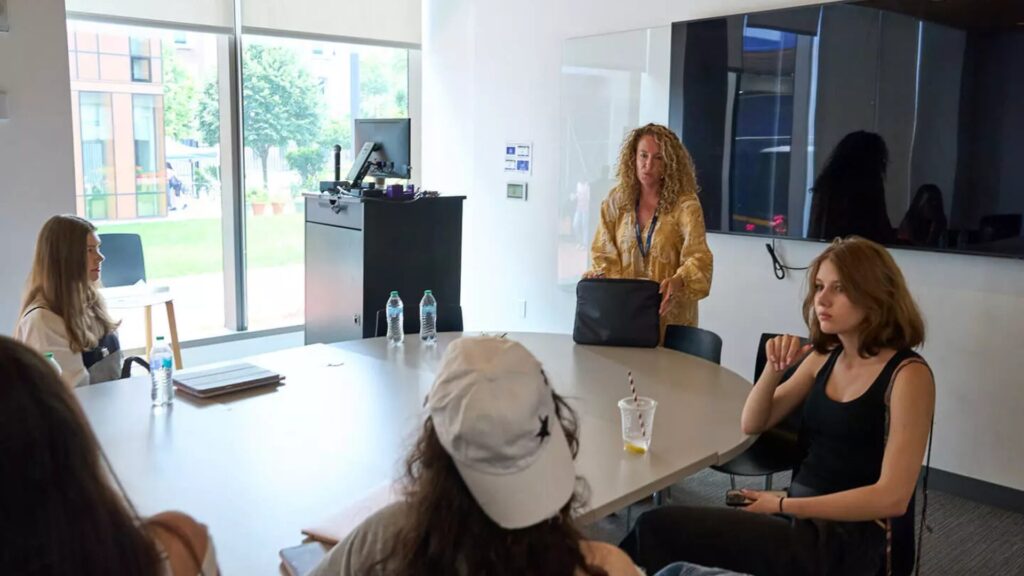
Immerse Education’s Software Development and AI Summer Internship is a residential program for students aged 15–18 interested in programming and game development. In this program, you’ll attend classes that cover core topics in software development, including coding and basic AI concepts.
The program includes projects where you build simple applications or game-based systems. Sessions also include discussions and insights from professionals working in the tech industry. You will work in small groups and complete tasks across the duration of the program.
Why it stands out: It gives you location-based exposure to Silicon Valley, along with project-based work in software and game development.
3. Stanford CARE Explorers: AI x Precision Health
Location: Stanford University, Palo Alto, California
Cost: $5,500
Program Dates: Session One: June 15-26; Session Two: July 6-17
Deadline: Check the program website
Eligibility: Rising high school sophomores, juniors, or seniors; 14 years or older; must reside within commuting distance of Stanford’s Palo Alto campus
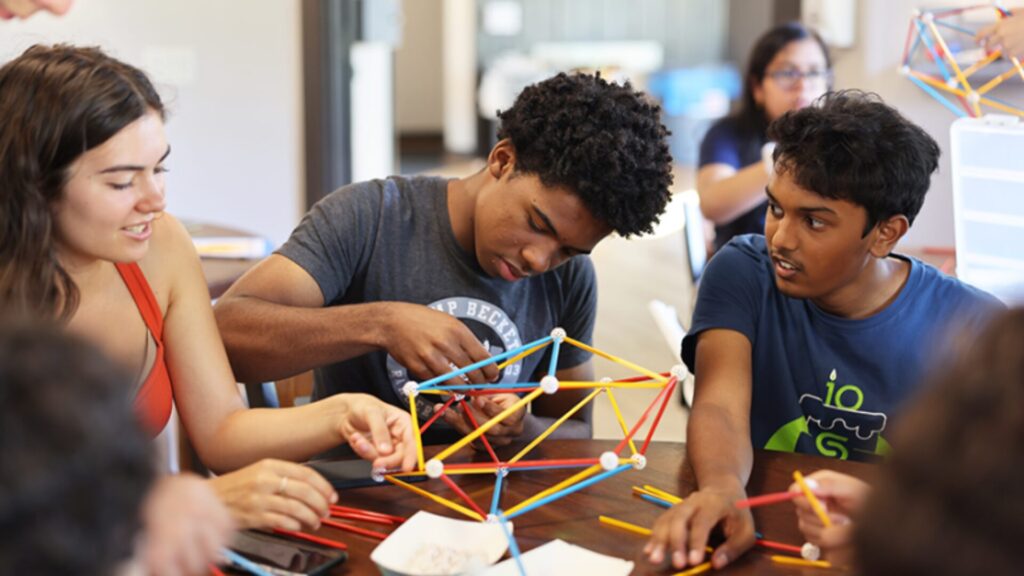
Stanford CARE Explorers: AI x Precision Health focuses on a question that is becoming increasingly important in medicine: how can AI help researchers understand health outcomes more accurately? Over two weeks, you’ll work with precision health datasets while learning the basics of statistical analysis, data science, and AI applications in healthcare. Project work takes place in teams, where you’ll investigate health-related questions and explore how data can be used to identify patterns and disparities.
The programme also includes discussions about health equity and the challenges involved in applying AI responsibly in medical settings. Throughout the programme, you’ll work closely with mentors and gain experience interpreting data rather than simply collecting it.
Why it stands out: The AI x health equity angle is uncommon; you’ll learn how data science is applied to real-world health disparities, not just abstract datasets.
4. UCLA Computer Science Summer Institute (CSSI)
Location: UCLA, Los Angeles, California
Cost: Varies by track
Program Dates: Session A3: June 22nd – July 10th (Tracks 1 & 2); Session B3: July 13th – July 31st (Tracks 3 & 4)
Deadline: June 10th
Eligibility: High school students; minimum 15 years of age by June 22nd; international student eligibility not specified
For students comparing AI summer programs in California for high school students with university-level coursework, UCLA’s Computer Science Summer Institute offers dedicated AI and Generative AI tracks. During the programme, you’ll attend classes taught by UCLA faculty and PhD students while completing homework, assessments, and coding projects across foundational concepts and newer AI applications.
Throughout the session, you’ll work on a capstone project with support from tutors and instructors. The pace is similar to an accelerated university course, which means you’ll spend a significant amount of time coding, solving problems, and applying what you’ve learned. Depending on the track, you may also earn UCLA course credit upon successful completion.
Why it stands out: The option to earn real UCLA course credit sets this program apart; it’s not just a summer experience; it can be a head start on your transcript.
5. BeSMART UC Berkeley Engineering Summer Machine-Learning & AI Research Training
Location: UC Berkeley, Berkeley, California
Cost: $7,000
Program Dates: July 27th – August 7th
Deadline: Typically late March
Eligibility: High school students ages 15-17 by the start of the program; international student eligibility not specified
BeSMART at UC Berkeley is designed for students who want to understand how machine learning works beneath the surface. You’ll spend two weeks learning Python, working with datasets, and exploring the foundations of machine learning through guided projects and exercises. As your understanding grows, you’ll apply those skills to a final project built around a topic that interests you.
Because the programme is hosted by Berkeley Engineering and limits enrollment to a small cohort, you’ll have regular opportunities to ask questions and receive feedback. Discussions focus on how machine learning models are trained, evaluated, and improved rather than simply how to use existing AI tools.
Why it stands out: With just 20 spots and a curriculum built around real datasets and ML fundamentals, BeSMART is one of the most focused machine learning experiences available at the high school level.
6. Berkeley Summer Computer Science Academy
Location: UC Berkeley, Berkeley, California
Cost: $5,197
Program Dates: June 21st – July 3rd
Deadline: March 17th
Eligibility: Completed 10th or 11th grade; overall B average (3.0); 16 years of age by June 21st; international student eligibility not specified
The Berkeley Summer Computer Science Academy is built on CS10, the same introductory computer science course that UC Berkeley undergraduates take. You’ll work through core concepts using Snap!, a visual programming language, building from the basics all the way to a programming project of your own design.
New to the cycle, the program has added a dedicated AI module covering Supervised Machine Learning, Reinforcement Learning, Generative AI, and the Ethics of AI, giving you a foundation in how these systems work. Resident assistants, who are Berkeley undergraduates themselves, plan activities and excursions to make the most of your two weeks on campus.
Why it stands out: It’s built on UC Berkeley’s actual undergraduate CS curriculum, so you’re not getting a simplified version of the material.
7. AI for Real-Life Problem Solving
Location: UC Berkeley Campus, Berkeley, California
Cost: $1,550
Program Dates: Multiple one-week sessions (June 22-26, July 6-10, July 20-24, July 27-31)
Deadline: Not specified, financial aid applications due April 12th
Eligibility: Students entering grades 10-12; international student eligibility not specified
This one-week program at UC Berkeley is built specifically around AI, how it works mathematically, how it’s applied to real problems, and what it means ethically. You’ll learn Python, design and build machine learning models, hear from AI graduate students working on current research, and take a robotics lab tour focused on human-compatible AI systems.
The curriculum has been developed with support from the Berkeley AI Research Lab (BAIR), which gives it a genuine research grounding rather than a surface-level overview. At the end of the week, you’ll present your project publicly; parents are invited to the final day and walk away with a UC Berkeley certificate of completion, a LinkedIn profile you’ve helped build, and an invitation to join the TRP alumni network.
Why it stands out: AI work backed by Berkeley’s AI research lab is one of the more accessible ways to gain real exposure to the field, and the alumni network is a long-term asset that most one-week programs don’t offer.
8. UCSB Summer Research Academies’ Rethinking AI Track
Location: UC Santa Barbara, Santa Barbara, California
Cost: Check program website
Program Dates: June 26th – July 24th
Deadline: March 23rd
Eligibility: Qualified high school students must attend the program in its entirety; international student eligibility not specified
The UCSB Summer Research Academies is a four-week program in which you pick a research track and spend the summer conducting research. For students interested in AI, Track 10 (Rethinking AI) dives into the deep histories of intelligence and machine learning, crossing computer science, philosophy, history of science, digital humanities, and cognitive science. If your interest runs more applied, Track 12 (Robotics Revealed) covers the dynamics and control of robotic systems.
You’ll earn 4 university credits, present findings at a formal capstone seminar, and produce a technical research paper that becomes part of your permanent academic record. You’ll also attend the GRIT talks lecture series, connecting you directly with UC Santa Barbara researchers presenting their current work.
Why it stands out: You’ll earn real university credit and produce a formal research paper; it’s one of the few high school summer programs that asks you to do the full research cycle from question to presentation.
9. UCI ICS Summer Academy’s AI & Machine Learning Course
Location: UC Irvine, Irvine, California
Cost: $2,500
Program Dates: Session II: July 20th – July 31st
Deadline: Not specified
Eligibility: Rising high school students in grades 9-12 and graduating 12th graders; international student eligibility not specified
The UCI ICS Summer Academy’s AI and Machine Learning course is a two-week deep dive into how machine learning actually works, not just how to use it. You’ll cover algorithms, methods, and core concepts through both paper-based and programming approaches, working through classification, clustering, and regression.
Classes are taught by UC Irvine professors alongside high-achieving undergraduate and graduate students. Each session wraps up with a capstone presentation where you and your group share your findings with peers, parents, and faculty.
Why it stands out: With UCI faculty teaching the curriculum and a final capstone you present publicly, the AI/ML course gives you something concrete to walk away with, both the knowledge and a presentation you can speak to.
10. UC Davis AIFS High School Summer AI Tech Camp
Location: UC Davis, Davis, California
Cost: Free
Program Dates: June 15-18
Deadline: First-come, first-served
Eligibility: High school students interested in food production, sustainability, or technology; no coding experience required; international student eligibility not specified
UC Davis’s AI Tech Camp is designed for students who are curious about AI but may not have much programming experience yet. Over four days, you’ll learn Python fundamentals before moving into topics such as neural networks, image classification, edge computing, and AI-powered computer vision. A major part of the programme involves building and testing an AI model using a Raspberry Pi AI Camera.
The examples and projects are tied closely to agriculture, food production, and environmental sustainability, showing how AI can be applied outside traditional tech settings. You’ll also visit the university’s drone lab and see how AI tools are being used in agricultural technology. The programme finishes with a team challenge where students apply what they’ve learned.
Why it stands out: It’s free and faculty-led, and it puts AI in a context of sustainable agriculture and food systems that most AI programs don’t go near.
11. ROAR Academy’s UC Berkeley
Location: UC Berkeley, Berkeley, California
Cost: $2,200
Program Dates: July 6th – July 17th
Deadline: March 27th
Eligibility: Rising 10th-12th graders with prior Python programming experience; California residents, out-of-state students may contact the program directly
The ROAR Academy is built around one of the more distinctive learning frameworks on this list: you’re not just learning AI, you’re learning to build an autonomous driving simulation that you then race competitively. The first week covers Python, data structures, object-oriented programming, and scientific visualization. Week 2 goes into gradient descent, convolutional and deep neural networks, reinforcement learning, and generative pre-trained transformers.
By the final day, you’ll be working directly with LLMs and learning how to make GPT a co-pilot for your own code. After completing the program, top students have the opportunity to become ROAR Ambassadors, join future competitions and seminars, and receive a UC Berkeley certificate of completion.
Why it stands out: The combination of autonomous driving simulation, reinforcement learning, and LLMs in a 10-day format is genuinely hard to find elsewhere at the high school level.
12. SJSU CyberAI: Navigating the AI-Empowered Future
Location: San José State University, San Jose, California
Cost: Free
Program Dates: June 22nd – June 26th
Deadline: April 13th
Eligibility: Local high school students completing grades 9-12; not open to international students
San José State University’s CyberAI Camp explores what happens when artificial intelligence and cybersecurity intersect. Throughout the week, you’ll work in university labs using equipment provided on-site while completing activities connected to both AI and cyber technologies. The programme looks at how AI is changing digital security and how security challenges affect AI systems. Faculty-led sessions introduce current topics through practical exercises and demonstrations.
Because the camp takes place in Silicon Valley, you’ll be learning in a region where many of these technologies are actively being developed and deployed. The programme is short, but the schedule is packed with hands-on activities and discussions.
Why it stands out: It’s free, university-run, and based on a campus in Silicon Valley; the environment itself is part of what makes a week here worthwhile.
13. UCSC Silicon Valley Extension’s AI Machine Learning
Location: UC Santa Cruz Extension, Silicon Valley campus
Cost: $3,750
Program Dates: June 29th – July 17th
Deadline: May 18th
Eligibility: High school students ages 14-17; international student eligibility not specified
Led by UC Santa Cruz instructors with graduate student mentors, this three-week program gives you a hands-on introduction to machine learning using Python. Over three weeks, you’ll learn Python and work with widely used libraries such as NumPy, Pandas, and Scikit-learn. Coursework covers machine learning topics including classification, clustering, regression, and neural networks.
Graduate student mentors help guide students through projects while instructors explain the reasoning behind the algorithms being used. As your understanding grows, you’ll apply these concepts to a research project of your own. The programme concludes with presentations where you’ll explain your work to instructors, mentors, and peers.
Why it stands out: The no-prerequisite entry point and UC Santa Cruz certification give it academic weight without requiring you to already be an experienced coder.
14. UCSC Silicon Valley Extension’s Human-Centered AI
Location: UC Santa Cruz Extension, Silicon Valley campus
Cost: $3,750
Program Dates: June 29th – July 17th
Deadline: May 18th
Eligibility: High school students ages 14-17; requires basic programming knowledge; international student eligibility not specified
UCSC Silicon Valley Extension’s Human-Centered AI programme adds an advanced, ethics-focused route to the many AI summer programs in California for high school students. You’ll work directly with large language models, learning their architecture, prompt engineering, retrieval-augmented generation, and fine-tuning while also exploring AI alignment, interpretability, and explainability.
The program goes into reinforcement learning with human feedback (RLHF), one of the key techniques used to align models like ChatGPT to human values. The course is taught by a UC Santa Cruz PhD candidate and ends with a final project presentation. Basic programming experience is required.
Why it stands out: It’s one of the only high school programs that teaches RLHF and AI alignment, topics at the center of how the most advanced AI systems are actually built today.
15. STEM-Focused AI-Enabled Robotics Summer Camp
Location: Bourns College of Engineering, UC Riverside, California
Cost: $150
Program Dates: July 6th – July 10th
Deadline: June 6th
Eligibility: High school students interested in engineering, robotics, or AI; international student eligibility not specified
The STEM-Focused AI-Enabled Robotics Summer Camp is run by the Bourns College of Engineering and is built around the intersection of AI and physical systems, specifically, how AI is used to make robots move, navigate, and make decisions on their own.
Through guided hands-on lab exercises, you’ll cover embedded system design, microcontroller programming, autonomous and manual robot-car navigation, obstacle avoidance, and wireless navigation control using mobile phones. The curriculum is custom-designed around the most in-demand areas of engineering, giving you direct exposure to how AI tools are applied in robotic systems, not just in theory, but in working hardware.
Why it stands out: The combination of AI and physical robotics hardware at this price point is almost unmatched; most programs that go this deep cost several times more.
Frequently Asked Questions: AI Summer Programs in California for High School Students
What is an AI summer program for high school students?
An AI summer program is a structured experience that introduces students to how artificial intelligence systems are built and applied, often before college. Programs typically cover topics like machine learning, neural networks, natural language processing, and data science through coding projects, lectures, or research mentorship. Many are hosted by universities such as Stanford, UC Berkeley, and UCLA, while others run as shorter, free workshops. Most conclude with a capstone project or presentation.
Do I need coding experience to join an AI program?
Requirements vary by program, with some expecting prior coding experience and others designed for complete beginners. UC Davis’s AI Tech Camp explicitly requires no programming background, while UC Santa Cruz’s Human-Centered AI program and ROAR Academy expect basic or prior Python experience. Immerse Education’s Software Development & AI Summer School is built to introduce coding and AI concepts from the ground up, supported by small group instruction. Checking each program’s prerequisites before applying can save time during the selection process.
How much do AI programs in California cost?
Costs range from free to $9,800 for Stanford AI4ALL’s residential session. Free options include UC Davis’s AI Tech Camp and SJSU’s CyberAI Camp, while UC Riverside’s AI-Enabled Robotics Summer Camp costs as little as $150. Immerse Education’s Software Development & AI Summer School offers bursary support that can reduce costs for eligible students. Many university programs also offer need-based financial aid, so it’s worth checking eligibility directly with each program.
Can international students attend AI programs in California?
International eligibility varies considerably across these programs. SJSU’s CyberAI Camp is not open to international students, since it’s designed for local high schoolers attending in-person labs. Immerse Education’s Software Development & AI Summer School is open to students worldwide aged 15 to 18. Many UC-affiliated programs, including UCLA’s Computer Science Summer Institute and UC Berkeley’s BeSMART, don’t specify international eligibility on their pages, so it’s worth confirming directly with the program.
What age do I need to be to apply?
Age requirements differ by program, generally ranging from 14 to 18 years old. Stanford AI4ALL is open to current 9th graders, while BeSMART at UC Berkeley requires students to be 15 to 17 by the program start date. Immerse Education’s Software Development & AI Summer School accepts students aged 15 to 18 from anywhere in the world. Several programs, including UC Santa Cruz’s AI and Machine Learning course, set a minimum age of 14, so it’s worth checking each program’s specific cutoff.
Will I earn university credit for completing an AI program?
Some programs offer real university credit, though most do not. UCLA’s Computer Science Summer Institute allows students to earn UCLA course credit depending on the track, and UC Santa Barbara’s Summer Research Academies grants four university credits for completing its Rethinking AI track. Programs like Immerse Education’s Software Development & AI Summer School and most shorter camps do not offer transferable credit, but instead provide a certificate of completion or written feedback on a final project.
How do AI programs help with college applications?
Participating in an AI program shows admissions officers initiative and engagement with a fast-evolving field. Research-focused options like UC Santa Barbara’s Summer Research Academies have students produce a formal research paper and present at a capstone seminar, giving them a concrete academic credential. Immerse Education’s Software Development & AI Summer School provides hands-on project experience and mentorship from industry professionals, which students can reference directly in personal statements and interviews.
What’s the difference between research-focused and project-based AI programs?
Research-focused programs, such as Stanford AI4ALL and UC Santa Barbara’s Summer Research Academies, place students into ongoing research groups and emphasize formal papers, data analysis, and academic presentation. Project-based programs, including UC Riverside’s AI-Enabled Robotics Camp and Immerse Education’s Software Development & AI Summer School, focus more on building working applications, models, or hardware within a shorter timeframe. Research programs tend to suit students considering future academic research, while project-based programs are better for students who want tangible, hands-on results quickly.
Let AI Learning Guide Your Next Step
What begins as a summer experiment with code can shift how you think about problems, creativity, evidence, and the careers growing around intelligent technology.
With these AI summer programs in California for high school students, you can test different sides of the field, from robotics and healthcare data to generative tools and responsible AI.
Instead of choosing a path too early, use each project, lecture, mentor conversation, or capstone to learn which questions keep pulling your attention forward.
For more ideas beyond summer programmes, browse our Career Exploration blogs and map your interests to possible degrees, industries, skills, and future roles.