

 Русский (RU)
 Українська (UK)
 Türkçe (TR)
 Italiano (IT)
 Français (FR)
 Português (PT)
 中文 (中国) (ZH)
 Español (ES)
 日本語 (JA)
 ไทย (TH)
 Deutsch (DE)
 Ελληνικά (EL)
 Polski (PL)
 Bahasa Indonesia (ID)
 Nederlands (NL)
 العربية (AR)
 한국어 (KO)

Imagine stepping out of a centuries-old lecture hall and onto cobblestone streets, the morning air crisp with history and possibility. To your left, a state-of-the-art laboratory hums with the latest discoveries; to your right, grand architecture stands as a reminder of the brilliant minds who walked these very paths. This is what it feels like to study in Europe, a place where the rich history of scientific discovery and the technology of the future sit side by side. Science Summer programs in Europe can act as a foundation for a high schooler’s college journey — giving them a taste of what university life is like at a top institution, in person.
These experiences are also designed to push you past standard high school curricula and help you develop a highly advanced, practical skillset. You step into the shoes of real researchers and get your hands on the actual tools of the trade. You learn how to operate advanced laboratory microscopes, sequence DNA, code algorithms, and collect environmental data in the field. By engaging directly with complex core concepts in areas like molecular biology, artificial intelligence, quantum physics, and sustainable engineering, you build a working understanding of how science is actively applied today.
Why participate in science summer programs in Europe?
Europe offers a unique backdrop for scientific exploration, where groundbreaking innovation happens just down the street from where the scientific revolution began. It is home to some of the oldest and most prestigious universities in the world. Learning in the exact cities where modern physics, chemistry, and medicine were pioneered adds a profound layer of inspiration to daily coursework. From massive particle physics colliders to advanced aerospace facilities, Europe hosts massive, highly collaborative research institutions that lead the world.
You’ll gain a genuine feel for the rhythm of university life. You learn how to navigate a bustling international campus, manage your independent study hours, and collaborate on high-level projects with ambitious peers from all over the world.
To help you find the best fit, we have listed below 15 science programs in Europe for high school students.
For related opportunities, consider the online biology program, the online chemistry program, and summer programs in Oxford.
15 Science Summer Programs in Europe for High School Students
1. KIT Carl Benz School Summer School – Mechanical Engineering for High School Innovators
Location: Karlsruhe Institute of Technology (KIT), Karlsruhe, Germany
Cost: Varies by session
Acceptance rate/cohort size: Selective; small class sizes
Dates: Week 1: June 29th – July 3rd; Week 2: July 6-10; Two-Week Program: July 20-31
Application Deadline: April 30th
Eligibility: Technically-inclined high school students between the ages of 16 and 19; open to international students
KIT’s Carl Benz School Summer School introduces you to mechanical engineering through applied workshops, academic lectures, and collaborative design activities. The program connects engineering concepts to sustainability, helping you see how technical decisions shape transportation, energy systems, materials, and infrastructure. You explore topics such as thermodynamics, bridge design, computer-aided engineering, and energy conversion through a mix of classroom learning and hands-on problem-solving.
Excursions add a practical layer by showing how engineering principles appear in production plants, renewable energy spaces, and real industrial systems. Team-based activities encourage you to test ideas, communicate technical reasoning, and understand engineering as a collaborative field.
Why it stands out: You explore mechanical engineering through a sustainability-focused lens, connecting topics like energy systems, bridge design, and computer-aided engineering to real-world infrastructure and environmental challenges.
2. Immerse Education’s Biology Summer School
Location: Oxford, Cambridge
Cost: Varies; summer school scholarship available through our bursary programme
Application Deadline: Multiple summer cohorts; rolling admissions
Program Dates: 2 weeks during the summer
Eligibility: Students worldwide aged 13-18 currently enrolled in middle or high school
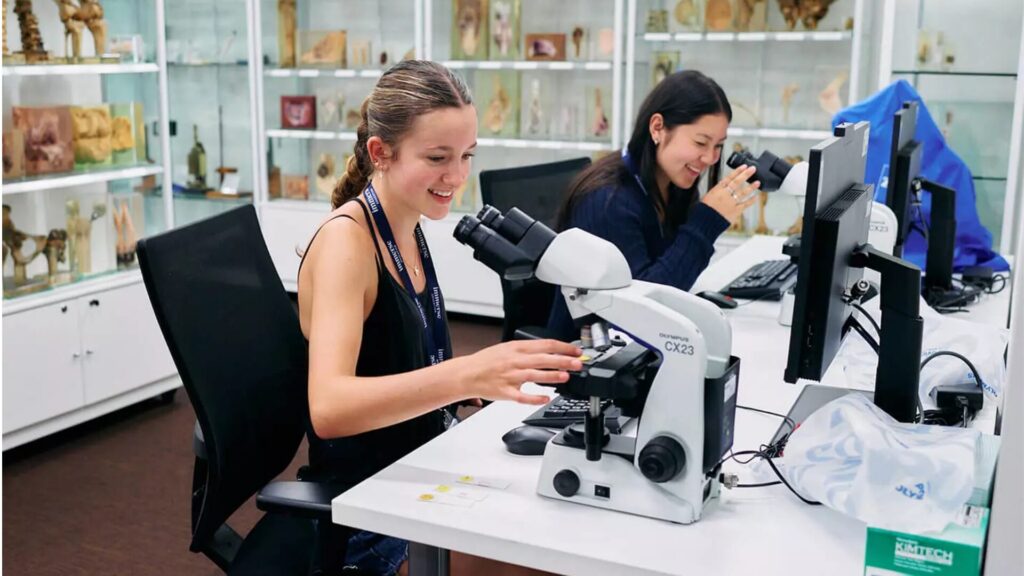
The Academic Insights Program lets high school students experience university life firsthand. You will live on campus and study in small groups of 7-10, and learn from tutors from eminent top universities like Oxford and Cambridge. If you join the Biology Track, you’ll step into a university-style learning environment where you’ll study cellular biology, genetics, ecology, and more, exactly as undergraduates would. The course is experiential and focuses on hands-on learning.
You’ll also get to design and carry out your own mini research project on a biology topic that fascinates you, giving a taste of real-world scientific work. By the end of the program, you’ll receive written feedback and a certificate of completion. You can find more details about the application and specific program details here.
Why it stands out: It pairs you with university-level tutors in focused small groups, helping you deepen subject knowledge and gain rigorous academic mentorship.
3. EPFL Pre-University Week – “Dive into the world of STEM!”
Location: EPFL Campus, Lausanne, Switzerland
Cost/Stipend: CHF 50 program fee / No stipend
Acceptance rate/cohort size: Open registration-based participation; cohort size not specified
Dates: June 29th – July 2nd
Application Deadline: May 3rd
Eligibility: High school students who have completed their first year of high school; limited to one pre-university week per student each school year, with exceptions possible when places remain; instruction conducted in English; open to international students
In this program, you spend a week on the EPFL campus in Lausanne, immersing yourself in science, technology, engineering, and mathematics through hands-on modules taught in English. You contribute to solving problems, collecting samples, and working on specific applications spanning robotics, medical technology, and the development of new materials.
Concrete projects can include building an optical heart rate monitor, discovering aquatic ecosystems in streams, designing an earthquake-resistant structure, and recreating the first walk on the moon. You also experience daily life at a cosmopolitan research university, getting to know the campus and its student environment firsthand.
Why it stands out: It lets high school students spend a full week actively building and experimenting across several STEM fields on the EPFL campus while experiencing what it is like to live and study at a cosmopolitan research university.
4. Imperial College London: Year 9 Girls Engineering Summer School
Location: Imperial College, London, UK
Cost: None
Acceptance rate/cohort size: Selective; cohort size not specified
Dates: August 4-7
Application Deadline: March 18th
Eligibility: Year 9 girls studying in UK non-fee-paying schools who are on track to achieve high grades in maths and science; not open to international students
Imperial’s Year 9 Girls Engineering Summer School is one of the earlier-stage science summer programs in Europe for high school students, designed to help younger students understand how broad and creative engineering can be. You explore multiple engineering fields through practical activities, taster sessions, talks, and team-based challenges that connect maths and science to real-world problem-solving.
The program introduces areas such as bioengineering, civil engineering, design engineering, materials, mechanical engineering, and earth science through an accessible but academically focused format. Reflection activities are built into the experience, helping you think about which disciplines match your strengths and interests. The final poster project gives you a chance to synthesize what you have learned and present it clearly to others.
Why it stands out: The program introduces engineering early through practical activities across multiple disciplines, helping you connect your maths and science strengths to future study and career pathways.
5. King’s College London – Pre-University Computer Science
Location: King’s College London, London, UK
Cost: £3,195 tuition for one course; £3,965 residential package for one week + £65 application fee
Acceptance rate/cohort size: Selective; small class sizes
Dates: July 13-17
Application Deadline: April 27th
Eligibility: Must be in the final three years of high school; ages 16 or 17 before the start date; English language proficiency of at least CEFR Level B2 (e.g., minimum Duolingo 70, TOEFL iBT 33, or equivalent) if English is not the first language; open to international students
King’s College London’s Pre-University Computer Science course gives you a concentrated look at computer science as an undergraduate subject. The course introduces programming principles, program design, efficiency, and advanced computing topics while helping you build stronger problem-solving habits.
You work with Python and apply algorithmic, mathematical, and scientific reasoning to computational challenges. Lectures, tutorials, peer assessment, interactive activities, and small-group projects expose you to the learning formats commonly used at the university level. The course also asks you to complete structured assignments, which help develop independent research and written communication skills.
Why it stands out: You experience computer science in a format modeled on first-year university study, with Python programming, algorithmic reasoning, tutorials, projects, and structured academic assignments.
6. Imperial College London – Year 10 Insights Summer School
Location: South Kensington campus, Imperial College London, London, United Kingdom
Cost: None
Acceptance rate/cohort size: Selective; typically oversubscribed with a limited number of residential places
Dates: 29th July – 1st August
Application Deadline: March 11th
Eligibility: Students in Year 10 at the time of application; live and attend school in the UK; able to take part in the entire residential event; studying at least eight GCSEs and on track for a minimum of five at grades 7-9 including maths and sciences, plus a grade 5 in GCSE English Language; expecting to study science and maths post-16; not open to international students
In this program, you join the science stream of this four-day, three-night residential summer school on Imperial’s South Kensington campus, where you explore biology, chemistry, physics, and maths beyond the GCSE level. You take part in hands-on practicals and workshops inside real undergraduate laboratories, guided by Imperial academics, researchers, and student mentors.
Across days two and three, you rotate through taster sessions developed by working scientists, then on the final day, you collaborate in a group to build and present an academic-style poster explaining a concept you learned during the week. Staying in university halls, you experience student life in London while strengthening practical laboratory techniques, scientific reasoning, and communication skills.
Why it stands out: It places Year 10 students inside Imperial’s own undergraduate science labs for hands-on practicals with the College’s academics and student mentors, is fully funded for successful applicants, and culminates in a university-style poster conference presented to peers and invited guests.
7. University of Warwick Pre-University Summer School

Location: University of Warwick, Coventry, UK
Cost: £5,250
Acceptance rate/cohort size: Competitive; cohort size not disclosed
Dates: July 14-24
Application Deadline: May 31st
Eligibility: Students ages 16-17; open to international students
Warwick’s Pre-University Summer School gives you a broad introduction to science and engineering within a university-style academic setting. The Science and Engineering route allows you to sample disciplines such as physics, engineering, computer science, artificial intelligence, mathematics, chemistry, and statistics. This interdisciplinary structure can be useful if your interests overlap across several STEM areas and you want to compare possible university pathways.
Practical sessions, lectures, seminars, and academic skills workshops help you connect subject knowledge with research, communication, and study skills. You also work on tasks that encourage you to apply new concepts rather than simply absorb information.
Why it stands out: The program lets you sample several STEM fields before choosing a university direction, combining science and engineering content with academic skills workshops and campus-based learning.
8. Falmouth University – Introduction to Game Development with Unity
Location: Falmouth University, Games Academy, Penryn Campus, Cornwall
Cost: £180; discounts are available for students from local partner schools in Cornwall
Acceptance rate/cohort size: Open / Non-selective; typically 10-30 students
Dates: July 27-28
Application Deadline: Rolling
Eligibility: Students ages 14-17; open to international students
Falmouth University’s Introduction to Game Development with Unity gives this list of science summer programs in Europe for high school students a practical digital-design option, with a clear entry point into game design and production. You learn how games move from concept to playable experience by studying development processes, team roles, and the tools used in the industry. Much of the course centers on Unity, where you build skills in asset creation, level design, and basic gameplay scripting.
Workshop-based teaching means you spend time applying concepts directly. Guidance from Games Academy staff helps you understand both the technical and creative sides of game development. By the end, you create a short playable demo that can support future exploration in computing, game design, or interactive media.
Why it stands out: You move from game concept to playable demo in a short, practical format, gaining direct experience with Unity, level design, asset creation, and gameplay scripting.
9. Imperial College London – Year 12 Work Experience Programme
Location: Imperial College, London, UK
Cost: None
Acceptance rate/cohort size: Not specified
Dates: June 29th – July 3rd
Application Deadline: March 5th
Eligibility: Current Year 12 students at UK state schools who can commute daily to the London campus; not open to international students
Imperial’s Year 12 Work Experience Programme gives you insight into what academic research looks like as a working environment. Depending on your department stream, you may take part in lab visits, workshops, research-focused activities, and department-led sessions that show how university research teams operate. The experience helps you understand the daily routines of researchers, including collaboration, deadlines, technical spaces, and professional expectations.
You also gain exposure to academic careers and the different paths connected to science, engineering, medicine, mathematics, climate research, and related fields. Group presentation work adds an important communication element, requiring you to explain what you have learned in a formal setting.
Why it stands out: You step into Imperial’s research environment and see how academic work actually happens, from department activities and lab exposure to presentations and university application guidance.
10. King’s College London Pre-University Science, Technology & Engineering
Location: King’s College London, London, UK
Cost: £2,900 + £60 application fee; residential package available
Acceptance rate/cohort size: Competitive; small cohort sizes
Dates: July 6-10 (session one) and July 20-24 (session three)
Application Deadline: April 27th
Eligibility: High-achieving students who are about to start or who are enrolled in their final two years of high school and are typically aged 16 and 17; must be aged 16 before the start date of the course; English language level must be at level B2 in the CEFR; open to international students
The King’s College London Pre-University Science, Technology & Engineering module is an intensive, one-week summer academic program designed to give high school students (aged 16–17) a hands-on introduction to undergraduate-level STEM studies. It explores how engineering and technology connect to modern scientific and social challenges.
You study topics such as robotics, artificial intelligence, digital logic, medical imaging, 3D printing, and computer-aided design, giving the program a strong interdisciplinary focus. Teaching combines lectures, seminars, discussion groups, practical lab work, and collaborative problem-solving. You also complete assignments and presentations, which helps build both academic independence and technical communication skills.
Why it stands out: The course links engineering with biomedical and emerging technologies, giving you exposure to robotics, AI, medical imaging, 3D printing, and practical lab-based problem-solving.
11. Dublin City University – Centre for Talented Youth Ireland Summer Programme
Location: Dublin City University, Glasnevin, Dublin 9, Ireland
Cost/Stipend: Fee-based programme (course tuition plus a non-refundable registration fee); separate Talent Search assessment fee €60 and financial aid are available
Acceptance rate/cohort size: Highly selective; 18-20 students
Dates: Two separate three-week sessions across June and July each year
Application Deadline: Spring
Eligibility: Aged 12-16; qualification at the 95th percentile in mathematical and/or verbal reasoning through the Post Primary Talent Search or an Educational Psychologist’s report; science-track places open to high scorers in mathematical reasoning; open to international students
At the Centre for Talented Youth, Ireland’s summer programme, you study a single science subject intensively for roughly 100 hours over three weeks on the Dublin City University campus. Among the more academically demanding science summer programs in Europe for high school students, it has offered subjects such as Neuroscience, Robotics, Genetics and Cell Biology, Marine Biology, and Theoretical Physics, where you engage with university-level material through laboratory work, dissections, microscope analysis, robot building and coding, and problem-based investigation.
Alongside academics, you join a structured social programme of sporting activities, day trips, and group events. Its fast pace and depth set it apart from ordinary school science.
Why it stands out: It delivers genuinely university-level science in small, fast-paced classes reserved for students assessed in roughly the top 5% of ability, combined with a full campus and social experience at an Irish university.
12. EPFL Pre-University Week – Game Theory and Artificial Intelligence
Location: EPFL – Swiss Federal Technology Institute of Lausanne, Lausanne, Switzerland
Cost: CHF 50
Acceptance rate/cohort size: Competitive; cohort size not specified
Dates: June 29th – July 3rd
Application Deadline: May 3rd
Eligibility: High school students who have completed their first year of gymnasium; open to international students
EPFL’s Game Theory and Artificial Intelligence week introduces you to AI through strategy, optimization, and computational decision-making. Games serve as the main framework, allowing you to test abstract mathematical and algorithmic ideas in a more concrete way. You examine possible moves, outcomes, and scenarios while learning how systems can be designed to identify stronger decisions.
The program combines theoretical concepts with practical work, including the development of game prototypes and artificial intelligence models. It also shows how the same reasoning can apply beyond games, including fields such as economics and geopolitics.
Why it stands out: The program approaches AI through strategy and optimization, using game theory to help you understand how machines evaluate choices and make decisions.
13. Durham University – Sutton Trust Summer School
Location: Durham University, Durham, England, United Kingdom
Cost: None
Acceptance rate/cohort size: Selective; approximately 20 programme places per subject strand across 24 subject strands
Dates: July 27-31
Application Deadline: March 5th
Eligibility: Year 12/S5 students attending UK state-maintained schools; meeting the Sutton Trust’s eligibility and selection criteria for under-represented backgrounds; for some strands, studying specific A-level or equivalent subjects (for Biosciences, Biology, Chemistry, or Human Biology plus a second science such as Psychology, Maths, or Geography); not open to international students
In this program, you spend a free residential week at Durham, living in one of its 17 colleges and following a single science subject such as Biosciences, Chemistry, Earth Sciences, or Physics. As one of the fully funded science summer programs in Europe for high school students, it includes academic sessions led by university academics and current Durham students acting as mentors. In Biosciences, you examine pressing real-world problems, including ecosystems, infectious diseases, and blood disorders, while Physics emphasises problem-solving that applies physics and mathematics.
You work alongside lecturers and PhD students, attend taster lectures and guided tasks, and receive targeted advice on university applications, student finance, and choosing a college. Completing the programme makes you eligible for a guaranteed reduced-grade alternative offer at Durham.
Why it stands out: It combines subject-specific science teaching from Durham academics with a fully funded residential experience and a guaranteed reduced-grade alternative offer for students who complete the programme.
14. Imperial Engineering Summer School
Location: Imperial College London, South Kensington, London, UK
Cost: £7,695
Acceptance rate/cohort size: Selective; cohort size varies every year
Dates: Session 1: June 29th – July 10th; Session 2: August 3-14
Application Deadline: First-come, first-served basis
Eligibility: Students ages 16-17; majority of 9-7 grades (A*-A) at GCSE level or the international equivalent, with a minimum of grade 7 (A) in maths and relevant science subjects, and strong English language skills required; open to international students
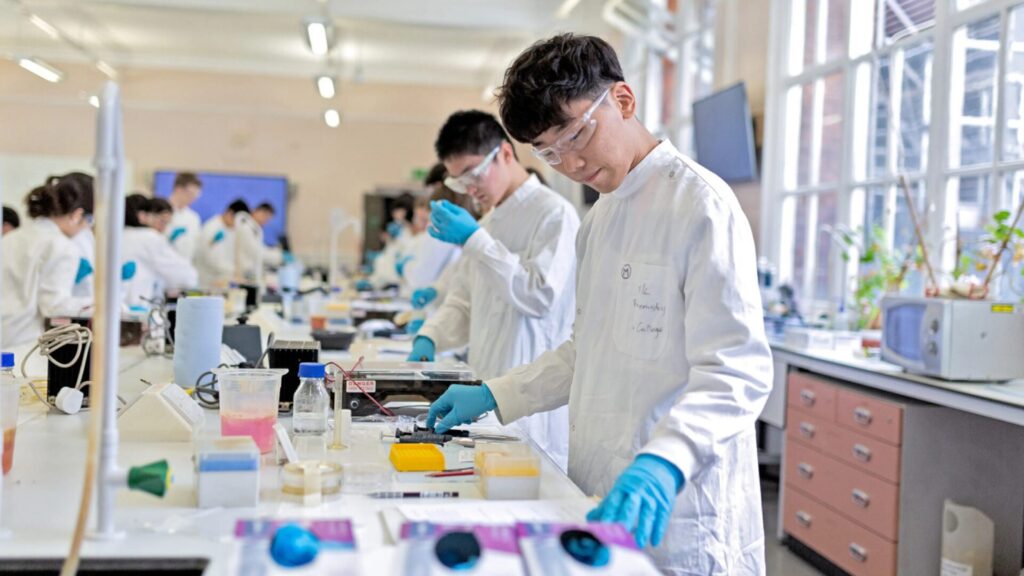
Imperial’s Engineering Summer School is designed for students who want to explore engineering as a broad and interdisciplinary field. You engage with areas such as aeronautical, chemical, civil, design, materials, mechanical, and computing-focused engineering through lectures, workshops, seminars, and practical activities.
The program asks you to collect and interpret data, test designs, build models, and work with peers on technical challenges. Direct input from Imperial academics helps you understand how different engineering disciplines are studied and applied at the university level. A second-stage innovation challenge brings students from different subject areas together to work on a larger real-world problem.
Why it stands out: You gain broad exposure to several engineering disciplines at Imperial while applying your learning through experiments, design challenges, model-building, and a cross-subject innovation project.
15. Oxford UNIQ – Physics
Location: University of Oxford, Oxford, UK
Cost: None
Acceptance rate/cohort size: Highly competitive; over 1,000 students overall across all subjects
Dates: July 13-17
Application Deadline: January 13th
Eligibility: UK state school students in their first year of further education (Year 12 in England/Wales, Year 13 in NI, or S5 in Scotland) who are 18 or younger; not open to international students
Oxford UNIQ Physics gives you a focused introduction to the academic style and expectations of physics study at Oxford, making it one of the more rigorous science summer programs in Europe for high school students. You explore topics that may extend beyond the school curriculum, such as special relativity, astrophysics, superconductivity, biological physics, and dimensional analysis. Lectures introduce new concepts, while lab exposure helps you see how theoretical physics connects to experimental work.
The tutorial-style problem-solving component is one of the program’s strongest features, requiring you to apply ideas in unfamiliar contexts with academic guidance. This format helps you practise explaining your reasoning, responding to prompts, and working through challenging material in a small-group setting.
Why it stands out: You experience Oxford-style physics learning through advanced lectures, lab exposure, and tutorial-based problem-solving that stretches your school-level knowledge in a rigorous academic setting.
Shape Your Future Through Scientific Exploration
Choosing a science programme is not only about learning more facts; it is about seeing how your ideas hold up in real academic settings.
The science summer programs in Europe for high school students featured here open doors to experiences such as DNA sequencing, robotics, environmental fieldwork, AI modelling, and engineering design.
Those moments can help you discover which questions genuinely excite you, whether that means testing prototypes, analysing lab results, or solving problems with international peers.
What could your discoveries add to your application? Visit our University Preparation blogs for guidance on statements, interviews, academic writing, requirements, and supercurriculars.