
 Русский (RU)
 Українська (UK)
 Türkçe (TR)
 Italiano (IT)
 Français (FR)
 Português (PT)
 中文 (中国) (ZH)
 Español (ES)
 日本語 (JA)
 ไทย (TH)
 Deutsch (DE)
 Ελληνικά (EL)
 Polski (PL)
 Bahasa Indonesia (ID)
 Nederlands (NL)
 العربية (AR)
 한국어 (KO)

If you’re interested in biology, chemistry, medicine, engineering, environmental science, or scientific research, high school is a great time to explore lab internships for high school students and see how science works beyond textbooks and classrooms. While school introduces important concepts, research is where those ideas are tested, challenged, and expanded. Spending time in a laboratory can help you understand what scientific work actually looks like day to day.
Imagine spending part of your summer working alongside researchers, assisting with experiments, analysing samples, collecting data, or learning techniques used in professional laboratories. Depending on the programme, you might contribute to research involving human health, genetics, neuroscience, chemistry, engineering, or environmental systems. You’ll gain exposure to the process behind scientific discovery while developing skills that are difficult to learn through coursework alone.
How do you choose the right lab internships for high school students?
The right internship often depends on your interests. Students interested in medicine or biology may want to look for opportunities in biomedical research, neuroscience, genetics, or public health. Those interested in engineering, chemistry, physics, or environmental science may benefit from programs aligned with those fields. The strongest internship is usually one that allows you to explore a subject you’re genuinely curious about.
It is also worth paying attention to how much hands-on work students receive. Some internships place participants directly into active research environments where they assist with experiments and data collection. Others focus more on mentorship, workshops, and research training. Programs that allow students to actively engage with research often provide the clearest picture of what scientific work involves.
To make the search easier, we’ve compiled a list of the 15 best lab internships for high school students!
For adjacent opportunities, consider the online research program.
Key Takeaways
- Stipends and pay vary widely, from unpaid positions at Princeton’s Laboratory Learning Program to $4,500 at UCSF’s High School Intern Program (HIP).
- Most lab internships on this list are restricted to US citizens or local residents, including Fred Hutch’s SHIP, the NIH Summer Internship Program, and Princeton’s LLP.
- Program length ranges from four weeks, as with the Florida International University Center for Translational Science Internship, to a full summer, as with the NIH’s Summer Internship Program, which runs from May through August.
- Several programs target low-income or underrepresented students specifically, including iCLEM, which provides a $3,000 stipend to eligible Bay Area students.
- Acceptance is highly competitive at flagship programs: Princeton’s LLP receives more than 3,000 applicants annually, and the Coriell Summer Experience selects only three students each year.
- Nearly every internship concludes with a formal presentation, whether a research poster, written summary, or seminar talk delivered to scientists and peers.
- Immerse Education’s Academic Insights Programme is one of the few options open to international students worldwide aged 13 to 18, offering hands-on coursework across more than 20 subjects at university campuses including Oxford, Cambridge, and Tokyo.
15 Lab Internships for High School Students
1. Fred Hutch Summer High School Internship Program (SHIP)
Location: Fred Hutch Cancer Center, Seattle, WA
Cost: Paid internship (stipend amount not specified)
Acceptance Rate/Cohort Size: Highly competitive; cohort size not specified
Program Dates: June 22nd – August 14th
Application Deadline: Applications expected to open in November
Eligibility: Students entering their senior year of high school, age 16+, residing in the Greater Seattle area; not open to international students
The Fred Hutch Summer High School Internship Program (SHIP) is one of the more structured lab internships for high school students who are new to scientific research. You’ll begin with two weeks of intensive training focused on laboratory safety, research techniques, and an introduction to the work being conducted at Fred Hutch.
After completing the training period, you’ll be paired with a mentor and placed in an active research group where you’ll spend six weeks contributing to ongoing scientific projects. Throughout the summer, you’ll also attend research seminars, participate in college and career development workshops, and connect with fellow interns through cohort activities. The program concludes with a formal presentation of your research experience to scientists, family members, and the broader Fred Hutch community.
Why it stands out: Students receive structured laboratory training before joining a research team, making it one of the few biomedical internships specifically designed for first-time researchers.
2. Immerse Education’s Pre-University Summer School
Location: Cambridge, London, Oxford, Singapore, Sydney, Tokyo, and Toronto
Cost: Varies; summer school scholarship available through our bursary programme
Application Deadline: Multiple summer cohorts; rolling admissions.
Program Dates: 2 weeks during the summer
Eligibility: Students across the globe aged 13-18 currently enrolled in middle or high school; open to international students
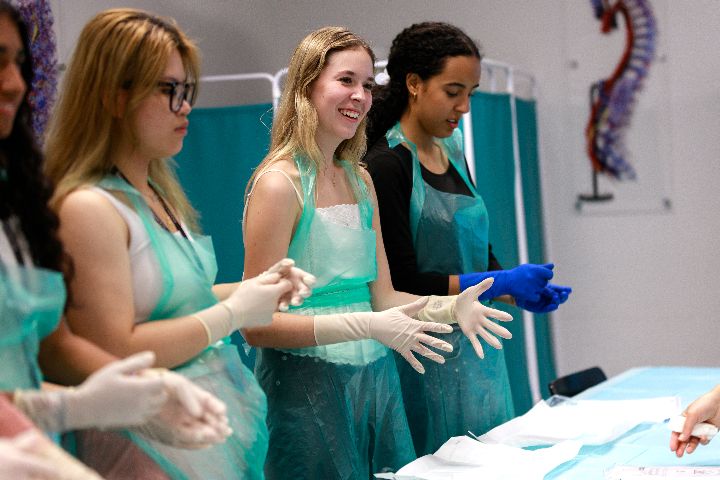
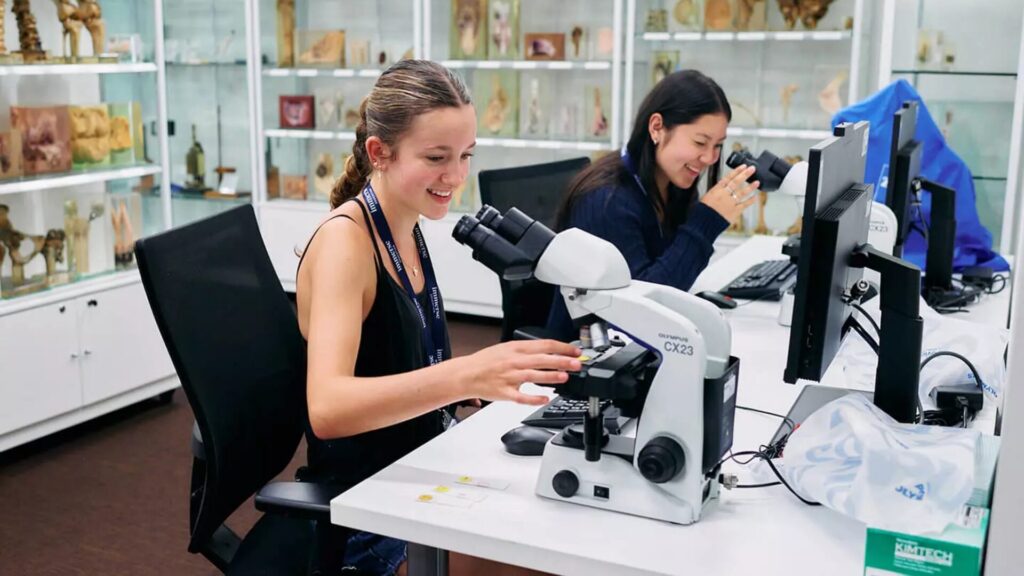
The Academic Insights Program lets high school students experience university life firsthand. You will live on campus and study in small groups of 7-10, and learn from tutors from eminent top universities like Oxford and Cambridge. You can explore a wide range of subjects, spanning over 20 options, including Biology, Chemistry, Physics, AI, Computer Science, Medicine, and more. The courses are experiential and focus on hands-on learning.
You may find yourself conducting dissections in medicine, designing a robotic arm in engineering, participating in a moot court for law, or building creative writing portfolios and business case studies. By the end of the program, you’ll complete a personal project, receive written feedback, and receive a certificate of completion. You can find more details about the application here.
Why it stands out: You’ll get an early start at university life and academics because the program includes an independent project, discussion-based classes, and living at a college campus.
3. National Institutes of Health (NIH) Summer Internship Program (SIP)
Location: National Institutes of Health campuses, primarily Bethesda, MD
Cost: Paid stipend (amount varies by educational level)
Acceptance Rate/Cohort Size: Not specified
Program Dates: May 11th – August 31st
Application Deadline: Winter (varies annually)
Eligibility: Graduating seniors who turn 18 by Sept 30th (or are 17 and live within 40 miles of Bethesda) can apply; not open to international students
The NIH Summer Internship Program offers students the opportunity to work full-time in one of the world’s largest biomedical research organizations. You’ll join a research group led by a principal investigator and contribute to ongoing projects in fields such as biology, chemistry, computer science, engineering, psychology, public health, and bioinformatics. You will work directly alongside researchers while gaining exposure to both basic and translational research in professional laboratory settings.
In addition to research responsibilities, you’ll have access to career development workshops, scientific seminars, graduate school preparation events, and wellness programming. You will also present your work during NIH Summer Poster Day and can network with researchers from across the institution.
Why it stands out: Interns conduct research at one of the world’s leading biomedical institutions while accessing a large network of scientists, professional development programs, and scientific events.
4. Scripps Research Translational Institute Student Research Internship Program (SURI)
Location: Scripps Research Translational Institute, La Jolla, CA
Cost: Funding varies; unpaid positions available for academic credit
Acceptance Rate/Cohort Size: Approximately 40 students annually
Program Dates: June 1st – August 7th or June 15th – August 7th
Application Deadline: Late March
Eligibility: High school students age 16+, undergraduate students, and professional school students with an interest in translational research; international student eligibility not specified
Scripps Research’s Student Research Internship Program (SURI) gives this list of lab internships for high school students a strong translational research option, focusing on how discoveries move from data and experiments toward real healthcare applications. You’ll work closely with a mentor while developing an independent project connected to genomics, personalized medicine, mobile health technologies, or translational research. Many projects involve computational research, statistical analysis, and large biological datasets, though some laboratory-based opportunities are also available.
Throughout the summer, you’ll learn how researchers design studies, evaluate evidence, and interpret results. Scientific seminars and research discussions help place your project within broader developments in medicine and biotechnology. By the end, you’ll present both a research proposal and a final research presentation based on your work.
Why it stands out: Students complete their own research project while exploring cutting-edge fields such as genomics, mobile health technologies, and personalized medicine.
5. Max Planck Florida Institute Summer Research Internship
Location: Max Planck Florida Institute for Neuroscience, Jupiter, FL
Stipend: $14 per hour
Acceptance Rate/Cohort Size: highly selective; approximately 8 students annually
Program Dates: June 22nd – July 31st
Application Deadline: February 8th
Eligibility: Students entering their junior or senior year in Palm Beach or Martin County high schools, age 16+; not open to international students
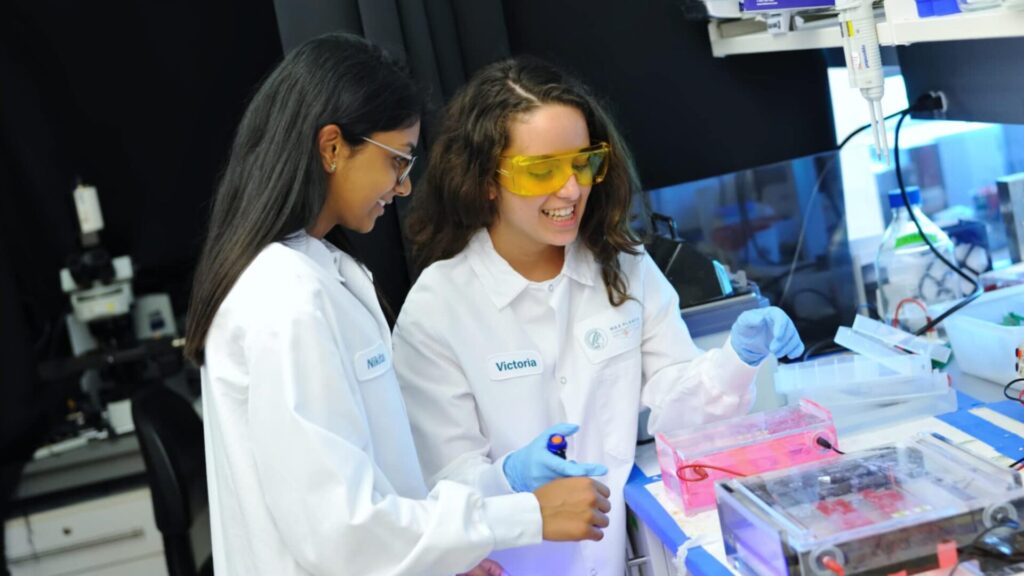
The Max Planck Florida Institute Summer Research Internship gives you direct access to research environments focused on neuroscience and advanced scientific technologies. Depending on your placement, you may work on neuroscience projects or contribute to scientific programming, engineering, and software development efforts that support research. You will gain exposure to techniques such as microscopy, genetic engineering, histology, computational analysis, and scientific imaging.
You’ll spend much of the internship working alongside researchers while learning how modern neuroscience questions are investigated. The institute’s advanced facilities provide a look at tools and methods that most high school students never encounter. At the end of the programme, you’ll prepare an abstract and present your work to researchers and peers.
Why it stands out: Few high school internships offer access to advanced neuroscience research facilities alongside specialized tracks in programming, engineering, and scientific computing.
6. Princeton University Laboratory Learning Program (LLP)
Location: Princeton University, Princeton, NJ
Cost: Free
Acceptance Rate/Cohort Size: Highly selective; more than 3,000 applicants annually
Program Dates: Typically 5-6 weeks during the summer
Application Deadline: March 15th
Eligibility: U.S. citizens age 16+ attending local New Jersey high schools; not open to international students
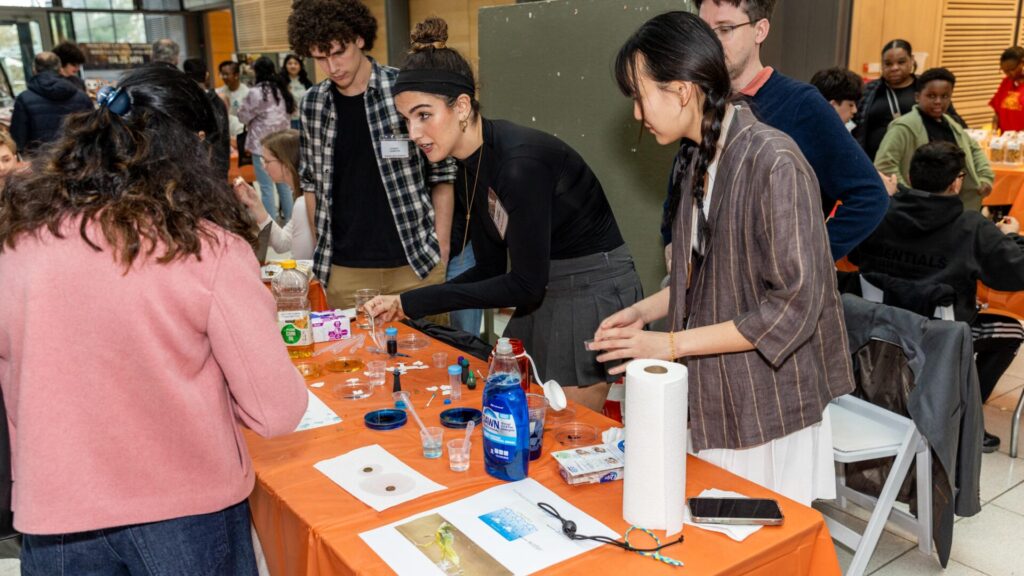
Princeton’s Laboratory Learning Program (LLP) places you directly into an active research lab where you’ll spend several weeks working alongside faculty members, researchers, and laboratory staff. Unlike many summer programs, there is no separate classroom curriculum running alongside the experience. Instead, you learn by becoming part of an ongoing research project.
Depending on the lab, you may help prepare samples, collect data, learn specialized techniques, review scientific literature, or assist with experiments already underway. Every research group operates differently, so the experience often reflects the pace and culture of a real university laboratory. Before starting, you’ll complete safety training and learn the protocols required for research work. The program concludes with a written summary of your research experience.
Why it stands out: Participants are integrated into active Princeton research labs, providing exposure to authentic university research rather than simulated classroom projects.
7. Introductory College Level Experience in Microbiology (iCLEM)
Location: Joint BioEnergy Institute (JBEI), Emeryville, CA
Stipend: $3,000
Acceptance Rate/Cohort Size: Not specified
Program Dates: June 8th – July 24th (including one prep week)
Application Deadline: Applications typically close in the spring
Eligibility: Low-income high school sophomores and juniors, age 16+, residing in Alameda, Contra Costa, or San Francisco County; not open to international students
Among the various paid lab internships for high school students, the Introductory College Level Experience in Microbiology (iCLEM) stands out for its focus on biotechnology and laboratory research. You’ll work on a research project while learning techniques used in microbiology, molecular biology, synthetic biology, biochemistry, and biofuels research.
Much of your time is spent in professional laboratory environments where you’ll gain experience handling samples, conducting experiments, and interpreting results. Undergraduate mentors and researchers guide students through the research process and explain the science behind the techniques being used. Beyond the lab, the programme includes college preparation workshops, admissions guidance, and visits to biotechnology companies.
Why it stands out: The program combines paid laboratory research with extensive college preparation and career exploration opportunities, making it especially accessible for students from underrepresented backgrounds.
8. Sandia National Laboratories Student Internship Program
Location: Sandia National Laboratories, New Mexico and California
Stipend: Paid internship (amount varies by position)
Acceptance Rate/Cohort Size: Not specified
Program Dates: Varies by internship position
Application Deadline: Varies throughout the year
Eligibility: Students age 16+, enrolled full-time in high school, college, or university, with a minimum GPA requirement; international student eligibility not specified
Sandia National Laboratories’ Student Internship Program allows you to contribute to research and engineering projects connected to national security, advanced computing, energy systems, and emerging technologies. You’ll be assigned work that supports ongoing projects. Depending on your placement, you may work with scientists, engineers, software developers, or technical specialists tackling complex real-world challenges.
Laboratory tours, seminars, networking events, and intern activities provide additional insight into how a national laboratory operates. The scale of Sandia means students are exposed to projects that often involve large multidisciplinary teams. Throughout the internship, you’ll see how scientific research moves from theory into practical applications.
Why it stands out: Students contribute to real research and engineering projects at one of the United States’ leading national laboratories while gaining exposure to advanced technologies and national-scale scientific initiatives.
9. Pacific Northwest National Laboratory (PNNL) High School Internship Program
Location: Pacific Northwest National Laboratory, Richland, WA
Stipend: Paid internship
Acceptance Rate/Cohort Size: Not specified
Program Dates: Academic year and summer opportunities available
Application Deadline: Summer applications typically close in March; academic-year applications close in June
Eligibility: High school students interested in STEM or business careers; international student eligibility not specified
The Pacific Northwest National Laboratory High School Internship Program allows you to work alongside researchers, engineers, and technical professionals at one of the Department of Energy’s major national laboratories. Depending on your interests, you may contribute to projects involving scientific research, engineering, computing, technology development, or business operations.
Mentors help students understand not only the technical work but also how large research organizations function day to day. The programme includes leadership development activities, communication training, laboratory tours, and career exploration workshops. Some students participate during the summer while others continue part-time throughout the academic year.
Why it stands out: Students can explore both STEM and business pathways while receiving mentorship from professionals at a major Department of Energy national laboratory.
10. Oak Ridge National Laboratory Next Generation STEM Internship Program (NGSI)
Location: Oak Ridge National Laboratory, Oak Ridge, TN
Stipend: Weekly stipend provided
Acceptance Rate/Cohort Size: Not specified
Program Dates: June 8th – July 24th (summer session)
Application Deadline: Varies by cycle
Eligibility: U.S. citizens or permanent residents who are rising juniors, seniors, or recent high school graduates from eligible Tennessee counties with a minimum 3.0 GPA; not open to international students
Oak Ridge National Laboratory’s Next Generation STEM Internship Program places you inside one of the largest research laboratories in the United States. You’ll work alongside scientists, engineers, and technical experts on projects related to research, technology development, and scientific problem-solving. Daily work varies by placement but often involves data analysis, experimentation, technical investigations, and collaborative project work.
You will also attend seminars, networking events, laboratory tours, and professional development sessions throughout the internship. The environment exposes you to the scale and complexity of research conducted at major national laboratories.
Why it stands out: Participants work with world-renowned scientists and engineers while gaining access to professional development opportunities and research facilities at a leading national laboratory.
11. Magee-Womens Research Institute High School Summer Internship Program
Location: Magee-Womens Research Institute, Pittsburgh, PA
Stipend: $1,800 for eligible students who qualify based on household income
Acceptance Rate/Cohort Size: Not specified
Program Dates: June 15th – July 24th
Application Deadline: Applications typically open in late fall
Eligibility: High school sophomores and juniors, age 16+, residing in eligible southwestern Pennsylvania counties; not open to international students
Magee-Womens Research Institute’s Summer Internship Program introduces you to biomedical research through a project that you help develop over six weeks. Working with investigators and research staff, you’ll contribute to studies connected to women’s health, reproductive biology, infant health, and related biomedical fields.
You’ll take an active role in collecting information, analyzing findings, and understanding how research questions are investigated. Lunch seminars give students a chance to hear directly from scientists about their research journeys and career paths. The summer ends with a formal research presentation delivered to researchers and fellow interns.
Why it stands out: Participants complete independent research projects while working within one of the nation’s leading institutes focused on women’s health, reproductive biology, and infant health.
12. UCSF Science & Health Education Partnership High School Intern Program (HIP)
Location: University of California, San Francisco, CA
Stipend: $4,500 upon successful completion of the program
Acceptance Rate/Cohort Size: Approximately 25 interns annually
Program Dates: June 8th – July 31st
Application Deadline: February 8th
Eligibility: Rising high school seniors enrolled in SFUSD or San Francisco public charter schools; not open to international students
UCSF’s High School Intern Program (HIP) combines biomedical research with extensive academic and college support. You’ll work closely with a scientist mentor while conducting research in fields such as neuroscience, immunology, stem cell biology, cancer research, infectious disease, or developmental biology. Laboratory work is paired with science communication training that helps you learn how to explain complex findings clearly.
Students also receive guidance on college applications, personal statements, financial aid, and university planning throughout the summer. The programme places a strong emphasis on independent research, with each student completing a project and presenting findings at the end of the internship.
Why it stands out: The program combines authentic biomedical research with individualized college counseling and professional development, helping students prepare for both higher education and STEM careers.
13. Coriell Summer Experience for High School Students
Location: Coriell Institute for Medical Research, Camden, NJ
Cost: Free; provides a $1,000 stipend upon successful completion
Acceptance Rate/Cohort Size: Three students selected annually
Program Dates: Mid-July to mid-August
Application Deadline: Applications typically open in the spring
Eligibility: U.S. residents age 17+ with a strong interest in science and the ability to attend the full four-week program; not open to international students
The Coriell Summer Experience gives you a rare opportunity to explore multiple areas of biomedical research within a single institute. Over four weeks, you’ll rotate through stem cell labs, molecular biology facilities, production laboratories, and biobanking operations while learning the techniques used in each area. Activities may include DNA extraction, chromosome analysis, sample preservation, and stem cell-related research methods.
Scientists and technicians explain not only how procedures are performed but also why they matter for medical research. Career workshops and seminars provide additional insight into research careers and professional development. The programme concludes with a presentation summarizing what you’ve learned across the different laboratory environments.
Why it stands out: With only three students selected each year, participants receive unusually close exposure to multiple areas of biomedical research and biotechnology operations.
14. Institute for Systems Biology (ISB) Summer High School Internship
Location: Institute for Systems Biology, Seattle, WA
Stipend: Paid and unpaid positions available
Acceptance Rate/Cohort Size: Approximately 4-10 summer interns annually
Program Dates: June 29th – August 21st
Application Deadline: Applications typically open in January
Eligibility: Current high school juniors (rising seniors); international student eligibility not specified
The Institute for Systems Biology Summer Internship introduces you to research that crosses traditional disciplinary boundaries. Depending on your project, you may work with computational biology, microbiology, cancer research, infectious disease, engineering, aging research, or data analysis. Many students spend time coding, analyzing datasets, building models, or working on laboratory investigations that combine multiple fields.
The programme encourages systems thinking, which means looking at how different biological processes interact rather than studying them in isolation. Students also interview professionals throughout the institute to learn about different career pathways. By the end of the internship, you’ll create a website that documents and explains your research experience.
Why it stands out: Students engage in interdisciplinary systems biology research while developing technical, leadership, communication, and professional skills through a uniquely project-based experience.
15. Florida International University Center for Translational Science High School Summer Internship Program
Location: Florida International University Center for Translational Science, Port St. Lucie, FL
Cost: Not specified
Acceptance Rate/Cohort Size: Not specified
Program Dates: June 8th – July 9th
Application Deadline: Information released through participating schools in March
Eligibility: High school juniors and seniors who live in and attend school in St. Lucie County, Florida; not open to international students
Florida International University’s Center for Translational Science Internship gives you five weeks of hands-on experience in biomedical research laboratories. You’ll work alongside scientists investigating topics such as neuroscience, regenerative medicine, stem cell biology, immunology, cardiovascular health, metabolism, and drug discovery. Laboratory activities involve conducting experiments, analyzing findings, and learning how researchers turn scientific questions into testable investigations.
Researchers provide guidance throughout the programme while encouraging students to think critically about results and experimental design. The internship concludes with a research showcase where you’ll present a scientific poster summarizing your work. You will leave with substantial volunteer hours and experience communicating scientific research.
Why it stands out: Students rotate through state-of-the-art biomedical research environments while exploring a wide range of scientific disciplines, from neuroscience and regenerative medicine to drug discovery and immunology.
Frequently Asked Questions: Lab Internships for High School Students
What is a lab internship for high school students?
A lab internship is a structured opportunity for high school students to work alongside scientists in an active research environment, often for several weeks during the summer. Students typically assist with experiments, collect and analyze data, and learn laboratory techniques used in fields like biology, chemistry, neuroscience, or engineering. Most are hosted by universities, hospitals, or national laboratories, and many pair students with a mentor for the full program. Internships usually conclude with a research presentation, poster, or written summary of the work completed.
Do I need prior research experience to apply?
No, most lab internships do not require prior research experience, though some prefer students with a strong interest in science. Programs like Fred Hutch’s SHIP are specifically designed for students new to research and begin with dedicated laboratory training before placement. Others, like Princeton’s Laboratory Learning Program, place students directly into active labs with safety training provided beforehand. A genuine interest in science and willingness to learn matters more than existing technical background.
Are lab internships paid?
Many lab internships do offer a stipend, though amounts and eligibility vary widely. UCSF’s High School Intern Program provides $4,500 upon successful completion, while iCLEM offers a $3,000 stipend specifically for low-income students in the Bay Area. Other programs, including Princeton’s Laboratory Learning Program, are unpaid but free to attend. It’s worth checking each program’s funding details directly, since stipend amounts and availability can change from year to year.
Can international students apply to lab internships?
Most of the lab internships on this list are not open to international students, since many require US citizenship or local residency. Programs like the NIH Summer Internship Program, Princeton’s Laboratory Learning Program, and Fred Hutch’s SHIP are restricted to US students, often within a specific region. Immerse Education’s Academic Insights Programme is a notable exception, since it’s open to students worldwide aged 13 to 18 and offers research-style coursework at university campuses including Oxford, Cambridge, and Tokyo.
What age do I need to be to apply?
Age requirements generally fall between 16 and 18 for most US-based lab internships, since many programs require students to be old enough to work in a professional research setting. Fred Hutch’s SHIP and the Max Planck Florida Institute’s internship both require students to be at least 16. Immerse Education’s Academic Insights Programme accepts a younger range, welcoming students aged 13 to 18 from anywhere in the world.
How competitive are lab internships?
Competition varies significantly across programs, with some flagship internships receiving thousands of applications each year. Princeton’s Laboratory Learning Program receives more than 3,000 applicants annually, while the Coriell Summer Experience selects only three students each year from its applicant pool. Other programs, including several national laboratory internships, don’t publish acceptance rates, making it harder to gauge competitiveness in advance. Applying to multiple programs with different selectivity levels can improve your overall chances of securing a spot.
How do lab internships help with college applications?
Completing a lab internship demonstrates genuine scientific curiosity and the ability to work in a professional research environment, both of which admissions officers value. Programs like the Institute for Systems Biology’s internship have students build a website documenting their research, giving them a concrete project to reference in applications. A formal research presentation or poster, common across nearly every program on this list, also gives students a strong talking point for personal statements and interviews.
What’s the difference between a lab internship and an academic enrichment program?
A lab internship places students directly into an active research environment, where they assist with real experiments and contribute to ongoing scientific work, often under a faculty or staff mentor. An academic enrichment program, like Immerse Education’s Academic Insights Programme, focuses more on structured coursework and hands-on learning across a wide range of subjects, without requiring placement in an existing research project. Internships tend to suit students who already know they want a deep research experience, while enrichment programs work well for those still exploring different academic interests.
How Lab Internships Build Academic Confidence
Choosing the right lab internship can help you move beyond classroom science and understand how research works in real laboratory settings.
The 15 lab internships for high school students featured in this guide span biomedical research, neuroscience, engineering, public health, translational science, and academic enrichment.
Through experiments, mentorship, data analysis, and presentations, these experiences can strengthen confidence, communication, independence, and clearer academic direction before university study.
Ready to turn early research experience into stronger university choices? Visit our University Preparation blogs for subject, application, and interview guidance.