

 Русский (RU)
 Українська (UK)
 Türkçe (TR)
 Italiano (IT)
 Français (FR)
 Português (PT)
 中文 (中国) (ZH)
 Español (ES)
 日本語 (JA)
 ไทย (TH)
 Deutsch (DE)
 Ελληνικά (EL)
 Polski (PL)
 Bahasa Indonesia (ID)
 Nederlands (NL)
 العربية (AR)
 한국어 (KO)

If you’re considering studying law, political science, public policy, international relations, or a related subject in college, high school is a good time to start exploring the field in a more serious academic setting. School can introduce you to government, history, and current affairs, but legal education requires you to analyze evidence, evaluate competing arguments, and understand how rules and institutions shape society. Pre-college law programs for high school students are designed to give you an early look at that process.
Imagine spending part of your summer attending seminars on a university campus, discussing landmark court cases with instructors, participating in mock trials, or debating legal and constitutional issues with other students. You may find yourself working through the same types of questions that undergraduate law and public policy students encounter, while gaining exposure to the expectations of university-level academics.
Why should I consider a pre-college law program?
One of the biggest advantages of a pre-college program is the opportunity to experience university life before applying to college. Living on campus, attending university-style classes, and interacting with faculty can help you better understand what higher education actually feels like beyond brochures and campus tours.
These programs also allow you to test your interest in law before committing to it as a college major or career path. Some students discover a passion for constitutional law or public policy, while others realize their interests align more closely with politics, economics, or international relations.
For college applications, participation in a university-hosted law program demonstrates initiative and academic curiosity. It shows that you’ve actively sought opportunities to explore a subject beyond your school’s curriculum and engaged with it in a more rigorous environment. Experiences like these often provide strong material for essays, interviews, and future academic pursuits.
With that, here are 15 pre-college law programs for high school students worth exploring!
For adjacent opportunities, consider the online law program.
15 Pre-College Law Programs for High School Students
1. Harvard Summer School Pre-College Program
Location: Harvard campus, Cambridge, MA
Cost: $6,100 + $75 application fee; limited scholarships available
Acceptance rate/cohort size: Selective
Dates: Session I: June 21st – July 2nd | Session II: July 5-17 | Session III: July 19-31
Application Deadline: Early Application & Priority Financial Aid Deadline: January 7th | Regular Application & Financial Aid Deadline: February 11th | Late Application Deadline: April 1st
Eligibility: Students worldwide aged 16-18 who have completed their sophomore or junior years
Harvard’s Pre-College Program gives you a strong introduction to law through intensive seminar-style courses taught in a university setting. Depending on the course you choose, you may examine American legal institutions, constitutional interpretation, civil rights debates, intellectual property, AI governance, or the historical development of legal systems.
Classes are centered on close reading, analytical writing, discussion, and oral argument, helping you practice the kind of reasoning expected in college-level law, politics, and history courses. You’ll work with legal texts, court decisions, statutes, and case-based examples to understand how law functions in both theory and practice. Some courses also include debates, presentations, hands-on assignments, or guest speakers connected to Harvard’s research centers.
Why it stands out: You get a short, discussion-heavy Harvard academic experience with multiple law-related course options, giving you a flexible way to explore legal systems, constitutional issues, civil rights, AI ethics, intellectual property, or legal history before college.
2. Immerse Education’s Law Summer School
Location: Cambridge, Oxford, London, Singapore, Sydney, Tokyo, and Toronto
Cost: Varies; summer school scholarship available through our bursary programme
Application Deadline: Multiple cohorts with rolling admissions
Program Dates: 2 weeks during the summer
Eligibility: Students worldwide aged 13-18 currently enrolled in middle or high school; open to international students
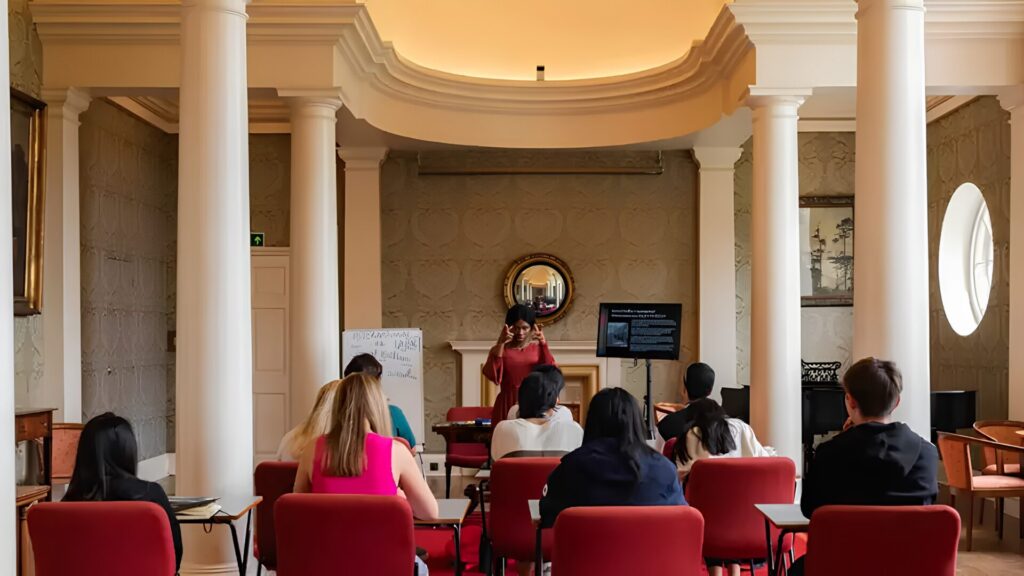
The Law Academic Insights Program provides school students with an opportunity to take undergraduate-level classes at universities around the world. Participants work with academics from universities like Oxford, Cambridge, and Harvard in classes of 4-10 students. They attend university-style lectures and 1:1 weekly sessions with their tutor. Through interactive seminars, case studies, and discussions intended to replicate the intellectual rigor of undergraduate law courses, you investigate fundamental topics of law, including contracts, criminal justice, human rights, and constitutional principles.
The program helps you develop the abilities necessary for success in legal and related academic fields by emphasizing analytical reasoning, persuasive communication, and disciplined arguments. By the end of the program, you will complete a personal project and receive written feedback and a certificate of completion. You can find more details about the application here.
Why it stands out: You’ll be taught by top faculty, work on an independent project, and live on campus, giving you a complete experience of future university life.
3. University of Miami Summer Scholars Program – Law: Litigation and the Legal Profession
Location: University of Miami, Coral Gables, FL
Cost: Residential Program: $10,225.20 | Commuter Program: $8,561.50
Acceptance rate/cohort size: 25% for the broader Summer Scholars Program
Dates: June 27th – July 17th
Application Deadline: April 1st
Eligibility: Students who completed grades 10 or 11 in high school; minimum GPA of 3.0. (International applicants must have an F-1 student visa.)
The University of Miami’s Summer Scholars Program in Law is a courtroom-focused option within pre-college law programs for high school students, giving you a focused look at litigation, courtroom advocacy, and the responsibilities of legal professionals. You’ll take courses that cover trial preparation, witness examination, objections, opening statements, closing arguments, attorney-client relationships, professional ethics, and the broader role of lawyers in society.
The litigation component is especially hands-on, pushing you to understand how evidence, persuasion, and case theory shape what happens in court. You’ll also study the legal profession through ethical frameworks such as the American Bar Association’s Model Rules, which help you see law as both a career and a public responsibility. Guest lectures, field trips, open discussions, and collaborative assignments add context beyond the classroom.
Why it stands out: You earn college credit while studying litigation and legal ethics through a structured combination of classroom learning, courtroom-style exercises, case analysis, guest speakers, and field-based exposure.
4. Columbia High School Law Institute
Location: Columbia Law School campus, New York, NY
Cost: None
Acceptance rate/cohort size: Up to 30 students per HSLI site
Dates: Classes are conducted on Saturdays throughout the academic year
Application Deadline: Mid-September
Eligibility: High school students; international student eligibility not specified
Columbia’s High School Law Institute gives you a serious academic foundation in law through Saturday classes held during the school year. The curriculum begins with constitutional law and criminal law, allowing you to study core legal principles through cases, class discussions, written assignments, and structured activities. As you continue, you can move into moot court and advanced seminars that explore topics such as wrongful convictions, criminal procedure, human rights, and international law.
Courses are taught by Columbia Law students, which gives you a closer view of how law students approach reading, reasoning, and argumentation. The program focuses on evidence-based analysis, independent thought, collaboration, and clear advocacy.
Why it stands out: This free, yearlong program gives New York City high school students sustained exposure to law school-style coursework taught by Columbia Law students, rather than a short one-week introduction.
5. NYU High School Law Institute
Location: NYU’s Washington Square Park campus, West Village, NY
Cost/Stipend: None
Acceptance rate/cohort size: Up to 30 students per HSLI site
Dates: Classes are conducted on Saturdays throughout the academic year; Graduation: March 7th
Application Deadline: August 15th
Eligibility: Students entering or currently enrolled in grades 9-12 who live within commutable distance to NYU’s Washington Square Park campus in NYC’s West Village; international student eligibility not specified
The NYU High School Law Institute introduces you to legal reasoning through discussion-based classes on constitutional law, criminal law, and advocacy. You’ll work with legal cases, contemporary issues, written assignments, and classroom debates that help you evaluate arguments with clarity and evidence. The program is especially useful if you want to understand how lawyers build claims, respond to opposing viewpoints, and interpret legal principles in context.
Because classes are taught by NYU Law and undergraduate students, you also get insight into how students at a major university approach legal education. The speech and debate component strengthens public speaking, organization, and persuasion, which are valuable for law, policy, journalism, business, and civic leadership.
Why it stands out: You can study constitutional law, criminal law, and speech and debate for free in a structured Saturday program connected to NYU Law, with instruction from trained law and undergraduate students.
6. Wake Forest Summer Immersion Program – Law Institute
Location: Wake Forest University, Winston-Salem, NC
Cost: $3,500 + $60 non-refundable application fee; Limited need-based scholarship funding available
Acceptance rate/cohort size: Highly selective; Law Institute frequently waitlists
Dates: June 14-19 or July 19-24
Application Deadline: Rolling, starting in November
Eligibility: Current 9th-12th grade students; international student eligibility not specified
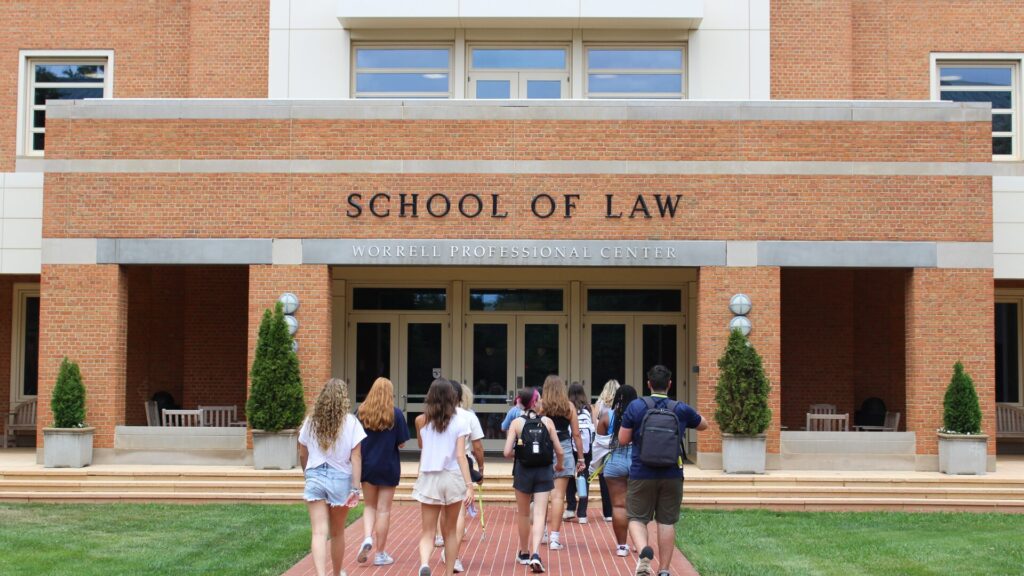
Wake Forest’s Law Institute is built around the question of what lawyers actually do in different practice areas. You’ll explore civil and criminal litigation, family law, government law, lobbying, the judicial system, and transactional law, giving you a broader view of legal careers beyond the courtroom. Activities such as case discussions, negotiations, and a simulated 1L law class help you practice legal reasoning in active ways.
You’ll also examine professional duties such as confidentiality, candor, conflicts of interest, and ethical decision-making, which are central to the legal profession. Mentorship from law students, young lawyers, and guest speakers adds a practical perspective on law school, career planning, and professional growth.
Why it stands out: This program stands out for its strong focus on practical legal problem-solving, with exposure to litigation, negotiation, transactional law, ethics, and mentorship from law students and early-career professionals.
7. Duke Pre-College
Location: Duke University, Durham, NC
Cost: Residential: $6,050; Financial aid offered
Acceptance rate/cohort size: Not specified
Dates: June 13-24; June 28th – July 9th; July 13-24
Application Deadline: Rolling until filled
Eligibility: Current high school students (14+) who have a 3.0+ GPA and have completed one year of secondary school; international student eligibility not specified
Duke Pre-College is a strong choice among pre-college law programs for high school students if you want to explore law through courses that combine academic theory with simulations, research, debates, and applied projects. Depending on the course, you may study criminal law, constitutional protections, civil rights, public interest litigation, legal advocacy, institutional power, or the relationship between law and politics.
The classes are designed to help you analyze evidence, interpret statutes, build persuasive arguments, and understand how legal systems shape public decisions. Projects may include mock criminal cases, courtroom-style presentations, legal briefs, policy advocacy exercises, or oral argument showcases. With its university setting, the program can also help you imagine how law might fit into your future college studies.
Why it stands out: Duke Pre-College gives you access to specialized law-related courses that connect legal reasoning with fields such as advocacy, politics, psychology, public policy, and criminal justice.
8. Pre-College @ UMass Amherst
Location: UMass Amherst, Amherst, MA
Cost: Residential: $4,119 | Commuter: $2,337
Acceptance rate/cohort size: Not specified
Dates: June 28th – July 11th
Application Deadline: Programs starting June 28th: May 1st | Programs starting July 12th: May 15th | Programs starting July 26th: May 31st
Eligibility: Rising high school sophomores through seniors; international student eligibility not specified
UMass Amherst’s Pre-College Legal Studies course helps you understand law as something that operates beyond courtrooms and written statutes. You’ll examine how laws shape relationships between individuals, communities, institutions, and government authorities. The curriculum explores topics such as crime, enforcement, inequality, legal narratives, morality, media portrayals of law, and how people challenge or resist legal structures.
The course encourages you to ask how law functions “on the ground” in real social and political contexts. Small-group activities, interactive discussions, and field trips in Western Massachusetts help connect classroom concepts to lived experiences.
Why it stands out: This program approaches law through an interdisciplinary legal studies lens, making it a strong choice if you are interested in how law affects everyday life, inequality, media, public policy, and social institutions.
9. Stephen F. Austin State University – High School Pre-Law Academy
Location: Stephen F. Austin State University, Nacogdoches, TX
Cost: $850+ $25 registration fee
Acceptance rate/cohort size: Not specified
Dates: June 13-19
Application Deadline: Registration typically opens January 8 each year for the following summer
Eligibility: High school sophomores through seniors; international student eligibility not specified
Stephen F. Austin State University’s High School Pre-Law Academy gives you a direct introduction to legal careers through lectures, simulations, competitions, and professional panels. You’ll take part in mock trials, mock negotiations, legal debates, and crime scene investigation activities that connect law with evidence, procedure, and advocacy. The mock trial tournament is a major feature, allowing you to prepare and present a case with guidance from experienced attorneys.
Sessions with judges, lawyers, and SFA professors help you understand topics such as trial practice, the criminal justice system, and law school preparation. The program is residential, giving you a short preview of college life through residence hall living and campus dining.
Why it stands out: The academy combines mock trial, crime scene investigation, legal debates, attorney guidance, and campus life in a short, practice-heavy format.
10. Stetson Young Scholars Pre-Law Camps
Location: Stetson University, DeLand, FL
Cost: $1,000 (includes a non-refundable registration fee); need-based scholarships available
Acceptance rate/cohort size: 12-15 students per Camp
Dates: Mock Trial Camp: July 7-11 | Mock Trial Camp: July 21-25 | Moot Court Camp: July 14-18
Application Deadline: Not specified
Eligibility: High school students residing in the U.S.
Stetson’s Young Scholars Pre-Law Camps offer a focused legal advocacy experience for students who want to practice argumentation in a realistic setting. In the Mock Trial camp, you’ll work through civil or criminal procedure while learning how to build opening statements, conduct direct and cross-examinations, introduce evidence, and deliver closing arguments. The Moot Court camp shifts the focus to appellate law, where you prepare written briefs and present oral arguments before a panel.
Both formats help you understand how legal reasoning changes depending on whether you are arguing facts at trial or interpreting legal issues on appeal. Instruction from practicing attorneys, retired professionals, and members of Stetson’s Trial Team gives you direct feedback as you develop your skills.
Why it stands out: Stetson’s small-cohort camps let you choose between mock trial and moot court, giving you targeted training in either trial advocacy or appellate argument.
11. USF Summer Camps – JGHC: Mock Trial Intensive
Location: USF Sarasota/Manatee, Tampa, FL
Cost: $695
Acceptance Rate/cohort size: 32 students
Dates: July 6-10
Application Deadline: Applications open February 1st
Eligibility: Students entering grades 10th – 12th; international student eligibility not specified
The University of South Florida’s Judy Genshaft Honors College Mock Trial Intensive is designed for students who want to learn courtroom advocacy through repeated practice. You’ll study a major historical trial, build arguments, prepare witnesses, and develop opening statements, cross-examinations, and closing arguments.
Daily workshops focus on public speaking, legal reasoning, trial strategy, and courtroom decorum, helping you understand both the performance and analytical sides of advocacy. Guidance from legal educators, law students, and collegiate mock trial competitors gives you practical support as you prepare for the final trial. The program also includes panels with legal professionals and law school admissions leaders, offering insight into legal careers and future academic pathways.
Why it stands out: This intensive takes you through the full arc of a mock trial in one week, ending with a showcase trial at Stetson University College of Law.
12. FAU’s Criminal Justice Summer Camp
Location: FAU Campus, Boca Raton, FL
Cost: $950
Acceptance rate/cohort size: 25 students
Dates: Session 1: June 14-19 | Session 2: July 12-17
Application Deadline: Applications typically close in the Spring
Eligibility: Students entering grades 9 to 12 in the coming fall; international student eligibility not specified
Florida Atlantic University’s Criminal Justice Summer Camp introduces you to the justice system through a mix of classroom learning, professional demonstrations, and field experiences. You’ll practice crime scene investigation techniques, examine forensic evidence, and observe specialized units such as K-9, SWAT, and bomb squad teams.
Visits to law enforcement agencies and the Medical Examiner’s Office help you understand how investigations move from evidence collection to legal and procedural decision-making. Sessions may also cover FBI investigations, high-profile criminal justice topics, court procedures, and public safety operations.
Why it stands out: This camp gives you field-based exposure to criminal justice, investigations, forensic evidence, law enforcement agencies, and public safety careers through demonstrations and off-campus site visits.
13. NYU Pre-Law Bootcamp
Location: NYU School of Law, Washington Square campus, New York, NY
Cost: $2579
Acceptance rate/cohort size: Not selective
Dates: Multiple week-long sessions in the summer
Application deadline: Not specified
Eligibility: High school students who have completed grades 9-11; international student eligibility not specified
NYU’s Pre-Law Bootcamp gives you a short but structured overview of law, litigation, and legal career pathways. You’ll study basic substantive law, the U.S. legal system, legal topics, and real cases that help you understand how lawyers analyze disputes. The course combines lectures, discussions, speaker panels, and career-focused sessions connected to courts, public interest organizations, and government agencies.
You’ll also gain exposure to different roles within the profession, including attorneys, judges, legislators, academics, and advocates. The NYU transcript at the end gives you a formal record of your participation, making the program a useful academic addition to your pre-college profile.
Why it stands out: NYU’s Pre-Law Bootcamp offers a compact academic introduction to legal studies, legal careers, and real case analysis on the NYU School of Law campus.
14. Harvard Secondary School Program
Location: Virtual or on-campus at Harvard University, Cambridge, MA
Cost: $4,180 – $15,735 + $75 application fee; financial aid available
Acceptance rate/cohort size: Selective
Dates: 4-Week: July 12th – August 8th | 7-Week: June 20th – August 8th
Application Deadline: Early Application & Priority Financial Aid Deadline: January 7th | Regular Application & Financial Aid Deadline: February 11th | Late Application Deadline: April 1st
Eligibility: Students graduating high school in the current or next two years | At least 16 years old by June 21st and under 19 years old as of July 31st; open to international students
Harvard’s Secondary School Program is one of the most prestigious pre-college law programs for high school students, suited for students ready to take on college-level coursework in law, justice, ethics, and public policy. You can choose from courses that examine topics such as intellectual property, business law, AI ethics, criminal justice, international law, human rights, and the laws governing war. The coursework is more demanding than a typical enrichment program, with regular readings, assignments, discussions, and assessments that mirror the expectations of a university classroom.
In law-focused classes, you may analyze legal documents, study case law, draft arguments, or explore how courts and institutions respond to complex social and political questions. Some courses also include mock trials, policy projects, oral presentations, or applied exercises that connect legal theory to real-world practice.
Why it stands out: This program lets you enroll in actual Harvard courses for college credit, making it a strong option if you want a more rigorous and sustained academic experience than a short introductory summer course.
15. USC Summer Programs
Location: University of Southern California, Los Angeles, CA.
Cost: Varies by course; $85 application fee
Dates: June 22nd – July 17th
Application Deadline: Domestic deadline May 8th; international deadline March 13th
Eligibility: High school students who have completed ninth grade by the start of the program; open to international students
USC Summer Programs allow you to spend four weeks taking a university-level course while experiencing life on the University of Southern California campus. You’ll choose from subjects across law, business, journalism, architecture, engineering, cinematic arts, and other academic fields depending on your interests. Classes are taught by USC instructors and follow a schedule that mirrors the pace of an accelerated college course.
Depending on the subject, you may spend your time working on projects, case studies, discussions, presentations, or portfolio-based assignments. Living and learning alongside other high school students gives you a clearer sense of what college academics and campus life feel like. Outside class, you’ll have access to campus resources, organized activities, and the wider Los Angeles environment.
Why it stands out: The range of available subjects makes it easy to explore a potential college major while studying on an active USC campus
From Case Analysis to College Applications
Case analysis to mock trials, legal summer study can help you turn curiosity into clearer reasoning, stronger arguments, and practical academic direction.
The pre-college law programs for high school students in this guide introduce constitutional law, litigation, criminal justice, advocacy, ethics, public policy, and legal writing.
Through seminars, debates, courtroom simulations, campus learning, and mentor feedback, you can collect meaningful examples for essays, interviews, and future study plans.
For sharper next steps, explore our University Preparation blogs for advice on choosing subjects, shaping your story, preparing for interviews, and connecting law experiences to applications with purpose, confidence, and clarity.