
 Русский (RU)
 Українська (UK)
 Türkçe (TR)
 Italiano (IT)
 Français (FR)
 Português (PT)
 中文 (中国) (ZH)
 Español (ES)
 日本語 (JA)
 ไทย (TH)
 Deutsch (DE)
 Ελληνικά (EL)
 Polski (PL)
 Bahasa Indonesia (ID)
 Nederlands (NL)
 العربية (AR)
 한국어 (KO)

College research programs allow ambitious high school students to move beyond the traditional classroom and explore academic subjects at a much deeper level. Through hands-on research projects, close mentorship from university faculty and researchers, and exposure to advanced academic methods, students develop valuable skills such as critical thinking, data analysis, scientific inquiry, academic writing, and problem-solving.
Depending on the program, participants may work with laboratory equipment, coding platforms, research databases, statistical software, archival materials, or fieldwork methodologies that mirror the tools used by professional researchers. Beyond building subject-matter expertise, these experiences introduce students to the expectations of higher education, helping them navigate collaborative projects, independent study, and university-level coursework.
College research programs can also act as a foundation for your college journey, giving you a taste of what university life is like at a top institution, in person.
What kind of college research programs are available for high school students?
High school students can access a wide variety of college research programs designed to provide early exposure to academic investigation across multiple disciplines. University-hosted pre-college summer programs offer structured learning that typically culminates in a capstone research project under faculty guidance. Mentorship-based programs pair students directly with graduate students, postdocs, or professors for independent, self-directed research, which can often lead to a co-authored paper or a science fair entry.
STEM-focused lab internships provide hands-on wet lab or computational dry lab experience in fields like biomedical engineering, computer science, and astrophysics. Alternatively, humanities and social science fellowships allow students to explore qualitative research, historical archives, and economic data. Additionally, highly competitive national programs offer fully funded, immersive, and rigorous research experiences at top-tier academic institutions.
Below are 15 college research programs for high school students.
Key takeaways
- The Carl B. and Florence E. King Foundation program at MD Anderson pays a $7,200 stipend for 10 weeks but admits only up to six students annually and is restricted to Texas seniors.
- Immerse Education’s Academic Insights Programme spans eight locations, including Boston, Cambridge, and Tokyo, with small classes of seven to 10 students open to students worldwide aged 13 to 18.
- Princeton’s Laboratory Learning Program is completely free but restricted to local New Jersey high school students, admitting just three students per research area.
- The Research Science Institute at MIT has a very selective acceptance rate below 2.5 percent, admitting 80 to 100 students annually for a fully funded program combining coursework and mentored research.
- ARISE in Brooklyn pays a $2,000 stipend to approximately 60 students and provides ongoing access to NYU’s alumni network for future research and internship opportunities.
- The University of Texas at Austin’s Summer High School Research Academy costs $4,000 and awards three hours of college credit through the NSC309 extension course.
- Northwestern’s CIERA REACH Program costs $2,500 for the core component plus an additional $1,500 for the extended REACH Further research phase.
- Program costs for college research programs range from free options like Princeton’s LLP and Rockefeller’s SSRP to $7,200 in stipend value at MD Anderson’s biomedical sciences program.
15 College Research Programs for High School Students
1. Carl B. and Florence E. King Foundation High School Summer Program in Biomedical Sciences
Location: University of Texas MD Anderson Cancer Center
Cost/Stipend: No cost / $7,200 stipend for the 10-week program; $6,480 for nine weeks
Acceptance rate/cohort size: Highly selective; up to 6 students each year
Dates: June 1st – August 7th
Application Deadline: January 14th
Eligibility: Students enrolled as senior-level high school students in Texas during the Spring semester before the start of the program, aged at least 18 years old by the start of the program, US citizens/permanent residents, or work-eligible visa holders; not open to international students
This program offers an opportunity to participate in research at MD Anderson. During the experience, you will spend the majority of your time working alongside researchers in laboratory settings, contributing to ongoing projects and learning how biomedical research is conducted. In addition to laboratory work, you will take part in seminars, research-focused workshops, and professional development activities that introduce key aspects of scientific communication.
These may include creating research posters, presenting findings, and refining public speaking skills. The program concludes with a formal presentation of your research experience and a closing event for participants.
Why it stands out: You gain direct exposure to cancer and biomedical research within a leading research and clinical institution.
2. Immerse Education’s Pre-University Summer School
Location: Cambridge, London, Oxford, Singapore, Sydney, Tokyo, and Toronto
Cost: Varies; summer school scholarship available through our bursary programme
Application Deadline: Multiple summer cohorts; rolling admissions.
Program Dates: 2 weeks during the summer
Eligibility: Students across the globe aged 13-18 currently enrolled in middle or high school; open to international students
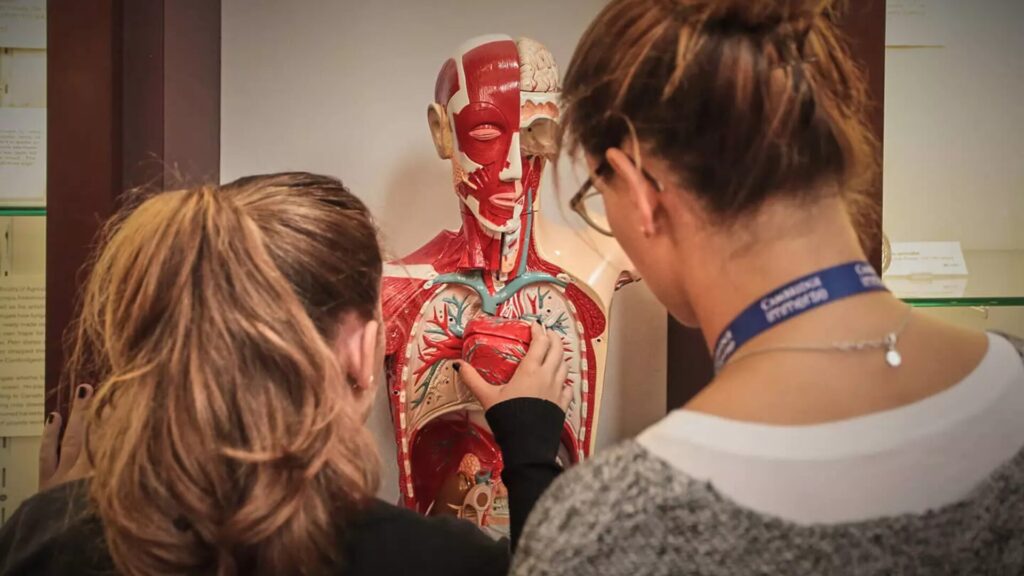
The Academic Insights Program lets high school students experience university life firsthand. You will live on campus and study in small groups of 7-10, and learn from tutors from eminent top universities like Oxford and Cambridge. You can explore a wide range of subjects, spanning over 20 options, including Architecture, AI, Business Management, Computer Science, Economics, Medicine, Philosophy, and more.
The courses are experiential and focus on hands-on learning. You may find yourself conducting dissections in medicine, designing a robotic arm in engineering, participating in a moot court for law, or building creative writing portfolios and business case studies. By the end of the program, you’ll complete a personal project, receive written feedback, and receive a certificate of completion. You can find more details about the application here.
Why it stands out: You’ll get an early start at university life and academics because the program includes an independent project, discussion-based classes, and living at a college campus.
3. Princeton University’s Laboratory Learning Program (LLP)
Location: Princeton University, Princeton, NJ
Cost: None
Acceptance rate/cohort size: Highly selective; ~3 students per research area
Dates: 5-6 weeks in the summer (dates as scheduled by the department faculty)
Application Deadline: March 15th
Eligibility: Students enrolled in a local NJ high school (high school graduates who have not yet turned 18 by June 15th are also eligible); must be 16 years old or more by June 15th; must be U.S. citizens currently in the U.S. (check all criteria here); not open to international students
As one of the most selective college research programs for high school students, Princeton University’s Laboratory Learning Program allows you to complete a project in a university laboratory under the guidance of faculty members and research staff. It focuses primarily on the natural sciences, with a separate engineering track available for interested participants.
Throughout the program, you will engage in the core stages of the research process, including identifying research questions, collecting and analyzing data, applying scientific methods, and interpreting results. Your work culminates in a written research report that documents your findings and reflects the skills you developed during the experience. Research topics vary by placement and have previously included areas such as environmental science, chemistry, geoscience, biology, and engineering.
Why it stands out: You conduct faculty-mentored research in active Princeton laboratories at no cost.
4. Applied Research Innovations in Science and Engineering (ARISE)
Location: Brooklyn, NY
Stipend: $2,000 stipend
Acceptance rate/cohort size: Highly selective; ~60 students
Dates: Remote Workshops: June 1-25; In-person lab sessions: July 6th – August 14th
Application Deadline: February 27th
Eligibility: Rising high school juniors and seniors for the upcoming school year, only for full-time NYC residents attending NYC schools; not open to international students
The ARISE program allows you to participate in research across a range of disciplines, including the life sciences, computer science, engineering, and social sciences. Working alongside researchers and mentors, you will contribute to ongoing projects while learning how research is designed, conducted, and communicated. During the program, you will develop practical skills through laboratory work, data analysis, and technical training.
Additional workshops and seminars cover topics such as research ethics, scientific communication, and presentation skills. As part of the experience, you will prepare and present your work at a research colloquium, gaining experience sharing findings in an academic setting. The program is fully funded and provides a stipend to participants who complete the program requirements.
Why it stands out: Participants receive ongoing access to NYU’s ARISE alumni network for research, internship, and professional development opportunities.
5. Columbia University BRAINYAC
Location: Columbia University, New York, NY
Cost/Stipend: No cost / Stipends paid, amount not specified
Acceptance rate/cohort size: Highly competitive; approximately 20 students per year
Dates: Winter/Spring training + 7-10 weeks of summer research
Application Deadline: Typically, fall
Eligibility: High school students in grades 10 and 11 residing in New York City and enrolled in partner programs; preference is given to students in Upper Manhattan and the South Bronx; not open to international students
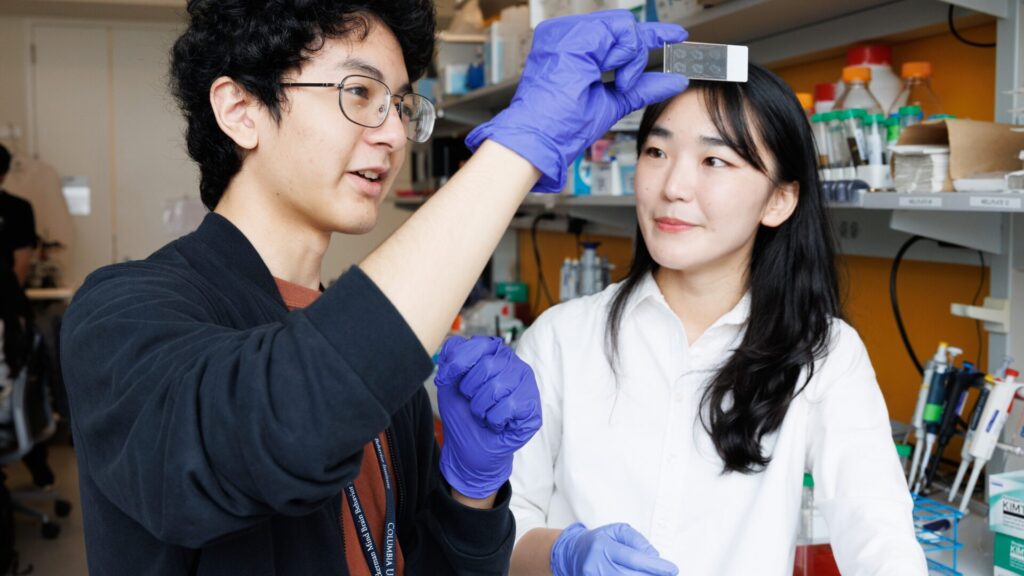
BRAINYAC (Brain Research Apprenticeships in New York at Columbia) introduces you to neuroscience research through placement in a Columbia laboratory. Before beginning your research work, you will complete foundational training in areas such as laboratory safety, research ethics, and experimental methods. You will then join an active research group, working alongside scientists and contributing to ongoing projects.
Throughout the program, you may assist with experiments, interpret research data, and attend lab meetings that provide insight into how scientific studies are planned and carried out. The experience also includes workshops focused on scientific communication and research skills, along with opportunities to engage with other students interested in neuroscience.
Why it stands out: You work directly with a neuroscience researcher through a one-on-one mentorship model in an active laboratory setting.
6. Duke University Neuroscience Experience (DUNE)
Location: Duke University, Durham, NC
Cost/Stipend: No cost / Stipend paid, amount not specified
Acceptance rate/cohort size: Highly selective; approximately 8 students
Dates: June 15th – August 7th
Application deadline: February 8th
Eligibility: Current high school sophomores and juniors (grades 10 and 11) who attend a public or charter high school in Durham, NC, are at least 16 years old by June 15th, and are U.S. citizens, nationals, permanent residents, or legal residents; not open to international students
The DUNE program at Duke University stands out among the many college research programs for high school students interested in neuroscience. During the eight-week summer experience, you are placed in a research laboratory based on your interests and work with faculty members, researchers, and laboratory staff on a project related to the brain and nervous system.
As part of the program, you will develop practical research skills through laboratory work, data collection, and analysis while learning how scientific investigations are conducted. Additional programming includes workshops on scientific communication, discussions about pathways in research and healthcare, and guidance related to the college application process.
Why it stands out: You spend a full summer embedded in a neuroscience laboratory, contributing to a research project from start to finish.
7. Stanford’s Institutes of Medicine Summer Research Program (SIMR)
Location: Stanford University campus (Stanford, CA)
Cost/Stipend: $50 application fee applies; waivers are available / Limited need-based stipends are available
Acceptance rate/cohort size: Highly selective; ~50-60 students
Dates: 8 weeks, June 8th – July 30th
Application Deadline: February 21st
Eligibility: High school juniors and seniors who will be at least 16 years old when the program begins, are living in the U.S., and are U.S. citizens or permanent residents with a green card; not open to international students
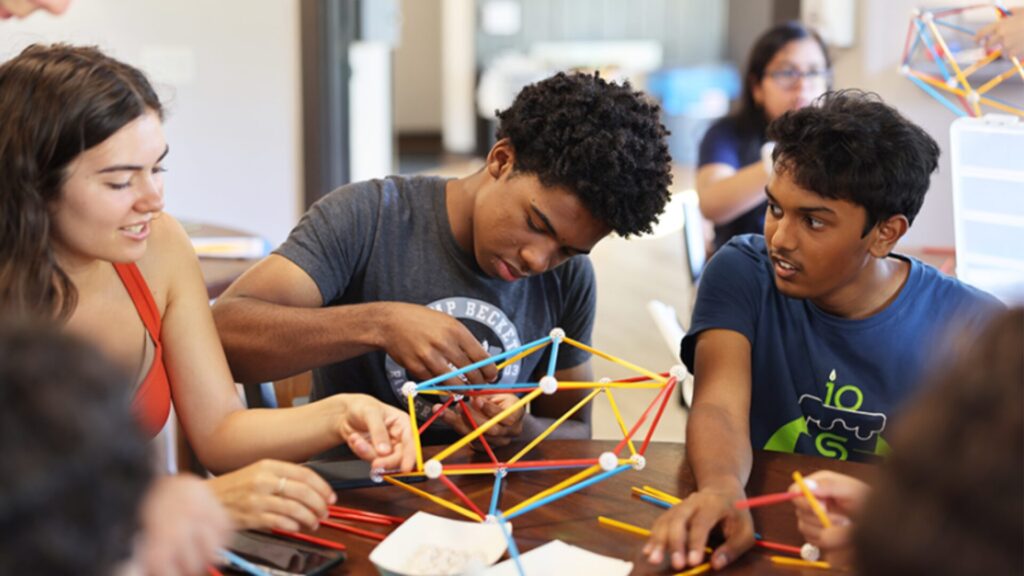
The Stanford Institutes of Medicine Summer Research Program (SIMR) allows high school juniors and seniors to participate in research within Stanford’s biomedical and life sciences community. During the application process, you indicate the research areas that interest you most, and selected participants are matched with laboratories based on their preferences and available placements.
Once placed, you will work alongside researchers and mentors on active projects, gaining experience with the day-to-day processes of academic research. Depending on your assignment, you may assist with literature reviews, laboratory procedures, data collection, computational analysis, or other research-related tasks. The program also offers a bioengineering track that focuses on applied projects and foundational engineering concepts.
Why it stands out: You can explore a wide range of biomedical research fields through direct placement in a Stanford-affiliated laboratory or bioengineering track.
8. Texas Tech University’s Anson L. Clark Scholars Program
Location: Texas Tech University (Lubbock, TX)
Cost/Stipend: $25 application fee / $750 stipend
Acceptance rate/cohort size: Highly selective; 12 students accepted
Dates: 6 weeks, June 21st – August 6th
Application Deadline: February 16th
Eligibility: High school juniors and seniors (i.e., students graduating high school in the programme year or the next) who are at least 17 by the start date; U.S. citizens or permanent residents; not open to international students
The Clark Scholars Program offers a six-week summer research experience that allows you to work closely with a faculty member on an individual research project. You are matched with mentors across a variety of academic disciplines and spend the summer exploring a specific topic through guided research and independent inquiry. In addition to your project work, you will take part in seminars, discussions, and other academic activities designed to broaden your understanding of research and scholarship.
Depending on the field, the program may also include site visits or experiential learning opportunities connected to your area of study. The program is extremely selective and admits only a small number of students each year.
Why it stands out: You conduct one-on-one research with a faculty mentor as part of a small, highly selective cohort.
9. NeuroCamp by UCLA
Location: Los Angeles, CA
Cost/Stipend: None
Acceptance rate/cohort size: Selective; 30 students
Dates: June 16-18; June 22-26
Application Deadline: April 19th
Eligibility: Highly motivated domestic high school students who are U.S. citizens or permanent residents; not open to international students
NeuroCamp is a two-week educational program designed to introduce high school students to the fundamentals of neuroscience. It combines classroom instruction with laboratory-based learning to help you explore how the brain and nervous system function. During the program, you will study key concepts in neuroscience while participating in supervised laboratory activities that reinforce scientific techniques and research practices.
Sessions may include topics in neurobiology, experimental methods, and introductory molecular biology, alongside hands-on exercises that provide practical exposure to laboratory work. Throughout the experience, you will learn from researchers, educators, and institute staff while gaining insight into neuroscience as an academic field.
Why it stands out: You learn neuroscience concepts through a combination of laboratory activities and instruction at a university-based research institute.
10. Research Science Institute (RSI)
Location: Massachusetts Institute of Technology, Cambridge, MA
Cost/Stipend: None except a $75 application fee (waivers are available)
Acceptance rate/cohort size: Very selective; <2.5% acceptance rate; 80-100 students/year
Dates: June 28th – August 8th
Application Deadline: December 10th
Eligibility: High school juniors who meet the RSI academic prerequisites; at least 16 by July 1st of the programme year; open to international students
The Research Science Institute (RSI) is a fully funded summer program that combines advanced STEM coursework with independent research. During the opening phase of the program, you attend lectures, seminars, and academic sessions led by university faculty and researchers across disciplines such as mathematics, engineering, physics, and the life sciences. These sessions provide background knowledge and introduce approaches used in university-level research.
You then spend the remainder of the program conducting a research project under the guidance of a mentor in your area of interest. Throughout the experience, you will learn how to review scientific literature, formulate research questions, design studies, analyze findings, and communicate results through written and oral presentations.
Why it stands out: You combine advanced STEM coursework with mentored research in a fully funded academic environment.
11. Rockefeller University Summer Science Research Program
Location: Rockefeller University
Cost/Stipend: No cost / Transit cards are provided, and need-based stipends may be awarded
Acceptance rate/cohort size: Extremely selective; 32 students
Dates: June 22nd – August 6th
Application Deadline: January 2nd
Eligibility: Current high school juniors or seniors who are at least 16 years old at the start of the programme; open to international students
The Summer Science Research Program (SSRP) is a team-based research experience where you work in a laboratory setting under the guidance of trainees affiliated with institutions such as Rockefeller University, Memorial Sloan Kettering Cancer Center, and Weill Cornell Medicine. You are placed into groups and assigned dedicated space within teaching laboratories where you carry out your projects.
The program follows a structured progression over the summer. You begin by becoming familiar with the lab environment and research tools, then work with your team to define a research question. In the middle weeks, you conduct experiments, gather data, and analyze results, before shifting focus toward organizing and communicating your findings.
Why it stands out: You complete a structured, team-based research project with mentorship from researchers affiliated with leading biomedical institutions.
12. MIT PRIMES-USA
Location: Remote
Cost/Stipend: None
Acceptance rate/cohort size: Very selective; ~20-25 students per year
Application Deadline: December 1st
Dates: January 1st – December 31st
Eligibility: High school sophomores and juniors in the United States who live more than 50 miles from Boston; not open to international students
In this program, you work under the guidance of MIT faculty and graduate student mentors. Based on your interests and preparation, you are matched to a mentor and assigned a research direction in areas such as mathematics, theoretical computer science, or computational fields. The program begins with an extended reading phase, during which you study foundational material related to your topic and meet regularly with your mentor to discuss progress.
You are expected to submit written reports summarizing your understanding of the material before moving into the research phase. If you are selected to continue, you then work on a long-term research project, developing ideas, testing approaches, and refining results with ongoing mentorship.
Why it stands out: You engage in a year-long mentored mathematics research experience with opportunities for formal academic presentation and publication.
13. Summer Academy for Math and Science (SAMS)
Location: Pittsburgh, PA
Cost/Stipend: None
Acceptance rate/cohort size: Highly selective; approximately 75-80 students
Application Deadline: February 1st
Dates: Virtual Jumpstart: June 15-16; Main programme: June 20th – August 1st
Eligibility: High school juniors in 11th grade at the time of application submission; at least 16 years old by the programme start date; U.S. citizens or permanent residents; not open to international students
The Summer Academy for Math and Science (SAMS) at Carnegie Mellon University is a six-week STEM program for high school students, with a focus on students from backgrounds underrepresented in science and engineering. The program combines academic instruction, project work, and mentorship to help you explore STEM fields in a university setting.
Before the residential portion begins, you take part in a virtual preparatory phase that introduces key concepts and helps you build foundational skills. Once on campus, you attend classes and seminars, work on group-based projects, and participate in mentoring sessions with faculty, staff, and peers. After the summer, you continue to receive academic and college-preparation support through follow-up programming and resources.
Why it stands out: You take part in a fully funded, university-based STEM program at Carnegie Mellon that combines coursework, project work, and mentorship.
14. Northwestern University’s CIERA REACH Program
Location: Northwestern University, CIERA, Evanston, IL
Cost: $2,500 (Core Program); an additional $1,500 (REACH Further Program); need-based full or partial financial aid is available
Acceptance rate/cohort size: Selective; approximately 50 students for the Core Program and 12-15 students for the REACH Further extension
Dates: Core Program: June 15th – July 2nd (Session 1) and July 6-24 (Session 2); REACH Further Program: July 6-24 (Session 1) and July 27th – August 14th (Session 2)
Application Deadline: March 9th
Eligibility: Current high school sophomores, juniors, or seniors (grades 10-12); open to international students
This program begins with a three-week core component focused on foundational skills in programming, data analysis, and observational astronomy. During the core program, you learn basic Python coding and apply it to structured astronomy activities using real or simulated datasets. You also work on a guided group research project and present your findings at the end of the session.
Additional components include observational sessions at an observatory and discussions about academic and career pathways in astronomy. After completing the core program, you may apply for an optional extended research experience where you work more independently with a CIERA researcher on a focused project.
Why it stands out: You build foundational astronomy research and coding skills while working with data and observing real astronomical phenomena in a university setting.
15. The University of Texas at Austin – College of Natural Sciences – Summer High School Research Academy (HSRA)
Location: University of Texas at Austin campus, Austin, Texas
Cost/Stipend: $4,000; a limited number of need-based scholarships may be available
Acceptance rate/cohort size: Selective; limited cohort size
Dates: June 8th – July 15th
Application Deadline: March 22nd
Eligibility: Texas residents who are at least 15 years old by June 1st and will be rising sophomores, juniors, or seniors in the next academic year, with preference given to rising juniors and seniors; not open to international students
As an HSRA student, you embed in an active College of Natural Sciences laboratory at UT Austin, working roughly 15–25 hours per week with your research group on an ongoing faculty project in fields such as biochemistry, biology, environmental science, genetics, neuroscience, genome engineering, and data analytics.
Depending on placement, you build hands-on research skills such as micropipetting, PCR amplification, RNA transcription, gel electrophoresis, experimental design, data analysis, and programming in R. Alongside undergraduates and faculty mentors, you collect and analyze real data, participate in Wednesday Seminars hosted by UT guest speakers, and complete graded reflection assignments and readings to earn NSC309 UT extension course credit.
Why it stands out: It places you directly inside authentic, ongoing UT Austin research laboratories alongside faculty and undergraduate mentors, and awards three hours of college credit through the NSC309 extension course for the completed research work.
Frequently asked questions: College research programs for high school students
Are college research programs for high school students open to international students?
Eligibility is mixed. Several highly selective research placements, including Princeton’s LLP, the Anson L. Clark Scholars Program, and Stanford’s SIMR, are restricted to US citizens or permanent residents. However, the Research Science Institute at MIT, Rockefeller’s SSRP, and Northwestern’s CIERA REACH Program all welcome international applicants. Immerse Education’s Academic Insights Programme is also open globally to students aged 13 to 18.
Do college research programs pay a stipend?
Many do, though amounts vary considerably. MD Anderson’s King Foundation program pays $7,200 for 10 weeks, ARISE pays $2,000, and the Anson L. Clark Scholars Program pays $750. Some programs, like Princeton’s LLP and NeuroCamp at UCLA, are free but don’t offer a stipend. RSI at MIT charges only a $75 application fee with waivers available, making it essentially cost-free despite its intensive research component.
How selective are college research programs for high school students?
Selectivity ranges from extremely competitive to more accessible. RSI has an acceptance rate below 2.5 percent, and Princeton’s LLP admits just three students per research area. Rockefeller’s SSRP admits 32 students from a large applicant pool. Regardless of selectivity, meeting specific prerequisites, like DUNE’s requirement of Durham, NC residency or SIMR’s minimum age, matters as much as the overall strength of your application.
What kind of research do college research program participants actually do?
The work varies by host institution and field. BRAINYAC and DUNE interns contribute to neuroscience research in active university labs, while the CIERA REACH Program has you apply Python coding to observational astronomy datasets. MD Anderson’s program places you directly in biomedical and cancer research labs. Nearly all programs culminate in a formal presentation, poster session, or written research report summarizing your findings.
Do college research programs award academic credit?
A few do, though most instead provide a stipend, certificate, or research symposium experience. The University of Texas at Austin’s HSRA program awards three hours of college credit through its NSC309 extension course. Most other programs on this list, including RSI, ARISE, and the Clark Scholars Program, don’t offer transferable credit, focusing instead on the research experience itself and eventual publication or presentation opportunities.
Is Immerse Education a good option for exploring research before college?
Immerse Education’s Academic Insights Programme is a strong choice if you want a broader introduction to research-style learning without needing US citizenship or a specific regional residency. The two week program spans eight global locations, placing you in small groups of seven to 10 students working on a personal project with written feedback from tutors at top universities. It offers a lower-barrier entry point compared to the highly competitive, often US-restricted research programs listed here.
Make Early Research Count Towards University Success
Working in laboratories, analysing datasets, writing research reports, and presenting posters can show you how university researchers investigate questions and communicate credible findings in practice.
These college research programs for high school students offer experiences ranging from neuroscience and biomedical science to astronomy, mathematics, engineering, computational research methods, and ethics.
Compare mentor access, laboratory responsibilities, final presentations, eligibility rules, stipends, and credit options to choose a programme that supports your academic goals and interests effectively.
Ready to prepare for research-led university study? Explore our University Preparation blogs for application guidance, study strategies, academic planning, and confident next steps with confidence.