
 Русский (RU)
 Українська (UK)
 Türkçe (TR)
 Italiano (IT)
 Français (FR)
 Português (PT)
 中文 (中国) (ZH)
 Español (ES)
 日本語 (JA)
 ไทย (TH)
 Deutsch (DE)
 Ελληνικά (EL)
 Polski (PL)
 Bahasa Indonesia (ID)
 Nederlands (NL)
 العربية (AR)
 한국어 (KO)

As a high school student, the idea of spending part of your summer studying in another country can be exciting. International summer programs for teens offer much more than travel and sightseeing, combining university-level coursework, research projects, lectures, workshops, and experiential learning. They give you the chance to explore subjects in greater depth than a typical high school classroom allows while experiencing a new academic and cultural environment.
You might attend seminars at a university in London, collaborate on a sustainability project in Asia, explore engineering concepts in Toronto, or discuss social and political theory in Greece. Along the way, you can learn from professors, mentors, and industry professionals, connect with peers from around the world, and experience university-level expectations firsthand.
How do you choose the right international summer program as a teenager?
With so many options available, it can be difficult to determine which program aligns best with your interests and long-term goals. Some programs focus on a specific academic discipline, while others emphasize interdisciplinary learning, cultural immersion, or research. The strongest programs combine meaningful academic experiences with opportunities to explore university life, helping you better understand which subjects you enjoy studying and which college environment suits you best.
They should involve you attending lectures, participating in discussions, completing coursework and projects, and interacting with faculty, mentors, and students from around the world. They should also award certificates of completion that can be included in college applications and professional portfolios.
To help you get started, we’ve compiled a list of 15 international summer programs for teens that offer a range of academic subjects, learning environments, and global experiences.
For adjacent opportunities, consider the online research program.
Key takeaways
- King’s College London’s Pre-University Summer School costs £3,195 for a single week up to £9,375 for three weeks, drawing more than 1,500 students across all its summer sessions combined.
- Immerse Education’s Academic Insights Programme spans six global locations, including Oxford, Cambridge, Singapore, Sydney, Toronto, and Boston, with classes averaging seven to 10 students.
- The Sakura Science High School Program in Japan is fully funded but restricted to students who have never visited Japan before, drawing 50 to 80 students per batch.
- The University of Oxford’s Saïd Business School Teen Technology and Innovation Summer Academy costs £8,995 for a two week program focused on entrepreneurship, venture capital, and emerging technologies.
- Harvard’s High School Summer Program in Greece is fully funded but limited to students from specific regions of Greece, an American partner school, and an essay competition winner, and is not open to international students broadly.
- The University of Toronto’s DEEP Summer Academy charges CAD$732 per week for domestic students and CAD$1,111 per week or more for international students across one-week engineering modules.
- Imperial Global Summer School costs £7,695 and draws more than 550 students annually for a two week program combining specialized subject study with an interdisciplinary team challenge.
- Program costs vary enormously across this list, ranging from fully funded options like the Sakura Science Program and Harvard’s Greece program to over £8,995 for Oxford’s Teen Technology and Innovation Summer Academy.
15 International Summer Programs for Teens
1. King’s College London Pre-University Summer School
Location: King’s College London, Strand Campus, London, UK
Cost/Stipend: £3,195 (1 week); £6,180 (2 weeks); £9,375 (3 weeks); English Language & Culture courses: £1,200 – £2,400; £65 application fee
Acceptance rate/cohort size: Competitive; approximately 1,500+ students across all summer programs
Dates: July 6-10; July 13-17; July 20-24; July 27-31
Application Deadline: April 27th
Eligibility: Students aged 16-17 in their final three years of high school; must meet English language requirements; open to international students
King’s College London’s Pre-University Summer School allows you to explore subjects such as Medical Science, Psychology, Law, Business Management, and STEM through university-style teaching. Depending on your interests, you can enroll in one or several week-long courses. Classes combine lectures, seminars, collaborative discussions, and academic assignments designed to reflect undergraduate coursework.
Many subjects incorporate simulations, case studies, and problem-solving exercises that encourage active participation. Guest speakers provide additional insight into professional and academic pathways connected to each field. Students who complete the program receive a certificate of completion from King’s College London.
Why it stands out: Given its location and institutional connections, students may have opportunities to engage with speakers and professionals from organizations such as the NHS and the UK Parliament.
2. Immerse Education’s Pre-University Summer School
Location: Cambridge, London, Oxford, Singapore, Sydney, Tokyo, Toronto
Cost/Stipend: Varies; summer school scholarship available through our bursary programme
Acceptance rate/cohort size: Selective; an average of 7 participants per class
Dates: Multiple 2-week summer cohorts
Application Deadline: Rolling admissions
Eligibility: Students aged 13-18 enrolled in middle or high school; open to international students
Immerse Education offers one of the most academically focused international summer programs for teens, combining small-group teaching with university-style learning across more than 20 subjects. You will live on campus, study in groups of seven to 10, and learn from tutors from leading universities while exploring options such as Architecture, AI, Business Management, Computer Science, Economics, Medicine, and Philosophy.
The courses are experiential and focus on hands-on learning. You may find yourself conducting dissections in medicine, designing a robotic arm in engineering, participating in a moot court for law, or building creative writing portfolios and business case studies. By the end of the program, you’ll complete a personal project, receive written feedback, and receive a certificate of completion. You can find more details about the application here.
Why it stands out: You’ll get an early start at university life and academics because the program includes an independent project, discussion-based classes, and living at a college campus.
3. Bocconi Summer School for High School Students
Location: Bocconi University, Milan, Italy
Cost/Stipend: €2,700; optional on-campus housing is an additional €1,600
Acceptance rate/cohort size: Competitive; ~400-500 high school students
Dates: July 6-17
Application Deadline: Typically early April
Eligibility: Students in the third-to-last or second-to-last year of high school who are at least 15 years old by the start of the program; open to international students
Bocconi Summer School allows you to combine two academic labs selected from a catalog of 17 options. Topics range from business strategy and marketing to Python programming, economics, and data science. Along with lectures, courses are structured around practical exercises, case studies, and collaborative projects. You may analyze communication campaigns, explore business decision-making through game theory, or learn how to visualize and interpret data.
Faculty members and professionals guide students through real-world applications of each subject. The program offers exposure to several disciplines within a short period, helping students identify future academic interests.
Why it stands out: You can explore multiple fields through specialized labs while gaining exposure to Bocconi’s business-focused academic environment.
4. Sakura Science High School Program (SSHP)
Location: Multiple sites across Japan, including Tokyo, Tsukuba, and Aichi
Cost/Stipend: None
Acceptance rate/cohort size: Highly Selective; ~50-80 students per batch
Dates: Approximately one week during the summer (varies by host institution)
Application Deadline: Varies by host institution and application cycle
Eligibility: High school students (Grades 10, 11, or 12) who are at least 15 years old, have an “excellent” academic record in science/math, and are first-time visitors to Japan; open to international students
The Sakura Science High School Program introduces students to Japan’s research and innovation ecosystem through a short-term academic exchange. Participants attend lectures, laboratory workshops, and demonstrations led by university researchers and faculty members. Visits to research institutes and universities provide firsthand exposure to scientific work in fields such as engineering, technology, and the natural sciences.
Group activities with Japanese students encourage collaboration and cultural exchange. The program also includes cultural experiences that help participants understand how science and education intersect within Japanese society. Through these activities, students gain insight into international approaches to research and innovation.
Why it stands out: The program is fully funded and offers direct access to Japanese universities, laboratories, and researchers through a structured international exchange.
5. University of Toronto DEEP Summer Academy
Location: University of Toronto, St. George Campus, Toronto, ON
Cost/Stipend: Domestic students: CAD$732/week; International students: CAD$1,111/week+ $50 application fee; discounts are available
Acceptance rate/cohort size: Highly selective; approximately 400–500 students per summer
Dates: July 6-10; July 13-17; July 20-24; July 27-31; August 10-14
Application Deadline: Round 1: March 23rd; Round 2: April 13th
Eligibility: Students in grades 9-12; grades 9/10: completed grade 9 math and science courses by June; grades 11/12: completed grade 11 math and science courses by June; open to international students
The DEEP Summer Academy is organized into one-week engineering modules that focus on specific technical disciplines. Students can select individual weeks based on their interests and attend multiple sessions if they wish to explore different subjects. Topics may include robotics, artificial intelligence, optics, biomedical engineering, or materials science.
Instruction combines foundational concepts with laboratory activities, design challenges, and hands-on projects. Undergraduate and graduate students help facilitate learning and share their experiences studying engineering. The modular structure allows participants to gain focused exposure to a particular area rather than survey many topics at once.
Why it stands out: Its week-by-week format allows students to explore different engineering disciplines through concentrated, hands-on learning experiences.
6. Temple University Japan High School Summer Program
Location: Tokyo, Japan
Cost/Stipend: 340,000 JPY plus 20,000 JPY registration fee; 320,000 JPY (early bird discounted fee if the first 20 students pay by March 1)
Acceptance rate/cohort size: Selective; approximately 50 students
Dates: July 29th – August 6th
Application Deadline: April 1st: students needing a visa; May 1st: not needing a visa
Eligibility: Students entering grades 9-12; domestic and international students welcome
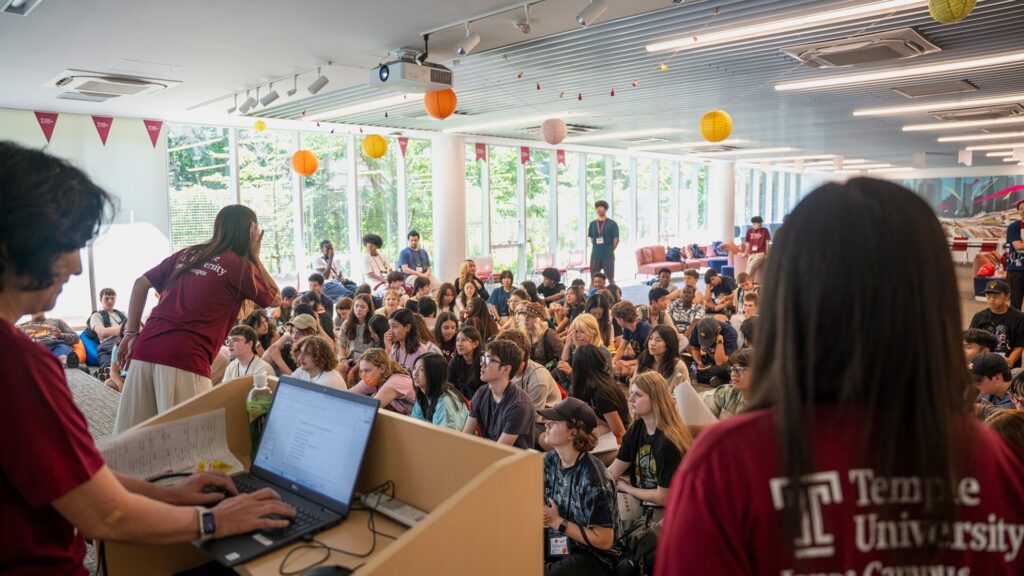
Hosted at Temple University’s Japan campus, this program introduces students to university-level coursework within an English-language academic environment. Participants can choose from subjects such as international business, international affairs, and the arts. Classes are supplemented by excursions and activities that connect course topics to contemporary Japanese society.
You also have opportunities to interact with university faculty and current undergraduates. Living and studying in Tokyo allows you to experience a different educational and cultural setting while developing academic skills. The program is designed to provide an early look at both international study and university life.
Why it stands out: It offers students the opportunity to study at an American-accredited university while living and learning in Tokyo.
7. University of British Columbia – Future Global Leaders On-Campus
Location: University of British Columbia (UBC), Vancouver, Canada
Cost: Canadian students: $1,940 – $2,110 CAD; International students: $2,620 – $2,855 CAD; Residence add-on: $2,650 CAD; bursaries are available
Acceptance rate/cohort size: Open enrollment; cohort size varies by course
Dates: Session 1: July 6-17; Session 2: July 20-31; Session 3: August 3-14
Application Deadline: Session 1: June 15th; Session 2: June 29th; Session 3: July 13th
Eligibility: High school students aged 15-18 who have completed grade 10; open to international students
In this program, you dive into university-level academics covering business, engineering, health sciences, media, and society. During this two-week immersive experience, you will live in student residences, engage in interactive coursework taught by top UBC instructors, and attend afternoon workshops to strengthen your college applications. You will also bond with peers on exciting weekend field trips to Vancouver landmarks such as Grouse Mountain.
The program uniquely provides direct access to expert university faculty and authentic campus facilities while allowing you to actively discover your academic passions. Throughout your stay, you will build essential transition skills like technical problem-solving, effective study habits, and collaborative teamwork.
Why it stands out: It distinguishes itself by seamlessly combining rigorous academic exploration with daily transition workshops, allowing you to build the necessary confidence to succeed in your future first year of university.
8. Harvard High School Summer Program in Greece
Location: Center for Hellenic Studies, Nafplio, Greece
Cost/Stipend: None
Acceptance rate/cohort size: Highly selective; up to 24 students
Dates: June 29th – July 14th
Application Deadline: March 31st
Eligibility: High school students from the Argolis and Arcadia regions in Greece, Odyssey Charter School (Delaware, USA), and the winner of the international Panhellenic Philosophical Essay Competition; not open to international students
Hosted by Harvard’s Center for Hellenic Studies, this two-week program explores questions surrounding justice, ethics, citizenship, and social change. Rather than relying on lectures alone, the curriculum is built around discussion, debate, close reading, and collaborative inquiry. You can examine complex social and political issues while learning how to construct and defend arguments.
Faculty members and teaching fellows guide students through research activities that culminate in a final presentation. The program also includes sessions on U.S. higher education led by the Fulbright Foundation. Harvard undergraduate mentors provide academic support throughout the experience.
Why it stands out: It offers an intensive small-group experience centered on discussion-based learning and social theory while remaining fully funded for all participants.
9. University of Oxford – Saïd Business School Teen Technology & Innovation Summer Academy
Location: Saïd Business School, University of Oxford, Oxford, UK
Cost/Stipend: £8,995; financial aid available
Acceptance rate/cohort size: Selective; approximately 40-60 participants
Dates: Two-week sessions beginning July 18th
Application Deadline: Rolling admissions; early application encouraged
Eligibility: Students aged 15-18; open internationally; recommended English proficiency of B2 or above
Technology is changing how businesses operate, and this academy examines that relationship through the lens of entrepreneurship and innovation. You get to investigate topics such as venture capital, intellectual property, business strategy, and emerging technologies. Workshops and collaborative exercises encourage you to evaluate real-world challenges and develop practical solutions.
Along the way, you’ll strengthen skills in analysis, communication, and structured decision-making. Teams work together to create and pitch a technology-based business concept, applying ideas from across the course. Faculty, professionals, and industry speakers contribute perspectives on innovation-driven industries.
Why it stands out: Students move beyond theory by developing and presenting a technology-focused venture idea within a business school environment.
10. Imperial Global Summer School
Location: Imperial College London, South Kensington Campus, London, UK
Cost/Stipend: £7,695
Acceptance rate/cohort size: Selective; over 550 students annually
Dates: June 29th – July 10th or August 3-14
Application Deadline: Rolling admissions until spaces fill
Eligibility: Domestic and international students aged 16-17 with strong academics and English proficiency
This two-week program combines focused subject study with interdisciplinary problem-solving. During the first week, you specialize in an area such as Chemistry, Engineering, Physics, Medicine and Life Sciences, or Data Science and AI. Learning takes place through lectures, laboratory sessions, workshops, and practical exercises led by Imperial faculty.
In the second week, you join students from different academic tracks to tackle a real-world challenge. Working in teams, they develop solutions while applying concepts from their respective disciplines. The experience concludes with presentations and collaborative project work.
Why it stands out: The program combines specialized academic learning with a cross-disciplinary innovation challenge that mirrors real-world collaboration.
11. University of Hong Kong Summer Institute / HKU School of Computing and Data Science – AI Creators Lab @ Shanghai
Location: HKU Zhangjiang Base, Shanghai, China
Cost/Stipend: HKD 26,000 + HKD 400 application fee
Acceptance rate/cohort size: Not selective; small team-based cohorts
Dates: July 12-25
Application Deadline: June 30th
Eligibility: Senior high school students in S4-S5, Year 11-12, or Grade 10-11; open to international students
In this program, you join a two-week residential AI summer camp at HKU’s Zhangjiang Base in Shanghai, built around a zero-code, hands-on, project-based approach that aims to turn you from an AI consumer into a responsible creator. Across eight lectures, you explore computer vision, generative AI, natural language processing, AI for science, and embodied AI, then apply each concept in practical labs.
You classify images with Teachable Machine, create AI art and short videos, run intelligent text-creation exercises, and design an AI-based solution to a science problem. Working in teams of four with Teaching Assistant coaching, you also visit embodied-AI companies and deliver a final group presentation.
Why it stands out: It pairs a zero-code, project-based AI curriculum with on-site visits to embodied-AI companies and direct guidance from an HKU School of Computing and Data Science professor.
12. Ashoka University Young Scholars Program (YSP)
Location: Ashoka University, Sonipat, Haryana, India
Cost/Stipend: ₹49,500 plus GST for 5-day tracks, or ₹85,000 plus GST for 10-day tracks (the application requires a ₹1,000 fee; financial aid is available)
Acceptance rate/cohort size: Selective; cohort size not specified
Dates: May 18-29; June 1-12
Application Deadline: April 26th
Eligibility: Students around the globe entering grades 9-12
For students interested in exploring multiple disciplines before choosing a college major, YSP provides an introduction to liberal arts education. You rotate through subjects spanning the humanities, social sciences, and natural sciences while engaging with university-style teaching. Sessions emphasize active participation through workshops, discussions, projects, and collaborative assignments.
You examine how different fields approach complex questions. Faculty interactions and peer collaboration form a central part of the experience. The program also develops communication, presentation, and critical-thinking skills through project-based learning.
Why it stands out: It introduces students to interdisciplinary learning and liberal arts education through exposure to multiple academic fields in a single program.
13. NUS SCALE Youth Programmes
Location: National University of Singapore (online and on-campus options)
Cost/Stipend: Varies by program
Acceptance rate/cohort size: Open enrollment for many programs; cohort size varies by course
Dates: Summer and winter sessions; dates vary by course
Application Deadline: Rolling admissions
Eligibility: High school, pre-university, and undergraduate students; participants must be at least 15 years old; open to international students
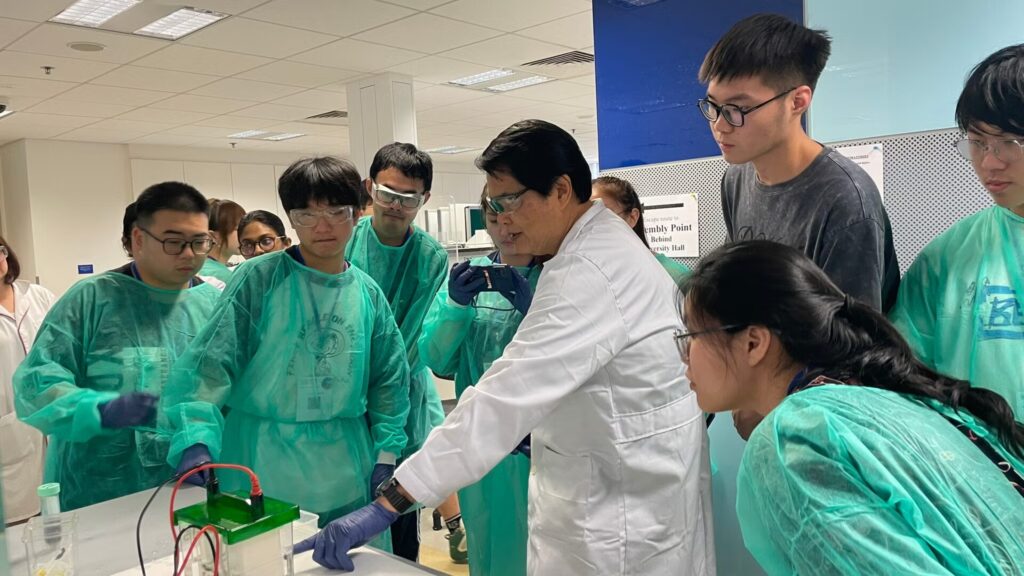
The NUS SCALE Youth Programmes offer short academic courses that expose students to university-level learning in areas ranging from artificial intelligence and entrepreneurship to economics, leadership, and negotiation. Classes are interactive and often built around case studies, discussions, and team-based projects. You get to collaborate with peers from different backgrounds while tackling practical problems that require critical thinking and communication.
Depending on the course, you may analyze business scenarios, develop leadership strategies, or explore emerging technologies. Both online and in-person formats are available, making the programs accessible to an international audience. Participants who meet course requirements receive a certificate from the National University of Singapore.
Why it stands out: The broad range of subject options allows students to explore emerging fields while experiencing teaching methods used at a leading Asian university.
14. McGill University – McGill Summer Academy
Location: Downtown Campus, McGill University, Montreal, Quebec, Canada
Cost/Stipend: $5,500 CAD; MSA Awards (financial assistance) available to eligible participants
Acceptance rate/cohort size: Selective; cohort size not specified
Dates: Session 1: July 5-18; Session 2: July 19th – August 1st
Application Deadline: March 22nd
Eligibility: Students currently in grades 10 and 11, equivalent to Secondary IV and V in Quebec; a B average of roughly 78-80% is recommended though no formal academic requirement exists; parental consent is required since participants are minors; open to international students
In this program, you spend two weeks on McGill’s downtown Montreal campus, combining university-style coursework with skill-building workshops and experiential learning that eases your transition into higher education. You select one of two streams – Pathways to Neuro and Health Sciences or Understanding Migration, Global Citizenship and Diasporic Resistance – and explore it through lectures, case studies, simulations, debates, and team-based projects led by McGill faculty.
Depending on your choice, you might trace brain development and neurological disorders or run a citizens’ assembly simulation on migration policy. You sharpen learning strategies, critical reading, presentation, and collaboration skills while discovering Montreal with current McGill students as team leaders.
Why it stands out: It lets you live and study on a major university campus while previewing real academic disciplines through faculty-led courses, hands-on simulations, and day-to-day mentorship from current McGill students.
15. University of Nottingham Malaysia – International High School Summer Programme
Location: University of Nottingham Malaysia, Semenyih, Malaysia
Cost/Stipend: Non-partner schools/universities: RM2,800 plus an 8% tax; Partner school students: RM2,500 plus tax; discounted tuition rates are available for students from partner schools/institutions or developing nations
Acceptance rate/cohort size: Selective; limited capacity
Dates: August 3-9
Application Deadline: June 30th
Eligibility: High school students aged 15-18; open to international students
This four-week program introduces students to university-level study through courses spanning business, engineering, computing, sciences, and humanities. Classes are designed to encourage analytical thinking and problem-solving while familiarizing you with academic expectations at the college level. Faculty-led workshops help you engage with concepts in a more applied and interactive way than traditional classroom learning.
Group projects and presentations provide opportunities to practice teamwork and communication. Outside academics, field trips and enrichment activities help connect classroom topics to real-world contexts. The experience is intended to help students evaluate future academic interests before entering university.
Why it stands out: Students gain extended exposure to university life while exploring multiple academic disciplines within an international campus setting.
Frequently asked questions: International summer programs for teens
Are international summer programs for teens open to all nationalities?
Most international summer programs for teens are explicitly open worldwide, including King’s College London’s Pre-University Summer School, the University of Toronto’s DEEP Summer Academy, and Immerse Education’s Academic Insights Programme. A few exceptions exist, like Harvard’s High School Summer Program in Greece, which is limited to students from specific regions and partner schools rather than open international enrollment. Always check the eligibility section closely, since a handful of highly funded programs restrict access more narrowly than their name suggests.
How much do international summer programs for teens cost?
Costs vary enormously depending on length, prestige, and funding model. Fully funded options exist, like the Sakura Science High School Program in Japan and Harvard’s program in Greece, while shorter university-run courses like King’s College London’s one-week session cost around £3,195. On the higher end, Oxford’s Saïd Business School Teen Technology and Innovation Summer Academy costs £8,995, and Imperial Global Summer School costs £7,695. Financial aid or bursary support is available for several programs, so check each listing individually.
Do international summer programs award college credit or a certificate?
Nearly all programs on this list award some form of certificate of completion, which you can include in future college applications. Fewer offer actual transferable college credit, since many are structured as enrichment rather than accredited coursework. King’s College London and Immerse Education’s Academic Insights Programme both provide certificates upon completion, while McGill’s Summer Academy and similar university-hosted programs emphasize skill-building workshops alongside academic content rather than formal credit.
How selective are international summer programs for teens?
Selectivity ranges widely. Highly funded or prestigious programs, like Harvard’s Greece program with just 24 spots or the Sakura Science Program’s competitive nomination process, are quite selective. Tuition-based programs, like King’s College London or the University of British Columbia’s Future Global Leaders, tend to have more open enrollment since they aren’t capped by funding constraints. Meeting language proficiency requirements and academic prerequisites matters across nearly every program, regardless of overall selectivity.
What is the difference between a subject-specific program and an interdisciplinary program?
Subject-specific programs, like the University of Toronto’s DEEP Summer Academy, let you focus deeply on one technical discipline, such as robotics or biomedical engineering, through a single-week module. Interdisciplinary programs, like Imperial Global Summer School or Ashoka University’s Young Scholars Program, instead have you rotate through multiple subjects or combine specialized study with a cross-disciplinary team challenge. Choosing between the two depends on whether you already know your area of interest or are still exploring options.
How long do international summer programs for teens typically run?
Program length varies from about one week to several weeks. Shorter options, like the Sakura Science Program or King’s College London’s single-week module, run about five to seven days, while longer immersive programs, like Bocconi’s Summer School or McGill’s Summer Academy, run closer to two weeks. A few, like the University of Nottingham Malaysia’s International High School Summer Programme, extend to about four weeks, giving you more time to settle into university-style coursework.
Is Immerse Education a good option for exploring university life abroad?
Immerse Education’s Academic Insights Programme is a strong choice if you want flexibility in location alongside a genuine university experience. The two week program lets you choose from six global campuses, including Oxford, Cambridge, Singapore, Sydney, Toronto, and Boston, studying in small groups of seven to 10 students under tutors from top universities. You’ll complete a personal project, receive written feedback, and earn a certificate of completion, giving you a consistent, well-rounded experience regardless of which location you select.
Take Your Next Step Beyond Borders
Studying abroad begins with small experiments: navigating an unfamiliar campus, joining discussions with new classmates, and discovering how another country approaches education and daily life.
International summer programs for teens provide that trial run, whether you are analysing business cases, building engineering projects, debating policy, or practising laboratory research abroad.
The right choice should challenge your thinking, support your independence, and leave you with clearer evidence about the subjects, places, and communities that suit you.
Curious about turning one summer into a longer journey? Explore our Study Abroad blogs for destination guides, planning advice, funding options, and practical preparation tips.