
 Русский (RU)
 Українська (UK)
 Türkçe (TR)
 Italiano (IT)
 Français (FR)
 Português (PT)
 中文 (中国) (ZH)
 Español (ES)
 日本語 (JA)
 ไทย (TH)
 Deutsch (DE)
 Ελληνικά (EL)
 Polski (PL)
 Bahasa Indonesia (ID)
 Nederlands (NL)
 العربية (AR)
 한국어 (KO)

Summer break as a high schooler tends to feel exciting and a little aimless at the same time. You’ve suddenly got months of open time, and figuring out how to spend it well isn’t always obvious. Summer courses for high school students give you a real direction for that time, letting you dig into a new subject, build on a skill you already have, or get exposure to something your school year never quite covers. If you want your summer to actually add up to something, picking a course that lines up with your interests is one of the better ways to do that.
Imagine yourself learning how to code an application, studying entrepreneurship with industry professionals, doing research, improving your writing, or exploring subjects such as medicine, engineering, psychology, or the arts. By participating in one, you can build practical skills, work alongside ambitious students, and experience a more independent style of learning. Many also provide exposure to university-level academics, helping you better understand potential fields of study before you begin the college application process.
How do you choose the right summer courses for high school students?
It can be challenging to determine which summer course is the best fit for you. Some programs may be too broad, while others may not provide the depth, engagement, or opportunities you are looking for. That is why it is important to carefully evaluate your options and focus on courses that match your goals and interests.
Summer courses come from all kinds of places, such as universities, educational organizations, research institutions, and cover subjects ranging from computer science and business to medicine, engineering, humanities, and the social sciences. Some prioritize hands-on work and collaboration with other students, while others are more about academic depth, research, or building a specific skill. Whether you’re just getting started in a subject or looking for something closer to actual college-level work, there’s usually a course built for where you are.
Of course, regardless of the course you choose, success depends on your willingness to learn and participate. To help you narrow down the options, we have compiled a list of the 15 summer courses for high school students! These options have been selected for their academic quality, learning opportunities, and strong reputations.
Key takeaways
- The Nanoscience Lab Summer Program at UCLA costs $2,400 and requires a completed high school chemistry course along with a minimum 3.2 GPA.
- Immerse’s Academic Insights Programme spans eight locations, including Boston, Cambridge, and Tokyo, with small classes of seven to 10 students open to students aged 13 to 18.
- MITES Summer is completely free and highly selective, admitting 70 to 80 students for a six week residential STEM program restricted to US citizens or permanent residents.
- Research Science Institute at MIT is free and highly selective, combining a week of advanced coursework with several weeks of mentored research at Boston-area institutions.
- Summer@Brown enrolls over 6,000 students annually across more than 230 non-credit courses, reflecting Brown’s Open Curriculum philosophy of academic freedom without formal grades.
- Computer Science Scholars at Carnegie Mellon is entirely free and restricted to US citizens or permanent residents, offering college-level computer science coursework without tuition.
- Bossgirls Summer Program at CCNY is free and specifically designed for girls and nonbinary students in the New York tri-state region interested in entrepreneurship.
- Program costs for summer courses range from free options like MITES Summer and RSI to over $8,950 for Stanford Mathematics Camp’s residential track.
15 Summer Courses for High School Students
1. Nanoscience Lab Summer Program
Location: California NanoSystems Institute, University of California, Los Angeles, CA
Cost: $2,400
Acceptance Rate/Cohort Size: Not specified
Dates: June 22-26 or August 3-7
Application Deadline: May 25th, or until capacity is reached
Eligibility: Open to students in grades 10-12 who are at least 15 years old by the start of the program; applicants must have completed a high school chemistry course and have a minimum GPA of 3.2; international students are eligible to apply
If you enjoy learning through experimentation, this UCLA program offers a practical introduction to nanoscience and its real-world applications. You will participate in laboratory activities that explore topics such as photolithography, bio-toxicity, and energy storage. The curriculum combines hands-on work with seminars and data analysis, allowing you to see how researchers investigate materials at the nanoscale.
You’ll also gain exposure to nanofabrication techniques and scientific communication practices and have a clearer understanding of how nanotechnology is shaping fields ranging from medicine to renewable energy.
Why it stands out: You work with research-inspired nanoscience experiments while learning directly from a program developed by UCLA scientists.
2. Immerse Education’s Pre-University Summer School

Location: Cambridge, London, Oxford, Singapore, Sydney, Tokyo, and Toronto
Cost: Varies; summer school scholarship available through our bursary programme
Application Deadline: Multiple summer cohorts; rolling admissions.
Program Dates: 2 weeks during the summer
Eligibility: Students across the globe aged 13-18 currently enrolled in middle or high school; open to international students
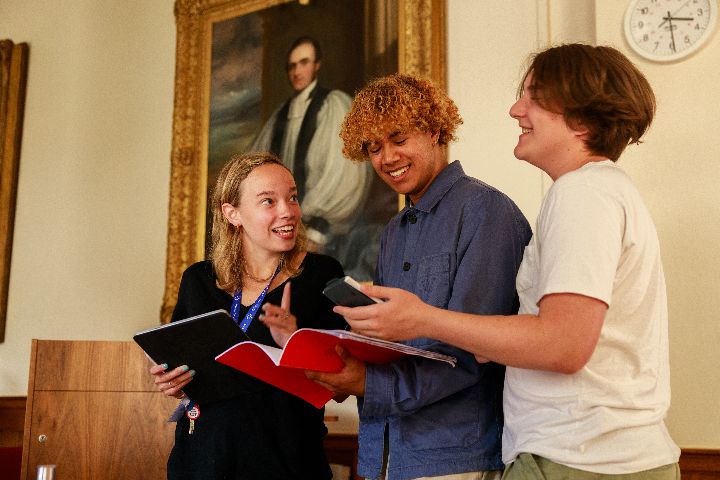
The Academic Insights Program lets high school students experience university life firsthand. You will live on campus and study in small groups of 7-10, and learn from tutors from eminent top universities like Oxford and Cambridge. You can explore a wide range of subjects, spanning over 20 options, including Architecture, AI, Business Management, Computer Science, Economics, Medicine, Philosophy, and more.
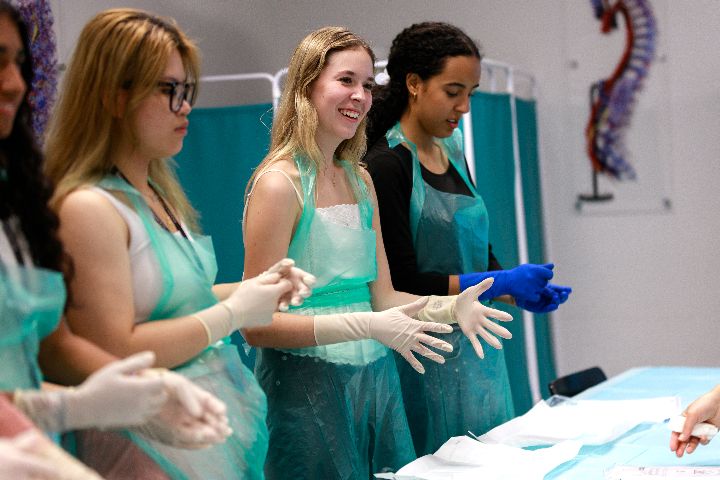
The courses are experiential and focus on hands-on learning. You may find yourself conducting dissections in medicine, designing a robotic arm in engineering, participating in a moot court for law, or building creative writing portfolios and business case studies. By the end of the program, you’ll complete a personal project, receive written feedback, and receive a certificate of completion. You can find more details about the application here.
Why it stands out: You’ll get an early start at university life and academics because the program includes an independent project, discussion-based classes, and living at a college campus.
3. MITES Summer
Location: Massachusetts Institute of Technology, Cambridge, MA
Cost: Free
Acceptance Rate/Cohort Size: Selective: 70-80 students
Dates: June 20th – July 31st
Application Deadline: February 1st
Eligibility: Open to high school juniors (11th grade or equivalent) who are U.S. citizens or permanent residents
MITES Summer gives you a chance to experience life at MIT through an intensive six-week residential program focused on STEM. You will take courses in mathematics, science, humanities, and a project-based elective while exploring subjects that often extend beyond a typical high school curriculum.
Alongside academics, you will participate in lab tours, college admissions workshops, mentoring sessions, and community-building activities. The program also includes exposure to STEM professionals and research environments, helping you better understand potential academic and career pathways.
Why it stands out: You receive a fully funded residential experience at MIT while taking a curriculum that mirrors the pace and rigor of college-level STEM study.
4. Stanford University Mathematics Camp (SUMaC)
Location: Stanford University, Stanford, CA
Cost: $8,950 (residential) or $3,750 (online); financial aid available; no stipend
Acceptance Rate/Cohort Size: 40 students (residential); 64 students (online)
Dates: June 21st – July 17th (residential); June 15th – July 3rd or July 6th – July 24th (online)
Application Deadline: February 2nd
Eligibility: Open to students in grades 10 and 11 who are at least 15 years old during the program; the residential option is limited to students who will be under 18 throughout the program; international students are eligible to apply
If mathematics is your favorite subject and you want to explore it beyond a standard classroom setting, SUMaC offers an immersive academic experience. You will study advanced topics through lectures, guided research, and collaborative problem solving with peers who share your enthusiasm for math.
Depending on your course placement, you may dive into areas such as number theory, abstract algebra, or algebraic topology. The program also includes problem-solving sessions, guest lectures, and a final research project presentation.
Why it stands out: You learn advanced mathematics in a highly selective environment designed specifically for students who are ready to tackle proof-based and research-oriented work.
5. Bossgirls Summer Program
Location: The City College of New York, New York, NY
Cost: Free
Acceptance Rate/Cohort Size: Not specified
Dates: June 29th – July 30th
Application Deadline: February 28th
Eligibility: Open to current high school girls and nonbinary students in grades 9-12, including graduating seniors living in the New York tri-state region
If you are curious about entrepreneurship but have never launched a business before, Bossgirls offers an accessible starting point. Working in teams, you will identify real-world problems, research customer needs, analyze competitors, and develop solutions using a human-centered design approach.
Along the way, you will learn how to prototype ideas, build a brand, and communicate your vision effectively. The program concludes with a pitch presentation where you showcase your venture to an audience and receive feedback on your work.
Why it stands out: Instead of focusing only on business theory, you build and pitch your own venture while receiving guidance from entrepreneurs and industry mentors.
6. Harvard Pre-College Program
Location: Harvard University, Cambridge, MA
Cost: $6,100 (includes tuition, room, and meal plan) + $75 application fee
Acceptance Rate/Cohort Size: Selective; average class size of 15 students
Dates: June 21st – July 2nd (Session I); July 5-17 (Session II); July 19-31 (Session III)
Application Deadline: Early & Priority Financial Aid: January 7th; Regular: February 11th; Late: April 1st
Eligibility: Rising juniors and seniors around the world who are at least 16 years old by June 20th
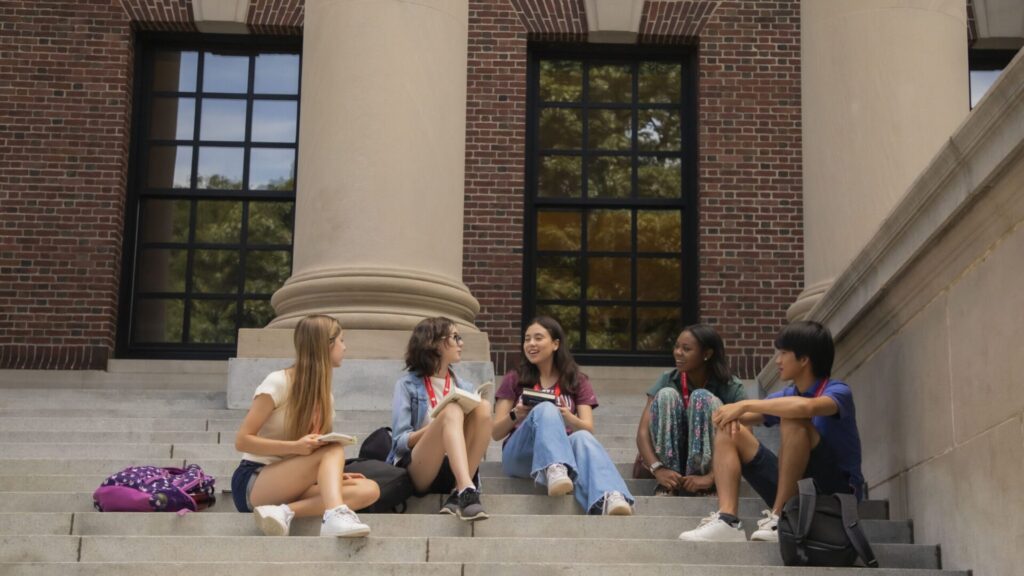
If you want to experience life as an Ivy League student, Harvard’s Pre-College Program provides a non-credit, two-week residential experience that lets you test your academic limits without grade pressure. You will live on the historic campus in freshman dorms and immerse yourself in a single, deeply focused subject with an average class size of 15 students.
The program offers over 100 courses taught by Ivy League scholars, ranging from political science to advanced STEM topics. Outside the classroom, you will attend college readiness workshops, panels on the financial aid process, and engage in social activities designed to build lasting global connections.
Why it stands out: You can dive deep into college-level inquiry under Ivy League scholars in a pressure-free, non-credit environment designed to build academic confidence.
7. UGA Grady Summer Media Academy
Location: University of Georgia, Athens, GA
Cost: $530 (day camp); $1255 (residential); need-based financial aid available
Acceptance rate/cohort size: Maximum 20 participants per camp week
Dates: June 8-12 (Entertainment and Media Studies; Multimedia Journalism) or June 15-19 (Advertising and Public Relations; Broadcast Journalism)
Application Deadline: Rolling admissions
Eligibility: Students aged 13-17; international participation not clearly specified
If you are interested in journalism, media, advertising, or storytelling, the Summer Media Academy offers a chance to explore these fields through hands-on projects. You can choose from four tracks: Advertising and Public Relations, Broadcast Journalism, Multimedia Journalism, or Entertainment and Media Studies.
Throughout the week, you will work with instructors, hear from industry professionals, and develop practical skills relevant to your chosen area. Depending on the track, you may create a news website, produce video content, design a communications campaign, or develop original media projects.
Why it stands out: With specialized tracks and small cohorts, you can focus on a specific area of media while producing portfolio-ready work in just one week.
8. UIC Engineering Summer Camp
Location: University of Illinois Chicago, Chicago, IL
Cost: $500
Acceptance rate/cohort size: Maximum of 30 students per group
Dates: July 27-31
Application Deadline: Not specified; registration remains open until capacity is reached
Eligibility: Rising 9th to 12th grade students; students must be able to commute daily and arrange their own local lodging
If you enjoy building, testing, and solving problems, UIC’s Engineering Summer Camp offers a week packed with hands-on exploration. You will work through engineering challenges designed by UIC faculty and graduate students while rotating across topics such as coding, robotics, biomechanics, and design.
The program introduces you to multiple branches of engineering through team-based projects and experiments. You will also learn about emerging fields such as nanotechnology, autonomous vehicles, and biomedical innovation.
Why it stands out: You experience several topics in a single week through projects developed from real university research labs.
9. Alpha Young Writers Workshop
Location: University of Pittsburgh, Greensburg campus, PA
Cost: $1,950
Acceptance rate/cohort size: Approximately 20 students per year
Dates: July 15-26
Application Deadline: March 1st
Eligibility: Open to students who are 14-19 years old on the first day of the workshop; U.S. and international students are eligible to apply
If you are passionate about speculative fiction, Alpha offers an immersive environment where writing takes center stage. Over nearly two weeks, you will attend workshops, participate in writing studios, and learn directly from published authors working in science fiction, fantasy, and horror.
The program combines craft lectures, peer critiques, one-on-one mentoring, and dedicated writing time to help you strengthen your storytelling skills. Admissions are based entirely on your creative work, creating a community centered on writing talent and potential.
Why it stands out: Admission is determined by the strength of your writing alone, making it one of the few selective summer programs where your creative work matters more than academic credentials.
10. Computer Science Scholars (CS Scholars)
Location: Carnegie Mellon University, Pittsburgh, PA
Cost: Free
Acceptance rate/cohort size: Competitive and selective with a small cohort
Dates: June 20-18
Application Deadline: February 1st
Eligibility: You must be in high school between 10th and 11th grade or between 11th and 12th grade during the summer of the program year; open to U.S. citizens and permanent residents
Computer Science Scholars allows you to study computer science at one of the country’s leading technology institutions without paying tuition. You will take college-level coursework in computer science while exploring topics such as programming, algorithmic thinking, and computational problem-solving.
Classes are complemented by workshops, collaborative projects, and activities designed to strengthen your academic and professional skills. You will also engage with faculty, staff, and peers who share a strong interest in technology.
Why it stands out: Few computer science summer programs combine rigorous coursework, residential campus life, and full funding in a single experience.
11. Summer@Brown (Brown Pre-College)
Location: Brown University, Providence, RI
Cost: Varies depending on course length and housing; need-based scholarships available
Acceptance Rate/Cohort Size: Enrollment of over 6,000 students across programs annually
Dates: Multiple 1-, 2-, and 3-week sessions running from June 15th
Application Deadline: Application opens January 14th; final deadline May 15th
Eligibility: Open to students completing grades 9-12 who are 14-18 years old by June 14th
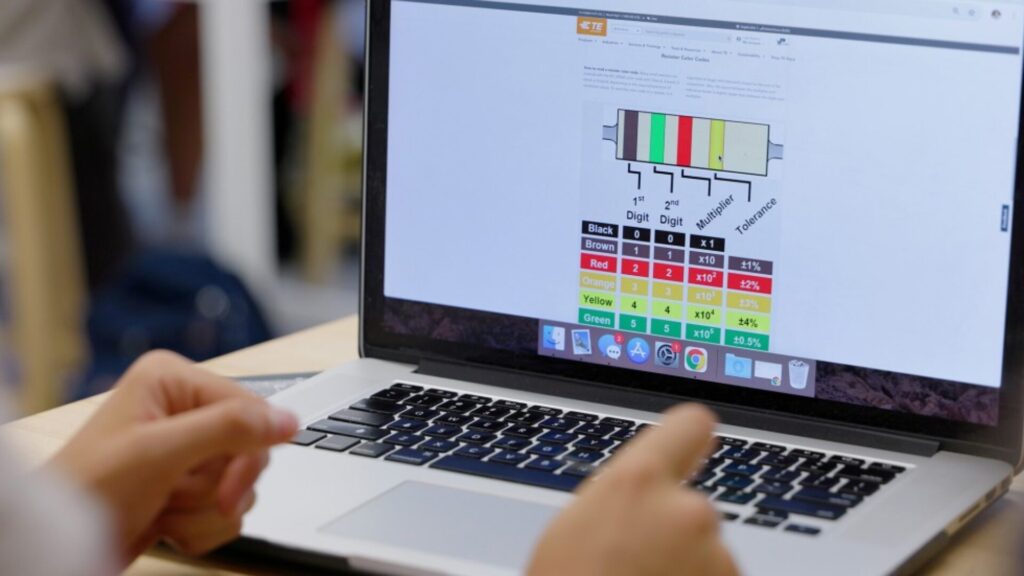
If you are looking for an independent and student-centered academic environment, Summer@Brown lets you experience the satisfying challenge of college-level study. Reflecting Brown’s famous student-centered philosophy, you can choose from over 230 non-credit courses across diverse subjects such as engineering, visual arts, and political science.
You will attend intensive three-hour classes each weekday, completing 2 to 3 hours of daily homework, projects, or research. This program gives you the freedom to manage your own schedule, live on campus, and collaborate with motivated peers from around the world.
Why it stands out: It mirrors Brown’s unique Open Curriculum, giving you the complete academic freedom to explore a subject you love without the stress of formal grades.
12. Columbia University Pre-College Programs
Location: Columbia University, New York, NY
Cost: Varies by program format
Acceptance Rate/Cohort Size: Not specified
Dates: Varies by session and format
Application Deadline: Rolling admissions
Eligibility: Open to domestic and international students who are in grades 9-12; international students are welcome to apply
Columbia’s Pre-College Summer Program allows you to study a subject that genuinely interests you while experiencing life at an Ivy League university. With many courses available across fields such as business, creative writing, psychology, engineering, medicine, political science, and data science, you can tailor your summer to your academic goals.
Classes are taught by Columbia instructors and emphasize discussion, critical thinking, and independent inquiry. Outside the classroom, residential students take part in campus activities and explore New York City.
Why it stands out: Few summer programs offer such a wide selection of university-level courses, allowing you to customize your experience around your specific academic interests.
13. Research Science Institute (RSI)
Location: Massachusetts Institute of Technology, Cambridge, MA
Cost: Free
Acceptance Rate/Cohort Size: Highly selective
Dates: Six-week summer program (specific dates vary by year)
Application Deadline: Typically due around December
Eligibility: High school juniors; international students can apply
RSI is one of the most selective STEM summer programs in the world, bringing together high-achieving students for an intensive research experience at MIT. The program begins with a week of advanced STEM coursework, seminars, and lectures delivered by leading scientists and researchers.
You then spend several weeks conducting original research under the guidance of mentors at institutions across the Boston area. The experience culminates in written and oral presentations that mirror the expectations of professional scientific conferences.
Why it stands out: Few high school programs match RSI’s combination of full funding, elite mentorship, and authentic research opportunities at one of the world’s leading STEM institutions.
14. Invest in Her: Financial Literacy and Leadership for Women – Fordham University
Location: Fordham University Gabelli School of Business, Rose Hill Campus, Bronx, NY
Cost: $1,300
Acceptance rate/cohort size: Not specified
Dates: July 13-17
Application Deadline: Priority for applications received before April 1st
Eligibility: Female high school students interested in business, finance, and leadership; international students are not eligible
If you are curious about business but unsure where to begin, Invest in Her offers an accessible introduction to finance and leadership. You will learn the basics of financial markets, accounting principles, financial statements, and personal financial decision-making.
The curriculum combines collaborative activities with problem-solving exercises that strengthen analytical and critical-thinking skills. Guest speakers, including Fordham alumni and professionals from leading firms, provide additional insight into careers in business and finance.
Why it stands out: The program blends financial literacy with leadership training, helping you build practical business knowledge while developing the confidence to lead.
15. Engineering & Computer Science Camp
Location: University of Texas at Austin, Austin, TX
Cost: $2,700
Acceptance rate/cohort size: Not specified
Dates: June 15th – July 23rd
Application Deadline: Rolling
Eligibility: Open to students who will have graduated from 9th or 10th grade by the summer of the program year; the program page does not specify citizenship or residency requirements
If you want to explore both engineering and computer science before choosing a future academic path, this five-week camp offers a broad introduction to both fields. You will investigate real-world engineering concepts while developing computational thinking and programming skills through Scratch and Python.
The curriculum goes beyond coding exercises by incorporating technology development projects that encourage problem-solving and creativity. You will meet industry professionals, attend career talks, and participate in lab tours that showcase how STEM is applied beyond the classroom.
Why it stands out: You explore engineering and computer science side by side, gaining exposure to multiple STEM disciplines instead of focusing on just one area.
Frequently asked questions: Summer courses for high school students
Are summer courses for high school students open to international students?
Eligibility varies by program. MITES Summer and Computer Science Scholars both restrict eligibility to US citizens or permanent residents. However, RSI, SUMaC, and Columbia University’s Pre-College Programs are all explicitly open to international students. Immerse’s Academic Insights Programme is also open globally to students aged 13 to 18 across eight locations, making it accessible regardless of citizenship.
How much do summer courses for high school students cost?
Costs range from completely free to over $8,950. Free options include MITES Summer, RSI, Computer Science Scholars, and Bossgirls. Mid-range courses like the UIC Engineering Summer Camp cost $500, while premium residential options like Stanford’s Mathematics Camp cost $8,950 and Harvard’s Pre-College Program costs $6,100. Financial aid is available for most selective, tuition-based programs listed here.
What is the difference between a single-subject deep dive and a broad exploration summer course?
Single-subject programs, like SUMaC or the Nanoscience Lab Summer Program, have you spend the entire course studying one field in depth, often through proof-based or lab-based work. Broad exploration programs, like Summer@Brown or Columbia’s Pre-College Programs, instead let you choose from a wide catalogue of subjects spanning business, engineering, and the humanities. If you already know your area of interest, a single-subject program offers deeper engagement; if you’re still deciding, a broad exploration format lets you sample multiple fields.
How selective are summer courses for high school students?
Selectivity varies dramatically. RSI and MITES Summer are both described as highly selective, admitting a small cohort from large national or international applicant pools. Other programs, like Summer@Brown, admit over 6,000 students annually with a less restrictive review process. Regardless of selectivity, meeting GPA and coursework prerequisites, like the Nanoscience Lab’s chemistry requirement, matters as much as the overall strength of your application.
What subjects can you explore in a summer course for high school students?
Subject offerings span nearly every academic field. Programs like the UGA Grady Summer Media Academy and Alpha Young Writers Workshop focus on journalism and creative writing, while the UIC Engineering Summer Camp and Nanoscience Lab Summer Program cover technical STEM fields. Business-focused options include Invest in Her at Fordham, and Immerse’s Academic Insights Programme offers the broadest range, covering more than 20 subjects across eight global locations.
Is Immerse Education a good option for exploring academic interests broadly?
Immerse’s Academic Insights Programme is a strong choice if you want flexibility in both subject and location, spanning eight cities including Boston, Cambridge, and Tokyo. The two week program places you in small groups of seven to 10 students, working on hands-on projects like conducting dissections in medicine or building a business case study. You’ll complete a personal project, receive written feedback, and earn a certificate of completion, giving you a well-rounded experience regardless of which academic direction you’re still weighing.
Turning a Summer Course Into Real Momentum
Choosing among these summer courses for high school students gives you a genuine introduction to college-level academics and independent learning.
Once the course ends, you can turn that hands-on experience into a clearer sense of your academic direction.
The skills, confidence, and academic habits you built become a strong foundation for stronger university applications ahead.
Keep building on what you started this summer by exploring our University Preparation blogs for guidance on your next steps.