

 Русский (RU)
 Українська (UK)
 Türkçe (TR)
 Italiano (IT)
 Français (FR)
 Português (PT)
 中文 (中国) (ZH)
 Español (ES)
 日本語 (JA)
 ไทย (TH)
 Deutsch (DE)
 Ελληνικά (EL)
 Polski (PL)
 Bahasa Indonesia (ID)
 Nederlands (NL)
 العربية (AR)
 한국어 (KO)

No matter what field you end up choosing in college or your career, AI is going to play some role in it. It has been one of the fastest-developing fields of the last few years, moving quickly enough that understanding it early gives you a real advantage. If you want to go beyond the normal prompting that everyone already knows how to do, one of the smartest options you have in high school is enrolling in one of the many AI courses for high school students.
These courses walk you through real, substantial topics like machine learning, neural networks, and natural language processing, using actual coding and real datasets. Compared to a longer program or a formal internship, they’re a much better starting point for beginners, especially students who don’t have much prior experience with AI but want a genuine introduction to it.
Picture actually understanding how ChatGPT generates a response, or why a model like Claude answers questions the way it does. That’s the kind of real, technical understanding these courses aim to build, moving you from simply using AI tools to actually knowing how they function.
How do you choose the right AI course for high school students?
Start with the field you’re actually interested in, and look for a course that connects AI to that specific area. AI touches nearly everything now: medicine, finance, art, transportation, so it’s worth searching for a course tied to your own interests rather than something too general.
Your skill level matters just as much. Some courses are designed for complete beginners with zero coding background, while others expect you to already know Python and dive straight into more advanced concepts. Choosing a course that actually matches where you’re starting from makes a real difference in how much you get out of it.
This kind of experience also strengthens your college applications in a real way. A completed AI course gives you something specific and memorable to discuss, an actual project or concept you worked through, which carries a lot more weight than just mentioning a general interest in AI.
To help you choose, we’ve drawn up a list of 15 AI courses worth considering.
For related opportunities, consider the online AI program.
Key takeaways
- AI Scholars at Carnegie Mellon is completely free but restricted to US citizens or permanent residents between 11th and 12th grade who complete a Python course before arriving on campus.
- MIT Beaver Works Summer Institute is free for families earning under $200,000 or $2,400 otherwise, letting students choose from tracks like autonomous systems, cybersecurity, and computer vision.
- Princeton AI4ALL is completely free but restricted to low-income rising 11th graders living in the US or Puerto Rico, including a notable field trip to Washington, DC to explore AI policy.
- Columbia’s Introduction to AI: Search Algorithms costs $12,837 per session and expects students to already be comfortable with object-oriented programming and recursion before enrolling.
- Harvard AI Bootcamp costs between $795 and $995 for a five day online program that requires prior Python experience, taught directly by current Harvard students and researchers.
- DEEP Summer Academy at the University of Toronto charges $732 per week for domestic students or $1,111 per week for international students, letting you combine up to four different one-week engineering courses.
- The AI and Machine Learning Pioneers Summer School at Oxford costs £8,995 and combines technical AI training with discussions on fairness, privacy, and responsible AI.
- Program costs for AI courses range from free options like AI Scholars and Princeton AI4ALL to over $12,837 for Columbia’s advanced Introduction to AI course.
15 AI Courses for High School Students
1. AI Scholars at Carnegie Mellon University
Location: Pittsburgh, PA, USA
Cost: Free
Program Dates: June 20th – July 18th
Deadline: February 1st
Eligibility: You must be between your 11th and 12th grade years in high school during the summer; You must be 16 years of age by June 20th; international students are not accepted
AI Scholars starts before you even arrive on campus; you will complete a Python course, so the program can move straight into artificial intelligence once classes begin. Over four weeks, you’ll learn how computers recognize patterns, process information, and make decisions using data.
Most of your time is spent writing code, testing ideas, and improving small AI projects instead of listening to long lectures. Faculty, graduate students, and researchers stop by regularly to explain what they’re working on and answer questions. The program ends with a project presentation, where every team explains what they built and how it works. You’ll also spend time on your college application essay with guidance from the program staff.
Why it stands out: Everyone begins with the same Python foundation, so the program can spend more time building AI projects instead of teaching basic programming.
2. Immerse Education’s AI Summer School

Location: Oxford, and Cambridge
Cost: Varies; summer school scholarship available through our bursary programme
Application Deadline: Multiple cohorts with rolling admissions.
Program Dates: 2 weeks during the summer
Eligibility: Students worldwide aged 13-18 currently enrolled in middle or high school; open to international students
As one of the more university-based AI courses for high school students, the Academic Insights Program provides school students with an opportunity to take undergraduate-level classes at universities around the world. Participants work with academics from universities like Oxford, Cambridge, and Harvard in classes of 4-10 students.
They attend university-style lectures and 1:1 weekly sessions with their tutor. The program includes exploring machine learning, neural networks, and AI ethics through hands-on coding projects, team challenges, and simulations led by Oxford and Cambridge tutors. By the end of the program, you will complete a personal project and receive written feedback and a certificate of completion. You can find more details about the application here.
Why it stands out: It gives you structured, project-based AI training with expert mentorship, helping you build real machine learning and ethical AI understanding early.
3. Princeton AI4ALL
Location: Princeton, New Jersey, USA
Cost: Free
Program Dates: July – August
Deadline: April 9th
Eligibility: Rising 11th-grade students living and attending high school in the U.S. or Puerto Rico; low income defined by specific criteria.
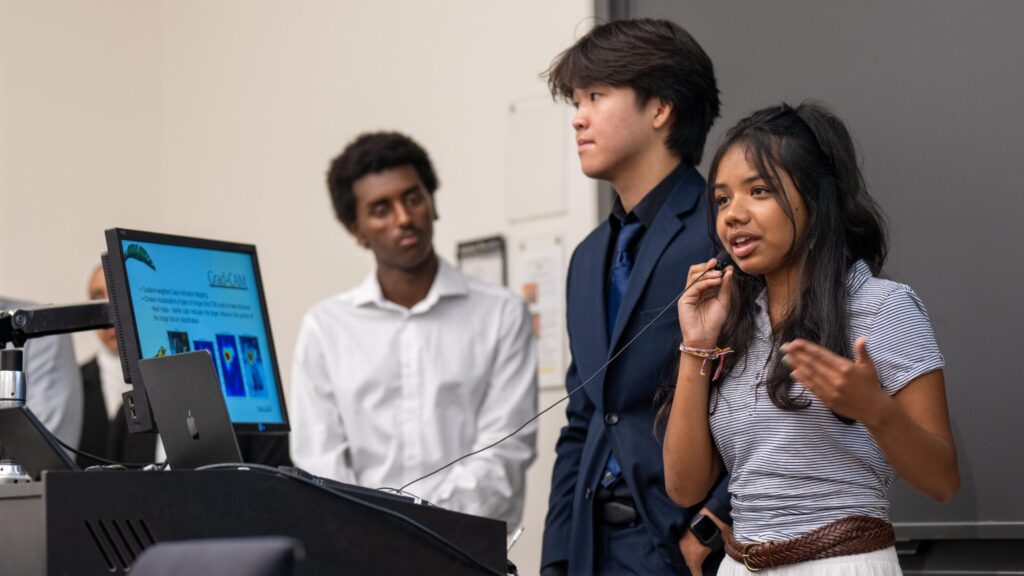
Princeton AI4ALL looks at artificial intelligence from two angles. First, you’ll learn the technical ideas behind AI through classes, coding activities, and research projects. Then you’ll spend time asking where those systems are actually used and what problems they create.
Topics like healthcare, public policy, biodiversity, and ethics come up often because they show how AI affects everyday life. Researchers and graduate students work closely with participants throughout the program, and every group presents its research before the session ends. One part that many students remember is the Washington, D.C. trip, where the discussion moves beyond classrooms into government and policy organizations.
Why it stands out: The program combines AI with public policy through a field trip to Washington, D.C., where students see how technology and government intersect.
4. Engineering Summer Academy at Penn (ESAP): Artificial Intelligence
Location: Philadelphia, PA, USA
Cost: $9,250 (plus a $90 application fee)
Program Dates: July 12th – July 31st
Deadline: Priority and International Deadline: January 31st; Final Deadline: February 28th
Eligibility: Rising sophomores to rising seniors around the world (must be at least 15 years old and have completed 9th grade); a minimum 3.0 GPA is required
The Engineering Summer Academy at Penn (ESAP) immerses you in an academically intense, fast-paced college environment on an Ivy League campus. The Artificial Intelligence course focuses heavily on generative AI, neural networks, and the core mathematics that power these systems.
You will learn the theoretical principles of machine learning and apply them to build custom AI applications. The program features small class sizes with a 1:19 instructor-to-student ratio and culminates in a final hands-on project. While a solid mathematical background is recommended, prior programming experience is beneficial but not strictly required.
Why it stands out: Students experience rigorous, college-level engineering coursework while building practical generative AI applications under the guidance of university instructors.
5. Georgetown University Summer Programs for High School Students: Artificial Intelligence Academy
Location: Washington, DC, USA
Cost: Residential: $3,725; Commuter: $3,095
Program Dates: 1 week starting June 7th
Deadline: Early Bird: January 31st (application fee waived); Final: April 15th
Eligibility: High school students; open to international students
Georgetown’s Artificial Intelligence Academy spends a week asking two questions. How does AI work, and where should people draw the line when using it? Classes introduce the science behind artificial intelligence before moving into discussions about topics like privacy, ethics, bias, and decision-making.
You will also look at examples of AI already being used in healthcare, business, and public services to understand why those debates matter. Guest speakers share their own experiences working with AI, making the conversations feel much less theoretical. By the end of the week, you’ll have worked through several case studies and small projects that connect the technology with everyday situations.
Why it stands out: The program gives equal attention to building AI knowledge and understanding the ethical questions that come with using it.
6. Machine Learning Summer Program at NYU Tandon School of Engineering
Location: Brooklyn, NY, USA
Cost: $3,180
Program Dates: Session 1: June 15-27; Session 2: July 6-17; Session 3: July 20-31
Deadline: Session 1: April 17th; Session 2 & 3: May 1st
Eligibility: Accepting students in 9th – 12th grade; open to US residents and international students
As one of the more beginner-friendly AI courses for high school students, NYU Tandon’s Machine Learning Summer Program starts with the ideas that make machine learning work before moving into actual models. You’ll look at neural networks, data analysis, and model testing, then use those ideas in coding exercises and small projects.
Each lesson builds on the previous one, so by the second week you’re working with larger datasets and making sense of the results yourself. Instructors explain why a model succeeds, why it fails, and what changes improve its accuracy. Classes are small enough that students can ask questions as they code instead of waiting until the end of a lecture.
Why it stands out: The program runs in three separate summer sessions, giving students several chances to study machine learning without needing prior experience in AI.
7. Stanford AI4ALL
Location: Online and Residential
Cost: $4,120 (Online); $9,800 (Residential)
Program Dates: June 15-26; July 19-31
Deadline: February 6th
Eligibility: Open to current 9th grade students; open to international students
Stanford AI4ALL introduces artificial intelligence through topics you’ll hear about almost every day, including computer vision, natural language processing, and robotics. The classes explain how these systems work before asking a bigger question: where should they actually be used?
You will spend time looking at AI in healthcare, education, and public policy while discussing issues such as bias and fairness. Researchers from Stanford share examples from their own work, and small projects give you a chance to test what you’ve learned. You can choose either the online or residential version, but both follow the same academic focus.
Why it stands out: The program spends as much time discussing responsible AI as it does teaching the technology itself.
8. Wharton Global Youth Program: Data Science Academy
Location: Philadelphia, USA
Cost: $10,599
Program Dates: Jun 21st – Jul 11th; Jul 12th – Aug 1st
Deadline: March 18th
Eligibility: Currently enrolled in grades 10-11 (rising juniors/seniors) with a strong background in math and coding and interest in data analytics; International applicants are welcome
Wharton’s Data Science Academy begins with one simple question: what can data actually tell us? From there, you will learn how to organize information, spot patterns, and make decisions based on evidence instead of guesses.
Lessons combine statistics, data visualization, and basic programming with assignments that use real datasets. You’ll spend time cleaning messy data before trying to answer questions with it, which turns out to be a big part of data science.
Why it stands out: You will work with real datasets throughout the program and receive a stipend after successfully completing the course.
9. Berkeley Coding Academy’s Data Science – The AI Journey
Location: Online
Cost: Starting from $3,259
Program Dates: July 6-31
Deadline: Rolling basis
Eligibility: Ages 12-14, 15-18; international students can apply
Berkeley Coding Academy’s Data Science: The AI Journey keeps classes live, so students write code while instructors explain each step. The course uses Python to introduce data science and artificial intelligence through coding exercises, datasets, and small projects.
One feature that stands out is the one-to-one support, where you can ask questions about your own code. As the weeks go on, projects become more open-ended, giving you room to test different ideas and compare results. The pace works well for beginners but still leaves enough room to explore more advanced topics.
Why it stands out: Every student receives one-to-one guidance while building data science projects in live online classes.
10. Columbia University Pre-College Programs: Introduction to AI: Search Algorithms
Location: New York, NY, USA
Cost: $12,837 per session
Program Dates: June 29th – July 17th (Summer A In-Person Session)
Deadline: Rolling basis
Eligibility: Domestic and international students entering or currently enrolled in grades 11 or 12 with a minimum 3.3 GPA and a strong programming background
One of the more advanced AI courses for high school students, this rigorous Ivy League course is intended for students who are already comfortable applying object-oriented programming and recursion, moving well beyond the basics. You will start with the history of artificial intelligence before diving into optimization and probabilistic strategies.
The curriculum is designed to help you analyze and understand the tradeoffs between different classical AI search techniques. Since it is part of Columbia’s Pre-College program, you will learn directly from university instructors while studying alongside highly motivated peers on a vibrant New York City campus.
Why it stands out: This course requires a strong foundation in programming, allowing the class to bypass introductory coding lessons and immediately focus on advanced optimization and probabilistic AI search strategies.
11. Harvard AI Bootcamp
Location: Online
Cost: $795 tuition; $995 Final Priority pricing
Program Dates: June 1-26
Deadline: May 26th
Eligibility: limited to high school students around the world; programming skills in Python are required
Harvard AI Bootcamp is a five-day online program that expects you to arrive with some Python experience. From there, you move into machine learning through coding sessions, short lessons, and programming challenges that get harder each day.
You’ll write code, test models, and fix mistakes with help from Harvard students and researchers. Small group projects give you a chance to apply what you’ve learned while getting feedback from mentors throughout the week. If you perform well, you may also earn additional certificates that recognize advanced work during the bootcamp.
Why it stands out: The program is taught by current Harvard students and researchers, giving you direct guidance while you work through coding challenges and AI projects.
12. Machine Learning for Beginners at Purdue University
Location: Virtual
Cost: $200 per session; $300 if you enroll in both sessions
Program Dates: July 7-11; July 21-25
Deadline: Rolling basis
Eligibility: 9th-12th graders and college students; open to international students
Machine Learning for Beginners at Purdue University introduces you to machine learning and computer vision through live online classes. You start with the basics before moving into small programming exercises that explain how machines recognize images and patterns.
Lessons mix coding with simple math, so you can see why an algorithm works instead of only learning how to use it. Throughout the week, you’ll complete short projects that build on each other, making the ideas easier to follow. The course is designed for beginners, so you do not need previous machine learning experience before joining.
Why it stands out: The course introduces both machine learning and computer vision in a beginner-friendly format through short live sessions and practical coding exercises.
13. DEEP Summer Academy at the University of Toronto
Location: Toronto, Canada
Cost: $732/week for domestic students; $1111/week for international students; $50 application fee; $60 application fee
Program Dates: Session A: July 6-10; B: July 13-17; C: July 20-24; D: July 27-31; not offered Aug 3-7; E: August 10-14
Deadline: Not specified
Eligibility: Grades 9-12; open to international students
DEEP Summer Academy lets you choose from several one-week engineering courses at the University of Toronto. Depending on your course, you might spend the week working with programming, artificial intelligence, robotics, biomedical engineering, or other engineering topics.
Graduate students teach the classes and guide you through experiments, design activities, and technical challenges that are similar to first-year university work. Since each course runs for one week, you can register for more than one if you want to explore different subjects over the summer. Classes stay small, giving you plenty of time to ask questions while you work.
Why it stands out: You can build your own summer by taking up to four different engineering courses instead of staying with a single subject.
14. AI and Machine Learning Pioneers Summer School at University of Oxford
Location: Oxford, United Kingdom
Cost: £8,995 (Economics page: Fees £8995; SBS page: Cost £8,995) accommodation and all meals included
Program Dates: July 19th – August 1st
Deadline: May 1st
Eligibility: High school students aged 15-18; open to international students
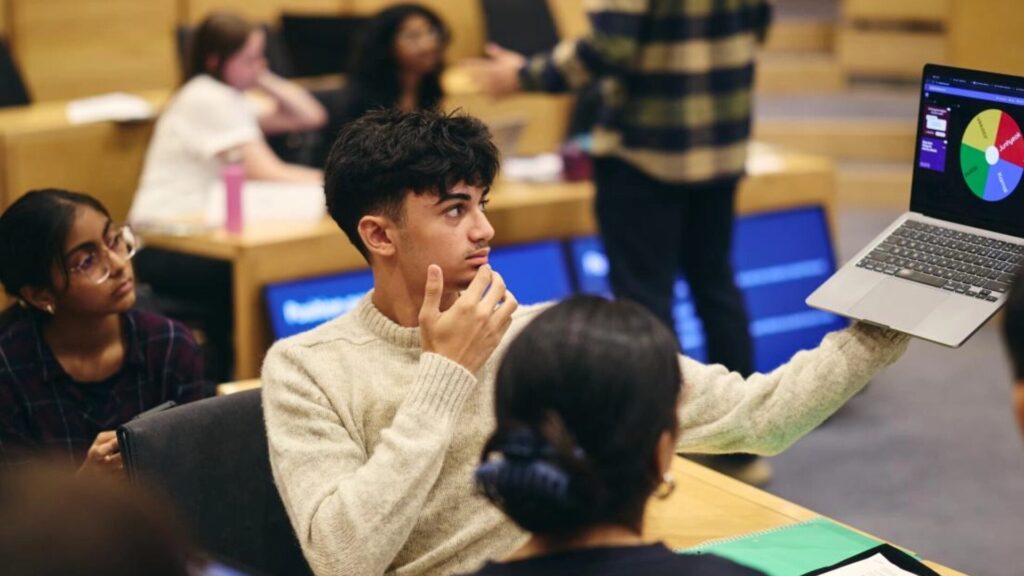
AI and Machine Learning Pioneers Summer School introduces you to the ideas behind artificial intelligence before asking you to use them in workshops and coding activities. You’ll explore topics like machine learning, neural networks, and how AI is being used in fields such as healthcare and business.
The program also spends time discussing questions around fairness, privacy, and responsible AI, so the focus isn’t only on writing code. Workshops and practical sessions run alongside the academic classes, giving you opportunities to test the concepts you’re learning instead of only reading about them.
Why it stands out: The course combines technical AI lessons with discussions about ethics, giving you a broader picture of how artificial intelligence is used.
15. Duke Pre-College High School Courses
Location: Durham, North Carolina, USA
Cost: Not specified
Program Dates: June 13-24, June 28th – July 9th, July 13-24
Deadline: Rolling basis
Eligibility: high school students; open to international students
Duke Pre-College High School Courses let you study subjects like artificial intelligence in a university setting alongside other high school students. If you choose an AI course, you’ll learn through lectures, coding exercises, and projects that explain how machine learning systems are built and used.
Duke faculty and Ph.D. students lead the classes, answer questions, and help students work through technical problems during the course. Assignments are similar to what you might see in an introductory college class, so you’ll spend time applying ideas instead of only reading about them. Depending on the course you choose, you’ll also complete a final project that brings together everything you’ve covered.
Why it stands out: You learn directly from Duke faculty and Ph.D. students while completing college-level coursework in a small classroom setting.
Frequently asked questions: AI courses for high school students
Do you need coding experience before starting an AI course?
It depends heavily on the course. Beginner-friendly options like Georgetown’s AI Academy and Stanford AI4ALL don’t require prior programming background, focusing instead on conceptual understanding and ethical questions. More advanced courses, like Columbia’s Introduction to AI or Harvard’s AI Bootcamp, explicitly require prior Python experience or comfort with object-oriented programming. Check each program’s prerequisites closely, since jumping into an advanced course without the expected background can make the material significantly harder to follow.
Are AI courses for high school students free?
Several are, including AI Scholars at Carnegie Mellon, Princeton AI4ALL, and MIT Beaver Works Summer Institute for lower-income families. Paid options range considerably: Purdue’s Machine Learning for Beginners costs just $200 per session, while premium residential programs like Wharton’s Data Science Academy cost $10,599 and Columbia’s Introduction to AI costs $12,837. Financial aid is available for several of the paid programs listed here.
What is the difference between a technical AI course and an AI ethics-focused course?
Technical courses, like NYU Tandon’s Machine Learning Summer Program or Berkeley Coding Academy’s Data Science course, have you writing code and building models using real datasets. Ethics-focused courses, like Georgetown’s AI Academy, instead spend equal time on questions of bias, privacy, and responsible use alongside the technical concepts. Several programs, including Stanford AI4ALL and the Oxford AI and Machine Learning Pioneers Summer School, deliberately blend both approaches within a single curriculum.
How selective are AI courses for high school students?
Selectivity varies considerably. Princeton AI4ALL and MIT Beaver Works Summer Institute are both quite competitive, tied to specific eligibility criteria like income thresholds or grade level. Others, like DEEP Summer Academy or Purdue’s Machine Learning for Beginners, use more open, rolling enrollment. Regardless of selectivity, meeting specific prerequisites, like a minimum GPA or completed math coursework, matters as much as overall application strength.
Do AI courses award college credit?
Very few in this list award transferable college credit. Most instead provide a certificate of completion or a final project presentation, as seen with AI Scholars and NYU Tandon’s Machine Learning Summer Program. If earning credit specifically matters to you, confirm this directly with each program, since AI-focused courses tend to favor project-based certificates over formal academic credit.
What subjects pair well with AI courses if you want a broader STEM foundation?
If you want AI knowledge alongside broader technical grounding, look for programs that combine AI with adjacent fields. MIT Beaver Works Summer Institute lets you pair AI with robotics or cybersecurity tracks, while DEEP Summer Academy lets you combine multiple one-week engineering courses covering different disciplines. Wharton’s Data Science Academy pairs AI concepts with statistics and business analytics, useful if you’re interested in how AI applies to finance or economics specifically.
Your AI Course Was Just The Entry Point
Choosing among these AI courses for high school students gives you real, technical exposure to machine learning, neural networks, and how these systems actually work.
Once the course ends, you can turn that hands-on experience into a clearer sense of your academic and career direction.
The coding skills, project work, and analytical thinking you built become a strong foundation for stronger university applications ahead.
Keep building on what you started with this course by exploring our University Preparation blogs for guidance on your next steps.