

 Русский (RU)
 Українська (UK)
 Türkçe (TR)
 Italiano (IT)
 Français (FR)
 Português (PT)
 中文 (中国) (ZH)
 Español (ES)
 日本語 (JA)
 ไทย (TH)
 Deutsch (DE)
 Ελληνικά (EL)
 Polski (PL)
 Bahasa Indonesia (ID)
 Nederlands (NL)
 العربية (AR)
 한국어 (KO)

If you’re the kind of student who likes solving problems that actually make your brain work, one of the many summer calculus courses for high school students can be a powerful way to level up before college. Calculus is where math starts feeling less like isolated formulas and more like a language for motion, change, optimization, engineering systems, economics, physics, data, and even biology.
In a course like this, you might work with limits, derivatives, integrals, series, multivariable functions, mathematical modeling, graphing tools, and computational applications that show how calculus is used beyond the textbook. You can also build the kind of academic skills colleges care about: independent problem-solving, careful reasoning, technical communication, and the ability to keep up with a faster-paced class.
Why should I attend a calculus course as a high schooler?
Summer calculus programs can act as a foundation for your college journey, giving you a taste of what university life is like at a top institution, often in person. Moreover, university-hosted calculus courses can give you more than classroom instruction; they can expose you to college faculty, campus learning tools, and the pace of undergraduate academics. For students considering STEM, economics, finance, data science, pre-med, or engineering, this can be a smart way to test your readiness for advanced coursework before applications or freshman year arrive.
To help you find a meaningful summer option, we’ve rounded up 15 summer calculus courses for high school students that offer advanced instruction, structured academic support, and exposure to college-style expectations.
Key takeaways
- Cornell’s MATH 1910 Calculus for Engineers costs approximately $7,760 in tuition and lets students earn four real Cornell credits through a program now more than 60 years old.
- Immerse’s Math Summer School spans five locations, including London, Tokyo, and Cambridge, with an average of seven participants per class, open to students aged 15 to 18 from all countries.
- Stanford’s Math 19 course places high school students in an actual undergraduate class alongside degree-seeking students, with commuter costs starting at $8,226 and residential costs starting at $18,771.
- The University of Houston’s TC Energy Summer Scholars Academy is completely free but restricted to graduating seniors already planning to attend UH as a STEM major.
- UChicago’s Mathematical Methods in the Physical Sciences II costs $4,980 plus a $75 application fee, though need-based aid can reduce the fee to as low as $1,245.
- UCLA’s Summer College Immersion Program requires a minimum unweighted GPA of 3.8 and combines calculus coursework with required seminars on leadership and wellness.
- UC Berkeley’s Pre-College Scholars program costs between $14,687 and $15,987 for the residential track, admitting over 300 students across multiple summer sessions.
- Program costs for summer calculus courses range from $950 per credit hour at Wake Forest to over $23,000 for the University of Pennsylvania’s two-course online option.
15 Summer Calculus Courses for High School Students
1. Cornell University Precollege Studies – MATH 1910: Calculus for Engineers
Location: Ithaca, New York (in-person course on the Cornell University campus, available through the Precollege Summer Residential and Commuter programs)
Cost/Stipend: $1,940 per credit tuition (4 credits, approximately $7,760 total tuition) + nonrefundable $75 application fee
Acceptance rate/cohort size: Selective; cohort scale varies by course section
Dates: June 22th – July 10th
Application Deadline: May 5th
Eligibility: Completed sophomore year of high school (grade 10 or the international equivalent) when the class starts; ages 16-18 for the residential program or 16-19 for the on-campus commuter program; three years of high school mathematics including trigonometry and logarithms, plus at least one course in differential and integral calculus or equivalent AP credit; open to international students
In this course, you study integral calculus at the rigor of Cornell’s engineering sequence. Over three intensive weeks, you attend in-person classes Monday through Friday from 8:30 a.m. to 12:30 p.m. with a Cornell instructor. You practice techniques of integration, compute areas and volumes, work with partial fractions and exponential growth, and analyze infinite sequences, series, convergence tests, and power series.
Daily problem-solving builds the computational fluency and mathematical reasoning engineers need before multivariable calculus. You earn 4 Cornell credits, graded letter or S/U, recorded on an official Cornell transcript and generally transferable toward an undergraduate degree.
Why it stands out: It lets you complete the first course in Cornell’s required engineering calculus sequence as a high school student, earning real college credit on an official Cornell transcript through one of the oldest precollege programs of its kind, now more than 60 years old.
2. Immerse Education’s Math Summer School

Location: Cambridge, Oxford, London, and Tokyo
Cost/Stipend: Varies; summer school scholarship available through our bursary programme
Acceptance rate/cohort size: Selective; an average of 7 participants per class
Dates: 2 weeks during the summer
Application Deadline: Multiple summer cohorts; rolling admissions.
Eligibility: Students from all countries aged 15-18 currently enrolled in middle or high school
Immerse Education’s Mathematics Summer School gives you the chance to explore advanced mathematical ideas in a focused two-week setting, with calculus forming an important part of the academic experience. You’ll work through challenging problems in areas such as calculus, algebra, and statistics while developing stronger analytical reasoning and problem-solving skills.
Beyond routine exercises, the program encourages you to examine mathematical concepts more deeply, discuss different approaches with peers, and apply your learning through collaborative projects. You may also take part in expert-led seminars, group workshops, individual tutoring, and research-style assignments that help you connect mathematical theory with practical applications.
Why it stands out: Its mix of rigorous math academics taught by esteemed faculty and provision of residential programs at campuses will help you gain an accurate picture of life as a math undergraduate student.
3. University of Houston TC Energy Summer Scholars Academy
Location: University of Houston campus, Houston, TX
Cost/Stipend: None
Acceptance rate/cohort size: Selective; ~55 students
Dates: June 8th – August 7th
Application deadline: April 9th
Eligibility: Graduating high school seniors who plan to attend UH in the fall and select a major in the College of Natural Sciences and Mathematics or the Cullen College of Engineering as a first-choice major; must have received credit or be currently taking pre-calculus in high school; open to international students
The University of Houston TC Energy Summer Scholars Academy is built for students preparing to enter demanding STEM majors and needing a strong start in college-level mathematics. The academic work centers on Calculus I, while also introducing you to chemistry concepts and study strategies that support the transition into university STEM coursework.
You can expect a structured environment with daily assignments, instructor-led lessons, and study sessions that push you to strengthen both technical skills and academic discipline. The program also emphasizes habits that matter in college, such as critical thinking, time management, and self-management during a fast-paced course sequence. Faculty, staff, and administrators are part of the experience.
Why it stands out: It is especially practical for future UH STEM majors because it combines Calculus I, college success support, faculty networking, and a pathway into engineering or natural sciences coursework.
4. Harvard Secondary School Program
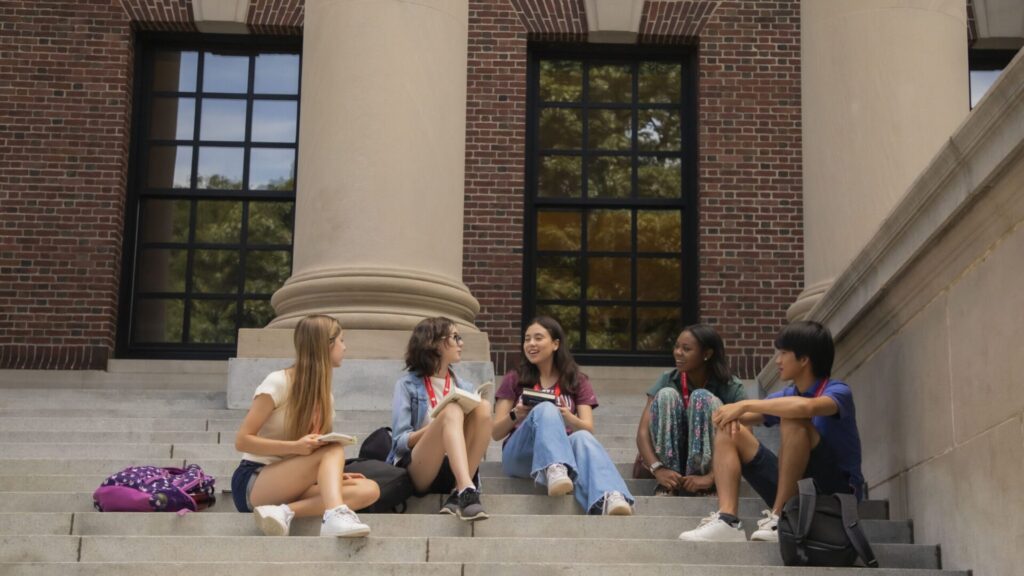
Location: Virtual or on-campus at Harvard University, Cambridge, MA
Cost: $4,180 – $15,735 + $75 application fee; financial aid is available
Acceptance rate/cohort size: Competitive; over 2,800 high school students globally across all program formats
Dates: July 12th – August 8th (residential) | June 20th – August 8th (residential/online/commuter)
Application Deadline: April 1st
Eligibility: High school freshmen, sophomores, and juniors who graduate high school in the program year or next two years; ages 16-18; open to international students
Harvard’s Secondary School Program gives you access to credit-bearing college coursework in mathematics and related fields while still in high school. If you choose a calculus track, you can study subjects such as single-variable calculus, Calculus II, multivariable calculus, differential equations, or proof-based mathematical structures depending on your preparation.
The courses are designed to develop conceptual understanding, computational fluency, and stronger problem-solving habits rather than only formula memorization. You should expect independent work, regular assignments, and active engagement with instructors and classmates in a setting that mirrors undergraduate expectations. Campus resources and college-readiness programming can also help you understand how advanced coursework fits into the transition from high school to university learning.
Why it stands out: Harvard’s Secondary School Program offers one of the strongest credit-bearing options for advanced math students, with calculus courses that go beyond AP-style coverage into deeper reasoning and college-level expectations.
5. Stanford University Summer Session – Calculus Math 19
Location: Stanford University campus, Stanford, California (in-person, residential or commuter)
Cost: $1,505 per unit + application, program, campus health, and document fees; high school commuter costs start at $8,226 with a minimum of 5 units, and residential costs with a full course load and meal plan start at $18,771
Acceptance rate/cohort size: Selective; roughly 25 students per class
Dates: June 20th – August 16th
Application Deadline: March 2nd
Eligibility: At least 16 years of age by June 20th, and no more than 19 by August 16th; not matriculating into Stanford as a freshman; knowledge of trigonometry, advanced algebra, and elementary functions, with completion of the Math Placement Diagnostic required to register; open to international students
As a high school student in Stanford Summer Session’s Math 19, you take a genuine 3-unit Stanford calculus course alongside university students during the eight-week summer quarter. The course introduces differential calculus of functions of one variable, including a review of elementary functions such as exponentials and logarithms, limits, rates of change, the derivative and its properties, and applications of the derivative.
You work through problem sets, lectures, and exams that build rigorous analytical and quantitative reasoning skills, and your grade appears on an official Stanford transcript. You also gain access to campus libraries, advising, and community events while experiencing authentic college-level mathematics.
Why it stands out: It lets high school students earn real, transcripted Stanford University credit in single-variable differential calculus by enrolling in an actual undergraduate course alongside degree-seeking students during Stanford’s eight-week summer quarter.
6. Boston University High School Honors
Location: Boston University campus, Boston, MA
Cost: $6,760 + $75 application fee; housing and dining separate; limited need- and merit-based aid available for domestic students taking at least two courses
Acceptance rate/cohort size: Selective; approximately 130 students
Dates: Multiple summer sessions available; exact dates vary by course
Application Deadline: May
Eligibility: Students entering junior or senior year of high school in the fall; qualified juniors must be in Honors and/or AP courses; open to international students
Boston University High School Honors allows you to take undergraduate-level courses while experiencing the pace and expectations of a college classroom. If you focus on mathematics, you may choose courses such as Calculus 1, Calculus 2, multivariate calculus, or calculus designed for life and social science applications. The coursework can help you strengthen core skills in differentiation, integration, sequences, series, vectors, partial derivatives, and applied problem-solving depending on the class you select.
Because the courses are part of BU’s regular summer offerings, you are expected to manage college-style assignments, exams, and independent preparation. Academic advising and campus resources can support the transition, but you still need to take responsibility for pacing, preparation, and follow-through.
Why it stands out: BU High School Honors stands out for giving you access to undergraduate math courses in a major university setting, with smaller summer classes and the chance to earn credit while learning alongside college students.
7. Johns Hopkins Summer Term Undergraduate Courses – Calculus I (Physical Sciences & Engineering)
Location: Online (8-week section) or Johns Hopkins University Homewood Campus, Baltimore, Maryland (5-week section)
Cost/Stipend: $1,275 per credit hour + an $85 non-refundable application fee; financial assistance is available
Acceptance rate/cohort size: Selective; cohort size is not published
Dates: Summer – Online section: June 1st – July 24th; Homewood Campus section: June 29th – July 31st
Application Deadline: Rolling deadline of July 6th for Homewood Campus applicants and July 13th, 2026 for Online applicants
Eligibility: Cumulative GPA of 3.0 or higher on a 4.0 scale; successful completion of 10th grade before the course start date; course-specific prerequisites must be met; open to international students
In this course, you study the differential and integral calculus of functions of one variable, working through analytic geometry of graphs, limits, derivatives, integrals, and the Fundamental Theorem of Calculus. You also apply integration to problems such as arc length and volumes of solids with rotational symmetry, with applications to the physical sciences and engineering emphasized throughout.
In the online section, you learn through pre-recorded lectures, notes, interactives, computer-scored assessments with immediate feedback, instructor-graded assignments, and weekly recorded synchronous problem-solving sessions. Expect a minimum of 5–10 hours of work per week online, or daily morning classes on the Homewood Campus. You finish with transferable college credit and a rigorous calculus foundation for STEM majors.
Why it stands out: It lets qualified high school students earn four Johns Hopkins credits in the same Calculus I course designed for physical sciences and engineering majors, with a choice between a flexible asynchronous online format and an in-person Homewood Campus classroom.
8. Summer at UChicago – Mathematical Methods in the Physical Sciences II (MATH18400 10)
Location: Remote
Cost: $4,980 + a $75 application fee; need-based financial aid is available, reducing the fee to $2,940 for household incomes under $125,000 or $1,245 for incomes under $80,000
Acceptance rate/cohort size: Selective; cohort size not specified
Dates: Session 1: June 15-17
Application Deadline: March 12th
Eligibility: Current 11th and 12th graders for College curriculum courses taken alongside UChicago undergraduates through Summer Online; readiness for the second course in the Mathematical Methods sequence, which builds on prior calculus and linear algebra preparation; open to international students
In this course, you study multivariable and vector calculus in a five-week University of Chicago College course taken online alongside UChicago undergraduates. You work with functions of more than one variable, parameterized curves, and vector fields, and compute partial derivatives and vector derivatives, including divergence, gradient, and curl.
You evaluate double and triple integrals as well as line and surface integrals, applying the fundamental theorems of vector calculus in two and three dimensions through Green’s, Gauss’s, and Stokes’ theorems. You earn a letter grade and at least 100 units of credit recorded on an official UChicago transcript.
Why it stands out: It allows advanced high school students to earn graded University of Chicago credit in a rigorous multivariable calculus course drawn directly from the College’s physical sciences mathematics sequence.
9. UCLA Summer College Immersion Program (SCIP)
Location: University of California Los Angeles, Los Angeles, CA
Cost: $1,675 + additional fees; scholarships are available
Acceptance rate/cohort size: Highly competitive; small cohort sizes
Dates: June 22th – July 31st
Application Deadline: Domestic: May 1st; International: April 1st
Eligibility: Currently enrolled in grades 10-11 as of Spring; minimum 3.8 GPA (unweighted, cumulative) at the time of application; specific requirements may apply by course; open to international students
UCLA’s Summer College Immersion Program gives academically advanced high school students a chance to take UCLA coursework while building college-readiness skills. If you choose a calculus course, you may study differential and integral calculus or calculus of several variables while learning how university math classes are structured. The academic side requires you to keep up with college-level lectures, assignments, and assessments, while the co-curricular components help you prepare for broader campus expectations.
You also participate in required seminars focused on areas such as leadership, public speaking, wellness, and the transition into college life. Studying alongside UCLA undergraduates can give you a more realistic view of how college students handle rigorous quantitative courses.
Why it stands out: UCLA SCIP combines real UCLA coursework with required college-readiness seminars, making it a well-rounded option for students who want both calculus exposure and a preview of undergraduate life.
10. Tufts Dual Enrollment Courses
Location: Tufts University Medford / Somerville Campus, Medford, MA (15 minutes from Cambridge)
Cost: $1,140 per credit + a $65 non-refundable registration fee
Acceptance rate/cohort size: Selective; no fixed cohort sizes
Dates: Spring: January 14th – May 8th; Summer Session 1: May 20th – July 2th; Summer Session 2: July 6th – August 14th; and Fall sessions
Application Deadline: Varies by session; Spring: January 1st; Summer Session 1: May 6th; Summer Session 2: June 22th
Eligibility: Students entering grades 10-12 who are at least 16 years old by program start; open to international students
Tufts Dual Enrollment Courses let qualified high school students take undergraduate-level classes in mathematics and other subjects with flexibility around academic goals. Within calculus, you can study topics such as limits, continuity, derivatives, definite integrals, applications of integration, sequences, series, vectors, multiple integrals, and vector calculus, depending on your placement. The program requires you to meet university standards, which means completing rigorous assignments, preparing independently, and engaging with material at a deeper level than most high school courses allow.
You may also use the experience to explore related fields such as probability, statistics, differential equations, abstract algebra, or higher mathematics. Tufts faculty, academic resources, and the broader campus structure can help you understand what undergraduate learning actually requires.
Why it stands out: Tufts stands out for flexibility, allowing high school students to choose focused undergraduate math courses without committing to a full pre-college residential program.
11. UC Berkeley Pre-College Scholars
Location: University of California, Berkeley, CA; residential, commuter, and online options
Cost: Residential: $14,687 (6 weeks) to $15,987 (8 weeks); Virtual/Commuter: $635 per unit + $683 in standard fees (+$500 international fee if applicable); CS Academy: $5,197 program fee + $25 application fee; a single merit-based media scholarship is available for the residential track
Acceptance rate/cohort size: Selective; over 300 students
Dates: Session A: May 26th – July 2nd; Session B: June 8th – August 14th; Session C: June 22nd – August 14th; Session D: July 6th – August 14th; Session E: July 27th – August 14th; Session F: July 6th – July 24th
Application Deadline: Residential & CS Academy (Non-Credit): March 17th; Commuter & Virtual Tracks: June 1st
Eligibility: Must be 16 or 17 years old by the start of the program, have completed 10th or 11th grade, and maintain a minimum 3.0 GPA; open to international students
UC Berkeley Pre-College Scholars allows high school students to take summer coursework through a major public research university. You may study single-variable calculus, Calculus II, multivariable calculus, analytic geometry, or math sequences designed for STEM and life science pathways as part of the calculus offerings.
The coursework can involve regular assignments, assessments, and problem-solving that require more independence than a typical high school math class. You may also learn how calculus applies to economics, life sciences, engineering, differential equations, vector spaces, and optimization depending on the course you select.
Why it stands out: Berkeley’s program is strong for students seeking a public research university experience, with calculus pathways that connect directly to STEM, economics, life sciences, and engineering preparation.
12. NYU Precollege
Location: NYU’s Washington Square campus, NY
Cost: $700 to $16,016 for 0-8 credits; need-based scholarships are available and can cover up to 50% of tuition costs
Acceptance rate/cohort size: Selective; cohort size not specified
Dates: Spring: January 20th – May 13th; Summer: July 1st – August 12th; Fall: September 2nd – December 22th
Application Deadline: Spring: January 5th; Summer: March 13th (International on-campus) or June 15th (US/Online); Fall: August 14th
Eligibility: Rising 11th or 12th grade high school students in summer or current 11th or 12th grade students in the fall or spring semesters with a minimum 3.0 GPA on a 4.0 scale; open to international students
NYU Precollege allows you to enroll in college-level courses while experiencing the academic environment of NYU. If you are interested in calculus, you may choose options such as Calculus I or Calculus II for Engineers, depending on your preparation and course availability. The coursework can help you build experience with lectures, assignments, exams, and the kind of independent study expected in undergraduate math classes.
Alongside academics, the program includes college-prep programming that can help you think through admissions, financial aid, study habits, and the transition into university life. Participants are treated as part of the NYU academic community, with access to university resources such as libraries, tutoring, and student support services.
Why it stands out: NYU Precollege offers a city-based university experience where you can take calculus for credit while accessing campus resources, peer tutoring, college-prep sessions, and NYU’s broader academic community.
13. University of Pennsylvania Pre-College Online Program

Location: Online
Cost: 1 course unit: $8,692; 2 course units: $14,300
Acceptance rate/cohort size: Competitive; cohort size varies by course
Dates: Summer Session I: May 26th – July 1st; Summer Session II: July 2th – August 7th
Application Deadline: Summer Session I: May 1st; Summer Session II: June 1st
Eligibility: Current 10th and 11th-grade students; open to international students
The University of Pennsylvania Pre-College Online Program lets you take credit-bearing undergraduate courses from home while working under Penn’s academic standards. For calculus-focused students, relevant options include introductory calculus and more advanced calculus coursework that builds on high school preparation.
You may study functions, derivatives, extrema, curve-sketching, integrals, infinite series, first-order differential equations, and the use of symbolic or graphical tools in mathematical analysis. The courses can require regular meetings, homework, papers or assessments, midterms, and final exams, depending on the class. Since you are evaluated like an undergraduate student, the experience can help you understand how college-level grading, pacing, and expectations work.
Why it stands out: Penn’s online program is a strong option for students who want Ivy League-level calculus coursework from home while still being evaluated under undergraduate academic standards.
14. Georgetown University Hoya Summer High School Sessions – College Prep Program
Location: Georgetown University, Washington, DC
Cost: $7,113 tuition per class + $50 application fee + housing and other additional fees; limited need-based scholarships are available for tuition only
Acceptance rate/cohort size: Selective; small, personalized seminar groups
Dates: July 5th – August 7th
Application Deadline: Rolling; May 31st
Eligibility: Current 9th – 12th graders during the academic year before your summer program; minimum 3.0 GPA; open to international students
Georgetown’s Hoya Summer High School Sessions College Prep Program allows you to take university coursework while also developing skills for the college admissions and campus transition process. If you choose a calculus course, you can study single-variable calculus, integration techniques, sequences, series, parametric curves, or precalculus foundations depending on the class that fits your background.
The academic structure includes scheduled class meetings and a significant amount of independent study, so you need to be prepared for a college-style workload. You also participate in seminars that address test preparation, the college search, admissions planning, and skills for academic success. The program also gives you a chance to study with peers from different places.
Why it stands out: Georgetown stands out for pairing credit-bearing calculus coursework with college-prep seminars, test strategy support, academic resources, and a structured look at university life.
15. Wake Forest University Summer Sessions
Location: Wake Forest University, Winston-Salem, NC
Cost: Tuition $950 per credit hour (online and in-person); Audit Fee $75 per credit hour
Acceptance rate/cohort size: Selective; limited spaces
Dates: May 27th – July 1st (Session 1); July 7th – August 14th (Session 2)
Application Deadline: Rolling basis
Eligibility: High school juniors or seniors in good academic standing; open to international students
Wake Forest University Summer Sessions allows current high school students to take credit-bearing courses in a flexible university setting. If you choose a calculus course, you can study topics such as limits, continuity, derivatives, integration, infinite series, vector functions, multiple integrals, and major theorems in multivariable calculus, depending on your placement.
The smaller summer class format is designed to support stronger student-faculty interaction, which can be useful when you are working through fast-paced mathematical material. You’ll be expected to manage college-style assignments and keep up with rigorous coursework while developing more independent study habits. You can also earn academic credit while getting an early feel for Wake Forest’s classroom expectations and teaching style.
Why it stands out: Wake Forest stands out for its small summer class sizes and strong student-faculty interaction, making it a good fit if you want a more personal credit-bearing calculus experience.
Frequently asked questions: Summer calculus courses for high school students
Are summer calculus courses for high school students open to international students?
Yes, nearly every program in this list explicitly welcomes international students, including Cornell’s MATH 1910, Stanford’s Math 19, and Harvard’s Secondary School Program. Immerse’s Math Summer School is also open globally to students aged 15 to 18. Since most of these are US university-hosted courses, English proficiency and specific math prerequisites typically apply regardless of citizenship.
How much do summer calculus courses cost?
Costs vary enormously by institution and credit load. The University of Houston’s TC Energy Summer Scholars Academy is free, while Wake Forest charges $950 per credit hour and Tufts charges $1,140 per credit. Premium options include Stanford’s Math 19, starting at $8,226 for commuters, and UC Berkeley’s Pre-College Scholars residential track, costing up to $15,987. Financial aid is available for most tuition-based programs.
Do all summer calculus courses award transferable college credit?
Most do, since many place you directly into an actual undergraduate course rather than a simplified version. Cornell’s MATH 1910, Stanford’s Math 19, and UChicago’s Mathematical Methods course all award real, transcripted credit alongside degree-seeking students. A few, like some tracks within Boston University’s High School Honors, may vary by specific course, so confirm credit-bearing status directly before enrolling.
What math background do you need before taking a summer calculus course?
Prerequisites vary but are typically substantial. Cornell’s MATH 1910 requires three years of high school math including trigonometry and logarithms plus prior calculus exposure, while Stanford’s Math 19 requires completing a Math Placement Diagnostic covering trigonometry and elementary functions. UChicago’s multivariable calculus course specifically requires prior calculus and linear algebra preparation. Check each program’s prerequisites closely, since some courses assume considerably more background than a standard AP Calculus class.
How selective are summer calculus courses for high school students?
Selectivity ranges from moderate to highly competitive. UCLA’s Summer College Immersion Program requires a minimum unweighted GPA of 3.8, and Stanford’s Math 19 admits roughly 25 students per class. Others, like Wake Forest’s Summer Sessions or Tufts Dual Enrollment Courses, describe themselves as selective without an extremely low acceptance rate. Regardless of selectivity, meeting specific math prerequisites matters as much as overall academic strength.
Is Immerse Education a good option for exploring calculus and math before college?
Immerse’s Math Summer School is a strong choice if you want a shorter, more flexible introduction to advanced mathematics across five global locations, including London, Tokyo, and Cambridge. The two week program covers calculus, algebra, and statistics through expert-led seminars, group workshops, and individual tutoring, with an average of just seven participants per class. It offers a lower-commitment alternative to the longer, credit-bearing university courses listed here, while still giving you a picture of undergraduate math life.
What Comes After Your Calculus Course?
Choosing among these summer calculus courses for high school students gives you a genuine introduction to advanced mathematical reasoning and proof-based thinking.
Once the course ends, you can turn that quantitative foundation into a clearer sense of your academic direction.
The analytical skills, confidence, and math fluency you built become a strong foundation for stronger university applications ahead.
Keep building on what you started with this course by exploring our University Preparation blogs for guidance on your next steps.