
 Русский (RU)
 Українська (UK)
 Türkçe (TR)
 Italiano (IT)
 Français (FR)
 Português (PT)
 中文 (中国) (ZH)
 Español (ES)
 日本語 (JA)
 ไทย (TH)
 Deutsch (DE)
 Ελληνικά (EL)
 Polski (PL)
 Bahasa Indonesia (ID)
 Nederlands (NL)
 العربية (AR)
 한국어 (KO)

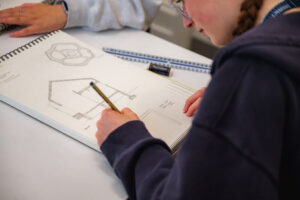
If you’re interested in design, one of the best ways to explore the field is by creating, experimenting, and solving real creative problems rather than simply reading about them. Design courses for high school students introduce you to areas such as graphic design, architecture, product design, animation, filmmaking, fashion, and visual communication. You learn these through studio projects, portfolio-building exercises, critiques, and hands-on use of industry-standard tools like Adobe Photoshop, Illustrator, InDesign, CAD software, and digital design platforms.
Along the way, you’ll strengthen skills in creative thinking, visual storytelling, design research, problem-solving, collaboration, and presentation while experiencing the pace and expectations of university-level creative education. Many courses also allow you to receive feedback from faculty, practicing designers, and industry professionals, helping you refine your interests before applying to college.
Design courses can act as a foundation for your college journey by giving you a firsthand experience of what it’s like to study a creative discipline at a university or through a professional design program.
What kind of design courses are available for high school students?
High school students have access to a rich spectrum of design courses, ranging from foundational visual arts to career-focused digital and physical disciplines. Introductory programs typically cover core fundamentals like composition, color theory, and typography, which lay the groundwork for specialized tracks in graphic design, UI/UX (user interface/user experience), and digital animation.
For those interested in spatial or tactile fields, courses in architecture, industrial design, and fashion focus on sketching, 3D modeling, and physical prototyping. Additionally, many pre-college academies and online platforms offer hands-on portfolio development courses specifically tailored to help you refine your technique, build original projects, and prepare compelling submissions for art and design college admissions.
Below are 15 design courses for high school students to help you start off.
For related options, consider the online architecture program.
Key takeaways
- The NYU Tisch Summer High School Program costs $8,008 for four credits or $12,012 for six credits, letting you choose specializations like filmmaking, game design, or photography over four weeks.
- Immerse Education’s Architecture & Design Summer Programme takes place in London over two weeks, working in classes of seven to 10 students, open to students worldwide aged 15 to 18.
- Central Saint Martins’ Graphic Design short course starts at £520 and teaches design fundamentals entirely without computers, using sketchbooks, found printed material, and hand tools.
- The RISD Pre-College Program costs $12,495 for residential students and follows the same curriculum as RISD’s own first-year Experimental and Foundation Studies program.
- UCLA’s Design Media Arts Summer Institute costs $6,541 for residential students and rotates through four studio areas, including 2D Image, Net Art, 3D Worldbuilding, and Motion, over three weeks.
- Carnegie Mellon’s Pre-College Design program costs $12,204 for residential students and mirrors CMU’s first-year School of Design experience across a six week, non-credit format.
- Two free online options, Graphic Design Essentials from LCI Education and the University of Colorado Boulder’s Graphic Design course, let you build design fundamentals without any cost or application process.
- Program costs for design courses range from free online options to over $12,495 for RISD’s five week residential Pre-College Program.
15 Design Courses for High School Students
1. NYU Tisch Summer High School Program
Location: New York University, New York City
Cost: $8,008 (4 credits) or $12,012 (6 credits); $1,308–$1,820), Meals ($824), a Program Fee ($200), and track-specific lab or ticket fees ($168–$690) + $75 application fee; limited need-based scholarships are available
Acceptance rate/cohort size: Selective; ~300 students total
Dates: July 5th – August 1st
Application Deadline: December 1st
Eligibility: High school sophomores and juniors who are at least 15 years old at the time of application; minimum 3.0 cumulative unweighted GPA; open to international students
The NYU Tisch Summer High School Program allows you to study creative disciplines through courses modeled after the school’s undergraduate curriculum. You can choose a specialization such as filmmaking, drama, game design, photography, or recorded music and spend four weeks developing technical and creative skills through studio work and collaborative projects.
Classes are taught by Tisch faculty and follow a graded curriculum that reflects the pace and expectations of university-level study. Alongside coursework, you’ll experience New York City’s creative environment while working with peers who share similar interests. The program concludes with a final showcase where you present your work, and eligible courses offer up to six transferable college credits.
Why it stands out: It offers direct exposure to NYU Tisch’s college-level curriculum while allowing you to earn college credit in a professional creative environment.
2. Immerse Education’s Architecture & Design Summer School
Location: London, UK
Cost: Varies; summer school scholarship available through our bursary programme
Acceptance rate/cohort size: Selective; an average of 7 participants per class
Dates: Two weeks during the summer
Application Deadline: Multiple summer cohorts with rolling admissions
Eligibility: High school students worldwide aged 15-18; open to international students
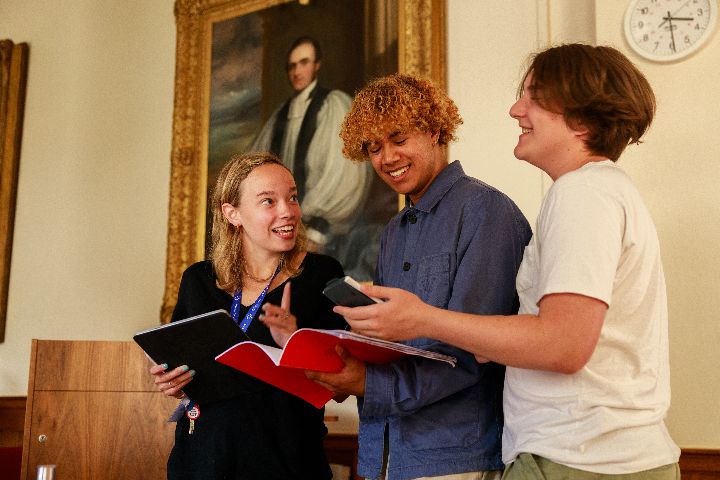
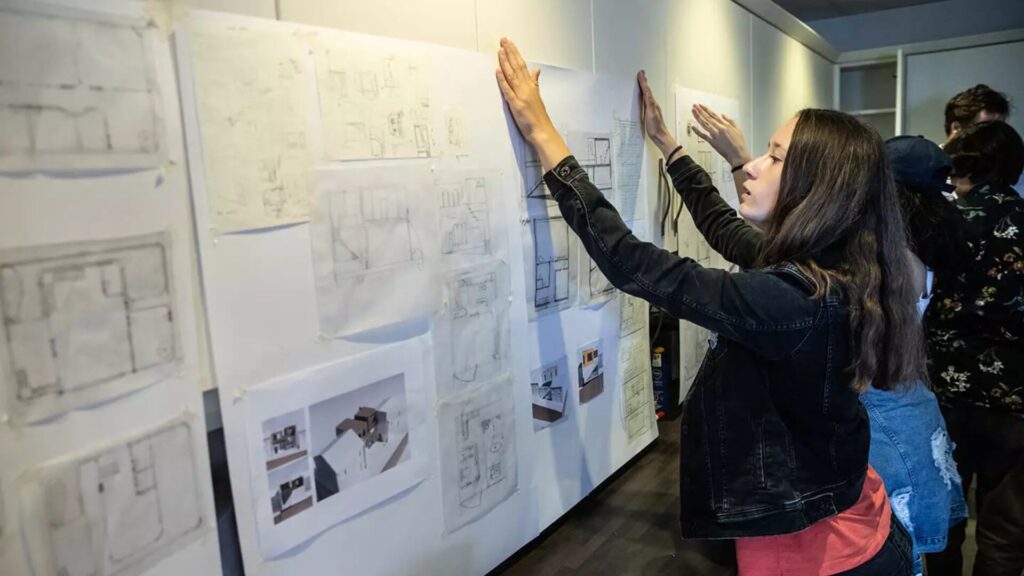
Immerse Education’s Architecture & Design Summer Programme introduces you to university-level design thinking through small-group teaching and project-based learning. You’ll study topics such as spatial design, sustainable architecture, structural engineering, and urban planning while learning from tutors affiliated with leading universities.
Studio sessions, design workshops, and site visits encourage you to apply concepts to practical design challenges rather than relying only on theory. Throughout the programme, you’ll strengthen visual communication, creative problem-solving, and presentation skills while completing your own design project. Living and studying alongside students from around the world also gives you an authentic introduction to university life.
Why it stands out: Alongside introducing you to architecture and design principles, the programme encourages you to explore design research while experiencing university-style learning in small academic groups.
3. California State Summer School for the Arts (CSSSA)
Location: Cal Poly Pomona, California
Cost/Stipend: California residents: $5,174; Out-of-state and international students: $10,475; full or partial scholarships are available
Acceptance rate/cohort size: Highly competitive; approximately 20 students per discipline
Dates: July 4th – August 1st
Application Deadline: February 28th
Eligibility: Students worldwide enrolled in grades 8-12, including those who are graduating high school in the spring immediately before the summer session
Among design courses for high school students, CSSSA stands out as a residential pre-professional arts programme that allows you to focus intensively on a chosen creative discipline, including visual arts, animation, architecture, film, creative writing, and performing arts. You’ll spend several weeks working in studio environments where faculty guide you through projects that strengthen both technical ability and creative thinking.
Guest artists, masterclasses, screenings, and interdisciplinary collaborations expose you to different approaches across the arts. Living on campus also provides an introduction to university life while encouraging collaboration with peers who have similar creative interests. The programme concludes with exhibitions and performances, and eligible students may receive recognition as California Arts Scholars along with college credit.
Why it stands out: It combines intensive studio training, interdisciplinary collaboration, and portfolio development within a highly selective residential arts programme.
4. Central Saint Martins, University of the Arts London – Graphic Design for 16 to 18 Year Olds Short Course (CSM)
Location: London, England; also offered online
Cost/Stipend: From £520
Acceptance rate/cohort size: Open admission; cohort size not stated
Dates: On campus: August 3-7; December 14-18; Online: August 17-21
Application Deadline: First-come, first-served until each session is fully booked
Eligibility: Aged 16-18; open to beginners with no prior graphic design experience; on-campus sessions include an off-site trip; open to international students
In this program, you explore graphic design fundamentals through a practical, intensive introduction aimed at beginners at Central Saint Martins. You work across a range of physical projects, building fundamental design skills entirely without the use of computers.
You develop a visual research methodology, generate and develop concepts, and present final design solutions. Working with sketchbooks, found printed material, paper and hand tools rather than software, you build creative experimentation and a critical approach to your own work. Practising designers and illustrators teach the sessions, and the on-campus version includes an off-site trip. You leave with work that can strengthen a portfolio for foundation or degree applications, plus a digital badge and certificate of attendance.
Why it stands out: It teaches graphic design entirely off-screen, using hands-on physical projects at Central Saint Martins to build portfolio-ready work for art and design applications.
5. Graphic Design Essentials (edX – LCI Education)
Location: Online
Cost: None
Acceptance rate/cohort size: Open enrolment; unlimited cohort size
Dates: Self-paced; takes roughly 4 weeks to complete (1-2 hours per week)
Application Deadline: Rolling / No deadline (students can enroll and start at any time)
Eligibility: Anyone with an interest in graphic design, including high school students; open to international students
This online course introduces you to the core principles of graphic design through a structured curriculum covering visual communication, typography, colour theory, and image creation. Across eight modules, you’ll learn how to move from understanding a client brief to developing and presenting polished design solutions.
The coursework encourages you to refine ideas through visual exploration while building practical design workflows used in professional settings. You’ll also complete a final project that requires you to analyse a client mandate, develop creative concepts, and present your finished work. The course is recognised by the Association of Registered Graphic Designers (RGD), providing additional value for learners exploring graphic design.
Why it stands out: It combines design fundamentals with a complete client-based project that mirrors the creative process used by professional graphic designers.
6. Graphic Design – University of Colorado Boulder (Coursera)
Location: Online
Cost: None with Coursera Plus subscription ($49/month); financial aid available up to 90%
Acceptance rate/cohort size: Open enrolment; unlimited cohort size
Dates: Self-paced; learners can start at any time
Application Deadline: Rolling / No deadline
Eligibility: All learners regardless of age or experience level; open to international students
This course introduces you to the fundamentals of graphic design while placing visual communication within a broader framework of writing and presentation. You’ll explore topics such as layout, typography, colour, hierarchy, and visual storytelling through practical exercises that strengthen your design skills.
Because it forms part of the Effective Communication: Writing, Design, and Presentation Specialization, you’ll also learn how design supports clear and persuasive communication. The self-paced format allows you to work through projects using real-world examples while building a foundation for future creative work. By the end of the course, you’ll have developed practical design skills alongside a stronger understanding of how visual content communicates ideas.
Why it stands out: It combines graphic design with writing and presentation skills, helping you develop a broader communication toolkit rather than focusing on design alone.
7. Cooper Union Summer Art Intensive
Location: Cooper Union, New York City, NY
Cost: $4,350 – $4,500 (varies by course; includes a $270 non-refundable registration fee); scholarships are available
Acceptance rate/cohort size: Selective; classes limited to 16 students
Dates: July 13th – August 6th
Application Deadline: July 5th
Eligibility: Ages 15-18; rising sophomores through rising seniors or equivalent; international students are eligible
The Cooper Union Summer Art Intensive offers college-level studio courses that allow you to explore disciplines such as drawing, painting, animation, and graphic design in small class settings. You’ll spend your time developing technical skills through studio practice while receiving feedback from faculty and undergraduate teaching assistants. Workshops, visiting artist talks, and critiques mirror the learning environment of an undergraduate art programme.
Beyond the classroom, you’ll visit major cultural institutions in New York, including the Metropolitan Museum of Art and the Museum of Modern Art, to study artistic practice firsthand. The programme concludes with a public exhibition where you showcase your completed work.
Why it stands out: Its small studio classes, museum visits, and final exhibition create an experience that closely reflects undergraduate art education.
8. Rhode Island School of Design – Pre-College (on-campus)
Location: Providence, Rhode Island, USA
Cost: Residential $12,495; commuter $9,595 + $60 non-refundable application fee; limited need-based scholarships for US citizens and permanent residents, plus nomination-based partner scholarships are available
Acceptance rate/cohort size: Open admissions; roughly 560 students annually
Dates: June 27th – August 1st
Application Deadline: Rolling, first-come, first-served basis
Eligibility: Age 16-18, born between July 31st, 2007 and June 27, 2010, with rising juniors turning 16 by October 1st also eligible; completion of 10th or 11th year of high school or equivalent; English proficiency test results if English is not primary language; open to international students
As one of the most prestigious design courses for high school students, the RISD Pre-College program has you spend five weeks on RISD’s Providence campus following a college-level art and design curriculum modeled on RISD’s first-year Experimental and Foundation Studies program. You take Design Foundations, Drawing Foundations, and Critical Studies in Art alongside one of 20-plus majors such as Graphic Design, Industrial Design, Architecture, or Interior Design.
Your weeks combine six-hour studio days with concept development, prototyping, model-making, and roughly 40 hours of coursework, all tested in group and individual critiques. You finish by exhibiting work in the closing Majors and Foundations exhibitions and by having your portfolio reviewed by a RISD Admissions representative. Open access to the RISD Museum, Nature Lab and Fleet Library extends your research beyond the studio.
Why it stands out: It gives high school students a full five-week version of RISD’s own first-year foundation curriculum, with a chosen design major, studio critiques and a public final exhibition.
9. USC SCA Summer Program
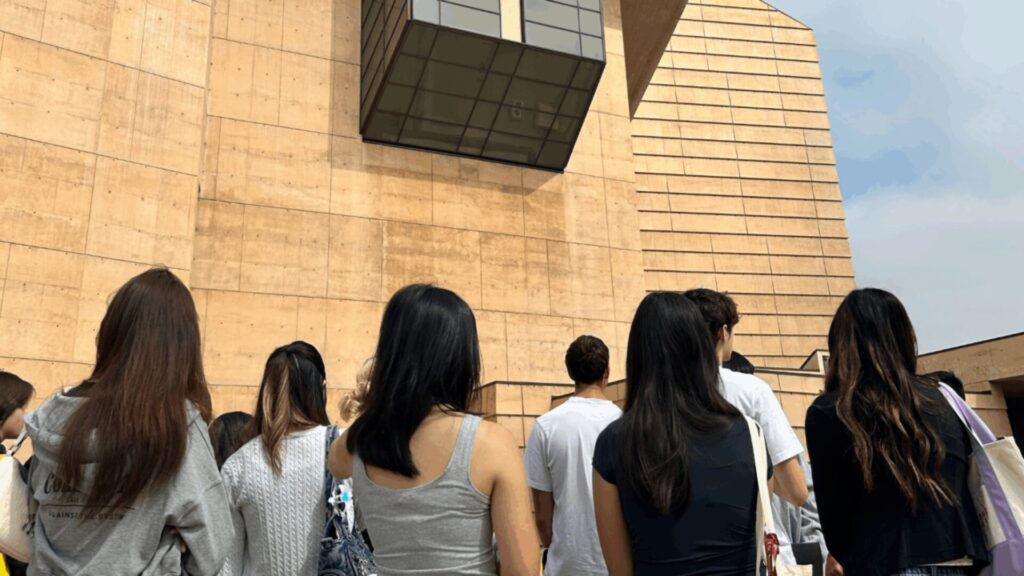
Location: USC School of Cinematic Arts, Los Angeles, CA
Cost/Stipend: Varies; more details here
Acceptance rate/cohort size: Competitive; small class sizes
Dates: June 25th – August 7th
Application Deadline: General (US Citizens/Permanent Residents): May 1st; International Students (requiring an I-20): March 15th; International Students (on another school’s I-20/F1): April 1st
Eligibility: Students who turn 16 by June 15th of the year attending. Ages 16-17 apply as Pre-College; 18+ apply as Adults; current USC students or those dismissed from USC are not eligible; open to international students.
The USC School of Cinematic Arts Summer Program introduces you to college-level study in filmmaking, screenwriting, animation, or the business of film and television. You’ll develop practical skills by creating projects in your chosen discipline, whether that involves directing, editing, writing, designing, or producing using industry-standard equipment.
Courses are taught by USC faculty and experienced professionals, giving you insight into the creative and technical processes used across the entertainment industry. Alongside coursework, you’ll attend screenings, seminars, and discussions with filmmakers that provide additional industry perspective. The program concludes with completed portfolio projects, and eligible courses offer transferable college credit.
Why it stands out: It combines hands-on filmmaking with instruction from industry professionals, allowing you to build portfolio-ready work while experiencing one of the world’s leading film schools.
10. Pratt Summer PreCollege Intensive
Location: Pratt Institute, Brooklyn, New York City, NY
Cost: Residential: $8,192; Commuter: $5,452 + $65 application fee
Acceptance rate/cohort size: Selective; limited seats
Dates: July 6-31
Application Deadline: International students: April 1st; Rolling deadline: May 1st
Eligibility: High school students worldwide aged 16-18 by December 31st of the application year
The Pratt Summer PreCollege Intensive introduces you to college-level study through credit-bearing courses in art, design, architecture, and writing. You’ll spend four weeks in studio-based classes where you develop technical skills, experiment with creative ideas, and complete projects that strengthen your portfolio. Faculty-led critiques and one-on-one feedback mirror the learning environment of Pratt’s undergraduate programs, helping you refine both your creative process and finished work.
Living on the Brooklyn campus also allows you to experience residential college life while collaborating with peers from different backgrounds and exploring New York City’s creative community. Upon successful completion, you’ll earn four transferable college credits alongside a portfolio of completed projects.
Why it stands out: It combines transferable college credit, portfolio-focused studio learning, and an immersive residential experience at one of New York City’s leading art and design schools.
11. Summer of Art by Otis College of Art & Design
Location: Otis College of Art and Design, Los Angeles, CA
Cost/Stipend: Varies based on the program; more details here; scholarships are available
Acceptance rate/cohort size: Non-competitive; around 20 students per class
Dates: July 6-31
Application Deadline: June 23rd; International students: May 14th
Eligibility: High school students worldwide aged 14.5-19
The Summer of Art program introduces you to college-level art and design through studio-based courses taught by practicing artists and designers. You can choose from a variety of creative disciplines while developing technical skills, experimenting with different materials, and refining your design process through hands-on projects. Regular critiques and faculty feedback help you strengthen both your portfolio and your understanding of professional creative practice.
Full-day options allow you to earn transferable college credit while experiencing the pace and expectations of an undergraduate art program. Studying in Los Angeles also provides exposure to one of the world’s leading creative industries.
Why it stands out: It combines portfolio-focused studio instruction with college credit opportunities and mentorship from practicing artists and designers.
12. Summer at CCS
Location: College for Creative Studies, Detroit, MI
Cost: Residential: $3,995; Commuter: $3,645; scholarships are available
Acceptance rate/cohort size: Selective; cohort size not specified
Dates: July 12-31
Application Deadline: Rolling admissions
Eligibility: High school students worldwide (typically ages 14-18); open to international students
Summer at CCS is a three-week pre-college experience that lets you explore art and design through a studio concentration of your choice. You can specialize in fields such as animation, illustration, fashion design, product design, or transportation design while completing hands-on projects that build both technical and conceptual skills.
Faculty members and industry professionals provide guidance throughout the program, while admissions counselors offer portfolio reviews to help you prepare for future college applications. You’ll also experiment with professional tools, materials, and digital workflows commonly used in creative industries. The experience concludes with a final exhibition where you present your completed work.
Why it stands out: It emphasizes portfolio development through industry-focused studio practice and direct feedback from faculty and admissions professionals.
13. UCLA Department of Design Media Arts – Design Media Arts (DMA) Summer Institute
Location: Los Angeles, California; virtual session offered online
Cost/Stipend: Residential $6,541 total; virtual $3,591 total, each including the $350 non-refundable registration fee; international students assessed an additional $1,025 in health insurance and service fees
Acceptance rate/cohort size: Non-competitive; maximum 25 students per class
Dates: Residential Session A3: June 21st – July 8th; Virtual Session B3: July 13-30
Application Deadline: Rolling admissions; residential: June 15th; virtual: June 30th
Eligibility: Age 15 or older by June 22nd and not older than 18 or enrolled full-time in college; no more than one absence, excused or unexcused, to complete the program; open to international students
In the Design Media Arts Summer Institute program, you spend three weeks rotating through four design courses—2D Image, Net, 3D Worldbuilding, and Motion—in morning and afternoon studio blocks. You sharpen graphic design and typography skills through fast-paced print and digital exercises, use creative coding to reimagine the browser window, learn Unity and 3D modelling, and explore animation, editing, and sound.
Classes are capped at 25 students and led by a faculty instructor with a teaching assistant, with laptops provided for classroom use. All four courses address a shared theme that feeds an integrated multimedia final exhibition, and you earn four quarter units of pass/no pass UC credit. You finish with a portfolio-ready body of work for college applications.
Why it stands out: It moves you through all four DMA studio areas such as 2D image, net art, 3D world building, and motion, in one three-week program built on the department’s undergraduate curriculum and closing with an integrated multimedia exhibition.
14. Carnegie Mellon University – Pre-College Design
Location: Pittsburgh, Pennsylvania
Cost: Residential: $12,204; commuter: $8,862; $50 application fee; full need-based scholarships are available for eligible U.S. citizens and permanent residents
Acceptance rate/cohort size: Selective; cohort size not stated
Dates: June 20th – August 1st
Application Deadline: International: February 1st; Final: March 1st
Eligibility: Age 16 by June 20th; current high school sophomore or junior when applying; B average (3.0/4.0) or better; open to international students
In the Pre-College Design program, you explore design principles and practices through a curriculum modeled on Carnegie Mellon’s first-year School of Design experience. You work in studios, attend lectures and critiques, and develop ideas through sketching, diagramming, prototyping, and guided problem-solving. You also study design drawing, photography, and research methods, learning to communicate concepts, capture meaningful images, gather data, and apply findings to design solutions.
A laptop capable of running Adobe Creative Cloud is required, while a camera is used for photography exercises. You receive your own studio space and finish with faculty-critiqued portfolio pieces presented in a program showcase. The six-week, non-credit format emphasizes iterative design across products, communications, and environments.
Why it stands out: It mirrors CMU’s first-year design experience through faculty-led studios, critiques, personal workspace, and portfolio development.
15. Parsons Paris Summer Intensive

Location: Parsons Paris Saint-Roch Campus, Paris, France
Cost: $9,999
Acceptance rate/cohort size: Competitive; cohort size not specified
Dates: June 27th – July 18th
Application Deadline: May 1st
Eligibility: High school students entering their junior or senior year, and recent high school graduates; must be 16 to 18 years of age by the start of the course; open to international students
The Parsons Paris Summer Intensive offers college-level studio courses that introduce you to disciplines such as fashion design, drawing, painting, photography, and visual communication. You’ll spend your time developing technical skills through studio projects while earning transferable college credit in a university setting.
Coursework is complemented by guided visits to museums, galleries, and cultural landmarks across Paris, allowing you to connect classroom learning with one of the world’s leading design capitals. Faculty critiques and project reviews help you refine your creative process while building portfolio-ready work. The program also gives you a realistic introduction to studying art and design in an international academic environment.
Why it stands out: It combines studio-based learning, college credit, and direct exposure to Paris’s internationally recognized art, fashion, and design culture.
Frequently asked questions: Design courses for high school students
Are design courses for high school students open to international students?
Most are, including NYU Tisch’s Summer High School Program, RISD’s Pre-College Program, and Parsons Paris Summer Intensive. Free online courses, like Graphic Design Essentials and the University of Colorado’s Coursera course, are open to anyone worldwide with no restrictions at all. Immerse Education’s Architecture & Design Summer Programme is also explicitly open to international students aged 15 to 18.
How much do design courses cost?
Costs vary enormously by format and prestige. Free options include the online Graphic Design Essentials course and University of Colorado Boulder’s Coursera course. Mid-range options include Central Saint Martins’ short course starting at £520 and Cooper Union’s Summer Art Intensive at $4,350. Premium residential programs include RISD’s Pre-College at $12,495 and Parsons Paris Summer Intensive at $9,999. Financial aid is available for most tuition-based programs.
What is the difference between an on-screen and an off-screen design course?
Off-screen courses, like Central Saint Martins’ Graphic Design short course, deliberately avoid computers, instead using sketchbooks, paper, and hand tools to build fundamental visual thinking skills. On-screen courses, like UCLA’s Design Media Arts Summer Institute or NYU Tisch’s Summer High School Program, instead have you working with industry-standard software like Adobe Creative Cloud or Unity. If you want to build foundational creative instincts before relying on software, an off-screen course offers that; if you want to build technical digital skills, an on-screen program is more direct.
Do design courses award college credit?
Some do, though it varies. NYU Tisch’s Summer High School Program, RISD’s Pre-College Program, and Pratt’s Summer PreCollege Intensive all award transferable college credit. Others, like Central Saint Martins’ short course or Cooper Union’s Summer Art Intensive, provide a portfolio and certificate rather than formal credit. If credit matters to you, confirm this directly with each program, since even similarly structured studio programs handle this differently.
How selective are design courses for high school students?
Selectivity varies considerably. California State Summer School for the Arts is highly competitive, admitting approximately 20 students per discipline, while Cooper Union’s Summer Art Intensive caps classes at 16 students. Others, like Summer of Art by Otis College or free online courses, use open or non-competitive enrollment. Regardless of selectivity, meeting age and GPA requirements, which vary by institution, matters as much as portfolio strength.
Is Immerse Education a good option for exploring architecture and design before college?
Immerse Education’s Architecture & Design Summer Programme is a strong choice if you want small-group, project-based learning in London without needing US residency. The two week program covers spatial design, sustainable architecture, and urban planning through studio sessions, design workshops, and site visits, with classes of just seven to 10 students. You’ll complete your own design project and strengthen visual communication and presentation skills, with financial aid available through its bursary programme.
Your Design Course Was Just The First Draft
Choosing among these design courses for high school students gives you real studio experience in critique, iteration, and creative problem-solving.
Once the course ends, you can turn that portfolio work into a clearer sense of your creative and academic direction.
The technical skills, feedback, and design thinking you built become a strong foundation for stronger applications to design programs.
Keep building on what you started with this course by exploring our University Preparation blogs for guidance on your next steps.