
 Русский (RU)
 Українська (UK)
 Türkçe (TR)
 Italiano (IT)
 Français (FR)
 Português (PT)
 中文 (中国) (ZH)
 Español (ES)
 日本語 (JA)
 ไทย (TH)
 Deutsch (DE)
 Ελληνικά (EL)
 Polski (PL)
 Bahasa Indonesia (ID)
 Nederlands (NL)
 العربية (AR)
 한국어 (KO)

Study abroad programs in Australia for high school students can be a great way to test how you learn, work, and adapt in a new academic environment before college. Beyond attending classes in another country, you can build skills in independent study, academic writing, discussion, cross-cultural communication, subject exploration, and project-based learning.
Many programs also give you the chance to work with mentors, collaborate with peers from different backgrounds, present ideas, and experience how classroom learning connects to everyday life in a new setting. This kind of exposure can make college feel less abstract and help you understand what it takes to manage a more independent academic routine.
They can act as a foundation for your college journey, giving you a taste of what university life is like at a top institution, in person.
Why attend study abroad programs in Australia?
Australia is a strong destination to study abroad because it combines respected universities, diverse school systems, research-driven learning environments, and a culture that encourages independence inside and outside the classroom. You can explore academic interests in fields such as STEM, business, medicine, environmental science, the arts, humanities, and social sciences while also gaining exposure to a new education system.
The country’s geography also adds something distinctive: coastal cities, regional communities, marine ecosystems, outdoor learning environments, and multicultural urban centers can all shape what you learn beyond textbooks. For students considering international universities or globally focused careers, studying in Australia can help you build confidence, adaptability, and a clearer sense of what academic life abroad could look like.
Below, we’ve rounded up 15 study abroad programs in Australia for high school students that stand out for their academic depth, credible host institutions, cultural learning opportunities, and practical value for future college plans.
For related options, consider the online research program.
Key takeaways
- The NSW Government Schools Study Abroad Program offers flexible placements from three months to a year across urban, coastal, and regional New South Wales communities.
- Immerse Education’s Academic Insights Programme takes place in Sydney over two weeks, working in classes of seven to 10 students, open to students worldwide aged 13 to 18.
- The ACT Public Schools International Student Program costs AUD$14,500 for Years 7 to 10 or AUD$16,200 for Years 11 to 12, with top Year 12 international students regularly achieving an ATAR of 90 or above.
- Monash College’s Foundation Year costs AUD$42,300 for the standard program and provides a guaranteed pathway into all 10 Monash University faculties upon meeting required results.
- Trinity College’s Foundation Studies enrolls more than 1,000 students annually and can guarantee entry to the University of Melbourne once a required final score is achieved.
- UNSW Foundation Studies costs A$42,700 and lets students choose from streams including Arts & Social Sciences, Commerce, Design & Architecture, or Physical and Life Sciences.
- The Education Queensland International Regional Study Abroad Program places students in coastal, rainforest, or outback regional settings, connecting studies to marine science, agriculture, or conservation.
- Program costs for Australian study abroad options range from government school programs with standard tuition to over AUD$57,100 for Monash College’s Extended Foundation Year.
15 Study Abroad Programs in Australia for High School Students
1. NSW Government Schools – Study Abroad Program
Location: NSW Government Schools, Sydney and regional New South Wales, AU
Cost/Stipend: Check here
Acceptance rate/cohort size: Selective; cohort size varies as students are placed individually or in small groups across numerous participating public high schools
Dates: 3 months to 1 year options available; intake days are at the beginning of each school term
Application Deadline: Typically 3 months before intake
Eligibility: Applicants must be under 18 at the time of enrolment in their NSW school; not be in their final year of schooling; must meet the English language proficiency, academic and genuine student requirement; check the Study Abroad application process here
The NSW Government Schools Study Abroad Program gives you the chance to experience everyday school life in Australia through a mainstream public school setting. You can study alongside local students while adjusting to new classroom expectations, school routines, and approaches to learning.
The program also allows you to explore different school environments, from urban campuses to coastal or regional communities, depending on the placement you choose. Alongside academic subjects, you may be able to participate in co-curricular activities, sports, clubs, or school events that help you connect with peers beyond the classroom. The homestay option adds another layer of cultural exposure, giving you space to practise English in daily conversations and to understand Australian family life better.
Why it stands out: This program stands out for its flexible school-setting choices, letting you experience Australian academics in an urban, coastal, rural, or regional NSW community.
2. Immerse Education’s Sydney Summer School

Location: Sydney, Australia
Cost: Varies; summer school scholarship available through our bursary programme
Acceptance rate/cohort size: Selective; an average of 7 participants per class
Dates: 2 weeks during the summer
Application Deadline: Multiple summer cohorts; rolling admissions
Eligibility: Students across the globe aged 13-18 currently enrolled in middle or high school; open to international students
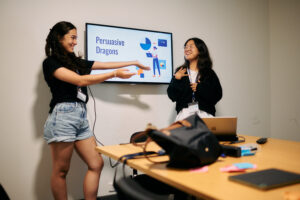
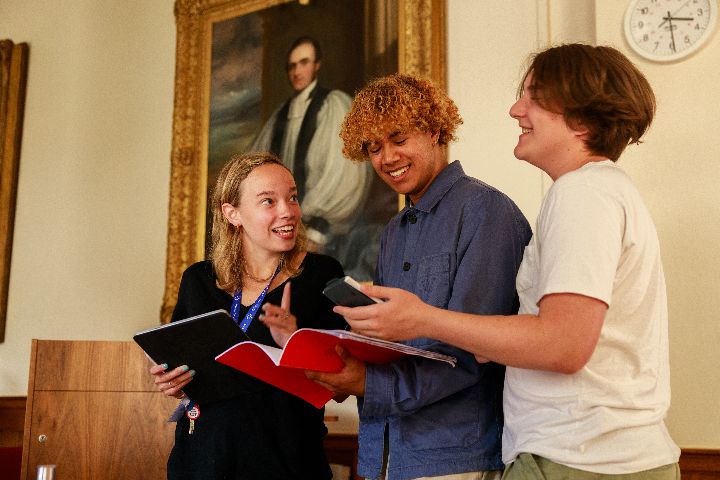
Immerse Education’s Academic Insights Program in Sydney lets high school students experience university life firsthand at USYD. You will study in small groups and learn from expert tutors at St Andrew’s College, exploring subjects like Psychology, Law, Medicine, Engineering, Business Management, Creative Writing, and more. The courses are experiential and focus on hands-on learning.
You may find yourself analysing legal reasoning in law, examining psychological theory in psychology, or investigating veterinary science foundations, alongside dedicated mentors who guide you day to day. By the end of the program, you’ll complete a personal project, receive written feedback, and receive a certificate of completion. You can find more details about the application here.
Why it stands out: You’ll get an early start at university life and academics because the program includes an independent project, discussion-based classes, and living at a college campus.
3. Victoria Study Abroad Program
Location: Victorian Government Schools, Melbourne and regional Victoria, AU
Cost: Check here
Acceptance rate/cohort size: Selective; cohort size variable
Dates: 3, 6, 9, or 12 month options available starting each term
Application Deadline: Varies by term; typically closes 2.5 to 3 months before the term starts
Eligibility: International students in Years 9-12 applying under the appropriate student visa pathway, with school placement and welfare requirements
The Victoria Study Abroad Program places you in a government secondary school where you can experience Australian academics through regular classes and school activities. You can explore core subjects while also choosing from electives that may include areas such as robotics, coding, engineering, psychology, economics, theatre, music, design, photography, or environmental studies.
This subject flexibility makes the program useful if you want to test new interests in a school system that encourages student choice. Beyond coursework, you may take part in sports, creative activities, clubs, and other school-based opportunities that help you engage with the wider student community.
Why it stands out: It offers a wide subject choice, with options across STEM, arts, design, psychology, economics, sport, and environmental studies.
4. Education Queensland International Study Abroad Program
Location: Queensland Government Schools, Brisbane, Gold Coast, Sunshine Coast, Cairns, regional Queensland, and other approved locations, AU
Cost: Check here
Acceptance rate/cohort size: Selective; cohort size not specified
Dates: Varies by intake term and typically closes several months prior
Application Deadline: Varies by term
Eligibility: Ages 12-18, Years 7-12; must meet academic, English-language, and welfare requirements; Year 12 entry is generally Term 1 only.
Education Queensland International’s Study Abroad Program lets you join a Queensland government school and experience academics through a regular Australian timetable. You can choose subjects that align with your interests, including core curriculum areas as well as creative, sporting, technical, and STEM-focused options where available. The program is useful if you want your time abroad to connect back to your home-country studies, since Queensland study may be recognised by some education systems.
Classroom learning is paired with school activities, peer interaction, and the chance to experience different Queensland settings, from major cities to coastal or regional areas. Depending on the school, you may also access specialist subjects or programs that support academic, creative, athletic, or career-related goals.
Why it stands out: It lets you tailor your Queensland school experience across academic, creative, sporting, and STEM-focused pathways.
5. Education Queensland International Regional Study Abroad Program
Location: Queensland Government regional high schools, including coastal, rainforest, outback, and regional community settings
Cost: Check here
Acceptance rate/cohort size: Selective; cohort size varies by individual school
Dates: Program lengths range from 1 to 4 terms (3 to 12 months); Students in Years 9-11 can start at the beginning of any school term; Year 12 students must begin in Term 1
Application Deadline: Varies by term
Eligibility: Ages 13-18, Years 7-12, with academic, English, and welfare requirements
The EQI Regional Study Abroad Program is designed for students who want to experience Australian school life outside a major city. You can study in a regional Queensland high school while engaging with subjects and activities shaped by the local environment, such as marine science, agriculture, conservation, outdoor learning, or community-based projects.
Some placements may give you access to distinctive regional experiences, including coastal, rainforest, outback, or reef-adjacent settings. The program also includes a flexible option to divide your time between two regional locations, which can give you a broader view of Queensland’s communities and landscapes.
Why it stands out: It immerses students in place-based learning, with regional options that can connect your studies to marine science, agriculture, conservation, and outdoor environments.
6. South Australian Government Schools – High School Study Abroad Program
Location: South Australian Government Schools, mainly metropolitan Adelaide and surrounding areas
Cost: Check here
Acceptance rate/cohort size: Non-competitive; cohort size varies widely
Dates: Terms 1-4, check here
Application Deadline: Varies by term
Eligibility: Students ages 12+ entering Years 7-12, with passing grades in main academic subjects and the required welfare/visa arrangements
In this program, you can try subjects that may not be available at your current school, including specialized options such as marine biology, hospitality, outdoor education, surfing, dance, music, or photography, depending on placement. Some schools also offer special interest programs in areas like languages, performing arts, music, and sport, though these may require auditions, try-outs, or evidence of ability.
Outside the classroom, you may be able to join activities such as debating, engineering design competitions, drama productions, weekend sports, or music groups. The program includes academic and personal support through school staff, English assistance, counselling, progress reports, and wellbeing check-ins.
Why it stands out: It has a strong student support system, including English assistance, counselling, progress reports, wellbeing check-ins, and school-based guidance.
7. South Australian Government Schools – Regional Study Abroad Program
Location: Regional South Australian Government Schools
Cost/Stipend: Check here
Acceptance rate/cohort size: Selective; cohort size varies by school; small groups fully integrated into local Australian classes
Dates: Terms 1-4, check here
Application Deadline: Varies by term
Eligibility: International students generally aged 13-18 seeking one to four terms in a regional South Australian government school; must have achieved passing grades in your main academic subjects and the required welfare/visa arrangements
The South Australian Regional Study Abroad Program gives you a government-school experience in smaller communities such as the Fleurieu Peninsula, Mount Gambier, Port Lincoln, or Kangaroo Island. You study within the Australian curriculum while also participating in school and community activities that reflect regional life. Depending on your placement, you may explore subjects or co-curricular options connected to marine biology, hospitality, outdoor education, sport, music, photography, dance, or environmental learning.
The regional structure can be especially useful if you want more interaction with local peers, teachers, and community members than you might get in a larger city. Support is built into the program through school orientation, English assistance, counselling, academic progress reports, and wellbeing check-ins.
Why it stands out: It creates a smaller-community study abroad experience while still giving you access to structured academics and co-curricular opportunities.
8. ACT Public Schools – International Student Program
Location: Canberra, Australian Capital Territory
Cost: Years 7-10: AUD$14,500; Years 11 to 12: AUD$16,200 + AUD$265 non-refundable application fee; Homestay accommodation: AUD$425 per week with a AUD$350 matching fee; fee waivers and fee exemptions are not available / No stipend
Acceptance rate/cohort size: Non-competitive; no single fixed cohort
Dates: Terms 1-4. July 21st – September 25th; October 13th – December 18th; February 1st – April ; July 20th – September 24th; October 12th – December 17th
Application Deadline: Rolling basis
Eligibility: Enrolment on a subclass 500 student visa in the schools sector; students under 16 living with a parent or a close relative approved by the Department of Home Affairs, and students aged 16 and over placed with a local family through the Australian Homestay Network; Overseas Student Health Cover, minimum 80% attendance and satisfactory course progress; open to international students
As one of the more structured study abroad programs in Australia for high school students, this program has you enrol as a fee-paying student at one of Canberra’s 92 ACT public schools, studying the Australian curriculum alongside local students in years 7 to 12. Your school assigns an international student coordinator who provides academic and welfare support, and you receive English as an Additional Language or Dialect assistance plus a bridging and orientation program.
You are supplied the same equipment as local students, including a Chromebook laptop, and you are assessed continuously rather than through final exams. Two written school reports each year track your progress, and you keep attendance at 80% or above. Completing Year 12 earns a Year 12 Certificate and an ATAR for university applications.
Why it stands out: It embeds you in a government school system where every school with international students has a dedicated coordinator for academic and welfare support and the top 25 Year 12 international students each year achieve an ATAR of 90 or above.
9. TAFE International Western Australia – Government Schools Student Visa Program

Location: Western Australian Government Schools, Perth and regional WA
Cost: Check here
Acceptance rate/cohort size: Selective; cohort size varies by host school
Dates: Full-year or longer enrolment aligned with WA school terms
Application Deadline: Varies by passport nationality and typically requires submission 3 to 6 months before the start date to accommodate visa processing; check here
Eligibility: International students applying under the relevant student visa pathway for Years 1-12; meet minimum academic and English language standards, and obtain a Subclass 500 student visa for a minimum enrolment period of two school terms
TAFE International Western Australia’s Government Schools Student Visa Program is designed for students seeking a longer and more formal public-school pathway in WA. You can study across the standard learning areas, including English, mathematics, science, humanities and social sciences, arts, languages, health and physical education, and technologies.
In the senior years, you can choose courses that connect more closely to university, training, employment, or career goals. The program also gives families a clearer sense of academic monitoring, since schools provide progress updates, reports, and access to school communication systems. Teachers and staff are trained to support international students academically and personally, which can help with adjustment during a longer stay.
Why it stands out: It is ideal for students seeking a longer academic pathway, with sustained public-school enrolment and subject choices linked to future study or career goals.
10. Tasmanian Government Education International – Study Abroad High School Program
Location: Tasmanian Government Schools, Tasmania, AU
Cost: Check here
Acceptance rate/cohort size: Non-competitive; 20-25 students per class
Dates: Flexible enrollments ranging from 3 months (1 term) to 1 year (4 terms). Start dates align with the four standard Tasmanian school terms (Term 1 in February, Term 2 in April/May, Term 3 in July, and Term 4 in October)
Application Deadline: Rolling admissions with no fixed deadlines
Eligibility: International high school students with satisfactory academic performance over the previous two years; no minimum English requirement is listed for this program
Tasmanian Government Education International’s Study Abroad High School Program offers a school-based academic experience in one of Australia’s smaller and more close-knit states. You can study regular high school subjects while building confidence through classroom participation, peer interaction, and daily communication.
The program includes a wide range of subjects, allowing you to explore academic, creative, practical, and extracurricular interests through the Tasmanian school system. You may also participate in sports, school activities, and community experiences that help you understand student life beyond coursework. The setting can appeal to students who want a quieter study abroad environment with access to natural surroundings and local communities.
Why it stands out: It covers a broad subject range and quieter learning environment, making it a strong fit if you want academic variety in a close-knit setting.
11. Northern Territory Government Schools – International Student Program
Location: Northern Territory, Australia
Cost: AUD$13,646 per year for years 7-9 and AUD$14,818 for years 10–12 (2026 fees for primary holders of a fee-paying visa); AUD$240 one-off student administration fee; homestay AUD$348 per week if applicable; no stipend; scholarships may be available
Acceptance rate/cohort size: Non-selective; cohort size varies by school
Dates: School year: Term 1: January 29th – April 2nd; Term 2: April 14th – June 19th; Term 3: July 14th – September 18th; Term 4: October 6-10
Application Deadline: Rolling basis
Eligibility: Minimum age 15 for Year 10, 17 for Year 12 by 30th June of enrolment year; subclass 500 student visa for study longer than three months; full-time enrolment; sufficient funds for study expenses; under-18s living with a parent, legal guardian or relative over 21, or in department-approved homestay; acceptable health insurance; agreement to return home after completing studies
In this program, you enrol directly in a Northern Territory government school as a fee-paying international student, joining regular classes alongside local students in middle or senior secondary years. You work toward the Northern Territory Certificate of Education and Training, which, with the right subject combination, can generate an ATAR recognised by Australian and international universities.
If your English needs strengthening first, you can study in an intensive English unit at schools such as Sanderson Middle School or Darwin High School before moving into mainstream subjects. Your tuition covers orientation, English language support, career and personal counselling, and term and semester reports. The department’s international education unit places you in a school and manages the homestay program for secondary students.
Why it stands out: It gives you access to any Northern Territory government school under a single CRICOS-registered department, with dedicated intensive English units and a coordinated homestay program supporting students who arrive with developing English.
12. Monash College – Foundation Year (MUFY)

Location: Melbourne, Victoria, Australia
Cost: AUD$42,300 Standard program tuition / AUD$57,100 Extended program tuition; AUD$125 application fee
Acceptance rate/cohort size: Non-competitive; large cohort across two intakes each year
Dates: Semester 1: February 23rd – June 16th; Semester 2: August 17th – November 27th
Application Deadline: Rolling basis
Eligibility: Minimum age 16; recognised secondary qualification meeting academic entry requirements; meet English language requirements; Australian and New Zealand citizens and Australian permanent residents ineligible
If you’re weighing your options among study abroad programs in Australia for high school students, this program gives you a one-year, pre-university academic experience at Monash College’s Melbourne campus, bridging secondary school and first-year Australian university study. You complete eight units, including two compulsory English units, with the remainder drawn from thirteen standard-program subjects such as Mathematics, Chemistry, Biology, Physics, Accounting, Economics, Global Studies, Music and Information and Communication Technology.
Learning combines tutorials, independent study, group projects and real-world assessments, so you build critical thinking, problem solving, communication and collaboration alongside academic English. You use campus science labs, art and design studios, music studios and the library and learning centre. Achieving the required results and prerequisites gives you a guaranteed pathway into all ten Monash University faculties.
Why it stands out: It is the only pathway into all ten Monash University faculties, with an Extended format adding a 14-week semester for students who need more preparation before the standard program.
13. Trinity College – Foundation Studies (TCFS)
Location: Melbourne, Victoria, Australia
Cost: AUD$44,540 for Standard and Fast Track intakes, AUD$55,290 for Comprehensive intakes, plus AUD$310 non-refundable enrolment fee; AUD$10,000 merit-based scholarships available as a second-semester fee reduction
Acceptance rate/cohort size: Non-competitive; more than 1,000 students enrol each year
Dates: June Fast Track: June 9th – January 29th; July Comprehensive: July 14th – June 4th; August Standard: August 6th – May 28th; September Fast Track: September 29th – May 28th
Application Deadline: Rolling basis; applications close five weeks before each intake’s commencement date
Eligibility: At least 16 years old at course commencement; secondary results equivalent to Australian Year 11, with country-specific minimums; five academic subjects normally assessed; English proficiency such as IELTS 6.0 with no band below 5.5 for 2026 Standard and Comprehensive intakes, or IELTS 6.0 with no band below 6.0 for Fast Track
In the Trinity College Foundation Studies program, you complete an intensive university preparation year at Trinity’s Parkville campus, on the University of Melbourne’s doorstep. You take two core subjects, including English for Academic Purposes, and select three electives from the eleven offered, such as Mathematics 1 and 2, Biology, Chemistry, Physics, Music, and Environment, Development and Design.
You develop academic English, may add science electives such as Biology, Chemistry or Physics that carry separate laboratory fees, and are assessed across your subjects. From orientation, advisers help you match electives to the prerequisites for your intended degree. Your best four results form a final score that can guarantee entry to the University of Melbourne.
Why it stands out: It guarantees a place in your chosen University of Melbourne undergraduate degree once you achieve the required final score, at least 50 per cent in English for Academic Purposes, and the listed prerequisite subjects.
14. UNSW Foundation Studies – Standard Program
Location: Sydney, New South Wales, Australia; also select international centres
Cost/Stipend: A$42,700 tuition + A$360 enrolment fee; scholarships valued up to A$10,000 available
Acceptance rate/cohort size: Non-competitive; small class sizes
Dates: August 19-20, orientation, classes August 24th – April 16th; November 11-12 orientation, classes November 16th – July 16th; nine months each
Application Deadline: Rolling basis; country-specific application deadlines apply per intake
Eligibility: Aged at least 16 at program commencement; strong Year 11 or Year 12 results that fall short of direct undergraduate entry; meets specified academic and English language entry requirements; stream-specific subject requirements, including mathematics for Commerce and Actuarial Studies and relevant sciences for Life or Physical Sciences
This program, one of the more flexible study abroad programs in Australia for high school students in terms of subject choice, has you complete a nine-month pre-university pathway at UNSW College that prepares you for first-year study in any UNSW Sydney bachelor’s degree. You choose a stream – Arts & Social Sciences, Commerce or Actuarial Studies, Design & Architecture, or Physical or Life Sciences and study Foundation Academic English alongside subjects matched to your intended degree.
You attend university-style lectures and tutorials, complete presentations, research and referencing tasks, group work and ongoing assessments across two terms. Each stream includes a computing course, where you work with MS Excel spreadsheets, Adobe Photoshop and InDesign, or Python programming, depending on your pathway. You build academic English, critical thinking and independent study skills across roughly 20–25 class hours each week.
Why it stands out: It is accredited by UNSW Sydney and gives you full access to UNSW’s libraries, clubs and societies, with direct progression into the first year of any UNSW bachelor’s degree once you meet the required GPA and English standards.
15. UTS College – UTS Foundation Studies
Location: Sydney, New South Wales, Australia
Cost: A$33,000 Standard or A$49,500 Extended (A$34,500 and A$51,500 in 2027), plus A$300 international student processing fee; UTS Foundation Studies Scholarship worth A$4,000 or A$8,000 in tuition fee waivers
Acceptance rate/cohort size: Non-competitive; cohorts admitted across three trimester intakes each year
Dates: Trimester 3: September 28th – December 18th; Trimester 1: March 1st – May 21st; Standard pathway runs two trimesters, Extended pathway three
Application Deadline: August 2nd for Trimester 3 applicants outside Australia; September 13th, within Australia
Eligibility: Minimum age 16 at commencement; completion of Year 11 or recognised equivalent with required grades; IELTS 5.5 overall with minimum 5.0, or UTS College Academic English AE3 pass; full-time, face-to-face on-campus enrolment
In the UTS Foundation Studies program, you prepare for Australian university study through a structured mix of core and elective subjects taught on the UTS College campus in Sydney, with a direct-entry guarantee that makes it a compelling pick among study abroad programs in Australia for high school students. You take Culture and Society, Foundation English and Foundation Mathematics, plus Professional Knowledge and Practice, and choose electives such as Foundation IT, Business, Media Communication, Creative Practice or Physics.
Learning happens through the Learning Connected model, where interactive tutorials replace lectures and are supported by guided independent activities, videos and forums. Assessment builds practical skills through essays, group presentations, learning portfolios, website designs, media creation projects and final exams. Successful completion leads to direct entry into more than 200 UTS undergraduate degrees or seven UTS College diplomas.
Why it stands out: It is delivered by UTS College on behalf of the University of Technology Sydney, so meeting the required GPA gives you direct entry into first-year UTS degrees.
Frequently asked questions: Study abroad programs in Australia for high school students
Are study abroad programs in Australia open to international students by default?
Yes, nearly every program in this list is specifically designed for international students on a subclass 500 student visa, including the NSW, Victoria, and Queensland government school programs, as well as foundation year pathways like Monash College and UNSW Foundation Studies. Immerse Education’s Academic Insights Programme in Sydney is also open globally to students aged 13 to 18.
How much do study abroad programs in Australia cost?
Costs vary enormously by program type and duration. Government school programs vary by state and are detailed on each state’s dedicated fee pages, while foundation year pathways cost significantly more: UTS Foundation Studies runs A$33,000 for the standard pathway, and Monash College’s Extended program costs AUD$57,100. Scholarships are available for several foundation programs, including UNSW and Trinity College.
What is the difference between a government school study abroad program and a foundation year program?
Government school programs, like the NSW or Victoria Study Abroad Programs, place you directly in a mainstream Australian secondary school studying alongside local students in Years 7 through 12. Foundation year programs, like Monash College or Trinity College’s Foundation Studies, instead offer an intensive one-year pre-university bridge specifically designed to prepare international students for direct entry into a specific Australian university. If you want a longer, more immersive secondary school experience, a government program fits better; if you’re closer to university age and want a guaranteed pathway, a foundation year is more direct.
Do study abroad programs in Australia guarantee university admission?
Several foundation year programs do, provided you meet specific score requirements. Monash College’s Foundation Year guarantees a pathway into all 10 Monash University faculties, and Trinity College’s Foundation Studies can guarantee entry to the University of Melbourne. UNSW and UTS Foundation Studies similarly guarantee progression to their respective universities upon meeting GPA and English requirements. Government school programs don’t offer this same direct guarantee, though strong ATAR results from programs like the ACT’s International Student Program can support broader university applications.
How selective are study abroad programs in Australia?
Selectivity varies by program type. Most government school programs, like Tasmania’s or the Northern Territory’s, are described as non-competitive, admitting students who meet basic academic and English requirements. Foundation year programs are similarly non-competitive in terms of acceptance rate but require meeting specific entry requirements tied to your intended degree stream. Regardless of program type, meeting English proficiency and visa requirements precisely matters significantly across this entire list.
Is Immerse Education a good option for exploring Australia specifically?
Immerse Education’s Academic Insights Programme in Sydney is a strong choice if you want a shorter, more flexible introduction to Australian university life without committing to a full school term or foundation year. The two week program places you in small groups of seven to 10 students, working on hands-on projects across more than 20 subjects. You’ll complete a personal project, receive written feedback, and earn a certificate of completion, offering a lower-commitment alternative to the longer study abroad pathways listed here.
Your Next Step After Studying in Australia
Choosing a path for high school study abroad in Australia gives you a genuine introduction to a new education system, culture, and way of learning.
Once your time there wraps up, you can turn that experience into a clearer sense of where your academic journey goes next.
The independence, adaptability, and cross-cultural skills you built become a strong foundation for whatever study abroad opportunity comes after.
Keep building on what you started in Australia by exploring our Study Abroad blogs for guidance on your next steps.