
 Русский (RU)
 Українська (UK)
 Türkçe (TR)
 Italiano (IT)
 Français (FR)
 Português (PT)
 中文 (中国) (ZH)
 Español (ES)
 日本語 (JA)
 ไทย (TH)
 Deutsch (DE)
 Ελληνικά (EL)
 Polski (PL)
 Bahasa Indonesia (ID)
 Nederlands (NL)
 العربية (AR)
 한국어 (KO)

As a high school student, college can feel both exciting and unfamiliar. College summer camps for high school students are designed to make that transition clearer by giving students firsthand experience of university academics, campus life, and the independence that comes with higher education.
You might spend your days attending lectures, participating in seminars, conducting lab work, solving case studies, creating projects, or exploring subjects such as engineering, business, medicine, law, or the humanities. Many programs also include mentorship, admissions workshops, and collaborative activities with peers from different backgrounds.
These camps help students build practical skills such as time management, communication, independent learning, teamwork, and academic confidence while clarifying what studying at university may actually feel like.
How do you choose the right college summer camp for high school students?
Finding the perfect summer spot is less about the prestige on the flyer and more about where a student actually wants to spend their Tuesday mornings. You should check if the program aligns with your curiosity, whether they’re obsessed with creative storytelling, sports dynamics, or mastering a new technical skill. You’ll want to look closely at the daily schedule to see if it offers the right mix of hands-on projects and social downtime, as a burnt-out student won’t gain much from even the most elite environment.
It’s also worth considering the campus culture to see if the vibe feels welcoming or overly rigid, and of course, doing a quick reality check on the travel logistics and total costs. Ultimately, the “right” choice is the one that leaves you feeling more energized about your future, not just exhausted by it.
This list features 15 programs selected for academic rigor, residential experience, institutional credibility, and the quality of opportunities available to high school students.
For adjacent opportunities, check out the online research program.
15 College Summer Camps for High School Students
1. Stanford University Mathematics Camp (SUMaC)
Location: Stanford University, Stanford, CA
Cost: $3,750 (online); $8,950 (residential); need-based financial aid available
Acceptance rate/cohort size: Highly selective; cohort size not publicly specified
Dates: Residential Session: June 21st – July 17th; Online Sessions: June 15th – July 3rd and July 6-24
Application Deadline: February 2nd
Eligibility: High school students in grades 10 or 11 at the time of application; minimum mathematical requirement is the completion of precalculus, though most admitted students have taken calculus or higher; open to international applicants
This program covers advanced topics, such as abstract reasoning, number theory, algebraic structures, and higher-level problem solving, in daily lectures, collaborative problem sets, and discussion sections. It prioritizes proofs, mathematical creativity, and the logic behind complex ideas, where you collaborate closely with instructors and peers who share strong quantitative interests, resulting in an academically rigorous environment.
Attending the residential session allows you to experience campus life at Stanford, including shared housing, organized activities, and university facilities. The program is especially beneficial if you want to gain early experience with the rigor and pace of mathematics at a top research university.
Why it stands out: It offers one of the most recognized proof-based math experiences for high school students, combining advanced theory, collaborative problem solving, and the opportunity to study in Stanford’s academic environment.
2. Immerse Education’s Pre-University Summer School

Location: Cambridge, London, Oxford, Singapore, Sydney, Tokyo, and Toronto
Cost: Varies; summer school scholarship available through our bursary programme
Acceptance rate/cohort size: Selective; an average of 7 participants per class
Dates: 2 weeks during the summer
Application Deadline: Multiple summer cohorts; rolling admissions
Eligibility: Students aged 13-18 currently enrolled in middle or high school; open to international applicants
The Academic Insights Program lets high school students experience university life firsthand. You will live on campus and study in small groups of 7–10, learning from tutors from top universities like Oxford and Cambridge. Participants can explore over 20 subjects, including Architecture, AI, Business Management, Computer Science, Economics, Medicine, Philosophy, and more.
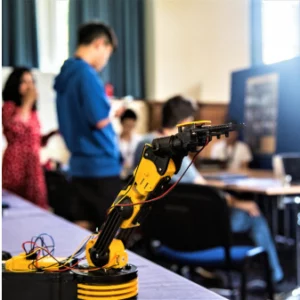
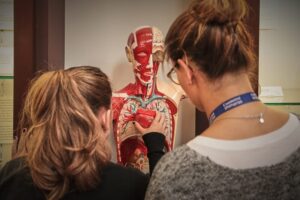
The courses are experiential and hands-on: you may find yourself conducting dissections in medicine, designing a robotic arm in engineering, participating in a moot court for law, or building creative writing portfolios and business case studies. By the end of the program, you’ll complete a personal project, receive written feedback, and receive a certificate of completion. You can find more details about the application here.
Why it stands out: You’ll study under expert academics, be guided daily by a university student mentor, complete a project you can show in future applications, and experience genuine university college life — with other campuses worldwide as alternatives.
3. U.S. Naval Academy Summer STEM Camp
Location: United States Naval Academy, Annapolis, MD
Cost: $450; need-based financial aid is available
Acceptance rate/cohort size: Selective; approximately 260 students per session
Dates: Session 1 (Rising 9th Graders): June 1-6; Session 2 (Rising 10th Graders): June 8-13; Session 3 (Rising 11th Graders): June 15-19
Application Deadline: March 31st
Eligibility: Students typically in grades 8-11 (rising students by summer); applicants generally must be U.S. citizens or permanent residents and meet age requirements; not open to international students
The United States Naval Academy Summer STEM Program allows you to learn about engineering and applied science through hands-on challenges on one of the country’s most unique college campuses. You work on projects in robotics, cybersecurity, aerodynamics, naval engineering, and other technical fields under the supervision of Academy staff and midshipmen. Sessions emphasize collaboration, design thinking, experimentation, and problem-solving under real-world constraints.
Living on campus also allows you to observe the structure, discipline, and daily routines of a federal service academy. You interact with current midshipmen, who provide insights into academics, leadership training, and student life at Annapolis.
Why it stands out: It combines practical STEM project work with a residential experience at the Naval Academy, giving you early exposure to engineering problem-solving, leadership culture, and life at a federal service academy.
4. IMA-MathCEP Math Modeling Camp – University of Minnesota
Location: University of Minnesota, Minneapolis, MN
Cost: None
Acceptance rate/cohort size: Selective; 30-40 students
Dates: June 22-26
Application Deadline: May 31st
Eligibility: Current high school students who will have completed a full year of single-variable calculus by the end of the academic year; open to international students
As one of the more analytically focused college summer camps for high school students, the IMA-MathCEP Math Modeling Camp is a one-week academic program that uses mathematics to solve real-world problems in a collaborative university setting. Working in groups, you develop and test mathematical models on topics such as traffic systems, disease transmission, environmental change, and resource planning.
Faculty and instructors at the University of Minnesota walk students through the process of transforming complex situations into equations, assumptions, and data-driven outcomes. The program prioritizes problem formulation, quantitative reasoning, and effective communication of results. You also present your findings, allowing you to practice explaining technical ideas to others.
Why it stands out: It teaches you to use advanced mathematics on practical, real-world problems, combining teamwork, modeling, and faculty mentorship in a university research environment.
5. University of Maryland Shirley Povich Sports Journalism Summer Camp
Location: University of Maryland, College Park, MD
Cost: $125; scholarships are available upon request
Acceptance rate/cohort size: Open enrollment until full; cohort size not publicly specified
Dates: July 7-11
Application Deadline: Open until spaces are filled
Eligibility: High school students entering grades 9-12; not open to international students
In this camp, you participate in workshops led by journalism faculty and working media professionals on writing game stories, interviewing athletes, creating multimedia content, and understanding ethical reporting standards. You also investigate emerging areas of the industry, such as social media storytelling, podcasting, and sports content creation for digital platforms.
Daily sessions focus on practical skill development, allowing you to report, write, revise, and present your own work in a university setting. You are also exposed to the Philip Merrill College of Journalism campus environment, which helps you understand what it is like to study journalism in college.
Why it stands out: It combines hands-on sports reporting training with direct access to journalism faculty and media professionals, helping you experience how modern sports media operates inside a leading university setting.
6. Camp Business – Drexel University, LeBow College of Business
Location: Drexel University, Philadelphia, PA
Cost: Residential: $2,000; Commuter: $950; a limited number of need-based scholarships are available
Acceptance rate/cohort size: Selective; cohort size is not publicly available
Dates: Residential Blue Session: July 13-17; Commuter Session: July 20-24; Residential Gold Session: July 27-31
Application Deadline: May 1st; applications may close earlier if the program reaches capacity
Eligibility: High school students entering their sophomore, junior, or senior year; international applicants may apply
In this camp, you will learn about accounting, marketing, finance, and management, as well as leadership, professional image, etiquette, teamwork, and strategy. The program includes interactive lectures, group exercises, and activities to help you understand financial documents, stock market concepts, and business technology.
If you choose a residential session, you will live in a Drexel residence hall and have a structured schedule that combines academic sessions and supervised campus life. This makes the program useful for determining whether a business major or business school environment feels right before college. At the end of the week, you’ll receive a certificate of completion.
Why it stands out: It gives you a focused introduction to college-level business study at Drexel, combining core business disciplines, team exercises, and residential campus exposure in a short one-week format.
7. UIC Engineering Summer Camp (IMPACT)
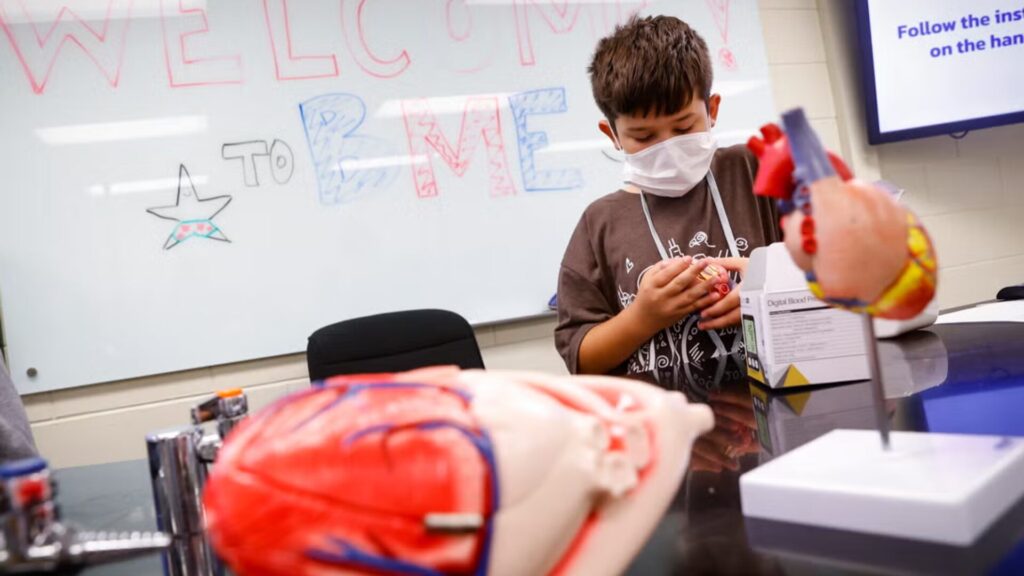
Location: University of Illinois Chicago (UIC) Campus, Chicago, IL (Activities held in the Engineering Design Lab, Fluid Dynamics Lab, and CAD design studio)
Cost: $1,000 per student per session; 10% discount is available for children of University of Illinois system employees
Acceptance rate/cohort size: Selective; cohort size not specified
Dates: Session 1: July 27-31; Session 2: August 3-7
Application Deadline: Open until filled
Eligibility: High school students entering grades 10-12 in the upcoming fall; open to international students
At the UIC IMPACT summer camp, you dive into a rigorous environment that covers design engineering, automotive engineering, applied AI, fluid dynamics, and smart manufacturing. During the program, you will actively construct a custom handheld electric fan, engineer a remote-operated rover, and design an automated optical candy-sorting machine. The camp uniquely bridges the gap between theory and hands-on implementation by giving you exclusive, guided access to the UIC Makerspace and active university research labs.
Through these daily challenges, you will develop advanced technical skills in hardware fabrication, system logic, reverse engineering, and machine learning architecture. Ultimately, you will leave the program having experienced exactly what it takes to solve complex industrial and mechanical problems.
Why it stands out: It skips generic STEM activities to provide a highly focused experience where you tackle advanced, university-level engineering challenges in state-of-the-art facilities.
8. NUS – Young Leaders and Changemakers Summer Camp – Singapore
Location: Lee Kuan Yew School of Public Policy, National University of Singapore, Singapore (on-campus accommodation provided)
Cost: S$3,625; S$2,900 early-bird rate until May 4th
Acceptance rate/cohort size: Selective; cohort size not publicly specified
Dates: June 29th – July 3rd
Application Deadline: June 1st
Eligibility: High school, post-secondary, and university students; at least 16 years old by the start of the program; open to international students
Among the internationally focused college summer camps for high school students, the Young Leaders and Changemakers Summer Camp is a five-day residential program that teaches you about leadership, governance, and public policy in an applied university setting. Held at the Lee Kuan Yew School of Public Policy, the program includes workshops, case studies, and interactive sessions on policymaking, innovation, and social impact.
You also participate in experiential learning visits across Singapore, which help to connect classroom concepts to real-world institutions, communities, and policy systems. Throughout the week, students collaborate in groups to analyze problems, devise solutions, and improve communication and decision-making abilities. The program concludes with a capstone presentation in which you pitch ideas for solving a real-world problem.
Why it stands out: It gives you direct exposure to public policy education at one of Asia’s leading universities while combining leadership training, real-world site visits, and a team-based policy pitch project.
9. University of Michigan – Summer Engineering Exploration Camp
Location: University of Michigan campus, Ann Arbor, MI
Cost: $750
Acceptance rate/cohort size: Highly competitive; approximately 40 students
Dates: July 5-11
Application Deadline: February 19th
Eligibility: High school students entering grades 10-11 in the fall; open to international students
This camp offers a hands-on, residential introduction to engineering and design via collaborative projects and workshops. It is organized by the Society of Women Engineers and held on the University of Michigan campus, and teaches students about various fields of engineering, such as mechanical, environmental, and electrical engineering.
You participate in design challenges, visit labs, and complete interactive activities that demonstrate how university engineers solve problems. Talking with current students and faculty can help you learn about college engineering programs and the types of work that engineers do. A week on campus prepares you for college life, including teamwork and time management.
Why it stands out: It offers a hands-on, residential introduction to various engineering disciplines through collaborative projects and workshops, letting you experience engineering problem-solving techniques and explore university-level engineering programs while building skills in teamwork and time management.
10. Architecture and Landscape Architecture Summer Camp – Penn State
Location: Penn State University Park, PA
Cost: $1,100; need-based financial aid and partial/full scholarships are available
Acceptance rate/cohort size: First-come, first-served; limited capacity
Dates: Session 1: July 12-16; Session 2: July 19-23
Application Deadline: June 15th
Eligibility: High school students entering 9th through 12th grade, as well as just-graduated seniors (must be at least 15 years old by the start of the camp); open to international students
The Penn State Architecture and Landscape Architecture Summer Camp immerses you directly into college-level design, covering fundamental topics like architectural concepts, landscape design, spatial reasoning, and design thinking. During the program, you will actively engage in physical hand-drawing, construct intricate physical models, complete hands-on introductory design exercises, and participate in project site visits around the university campus.
What makes this experience unique is that you work in the actual Stuckeman School studios, receiving direct mentorship from real Penn State faculty rather than graduate assistants. Through this curriculum, you will build critical thinking skills, master the basics of spatial translation, and learn how to conceptualize abstract problems into tangible structures.
Why it stands out: It provides an authentic, residential college studio culture where high schoolers use the exact same workspaces and learn from the exact same professors as current university design majors.
11. Manhattan College Entrepreneurship Pre-College Camp (NY)
Location: Manhattan University, Riverdale, NY
Cost: $1,400 + $50 non-refundable registration fee
Acceptance rate/cohort size: Open enrollment; cohort size not specified
Dates: July 6-23
Application Deadline: Rolling admissions; applications remain open until full
Eligibility: High school students in the 10th, 11th, and 12th grades (ages 15-17); open to international students
This three-week camp allows you to build a business idea from concept stage to final pitch. During the first phase, you identify a product or service, define a target audience, and create initial branding materials like logos and messaging. You then proceed to pricing, supplier research, prototype or MVP development, and pitch preparation, with regular instructor feedback.
You work in groups, meet weekly milestones, and refine ideas through daily check-ins and collaborative sessions. The program concludes with a final presentation given to both in-person and virtual audiences. It provides a practical introduction to entrepreneurship while also helping you develop communication, teamwork, and problem-solving skills in a college setting.
Why it stands out: It focuses on the full startup process—from idea creation to final investor-style pitch, giving you hands-on entrepreneurial experience rather than only classroom theory.
12. Constructor University Summer Camp
Location: Bremen, Germany
Cost: €4,600
Acceptance rate/cohort size: Selective; approximately 30–35 students
Dates: July 24th – August 4th
Application Deadline: May 31st
Eligibility: High school students aged 16-18 worldwide; open to international students
Constructor University Summer Camp stands out among the various college summer camps for high school students for its international campus setting and mix of robotics, business, biotechnology, and data science. During the program, you will participate in interactive workshops where you can build and program autonomous machines, conduct experiments in modern labs, and collaborate on real-world business case studies.
A unique feature of this camp is the chance to live on a truly international campus in Bremen, interacting with current university students and peers from around the world. By the end of the session, you will have sharpened your critical thinking and technical problem-solving skills through hands-on experience in high-tech environments. This intensive environment is designed to give you a genuine feel for undergraduate research while helping you narrow down your future career interests.
Why it stands out: It offers a rare opportunity for high school students to experience a multicultural, English-speaking university environment in the heart of Europe.
13. Rice University – Tapia STEM Camps
Location: Rice University, Houston, TX
Cost: Regular: $2,500; Early Bird: $2,200; scholarships are available
Acceptance rate/cohort size: Open enrollment; 100-150 campers per week
Dates: Session 1: July 5-10; Session 2: July 12-17; Session 3: July 19-24
Application Deadline: May 1st
Eligibility: Rising 8th-12th grade students with an interest in STEM and readiness for collaborative project work; “Techniques of a Pro Mathematician” session requires completion of high school geometry and an understanding of basic trigonometry; open to international students
Rice University’s Tapia STEM Camps are residential summer programs that emphasize hands-on learning in science, technology, engineering, and mathematics. You live on campus and collaborate on applied projects that may include coding, engineering design, experiments, or analytical problem solving.
The sessions are supported by university faculty, graduate students, and current undergraduates who help students understand technical concepts and develop projects. Many activities end with presentations, which allow you to practice communication skills and explain ideas clearly. During the week, students gain experience with residence life and the pace of a university schedule.
Why it stands out: It combines residential campus life at Rice with collaborative STEM projects and mentorship from university students and faculty, creating a practical introduction to college-level STEM learning.
14. Entrepreneurship & Innovation Bootcamp – Tufts University
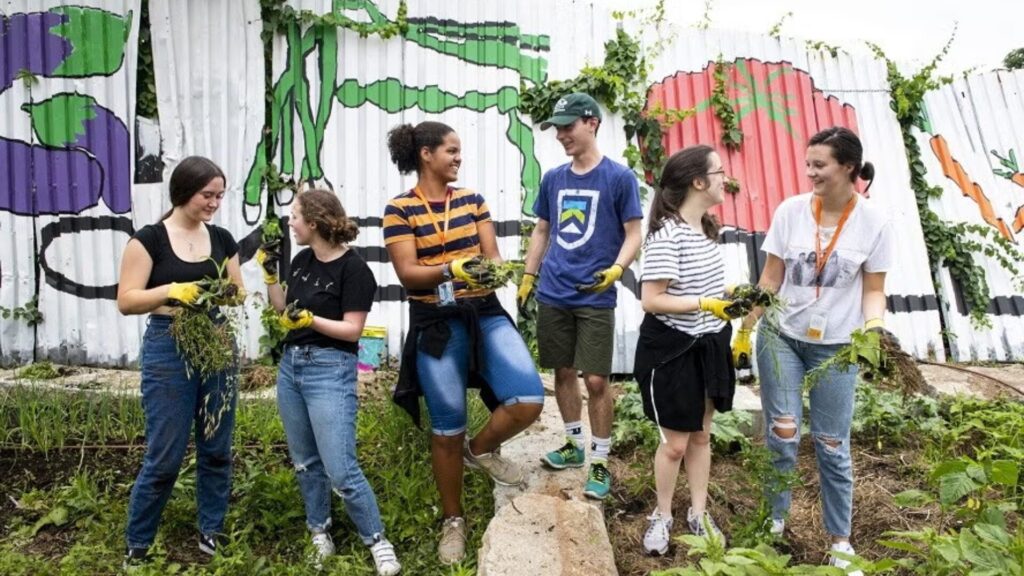
Location: Tufts University Medford/Somerville Campus, MA
Cost: $4,225 (commuter); $5,750 (residential); limited need-based financial aid is available
Acceptance rate/cohort size: Selective; cohort size varies by program
Dates: July 5-17
Application Deadline: May 1st
Eligibility: High school students entering grades 10-12 or recent high school graduates; open to international students
Tufts University’s Entrepreneurship & Innovation Bootcamp is a two-week program that teaches students how to identify problems and generate successful business ideas. You participate in workshops covering business case development, market research, and go-to-market strategy. The program concludes with a formal presentation to peers and advisors. The lessons emphasize practical business thinking, communication skills, and project collaboration.
You can also use campus resources and get assistance from Tufts students, alumni, and faculty who work at the Gordon Entrepreneurship Center. Campus experiences, such as living in residence halls, mirror aspects of college learning and community. By the end of the bootcamp, you’ll have learned the fundamentals of planning and pitching a new business.
Why it stands out: It immerses you in the entrepreneurial process at Tufts University, where you identify real-world problems, develop business ideas, and pitch them in a structured, hands-on environment, gaining practical skills in business thinking, market research, and communication.
15. USF High School Robotics Camp
Location: USF Tampa Campus, FL
Cost: $999.99 for the day camp (Optional “Rocky’s Residents” overnight housing/dining add-on is an additional $1,395); need-based scholarships are available
Acceptance rate/cohort size: First-come, first-served; 30 students per session
Dates: Session 1: June 22-26; Session 2: July 20-24
Application Deadline: Rolling basis until filled
Eligibility: Students entering 9th – 12th grade; open to international students
For students interested in hands-on engineering, USF High School Robotics Camp is one of the more technical college summer camps for high school students. In this camp, you will explore the fundamentals of robotics theory and electrical circuit design, specifically focusing on the Raspberry Pi platform and Python programming. Throughout the week, you will 3D print custom components, assemble an Autonomous Mobile Robot (AMR) with integrated sensors and actuators, and program it to navigate real-world environmental challenges.
A unique highlight of the program is the opportunity to work in USF’s state-of-the-art labs using ABB RobotStudio to experiment with actual industrial robotics. By the end of the session, you will have developed systematic debugging and technical problem-solving, and you will even get to take your completed robot and programming files home to continue your projects.
Why it stands out: It bridges the gap between hobbyist building and professional career prep by giving you hands-on access to the same industrial robotics software used in modern manufacturing.
Turn Campus Experience Into University Readiness
University starts to feel less unfamiliar when you try lectures, labs, studios, business pitches, design challenges, and residential campus life early.
The 15 college summer camps for high school students in this guide help you practise independent learning, teamwork, academic confidence, and subject exploration.
By testing fields like engineering, business, journalism, architecture, robotics, policy, or mathematics, you can make more informed choices before applying.
Wondering how to shape those experiences into stronger applications? Head to our University Preparation blogs for personal statements, interviews, academic writing, entry requirements, and supercurriculars.