


 Русский (RU)
 Українська (UK)
 Türkçe (TR)
 Italiano (IT)
 Français (FR)
 Português (PT)
 中文 (中国) (ZH)
 Español (ES)
 日本語 (JA)
 ไทย (TH)
 Deutsch (DE)
 Ελληνικά (EL)
 Polski (PL)
 Bahasa Indonesia (ID)
 Nederlands (NL)
 العربية (AR)
 한국어 (KO)

From navigating bustling streets in Tokyo to participating in centuries-old tea ceremonies, studying abroad in Japan offers far more than a change of scenery. It’s an opportunity to experience a new culture firsthand, build meaningful friendships across borders, improve your Japanese language skills, and discover what daily life is like in one of the world’s most fascinating countries. Whether you’re interested in technology, history, language, or simply stepping outside your comfort zone, one of the many exchange programs in Japan for high school students can provide experiences that stay with you long after the summer ends.
There are many such programs, ranging from short-term summer experiences to semester- and year-long immersions. Depending on the program, you might attend a local Japanese high school, live with a host family, participate in cultural excursions, improve your language proficiency, or collaborate with students from around the world. These experiences not only deepen your understanding of Japanese culture but also help you develop independence, adaptability, and cross-cultural communication skills.
How to choose the right exchange program in Japan for high school students?
The best exchange program is one that matches both your interests and your goals. Some programs emphasize Japanese language immersion through homestays and classroom instruction, while others focus on cultural exchange, university experiences, STEM learning, or leadership development. As you compare programs, consider factors such as the program length, accommodation options, language requirements, cost, and the type of support provided before and during your stay.
It’s also worth thinking about the kind of experience you’re hoping to have. If your goal is to become fluent in Japanese, a homestay with language-focused classes may be the best fit. If you’re more interested in exploring Japanese culture or experiencing student life abroad, you might prefer a program that combines cultural activities with academic learning or local school attendance.
To help you find the right opportunity, we’ve compiled 15 exchange programs in Japan for high school students.
For adjacent opportunities, consider summer programs in Singapore in 2026.
Key Takeaways
- Program lengths range from one-week research sessions, like the SAKURA Science High School Program, to a four-month MEXT-funded semester through the ASIA KAKEHASHI Project+.
- Costs vary widely, from fully free programs such as SAKURA Science, MEXT ASIA KAKEHASHI, and the Midland–Handa exchange to paid options like the TUJ High School Summer Program at JPY340,000.
- Most sister-city exchanges, including those to Oiso, Handa, Nirasaki, Amakusa, Ikata, Yamatotakada, Ichinoseki, and Shizuoka/Kambara, place students directly with host families rather than in dormitories or on campus.
- Several programs restrict eligibility to residents of a specific city or region, such as Fairfield, Midland, Encinitas, Red Wing, and Shelbyville, and are not open to international applicants.
- Programs open to international students include JASSO Osaka, Immerse Education’s Pre-University Summer School, the TUJ High School Summer Program, SAKURA Science, and MEXT’s ASIA KAKEHASHI Project+.
- Application deadlines fall anywhere from March to September depending on the program, so students should confirm timelines well in advance.
- Reciprocal exchanges, including Dubbo–Minokamo, Red Wing–Ikata, and Central Highlands–Ichinoseki, require students to host a Japanese visitor after their own trip.
- Immerse Education’s Pre-University Summer School in Tokyo lets students aged 13 to 18 study in small groups of 7 to 10 with tutors from universities such as Oxford and Cambridge.
15 Exchange Programs in Japan for High School Students
1. JASSO Osaka Japanese Language Education Center Summer Course
Location: Osaka Japanese Language Education Center, Tennoji-ku, Osaka City, Japan
Cost: JPY65,000
Dates: July 27th – August 14th
Application Deadline: July 14th
Eligibility: Students aged 16 and above; under-18 students require parental consent; open to international students
JASSO Osaka Japanese Language Education Center Summer Course offers a three-week learning experience to high school students. The program focuses on improving your conversational skills in the Japanese language. You’ll learn through practical scenarios including everyday discussions, common greetings, explaining reasons, and expressing your feelings.
You’ll attend classes focused on face-to-face interactions, participate in speaking classes, visit local stores, and manage other simple everyday tasks to apply your language skills. You’ll receive personalized guidance and develop skills in cross-cultural communication, listening comprehension, and fluency.
Why it stands out: You will develop practical Japanese language skills through immersive, conversation-based learning while building fluency and cross-cultural communication through real-world interactions.
2. Immerse Education’s Tokyo Summer School

Location: Tokyo, Japan
Cost: Varies; summer school scholarship available through our bursary programme
Application Deadline: Multiple summer cohorts; rolling admissions
Dates: 2 weeks during the summer
Eligibility: Students across the globe aged 13-18 currently enrolled in middle or high school; open to international students
The Academic Insights Program lets high school students experience university life firsthand. You will live on campus and study in small groups of 7-10, and learn from tutors from eminent top universities like Oxford and Cambridge. You can explore a wide range of subjects, spanning over 20 options, including Architecture, AI, Business Management, Computer Science, Economics, Medicine, Philosophy, and more.
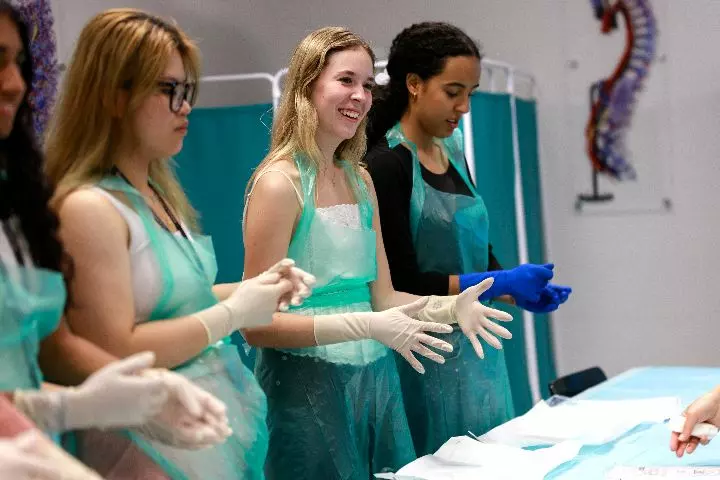
The courses are experiential and focus on hands-on learning. You may find yourself conducting dissections in medicine, designing a robotic arm in engineering, participating in a moot court for law, or building creative writing portfolios and business case studies. By the end of the program, you’ll complete a personal project, receive written feedback, and receive a certificate of completion. You can find more details about the application here.
Why it stands out: You’ll get an early start at university life and academics because the program includes an independent project, discussion-based classes, and living at a college campus.
3. TUJ High School Summer Program

Location: Temple University Japan Campus
Cost: JPY340,000 ; first 20 participants receive a discount of JPY20,000 if payment made before March 1st
Dates: July 29th – August 6th
Application Deadline: April 1st for students requiring visas; May 1st for students not requiring visas
Eligibility: Rising 9th-12th-grade high school students; international students are welcome
TUJ High School Summer is an eight-night exchange program in Japan for high school students. The program allows you to learn through a combination of Japanese language and elective classes.
You’ll participate in group discussions, explore academics at a foreign University campus, and learn through collaboration with peers. Along with classroom learning, the program also offers cultural excursions in Tokyo, an overnight Nikko trip, a one-day excursion to DisneySea, and combined events and meals with high school students in Japan.
Why it stands out: You will experience college life in Japan through university-level classes, Japanese language learning, and cultural immersion while collaborating with local and international peers.
4. SAKURA Science High School Program
Location: Various universities and research institutes across Japan
Cost: None
Dates: One-week sessions throughout the year
Application Deadline: Varies by country (students do not apply directly; they must be nominated)
Eligibility: Grades 10th-12th high school students; minimum age:15 years; have a strong academic record in science/math; are first-time visitors to Japan; open to international students
SAKURA Science High School Program offers a research-based learning experience to high school students. You’ll attend lectures, participate in exchange activities with peers, and visit labs to explore the scientific research environments in Japan.
You’ll gain exposure to advanced-level concepts in STEM, receive knowledge from Nobel laureates and researchers, all while engaging in thoughtful discussions with students from around the world. Along with academic and scientific learning, the program also allows you to develop an improved understanding of Japanese society through cultural activities.
Why it stands out: You will explore advanced STEM research through laboratory visits, expert-led lectures, and international exchange activities while learning from leading researchers and experiencing Japan’s scientific community.
5. Japan’s Ministry of Education, Culture, Sports, Science and Technology (MEXT); implemented by AFS Intercultural Programs, Japan – ASIA KAKEHASHI Project + (Plus)
Location: Various cities and regions across Japan
Cost: None
Dates: August 19th – December 15th
Application Deadline: Country-specific deadlines set by each partner organization
Eligibility: Ages 15-18, born after April 2nd, 2008 and before April 1st, 2011; citizenship of one of 28 listed Asian and G7 countries or regions; minimum 60% marks in the latest school examination and a 60% two-year average; learner of Japanese, such as JLPT N5 or hiragana and katakana literacy; no prior ASIA KAKEHASHI participation; open to international students
As one of the longest-running exchange programs in Japan for high school students, this program has you spend roughly four months living and studying in Japan as an MEXT-funded exchange student placed by AFS Japan. You attend a Japanese high school alongside local peers, live with a volunteer host family or in a dormitory, and build everyday Japanese through classes and school-based activities. You join two international camps with Japanese high school students, paired with arrival and end-of-stay orientations.
The Japanese government’s full scholarship covers round-trip international and domestic airfare, dormitory fees, standard school expenses, health insurance in Japan, and all program costs. AFS Japan’s volunteers and professional staff support you throughout, and selection favors students showing leadership potential to bridge their home country and Japan.
Why it stands out: It is a fully government-funded national exchange scheme in which roughly 100 students from 28 countries and regions enrol in Japanese high schools for a semester at no cost to their families.
6. Racine Sister City Planning Commission, City of Racine, Wisconsin – Summer Sister City Student Exchange to Oiso, Japan
Location: Oiso, Kanagawa Prefecture
Cost: Approximately $1,500 airfare plus$160 passport fee and personal spending money; scholarships are available to offset some costs
Dates: July 19th – August 2nd
Application Deadline: March 2nd
Eligibility: City of Racine residents enrolled in grades 9-11; mandatory orientation sessions; open to international students
In this program, you live with a host family in Oiso and experience Japanese family, cultural, and language life firsthand. You participate in educational and cultural activities, visit historical and cultural sites, and observe daily routines within a Japanese household. The two-week exchange places you inside a host-family environment rather than limiting the experience to organized sightseeing.
You develop intercultural communication, independence, adaptability, and a deeper understanding of Japanese traditions through sustained community participation. Before departure, you attend mandatory orientation sessions designed to prepare you for the exchange and the responsibilities of representing Racine abroad.
Why it stands out: It combines a two-week host-family stay with organized cultural and historical activities in Racine’s Japanese sister city.
7. City of Midland Sister City Committee, Midland, Michigan – Midland-Handa Sister City Student Exchange
Location: Handa, Japan
Cost: None
Dates: July 22th – August 12th
Application Deadline: March 23rd
Eligibility: Current high school sophomores or juniors; live or attend a school system in the City of Midland; minimum 3.0 GPA; not open to international students
In this program, you will travel to Handa, Japan, to experience daily life and build cross-cultural friendships. Throughout your three-week stay, you will live with three different Japanese host families, fully immersing yourself in their day-to-day routines. You will also participate in both group and family-centric activities, visiting local places of interest and touring regional government facilities.
By engaging directly with the community, you will deepen your understanding of Japanese culture without needing prior fluency in the language. This immersive exchange program fosters international goodwill by enabling you to serve as a youth ambassador for your hometown while navigating a completely different cultural landscape.
Why it stands out: It provides a comprehensive cultural immersion by having each participant live with three distinct Japanese host families over just three weeks.
8. City of Fairfield, California – City Manager’s Office Sister City Program – Fairfield-Nirasaki Summer Student Exchange

Location: Nirasaki, Yamanashi Prefecture, Japan
Cost: Approximately $3,500 per student; community donations cover a portion of the fees
Dates: June 24th – July 8th
Application Deadline: Rolling basis
Eligibility: Local Fairfield high school students; entering 9th grade through outgoing 12th grade during the exchange period; participation in Sister City program activities and meetings for at least one year after the trip; hosting a Nirasaki student during the winter exchange; not open to international students
In this program, you travel to Nirasaki in Yamanashi Prefecture as one of five student ambassadors representing the City of Fairfield during a two-week summer exchange in Japan. You live with a Japanese host family, attend classes at local schools, tour cultural and historical sites, and take part in activities arranged by the host city.
The City of Nirasaki and the host families cover all in-Japan expenses, so your approximately $3,500 contribution goes toward airfare, host-family gifts, and personal spending. You build cross-cultural communication, adaptability, and public-representation skills expected of a civic ambassador. You then stay involved with the Sister City program for a year and host a Nirasaki student that winter.
Why it stands out: It places you inside a city-to-city partnership running since 1971, where you spend two weeks as an official ambassador living in a Japanese household rather than as a tourist.
9. Dubbo Regional Council, New South Wales, Australia – Dubbo-Minokamo Student Exchange Program
Location: Minokamo, Gifu Prefecture}
Cost/Stipend: No cost / A$1,000 travel subsidy
Dates: Minokamo students visit Dubbo late July to early August; Dubbo students and chaperones visit Japan late September to early October
Application Deadline: June 18th
Eligibility: Ages 15-18 by departure; high-school students attending school in or residing within the Dubbo Regional Council Local Government Area; reciprocal hosting required; not open to international students
In this program, you spend about two weeks in Japan learning directly from Minokamo residents, schools, and host families. You attend a local school, participate in cultural workshops, visit temples and museums, and join activities with your host family. The itinerary also includes three nights and two days in Tokyo, city touring, and a visit to Tokyo Disneyland.
Because the exchange is reciprocal, you also host a student or chaperone from Minokamo during the Japanese delegation’s visit to the Dubbo Region. Supported by council staff, two chaperones, preparation sessions, and arranged travel, you build intercultural communication, independence, adaptability, and practical understanding of Japanese daily life.
Why it stands out: It combines a two-week Japanese homestay and school experience with reciprocal hosting in Dubbo, creating sustained two-way cultural exchange.
10. City of Encinitas, California – Encinitas Sister City Student Exchange to Amakusa, Japan
Location: Amakusa, Japan
Cost: None
Dates: July 23rd – August 1st
Application Deadline: April 20th
Eligibility: Current 9th or 10th-grade students; must be an Encinitas resident; not open to international students
In the Encinitas Sister City Student Exchange to Amakusa, Japan program, you will represent your community as a youth delegate while immersing yourself in Japanese culture. Throughout the trip, you will stay with local host families, participate in daily cultural activities, and build friendships with your Japanese counterparts. You will navigate new environments and adapt to foreign customs, developing flexibility and international cooperation skills.
This cross-cultural exchange program provides direct experience in grassroots diplomacy by allowing you to live with a host family and navigate daily life in Amakusa. You will gain a broader global perspective and foster meaningful connections that strengthen the long-standing relationship between Encinitas and Amakusa.
Why it stands out: It fully covers airfare and homestay accommodations for youth delegates, providing an immersive opportunity to develop global awareness through living with a Japanese family.
11. University of Baguio, in collaboration with the city government of Baguio, Philippines – Sister Cities Student Exchange Program to Hanyu, Japan
Location: Hanyu, Saitama Prefecture, Japan
Cost: Airfare to and from Japan, Academic Mobility Fee, and visa processing fees shouldered by participants; amounts not stated; accommodation and meals covered by the City of Hanyu and host families
Dates: October 29th – November 4th
Application Deadline: May 5th
Eligibility: Enrolled University of Baguio High School or Science High School students; academic and grade assessment of 80 and above; endorsement letter from the Principal noted by the University President; physically fit; no disciplinary record; family willing to host a Hanyu student in Baguio the following year; not open to international students
In the Sister Cities Student Exchange Program, you travel to Hanyu, Japan for a seven-day immersion in Japanese culture and academic life under Baguio City’s sister-city partnership with Hanyu. You live with a local Japanese host family, engage with Japanese academic life, and experience everyday customs and community routines firsthand.
Only one high school student is selected for the trip, chosen based on grades of 80 and above, a principal’s endorsement noted by the University President, and a 500-word letter of application. You engage the theme, Uncertainties and Challenges in a Changing World, exploring technological disruption, educational reform, and community resilience. You build cross-cultural communication and independence, and your family hosts a Hanyu student in Baguio the following year.
Why it stands out: It sends a single high school student to Baguio’s sister city of Hanyu on a fully hosted homestay, with accommodation and meals covered by the City of Hanyu and local families.
12. Sister Cities Commission, City of Red Wing, Minnesota – Red Wing-Ikata Student Exchange Program
Location: Ikata, Ehime Prefecture
Cost: Approximately $2,400 – $3,650; fundraising opportunities available
Dates: Departure: July 18th
Application Deadline: December 5th
Eligibility: Grades 8-11; enrolled in a Red Wing school or homeschooled within the Red Wing school district; active student and parent participation required; not open to applicants studying outside Red Wing
In this program, you represent Red Wing during a reciprocal cultural exchange with its sister city of Ikata, Japan. You prepare through required meetings, paperwork, events, and fundraising before travelling through Tokyo, Hiroshima, Kyoto, and Matsuyama and joining a homestay in Ikata.
You experience Japanese family and community life while developing intercultural communication, adaptability, independence, and responsible travel skills. Only six students are selected through scored applications and interviews, making this a small-group civic exchange rather than a general student tour. You may also help welcome visiting Ikata students in Red Wing, extending the exchange through local activities and family connections.
Why it stands out: It combines a multi-city introduction to Japan with a homestay in Red Wing’s official sister city and reciprocal community hosting.
13. Lismore City Council, New South Wales, Australia – Yamatotakada Sister City Exchange Program
Location: Yamatotakada, Japan
Cost: No program cost stated; students fund all their own travel costs and contribute to the chaperone’s travel costs
Dates: September 28th – October 9th
Application Deadline: June 26th
Eligibility: Secondary students aged 15-17; resident of or attending a school in the Lismore Local Government Area; not open to international students
In this program, you will experience daily Japanese life and serve as a youth cultural ambassador for your local council. You will stay with a local host family to actively develop intercultural communication skills and immerse yourself in Japanese customs, language, and authentic cuisine.
Throughout the two-week exchange, you will attend classes at local high schools alongside Japanese students and engage directly with civic leaders, including the Mayor of Yamatotakada. This comprehensive cultural exchange allows you to deepen international friendships by navigating authentic daily routines rather than following a standard tourist itinerary. You will also participate in various educational activities and local events designed to strengthen Australia’s oldest Sister City relationship.
Why it stands out: It bypasses standard tourist routes by placing students in homestays and local schools to provide genuine, everyday cultural immersion in Australia’s oldest Sister City relationship.
14. Central Highlands Regional Council, Queensland, Australia – Ichinoseki Sister City Student Exchange
Location: Ichinoseki, Iwate Prefecture, Japan
Cost: No program cost stated; participants fundraise toward trip expenses with family, school, and local sponsor support
Dates: Departure June 27th; approximately two weeks in the Ichinoseki region
Application Deadline: September 14th
Eligibility: High school students residing in the Central Highlands region of Queensland; participation in pre-departure fundraising and cultural lessons; not open to international students
In this program, you travel to Ichinoseki in Iwate Prefecture with two council chaperones for a two-week exchange during the mid-year school holidays. You live with a Japanese host family, spend time in local schools, and use everyday Japanese language and etiquette in real situations. You also visit well-known Japanese sites, with a previous group finishing at Disneyland and Universal Studios.
Before departure, you take cultural lessons and fundraise with your family, school and local sponsors, as the 2024 cohort did in raising about A$32,000. Run with Ichinoseki City since 1993, the exchange has drawn more than 400 high school participants across its homestay programs. Soon after, you help host visiting Ichinoseki students in the Central Highlands.
Why it stands out: It is a council-run reciprocal exchange in a sister-city partnership dating to 1993, where you stay with an Ichinoseki family and then welcome a Japanese student into your own community weeks later.
15. City of Shelbyville, Indiana, in partnership with the Shelby County International Relations Council – Sister City Student Trip to Shizuoka City/Kambara, Japan
Location: Shizuoka City and Tokyo, Japan
Cost: $3,000 – $4,000 estimated total;$250 deposit required; one fully funded scholarship awarded
Dates: Departure: June 15th
Application Deadline: December 22nd
Eligibility: Shelby County students in grades 8-12; valid U.S. passport; required pre-trip orientation; not open to international students
In this program, you join a small Shelby County student delegation for a cultural exchange in Shizuoka City’s Kambara district and Tokyo. You spend approximately one week with a Japanese host family, experiencing daily household life and building direct cross-cultural relationships.
You may visit local schools, explore sites in Shizuoka City and Prefecture, participate in community traditions, and introduce yourself in Japanese during civic activities. Before departure, you attend orientations covering Japanese culture, language, customs, and trip logistics. The Tokyo portion adds broader cultural sightseeing, while the exchange develops adaptability, communication, global awareness, and responsible representation of Shelby County.
Why it stands out: It combines an extended homestay with school, civic, and cultural engagement in a long-running municipal sister-city exchange.
Frequently asked questions: Exchange Programs in Japan for High School Students
What is the best exchange program in Japan for students who don’t speak Japanese?
Sister-city homestay exchanges, such as the programs in Handa, Amakusa, and Yamatotakada, don’t require prior fluency and instead build language skills through daily immersion with a host family. These programs pair students with local families and schools, so conversational Japanese develops naturally through everyday interactions rather than classroom study. If a student wants structured language instruction alongside cultural exposure, the JASSO Osaka course is a stronger fit, since it’s built specifically around conversational skill-building.
Are there free exchange programs in Japan for high school students?
Yes. The SAKURA Science High School Program, MEXT’s ASIA KAKEHASHI Project+, and the Midland–Handa Sister City Student Exchange all carry no program cost. Several other sister-city exchanges, including Fairfield–Nirasaki and Dubbo–Minokamo, keep costs low by having the host city or host families cover in-Japan expenses, leaving families responsible mainly for airfare. Fully funded options tend to have narrower eligibility, such as nomination requirements or residency in a specific city.
Can international students apply to exchange programs in Japan?
Several programs are explicitly open to international applicants, including JASSO Osaka, the TUJ High School Summer Program, SAKURA Science, MEXT’s ASIA KAKEHASHI Project+, and Immerse Education’s Pre-University Summer School in Tokyo, which welcomes students aged 13 to 18 from anywhere in the world. Many sister-city exchanges, by contrast, are limited to residents of the partner city, such as Fairfield, Midland, or Red Wing, so students should check residency requirements before applying.
How long do Japan exchange programs for high school students typically last?
Duration varies significantly by program type. Research- and lab-based programs like SAKURA Science run for about one week, most sister-city homestays last two to three weeks, and university-affiliated programs like TUJ’s High School Summer Program run just over a week. The longest option, MEXT’s ASIA KAKEHASHI Project+, places students in Japan for roughly four months, including full-time attendance at a Japanese high school.
What’s the difference between a sister-city exchange and a university-based summer program in Japan?
Sister-city exchanges, such as those to Oiso, Handa, or Ikata, center on homestays, community activities, and civic representation, with limited or no academic coursework. University-based programs instead focus on classroom or lab learning: Immerse Education’s Pre-University Summer School in Tokyo, for example, has students live on campus and study in small groups with tutors from universities like Oxford and Cambridge, working toward a personal project and certificate of completion.
When should students apply for exchange programs in Japan?
Deadlines vary widely, from March for the Racine–Oiso exchange to December for MEXT’s ASIA KAKEHASHI Project+ and the Shelbyville sister-city trip. Government-funded and sister-city programs generally require applications six to nine months before departure, since many involve orientation sessions, fundraising, or nomination processes. Programs with rolling admissions, like Immerse Education’s Pre-University Summer School, offer more flexibility for students applying closer to their preferred dates.
What Comes After Your Exchange in Japan?
Choosing among these exchange programs in Japan for high school students gives you a genuine introduction to a new language, culture, and way of life.
Once your exchange wraps up, you can start thinking about where else in the world your journey might take you next.
The independence, adaptability, and cross-cultural skills you built become a strong foundation for whatever study abroad opportunity comes next.
Keep building on what you started in Japan by exploring our Study Abroad blogs for guidance on your next steps.