


 Русский (RU)
 Українська (UK)
 Türkçe (TR)
 Italiano (IT)
 Français (FR)
 Português (PT)
 中文 (中国) (ZH)
 Español (ES)
 日本語 (JA)
 ไทย (TH)
 Deutsch (DE)
 Ελληνικά (EL)
 Polski (PL)
 Bahasa Indonesia (ID)
 Nederlands (NL)
 العربية (AR)
 한국어 (KO)

Every student wants to explore a new country and culture at some point, to actually live somewhere different, even if just for a few weeks, and see the world from another angle. If you’re a high school student who wants that experience while also getting some benefit for your academic future, one of the smartest choices is joining one of the study abroad programs for high school students in 2026.
Picture yourself sitting in a classroom in Germany, or France, or Tokyo, learning next to local students and other international students from all over the world. These programs let you study a subject you genuinely love in a country where that subject is taken seriously, which makes the whole experience feel a lot more real than sitting through the same topic back home.
They also do solid work for your future college applications. Having lived and studied abroad gives you something concrete and specific to include on your resume and talk about in an interview, something a lot of other applicants simply won’t have.
How do you choose the right study abroad program for high school students?
First, pick the subject you actually want to study, then find a country known for being strong in that field. Germany is a great choice if engineering interests you. France or Italy work well for art or fashion. If business or finance is more your speed, somewhere like Singapore or the UK is worth looking into.
You should also think about the length of the program and the kind of support available while you’re there. The right program leaves you with more confidence and independence, along with real experience in a place you actually lived in, not just somewhere you passed through.
To help you choose, we’ve drawn up a list of 13 study abroad programs for high school students in 2026!
For related opportunities, have a look at the online research program.
Key takeaways
- Tufts Summit in Talloires, France requires just a $75 application fee and $500 deposit for a four week program combining college-level coursework with a French host family stay.
- Immerse Education’s Academic Insights Programme spans six locations, including Oxford, Cambridge, and Boston, with small classes of seven to 10 students open to students worldwide aged 13 to 18.
- The Congress-Bundestag Youth Exchange is completely free and places US citizens in a German high school for a full academic year, living with a host family throughout.
- The Kennedy-Lugar Youth Exchange and Study Abroad program is free with a modest stipend, placing students in countries including Bosnia and Herzegovina, Thailand, and Türkiye for a full academic year.
- CIEE Global Navigator offers the widest range of program lengths, from three-week summer experiences to full academic years, with substantial scholarships available across its many destinations.
- LITA’s language immersion program in rural Spain costs $11,950 and places students in small towns specifically to maximize daily Spanish conversation practice outside a group of international peers.
- The Experiment in International Living organizes its summer programs around specific themes like Culinary Training or Anime and Manga, pairing cultural homestays with focused thematic exploration.
- Program costs for study abroad programs range from free options like NSLI-Y and the Congress-Bundestag Youth Exchange to $11,950 for LITA’s intensive Spanish immersion program.
13 Study Abroad Programs for High School Students in 2026
1. Tufts Summit: High School Study Abroad
Location: Talloires, France
Cost: $75 application fee; $500 deposit
Program Dates: July 1-29
Deadline: Rolling admissions; applications open on December 5th
Eligibility: Rising high school juniors or seniors (having completed a minimum of two years of high school); open to international students.
Tufts Summit takes you to southern France for four weeks, where international relations becomes something you experience hands-on. You will take college-level classes, improve your French, and spend time with a local host family, so the language becomes part of everyday life. The program also includes workshops, excursions, and visits that connect politics, history, and culture with what you study in class.
Living in places like Talloires and Geneva gives you a closer look at how international institutions and different cultures interact. By the end of the month, you will have spent far more time speaking French than you ever could in a regular classroom.
Why it stands out: You live with a French host family while studying international relations, making language learning part of daily life instead of just another class.
2. Immerse Education’s Pre-University Summer School

Location: Cambridge, London, Oxford, Singapore, Sydney, Tokyo, and Toronto
Cost: Varies; summer school scholarship available through our bursary programme
Application Deadline: Multiple summer cohorts; rolling admissions
Program Dates: 2 weeks during the summer
Eligibility: Students aged 13-18 currently enrolled in middle or high school; open to international students
The Academic Insights Program lets high school students experience university life firsthand. You will live on campus and study in small groups of 7–10, learning from tutors from top universities like Oxford and Cambridge. Participants can explore over 20 subjects, including Architecture, AI, Business Management, Computer Science, Economics, Medicine, Philosophy, and more.
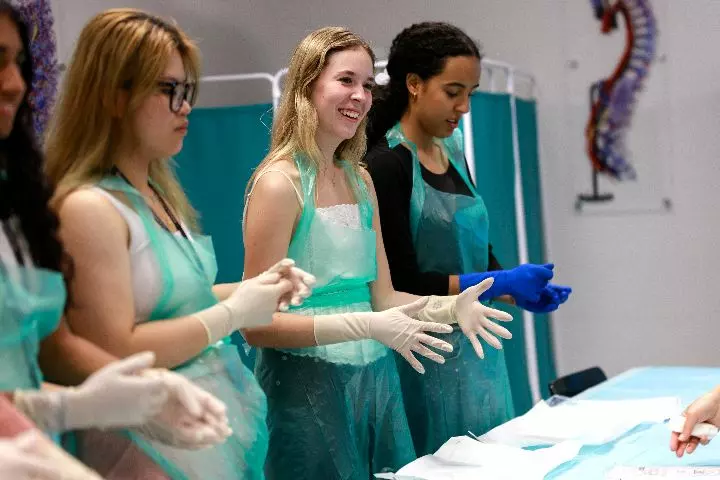
The courses are experiential and hands-on — you may find yourself conducting dissections in medicine, designing a robotic arm in engineering, participating in a moot court for law, or building creative writing portfolios and business case studies. By the end of the program, you’ll complete a personal project, receive written feedback, and receive a certificate of completion. You can find more details about the application here.
Why it stands out: You’ll study under expert academics, be guided daily by a university student mentor, complete a project you can show in future applications, and experience genuine university college life — with other campuses worldwide as alternatives.
3. Congress-Bundestag Youth Exchange (CBYX)
Location: Cities and towns throughout Germany
Cost: Free
Program Dates: July – September (Departure for Germany) – June – July (Year following- Return from Germany)
Deadline: Applications generally close by November or December
Eligibility: High school students (15-18 years old); applicants must be U.S. citizens
Congress-Bundestag Youth Exchange (CBYX) gives you an entire academic year inside a German high school. You live with a host family, attend local classes, and gradually become part of everyday life instead of staying with other exchange students. As your German improves, ordinary things like shopping, school projects, and conversations around the dinner table become part of the learning experience.
Community events and local activities help you understand how people actually live, not just what guidebooks describe. The program is jointly supported by the U.S. Congress and the German Bundestag, making it one of the best-known exchanges between the two countries.
Why it stands out: You spend a full school year as a local student in Germany, not as a visitor following a short summer schedule.
4. Kennedy-Lugar Youth Exchange and Study (YES) Abroad
Location: Bosnia and Herzegovina, Bulgaria, India, Thailand, Türkiye, and other past YES Abroad countries
Cost: Free; a modest stipend given
Program Dates: One academic year
Deadline: December 4th
Eligibility: High school students and recent graduates (age 15-18.5); open to international students
The Kennedy-Lugar Youth Exchange and Study (YES) Abroad program places you in another country for an academic year, where you attend school and live with a host family. Every day brings something new, whether that is learning classroom routines, joining community activities, or adjusting to a completely different culture.
You stay in one place long enough to understand how people study, celebrate, and solve everyday problems. Throughout the year, you also take part in service activities and local events that introduce you to the community around you. It feels much closer to living abroad than simply travelling abroad.
Why it stands out: You experience another country’s school system and family life for an entire academic year, giving you time to settle in instead of rushing through the experience.
5. National Security Language Initiative for Youth (NSLI-Y)
Location: Locations speaking the following languages: Arabic, Hindi, Chinese (Mandarin), Indonesian, Korean, Persian (Tajiki), Russian, and Turkish
Cost: Free
Program Dates: June 8th – November 19th; August – September
Deadline: June 8th; November 12th
Eligibility: U.S. citizens in grades 9-12
NSLI-Y focuses on learning a language by using it every day, and its free, government-funded model makes it one of the most accessible study abroad programs for high school students in 2026. You can study languages such as Arabic, Mandarin, Korean, Russian, Turkish, Indonesian, or Persian, while living with local families or joining the online version.
Language classes are combined with cultural activities, community events, and local visits that push you to speak outside the classroom. Instead of memorising vocabulary lists, you practice the language during conversations, meals, and daily routines. The program is funded by the U.S. Department of State and is known for its intensive language immersion.
Why it stands out: It focuses on languages that are rarely offered in most schools and teaches them through daily use instead of classroom drills alone.
6. Youth For Understanding (YFU) High School Study Abroad Program
Location: Argentina, Belgium, Chile, China, Czech Republic, Estonia, Germany, United Kingdom, and other YFU partner countries worldwide
Cost: Varies by destination
Program Dates: Rolling basis
Deadline: Rolling basis
Eligibility: Aged 15 to 18; open to international students
Few study abroad programs for high school students in 2026 cover as much ground as Youth For Understanding, which has been running student exchanges for decades and offers programs in more than 35 countries. You can choose a summer, semester, or full academic year, depending on how much time you have.
During your exchange, you stay with a host family, attend a local school, and join community activities that help you settle into everyday life. Before you leave, YFU also provides orientation sessions, so you know what to expect after arriving in your host country. The program keeps supporting students throughout the exchange, making it easier to adjust to a new school and culture.
Why it stands out: You can choose from short or long exchanges across more than 35 countries while receiving support before, during, and after your stay.
7. Rotary Youth Exchange
Location: Argentina, Austria, Belgium, Brazil, Denmark, Finland, France, Germany, Italy, Japan, Switzerland, Taiwan, Thailand, and other Rotary Youth Exchange countries worldwide
Cost: Room and board provided; student covers travel, insurance, documents, and personal expenses
Program Dates: Varies; long-term (1 academic year) and short-term (several days to 3 months)
Deadline: Contact your local Rotary club for application details
Eligibility: Ages 15-19; leaders in their schools and communities; open to international students
Rotary Youth Exchange is less like a summer program and more like pressing pause on your normal life for a few months or even a full school year. You attend a local school, live with one or more host families, and slowly get used to a completely different routine. Some days are about homework and school clubs, while others revolve around local festivals, community projects, or family traditions that never make it into travel guides.
Rotary clubs support students throughout the exchange, so there is always a local network to help if something feels unfamiliar. The program runs in more than 100 countries, giving you plenty of options depending on where you want to go.
Why it stands out: You don’t just visit another country. You spend enough time there to settle into everyday life, school, and family routines.
8. CIEE Global Navigator High School Study Abroad Programs
Location: Argentina, Australia, Botswana, China, Costa Rica, Czech Republic, Denmark, New Zealand, Portugal, Scotland, Singapore, South Africa, South Korea, Spain, Taiwan, and other CIEE Global Navigator destinations worldwide
Cost: Varies by program; substantial scholarships available
Program Dates: Summer abroad (3-4 weeks), high school semester abroad (3 months- 2 semesters), gap year abroad (1-2 semesters)
Deadline: January 20th for summer scholarships; other dates vary by program
Eligibility: Designed for high school freshmen, sophomores, juniors, and seniors; open to international students
CIEE Global Navigator offers programs that range from three-week summer experiences to semester- and year-long exchanges, giving it more flexibility than most other study abroad programs for high school students in 2026. Every destination mixes language learning with local culture, so lessons continue long after class ends. Depending on where you go, your schedule could include neighborhood visits, cultural events, local workshops, and community activities alongside regular coursework.
The program is known for offering generous scholarships, making international study possible for many students who might not otherwise consider it. Each location has its own academic focus, but every program encourages students to become comfortable living somewhere completely new.
Why it stands out: CIEE offers one of the widest ranges of destinations and scholarships, with programs that fit almost every type of schedule.
9. LITA: A Unique Approach to Language Immersion in Spain
Location: Rural communities in northern and southern Spain
Cost: $11,950
Program Dates: June 15th – July 21st; June 22nd – July 28th; June 22nd – July 13th; June 29th – July 20th
Deadline: January 31st; February 28th
Eligibility: Students finishing 9th-11th grades; Age Min. 14; Age Max. 18; international students open
LITA takes language learning into small towns across Spain, where Spanish quickly becomes part of daily life. You split your time between language lessons, independent projects, and living with a local family. Cooking traditional food, attending local celebrations, and joining community events become part of the learning process because every conversation helps build confidence.
The program also asks students to explore a cultural topic through research while improving their Spanish along the way. After several weeks, speaking the language starts to feel much more natural because you are using it from morning until night.
Why it stands out: Living in smaller Spanish communities gives you far more chances to speak the language than staying with a group of international students.
10. High School Study Abroad Program by CETUSA
Location: Australia, Brazil, Cambodia, China, France, Germany, Hungary, Italy, New Zealand, Luxembourg, Poland, Slovakia, South Korea, Spain, Sweden, Taiwan, Thailand, and other countries
Cost: Varies by country
Program Dates: Trimester: July – October; Semester: July – December; Academic Year: July – June
Deadline: March 15th
Eligibility: Available for high school students; open to international students
CETUSA places high school students in schools across several countries for a trimester, semester, or full academic year. School quickly becomes part of your daily routine, but so do things like local traditions, family meals, and weekend activities with your host community.
As you adjust to different classroom styles and cultural expectations, you begin picking up the language in ordinary conversations instead of only from textbooks. The exchange also includes local excursions and community activities that help students understand the place they’re living in. Every destination feels different because you’re experiencing it as a student instead of a tourist.
Why it stands out: The program combines regular school life with a long-term cultural exchange, giving you time to feel like a local instead of a visitor.
11. ASSE and World Heritage International Student Exchange Programs
Location: Argentina, Australia, Brazil, Canada, China, Czech Republic, Denmark, Estonia, Finland, France, Germany, Great Britain, Italy, Japan, and other ASSE partner countries worldwide
Cost: $2500 tuition
Program Dates: Various cohorts across the year
Deadline: Varies by the cohort
Eligibility: High school students; open to international students
ASSE has been running international exchanges for decades and now offers placements in more than 30 countries, a track record that few study abroad programs for high school students in 2026 can match. You can choose a summer, semester, or full academic year depending on how much time you want to spend abroad. Most participants live with carefully selected host families and attend local schools, where everyday routines become the biggest source of learning.
Community projects, local events, and school activities help you understand how people live beyond the tourist attractions. Because the program has such a long history, many destinations already have well-established support networks for exchange students.
Why it stands out: With exchange options in over 30 countries and decades of experience, ASSE has one of the largest international networks available to high school students.
12. ICES High School Study Abroad Programs for American Students
Location: Argentina, Australia, Austria, Belgium, Brazil, Chile, Costa Rica, Denmark, Finland, France, Germany, Great Britain, Ireland, Italy, Mexico, and other ICES destinations worldwide
Cost: Fees may vary for each country
Program Dates: Trimester (July – October); Semester (July – December), Year (July – June)
Deadline: Rolling basis
Eligibility: High school students from around the world
ICES High School Study Abroad Programs place students with host families for a semester or full academic year in countries across Europe, Asia, and other regions. You will settle into ordinary life by attending school, joining local activities, and getting to know the people around you.
Conversations at home, classroom discussions, and everyday errands all become part of learning the local language and culture. Because you stay in one place for several months, friendships grow naturally, and routines begin to feel familiar. The experience is much closer to living abroad than simply travelling through another country.
Why it stands out: Staying with a host family for several months gives you a much deeper understanding of local culture than a short study tour.
13. The Experiment in International Living (Summer Abroad)
Location: Over 10 countries, including France, Italy, Japan, Ecuador, and South Korea
Cost: Varies by program; $50 application fee and $500 deposit required, with financial aid and discounts available
Program Dates: Varies by destination (Summer cohorts)
Deadline: Rolling basis, but enrollment requests are not guaranteed after February 15th
Eligibility: Students who have completed their 9th, 10th, 11th, or 12th-grade year but have not yet entered college; open to U.S. students
Its theme-based structure, covering areas like Cultural Discovery, Culinary Training, Global Affairs, or Anime and Manga, makes The Experiment in International Living one of the more niche study abroad programs for high school students in 2026. You will explore the world through experiential learning in local communities, residing with carefully vetted host families to gain an authentic perspective on everyday life.
The curriculum is deeply hands-on, encouraging you to extract lessons through active reflection facilitated by trained group leaders. By the end of the program, you’ll develop essential college-readiness skills, including intercultural communication, problem-solving, and adaptability.
Why it stands out: With over 90 years of experience, The Experiment in International Living is uniquely distinguished by its highly respected, student-centered experiential learning model that pairs deep cultural homestays with focused, thematic explorations across the globe.
Frequently asked questions: Study abroad programs for high school students in 2026
Are study abroad programs for high school students open to international students?
Most are open to international students, including Tufts Summit, Youth For Understanding, and CIEE Global Navigator. A few programs are specifically restricted to US citizens, including the Congress-Bundestag Youth Exchange and NSLI-Y. Immerse Education’s Academic Insights Programme is also open globally to students aged 13 to 18 across six locations, offering an alternative if citizenship restrictions apply.
What is the difference between a full academic year exchange and a summer study abroad program?
Full academic year exchanges, like the Congress-Bundestag Youth Exchange or Kennedy-Lugar YES Abroad, immerse you in a local school system and host family for an entire year, giving you deep cultural and language exposure. Summer programs, like Tufts Summit or LITA’s Spanish immersion program, instead offer a concentrated few weeks of study and cultural exposure without the extended time commitment. If you want maximum immersion and can commit the time, a full-year exchange offers deeper learning; if you have limited time, a summer program still delivers meaningful exposure.
Are these study abroad programs free or do they require high cost?
Costs vary enormously. Several government-funded exchanges, including NSLI-Y, the Congress-Bundestag Youth Exchange, and Kennedy-Lugar YES Abroad, are completely free. Others charge substantial fees: LITA’s Spanish program costs $11,950, and Tufts Summit requires a $500 deposit alongside program costs. CIEE Global Navigator offers generous scholarships across its many destinations, making cost less of a barrier than it might first appear.
What is the difference between a host family exchange and a structured academic program abroad?
Host family exchanges, like Rotary Youth Exchange or ASSE’s International Student Exchange Programs, place you with a family and enroll you in a local school, prioritizing cultural immersion and daily language use. Structured academic programs, like Tufts Summit, instead combine college-level coursework with a host family stay, giving you both academic credit-building and cultural exposure. If your primary goal is language immersion, a host family exchange offers more daily practice; if you want academic rigor alongside cultural experience, a structured program provides that balance.
How selective are study abroad programs for high school students?
Selectivity varies by program. The Congress-Bundestag Youth Exchange and Kennedy-Lugar YES Abroad are both competitive government-funded exchanges with specific age and citizenship requirements. Others, like Youth For Understanding and ASSE, use more open, rolling enrollment across their many partner countries. Regardless of selectivity, meeting country-specific age ranges and application deadlines, which vary considerably across this list, matters significantly.
Is Immerse Education a good option for exploring international study without a full exchange commitment?
Immerse Education’s Academic Insights Programme is a strong choice if you want international academic exposure without committing to a full semester or year abroad. The two week program spans six global locations, including Oxford, Cambridge, and Boston, placing you in small groups of seven to 10 students working on a personal project. You’ll receive written feedback and a certificate of completion, offering a lower-commitment alternative to the longer exchange programs listed here while still providing genuine international academic exposure.
Your Study Abroad Program Was Just The Opener
Choosing among these study abroad programs for high school students in 2026 gives you a genuine introduction to a new country, culture, and academic system.
Once your program wraps up, you can start thinking about which destination or format might suit your next chapter abroad.
The independence, adaptability, and cross-cultural skills you built become a strong foundation for whatever study abroad opportunity comes next.
Keep building on what you started this year by exploring our Study Abroad blogs for guidance on your next steps.