


 Русский (RU)
 Українська (UK)
 Türkçe (TR)
 Italiano (IT)
 Français (FR)
 Português (PT)
 中文 (中国) (ZH)
 Español (ES)
 日本語 (JA)
 ไทย (TH)
 Deutsch (DE)
 Ελληνικά (EL)
 Polski (PL)
 Bahasa Indonesia (ID)
 Nederlands (NL)
 العربية (AR)
 한국어 (KO)

While you are in high school, summer programs for international high school students in 2026 can be your opportunity to move beyond the traditional classroom and explore academic subjects through hands-on, inquiry-driven learning. They let you engage in university-level academics, work alongside a cohort of peers from diverse backgrounds and nationalities, and prepare for future majors and careers.
Whether you are curious about the arts, business, leadership, STEM, healthcare, or economics, credible universities around the world run summer learning experiences for pre-college students. Many reputable summer experiences are designed to welcome a multinational cohort of high schoolers. Choosing one can help you engage in thoughtful exchanges, collaborative activities, and meaningful discussions with peers from around the world.
How to choose the right summer programs for international high school students?
Summer programs vary widely in scope, theme, and format. Some programs let you explore new subject areas before college, while others focus on niche topics, letting you build subject-specific skills to build a foundation in your field of choice.
Depending on the program, you may spend the summer diving into career- or college-focused workshops, academic seminars, undergraduate-level lectures, or research. The right opportunity is one that offers a good mix of instruction and hands-on exposure.
To help you choose from the available options, we have put together a list of 15 summer programs for high school students in 2026. We have focused on experiences that let you explore university-style academics and connect with students from around the globe.
For adjacent opportunities, consider the online research program.
Key takeaways
- The Research Science Institute at MIT has approximately a 2.5% acceptance rate, admitting around 100 students annually for a program combining STEM coursework with mentored research.
- Immerse Education’s Academic Insights Programme spans eight locations, including Oxford, Singapore, and Tokyo, with small classes of seven to 10 students open to students worldwide aged 13 to 18.
- UBC’s Future Global Leaders program costs between CAD 1,940 and CAD 2,855 in course fees depending on residency status, letting students sample introductory university courses in fields like law and engineering.
- Northwestern’s CIERA REACH Program costs $2,500 for the core component, with free CTA transit passes provided alongside need-based financial aid.
- Harvard’s Secondary School Program costs between $4,180 and $15,735 and awards real college credit and an official Harvard transcript for successfully completed courses.
- Vogue Summer School costs $6,195 for the day program or $7,695 for residential, combining fashion coursework with site visits to designer studios and fashion headquarters in New York City.
- The University of Toronto’s DEEP Summer Academy charges CAD 732 per week for domestic students or CAD 1,111 per week for international students across advanced engineering and science courses.
- Program costs for international summer programs range from free options like RSI at MIT to over $15,735 for Harvard’s longest Secondary School Program sessions.
15 Summer Programs for International High School Students in 2026
1. Research Science Institute (RSI) @ MIT
Location: Massachusetts Institute of Technology, Cambridge, MA, U.S.
Cost: Free apart from a $75 application fee; fee waivers available
Acceptance rate/cohort size: ~2.5% acceptance rate; ~100 students/year
Application deadline: Mid-December
Dates: Six weeks in the summer
Eligibility: Rising high school seniors (juniors at the time of application) with exceptional achievements in STEM; international students are eligible.
RSI is a competitive summer program that introduces you to university-level STEM research through a combination of academic instruction and independent research. At the start of the program, you will attend classes, lectures, and seminars covering subjects such as mathematics, engineering, physics, and the biological sciences. These sessions will help you build the theoretical foundation and research skills needed for the project phase of the program.
Following the instructional component, you will work with a research mentor on an individual project in your chosen area of interest. As you progress, you will learn how to read and evaluate scientific literature, develop a research question, apply appropriate methods, interpret your findings, and present your work in both written and oral formats. Throughout the program, you will attend presentations by researchers and STEM professionals that provide additional perspectives on scientific research and related careers.
Why it stands out: It combines advanced STEM coursework with mentored research within a rigorous academic environment.
2. Immerse Education’s Pre-University Summer School

Location: Cambridge, London, Oxford, Singapore, Sydney, Tokyo, and Toronto
Cost: Varies; summer school scholarship available through our bursary programme
Acceptance rate/cohort size: Selective; an average of 7 participants per class
Application deadline: Multiple summer cohorts; rolling admissions
Dates: Two weeks during the summer
Eligibility: Students, ages 13-18, currently enrolled in middle or high school; open to students from around the world
The Academic Insights Program lets middle and high school students experience university life firsthand. You will live on campus and study in small groups of 7 to 10, and learn from tutors from top universities like Oxford and Cambridge. You can explore a wide range of subjects, spanning over 20 options, including Computer Science, Economics, Architecture, AI, Business Management, Medicine, and Philosophy. The courses are experiential, letting you practice what you learn over two weeks.
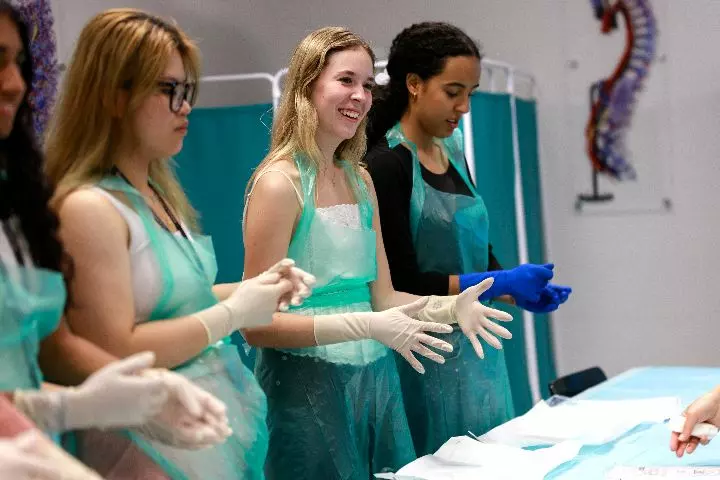
You may find yourself conducting dissections in medicine, designing a robotic arm in engineering, participating in a moot court for law, or building creative writing portfolios and business case studies. By the end of the program, you will complete a personal project, receive written feedback, and leave with a certificate of completion. You can find more details about the application here.
Why it stands out: You will get early exposure to university life and explore new fields through independent project work and discussion-based classes
3. University of British Columbia Future Global Leaders
Location: University of British Columbia (UBC), Vancouver, BC, Canada
Cost: CAD 1,940 course fee and CAD 2,110 mini-school fee for domestic students | CAD 2,620 course fee and CAD 2,855 mini-school fee for international students + residential fees CAD 2,650
Acceptance rate/cohort size: Not specified
Application deadline: Residential registration closes three weeks before the session start date; commuter registration closes a week before the chosen session begins
Dates: July 6-17 | July 20-31 | August 3-14
Eligibility: Students, ages 15-18 who have completed grade 10 (with a recommended 78% average); international students can apply.
Among summer programs for international high school students in 2026, Future Global Leaders stands out as a two-week program that lets you enroll in introductory university courses led by UBC professors and instructors on the University of British Columbia’s Vancouver campus. You will choose a subject from options such as law, health sciences, media, business, and engineering, and dive into core aspects within small classes.
The schedule will combine academic learning with campus exposure, activities, and opportunities to connect with a diverse student community. Courses will mirror first-year university offerings, so you will engage with the real content of a major before college. You may also tour campus facilities like labs, participate in hands-on exercises, and connect with professionals within your chosen field.
Why it stands out: It lets you explore a university campus and study fields that most secondary schools do not cover during regular classes.
4. Northwestern University’s CIERA REACH Program
Location: Northwestern University, CIERA, Evanston, IL
Cost: $2,500 (Core program) + $1,500 (REACH Further Program); need-based full/partial financial aid + free CTA transit passes available
Acceptance rate/cohort size: ~50 for the core component; limited spots for the REACH Further component
Application deadline: March 9th
Dates: Core program : June 15 th – July 2nd (Session 1); July 6-24 (Session 2) | REACH Further program : July 6-24 (Session 1); July 27th – August 14th (Session 2)
Eligibility: Current high school sophomores, juniors, or seniors; open to international students
The Research Experiences in Astronomy (REACH) program introduces you to the fundamentals of astronomy research through coursework, programming, and project-based learning, giving it a research depth that few other summer programs for international high school students in 2026 can match. During the initial three-week core program, you will develop foundational skills in Python programming, data analysis, and observational astronomy while working with astronomical datasets and learning techniques commonly used in the field.
You will collaborate with other participants on a guided research project, applying the programming and data analysis concepts and tools introduced during the coursework phase. You will also take part in observing sessions, learn about methods used to study astronomical objects, and explore academic pathways in astronomy through discussions with researchers. At the end of the core program, you will present your group’s research findings. Following the experience, you can continue engaging with the program through REACH Further, which is an extended three-week opportunity to conduct a mentored research project with a CIERA scientist.
Why it stands out: You build foundational astronomy research and coding skills while working with data and observing real astronomical phenomena in a university setting.
5. George Mason University’s Aspiring Scientists Summer Internship Program (ASSIP)
Location: Virtual/hybrid or George Mason University, Fairfax, VA
Cost: $25 application fee + $1,299 tuition fee; financial aid available
Acceptance rate/cohort size: Not specified
Application deadline: February 15th
Dates: June 18th – August 12th
Eligibility: Students from around the world who are at least 15 years old; in-person and wet-lab placements have a 16+ age requirement
George Mason University’s ASSIP is a summer research internship that allows you to contribute to faculty-led research projects across a range of disciplines. When you apply, you can indicate the research areas and mentors that align with your interests. Research opportunities span fields including engineering, biology, computer science, mathematics, chemistry, physics, data science, forensic science, finance, and business.
Throughout the eight-week program, you will work with faculty members and research teams on active research projects while gaining experience with research methods used in your field. Depending on your project, you may analyze data, conduct laboratory work, attend research meetings, and develop skills in scientific communication and technical writing. Many students also present their research at the end of the program through a symposium, conference, or similar academic event.
Why it stands out: You get to participate in faculty-led research across a wide range of disciplines and choose from in-person, hybrid, or virtual internships.
6. Harvard Secondary School Program

Location: Harvard University, Cambridge, MA (residential, commuting, and virtual format available)
Cost: $4,180 – $15,735 + $75 application fee; need-based financial aid available
Acceptance rate/cohort size: Selective enrollment; class sizes vary by course
Application deadline: Not disclosed
Dates: Four-week program: July 12th – August 8th | Seven-week program: June 20th – August 8th
Eligibility: High school sophomores, juniors, and seniors who are at least 16 years old by the start of the program and will not graduate before the summer session; international students can apply if they meet program requirements
As one of the most prestigious summer programs for international high school students in 2026, Harvard’s Secondary School Program gives you the opportunity to take undergraduate-level courses through Harvard Summer School while you are still in high school. You can enroll in courses across a variety of subject areas, including the humanities, social sciences, computer science, mathematics, and the natural sciences, depending on your academic interests..
During the program, you will complete coursework in a university setting that may include lectures, seminars, laboratory sessions, discussions, and independent study, depending on the course you choose. You will learn how to keep up with college-level reading, assignments, assessments, and deadlines, gaining exposure to the academic expectations and structure of a university course. If you successfully complete your classes, you will earn college credit and receive an official transcript.
Why it stands out: You get to enroll in real academic courses, earn Harvard college credit, and receive an official transcript while still in high school.
7. New York University’s Pre-College Program
Location: Online or NYU, New York, NY
Cost: $50 application fee + tuition: $700 – $16,016, depending on the number of credits
Acceptance rate/cohort size: Not specified
Dates: July 1st – August 12th
Application deadline: June 15th (online and domestic students) | March 13th (international students)
Eligibility: Rising 11th- or 12th-grade high school students for the summer sessions with a minimum GPA of 3.0 on a 4.0 scale; international students who meet English language and program requirements can apply
NYU’s Pre-College program allows you to enroll in undergraduate courses while you are still in high school. You can choose from a range of subjects offered during the summer, with options that may include business, engineering, computer science, psychology, journalism, the humanities, and other disciplines.
As a participant, you will complete university-level coursework through lectures, discussions, readings, assignments, projects, and other course activities, depending on the class you select. You will learn how to meet university-level academic requirements and deadlines while developing the study and time-management skills needed for college-level learning. Upon successful completion, you will earn up to 8 university credits.
Why it stands out: You will earn university credit while experiencing undergraduate coursework on the NYU campus.
8. Cornell University’s Pre-College Studies
Location: Cornell University, Ithaca, NY
Cost: ~$1,940/credit + $75 application fee + health fees and residential fees apply for on-campus students; financial aid is available for eligible students
Acceptance rate/cohort size: Not specified; class sizes vary by course
Application deadline: Varies by session; typically April – early June deadlines
Dates: June 1-31 (three-week and six-week summer sessions available within this window; dates vary by selected course)
Eligibility: Students, ages 16-19, who have completed their sophomore year of high school; international students who can obtain an F-1 student visa can apply
Cornell’s Pre-College Studies program lets you take undergraduate courses while you are still in high school. Depending on the session, you can choose from courses across a range of disciplines, including engineering, business, architecture, life sciences, veterinary medicine, the social sciences, and the humanities. Throughout the program, you will participate in learning experiences that follow the format of Cornell undergraduate courses.
Depending on your course, you may attend lectures, contribute to discussions, complete written assignments or projects, and spend time on independent study outside the classroom. The program will introduce you to the academic standards, workload, and learning environment of a university course while allowing you to earn credit for successfully completed coursework.
Why it stands out: You get to take Cornell undergraduate courses for credit, experiencing university expectations and coursework in your field of choice before starting college.
9. Vogue Summer School
Location: Vogue College of Fashion, New York, NY, U.S.
Cost: $6,195 (day program) | $7,695 (residential program) + non-refundable $50 application fee; scholarships available
Dates: June 7th – July 31st (multiple two-week sessions available within this window)
Application deadline: Priority: February 27th; Regular Round 1: March 13th; Regular Round 2: April 10th; rolling admissions starting from April 13th
Eligibility: Students in grades 10-12 who are at least 15 years old; international students who can demonstrate English proficiency can apply
If you’re weighing your options among summer programs for international high school students in 2026, Vogue Summer School is a two-week pre-college program designed to introduce high schoolers from around the world to the fields of fashion communication, business, media, and styling. You will learn how the fashion industry works through structured courses in areas such as storytelling, branding, and design, and through project work, including portfolio building and visual content development.
You will engage in site visits to galleries, designer studios, museums, and fashion headquarters, which can help you connect coursework to industry practice. Guest lectures from designers, journalists, and professionals will offer insight into career pathways and fashion industry structure. You will also explore New York City, which will serve as a learning environment packed with fashion districts and cultural institutions.
Why it stands out: You will complete structured fashion coursework while gaining direct exposure to industry spaces and professionals, along with site-based exploration across NYC.
10. University of Southern California Summer Programs
Location: University of Southern California, Los Angeles, CA
Cost: $85 application fee of $85 + domestic student fee: $11,570 for residential participants and $8,130 for commuting participants | International student fee: $12,208 + government fees
Acceptance rate/cohort size: Not specified
Application deadline: March 13th for international applicants | May 8th for domestic applicants
Dates: June 22nd – July 17th
Eligibility: Students worldwide who have completed 9th grade and are pursuing a rigorous high school curriculum
The University of Southern California’s Summer Programs let high school students take a university-level course before college. Course offerings vary by session and typically span subjects such as business, engineering, communication, journalism, pre-law, pre-health sciences, and other academic fields. Throughout the program, you will complete coursework that follows the structure of a USC undergraduate class.
Depending on your course, you may attend lectures, participate in discussions, complete assignments and assessments, and meet other academic requirements outlined in the syllabus. Some courses have prerequisites or additional participation requirements, and certain classes may require you to use your own laptop. After successfully completing the program, you will receive an official USC transcript reflecting your coursework.
Why it stands out: You will take a focused college-level course at USC and receive a university transcript upon completion.
11. Stanford Pre-Collegiate Summer Institutes

Location: Online
Cost: $3,200 + additional course materials up to $100; need-based scholarships are available
Acceptance rate/cohort size: Not specified; ~ 16 students per class
Application deadline: March 13th
Dates: June 15-26 or July 6-17
Eligibility: 8th to 11th graders; open to international students
This Stanford program offers high schoolers around the world the opportunity to explore subject areas beyond the standard high school curriculum through online courses, making it one of the more accessible summer programs for international high school students in 2026 given its fully virtual format. You can choose from over 75 courses, including artificial intelligence, engineering, mathematics, philosophy, and creative writing.
You will attend live virtual classes, engage in discussions with other high school students from different locations, and work on projects to explore the chosen subject. Homework and assignments will help you revisit and practice what you learn in class. Office hours will help you connect with instructors and seek additional guidance regarding your coursework.
Why it stands out: You get to study a focused subject through live online classes under the guidance of Stanford-affiliated instructors while working with peers from around the world.
12. Emory Pre-College Program
Location: Emory University, Atlanta, GA, U.S.
Cost: $70 nonrefundable application fee + Residential fees starting at $5,510 | Commuter fees starting at $3,925; financial aid available for U.S. citizens and permanent residents)
Acceptance rate/cohort size: Varies by course
Application deadline: TBA for the next cycle
Dates: June 14-27 | June 28th – July 11th | July 12-25
Eligibility: 10th and 11th graders from around the world who are at least 15 years old and have a minimum GPA of 3.0
Emory University’s Pre-College Program offers summer courses designed for high school students across a broad range of academic subjects. You can choose from over a hundred courses, with options spanning areas such as biotechnology, astrophysics, forensic science, psychology, public health, and other interdisciplinary topics.
Within your chosen subject, you will engage in university-level coursework, which may include assigned readings, textbooks, and other academic materials to support your learning. You will complete coursework based on the structure of the class, following the requirements set by the instructor. The experience can introduce you to advanced academics, college-level expectations, and life on campus.
Why it stands out: You will study university-level subjects in a low-pressure, non-credit format on campus alongside peers from around the world.
13. University of Pennsylvania’s Penn Arts and Sciences Pre-College Residential Program
Location: University of Pennsylvania, Philadelphia, PA, U.S.
Cost: Starting at $15,192 for 1 course unit + $100 application fee
Acceptance rate/cohort size: Not specified
Application deadline: May 1st
Dates: June 30th – August 8th
Eligibility: 10th- and 11th-graders with a minimum GPA of 3.5 who are at least 13 years old; international students who can obtain an F-1 visa can apply
This program allows you to take credit-bearing undergraduate-level courses at Penn Arts and Sciences while you are still in high school. You will attend classes led by faculty and visiting instructors and learn alongside high school students and undergraduate students. You can choose from introductory courses in biology, media studies, law and society, and foundational topics depending on the session. Most credit-bearing courses follow a regular academic schedule with multiple weekly class meetings.
You will complete lectures, assignments, readings, independent study, and exams as part of the course structure. The workload will be designed to reflect standard university expectations for introductory undergraduate classes. Upon completing the program, you can request an official transcript from the university reflecting your academic performance.
Why it stands out: You will take credit-bearing undergraduate courses at the University of Pennsylvania, gaining exposure to a structured academic schedule and Ivy League evaluation system.
14. Columbia University College Edge: Summer
Location: Columbia University, New York, NY, U.S.
Cost: $2,672/point (one course is typically three points) + $80 application fee (check the full fee breakdown here)
Acceptance rate/cohort size: Not specified
Application deadline: TBA for the next cycle
Dates: May 25th – July 3rd | July 6th – August 14th
Eligibility: Domestic and international students who are in grades 11 or 12 with a minimum cumulative GPA of 3.3
Columbia University’s College Edge program allows you to take credit-bearing undergraduate-level courses on campus. You will study alongside Columbia University students as well as other high school juniors and seniors and earn academic credit for completed courses. Depending on availability, course options may span subjects such as mathematics, physics, history, statistics, psychology, and Germanic languages. Classes will be led by Columbia faculty and follow syllabi designed for undergraduate study.
Over the course of the program, you will learn how to keep up with the academic workload outside of class through readings, assignments, and preparation for assessments. The program will also provide academic advising to help you choose courses that align with your interests and academic background.
Why it stands out: You will earn Columbia University credit while studying in undergraduate classes with structured academic expectations.
15. University of Toronto DEEP Summer Academy
Location: University of Toronto, Toronto, ON
Cost: Domestic students: CAD 732/week | international students: CAD 1,111/week + CAD 50 (Round 1) or CAD 60 (Round 2) application fees
Acceptance rate/cohort size: Not specified
Dates: July 6th – August 14th (multiple sessions within this window)
Application deadline: Round 1: March 3-23; Round 2: March 24th – April 13th
Eligibility: Students in grades 9-12 who have completed at least one year of high school; international students can apply
DEEP (Da Vinci Engineering Enrichment Program), offered by the University of Toronto, lets high schoolers from around the world enroll in advanced courses in engineering, science, and tech, and its flexible weekly pricing sets it apart from many other summer programs for international high school students in 2026. You will attend classes led by graduate students and faculty, exploring engineering and science at a level beyond the standard high school curriculum.
Classes will typically combine instruction with lab work and design projects in fields like biomedical engineering, robotics, and computer science. Courses will follow the pace of a first-year university class while offering you exposure to advanced academic expectations. The program is designed to help you dive deep into a technical subject and assess your interest in an engineering or science major. You will study in U of T classrooms and can even choose to live on campus for the duration of the program.
Why it stands out: You will choose from a range of focused, advanced engineering or science courses, gaining exposure to the University of Toronto’s academic pace and learning environments.
Frequently asked questions: Summer programs for international high school students in 2026
Are these summer programs actually designed for international students?
Yes, every program in this list explicitly welcomes international students, unlike many US-based programs that restrict eligibility to citizens or permanent residents. RSI at MIT, Harvard’s Secondary School Program, and UBC’s Future Global Leaders are all specifically noted as open to international applicants, sometimes at a different fee tier. Immerse Education’s Academic Insights Programme is similarly built around a globally distributed cohort.
How much do these summer programs cost for international students?
Costs vary enormously by institution and format. RSI at MIT is free apart from a $75 application fee. Mid-range programs like George Mason’s ASSIP cost $1,299 in tuition, while premium options include Harvard’s Secondary School Program at up to $15,735 and Penn’s Pre-College Residential Program starting at $15,192. International students sometimes pay a higher tier than domestic students, as seen with UBC’s Future Global Leaders and the University of Toronto’s DEEP Summer Academy.
Do these summer programs award transferable college credit?
Many do, since several place you in actual undergraduate courses. Harvard’s Secondary School Program, NYU’s Pre-College Program, Cornell’s Pre-College Studies, and Columbia’s College Edge all award real, transcript-backed college credit. Others, like RSI at MIT and Northwestern’s CIERA REACH Program, provide a research symposium or presentation rather than formal credit. If credit matters to you, university-based pre-college programs tend to offer this more consistently than standalone research programs.
What is the difference between a research-focused program and a coursework-focused program?
Research-focused programs, like RSI at MIT or Northwestern’s CIERA REACH Program, have you work with a mentor on an original research project, culminating in a formal presentation or paper. Coursework-focused programs, like Harvard’s Secondary School Program or NYU’s Pre-College Program, instead have you take structured undergraduate classes with assignments and exams. If you already have a research interest, a research-focused program offers deeper engagement; if you want broad subject exposure, a coursework-based option provides that instead.
How selective are these summer programs for international students?
Selectivity ranges considerably. RSI at MIT is extremely selective, admitting around 100 students from a large international applicant pool. Others, like NYU’s Pre-College Program or Cornell’s Pre-College Studies, use a GPA-based admission process without an extremely low acceptance rate. Regardless of selectivity, meeting specific visa and English proficiency requirements matters as much as academic strength for international applicants.
Is Immerse Education a good option among these international summer programs?
Immerse Education’s Academic Insights Programme is a strong choice if you want flexibility in both subject and location, spanning eight cities including Oxford, Singapore, and Tokyo. The two week program places you in small groups of seven to 10 students, working on hands-on projects across more than 20 subjects. You’ll complete a personal project, receive written feedback, and earn a certificate of completion, offering a globally accessible alternative to the often US-centric programs listed here.
From Campus Life to Your College Shortlist
Choosing among these summer programs for international high school students in 2026 gives you a genuine introduction to university-level academics and campus life abroad.
Once the program ends, you can turn that hands-on experience into a clearer sense of your academic and career direction.
The independence, academic skills, and confidence you built become a strong foundation for stronger university applications ahead.
Keep building on what you started this summer by exploring our University Preparation blogs for guidance on your next steps.