


 Русский (RU)
 Українська (UK)
 Türkçe (TR)
 Italiano (IT)
 Français (FR)
 Português (PT)
 中文 (中国) (ZH)
 Español (ES)
 日本語 (JA)
 ไทย (TH)
 Deutsch (DE)
 Ελληνικά (EL)
 Polski (PL)
 Bahasa Indonesia (ID)
 Nederlands (NL)
 العربية (AR)
 한국어 (KO)

Summer can be a valuable time to explore your academic interests beyond the high school curriculum, especially if you are curious about law. Law summer programs in Japan for high school students can introduce you to legal study through research, case analysis, constitutional interpretation, policy discussions, and mock trial simulations. Along the way, you can develop analytical thinking, persuasive communication, and evidence-based reasoning skills.
Beyond academics, these experiences often provide exposure to campus life through lectures, seminars, residential activities, and interactions with faculty, law students, and legal professionals. By engaging with real-world legal issues, you can gain practical insight into fields such as criminal law, international law, human rights, and public policy while building skills that support a wide range of future academic paths.
Why should I consider a law summer program in Japan?
Japan provides a distinctive setting for students interested in exploring law and legal systems. As one of the world’s largest economies and a major hub for international business, technology, and public policy, Japan offers valuable perspectives on how legal frameworks operate within a highly developed society.
Many programs in the country are hosted at respected universities and academic institutions that attract students and researchers from around the world, creating opportunities for cross-cultural learning and discussion. For international students, studying in Japan can also offer firsthand experience navigating a different cultural environment while developing greater global awareness. Together, these academic and cultural factors make Japan a compelling destination for students seeking an introduction to legal studies.
To help you get started with your search, we have put together a list of 15 law summer programs in Japan for high school students!
For more flexible options, consider Immerse’s online law program.
Key Takeaways
- Japan hosts law summer programs across a range of formats — from in-person university experiences in Tokyo and Yokohama to free online workshops led by Japanese university faculty.
- Programs vary widely in cost: several options (Stanford e-Japan, Legal Education Support Association seminars, Tokyo Bar Association’s Judicial Exploration Program) are completely free, while residential programs typically range from ¥275,000 to $4,000 USD.
- Immerse Education’s Law Summer School in Tokyo is the only program on this list that combines university-level instruction, small-group tutoring, campus residential life, and a personal project with written feedback — offering the most complete pre-university experience.
- International students can apply to most programs on this list, including Immerse, KISEI Symposium, Natsu Camp, NUCB International College’s Summer Camp, and all online courses.
- Topics covered across these programs span constitutional law, criminal justice, international law, human rights, contract law, and public policy — giving students a broad foundation before college.
- Several programs are self-paced and open-enrollment (Harvard via edX, Yale and Case Western via Coursera), making them accessible year-round with no application required.
- Most in-person programs in Japan run during July–August, with application deadlines falling between January and April.
15 Law Summer Programs in Japan for High School Students
1. Akita International University International Law Studies Workshops
Location: Online (led by Akita International University faculty)
Cost: Not specified; you can contact the host for more information.
Acceptance rate/Cohort size: Not specified
Application deadline: Rolling
Dates: Various one-day sessions throughout the year, including sessions in June – August; next session on July 14th
Eligibility: High school students; international student eligibility not specified
AIU’s series of high school workshops introduces students to the development and evolution of Japan’s constitutional framework and international law. Among the more academically focused law summer programs in Japan for high school students, this option gives you space to explore current and historical legal developments, discuss constitutional principles and democratic governance, and examine the role of constitutions in modern society.
The format uses small-group discussions and plenary presentations that resemble university seminar courses. You may also engage with legal texts and historical developments rather than simply receiving lectures. You will learn alongside university students. The workshops emphasize legal analysis, interpretation, and argumentation skills. English-language discussion will be incorporated throughout the program.
Why it stands out: It offers direct exposure to constitutional law through a university-style seminar format.
2. Immerse Education’s Tokyo Law Summer School
Location: Tokyo, Japan
Cost: Varies; summer school scholarship available through our bursary programme
Application Deadline: Multiple cohorts with rolling admissions.
Program Dates: 2 weeks during the summer
Eligibility: Students worldwide aged 13-18 currently enrolled in middle or high school
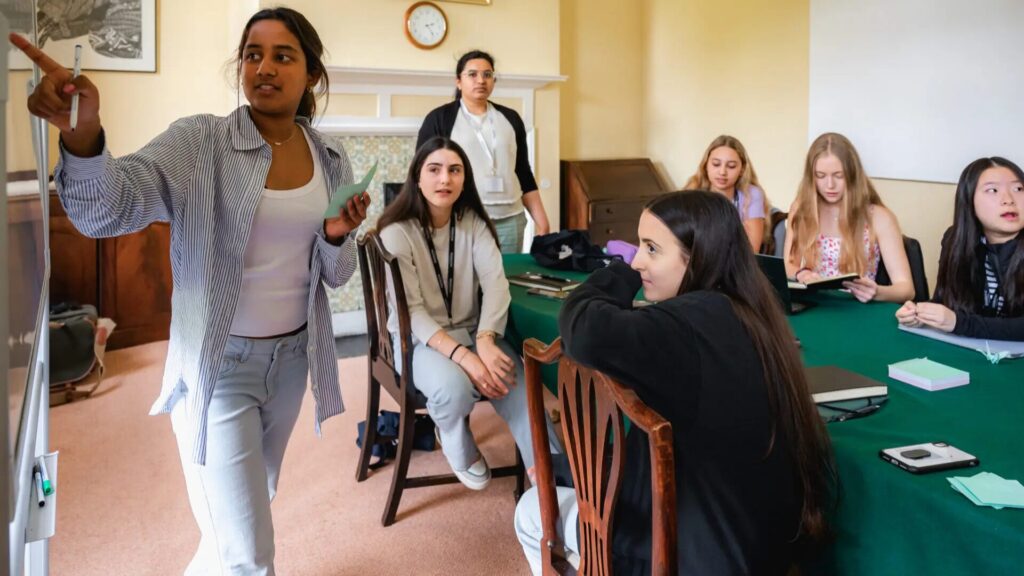
The Law Academic Insights Program provides school students with an opportunity to take undergraduate-level classes at universities around the world. Participants work with academics from universities like Oxford, Cambridge, and Harvard in classes of 4-10 students. They attend university-style lectures and 1:1 weekly sessions with their tutor. Through interactive seminars, case studies, and discussions intended to replicate the intellectual rigor of undergraduate law courses, you investigate fundamental topics of law, including contracts, criminal justice, human rights, and constitutional principles.
The program helps you develop the abilities necessary for success in legal and related academic fields by emphasizing analytical reasoning, persuasive communication, and disciplined arguments. By the end of the program, you will complete a personal project and receive written feedback and a certificate of completion. You can find more details about the application here.
Why it stands out: You’ll be taught by top faculty, work on an independent project, and live on campus, giving you a complete experience of future university life.
3. Legal Education Support Association ’s Criminal Justice Seminars & Mock Trials
Location: Legal Education Support Association offices in multiple cities in Japan
Cost: Free
Acceptance rate/Cohort size: Not specified
Application deadline: Varies by event
Dates: Multiple sessions throughout the year
Eligibility: Junior high and high school students; international student eligibility not specified
The Legal Education Support Association, established to increase awareness of legal careers among young people, offers a series of law-focused events to students. You can attend events such as criminal justice seminars, mock trials, courtroom simulations, and discussions with legal professionals.
During these sessions, you may hear directly from prosecutors, judges, attorneys, police officers, correctional officials, and probation officers. The sessions typically focus on helping you build an understanding of how Japan’s legal system operates in practice and learn about legal institutions and career pathways.
Why it stands out: You will learn about law pathways and Japan’s legal system from professionals.
4. Tokyo Bar Association Judicial Exploration Program
Location: Tokyo Bar Association, Tokyo, Japan
Cost: Free
Acceptance rate/Cohort size: Not specified
Application deadline: April 9th (tentative)
Dates: May 15th (tentative)
Eligibility: Open to the public, including high school students; international student eligibility not specified
This is a one-day opportunity to tour courts, prosecutors’ offices, and bar association facilities with practicing lawyers. The program is designed to explain the role of legal institutions within Japanese society. You will gain exposure to the judiciary beyond textbook descriptions and connect with legal professionals who discuss their work and how the justice system operates.
Activities emphasize constitutional values and civic understanding. You will be able to ask questions directly to legal practitioners. The experience can provide useful context for students considering legal studies.
Why it stands out: You will gain firsthand exposure to several key legal institutions in a single day.
5. KISEI Symposium (Keio Initiative for Scholarly Exchange & Insight)
Location: Keio Senior High School, Yokohama, Kanagawa, Japan
Cost: $4,000 (USD)
Acceptance rate/Cohort size: Approximately 20 participants (5 international students + 15 Keio students)
Application deadline: March 20th
Dates: July 13-19
Eligibility: Students, ages 15-18, enrolled full-time in a senior high school outside Japan
The KISEI Symposium is a week-long academic exchange program that brings together international and Japanese high school students to discuss research, global challenges, and contemporary issues. While many law summer programs in Japan for high school students focus on legal systems directly, this symposium builds relevant foundations through dialogue, empathy, and collaborative discussion on society, governance, international affairs, and public challenges.
You can also share research on topics such as human rights, constitutional law, international law, public policy, justice systems, or global governance. The symposium culminates in a formal presentation event held at Keio University’s Hiyoshi Campus. The seminar-based format emphasizes research, evidence-based discussion, analysis of societal issues, and the consideration of multiple perspectives , all skills that are central to legal education.
Why it stands out: It combines academic research presentations, cross-cultural exchange, and university exposure while encouraging you to engage with complex societal and governance-related issues.
6. Stanford e-Japan
Location: Online
Cost: Free
Acceptance rate/Cohort size: Selective
Application deadline: Varies by session; next window opens on July 1st
Dates: Spring and fall sessions each year; spring sessions extend into the summer
Eligibility: High school students enrolled in Japan
Stanford e-Japan is a distance-learning program that introduces Japanese high school students to U.S. society, culture, history, and contemporary issues through an intensive academic curriculum. You will engage with web-based lectures delivered by ambassadors, scholars, researchers, and subject-matter experts from across the United States. Topics include U.S.–Japan relations, American history, entrepreneurship and innovation in Silicon Valley, education systems, and current social and political issues.
Although not a typical law program, the curriculum is relevant to future studies in law, public policy, international relations, constitutional studies, and government. You will examine political institutions, U.S.–Japan relations, social systems, and contemporary policy issues, and engage in independent research to gain experience in evidence gathering, critical analysis, argument construction, and academic writing. The experience can help you build foundational skills for legal education and legal research.
Why it stands out: It lets you engage directly with Stanford-affiliated scholars and experts while exploring topics in governance, public affairs, international relations, and cross-cultural understanding through a rigorous, research-based curriculum.
7. Natsu Camp
Location: Tokyo, Japan
Cost: ¥348,000; need-based scholarships available
Acceptance rate/Cohort size: Not specified
Application deadline: Priority: January 11th; Final: March 1st
Dates: August 1-7
Eligibility: High school students, ages 15-19; international students can apply
Natsu Camp is a project-based summer program that brings together high school students and mentors from diverse academic and cultural backgrounds. You will explore university-level topics through interdisciplinary workshops, team projects, and field experiences. Potential themes include international relations, sustainable development, entrepreneurship, literature, and technology. You will work with peers to investigate complex global issues and develop research-driven solutions. Discussion, analysis, and presentation skills are emphasized throughout the week.
The international relations and sustainable development tracks introduce many of the same global governance, policy, and regulatory questions that you may encounter in international law and public policy studies. The program encourages you to engage with challenging questions from multiple perspectives rather than focusing on predetermined answers. Mentors will guide you through structured inquiry and collaborative problem-solving activities. The camp concludes with presentations that allow you to share your findings and insights.
Why it stands out: It exposes students to interdisciplinary analysis of global issues through a research-focused, discussion-based format.
8. NUCB International College’s Summer Camp

Location: NUCB International College, Nisshin-shi, Aichi Prefecture (near Nagoya), Japan
Cost: ¥275,000
Acceptance rate/Cohort size: Varies by year.
Application deadline: Applications open January 15th; rolling review
Dates: July 20-28
Eligibility: Students, ages 13-15, with conversational English proficiency; international students can apply
Hosted by NUCB International College, this nine-day summer camp lets you build leadership skills using the Harvard-style case method as its primary teaching tool. You will work through business cases in a boarding school environment, developing argumentation, analytical reasoning, and problem-solving skills curriculum for law education and careers.
You will work alongside peers from across Japan and abroad. Japanese language classes and field trips are part of the summer program. You will live in the school’s boarding facilities for the full week, getting a comprehensive preview of student life in Japan.
Why it stands out: It offers hands-on leadership experience within an IB boarding school, providing firsthand insight into what studying in Japan looks like.
9. Harvard University’s Contract Law: From Trust to Promise to Contract
Location: Online via edX
Cost: Audit for free
Acceptance rate/Cohort size: Open enrollment
Application deadline: No fixed deadline; open throughout the year
Dates: Self-paced; typical commitment of eight weeks
Eligibility: Open to all learners worldwide
The Harvard University course introduces how agreements become legally enforceable under contract law. You will examine the process of contract formation, including offer, acceptance, and consideration, as well as the conditions under which agreements may or may not be legally binding. Using case-based materials, you will review how courts approach issues such as breach of contract, remedies, mistake, and fraud.
You will also look at how contract principles operate in different contexts, including consumer transactions, business partnerships, and regulated sectors. The course emphasizes how legal rules are applied through judicial reasoning rather than memorization of doctrine. By the end, you will develop a structured understanding of how contractual obligations are created, interpreted, and enforced in legal systems.
Why it stands out: It uses case-based analysis to show how contract law is applied in practice across different types of agreements in a flexible online learning format.
10. Wake Forest University’s Law: From Crime Scene to Conviction
Location: Online
Cost: $1,595; need-based scholarships available
Acceptance rate/cohort size: Not specified
Dates: Multiple 1-, 2-, and 4-week sessions available throughout the year
Application deadline: One week before the session start date
Eligibility: Students, ages 13 and above; international students can also apply
This online course offered by Wake Forest University covers the full journey of a criminal case, from the crime scene to conviction, introducing you to topics such as search and seizure, rules of evidence, probable cause, witness examination, and sentencing. You will examine various cases from both the prosecution and defense sides to build an understanding of how criminal law works.
The course includes 30 hours of total instruction and coursework delivered through videos, multimedia simulations, and assignments that you can complete on your own schedule. You will have access to a personal mentor, who will be a Wake Forest student, law professional, or educator. You will also take on the role of an appellate judge, evaluate a real case, and share your opinion during the program.
Why it stands out: It introduces you to criminal law through hands-on experiences and simulations in an accessible online format.
11. USC Dornsife Center for the Political Future Internship
Location: Virtual
Cost/Stipend: None
Acceptance rate/Cohort size: Selective
Application deadline: April 24th
Dates: May 26th – August 14th
Eligibility: Rising high school sophomores, juniors, and seniors with a minimum GPA of 3.5; open to international students
The USC Center for the Political Future Summer Internship places you in a policy-oriented setting where you will study how legislation is developed, debated, and evaluated. You will work with real or recent legislative examples and examine how legal language is used to structure policy proposals and define governmental authority. The program requires you to complete two main assignments: a legislative policy memo and an analysis of the legislative process.
You will review how institutional procedures, committee structures, and political constraints influence the movement of laws through decision-making systems. Through these tasks, you will practice writing in a format similar to policy and legal analysis, focusing on clarity, structure, and evidence-based reasoning. Feedback will be provided in a guided remote format, allowing you to refine your analysis throughout the program.
Why it stands out: It lets you carry out structured analysis of real legislation through policy memo and legislative process writing in an accessible online format.
12. Georgetown University Pre-College Online Program – Law: Analyze, Argue, and Advocate Like a Lawyer

Location: Online
Cost: $1,895 enrichment course fee | $3,995 credit course fee; scholarships available
Acceptance rate/Cohort size: Not specified
Dates: Multi-length courses available throughout the year, including in the summer
Application deadline: Varies; typically, a week before each session begins
Eligibility: Students, ages 13 and above; international students can apply
This course introduces you to the application of legal reasoning in structured disputes and real-world legal contexts. You will examine how lawyers identify legal issues, interpret facts, and use legal rules to construct arguments. The course uses case-based materials to help you explore how evidence is gathered and how different sides of a dispute develop competing interpretations of the same facts. You will also study constitutional principles, including how individual rights interact with government authority under the Bill of Rights.
The course includes exercises that simulate legal reasoning tasks such as evaluating evidence, organizing arguments, and analyzing how courts approach disputes. You will look at how courtroom roles function and how advocacy is structured through questioning and presentation of evidence. A final project will let you apply legal reasoning to a structured scenario and explain how a legal argument would be built.
Why it stands out: It introduces core legal reasoning fundamentals through structured analysis of cases, evidence, and constitutional principles in an interactive online format.
13. Rice University Precollege Online Program – Law: Shaping a Just and Equitable World
Location: Online
Cost: $1,795; scholarships available
Acceptance rate/Cohort size: Not specified
Dates: Multi-length courses available throughout the year, including summer sessions
Application deadline: Typically, a week before each session starts
Eligibility: Students, ages 13 and up; international students can apply
This course focuses on the functioning of law within society and issues of rights, equality, and access to opportunity, focusing on how civil rights frameworks shape legal protections and how laws are used to address inequality in different contexts. You will also explore employment law topics such as workplace rights, equal pay principles, and ethical considerations in labor systems. In addition, you will analyze how educational rights are structured and how legal systems address questions of fairness and access.
The program includes applied exercises where you will consider how legal rules operate in real-world scenarios and how different areas of law interact when addressing social issues. A final project will let you propose legal approaches to interconnected challenges involving education, labor, and property rights.
Why it stands out: This online program lets you explore how multiple areas of law interact in addressing issues of rights, equality, and access to public goods.
14. Case Western Reserve University’s Introduction to International Criminal Law
Location: Online via Coursera
Cost: Varies by location
Acceptance rate/cohort size: Open enrollment
Application deadline: No fixed deadline; open throughout the year
Dates: Self-paced; typical commitment of one week
Eligibility: Open to learners worldwide
The course introduces the basic structure of international criminal law and how it is applied across national boundaries. You will examine concepts such as international tribunals, criminal responsibility under international law, and the procedural issues involved in investigating and prosecuting cross-border crimes. The material focuses on how international legal rules are formulated and applied in practice. You will also engage with readings, lectures, and structured exercises that require you to apply legal reasoning to factual scenarios.
Course activities involve analyzing how international legal institutions handle cases and how jurisdictional and enforcement challenges are addressed. The curriculum is designed to help you develop a working understanding of how international criminal law operates within broader global legal systems.
Why it stands out: It lets you explore how international criminal law is applied through tribunals and enforcement mechanisms in real cases in a flexible online learning format.
15. Yale University’s A Law Student’s Toolkit
Location: Online via Coursera
Cost: Varies by location
Acceptance rate/cohort size: Open enrollment
Application deadline: No fixed deadline; open throughout the year
Dates: Self-paced; typical commitment of two weeks
Eligibility: Open to learners worldwide
Offered by Yale University on Coursera, this course introduces basic methods used in legal analysis and reasoning. You will study how legal arguments are structured, how legal texts are interpreted, and how precedent is used to support or challenge conclusions. The material is covered through short lectures and guided exercises that focus on step-by-step analysis.
You will also practice reading legal materials closely and breaking down arguments into their component parts. The course emphasizes logical reasoning and clarity in written analysis rather than memorization of legal rules. By the end, you will develop an introductory understanding of how legal reasoning is applied in academic and professional contexts.
Why it stands out: It introduces foundational methods for analyzing legal arguments and interpreting legal texts in a self-paced online format.
Frequently Asked Questions: Law Summer Programs in Japan for High School Students
What is a law summer program for high school students?
A law summer program is a structured academic experience designed to introduce high school students to legal concepts, reasoning, and the justice system before college. Programs may include lectures, mock trials, case analysis, policy discussions, and interactions with legal professionals. They are typically offered by universities, bar associations, or educational organizations during the summer months.
Are there law summer programs in Japan open to international students?
Yes. Several programs on this list welcome international applicants, including Immerse Education’s Law Summer School in Tokyo, the KISEI Symposium at Keio Senior High School, Natsu Camp, and NUCB International College’s Summer Camp. Additionally, all online programs — including those offered by Harvard, Yale, Georgetown, Rice, Wake Forest, and Case Western Reserve — are open to learners worldwide.
How much do law summer programs in Japan cost?
Costs vary significantly. Some programs are completely free, such as the Legal Education Support Association’s Criminal Justice Seminars, the Tokyo Bar Association’s Judicial Exploration Program, and Stanford e-Japan. Paid programs range from around ¥275,000 (NUCB Summer Camp) to $4,000 USD (KISEI Symposium). Immerse Education offers need-based bursaries, and several online platforms offer free audit options.
What age do I need to be to attend a law summer program in Japan?
Most programs accept students between the ages of 13 and 18, though exact eligibility varies. NUCB International College’s Summer Camp targets students aged 13–15, while KISEI Symposium accepts students aged 15–18. Immerse Education’s Law Summer School is open to students aged 13–18 currently enrolled in middle or high school.
Do I need to speak Japanese to participate in these programs?
Not necessarily. Several programs, including Immerse Education’s Law Summer School and the KISEI Symposium, are conducted in English. Online programs from U.S. universities are also entirely in English. Some Japan-based programs may be primarily in Japanese, so it is worth checking language requirements directly with the program before applying.
What will I learn in a law summer program?
Depending on the program, you may explore topics such as constitutional law, criminal justice, contract law, international law, human rights, public policy, and legal reasoning. Programs often emphasize skills like analytical thinking, argument construction, evidence interpretation, and persuasive writing — all foundational to success in law school and related fields.
How do law summer programs help with college applications?
Participating in a law summer program demonstrates intellectual initiative, subject-matter interest, and academic readiness — qualities that college admissions officers value. Programs like Immerse Education’s Law Summer School provide a certificate of completion and written feedback on an independent project, which can serve as a concrete academic credential and a strong talking point in personal statements.
What is the best law summer program in Japan for high school students?
The right program depends on your goals, budget, and location. For the most immersive academic experience, Immerse Education’s Law Summer School in Tokyo stands out — it offers university-level instruction in small groups of 4–10 students, one-on-one tutor sessions with faculty from institutions like Oxford, Cambridge, and Harvard, campus residential life, and a personal project with written feedback. For students seeking free options, Stanford e-Japan and the Legal Education Support Association’s seminars are strong alternatives.
Build Legal Skills, Then Think Bigger
Japan gives aspiring lawyers a rare lens on constitutional debate, criminal justice, human rights, contract law, and global governance in action.
Through these 15 law summer programs in Japan for high school students, you can try mock trials, case analysis, policy memos, seminar discussions, and legal research.
Those experiences can sharpen your reasoning while helping you decide whether law, public policy, international relations, or human rights fits your future.
Where could that foundation take you next? Explore our Study Abroad blogs for expert advice on destinations, subject choices, applications, and universities worldwide.