
 Русский (RU)
 Українська (UK)
 Türkçe (TR)
 Italiano (IT)
 Français (FR)
 Português (PT)
 中文 (中国) (ZH)
 Español (ES)
 日本語 (JA)
 ไทย (TH)
 Deutsch (DE)
 Ελληνικά (EL)
 Polski (PL)
 Bahasa Indonesia (ID)
 Nederlands (NL)
 العربية (AR)
 한국어 (KO)

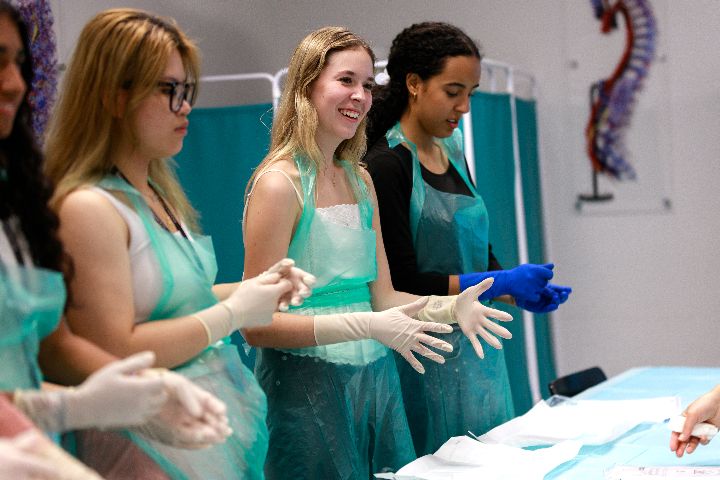
If you’re a high school student thinking seriously about college, you’ve probably wondered what university life is actually like beyond brochures and campus tours. Leading university pre-college programs for teens can help you experience that environment more directly, from studying a subject in depth to attending lectures, joining academic discussions, and learning alongside motivated peers.
Imagine spending your summer debating international relations in a university seminar room, conducting experiments in a research lab, building business strategies with a team, or exploring subjects like engineering, psychology, law, or creative writing through college-level coursework. These programmes give you the opportunity to experience academic life in a far more immersive and challenging way than traditional high school classes.
How do you choose the right university pre-college program as a teenager?
For teens, these programs can also help clarify future academic interests and career goals. Some focus on specialised subjects and intensive learning, while others emphasise exploration, interdisciplinary thinking, leadership, or research. Along the way, students gain independence, strengthen critical-thinking skills, and begin adapting to the expectations of university-style learning and collaboration.
Of course, not all pre-college programs offer the same level of rigour, mentorship, or meaningful engagement. Some provide little more than a campus experience, while others are academically demanding and designed to push students beyond their comfort zones. Finding the right fit can shape not only your summer, but also the way you think about your future education.
Across the world, leading universities now offer exceptional pre-college opportunities designed specifically for high school students. Whether you’re interested in STEM, humanities, business, medicine, the arts, or social sciences, these programs provide access to world-class faculty, university resources, and intellectually driven peer communities.
To help you navigate the options, we’ve compiled a list of 15 Leading University Pre-College Programs for Teens. They’ve been selected for their academic quality, mentorship opportunities, and immersive university experiences.
15 Leading University Pre-College Programs for Teens
1. Boston University PROMYS
Location: Boston University campus
Cost/Stipend: Free for US students whose families make less than US$ 80000 per year; full and partial scholarships are also available. Original price: up to US$ 7000 (2025 price)
Acceptance rate/cohort size: Approximately 80 students
Dates: June 28th – August 8th
Application Deadline: February 27th
Eligibility: Aged between 14 and 18 years old and have completed 9th grade, international students are eligible to apply
PROMYS (Programs in Mathematics for Young Scientists) is a six-week residential summer program at Boston University created for high school students who are passionate about mathematics and problem-solving. The curriculum places a strong emphasis on exploration, collaboration, and creative thinking rather than memorisation-based learning. Alongside lectures, you are encouraged to participate in seminars, workshops, research activities, and open-ended projects known as Exploration Labs, where you investigate mathematical ideas more independently.
The residential format allows you to fully immerse yourself in both the academic and social sides of the experience. Throughout the six weeks, you will work closely with peers who share the same enthusiasm for mathematics and scientific inquiry.
Why it stands out: The Exploration Labs encourage you to tackle open-ended mathematical questions in a way that feels much closer to real mathematical research than a traditional classroom.
2. Immerse Education’s Pre-University Summer School

Location: Cambridge, London, Oxford, Singapore, Sydney, Tokyo, Toronto
Cost/Stipend: Varies by format; summer school scholarship available through our bursary programme
Acceptance rate/cohort size: Multiple summer cohorts
Dates: 2 weeks during the summer
Application Deadline: Rolling admissions
Eligibility: Students aged 13-18 currently enrolled in middle or high school, application open for worldwide students
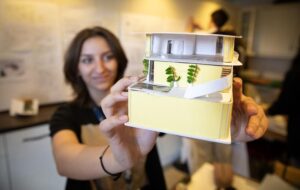
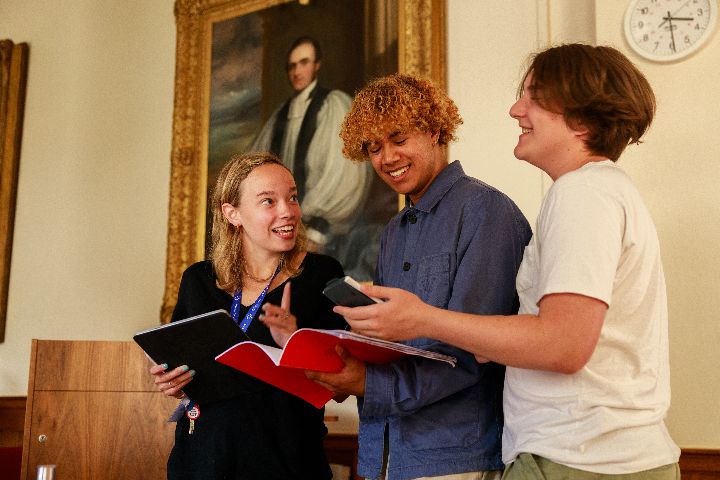
The Academic Insights Program offers a highly immersive introduction to university life through small-group academic learning and hands-on experiences. During the program, you will live on campus and study in groups of only 7 to 10 students under the guidance of tutors from prestigious universities such as Oxford and Cambridge. The program includes more than 20 different subject options, ranging from Architecture and AI to Medicine, Economics, Philosophy, and Business Management.
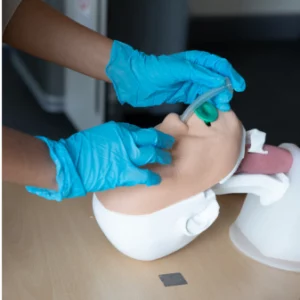
Learning is designed to be practical and interactive, meaning you might perform dissections in medicine, build a robotic arm in engineering, participate in a mock trial for law, or create business case studies and creative portfolios. By the end of the program, you will complete an individual project, receive personalised academic feedback, and earn a certificate of completion. The experience is designed to help you understand both the academic expectations and daily rhythm of university life.
Why it stands out: The combination of small tutorial-style teaching and highly practical subject activities makes the program feel very similar to an actual university academic environment.
3. Harvard Pre-College Program
Location: Harvard University
Cost/Stipend: US$ 6100 + US$ 75 application fee
Acceptance rate/cohort size: 15 students per class
Dates: June 21st – July 2nd, July 5-17, July 19-31
Application Deadline: April 1st
Eligibility: Rising juniors and seniors in high school, and international students may apply
The Harvard University Pre-College Program is a two-week intensive experience that introduces high school students to academic and social life at Harvard University. The program offers more than 30 different courses across subjects such as Psychology, Journalism, Philosophy, Anthropology, and many others. Outside academics, you are encouraged to participate in social activities, including arts and crafts, dance sessions, and talent shows.
You can also join excursions around Cambridge, Boston, and New England, such as trips to Newport, attending a Red Sox game, or walking the historic Freedom Trail. Through both academics and campus activities, the program is designed to give you a realistic glimpse into university student life at Harvard.
Why it stands out: The program combines small seminar-style classes with extensive campus and city experiences, giving you both academic exposure and a genuine taste of student life at Harvard.
4. Anson L. Clark Scholars Program
Location: Texas
Cost/Stipend: Free (there’s a US$ 25 application fee), and upon completion, each student will receive a US$ 750 stipend
Acceptance rate/cohort size: Limited to 12 students
Dates: June 21st – August 6th
Application Deadline: February 16th
Eligibility: Must be 17 years of age by the program start date, and must be a U.S. citizen or a permanent resident
The Anson L. Clark Scholars Program is a highly selective, research-focused opportunity with more than three decades of history, preparing high school students for future academic and professional careers. Hosted at Texas Tech University, the seven-week program allows you to conduct advanced research in disciplines such as mathematics, engineering, humanities, and fine arts.
Throughout the program, you will live on campus while receiving free accommodation, meals, and weekend activities. The small cohort and intensive research structure allow you to work very closely with faculty members throughout the experience.
Why it stands out: With only twelve students admitted annually, the program offers unusually close faculty mentorship alongside fully funded research opportunities and a completion stipend.
5. Stanford SHTEM Summer Internship
Location: Stanford University
Cost/Stipend: Free, but with a US$ 95 non-refundable application fee
Acceptance rate/cohort size: Not mentioned
Dates: June 22nd – August 14th
Application Deadline: February 1st
Eligibility: Currently a high school senior or junior, must be a U.S. citizen or permanent resident. International students are not allowed to apply.
The Stanford SHTEM Summer Internship is built around the idea that STEM education should also include the humanities and human-centred thinking. The program introduces you to a broad mix of subjects, including engineering, arts, linguistics, psychology, biology, neuroscience, computer science, philosophy, and design. Rather than treating technical subjects in isolation, the program encourages you to think about how research and innovation affect people and society.
The interdisciplinary structure helps you understand how areas like technology, design, and human behaviour intersect in real-world problem-solving. Since the program is non-residential, participants are responsible for arranging their own accommodation and transportation.
Why it stands out: The program’s “SHTEM” approach uniquely combines technical research with humanities perspectives, encouraging you to think about both innovation and human impact at the same time.
6. MIT Research Science Institute (RSI)
Location: Boston, MA
Cost/Stipend: Free, application fee US$ 75
Acceptance rate/cohort size: Limited to 100 students (less than 2.5% of applicants)
Dates: Not disclosed, they only say 6 weeks during the Summer
Application Deadline: mid-December
Eligibility: Only for high school juniors, international students are eligible
If you have a strong interest in math, science, or engineering, the Research Science Institute (RSI) at MIT stands out among one of the most rigorous leading university pre-college programs for teens. This six-week program is designed to prepare you for college-level research through lectures, mentorship, and independent scientific investigation. During the first week, you will be paired with a mentor who helps shape your research direction and guides your project development.
From the second week onward, you will spend most of your time working in labs and research environments to carry out your project. The combination of mentorship and hands-on research makes the experience feel much closer to early undergraduate research than a typical summer course.
Why it stands out: You work directly with research mentors while conducting advanced lab-based projects at MIT, making the program one of the most research-intensive STEM experiences available to high school students.
7. Brookes Engage
Location: Oxford, England
Cost/Stipend: None
Acceptance rate/cohort size: Competitive; approximately 100-150 students per year
Dates: Biomedical Science, Architecture, Business School Experience and Creative Industries streams: June 30th – July 2nd; Computer Science, Adult and Children’s Nursing, and Law streams: July 7-9
Application Deadline: Typically, mid-November
Eligibility: Students in the first year of a two-year Level 3 qualification (e.g. A Levels, BTEC, or equivalent); studying at a non-selective state school or college in England; England residents; aged 16 at the program’s start
The Brookes Engage Program is designed for high school students who want clearer direction about their academic future while gaining experience with university-style learning in the UK. During the summer portion, you will continue your studies on campus at Oxford Brookes University while becoming more familiar with student life in Oxford. After the summer experience ends, the program continues online from September with additional academic guidance and support sessions.
The experience eventually concludes with a mini-graduation ceremony held at Oxford Brookes University the following March. Through its longer structure, the program gives you ongoing support rather than only a short-term summer experience.
Why it stands out: Unlike most short summer programs, this one continues throughout the academic year and ends with a formal mini-graduation experience at Oxford Brookes University.
8. Summer Academy for Math and Science (SAMS)
Location: Pittsburgh, PA
Cost/Stipend: No cost / Stipend paid, amount not specified
Acceptance rate/cohort size: Highly selective; approximately 75-80 students
Dates: Virtual Jumpstart: June 15-16; Main program: June 20th – August 1st
Application Deadline: February 1st
Eligibility: High school juniors in 11th grade at the time of application submissions, are 16 years old by the program start date, are U.S. citizens or permanent residents
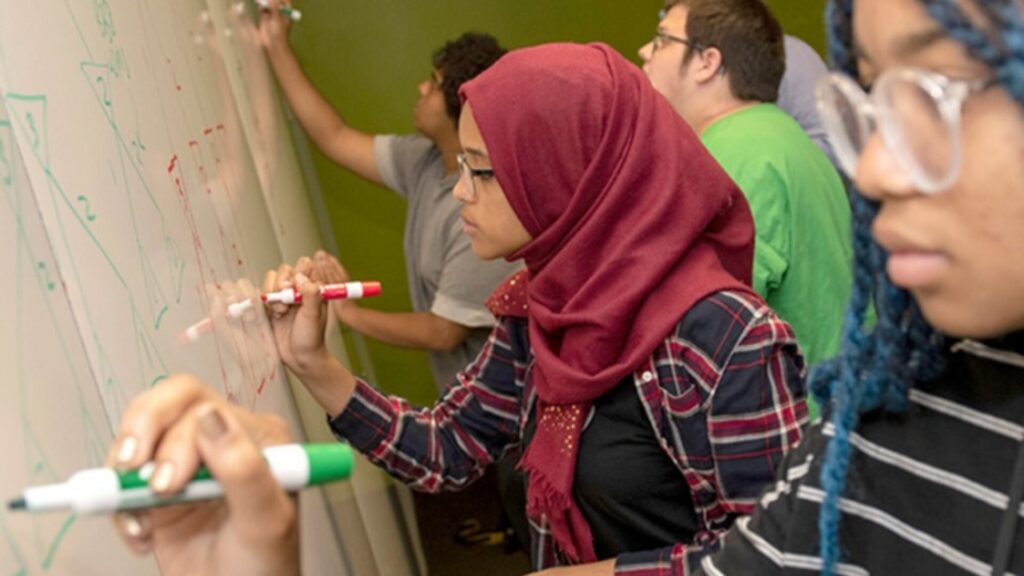
Students from underrepresented communities who are interested in STEM can apply to Carnegie Mellon University’s Summer Academy for Math and Science (SAMS). Over six weeks, you will deepen your understanding of STEM subjects through seminars, hands-on projects, and mentoring sessions with faculty and program staff. SAMS is divided into three phases, beginning with a Virtual Jumpstart focused on preparing you with foundational skills before the residential component begins.
This is followed by the six-week on-campus experience at Carnegie Mellon University, where you will fully immerse yourself in STEM learning and university life. After the residential phase, the program continues with ongoing college preparation support delivered both online and in person. The structure is designed not only to strengthen your STEM knowledge but also to help you navigate the college application process with continued guidance.
Why it stands out: The program extends beyond the summer itself by continuing to support you through college preparation and academic guidance after the residential phase ends.
9. Royal Veterinary College Pre-Vet Summer School
Location: University of London, UK
Cost/Stipend: £3700. Scholarships are available.
Acceptance rate/cohort size: 50 students
Dates: August 2-14
Application Deadline: April 2026
Eligibility: Students 16+ years old. There is no maximum age, and international students can apply
Students interested in veterinary medicine can begin exploring the field more seriously through the Royal Veterinary College’s Pre-Vet Summer School, one of the more specialised leading university pre-college programs for teens. Throughout the program, you will strengthen both academic knowledge and professional skills while connecting with other students who share the same interest in animal health and veterinary science. The experience includes practical work placements such as animal handling sessions, which can also support your future university applications.
Academic teaching takes place across both RVC campuses in Camden and Hertfordshire, where you will conduct research projects, attend group-led classes, and work through real-life veterinary case studies. Work experience placements are hosted at locations such as the Queen Mother Hospital for Animals, Beaumont Sainsbury Animal Hospital, and Equine Referral Hospital. In addition to academics, the program also includes field trips, theatre outings, and student social activities such as bake-offs and student nights.
Why it stands out: The program combines university teaching with real veterinary hospital placements, giving you direct exposure to both academic study and clinical animal care environments.
10. Year 9 Girls Engineering Summer School
Location: London, England
Cost/Stipend: Free
Acceptance rate/cohort size: Not disclosed
Dates: August 5-8
Application Deadline: March 17th
Eligibility: U.K. high school female students in year 9
If you enjoy mathematics and science and are considering engineering as a future college major, Imperial College’s Girls Engineering Summer School is a strong introduction to the field. This fully funded four-day program is designed specifically to encourage more girls to explore engineering through hands-on activities and subject tasters. The first day focuses on orientation and team-building activities to help participants get to know each other before the academic sessions begin.
On the following days, you will attend interactive engineering workshops that introduce different engineering disciplines and demonstrate how engineering concepts are applied in real life. On the final day, you will work collaboratively to create and present a poster project based on an engineering concept you explored during the week. While the program covers all course fees, materials, and lunches, it is non-residential, so you must organise your own travel and accommodation.
Why it stands out: The program is fully funded and designed specifically to encourage girls to explore multiple engineering disciplines through practical workshops and collaborative projects.
11. King’s College London Pre-University Summer School
Location: London, UK
Cost/Stipend: Prices vary, depending on how many weeks you want to stay in the summer school, or whether you want to choose the residential package (live-in campus). £65 admission fee
Acceptance rate/cohort size: Not disclosed
Dates: 4 sessions between July 6-31. Each session lasts for 1 week
Application Deadline: April 10th
Eligibility: High school students worldwide aged from 16 to 17 years old, an English language requirement is needed
This summer school offers a wide selection of courses across multiple disciplines, allowing you to choose one or several subjects from different academic pathways. You can explore areas such as Marketing, Computer Science, Psychology, and Medical Science through seminars, discussion groups, role-play activities, and interactive Q&A sessions with guest lecturers.
The combination of academics and social activities is designed to create a more complete university-style experience rather than focusing only on classroom learning. After completing the program and its assignments, you will receive a Certificate of Completion.
Why it stands out: The program allows you to combine courses across completely different subjects while also offering a highly social university-style experience in London.
12. MITES Summer
Location: Boston, MA
Cost/Stipend: Free of charge
Acceptance rate/cohort size: Not disclosed
Dates: Late June to early August
Application Deadline: February 1st
Eligibility: High school students in grade 11, US citizens or permanent residents
MITES Summer, short for MIT Introduction to Technology, Engineering, and Science, is a highly selective STEM option within the many leading university pre-college programs for teens, created to introduce high school students to rigorous college-level learning. During the program, you will follow an intensive academic schedule covering five core areas: mathematics, life sciences, physics, humanities, and a project-based elective.
Beyond academics, you will live on campus, participate in community activities, and explore the Greater Boston area alongside other participants. At the end of the program, each student receives a detailed written evaluation outlining both academic strengths and areas for future improvement.
Why it stands out: The demanding schedule closely mirrors real MIT-level STEM academics while giving you detailed written evaluations instead of just a participation certificate.
13. Stanford Pre-collegiate Summer Institutes
Location: Online
Cost/Stipend: US$ 3200 (not including course textbooks). Student aid available.
Acceptance rate/cohort size: Average class size of 16 students
Dates: June 15-26 and July 6-17
Application Deadline: Application opens in mid-December
Eligibility: Students worldwide from grades 8 to 11
This Stanford pre-college program allows you to explore subjects that go far beyond the typical high school curriculum through immersive online learning. The program offers more than 75 live online courses in areas such as artificial intelligence, engineering, mathematics, philosophy, and creative writing. The interactive format creates a more engaging learning experience compared to self-paced online classes.
Throughout the course, you will deepen your understanding of a single discipline through structured academic material and collaborative discussions. Although Stanford does not award grades or university credits for completing the program, the experience still provides strong exposure to advanced academic topics and university-style learning.
Why it stands out: With more than 75 live subject options, the program gives you access to advanced Stanford-level discussions without requiring you to relocate or travel.
14. University of Warwick Pre-University Summer School

Location: Warwick, UK
Cost/Stipend: £5250, included £1000 deposit, £50 for the admission fee
Acceptance rate/cohort size: Not disclosed
Dates: July 14-24
Application Deadline: May 31st
Eligibility: High school students aged 16 to 17 years old, international applicants are welcome to join
The University of Warwick invites students aged 16 to 17 to join its Pre-University Summer School for an immersive academic and residential experience. During the program, you can attend classes in areas such as Arts, Humanities, Business, Economics, Finance, Health, Life Sciences, Social Science, and Science while refining your academic interests before college.
Alongside subject-specific learning, the summer school also includes personal development sessions focused on useful university skills like note-taking, effective listening, and research methods. The balance between academics, personal growth, and social life is designed to give you a realistic preview of university living.
Why it stands out: The program combines academic study with structured personal development sessions and a full residential campus experience at Warwick University.
15. Year 10 Insights Summer School
Location: London, England
Cost/Stipend: Free
Acceptance rate/cohort size: Not disclosed
Dates: July 29th – August 1st
Application Deadline: March 11th
Eligibility: High school students in year 10 and enrolled in a non-paying school in the UK, who live and study in the UK
The Insights Summer School at Imperial College London gives younger students an early, hands-on entry point into leading university pre-college programs for teens through science, engineering, and work experience exposure in the UK. During the program, you will attend hands-on experiments, subject tasters, and practical workshops designed to introduce you to university-level STEM learning.
The science pathway is especially suitable if you are interested in subjects like biology, chemistry, and mathematics, while the engineering pathway focuses more deeply on different engineering fields and applications. At the end of the program, you will work in groups to create and present a poster project based on concepts you explored throughout the week. Your final presentation will be shared with peers, workshop leaders, and invited guests.
Why it stands out: The program introduces younger high school students to university-style STEM learning through hands-on experiments and collaborative poster presentations at Imperial College London.
Turning Academic Curiosity Into University Confidence
University can feel abstract until you try the pace for yourself: seminars, research tasks, independent projects, and conversations with ambitious peers.
The 15 leading university pre-college programs for teens listed here give you different ways to test that environment across STEM, humanities, medicine, business, engineering, and the arts.
What you gain is not just subject knowledge, but a clearer sense of how you learn, where you thrive, and what you may want next.
Use that clarity well: visit our University Preparation blogs for personal statements, interviews, entry requirements, academic writing, and supercurricular guidance.