
 Русский (RU)
 Українська (UK)
 Türkçe (TR)
 Italiano (IT)
 Français (FR)
 Português (PT)
 中文 (中国) (ZH)
 Español (ES)
 日本語 (JA)
 ไทย (TH)
 Deutsch (DE)
 Ελληνικά (EL)
 Polski (PL)
 Bahasa Indonesia (ID)
 Nederlands (NL)
 العربية (AR)
 한국어 (KO)

During middle school, breaks are a chance to step away from daily homework and routine classes. However, these months can offer so much more than relaxation: you could explore fields that regular schooling barely touches and push your boundaries by engaging in entirely new activities. Medical summer camps for 13 year olds can foster self-confidence, help you uncover potential career paths, and strengthen your academic foundation for the future.
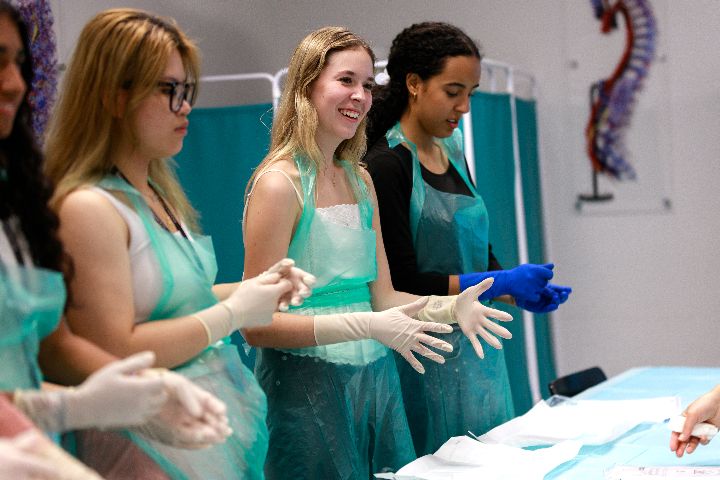
Imagine learning how to suture under the guidance of professionals, discovering human anatomy, or working with ambitious peers on medical ethics, clinical simulations, or public health projects. You could pair your scientific work with interactive laboratory experiences, be it by analyzing mock patient charts or by mastering basic first-aid techniques. Medical summer camps for young teens are more than simple workshops; they offer an immersive experience that blends advanced concepts with hands-on practice.
What kinds of medical summer camps for 13-year-olds are there?
Finding high-quality, excellent summer camps is incredibly tough. You want to avoid selecting an option that relies solely on passive listening or that completely excludes hands-on laboratory/practical work. True mentorship makes a massive difference here, since available options differ wildly in value.
Multiple prominent universities and healthcare facilities offer courses that emphasize genetics, nursing, neuroscience, surgical techniques, and more. You investigate a long-standing fascination or experiment with a fresh curiosity. Expert mentors guide you, while you tackle practical lab simulations, tour operational clinics, and unite with driven peers.
Whatever option you select, you will surely give maximum dedication. To ease your research and clarify your choices, we compiled a list of 15 Medical Summer Camps for 13 Year-olds. We chose these based on educational depth, experiential design, and stellar global standing.
For adjacent opportunities, consider the online medical summer camp and the biology camp.
15 Medical Summer Camps for 13-Year-Olds
1. UGA Mini-Medical School Summer Academy 1A
Location: University of Georgia Health Sciences Campus, Athens, GA
Cost/Stipend: $530
Acceptance rate/cohort size: Not disclosed; waitlist active
Dates: June 1-5
Application Deadline: Rolling waitlist enrollment
Eligibility: Ages 11-13; the official page doesn’t address international student eligibility, but no nationality restrictions are stated
Held on UGA’s Health Sciences Campus, this weeklong camp is one of the medical summer camps for 13 year olds that introduces students to medicine through team-based learning, lab work, and clinical simulations. You’ll practice taking patient health histories, perform dissections, and run through simulated cases at the campus simulation center.
The curriculum is led by current medical students from the Augusta University/UGA Medical Partnership, who developed the program with faculty to challenge campers without overwhelming them. Both day and overnight options are offered, so you have flexibility based on where you live and how much independence you want. You can start applying here.
Why it stands out: Medical students from a partner med school lead the curriculum, giving you direct exposure to people only a few years into their own training.
2. Immerse Education’s Oxford Medicine Summer School
Location: Oxford University Colleges, Oxford, United Kingdom
Cost/Stipend: £5,995 (non-residential), £7,495 (residential), £9,516 (residential + online research add-on); Summer school scholarships available through our bursary programme
Acceptance rate/cohort size: Selective; an average of 7 participants per class
Dates: 2 weeks during the summer
Application Deadline: Multiple summer cohorts; rolling admissions
Eligibility: High school students aged 13-18 (split into 13-15 and 16-18 cohorts); International students are eligible to apply
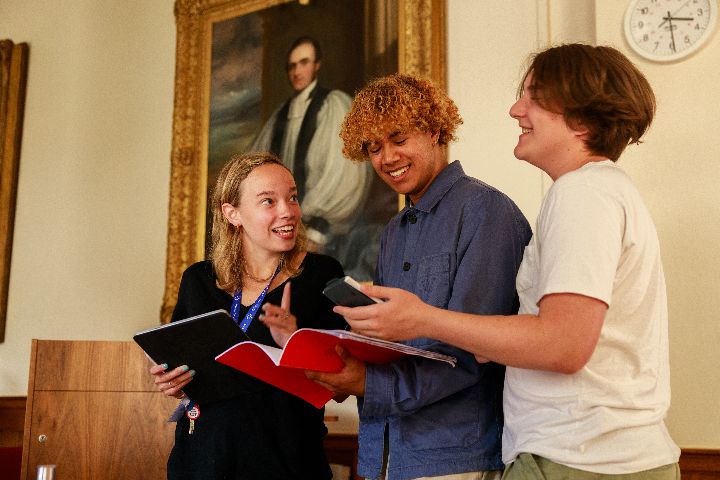
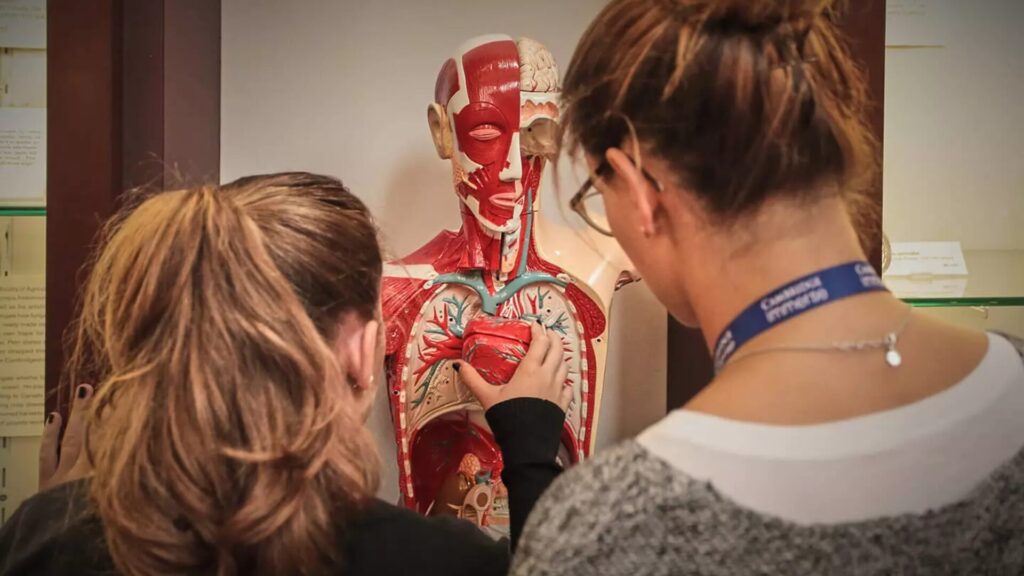
Immerse Education’s Oxford Medicine Summer Program places you inside the colleges of the University of Oxford for two weeks of subject-focused study. You’ll attend academic sessions led by PhD tutors from Oxford, Cambridge, and Ivy League institutions, with the 13–15 course covering human anatomy and healthcare basics.
Outside the classroom, you’ll live in historic college accommodation, attend two formal hall dinners, take a day trip to London, and complete a personal research project with one-to-one tutor support. The program also offers an optional 8 UCAS points for participants aged 14 and over, useful for UK university applications. You can start the application process here.
Why it stands out: It connects you with medical academics and clinicians, helping you understand how medicine is studied and practiced at leading universities.
3. MSM S.T.E.A.M. Academy
Location: Morehouse School of Medicine, Atlanta, GA
Cost/Stipend: $850
Acceptance rate/cohort size: Not disclosed; application-based selection
Dates: June 1-26 (Monday – Friday, 9 AM – 3 PM)
Application Deadline: March 27th
Eligibility: Students who have completed 4th through 8th grade; the website doesn’t address international student eligibility
The S.T.E.A.M. Academy is a four-week summer program centered on Science, Technology, Engineering, Arts, and Mathematics, with a focus on health careers. You’ll work through pre-exposure lessons aligned with Georgia Standards of Excellence for the grade you’re entering, plus hands-on units on sports science, financial literacy, coding, and routine dissections.
Days run from 9 AM–3 PM on the MSM campus, with inquiry-based activities that reinforce each week’s content. Selection is selective; applicants need a science teacher recommendation, a counselor recommendation, and grade-level academic standing.
Why it stands out: It’s hosted by a historically Black medical school with an explicit pipeline focus, so you’ll meet faculty and students actively working to widen access to medicine.
4. Rosetta Institute Biomedical Camps
Location: UC Berkeley, UC San Diego, Columbia University, University College London, and online
Cost/Stipend: Varies (from $490 to $1150 for camps available for 13-year-olds)
Acceptance rate/cohort size: Not specified
Dates: Two-week sessions from May 31st through August 15th; shorter online and winter options also offered
Application Deadline: Rolling basis admission
Eligibility: Ages 14-18 for most workshops, with select online courses for ages 12-18 (FutureMD: Oncology, Introduction to Cellular and Molecular Medicine, & Medical Bioinformatics); international students can apply too
The Rosetta Institute runs molecular medicine workshops at four major research universities and online, with PhD-level instructors leading lectures and lab work. Course options include Molecular Biology of Cancer, Molecular Neuroscience, Molecular Biology of Aging, Molecular Immunology, AI-Enhanced Bioinformatics, and Developmental Biology, plus several other bioinformatics tracks. Residential students stay in undergraduate dorms with on-site teaching assistants and camp directors.
Each workshop ends with an original research project on a gene or molecular process you choose, giving you something concrete to put on a college application or research portfolio. You can start applying here.
Why it stands out: Workshops run on the campuses of four world-ranked universities, so you’ll experience research-level instruction in the same labs current undergraduates use.
5. NYLF Explore STEM
Location: 17 university campuses across the US (UC Berkeley, Emory, Rice, Vanderbilt, and more)
Cost/Stipend: Starting at $2,899 for commuter programs and starting at $3,299 for residential programs
Acceptance rate/cohort size: Not disclosed; some sessions require nomination
Dates: Multiple dates depending on the college/university
Application Deadline: Rolling enrollment
Eligibility: Students in grades 6-8; international students may attend (Envision EMI serves families worldwide), though the page doesn’t outline a specific visa process
Run by Envision under the National Youth Leadership Forum brand, Explore STEM fits well among medical summer camps for 13 year olds because it rotates middle schoolers through hands-on labs in robotics, engineering, forensics, and medicine on a college campus. You’ll program a custom robot to complete an obstacle course, solve a staged crime scene, dissect a sheep’s lung, and design a habitat using CAD software.
Residential students live in dorms and join trivia nights, talent shows, and team challenges; commuters get the same core programming with the option to add an extended day. You can start the application process here.
Why it stands out: It stands out by translating high-level concepts into physical trials, like programming robots and dissecting lungs, giving younger students an immersive, multi-disciplinary preview of real-world STEM careers
6. Boston Leadership Institute Pre-High School Programs
Location: Greater Wellesley and Gann Academy/Bentley University (Waltham), Massachusetts
Cost/Stipend: $699 tuition fee + $699 optional residential fee
Acceptance rate/cohort size: Not disclosed
Dates: Varies for Mini Med School; July 27-31 for Pet Medicine program
Application Deadline: Rolling registration
Eligibility: Rising 6th – 8th graders; international students are also eligible
BLI’s Pre-High School lineup adds several hands-on options to medical summer camps for 13 year olds, with one-week, single-topic camps in Mini Med School, Pet Medicine, Crime Lab, etc. Mini Med campers rotate through neuroscience, orthopedics, oncology, and genetic disease units across the week, while Pet Medicine students perform mock surgeries and analyze X-rays, MRIs, and CT scans.
Days end at 3:30 PM, with options to stay until 5 PM or stay overnight, which suits families wanting a mix of academic and recreational summer activities. Sessions run at two Massachusetts locations, and small class sizes give you direct instructor attention. You can apply here.
Why it stands out: This program offers middle schoolers rare, hands-on exposure to specialized fields such as neuroscience and veterinary science through mock surgeries and advanced medical imaging analysis.
7. Wake Forest Online Pre-College Immersion

Location: Online (asynchronous via Canvas)
Cost/Stipend: $1,595 tuition per course; need-based scholarships available
Acceptance rate/cohort size: Not specified
Dates: Rolling cohorts year-round; 1-week intensive, 2-week, or 4-week formats depending on season
Application Deadline: Rolling
Eligibility: Students aged 13 to one year past high school graduation (age 13 included); international students are encouraged to apply
Wake Forest’s Online Immersion Program offers non-credit, faculty-designed courses from the university and the School of Medicine, all delivered asynchronously through Canvas. Courses include Medicine: Making the Rounds, Cancer Medicine, Sports Medicine, Women’s Medicine, Bioscience, Psychology, Business, Finance, and Law, taught through pre-recorded videos with mentor support via discussion boards and email.
Each course totals about 30 hours of work and ends with a final project you’ll list on future college or internship applications. Students receive an official Certificate of Completion from Wake Forest University, plus mentor feedback throughout. You can start applying here.
Why it stands out: Offers highly flexible, asynchronous faculty-led courses across specialized fields like medicine and law, allowing students as young as 13 to earn an official certificate and build a standalone final project on their own schedule.
8. ECU/NC State Collaborative Health Science Summer Camp
Location: Gateway Technology Center, Rocky Mount, NC (plus partner sites)
Cost/Stipend: $220
Acceptance rate/cohort size: Varies by camp
Dates: June 22-27
Application Deadline: May 23rd
Eligibility: Rising 6-12 grades; international students can apply
The Collaborative is a partnership between East Carolina University and NC State that runs subject-specific summer camps for K–12 students at Gateway Technology Center.
The lineup features the Health Sciences Camp, Camp Finance, Math Fun Camp, Data Science and Statistics Camp, MSEN STEM Camp, Construction Management Camp, Sports/STEM, and a residential Shelton Leadership Challenge at NC Wesleyan. The program runs weekdays in summer from 8 AM to 3 PM. You can start the application process here.
Why it stands out: The program delivers highly specialized, subject-specific tracks, such as health and data sciences, directly to younger students through hands-on weekday programs.
9. Circuit Stream Pre-College Summer Medicine and Healthcare Camp
Location: Online (live, instructor-led)
Cost/Stipend: $995
Acceptance rate/cohort size: Not disclosed
Dates: July 13-24
Application Deadline: Rolling enrollment per cohort
Eligibility: Ages 13-18; offered globally online, so international students may register without a visa
Circuit Stream’s Pre-College Summer Camps are live, instructor-led online programs giving teens a taste of university-style learning across seven STEM, medicine, and finance subjects. Each two-week cohort runs as scheduled live sessions with breakout rooms, hands-on daily projects, and a final portfolio piece for your college applications.
The Foundations of Medicine and Healthcare track has you examining symptoms, interpreting data, and developing a treatment plan, while the AI track culminates in a working chatbot. Sessions are CampSafe®-certified with small groups and meaningful interactions. You can start applying here.
Why it stands out: The camp replaces typical passive online lectures with live, hands-on medical case simulations and diagnostic projects that build a portfolio-ready piece for college applications.
10. Northwest AHEC Virtual Camp Med
Location: Virtual (100% online, self-paced)
Cost/Stipend: Free
Acceptance rate/cohort size: Not disclosed; open registration
Dates: June 1st – July 31st (20 hours of programming, self-paced)
Application Deadline: Rolling registration through the program window
Eligibility: Current 8th – 12th grade students for the Virtual option; the page doesn’t explicitly address international students, though the virtual format means anyone with internet access could register
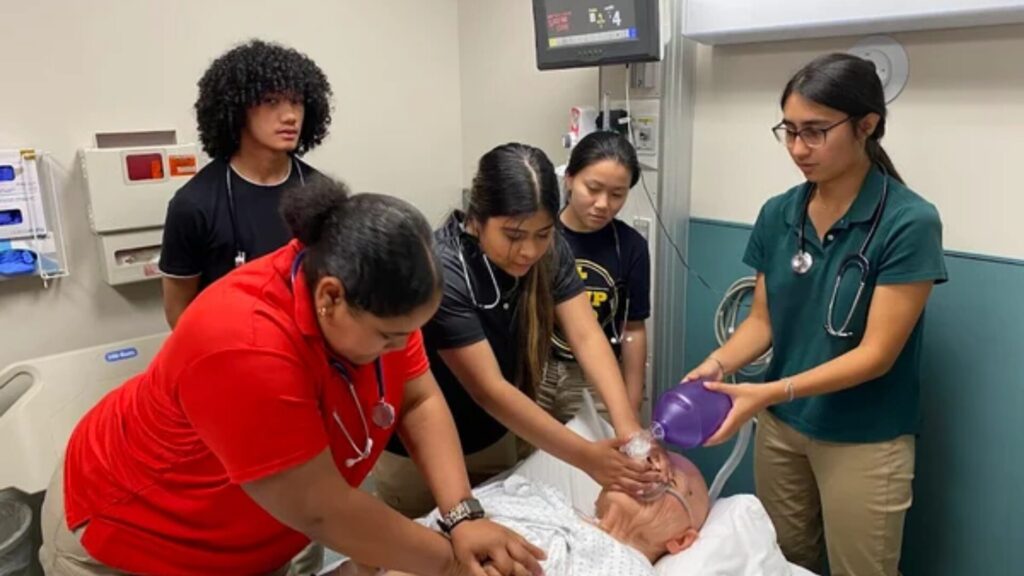
Northwest AHEC Virtual Camp Med is a free healthcare careers exploration program offered in both virtual and in-person formats. The virtual program is open to 8th–12th graders. It includes five self-paced modules: My Career Choices, Explore the Health of your Region, Human Body Systems, Healthcare in Action, and Education Possibilities.
You’ll complete a Camp Med Notebook across 20 hours of programming during the camp and earn a Certificate of Completion to list on college applications, job applications, and résumés. Funded by Wake Forest University School of Medicine and the NC AHEC program, the program focuses on health workforce development in North Carolina. You can start applying here.
Why it stands out: It’s completely free, online, and lets 8th–12th graders work through 20 hours of structured healthcare-career content on their own schedule; unusual for a medical-themed program with university-affiliated medical school backing.
11. Iona University Medical Summer Camp
Location: Iona University, New Rochelle, NY (in partnership with Albert Einstein College of Medicine)
Cost/Stipend: $300 for the first child; $150 per additional sibling; non-refundable once admission is accepted
Acceptance rate/cohort size: Selective application-based admission
Dates: July 6-24
Application Deadline: May 29th
Eligibility: Grades 7-12 students (so age 13 fits) who are New York State residents and meet New York State income guidelines for economic disadvantage; international students are not eligible due to the New York State residency requirement
Iona University’s Science and Technology Entry Program (STEP) partners with the Albert Einstein College of Medicine for a three-week medical summer camp at the New Rochelle campus. You’ll engage in CPR training, anatomy labs, suturing workshops, and medical simulations while collaborating directly with current nursing and medical students.
Throughout the academic year, STEP also offers enrichment classes, tutoring, college counseling, and the Engineering and Technology Express Program, which covers AI fundamentals through hands-on projects. You can start applying here.
Why it stands out: It’s fully subsidized by New York State for students who qualify economically, with a $300 fee that’s effectively the only out-of-pocket cost; far below private medical camps charging multiple thousands.
12. UConn Vergnano Institute SPARK Summer Program
Location: University of Connecticut, Storrs, CT (residential)
Cost/Stipend: $1,500 per week; need-based waivers from 25% to 100% available
Acceptance rate/cohort size: Not disclosed
Dates: Three week-long sessions – Week 1: June 28th – July 3rd; Week 2: July 5-10; Week 3: July 13-18
Application Deadline: May 1st
Eligibility: Current 5th – 7th grade girls (rising 6th – 8th, so age 13 fits at the upper end); the page doesn’t explicitly address international students, though the residential format would let them attend with their own visa and travel arrangements
SPARK at UConn’s Vergnano Institute for Impact is a girls-only residential STEM summer program designed and delivered by current UConn engineering undergraduates. Across three week-long sessions, you’ll work through layered STEM challenges paired with personal-development themes: Week 1 covers bioscaffolds and healing through cell culturing, 3D printing, and DNA extraction; Week 2 focuses on mechanical and materials engineering with backpack redesign and structural testing; Week 3 covers sustainable and secure engineering through water filtration, cybersecurity, and pharmaceutical delivery design.
Each week’s STEM work is paired with a life lesson layer — resilience, flexibility, or healthy boundaries. The program also partners with Next Minds for daily innovation sessions and need-based financial waivers.
Why it stands out: Each STEM challenge is paired with a personal-growth theme like resilience or advocacy, and the program is taught entirely by current UConn engineering undergraduates, giving you near-peer mentors rather than distant faculty.
13. Northwestern Center for Talent Development
Location: Northwestern University, Evanston, Illinois (and online; partner site at Avery Coonley School)
Cost/Stipend: Varies depending on session length and course type
Acceptance rate/cohort size: Not specified
Dates: Varies
Application Deadline: Rolling; financial aid is available
Eligibility: Academically advanced students in Grades 3-8 (with qualifying test scores required); international students welcome and would need a B-1/B-2 visa or ESTA waiver for in-person programs
CTD at Northwestern runs summer enrichment and credit-bearing courses for academically advanced students in Grades 3 through 8, with both day and residential formats on the Evanston campus. Course offerings span STEM, leadership, writing, and the social sciences, with medical and life-science options including anatomy, physiology, neuroscience, and disease-focused courses, taught over one to three weeks.
Honors and high-school-level credit-bearing courses are available for students whose assessments place them ahead of grade level. CTD provides need-based financial aid plus scholarship options, including a collaboration with the Jack Kent Cooke Foundation. You can start applying here.
Why it stands out: CTD is one of the oldest gifted-education programs in the country and offers credit-bearing options that allow advanced middle schoolers to earn high school credit over the summer.
14. Johns Hopkins CTY Anatomy and Physiology: The Science of Health Program
Location: Saint Andrew’s School, Boca Raton, FL
Cost/Stipend: $4,117 for tuition fee; additional charges may apply
Acceptance rate/cohort size: 18-20
Dates: June 28th – July 17th
Application Deadline: June 21st
Eligibility: Advanced grade 7-8 learners with qualifying CTY-Level test scores; international students can apply too
Johns Hopkins CTY’s online enrichment course gives you a comprehensive look at the human body across twelve organ systems, including the immune, nervous, cardiovascular, digestive, and reproductive systems. You’ll examine structure-function relationships through readings, lectures, discussions, and labs that culminate in a fetal pig dissection, where you’ll pick up techniques used across the health sciences.
With guidance from an expert CTY educator, you’ll keep a lab notebook of observations, sketches, and data while collaborating with advanced peers worldwide. The content sits above your grade level and is presented in a novel context, preparing you for college-style scientific reasoning. You can apply here.
Why it stands out: The course pairs an online format with hands-on lab work, including a fetal pig dissection and structured lab notebook practice you’d usually find only in in-person biology classes.
15. Alexandria College Scrubs Camp
Location: Alexandria Technical & Community College, Alexandria, Minnesota
Cost/Stipend: $79 per student
Acceptance rate/cohort size: Not disclosed
Dates: June 18th
Application Deadline: May 4th
Eligibility: Students entering grades 8-12 across the two sessions (the Middle School session for rising grade 8); the website doesn’t address international student eligibility
Across the day, you’ll rotate through hands-on simulations covering specialties like Ophthalmic Technician, Registered Nurse, EMT/EMS, Nurse Practitioner, and Nuclear Medicine, learning basic clinical skills from Alexandria College instructors and local healthcare professionals.
Scrubs Camp is part of HealthForce Minnesota’s statewide initiative, with similar camps offered at St. Cloud, St. Paul, and Augsburg, so you have multiple Minnesota locations to choose from. The format is short and low-cost, making it a useful first exposure to healthcare careers before committing to a longer program. You can start applying here.
Why it stands out: One of the most affordable medical-exploration camps available, with direct contact with healthcare professionals from the Alexandria community.
Continue Your Healthcare Journey Through Reading
A medical camp may introduce you to clinical skills, but reading helps those first experiences become clearer, richer, and more meaningful.
The 15 medical summer camps for 13 year olds in this article cover anatomy, patient care, biomedical science, public health, surgery, neuroscience, and ethics.
Once the programme ends, the right books can help you revisit difficult concepts, follow real medical stories, and understand how healthcare professionals think.
To take that interest further, turn to our Medicine Top Books Guide for engaging reads that make medicine feel more accessible and memorable.