
 Русский (RU)
 Українська (UK)
 Türkçe (TR)
 Italiano (IT)
 Français (FR)
 Português (PT)
 中文 (中国) (ZH)
 Español (ES)
 日本語 (JA)
 ไทย (TH)
 Deutsch (DE)
 Ελληνικά (EL)
 Polski (PL)
 Bahasa Indonesia (ID)
 Nederlands (NL)
 العربية (AR)
 한국어 (KO)

Summer can open up time to try experiences that do not usually fit into a normal school schedule. Whether you’re interested in STEM, business, law, medicine, the humanities, or the arts, residential programs for teens allow you to immerse yourself in a subject while experiencing a new academic and social environment. One of the biggest advantages is that you’re not just learning about a topic for a few hours a day.
Imagine spending your summer living on a university campus, attending classes during the day, working on projects with students from different backgrounds, and continuing conversations long after formal sessions end. You might participate in research projects, debates, workshops, simulations, or creative activities while getting a firsthand look at what life away from home and on a college campus can feel like. For many students, the experience is as much about personal growth as it is about academics.
How do you choose the right residential summer programs for teens?
Not all residential programs offer the same experience. Some are highly academic and designed around university-level coursework, while others focus more heavily on leadership, career exploration, creative pursuits, or hands-on projects. The best program for you depends on what you hope to gain from the experience and how you want to spend your summer.
It can be helpful to start by thinking about your interests and long-term goals. A student interested in medicine may benefit from a program with laboratory work or healthcare exposure, while someone considering business or entrepreneurship might prefer programs built around case studies, startup projects, or leadership development.
These programs can also strengthen college applications because they demonstrate a willingness to pursue learning outside of school while engaging deeply with a specific interest. More importantly, they often help students discover what they enjoy studying and what they may want to pursue in the future.
To help you find the right fit, we’ve curated a list of 15 residential programs for teens worth exploring!
For adjacent opportunities, consider the online research program.
15 Residential Programs for Teens
1. Harvard Secondary School Program
Location: Cambridge, Massachusetts
Cost: $4,180 – $15,735 + $75 application fee
Acceptance rate/cohort size: Selective admissions; acceptance rate and cohort size not publicly reported
Program Dates: 4-week: July 12th – August 8th; 7-week: June 20th – August 8th
Application Deadline: Application window opens December 1st; early application deadline January 7th, regular application deadline February 11th, and late application deadline April 1st, or earlier if courses fill
Eligibility: Open to students who will graduate from high school and enter college within the next three academic years; applicants must be at least 16 years old by the start of the programme and not turn 19 before the end of July; open to international students
As one of the most competitive and prestigious residential programs for teens, Harvard’s Secondary School Program lets you spend seven weeks taking actual Harvard Summer School courses while living on campus with students from around the world. You can choose from hundreds of subjects, including biology, neuroscience, psychology, molecular biology, and other STEM fields.
Classes follow the pace of a university course, so you’ll spend your time reading academic material, joining discussions, writing papers, completing projects, and preparing for assessments. In science courses, you may analyze research papers, work through case studies, and examine how researchers investigate biological questions. By the end of the summer, you’ll have completed a credit-bearing course and earned an official Harvard transcript.
Why it stands out: You can choose from an enormous range of Harvard courses instead of being limited to a fixed summer curriculum.
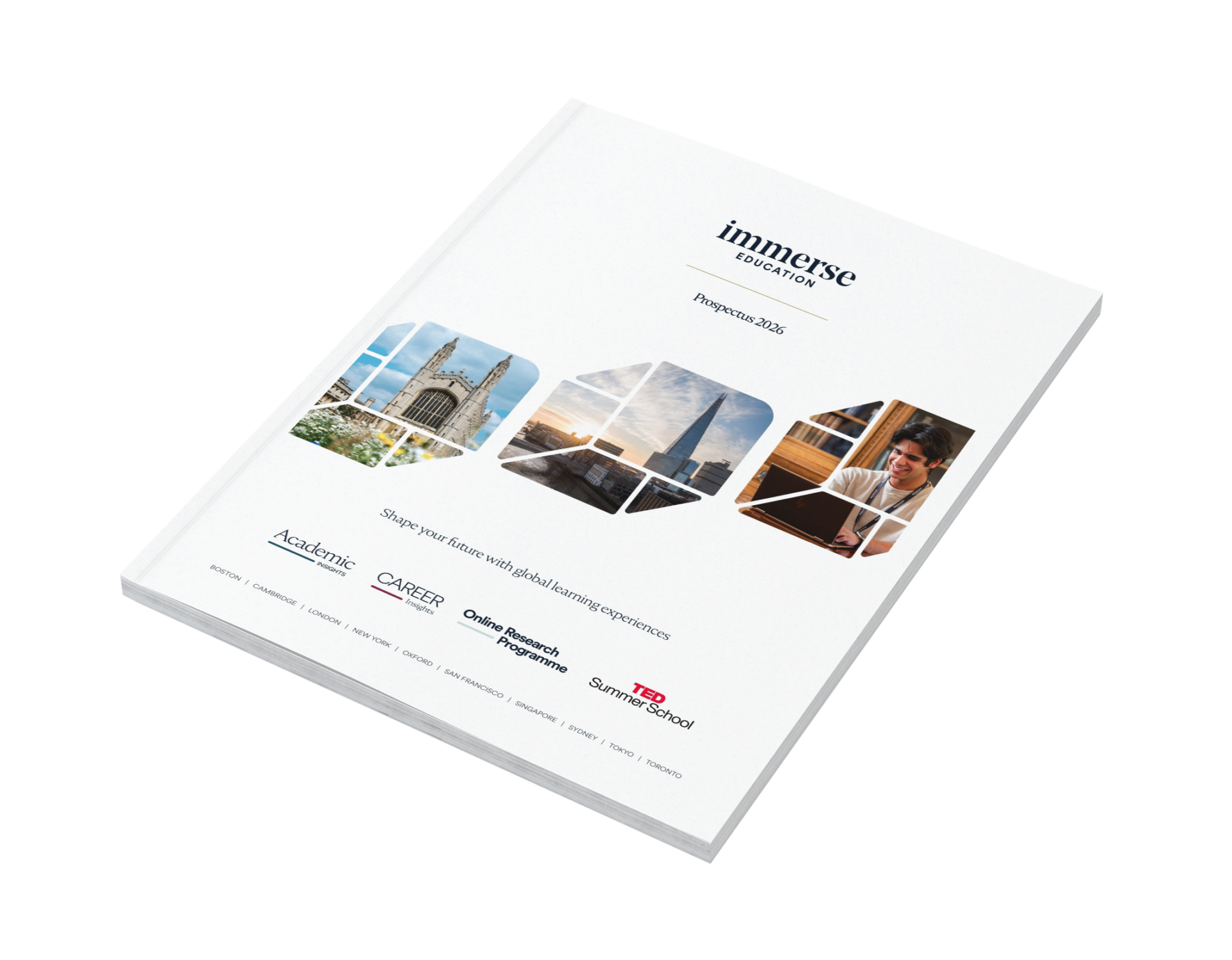
2. Immerse Education’s Pre-University Summer School
Location: Cambridge, London, Oxford, Singapore, Sydney, Tokyo, and Toronto
Cost: Varies; summer school scholarship available through our bursary programme
Application Deadline: Multiple summer cohorts; rolling admissions.
Program Dates: 2 weeks during the summer
Eligibility: Students across the globe aged 13-18 currently enrolled in middle or high school; open to international students
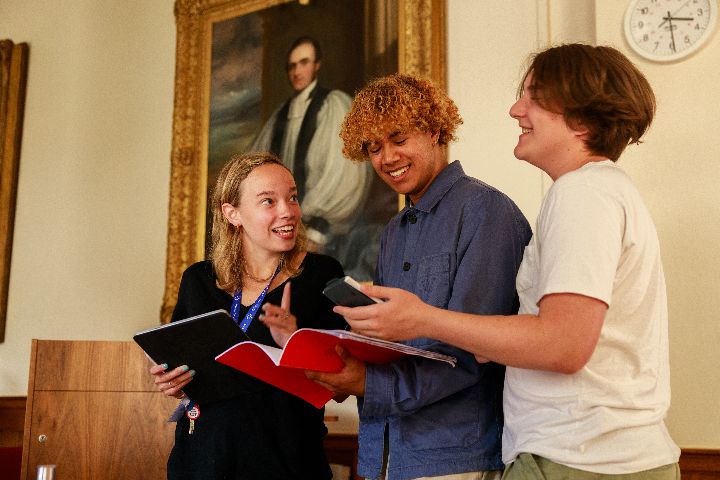
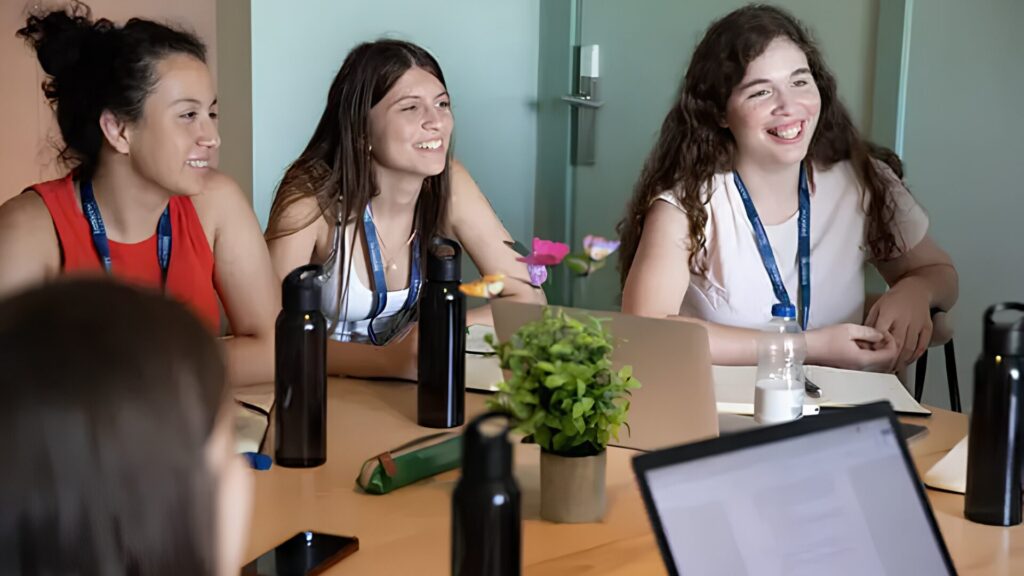
The Academic Insights Program lets high school students experience university life firsthand. You will live on campus and study in small groups of 7-10, and learn from tutors from eminent top universities like Oxford and Cambridge. You can explore a wide range of subjects, spanning over 20 options, including Architecture, AI, Business Management, Computer Science, Economics, Medicine, Philosophy, and more.
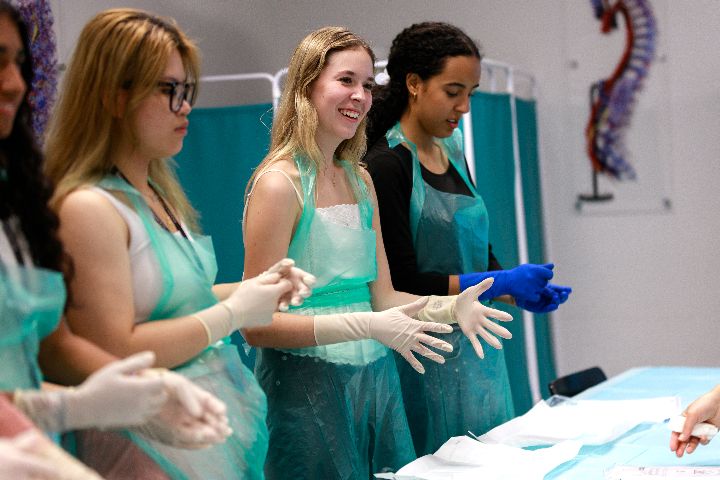
The courses are experiential and focus on hands-on learning. You may find yourself conducting dissections in medicine, designing a robotic arm in engineering, participating in a moot court for law, or building creative writing portfolios and business case studies. By the end of the program, you’ll complete a personal project, receive written feedback, and receive a certificate of completion. You can find more details about the application here.
Why it stands out: You’ll get an early start at university life and academics because the program includes an independent project, discussion-based classes, and living at a college campus.
3. Anson L. Clark Scholars Program
Location: Texas Tech University, Lubbock, Texas
Cost: Free; students receive a $750 stipend upon successful completion of their research project report; $25 application fee
Acceptance rate/cohort size: Approximately 2% acceptance rate; 12 students admitted each year
Program Dates: June 21st – August 6th
Application Deadline: February 16th
Eligibility: Applicants must be at least 17 years old by the programme start date and be rising high school seniors or recent high school graduates; the programme is open only to U.S. citizens and permanent residents
The Anson L. Clark Scholars Program gives you seven weeks to work on a research project under the guidance of a Texas Tech faculty member. You’ll be paired with a mentor and spend most of the summer investigating a question in a field such as biology, chemistry, engineering, computer science, mathematics, or the humanities.
Depending on your project, your days could involve laboratory work, data analysis, literature review, and discussions about research methods. Weekly seminars introduce you to work happening in other disciplines across the university. The summer ends with a substantial research report based on the work you’ve completed.
Why it stands out: With only about a dozen students admitted each year, you’ll have unusually close access to faculty mentors and research opportunities.
4. Michigan Math and Science Scholars
Location: Ann Arbour, Michigan
Cost: Tuition is approximately $1,400 per session, with an additional residential fee of approximately $1,100 for on-campus housing and meals; financial aid is available for eligible students
Acceptance rate/cohort size: The programme admits roughly 50% of applicants; cohort size varies by course and session
Program Dates: June 21st – July 3rd, July 5th – July 17th, or July 19th – July 31st
Application Deadline: Applications typically open in mid-January; courses generally fill by early April, though applications may remain open for waitlist consideration if space becomes available
Eligibility: Open to students who have completed at least one year of high school and have not yet graduated, including rising sophomores, juniors, and seniors; international student eligibility not specified
Michigan Math and Science Scholars is one of the more subject-focused residential programs for teens, allowing you to spend two weeks focusing deeply on a single STEM topic that isn’t usually available in high school. You’ll choose one course and study it alongside other students who are equally interested in the subject. Depending on the course, you may solve complex problems, analyse datasets, run simulations, examine case studies, or discuss current scientific questions with University of Michigan faculty.
Classes are intentionally small, which makes it easier to ask questions and work through difficult concepts in detail. Many courses connect directly to ongoing research areas and show how scientists approach unanswered questions. The experience feels closer to a university seminar than a traditional summer camp.
Why it stands out: You spend the entire programme diving into one specialised topic instead of jumping between multiple subjects.
5. Stony Brooks – Garcia Summer Program
Location: Stony Brook University, Stony Brook, New York
Cost: Approximately $4,000 laboratory usage fee; no stipend provided; housing and meal costs are separate
Acceptance rate/cohort size: Approximately 10% acceptance rate; cohort size not publicly specified
Program Dates: June 24th – August 7th
Application Deadline: Applications typically open in the winter and close in late February; the final application deadline is February 28th
Eligibility: Open to high school students who are at least 16 years old by July 4th; applicants should have a minimum unweighted GPA of 95/100 or 3.8/4.0, standardised test scores at or above the 60th percentile, and coursework in at least three subjects among English, Chemistry, Mathematics/Calculus, Physics, and Biology; international student eligibility not specified
The Garcia Summer Program at Stony Brook University is built around research, and you’ll spend most of your summer working on a project in materials science, polymer engineering, or a related field. Under the guidance of faculty members, graduate students, and research staff, you’ll design experiments, collect data, and figure out what the results actually mean. The work often sits at the intersection of chemistry, physics, biology, and engineering, so you’ll regularly pull ideas from multiple disciplines. .
Research meetings and mentor discussions become a normal part of your week as your project develops. You’ll also learn how scientists communicate findings through presentations, reports, and publications. Many students leave with work that goes on to be presented at conferences or competitions.
Why it stands out: You’re not following a set lab exercise. You’re contributing to a research project that can continue beyond the summer.
6. Clark Scholars Program
Location: Lubbock, Texas
Cost: No programme participation fee; participants receive room and board and a $750 stipend upon successful completion of the research project
Acceptance rate/cohort size: Approximately 12 students are selected each year from a highly competitive applicant pool
Program Dates: June 21st – August 6th
Application Deadline: Applications typically open in the fall; the final deadline is February 16th
Eligibility: Applicants must be at least 17 years old by the programme start date and be rising high school seniors or recent high school graduates; the programme is open to U.S. citizens and permanent residents
The Clark Scholars Program gives you seven weeks to focus on a single research project while working closely with a Texas Tech faculty mentor. Whether your project is in biology, chemistry, engineering, biomedical sciences, or another field, you’ll spend your days investigating questions that don’t have obvious answers. Research often involves reading scientific literature, analysing data, discussing ideas with mentors, and refining your approach as new results emerge.
Weekly seminars introduce you to research happening across different departments, giving you a broader view of academic work. Because the cohort is so small, you’ll get to know both faculty and fellow scholars well throughout the summer. The experience ends with a formal research report based on your work.
Why it stands out: The combination of a tiny cohort and one-on-one mentorship creates a level of academic attention that’s difficult to find elsewhere.
7. Research Science Institute (RSI)
Location: Cambridge, Massachusetts (MIT campus)
Cost: Free; tuition, housing, and meals are covered
Acceptance rate/cohort size: Approximately 80-100 students are selected from more than 3,000 applicants each year
Program Dates: Late June – early August
Application Deadline: Applications typically open in October and close in December
Eligibility: Open to high school juniors or rising seniors with strong backgrounds in mathematics, science, and research; international students may apply through their country’s selection process, where available
Research Science Institute (RSI) begins with a week of intensive lectures from scientists, researchers, and professors before shifting into full-time research. Once you’re matched with a mentor, you’ll spend the rest of the programme investigating a question in a field such as genetics, computational biology, biomedical science, engineering, chemistry, mathematics, or physics.
You’ll read research papers, develop a research plan, analyse data, and learn how scientists communicate their findings. Mentors help guide the process, but you’re expected to take ownership of the project as it develops. The programme concludes with a written research paper and a conference-style presentation. By the end, you’ll have experienced nearly every stage of the research process.
Why it stands out: Few programmes combine advanced STEM coursework and independent research at this scale while remaining completely free.
8. UC COSMOS
Location: University of California campuses: Davis, Irvine, Los Angeles, Merced, San Diego, and Santa Cruz, California
Cost: $5,518 programme fee
Acceptance rate/cohort size: Selective admission; cohort size varies by campus and cluster, with students placed into small academic groups
Program Dates: July 5th – August 1st
Application Deadline: Application window January 7th – February 6th; final submission deadline February 6th
Eligibility: Open to California students completing grades 8-12
UC COSMOS stands out among the many residential programs for teens because it lets you spend four weeks studying a specialised STEM topic through one of its academic clusters at a University of California campus. Depending on the cluster you choose, you might explore genetics, biotechnology, environmental science, microbiology, bioengineering, sustainable agriculture, or another research area. Your days are usually split between lectures, laboratory activities, fieldwork, group projects, and discussions with faculty and researchers.
Because students stay within one cluster for the entire programme, you’ll have time to explore the subject in depth rather than jumping between topics. Many clusters make use of university laboratories and research facilities that aren’t available in most high schools. The experience usually ends with a presentation, report, or research-based project.
Why it stands out: The cluster system allows you to spend a month focused on one STEM field while living on a UC campus.
9. CMU SAMS
Location: Pittsburgh, Pennsylvania; residential programme at Carnegie Mellon University
Cost: Fully funded; there is no tuition cost for accepted students; participants are responsible for travel expenses to and from campus
Acceptance rate/cohort size: Highly selective; Carnegie Mellon does not publicly release an official acceptance rate; cohort sizes generally include a limited group of students selected through a competitive application process
Program Dates: June 20th – August 1st
Application Deadline: Application window opens in the fall; final deadline is February 1st
Eligibility: Applicants must be at least 16 years old by the start of the programme, be current 11th-grade students at the time of application, and be U.S. citizens or permanent residents
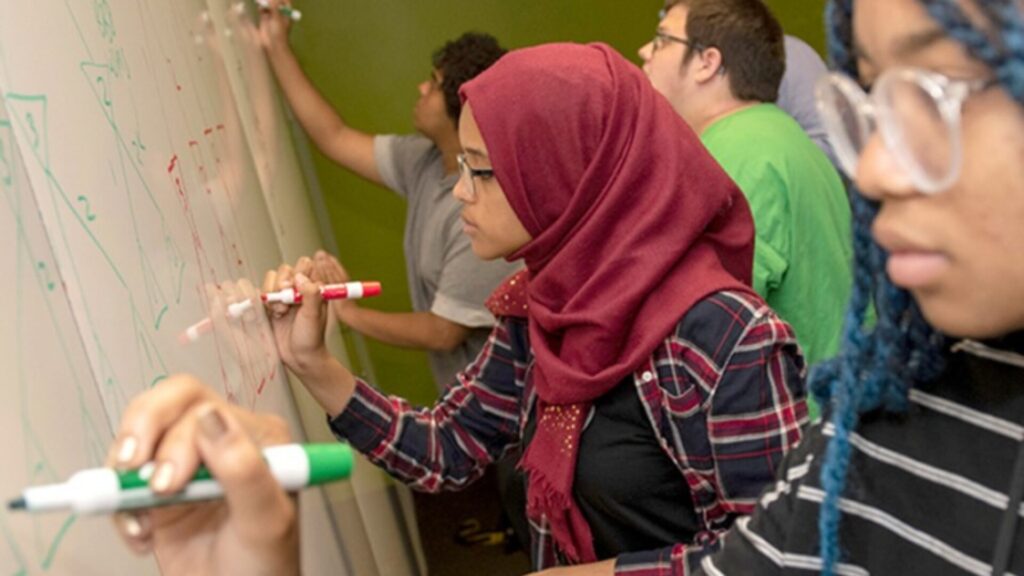
Carnegie Mellon’s SAMS programme combines advanced coursework, research, and college preparation into a six-week residential experience. You’ll take STEM classes that may include biology, chemistry, mathematics, computer science, and related subjects while working through material that goes beyond a typical high school curriculum. In biology-focused components, you might spend time on molecular biology, DNA analysis, biochemistry, and laboratory techniques such as electrophoresis.
Research projects allow you to apply what you’re learning while working alongside faculty members, graduate students, and mentors. The programme also includes writing workshops and college preparation sessions that help students communicate technical ideas more effectively. At the end of the summer, you’ll present your research during a symposium modelled after an academic conference.
Why it stands out: You’ll move between classroom learning, laboratory work, and research projects instead of focusing on just one part of STEM education.
10. Stanford High School Summer College

Location: Stanford University, Stanford, California
Cost: Tuition starts at approximately $8,226 for commuter students and $18,771 for residential students, including housing and meals; no stipend is provided
Acceptance rate/cohort size: Selective admission; acceptance rate and cohort size are not publicly reported
Program Duration: June 20th – August 16th
Application Deadline: Application window opens in early November; Early Decision deadline is mid-December, Regular Decision deadline is late January, and final Late Application deadline is early March
Eligibility: Open to domestic and international students who are current high school sophomores, juniors, seniors, or gap year students at the time of application; students must be at least 16 years old at the start of the programme and no older than 19 by the end
As one of the university-credit residential programs for teens, Stanford High School Summer College allows you to enrol in actual Stanford summer courses while living on campus with students from around the world. You’ll choose from subjects such as biology, genetics, neuroscience, environmental science, computer science, and many others, then spend the summer keeping up with the same expectations found in university classes. Depending on your course, you might analyse research papers, work through case studies, complete laboratory assignments, write essays, or prepare presentations.
Classes are taught by Stanford instructors and include office hours, discussions, and regular interaction with teaching staff. The workload can be demanding, especially during longer sessions, but that’s part of the experience. When the programme ends, you’ll receive an official Stanford transcript showing the credits you’ve earned.
Why it stands out: You’re taking Stanford’s regular summer courses, not a separate curriculum designed only for high school students.
11. Telluride Association Summer Seminar (TASS)
Location: Cornell University, Ithaca, New York, and University of Maryland, College Park, Maryland
Cost: Free; tuition, housing, meals, books, and programme-related expenses are covered; limited travel assistance and work-replacement funding are available for eligible students
Acceptance rate/cohort size: Approximately 3-5% acceptance rate; cohort size varies by seminar site
Program Duration: June 21st – July 25th
Application Deadline: Applications open October 15th and close December 3rd
Eligibility: Open to high school sophomores and juniors, or rising juniors and rising seniors; students must be at least 15 years old at the start of the programme and no older than 17 by the end; both U.S. and international students may apply
Telluride Association Summer Seminar (TASS) is built around the kind of conversations that make residential programs for teens valuable long after class ends. Over five weeks, you’ll spend your days reading challenging texts, discussing big questions, writing essays, and debating ideas with a small group of peers.
Seminar topics often explore history, politics, literature, culture, identity, and social issues, but there are no lectures, tests, or grades driving the experience. Instead, the programme relies on discussion, close reading, and careful argumentation. Outside the classroom, students help shape community life through shared decision-making and collaborative activities.
Why it stands out: The programme is almost entirely discussion-based, making it very different from lecture-heavy academic programs.
12. Notre Dame Leadership Seminars
Location: University of Notre Dame, Notre Dame, Indiana
Cost: Tuition, housing, and meals are covered by the university; students are responsible for a $75 application fee, a $150 enrolment fee if admitted, and travel expenses
Acceptance rate/cohort size: Approximately 150 students are admitted each year; the university does not publish an official acceptance rate
Program Duration: July 18th – July 29th
Application Deadline: Applications open October 15th and close January 21st
Eligibility: Open to current high school juniors entering their senior year in the fall; applicants must be at least 16 years old by August 1st; international student eligibility not specified
Notre Dame Leadership Seminars is one of the most discussion-driven residential programs for teens, asking you to spend nearly two weeks exploring a single contemporary issue through intensive analysis. You’ll choose one seminar topic and work closely with faculty and peers to examine questions related to public policy, inequality, technology, economics, leadership, or global affairs. Classes revolve around reading, discussion, debate, and collaborative projects rather than traditional lectures.
Throughout the programme, you’ll analyse case studies, evaluate evidence, and defend your ideas in conversation with others. The small seminar format means everyone is expected to contribute regularly. Outside class, you’ll participate in campus activities and experience residential life at Notre Dame. Students who complete the programme may also earn college credit.
Why it stands out: Every student focuses on one topic in depth, allowing discussions to go much further than they usually do in short summer programmes.
13. Northwestern NHSI (Cherubs)
Location: Evanston, Illinois; Northwestern University
Cost: Approximately $5,000 tuition, including room and board for residential programmes; financial aid is available for eligible students
Acceptance rate/cohort size: Selective admission; cohort size varies by division and is limited to maintain small-group instruction
Program Duration: June 28th – August 1st
Application Deadline: Applications typically open in November; early application deadline: January 2nd; regular application deadline: February 27th; supporting materials are due January 9th for early applicants and March 6th for regular applicants
Eligibility: Open to current high school sophomores and juniors who will enter 11th or 12th grade after the summer; eligibility requirements vary slightly by division; international student eligibility not specified
Northwestern’s National High School Institute (Cherubs) is one of the most creative residential programs for teens, designed for students who want to spend their summer fully immersed in a creative field. Depending on your division, you might spend your days writing scripts, producing films, preparing debate cases, rehearsing performances, or developing original creative work. Classes combine workshops, critiques, rehearsals, discussions, and project-based assignments that mirror the structure of introductory university arts programmes.
Faculty and professional instructors provide detailed feedback throughout the process, helping you revise and strengthen your work. You’ll also collaborate closely with other students who share the same interests. The programme concludes with performances, screenings, showcases, or presentations, depending on the track you choose.
Why it stands out: You’ll leave with substantial creative work rather than a collection of short assignments or exercises.
14. Summer Science Program (SSP)
Location: Multiple university campuses across the United States, including Purdue University, New Mexico Tech, and Indiana University
Cost: Maximum programme fee of $9,800, with complete need-based financial aid available; free for families earning $75,000 or less, with sliding scale discounts up to $140,000
Acceptance rate/cohort size: Approximately 4%-5% acceptance rate; about 36 students per campus cohort
Program Dates: Late June to early August; 39-day residential programme
Application Deadline: January 29th for international applicants; February 19th for domestic applicants
Eligibility: High school juniors and select sophomores who are between 15 and 18 years old and have completed the required maths and science prerequisites; open to international students
The Summer Science Program (SSP) bypasses classroom simulations to place you directly into an authentic, highly rigorous scientific research cycle. Working in a tight-knit team of three, you will conduct roughly 60 hours of hands-on research and study per week under the guidance of university faculty and PhD mentors.
Depending on the specialised research track you choose, your days could be spent analysing near-Earth asteroid orbits using calculus and Python programming, or working late in biochemistry labs designing custom enzyme inhibitors to combat agricultural crop diseases. The program combines college-level lectures, rigorous data collection, and extensive collaborative work, concluding with a comprehensive, formal team research report.
Why it stands out: You bypass academic exercises to tackle a high-stakes, collaborative scientific research project alongside university-level mentors, yielding a complete, professional research report.
15. Yale Young Global Scholars (YYGS)
Location: Yale University, New Haven, Connecticut
Cost: $7,000 for the two-week residential session, covering tuition, housing, and meals; over $3 million in need-based financial aid is available
Acceptance rate/cohort size: Selective, typically around 15%-20% acceptance rate; approximately 150 students per session, academic track
Program Dates: Multiple two-week sessions offered throughout June and July
Application Deadline: January 7th
Eligibility: Current high school sophomores and juniors aged 16-18 who are first-time participants; open to international students
Yale Young Global Scholars (YYGS) is one of the most globally diverse residential programs for teens, bringing together students from around the world to debate complex global issues. Living in Yale’s historic residential colleges, you will choose from academic tracks spanning STEM, social sciences, humanities, or global policy and economics.
The curriculum is highly collaborative, built around university-style lectures from Yale faculty, small seminar-style student discussions, and a collaborative “capstone” project designed to solve real-world problems. Because the program is completely non-graded and has no exams, the focus remains entirely on intellectual curiosity, critical thinking, and sharing perspectives with peers from over 150 countries.
Why it stands out: It is one of the most internationally diverse high school programs in the world, prioritising non-graded debate and global perspective-sharing on Yale’s campus.
Make Residential Learning Part of Your Growth
Residential learning can shape more than your academic interests because you practise independence, collaboration, and responsibility while studying in a focused environment.
The 15 residential programs for teens listed here combine university courses, research projects, creative work, leadership seminars, and campus living across selective academic settings.
As you manage classes, roommates, schedules, and new communities, you build confidence that supports future study and life away from home successfully later.
Ready to feel prepared beyond academics? Read our Student Life and Cultural Immersion blogs for advice on wellbeing, accommodation, finances, culture, and campus life before your next big step begins with confidence.