
 Русский (RU)
 Українська (UK)
 Türkçe (TR)
 Italiano (IT)
 Français (FR)
 Português (PT)
 中文 (中国) (ZH)
 Español (ES)
 日本語 (JA)
 ไทย (TH)
 Deutsch (DE)
 Ελληνικά (EL)
 Polski (PL)
 Bahasa Indonesia (ID)
 Nederlands (NL)
 العربية (AR)
 한국어 (KO)

If you’re serious about building your academic profile, waiting for summer is not your only option. Spring programs for high school students can help you explore subjects, develop new skills, and connect with mentors while the school year is still underway. These opportunities give you a focused way to keep learning, growing, and preparing for future academic goals.
Think about spending part of your spring working on a research project, participating in a policy discussion, learning coding from professionals, or collaborating with students who share your interests. These programs often bring together motivated students from different backgrounds and create space for the kind of intellectual curiosity that can be difficult to pursue in a traditional classroom setting.
Why join a spring program in high school?
One advantage of spring programs is timing. They allow students to gain meaningful experience without competing with the crowded landscape of summer opportunities. For many students, spring can be the perfect time to explore an academic interest, strengthen an extracurricular profile, or try something completely new before making plans for the summer.
Many spring programs focus on active learning rather than passive participation. You might conduct research, solve real-world problems, create projects, engage in discussions, or receive feedback from experts in a particular field. Along the way, you’ll develop skills that remain valuable regardless of what you eventually choose to study in college.
Whether you’re exploring a possible career path or simply looking for a more challenging learning experience, spring programs can provide an accessible way to continue growing throughout the academic year. With that, here are 15 spring programs for high school students worth considering!
For related options, check out summer programs for high school students.
15 Spring Programs for High School Students
1. Massachusetts Institute of Technology – MITES Saturdays
Location: Cambridge, Massachusetts, USA
Cost: Free; students pay transportation costs unless attending from Lawrence, Massachusetts
Program Dates: Fall and spring semesters; 8 Saturdays per semester from 10:00 a.m. to 3:30 p.m.
Deadline: Applications close early Feb
Eligibility: Public school students in grades 7-10 from Boston, Cambridge, or Lawrence, Massachusetts. Applicants must be U.S. citizens or permanent residents. International students are not eligible
MITES Saturdays is a long-running STEM commitment that stretches across the school year. Depending on your track, you might spend weeks building robotics projects, working through engineering design challenges, or exploring environmental systems through hands-on activities. The programme combines technical coursework with mentoring sessions that help you think about college and STEM careers.
Because you return every Saturday, there is time to build projects, revisit ideas, and improve your work rather than rushing through topics. You’ll work alongside students from different schools who share similar interests in science and engineering. The structure feels closer to an academic community than a one-off enrichment programme.
Why it stands out: The program combines long-term STEM mentorship with hands-on engineering coursework across multiple academic years.
2. Immerse Education’s Online Summer School

Location: Fully remote
Cost: Varies; summer school scholarship available through our bursary programme
Acceptance rate/cohort size: Selective; 1:1 learning
Application Deadline: Rolling admissions; multiple dates throughout the year
Program Dates: Flexible; multiple cohorts in a year.
Eligibility: Students around the world aged 13-18 (accredited options require age 14+); international students welcome
The Online Research Program offers high school students the opportunity to conduct rigorous research with tutors from Oxford, Cambridge, and Ivy League universities. You will work with your tutor to explore a subject of your choice in depth and write an academic research paper. The program is offered in 1:1 and small group formats, and you can choose to receive college credit from universities in the US and the UK.
The virtual research program is offered in over 20 subjects, including artificial intelligence, chemistry, psychology, economics, computer science, creative writing, philosophy, and more. At the end of the program, you’ll receive a written evaluation from your tutor, an opportunity to publish your research, and an invitation to present at the Immerse Online Symposium. You can find examples of papers Immerse students have worked on here. You can find more details about the application here.
Why it stands out: You’ll get access to 1:1 Oxbridge- or Ivy-style research supervision culminating in a publishable academic paper.
3. Montclair State University – Early College Scholars Program
Location: Montclair, New Jersey, USA
Cost: $825 per 3-credit course; additional costs for textbooks, parking, and course materials
Program Dates: Varies by the session (fall, spring, and summer)
Deadline: December 15th
Eligibility: Students must be at least 16 years old by the semester start date. Fall and spring applicants must be current high school juniors or seniors. Summer applicants must be rising juniors or seniors; international students can apply
Montclair State University’s Early College Scholars Program skips the simulation and places you directly into real university courses. You sit in the same classrooms as undergraduates, complete the same assignments, and are graded by the same standards.
Depending on your interests, you could study subjects ranging from psychology and business to mathematics and communication. The experience demands more independence than most high school programmes since you are expected to manage coursework, deadlines, and class participation on your own. For many students, it serves as a first look at the pace and expectations of college academics before graduation.
Why it stands out: You are not placed in a special high school cohort. You join actual university classes and earn transferable college credit from the start.
4. University of Pennsylvania Young Scholars High School Program

Location: Philadelphia (in-person only)
Cost: 1 course unit: $4,714
Program Dates: Spring Semester: January 20th – May 17th
Deadline: December 1st
Eligibility: Current 11th-grade students attending a local high school within commuting distance of Penn (approximately up to one hour). International students are eligible only if they can commute locally and meet English proficiency requirements. The program does not provide housing or visa sponsorship
The University of Pennsylvania’s Young Scholars Program allows local high school juniors to step into Penn classrooms while still completing high school. You choose undergraduate courses and study alongside university students throughout an entire semester. Coursework can involve research papers, discussion-heavy seminars, exams, and extensive reading, depending on the subject you select.
The programme works particularly well if you want to test yourself in a rigorous academic environment before applying to college. Since classes follow Penn’s normal curriculum, you experience the same expectations, workload, and classroom culture as degree-seeking students.
Why it stands out: Few programmes place high school students directly into Ivy League undergraduate courses for an entire semester rather than a short summer experience.
5. Dartmouth Community High School Program (CHSP)
Location: Dartmouth College
Cost: Tuition-free; students pay for books and course materials
Program Dates: Fall Term begins September 14th
Deadline: Registration window: May 8th – June 8th
Eligibility: High school seniors during fall, winter, and spring terms; juniors during winter and spring terms. Students must attend schools within a 50-mile radius of Dartmouth College. Not open to most international students unless enrolled in an eligible local high school
Dartmouth’s Community High School Program is designed for students who have already exhausted the highest-level courses available at their schools. Instead of repeating material, you enrol in a Dartmouth course and study alongside undergraduates. The programme works across disciplines, so one student may be taking a science course while another explores literature or economics.
Because you are part of a real college class, the focus shifts from guided enrichment to independent academic work. You are expected to keep up with readings, assignments, and classroom discussions just like any other Dartmouth student. The experience offers a realistic picture of liberal arts education before college begins.
Why it stands out: You will receive an official Dartmouth transcript, making this one of the few spring opportunities where high school students can earn credit directly from an Ivy League institution.
6. EnergyMag Virtual Internship
Location: EnergyMag
Cost: Free
Program Dates: Quarter-time internships available year-round; half-time internships available during the summer
Deadline: Rolling basis
Eligibility: Open to high school sophomores, juniors, and seniors with a GPA above 3.25 and at least one honors science or honors English course. International students may apply
EnergyMag’s Virtual Internship is built around one thing: researching how the energy sector is changing and learning how to communicate those changes clearly. Over the course of the internship, you investigate topics such as battery storage, renewable energy technologies, grid infrastructure, clean energy companies, and emerging market trends. You spend much of your time digging through reports, industry data, and technical publications to build your own understanding of a topic.
The programme also involves writing analytical pieces that may eventually be published on EnergyMag’s platform. Mentors guide you through the research process, helping you refine your questions, structure your findings, and strengthen your analysis. You may also reach out to industry professionals to gather additional perspectives and information.
Why it stands out: This internship places you in the role of a researcher from the beginning and allows you to produce work that can be published for a public audience.
7. Stanford FAST (Future Advancers of Science and Technology)
Location: Stanford FAST
Cost: Free
Program Dates: September 6th – March 23rd
Deadline: Rolling basis
Eligibility: Open only to students enrolled in the East Side Union High School District, including Andrew Hill, James Lick, and Independence High School. Not open to international students outside eligible schools
Stanford FAST takes a long-term approach to STEM enrichment rather than compressing everything into a single week or month. Running throughout much of the academic year, the programme brings together students for workshops, project development, mentoring, and collaborative activities centred on science and technology. You spend time working through technical challenges with peers while learning how larger projects are planned, tested, and improved over time.
The programme encourages experimentation and iteration, allowing ideas to evolve instead of rushing toward a final product. Alongside project work, students participate in discussions and activities designed to introduce the habits and expectations common in STEM fields. Because the programme unfolds gradually, relationships with mentors and fellow students have time to develop naturally.
Why it stands out: The year-long structure creates a level of continuity that most enrichment programmes cannot offer, giving students time to build projects, receive feedback, and develop meaningful mentor relationships.
8. NYU Tisch Future Artists Programs
Location: New York University Tisch School of the Arts
Cost: Free
Program Dates: February-May
Deadline: Typically in November
Eligibility: Open to high school first-years, sophomores, and juniors who can commute to NYU Tisch on Saturdays. International students may apply if they can attend in person
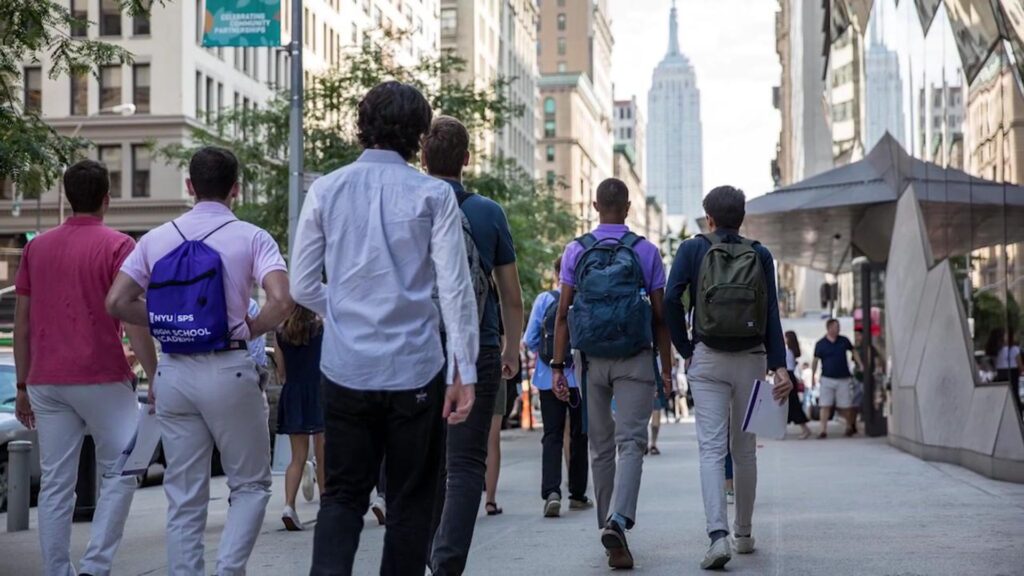
NYU Tisch Future Artists Programs offer high school students the chance to spend their spring Saturdays immersed in a creative discipline inside one of the most recognised arts schools in the United States. Depending on the track you choose, you might be writing scripts, directing short films, developing games, analysing cinema, working in photography, or exploring theatre and performance.
Sessions are designed around making work rather than simply discussing it, with students regularly producing projects and receiving feedback from instructors and peers. The workshops also introduce the creative processes used in professional and university settings, giving you a clearer understanding of what serious arts study involves.
Why it stands out: This program offers access to multiple creative fields within the same university ecosystem, allowing students to explore areas ranging from filmmaking and game design to dramatic writing and photography.
9. Columbia College Edge: Academic Year
Location: Columbia University Pre-College Programs
Cost: $2,574 per point; approximately $7,722 for one 3-point course, plus additional fees
Program Dates: Spring: January 20th – May 15th
Deadline: Rolling basis
Eligibility: Open to students in grades 11-12. International students may apply. Students must arrange supervised housing if not living at home
Columbia’s College Edge program adds an academically rigorous option to this list of spring programs for high school students, allowing juniors and seniors to enroll in undergraduate courses alongside Columbia students during the academic year. You’ll study university-level subjects while earning official college credit through courses taught by Columbia faculty.
The program emphasizes academic rigor through lectures, coursework, discussions, and independent study expectations similar to a full undergraduate experience. You’ll apply critical thinking, academic writing, and research skills while managing the pace of college-level assignments. In addition to academics, you’ll participate in workshops focused on leadership, college preparation, communication, and professional development.
Why it stands out: Students take the same courses as Columbia undergraduates and earn official college credit during the academic year.
10. Drawing for Artists & Designers (In-Person)
Location: Penny W. Stamps School of Art & Design at the University of Michigan
Cost: $325 program fee, including instructional materials; limited financial aid available
Program Dates: May 4th – June 3rd
Deadline: Early Action Deadline: February 1st | Final Application Deadline: March 1st
Eligibility: Open to students in grades 9-12, ages 14-18. International students may apply if they can attend in person
Drawing for Artists & Designers is less concerned with producing polished artwork and more focused on teaching students how artists learn to see. Through studio sessions, demonstrations, and critiques, you explore observational drawing, composition, mark-making, and experimental approaches to image-making.
Much of the programme takes place at the drawing board, where repeated practice helps refine both technical ability and visual judgement. Faculty members encourage students to think about why a drawing works, not just how it looks. Critique sessions provide opportunities to discuss decisions, process, and artistic intent, mirroring the structure of university art courses.
Why it stands out: The programme mirrors the studio-based approach used in university art schools, where feedback, revision, and sustained practice play a central role in the learning process.
11. MISA Spring
Location: Medical Immersion Scholars Academy
Cost: $1,950; $75 non-refundable application fee
Program Dates: March 16-20 | April 6-10
Deadline: January 5th
Eligibility: High school students; international student eligibility not specified
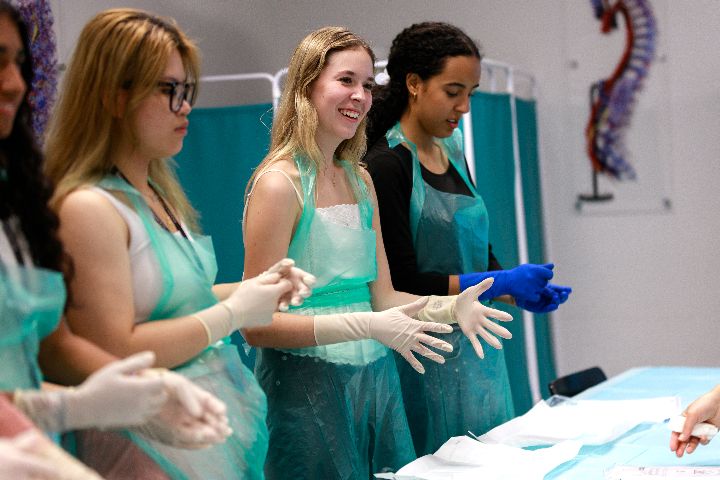
MISA Spring is a five-day programme for students who want a closer look at healthcare before college. Much of the week is spent in simulation-based activities where you work through clinical scenarios, learn basic medical procedures, and use equipment commonly found in healthcare settings. You may practice skills such as phlebotomy while also learning how healthcare teams work together during patient care.
The programme includes group exercises that mirror situations medical professionals encounter in hospitals and clinics. Throughout the week, instructors guide students through procedures and explain the reasoning behind them. If you’re considering medicine, nursing, or another healthcare field, the programme provides a practical introduction to the environment and day-to-day work.
Why it stands out: You spend a significant portion of the programme doing hands-on clinical activities instead of only attending lectures.
12. FIT High School: Spring 4-Day Workshops
Location: Fashion Institute of Technology
Cost: $440 including fees
Program Dates: March 7-28
Deadline: Registration opens December 4th and closes February 25th
Eligibility: Open to students in grades 9-12 as of fall; international student eligibility not specified
The Fashion Institute of Technology’s Spring 4-Day Workshops allow high school students to explore a specific creative subject over four focused sessions. Depending on the workshop, you might work on fashion design concepts, illustration, styling, digital tools, or other creative disciplines connected to the design industry. Classes are built around projects, giving you the chance to make something while learning new techniques.
Instructors provide feedback throughout the workshop and introduce approaches commonly used in design education. Because the sessions are short and focused, they work well for students who want to explore an interest without committing to a longer programme. The workshops also offer a glimpse into the type of work students encounter in FIT’s pre-college and degree programmes.
Why it stands out: The short format makes it easy to explore a new creative field without a major time commitment.
13. Foreign Policy Research Institute Spring Internship
Location: Foreign Policy Research Institute
Cost: Not specified; limited need-based stipends available
Program Dates: February-April
Deadline: Application period currently closed
Eligibility: Open to students at all stages of study. International students may apply, but visa sponsorship is not available. Remote and in-person opportunities available depending on role
The Foreign Policy Research Institute Spring Internship gives students exposure to how research organisations study international affairs and public policy. Depending on your role, you may assist with research, writing, communications, events, or organisational projects. Students interested in global politics can spend time examining topics such as national security, international relations, and regional affairs.
Research interns often work with articles, reports, and source materials while learning how policy research is conducted. The internship also provides access to discussions, events, and scholars working in the field. For students interested in politics, journalism, public policy, or international affairs, it offers a useful look at how ideas move from research into public discussion.
Why it stands out: You work inside an active think tank and see how researchers and policy experts approach current global issues.
14. Project Ignite at Carnegie Mellon University
Location: Carnegie Mellon University (Pittsburgh, Pennsylvania)
Cost: Free
Program Dates: 10 weeks during the spring (January to April)
Deadline: November 23rd
Eligibility: High school students from Pittsburgh
Project Ignite is a project-based programme run by Carnegie Mellon University students for high school students in the Pittsburgh area. Over ten weeks, you work in a small team on a project that you help shape from the beginning. Past groups have built robotic hands, developed mobile apps, created hologram projectors, launched Minecraft server businesses, and carried out science experiments.
Carnegie Mellon student mentors meet with teams during weekly workshops, helping students turn ideas into workable plans and navigate technical challenges. Much of the programme is spent designing, building, testing, and improving a project rather than attending lectures. The experience concludes with a public showcase where teams present what they created to families, educators, and the wider community.
Why it stands out: You will decide what gets built and drive the work from start to finish with support from Carnegie Mellon mentors.
15. Parsons Academy Saturday Program – Parsons School of Design
Location: Parsons School of Design, New York City (on campus or online options available)
Cost: On Campus: $605 + fees; Online: $490 + fees
Program Dates: February 28th – May 9th (on campus); April 6th – May 10th (online)
Application Deadline: March 6th (on campus); April 12th (online)
Eligibility: High school students in grades 9-12; international student eligibility not specified
Parsons Academy gives high school students the chance to study art and design in the same environment used by Parsons School of Design students in New York. Depending on the course you choose, you might spend your time working on fashion design, illustration, photography, animation, graphic design, architecture, or portfolio development projects. Classes are studio-based, so most of your learning happens through making, experimenting, revising, and discussing your work with instructors and classmates.
Faculty members provide critiques throughout the programme, helping you understand how ideas evolve from rough concepts into finished projects. By the end of the programme, you will have completed substantial creative work and gained a clearer understanding of how art and design are taught at the college level.
Why it stands out: Parsons is one of the most recognised art and design schools in the world, and the programme gives you direct access to the same studio.
From Semester Opportunities to Stronger Applications
Spring can be a useful time to build momentum, especially when you want academic growth before the summer rush begins.
The spring programs for high school students featured here can strengthen your profile through research, college courses, creative projects, mentorship, internships, and hands-on learning.
Afterwards, think about what each experience showed you: stronger study habits, clearer subject interests, better confidence, or new ideas for future applications.
Ready to turn spring experience into university preparation? Visit our University Preparation blogs for application advice, study planning, personal statement tips, and academic skill-building.