
 Русский (RU)
 Українська (UK)
 Türkçe (TR)
 Italiano (IT)
 Français (FR)
 Português (PT)
 中文 (中国) (ZH)
 Español (ES)
 日本語 (JA)
 ไทย (TH)
 Deutsch (DE)
 Ελληνικά (EL)
 Polski (PL)
 Bahasa Indonesia (ID)
 Nederlands (NL)
 العربية (AR)
 한국어 (KO)

Being 15 is a good time to start figuring out what genuinely interests you. You don’t need to have your future planned out, but exploring different subjects, activities, and experiences can help you discover what you enjoy and where your strengths lie. Summer camps for 15 year olds offer a chance to do exactly that while taking a break from the routine of the school year.
Imagine spending a few weeks learning something completely new, meeting students who share your interests, and working on projects that challenge you in different ways. Whether you’re interested in science, technology, sports, leadership, the arts, or outdoor adventures, there are camps designed to help students explore those interests in a more engaging environment.
What kinds of summer camps for 15-year-olds are there?
Summer camps come in many different forms. Academic camps allow students to explore subjects such as engineering, medicine, computer science, business, and writing through workshops, projects, and hands-on activities. These programs are often a good fit for students who enjoy learning and want to dive deeper into a particular area.
Creative camps focus on interests such as filmmaking, music, theatre, animation, visual arts, and design. Students have opportunities to create projects, develop portfolios, and learn from instructors with experience in their fields.
Leadership, outdoor, and adventure camps offer a different kind of experience. These programs often focus on teamwork, communication, problem-solving, and personal growth through activities that take students outside their usual comfort zones.
With that, here are 15 summer camps for 15-year-olds worth considering!
For related opportunities, also have a look at the online research program.
15 Summer Camps for 15 Year Olds
1. U.S. Naval Academy Summer STEM
Location: United States Naval Academy
Cost: $450 (financial aid available for program fee and travel)
Program Dates: Rising 9th Grade: 1-6 June | Rising 10th Grade: 8-13 June | Rising 11th Grade: 15-19 June
Deadline: 31st March
Eligibility: Rising 9th, 10th, and 11th grade students; international students not eligible
The U.S. Naval Academy Summer STEM Program is one of the summer camps for 15 year olds built around engineering challenges that require you to test, build, and improve solutions rather than simply learn concepts in a classroom. Throughout the week, you’ll work on activities involving robotics, coding, materials science, aerodynamics, and engineering design while using university facilities on the Naval Academy campus.
Projects may involve reverse engineering engines, testing materials, designing structures, or solving programming challenges with teammates. Faculty members and STEM professionals guide students through each activity while explaining how these ideas connect to engineering careers. Leadership exercises and team competitions are also woven into the schedule, reflecting the Academy’s collaborative culture.
Why it stands out: You learn engineering by building, testing, and solving problems in the same environment used by future Naval officers.
2. Immerse Education’s Pre-University Summer School
Location: Cambridge, London, Oxford, Singapore, Sydney, Tokyo, and Toronto
Cost: Varies; summer school scholarships available through our bursary programme
Application Deadline: Multiple summer cohorts; rolling admissions
Program Dates: 2 weeks during the summer
Eligibility: Students aged 13-18 currently enrolled in middle or high school; open to international students
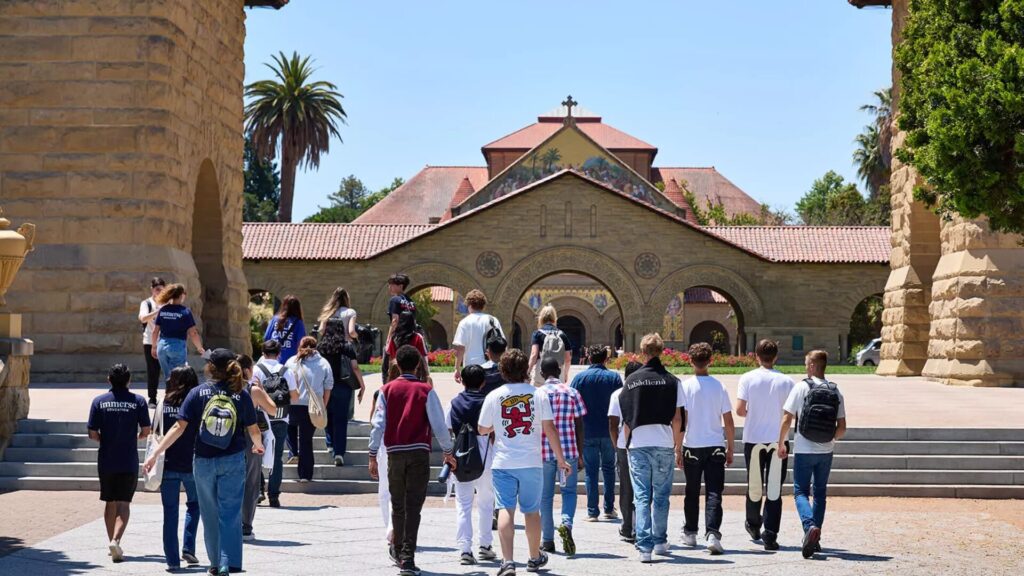
The Academic Insights Program lets high school students experience university life firsthand. You will live on campus and study in small groups of 7–10, learning from tutors from top universities like Oxford and Cambridge. You can explore over 20 subjects, including Architecture, AI, Business Management, Computer Science, Economics, Medicine, Philosophy, and more.
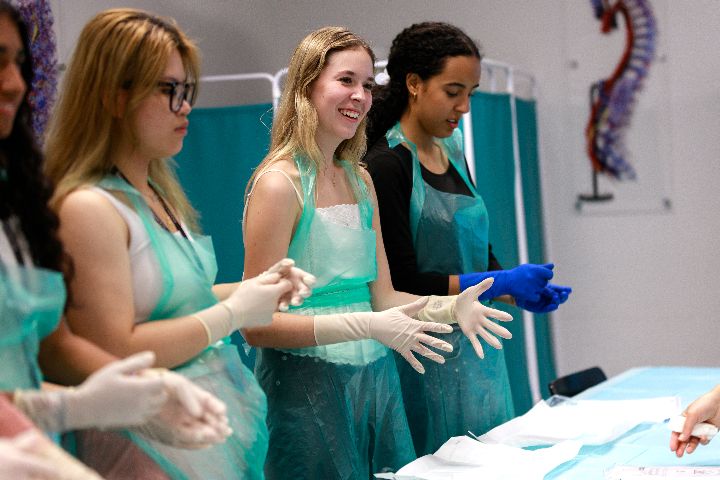
The courses are experiential and hands-on — you may find yourself conducting dissections in medicine, designing a robotic arm in engineering, participating in a moot court for law, or building creative writing portfolios and business case studies. By the end of the program, you’ll complete a personal project, receive written feedback, and receive a certificate of completion. You can find more details about the application here.
Why it stands out: You’ll study under expert academics, be guided daily by a university student mentor, complete a project you can show in future applications, and experience genuine university college life, with other campuses worldwide as alternatives.
3. IMA-MathCEP Math Modelling Camp
Location: University of Minnesota Twin Cities
Cost: $200
Program Dates: June 22-26
Deadline: May 31st
Eligibility: High school students who have completed a year-long single variable calculus course by the end of the school year; international student eligibility not specified
The IMA-MathCEP Math Modelling Camp is an in-person mathematics programme focused on applying mathematical models to real-world systems and societal problems. You’ll examine how mathematics is used to study transportation systems, population trends, disease spread, climate impact, and resource management. The program emphasizes collaborative problem solving, analytical reasoning, and mathematical communication through project-based exploration.
You’ll apply calculus-based modelling techniques while working in teams on open-ended quantitative problems. Faculty guidance and peer collaboration are central components of the learning experience. Previous projects have explored topics such as food deserts and light rail system design.
Why it stands out: The program focuses specifically on real-world mathematical modelling and requires prior calculus preparation, creating a more advanced and research-oriented environment than general math camps.
4. Stanford University Mathematics Camp (SUMaC)
Location: Stanford University
Cost: $3,750 (Online), $8,950 (Residential)
Program Dates: Online: 15th June – 3rd July and 6th July – 24th July | Residential: 21st June – 17th July
Deadline: 2nd February
Eligibility: Rising high school juniors and seniors (Grades 10-11). Open to international students
Stanford University Mathematics Camp (SUMaC) is for students who enjoy thinking deeply about mathematics and tackling problems that don’t have obvious solutions. You’ll spend several weeks exploring advanced mathematical ideas through lectures, discussions, collaborative problem-solving sessions, and independent work.
The focus is on proof-based reasoning and mathematical exploration rather than test preparation or competition training. As concepts become more challenging, you’ll learn how mathematicians construct arguments, investigate patterns, and approach unfamiliar questions. Discussions often connect mathematics to broader scientific ideas and current areas of research.
Why it stands out: The emphasis is on mathematical thinking and proofs, not speed, memorization, or competition-style questions.
5. Drexel Camp Business
Location: Drexel University LeBow College of Business
Cost: Residential Sessions: USD 2,000 | Commuter Session: USD 950
Program Dates: Residential Blue: 13-17 July | Commuter: 20-24 July | Residential Gold: 27-31 July
Deadline: Priority deadline is May 1st; Rolling after that
Eligibility: Rising high school sophomores, juniors, and seniors, open to international students
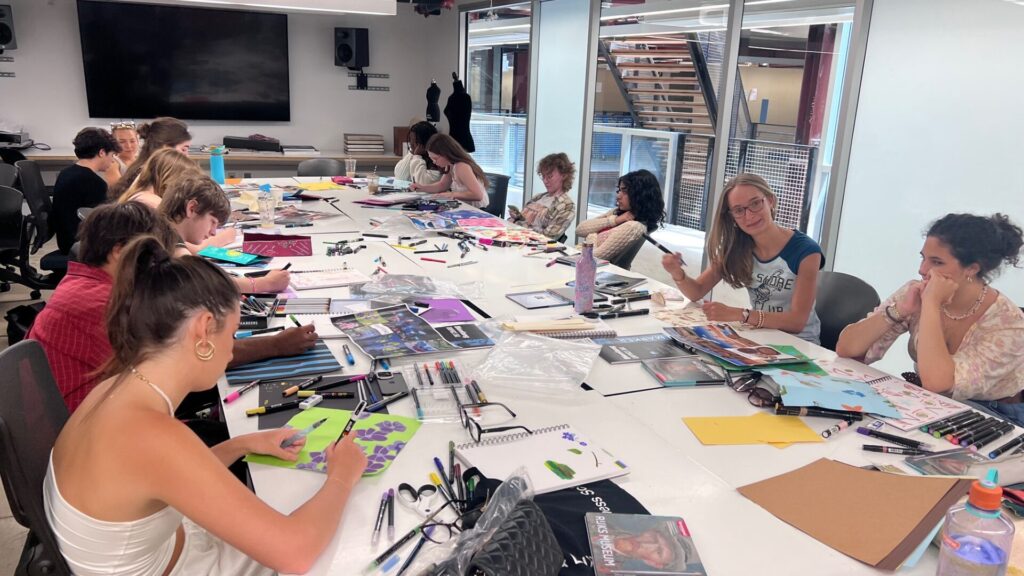
Drexel Camp Business adds a practical business option to the many summer camps for 15 year olds, introducing you to the different pieces that make a business work, from finance and marketing to management and entrepreneurship. Throughout the week, you’ll take part in workshops, simulations, and team activities that show how business decisions are made in practice.
Faculty members from different business disciplines bring their own perspectives, giving students exposure to multiple areas of business study. Team projects require you to apply ideas rather than simply learn definitions, and networking activities help you connect with peers who share similar interests. The programme is available in both residential and commuter formats.
Why it stands out: You get exposure to several business fields at once, making it easier to discover what interests you most.
6. UIC IMPACT Engineering Experience
Location: University of Illinois Chicago College of Engineering
Cost: $500 per session
Program Dates: Session 1: 27-31 July | Session 2: 3-7 August
Deadline: Session 1 full; Session 2 registration open
Eligibility: Students entering grades 10-12 in Fall; not open to International students
UIC’s IMPACT Engineering Experience is designed for students who want to spend a week building things instead of just hearing about them. You’ll work in engineering labs and makerspaces while exploring areas such as mechanical engineering, manufacturing, robotics, artificial intelligence, and industrial systems. Projects may involve designing automotive rovers, programming robotic arms, using CAD software, or working with rapid prototyping tools.
You’ll also learn how engineers approach problems by testing ideas, analyzing failures, and refining designs. Faculty members and engineering mentors guide students through each stage of the process while introducing the equipment and facilities used by university researchers.
Why it stands out: You spend much of your time in labs, workshops, and makerspaces working with the same tools used by engineering students.
7. SEE Camp
Location: University of Michigan Society of Women Engineers
Cost: $750
Program Dates: 5th July – 11th July
Deadline: 19th February
Eligibility: Rising sophomores and juniors (grades 10-11); international student eligibility not specified
The University of Michigan’s SEE Camp is a broad introduction to engineering for students who want to understand what engineers actually do before choosing a specific field. Over the course of the week, you’ll explore different engineering disciplines through demonstrations, design challenges, presentations, and hands-on activities.
Student mentors from the Society of Women Engineers play a major role in the programme and share their experiences studying engineering at university. Team projects encourage collaboration while exposing students to the kinds of problems engineers solve every day. Campus tours and discussions about academic pathways help connect the activities to future college options.
Why it stands out: It gives you a chance to explore several branches of engineering before committing to one area.
8. Penn State Architecture & Landscape Architecture Summer Camp
Location: Pennsylvania State University
Cost: $1,100
Program Dates: Session 1: 12th July – 16th July | Session 2: 19th July – 23rd July
Deadline: June 15th
Eligibility: High school students; open to international students
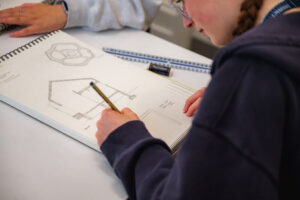
Penn State’s Architecture & Landscape Architecture Summer Camp introduces you to the way architects and landscape architects think about space, design, and the built environment. Working in professional design studios, you’ll develop projects that require sketching, modelling, visual communication, and spatial problem-solving. Faculty members guide students through the design process, from early ideas to finished concepts, while explaining how architects approach real projects.
Studio assignments encourage experimentation and revision, making the experience feel much closer to university design education than a traditional summer camp. You’ll also learn how buildings, public spaces, and landscapes interact with the people who use them. The programme provides an early look at what studying architecture is actually like.
Why it stands out: You work in university design studios and experience the same project-based approach used in architecture schools.
9. Manhattan University Youth Entrepreneurship Camp
Location: Manhattan University
Cost: $1,400 tuition + $50 non-refundable registration fee
Program Dates: 6th July – 23rd July
Deadline: Not specified
Eligibility: Students aged 15-17; open to international students
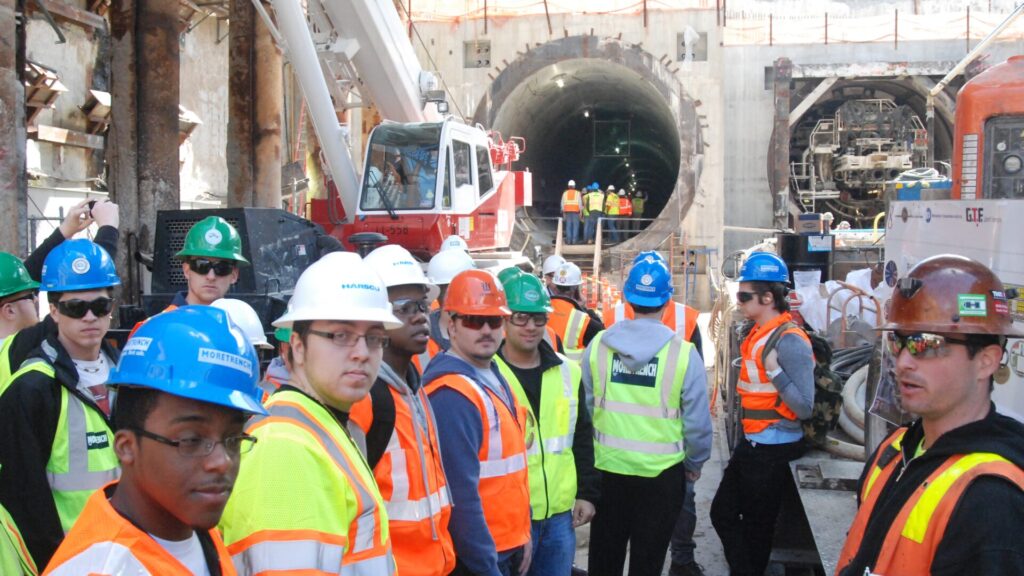
Manhattan University’s Youth Entrepreneurship Camp takes you through the process of turning an idea into a business concept over three weeks. You’ll start by identifying problems worth solving, then move into market research, competitor analysis, branding, pricing, and product development. Team projects form the center of the programme, giving you the chance to test ideas, gather feedback, and improve your plans as you go.
Guest speakers and entrepreneurs share insights about building businesses and navigating challenges. You’ll also spend time learning about sales strategies, financial planning, leadership, and investor pitching. The programme ends with teams presenting their ventures to an audience, much like a startup pitch event.
Why it stands out: You spend the entire programme building a venture step by step rather than learning entrepreneurship only through lectures.
10. Rice University Tapia STEM Camps
Location: Rice University
Cost: Early Bird: $2,200 | Regular: $2,500
Program Dates: Session 1: 5th July – 10th July | Session 2: 12th July – 17th July | Session 3: 19th July – 24th July
Deadline: Early Bird before 1st March | Regular before 30th May
Eligibility: Rising 8th – 12th graders; international students eligibility not mentioned
Rice University’s Tapia STEM Camps use hands-on projects to show how science, mathematics, and engineering are applied to real problems. Over six days, you’ll work on activities involving artificial intelligence, algorithms, sustainability, energy systems, and engineering design. One project might involve building a heatsink, while another could focus on modelling wind turbines or examining how algorithms make decisions.
Teamwork is a major part of the experience, with students regularly presenting findings and explaining their work to others. Researchers, faculty members, and STEM professionals contribute to workshops and discussions throughout the week. The programme also includes visits and activities that expose students to STEM opportunities beyond the classroom.
Why it stands out: Technical projects and presentation skills receive equal attention, helping you learn how to communicate complex ideas clearly.
11. Tufts Entrepreneurship & Innovation Bootcamp
Location: Tufts University
Cost: Commuter: $4,225 | Residential: $5,750
Program Dates: July 5th – July 17th
Deadline: May 1st
Eligibility: Students entering grades 10-12 or high school graduates. The program is open globally, and international students are eligible
Tufts University’s Entrepreneurship & Innovation Bootcamp is built around the process of creating a solution to a real problem and figuring out whether it could succeed in the real world. You’ll work through market research, customer discovery, business models, sales strategies, and venture design while developing an idea with your team. Mentors from Tufts’ entrepreneurship community help students test assumptions, improve concepts, and think critically about their plans.
Workshops and collaborative activities are designed to mirror the early stages of startup development. As projects evolve, you’ll refine your pitch and learn how entrepreneurs communicate ideas to investors and stakeholders. Residential students also experience campus life while working closely with peers who share an interest in innovation.
Why it stands out: The programme focuses on building and refining a venture from the ground up rather than studying entrepreneurship as a theory.
12. English Immersion Program – Fay School
Location: Southborough, Massachusetts, USA
Cost: $4,950 (2-week session) | $9,400 (4-week program)
Program Dates: July 12th – August 7th (4-week program) | July 12th – July 24th (Session 1) | July 26th – August 7th (Session 2)
Deadline: Rolling basis
Eligibility: Students aged 10-15 with sufficient English proficiency for academic and conversational participation; international student eligibility not specified
Fay School’s English Immersion Program is designed for international students who want to strengthen their English through constant daily use rather than classroom instruction alone. You’ll spend part of each day developing reading, writing, speaking, and listening skills, then continue practicing English through sports, activities, group projects, and social interactions. Because students live together on campus, conversations continue well beyond scheduled lessons.
The programme creates opportunities to use English in academic, recreational, and everyday situations, helping language development feel more natural. Students also interact with participants from other summer programmes, adding an international dimension to the experience. The residential setting makes English part of nearly every aspect of daily life.
Why it stands out: English practice extends far beyond class time, making immersion a real part of the experience.
13. Classic Camp Program – UCLA UniCamp
Location: UCLA UniCamp, California, USA
Cost: $265 – $750 (Varies based on household income); free for DCFS Campers
Program Dates: Multiple sessions between June 21st and August 9th
Application Deadline: Registration opens February 24th
Eligibility: High school-aged campers (approximately ages 15-17); international student eligibility not specified
UCLA UniCamp’s UniCorps Program gives older campers more responsibility and independence than a traditional summer camp. You’ll take part in outdoor activities, service projects, leadership exercises, and community-building experiences while living in a cabin-based residential environment. Much of the programme focuses on teamwork, personal responsibility, and learning how to contribute to a larger community.
Days may include hiking, recreational activities, environmental projects, camp events, and collaborative challenges with other campers. Counsellors guide students through activities while encouraging them to take initiative and support younger campers when appropriate. The setting is outdoors and community-oriented, offering a different kind of learning experience from academic summer programmes.
Why it stands out: It combines leadership development and service learning with the atmosphere of a traditional outdoor summer camp.
14. Interlochen Arts Camp
Location: Interlochen, Michigan
Cost: $5,250 (2-week session) | $7,265 (3-week session) | $10,350 (6-week session) (financial aid available)
Program Dates: June 28th – August 9th (Multiple sessions available: Session 1: June 28th – July 18th | Session 2: July 19th – August 9th)
Deadline: Priority deadline January 15th, then rolling admissions until full
Eligibility: Creative students currently in grades 9-12; international student eligibility not specified
Interlochen Arts Camp is a legendary pre-collegiate program that has cultivated young creative talent for nearly a century. Located on a scenic lakeside campus in northern Michigan, this camp allows you to dive deep into a specialized artistic discipline under the guidance of professional artists and university faculty. You can choose from a wide range of tracks, including creative writing, film & new media, music, theatre, and visual arts.
Your days will be filled with hands-on studio work, masterclasses, and collaborative projects, balanced with classic camp activities like canoeing, swimming, and hiking. Living in rustic cabins with peers from all over the world, you’ll wear the traditional blue-on-blue uniform and become part of an inspiring, supportive community.
Why it stands out: It offers professional-grade artistic training on a breathtaking lakeside campus, perfectly combining intensive studio work with traditional outdoor camp recreation.
15. NOLS Wyoming Backpacking Adventure
Location: Lander, Wyoming, USA
Cost: $6,590 – $6,790 + $400 equipment deposit (need-based scholarships available)
Program Dates: Session 1: June 11th – July 1st | Session 2: July 13th – August 2nd | Session 3: July 20th – August 9th | Session 4: July 23rd – August 12th
Deadline: Rolling admissions
Eligibility: Students aged 14-15; open to international students
NOLS’s Wyoming Backpacking Adventure is one of the most adventurous summer camps for 15 year olds, dropping you into three weeks of hiking and camping in the Rocky Mountains with a group of peers who are also 14 or 15. You’ll cover real backcountry terrain, carrying your own gear, cooking over a camp stove, navigating trails, and setting up camp each night.
Alongside the outdoor skills, leadership is built into everything: you’ll plan group decisions, practice risk assessment, communicate under pressure, and support teammates through challenging stretches. Small instructor-to-student ratios mean you get direct guidance rather than getting lost in a crowd. The programme also qualifies for one high school credit (0.5 Leadership, 0.5 Physical Education) through Blueprint Education, an accredited distance learning school.
Why it stands out: It’s a genuine backcountry expedition, not a themed day camp, as you develop outdoor skills and leadership by actually living them for three weeks.
Let Summer Learning Shape Your Academic Direction
At 15, summer learning can help you recognise which subjects, environments, and challenges motivate you to grow with more confidence.
The summer camps for 15 year olds in this article cover academics, engineering, business, arts, language, leadership, and outdoor adventure.
By trying something new, you can build independence, develop practical skills, and make clearer choices about future courses, degrees, and goals.
Use our University Preparation blogs to turn these experiences into stronger subject planning, application preparation, interview confidence, and long-term academic readiness.