
 Русский (RU)
 Українська (UK)
 Türkçe (TR)
 Italiano (IT)
 Français (FR)
 Português (PT)
 中文 (中国) (ZH)
 Español (ES)
 日本語 (JA)
 ไทย (TH)
 Deutsch (DE)
 Ελληνικά (EL)
 Polski (PL)
 Bahasa Indonesia (ID)
 Nederlands (NL)
 العربية (AR)
 한국어 (KO)
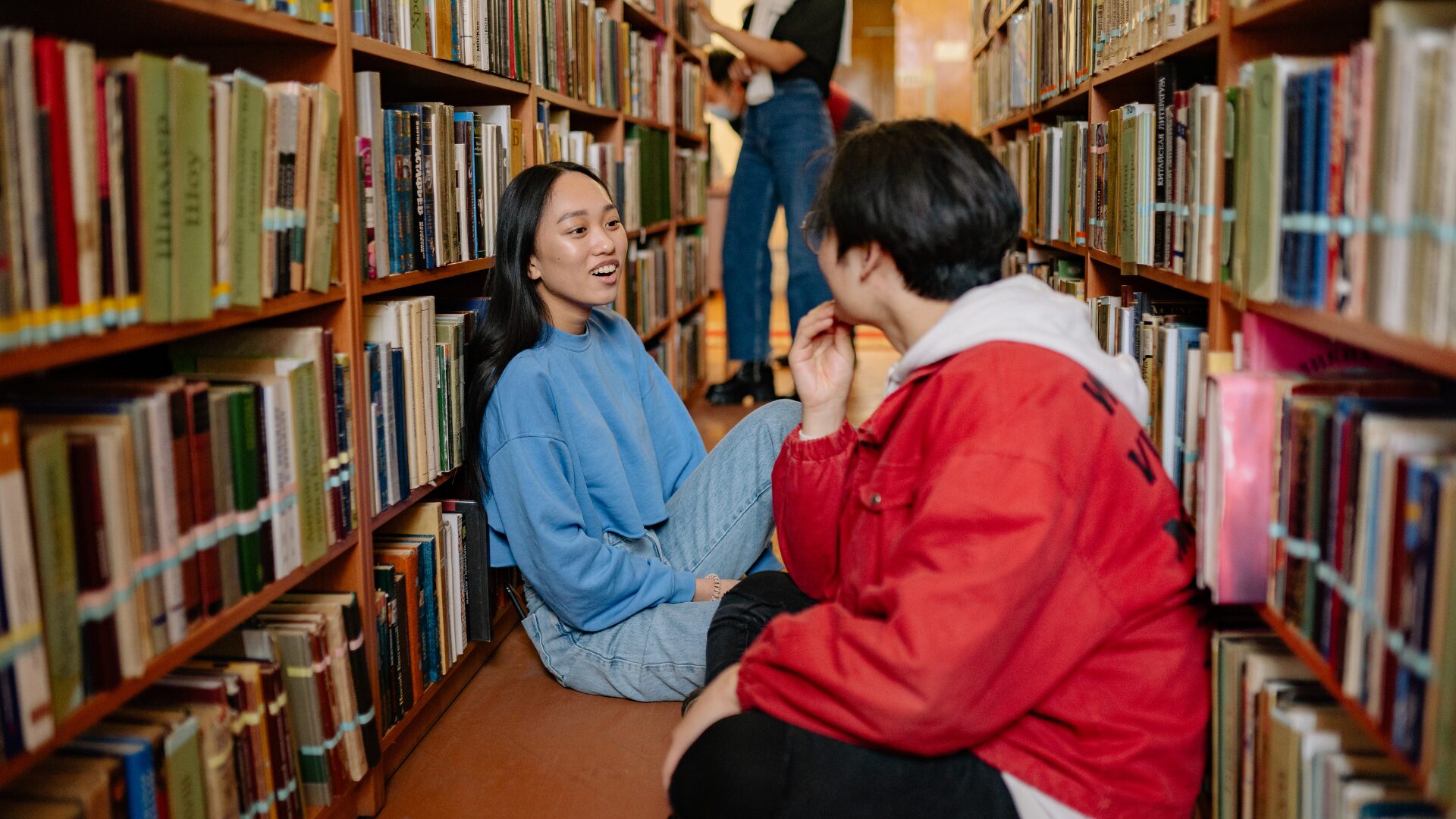
Summer programs for 10th graders offer a valuable opportunity to explore new academic interests, develop practical skills, and gain experiences that may not be available during the school year. Whether you’re interested in STEM, humanities, business, medicine, journalism, or the arts, participating in one can help you deepen your knowledge while experiencing college-level learning and working alongside like-minded peers.
Many of these programs combine hands-on projects, faculty mentorship, workshops, research opportunities, and campus experiences. Some also offer the chance to earn college credit, build a competitive portfolio, and gain exposure to potential career paths. Outside of academics, these programs help you strengthen valuable skills such as critical thinking, communication, collaboration, and problem-solving.
What kinds of summer programs are available for 10th graders?
With so many options available, choosing the right program can feel overwhelming. Some programs focus on a specific subject, such as engineering, artificial intelligence, mathematics, economics, or journalism, while others offer broader interdisciplinary learning across multiple fields. The best choice depends on your academic interests, career goals, and the type of learning experience you’re looking for.
Universities, research institutions, and nonprofit organizations around the world offer summer programs that allow 10th graders to explore college-level academics, participate in research and creative projects, and connect with faculty, professionals, and motivated students from diverse backgrounds. These experiences can help you build confidence, discover new interests, and prepare for future college applications.
To help you get started, we’ve curated a list of 15 summer programs for 10th graders. I selected these programs based on the quality of their learning opportunities, hands-on experiences, mentorship, academic enrichment, and the overall value they offer to high school students.
For adjacent opportunities, consider the online research program.
Key takeaways
- The University of Washington’s Engineering Academy is completely free but restricted to students attending a high school in the greater Seattle area.
- Immerse Education’s Academic Insights Programme spans eight locations, including Boston, Cambridge, and Singapore, with small classes of seven to 10 students open to students worldwide aged 13 to 18.
- Brown University’s Summer@Brown costs between $3,096 and $10,858 depending on course length and format, drawing from over 230 non-credit courses within Brown’s Open Curriculum.
- Cooper Union’s Summer STEM program costs $3,150 for three weeks or $5,150 for six weeks and is open to students worldwide, unlike many similarly structured US engineering programs.
- UC Berkeley’s AI for Real-Life Problem Solving camp costs $1,550 with an optional residential add-on, developed with funding and expertise from the Berkeley AI Research Lab.
- Yale Young Global Scholars costs $7,000 and restricts eligibility to first-time participants between 16 and 18 years old by the first day of Session III.
- Penn’s Pre-College Residential Program costs between $15,192 and $23,604 and requires students to be graded by the same standards as matriculated Penn undergraduates.
- Program costs for 10th grade summer programs range from free options like the University of Washington’s Engineering Academy to over $23,604 for Penn’s residential Pre-College Program.
15 Summer Programs for 10th Graders
1. University of Washington – Engineering Academy
Location: University of Washington, WA
Cost: None
Dates: July 20-24
Application Deadline: Typically, late April
Eligibility: Students in grades 10th – 11th attending high school in the greater Seattle area; open to international students provided they attend a high school in the greater Seattle area
The University of Washington Engineering Academy offers a one-week introductory summer learning experience to 10th graders. You’ll gain valuable exposure to the field of engineering while engaging in hands-on design challenges. You’ll explore the UW campus, interact with engineering faculty and students, and gain knowledge about the community impact of different engineering disciplines.
The program is offered free of cost and allows you to develop fundamental engineering skills, experience college-level learning, and explore multiple future pathways in the field. If you’re a high school student with limited access to engineering coursework and resources, this program could be a good option to consider.
Why it stands out: You will gain hands-on engineering experience through design challenges while exploring different engineering fields and learning from university faculty and students.
2. Immerse Education’s Pre-University Summer School

Location: Cambridge, London, Oxford, Singapore, Sydney, Tokyo, and Toronto
Cost: Varies; summer school scholarship available through our bursary programme
Dates: 2 weeks during the summer
Application Deadline: Multiple summer cohorts; rolling admissions
Eligibility: Students across the globe aged 13-18 currently enrolled in middle or high school; open to international students
The Academic Insights Program lets high school students experience university life firsthand. You will live on campus and study in small groups of 7-10, and learn from tutors from eminent top universities like Oxford and Cambridge. You can explore a wide range of subjects, spanning over 20 options, including Architecture, AI, Business Management, Computer Science, Economics, Medicine, Philosophy, and more.
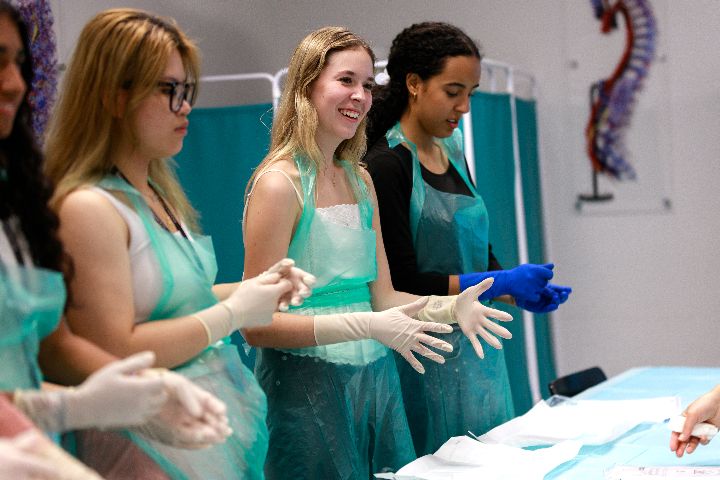
The courses are experiential and focus on hands-on learning. You may find yourself conducting dissections in medicine, designing a robotic arm in engineering, participating in a moot court for law, or building creative writing portfolios and business case studies. By the end of the program, you’ll complete a personal project, receive written feedback, and receive a certificate of completion. You can find more details about the application here.
Why it stands out: You’ll get an early start at university life and academics because the program includes an independent project, discussion-based classes, and living at a college campus.
3. Brown University – Summer@Brown
Location: Brown University campus, Providence, Rhode Island (with online and hybrid options)
Cost/Stipend: $3,096 – $10,858 depending on course length and format; need-based Sibley Scholarships and other scholarship opportunities available
Dates: June 15th – July 25th
Application Deadline: May 15th
Eligibility: Students completing grades 9 to 12; ages 14 to 18 by June 14th; strong English proficiency, with TOEFL or Duolingo required for non-native speakers; open to international students
As a 10th grader at Summer@Brown, you choose from over 230 non-credit courses spanning Brown’s Open Curriculum, sampling college-level academics in humanities, STEM, social sciences, arts, business, or engineering without the pressure of formal grades and credit.
You attend rigorous classes taught by engaged instructors, complete college-style readings, discussions, and projects, and learn to manage your own academic schedule. Outside of class, you participate in workshops, activities, and events scheduled from morning to night, building independence in a residential campus setting if you live in the dorms. You develop academic writing, critical thinking, and time-management skills that prepare you for college.
Why it stands out: It gives 10th graders access to one of the broadest Ivy League pre-college course catalogs combined with an immersive residential college experience and flexible 1- to 5-week session formats.
4. Florida Gulf Coast University – STEM Academy
Location: Florida Gulf Coast University (overnight camp)
Cost: None
Dates: June 14-26
Application Deadline: March 13th
Eligibility: Current high school freshman, sophomore, or junior attending schools in Lee, Collier, Hendry, Glades, and Charlotte Counties; minimum GPA: 3.0/4.0; completed Algebra 1
FGCU STEM Academy is an immersive summer program for 10th graders. You’ll explore your interest in science, technology, engineering, and math through hands-on activities. You’ll develop real-world knowledge and skills in STEM while gaining exposure to different career pathways in the field.
The program includes interactive challenges and lessons led by faculty, while also engaging in professional development sessions. Along with gaining academic knowledge in STEM, you’ll also have the chance to go on off-campus field trips, prepare for the SAT through guidance from trained faculty, and interact with professionals.
Why it stands out: You will develop real-world STEM skills through project-based learning, professional development sessions, and interactions with faculty and industry professionals.
5. Asian American Journalists Association – JCamp
Location: Varies by year; Minneapolis, MN, was the last location
Cost: Free
Dates: June 20-26
Application Deadline: January 11th
Eligibility: Current high school sophomores and juniors; freshmen and current seniors are not eligible; international students are welcome
JCamp offers a six-day multicultural training experience to high school students. You’ll have the opportunity to gain knowledge from top media executives and experienced journalists while engaging in hands-on learning. You’ll attend interactive workshops, go on field trips, and connect with peers from diverse backgrounds and cultures.
The program addresses the lack of diversity in journalism, focusing on areas such as religion, geography, race, sexual orientation, socioeconomics, and identity. The program will help you develop valuable skills in journalism and work on multiplatform news production packages for JCamp Live, the official news site for the program.
Why it stands out: You will develop journalism skills through hands-on reporting, workshops, and multimedia news production while exploring leadership, cross-cultural communication, and the role of diversity in media.
6. Cooper Union Summer STEM
Location: Cooper Union School of Engineering, New York
Cost: $3,150 for 3-week courses; $5,150 for 6-week courses; financial aid is available
Dates: 3-week Session I: July 6-23; 3-week Session II: July 27th – August 13th; 6-week: July 6th – August 13th
Application Deadline: March 27th
Eligibility: Students who have completed their 9th, 10th, or 11th grade year; current 8th graders are not eligible; open to students worldwide
In this program, you will dive into intensive engineering courses spanning civil, chemical, electrical, mechanical, and biomedical engineering, alongside computer science and robotics. During the session, you will design digital circuits, program microcontrollers like Arduino, operate 3D printers, and pitch your final prototype in a competitive showcase.
A unique feature of this program is that you will work directly alongside Cooper Union faculty and current undergraduates to solve real-world urban and environmental challenges. By tackling these rigorous projects, you will rapidly develop essential skills in 3D modeling, coding, physical prototyping, and professional communication. Ultimately, this hands-on experience provides a genuine preview of college-level design while empowering you to build technology for social good.
Why it stands out: You will explore computer science and engineering through college-level courses while developing technical skills in areas such as programming, engineering design, digital fabrication, and scientific research.
7. Economics for Leaders (EFL)
Location: Various college campuses across the United States
Cost: $2,800 (Residential); $900 (Virtual); scholarships are available
Dates: Vary. More information here
Application Deadline: April 15th
Eligibility: Current high school sophomores and juniors around the world
Economics for Leaders (EFL) introduces high school students to economic concepts, leadership theory, and reasoning. You’ll explore a range of economics-focused topics, including labour markets, opportunity cost, money and inflation, markets in action, economic growth and scarcity, property rights, and many more. You’ll engage in simulation-based learning and understand the real-world application of economic theories.
The program allows you to develop critical thinking skills while engaging in thought discussions and learning about different topics in leadership, including the personal leadership domain, contextual leadership domain, and relational leadership domain.
Why it stands out: You will explore economics and leadership through simulations and discussions while developing critical thinking and decision-making skills in topics such as markets, inflation, economic growth, and leadership.
8. Columbia Engineering – Summer High School Academic Program for Engineers (SHAPE)
Location: Columbia University, New York, New York
Cost: Commuter: $6,241 per session; Residential: $11,492 per session; need-based scholarships are available
Dates: Session 1: July 6-24; Session 2: July 27th – August 14th
Application Deadline: March 2nd
Eligibility: All current high school students are eligible for the commuter option; the residential option requires students to be 16 or older; open to international students (limited spots)
Columbia Engineering SHAPE offers a 3-week learning experience to high school students. You’ll be taught through college-level engineering courses and engage in project-based learning. Some of the courses covered by the program include robotics and autonomous driving, introduction to computer programming, data science, AI builders, introduction to data structures and algorithms, healthcare engineering, and more.
The program includes lab spaces, workshops, and offers college-preparation guidance. Experienced faculty members will teach you, and you will have the chance to choose electives based on your interests.
Why it stands out: You will experience college-level engineering through hands-on projects and laboratory learning while exploring emerging technologies and preparing for future engineering studies.
9. Stanford University Mathematics Camp (SUMaC)
Location: Online and residential; Stanford University, California
Cost: Online: $3,750; Residential: $8,950; need-based financial aid is available
Dates: Session One Online: June 15th – July 3rd; Session One Residential: June 21st – July 17th; Session Two Online: July 6-24
Application Deadline: February 2nd
Eligibility: Students in grades 10-11 at the time of application who are at least 15 years old during the program; have experience writing and reading mathematical proofs; strong mastery of high school geometry and algebra; open to international students
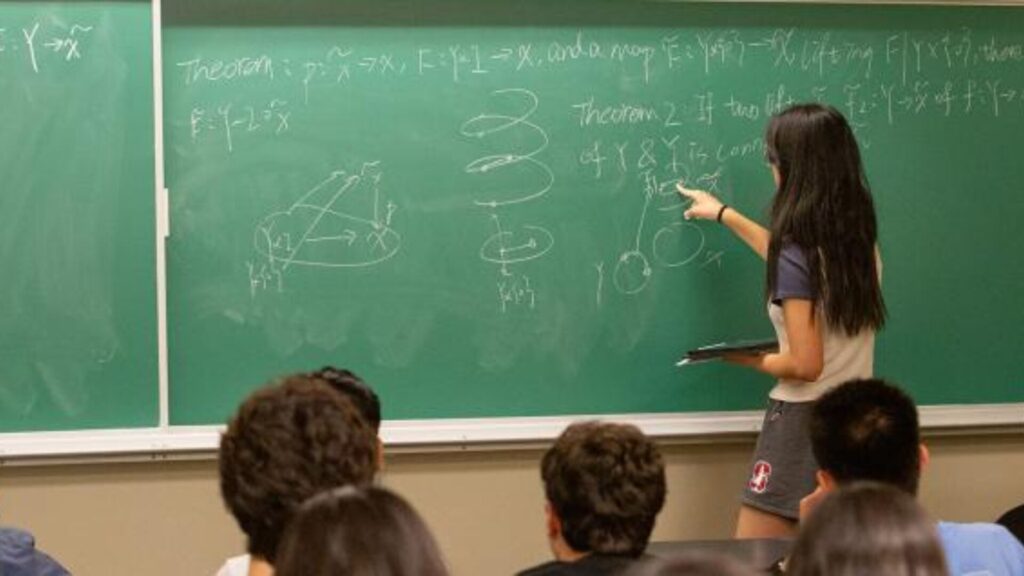
Stanford University Mathematics Camp (SUMaC) offers an intensive learning experience to 10th- and 11th-grade students. You’ll explore advanced mathematics through attending lectures, engaging in group problem-solving sessions, and participating in guided research.
The program offers academic enrichment and allows you to gain knowledge about the current research in mathematics. You’ll cover a range of topics, including algebraic topology, abstract algebra, number theory, and more. You’ll work on assignments along with exploring the multidisciplinary applications and historical development of mathematics.
Why it stands out: You will engage in advanced mathematical research and problem-solving while learning from expert instructors and exploring university-level topics in mathematics.
10. University of California, Berkeley The Lawrence Hall of Science – Artificial Intelligence for Real-Life Problem Solving
Location: UC Berkeley Campus, Berkeley, California
Cost: $1,550 + an optional residential add-on costs an additional $1,350; financial aid at 15%, 45%, and 90% off is available to California-based families;
Dates: June 22-26, July 6-10, July 20-24, and July 27-31
Application Deadline: Rolling registration until sessions fill
Eligibility: Students entering grades 10, 11, or 12; open to international students
In this program, you will spend an intensive week on the UC Berkeley campus exploring how artificial intelligence works and where it is headed, in a camp developed with funding and expertise from the Berkeley AI Research (BAIR) Lab. Your days combine hands-on Python coding workshops, designing machine-learning models, and studying the mathematical concepts underpinning AI.
You will also debate AI ethics, tour a robotics lab focused on human-compatible AI, and hear from graduate students working on cutting-edge applications. Laptops are provided if needed, and daily Pathways sessions connect you with college students and STEM professionals. You will earn a UC Berkeley certificate of completion and an invitation to the program’s alumni LinkedIn network.
Why it stands out: It gives high schoolers a rare, direct link to a leading university AI research community, since the camp is developed and supported through funding and expertise from the Berkeley AI Research Lab and taught on the UC Berkeley campus with grad-student speakers and a robotics lab tour.
11. Yale Young Global Scholars (YYGS)
Location: Yale University, New Haven, Connecticut
Cost: $7,000; need-based aid is available
Dates: Session I: June 21st – July 3rd; Session II: July 5-17; Session III: July 19-31
Application Deadline: January 7th
Eligibility: Current high school sophomores and juniors around the globe; must be between 16 and 18 years old by the first day of Session III; graduating in +1/+2 years; first-time YYGS participants only
Yale Young Global Scholars (YYGS) offers an academic enrichment opportunity to high school students. You’ll participate in a two-week session along with peers from all around the world. Some of the disciplines and concepts explored through the program include the politics of law and economics, innovations in science and technology, and solving global challenges.
You’ll engage in a residential learning experience while also having the chance to interact with the global community at Yale University. By engaging in this globally diverse setting, you will rapidly develop critical thinking, cross-cultural communication, and analytical problem-solving skills.
Why it stands out: You will explore global issues through interdisciplinary learning while engaging with topics in economics, law, science, technology, and public policy alongside peers from around the world.
12. University of Maryland – WIE Rise Summer Research Program
Location: Virtual
Cost: $25 per student
Dates: July 27-31
Application Deadline: April 25th
Eligibility: Rising 9th – 12th grade students; open to international students
WIE Rise Summer Research Program at the University of Maryland introduces high school students to engineering research. You’ll have the opportunity to participate in asynchronous experiments, explore different majors in engineering, and understand the interdisciplinary aspects of the field and scientific research.
Some of the disciplines explored through the program include bioengineering, fire protection, mechanical engineering, materials science, aerospace, chemical and civil engineering, and environmental, electrical, and computer engineering. You’ll go on virtual laboratory tours and also engage in practical demonstrations.
Why it stands out: You will explore global issues through interdisciplinary learning while engaging with topics in economics, law, science, technology, and public policy alongside peers from around the world.
13. University of Notre Dame – Summer Scholars
Location: University of Notre Dame, Notre Dame, Indiana
Cost: $5,200 + $75 application fee and a $300 enrollment fee; limited need-based partial to full-tuition scholarships are available
Dates: Session I: June 6-20; Session II: June 27th – July 11th
Application Deadline: February 18th
Eligibility: Current sophomores and juniors worldwide; must be at least 16 years old by August 1st
Notre Dame Summer Scholars offers a two-week intensive learning opportunity to high school students. You’ll be taught by experienced faculty at Notre Dame and gain exposure to college-level courses. The classes are small and allow you to work in collaboration.
You’ll have the opportunity to explore a range of areas and topics through program sessions, including entrepreneurial immersion, data visualization and storytelling, film production, law, life sciences, and more. The program allows you to develop Intellectual curiosity while learning in an engaging environment.
Why it stands out: You will explore a college-level subject of your choice through small, collaborative classes while developing academic skills and learning from experienced Notre Dame faculty.
14. University of Pennsylvania – Pre-College Residential Program

Location: University of Pennsylvania, Philadelphia, Pennsylvania
Cost: $15,192 – $23,604 depending on course units + a $100 application fee
Dates: June 30th – August 8th
Application Deadline: May 1st
Eligibility: Current 10th and 11th grade students; minimum 3.5 GPA who are at least 13 years old; international students welcome with a valid F-1 student visa
As a high school student in the University of Pennsylvania Pre-College Residential Program, you will experience the rigors of an authentic Ivy League education. You will explore diverse disciplines spanning the humanities, social sciences, and STEM, including specific subjects like biology, physics, economics, and philosophy.
During your six weeks on campus, you will live in undergraduate residence halls, attend daily lectures alongside current college students, complete substantial research papers, and participate in weekend excursions around Philadelphia. A unique feature of this program is that you are graded by the same academic standards as matriculated Penn undergraduates to earn official, transferable college credit. By managing this intensive coursework and residential independence, you will build essential time management, advanced research, and critical thinking skills.
Why it stands out: You will experience college-level learning through credit-bearing courses while studying alongside Penn undergraduates, completing academic assignments, and exploring a subject that matches your interests.
15. University of Michigan – Michigan Math and Science Scholars (MMSS)
Location: University of Michigan, Ann Arbor, Michigan
Cost: $1,400; $1,100 optional residential stay fee, and a $100 non-refundable application fee; limited need-based financial aid is available
Dates: Session 1: June 21st – July 3rd | Session 2: July 5-17 | Session 3: July 19-31
Application Deadline: Rolling until full, usually April
Eligibility: Rising sophomores, juniors, and seniors; must have completed at least one year of high school and not yet graduated; international students are welcome to apply
Michigan Math and Science Scholars (MMSS) introduces high school students to the latest research and developments in science. The program offers multiple sessions and allows you to explore your interest in mathematics and science. You’ll be taught by the experienced faculty at the University of Michigan and gain exposure to courses in a range of disciplines including biology, chemistry, mathematics, psychology, astronomy, environmental sciences, anthropology, and more.
You’ll gain access to laboratories and engage in classes while learning from graduate students, faculty, and advanced undergraduates. Along with gaining academic knowledge, you’ll also experience college life through on-campus activities, events, and weekend trips.
Why it stands out: You will explore college-level mathematics and science through faculty-led courses, laboratory experiences, and exposure to current research while studying a subject that matches your interests.
Frequently asked questions: Summer programs for 10th graders
Are summer programs for 10th graders open to international students?
Eligibility varies. The University of Washington’s Engineering Academy and Florida Gulf Coast University’s STEM Academy both restrict eligibility to specific regional residents. However, Cooper Union’s Summer STEM, Yale Young Global Scholars, and Penn’s Pre-College Residential Program all explicitly welcome international students. Immerse Education’s Academic Insights Programme is also open globally to students aged 13 to 18.
How much do summer programs for 10th graders cost?
Costs range from completely free to over $23,000. Free options include the University of Washington’s Engineering Academy and Florida Gulf Coast University’s STEM Academy. Mid-range programs like UC Berkeley’s AI camp cost $1,550, while Cooper Union’s Summer STEM costs $3,150 to $5,150. Premium options include Yale Young Global Scholars at $7,000 and Penn’s residential Pre-College Program at up to $23,604. Financial aid is available for most tuition-based programs.
What is the difference between a subject-specific camp and a broad pre-college program for 10th graders?
Subject-specific camps, like UC Berkeley’s AI for Real-Life Problem Solving or Cooper Union’s Summer STEM, focus narrowly on one field through hands-on labs and projects over one to several weeks. Broad pre-college programs, like Summer@Brown or Penn’s Pre-College Residential Program, instead let you choose from a wide catalogue of subjects spanning humanities, STEM, and social sciences. If you already know your area of interest, a subject-specific camp offers deeper engagement; if you’re still exploring, a broad program provides more flexibility.
Do summer programs for 10th graders award college credit?
Some do, though it varies. Penn’s Pre-College Residential Program and Columbia Engineering’s SHAPE program can lead to transferable credit depending on the specific course. Others, like Summer@Brown and Yale Young Global Scholars, are explicitly grade-free and non-credit, focusing on exploration rather than formal academic credit. If credit matters to you, confirm this directly with each program, since even similarly structured pre-college offerings differ on this point.
How selective are summer programs for 10th graders?
Selectivity varies considerably. Yale Young Global Scholars and Penn’s Pre-College Residential Program are both fairly selective, with strict age cutoffs and GPA minimums. Others, like the University of Washington’s Engineering Academy or JCamp, use more open or need-based enrollment criteria. Regardless of selectivity, meeting specific eligibility details, like being a first-time YYGS participant, matters as much as overall academic strength.
Is Immerse Education a good option for a 10th grader exploring academic interests?
Immerse Education’s Academic Insights Programme is well-suited to this age group, spanning eight global locations, including Boston, Cambridge, and Singapore, with classes of seven to 10 students. You’ll work on hands-on projects like designing a robotic arm in engineering or participating in a moot court for law, complete a personal project, and receive written feedback along with a certificate of completion. It offers a flexible, globally accessible alternative to some of the more regionally restricted or expensive programs listed here.
What Comes Next After Your 10th Grade Summer
Choosing among these summer programs for 10th graders gives you a genuine introduction to college-level coursework and hands-on academic exploration.
Once the program ends, you can turn that experience into a clearer sense of your subject interests and future direction.
The skills, confidence, and academic habits you built become a strong foundation for your applications in the years ahead.
Keep building on what you started this summer by exploring our University Preparation blogs for guidance on your next steps.