
 Русский (RU)
 Українська (UK)
 Türkçe (TR)
 Italiano (IT)
 Français (FR)
 Português (PT)
 中文 (中国) (ZH)
 Español (ES)
 日本語 (JA)
 ไทย (TH)
 Deutsch (DE)
 Ελληνικά (EL)
 Polski (PL)
 Bahasa Indonesia (ID)
 Nederlands (NL)
 العربية (AR)
 한국어 (KO)

If there’s one summer that can influence the rest of your high school experience, it’s the one after 11th grade. By this point, you’re likely thinking seriously about college, but you still have enough time to explore subjects beyond the classroom. Summer programs for 11th graders offer the space to go deeper into an area that interests you, whether through research, hands-on learning, or college-level coursework.
What if your summer included working in a university lab, developing a startup with an international team, attending lectures and seminars by university faculty, writing your first research paper, participating in clinical workshops, or tackling an engineering design challenge? Many of these programs offer exactly these kinds of experiences, giving you a chance to explore subjects beyond the high school classroom while learning alongside students with similar academic interests.
Another advantage is that these experiences often influence what comes next. A summer program can lead to an independent research project, a stronger college essay, a new extracurricular commitment, or simply a much clearer understanding of what you’d like to study after high school. By the time senior year begins, you’ll have far more direction than you did at the start of the summer.
How do you choose the right summer program for 11th graders?
At this stage, it’s worth choosing a program that reflects the subjects you’re genuinely interested in exploring rather than simply applying to the most recognizable name. Look for opportunities that let you go beyond lectures through research, workshops, discussions, projects, or mentorship. Those experiences tend to leave a much stronger impression and give you a better understanding of university academics.
It’s also important to think about what you’ll take away from the program. Some students want to build research experience, while others are looking to strengthen a portfolio, explore a possible college major, or experience life on a university campus. Choosing a program that matches your goals will make the experience far more meaningful than selecting one based on reputation alone.
To help you find the right fit, we’ve put together a list of 15 summer programs for 11th graders!
Key takeaways
- The Research Science Institute at MIT has an acceptance rate of just 2 to 3%, admitting 80 to 100 students annually for a fully funded summer combining coursework and mentored research.
- Immerse Education’s Career Insights Programme spans seven global locations, including Cambridge, London, and Tokyo, with an average of seven participants per class for students aged 15 to 18.
- MITES Summer is fully funded and highly selective, admitting around 80 students, but restricted to US citizens or permanent residents currently in 11th grade.
- Stanford University Mathematics Camp costs $3,750 online or $8,950 for the residential option, with an estimated 5 to 8% acceptance rate across both formats.
- Stanford Medical Youth Science Program is tuition-free and specifically designed for students from low-income and first-generation backgrounds, though it’s limited to Northern California residents.
- The Princeton Summer Journalism Program is completely free and concludes with published work in the annual Princeton Summer Journal, though it excludes international students.
- Interlochen Arts Camp draws more than 3,000 students annually across multiple creative disciplines, with tuition ranging from approximately $2,050 to $10,350 depending on session length.
- Program costs for 11th grader programs range from fully funded options like RSI and MITES Summer to over $8,950 for Stanford’s residential Mathematics Camp.
15 Summer Programs for 11th Graders
1. Research Science Institute (RSI) at MIT
Location: Cambridge, Massachusetts (MIT campus)
Cost: Free to attend; tuition, housing, meals, and program materials are covered
Acceptance rate/cohort size: Approximately 2-3% acceptance rate; around 80-100 students selected annually
Program Dates: June 28th – August 8th
Application Deadline: Applications typically open in October and close in December; the final deadline is usually in mid-December.
Eligibility: Open to high school juniors (11th-grade students) who will be at least 16 years of age by July 1st of the program year, with one year of secondary school remaining before graduation. International students are eligible through country-specific selection processes
The Research Science Institute gives you a chance to experience how research actually happens, from the first research question to the final presentation. The program begins with a week of advanced lectures in subjects like biology, chemistry, mathematics, physics, and engineering before you move into full-time research with a mentor.
You’ll spend your days reading scientific papers, refining research questions, collecting and analyzing data, and learning how researchers solve problems when experiments don’t go as planned. Along the way, you’ll receive feedback from scientists, graduate students, and faculty who help shape your project. By the end of the program, you’ll write a research paper and present your findings in a conference-style symposium.
Why it stands out: Hosted by MIT and the Center for Excellence in Education, RSI is one of the few programs that combine university-level coursework with independent mentored research in leading research labs.
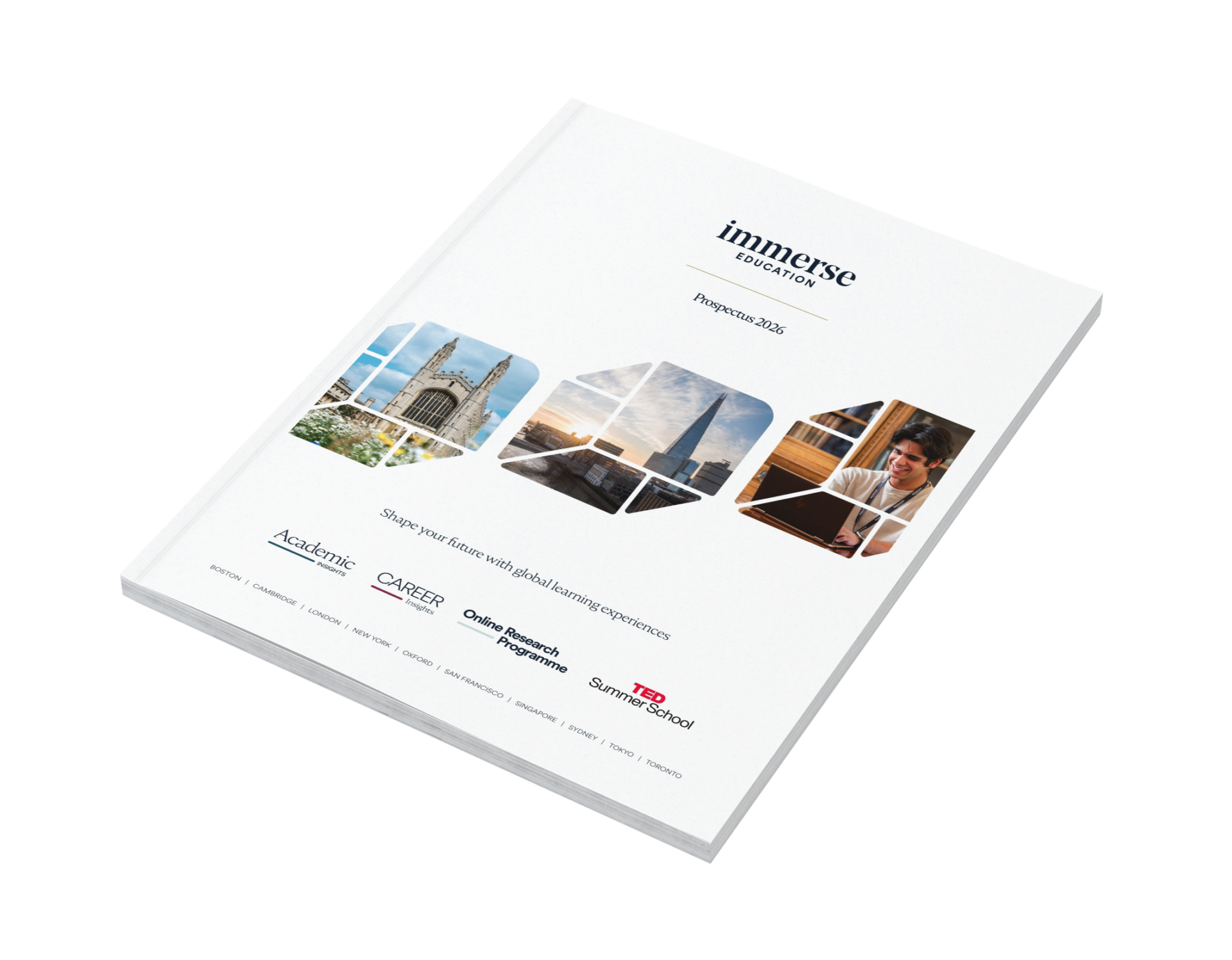
2. Immerse Education’s Pre-University Summer School

Location: Cambridge, London, Oxford, Singapore, Sydney, Tokyo, and Toronto
Cost: Varies; summer school scholarship available through our bursary programme
Application Deadline: Multiple summer cohorts; rolling admissions
Program Dates: 2 weeks during the summer
Eligibility: Students across the globe aged 13-18 currently enrolled in middle or high school; open to international students
The Academic Insights Program lets high school students experience university life firsthand. You will live on campus and study in small groups of 7-10, and learn from tutors from eminent top universities like Oxford and Cambridge. You can explore a wide range of subjects, spanning over 20 options, including Architecture, AI, Business Management, Computer Science, Economics, Medicine, Philosophy, and more.
The courses are experiential and focus on hands-on learning. You may find yourself conducting dissections in medicine, designing a robotic arm in engineering, participating in a moot court for law, or building creative writing portfolios and business case studies. By the end of the program, you’ll complete a personal project, receive written feedback, and receive a certificate of completion. You can find more details about the application here.
Why it stands out: You’ll get an early start at university life and academics because the program includes an independent project, discussion-based classes, and living at a college campus.
3. MITES Summer
Location: Cambridge, Massachusetts (Residential, on-campus)
Cost: Free; all program-related costs, including housing and meals, are covered. Students are responsible for transportation to and from MIT
Acceptance Rate/Cohort Size: Highly selective; cohort size typically around 80 students
Program Dates: June 20th – July 31st
Application Deadline: Application opens in November; final application deadline is February 1st. Recommender materials are due by February 15th
Eligibility: Open to current 11th-grade students (rising seniors) who are U.S. citizens or permanent residents. Students may attend public, private, or homeschool programs. Applicants should demonstrate strong academic performance and a sustained interest in STEM subjects. International students are not eligible
For six weeks, MITES Summer lets you experience what studying STEM at MIT actually feels like. You’ll take college-level classes in mathematics, physics, life sciences, humanities, and a project-based elective while keeping up with assignments, presentations, and assessments similar to those used in undergraduate courses. Beyond the classroom, you’ll meet current MIT students, attend advising sessions, visit research labs, and learn how scientific ideas become research projects.
Faculty and instructors encourage you to ask questions, test ideas, and think beyond textbook answers. The pace is demanding, but it gives you a realistic picture of university-level STEM education. You’ll leave with stronger academic foundations and a much better understanding of what studying science and engineering at MIT involves.
Why it stands out: MITES is MIT’s flagship outreach program for high school students, combining rigorous academics with direct access to the university’s faculty, students, and research environment.
4. Stanford University Mathematics Camp (SUMaC)
Location: Stanford University (Stanford, California) and Online
Cost: $3,750 for the online program; $8,950 for the residential program (includes room and board). Need-based financial aid is available for both tracks
Acceptance rate/cohort size: Highly selective (estimated 5-8% acceptance rate); cohort size of approximately 64 students for the online program and approximately 40 students for the residential program
Program Dates: Online Session One runs June 15th – July 3rd; Online Session Two runs July 6-24; Residential Session runs June 21st – July 17th
Application Deadline: Application opens in the winter; final deadline is February 2nd
Eligibility: Open to students in grades 10-11 at the time of application who are at least 15 years old by the start of the program. International students are eligible to apply. Applicants should have a strong mastery of high school algebra and geometry, experience reading and writing mathematical proofs, and an exceptional interest in mathematics
If solving difficult math problems is something you genuinely enjoy, SUMaC takes you well beyond a typical high school curriculum. You’ll study subjects like abstract algebra, number theory, or algebraic topology through live classes, guided discussions, and challenging problem sets that emphasize proofs and mathematical reasoning. The focus isn’t on memorizing formulas but on understanding why mathematical ideas work.
You’ll also investigate open-ended problems, attend talks by mathematicians, and discuss different ways to approach the same question with classmates. Toward the end of the program, you’ll present your mathematical investigation to instructors and peers. It feels much closer to a university mathematics seminar than a traditional summer class.
Why it stands out: Stanford’s mathematics faculty designed SUMaC around proof-based learning, exposing high school students to branches of mathematics that are usually first encountered in college.
5. Stanford Medical Youth Science Program (SMYSP)
Location: Stanford University, California
Cost: Tuition-free; participating students receive an enrollment stipend to offset expenses
Acceptance rate/cohort size: Approximately 24 students per cohort
Program Dates: June 22nd – July 26th
Application Deadline: Application window opens in December; final deadline is March 23rd
Eligibility: Open to current high school juniors. The program is designed for students from low-income and first-generation backgrounds. The in-person Stanford program is limited to students residing in Northern California; international students are not eligible
Medicine is only one part of what you’ll explore in the Stanford Medical Youth Science Program. Over five weeks, you’ll study human biology, public health, healthcare systems, and health disparities through faculty lectures, workshops, and discussions with healthcare professionals.
Case studies help you examine how scientific evidence guides medical decisions, while group projects encourage you to investigate real public health issues and communicate your findings clearly. You’ll also receive mentorship from Stanford faculty, physicians, and college students who share advice on academic pathways and careers in healthcare. The program gives equal attention to science, medicine, and the communities those fields serve.
Why it stands out: SMYSP reflects Stanford Medicine’s focus on combining biomedical science with public health, giving students an early look at how research and healthcare intersect.
6. Rockefeller University Summer Science Research Program
Location: New York City, New York, USA (on-campus)
Cost: Free to attend; no application fee. Need-based stipends may be available for students experiencing financial hardship
Acceptance Rate/Cohort Size: Approximately 32 students selected each year
Program Dates: June 22nd – August 6th
Application Deadline: Applications open in October and close on January 2nd; recommendation letters are due by January 5th
Eligibility: Applicants must be current high school juniors or seniors and at least 16 years old by the start of the program. International students are eligible to apply, although the program does not provide housing, transportation beyond local support, or visa assistance
The Rockefeller University Summer Science Research Program places you inside an active biomedical research team for seven weeks, where you’ll work on an ongoing project alongside scientists and researchers. You’ll learn how experiments are planned, carry out laboratory techniques, analyze data, and keep track of your findings as the project develops.
Workshops and faculty talks introduce current questions in biology and biomedical science while helping you understand how research moves from an idea to published results. Throughout the program, mentors guide you through both the technical work and the reasoning behind it. As the summer comes to a close, you’ll turn your research into a scientific poster and present it during the program’s symposium.
Why it stands out: Rockefeller is one of the world’s leading biomedical research institutions, giving high school students the chance to work within the same research environment as professional scientists.
7. Economics for Leaders (EFL)
Location: Virtual
Cost: Program fee required; need-based scholarships available. No stipend
Acceptance rate/cohort size: Approximately 25-40 students per cohort; admission is competitive, with roughly two applicants for each available spot
Program Dates: Multiple sessions offered throughout June – July
Application Deadline: Applications open in the fall and are reviewed on a rolling basis; students are encouraged to apply early as spaces fill. Final deadlines vary by session
Eligibility: Open to current high school sophomores and juniors (rising 11th and 12th graders). International students may apply. No prior coursework in economics is required, though applicants should demonstrate leadership potential, maturity, and an interest in public policy, economics, or leadership
Economics isn’t just about graphs and markets, and Economics for Leaders is built around showing you why. Through live online classes, you’ll study ideas like incentives, trade-offs, public policy, and market behavior while using them to solve leadership challenges and real decision-making problems. Professors lead discussions, simulations, and case studies that encourage you to think through problems before jumping to conclusions.
You’ll spend much of the program working with classmates on exercises that connect economics to government, business, and everyday choices. By the end, you’ll have a stronger understanding of how economists think and how those ideas influence leadership in different settings.
Why it stands out: EFL is one of the few high school programs designed specifically to teach economics through leadership simulations, helping you apply economic thinking beyond the classroom.
8. Berkeley Business Academy for Youth (B-BAY)
Location: Virtual
Cost: Program fee required; need-based scholarships available
Acceptance rate/cohort size: Approximately 25-40 students per cohort; admission is competitive, with roughly two applicants for each available spot.
Program Dates: Multiple sessions offered throughout June – July
Application Deadline: Applications open in the fall and are reviewed on a rolling basis; students are encouraged to apply early as spaces fill. Final deadlines vary by session
Eligibility: Open to current high school sophomores and juniors (rising 11th and 12th graders). International students may apply
At Berkeley Business Academy for Youth (B-BAY), you’ll explore how businesses make decisions by working through the same kinds of questions discussed in business school classrooms. Faculty from UC Berkeley’s Haas School of Business introduce topics such as entrepreneurship, finance, marketing, leadership, and innovation through lectures, discussions, and case studies. You’ll examine how companies solve business problems, evaluate new ideas, and respond to changing markets.
Group activities and business simulations give you opportunities to test your thinking and explain your decisions. Throughout the program, you’ll also interact with Berkeley students and learn what studying business at the university level looks like.
Why it stands out: B-BAY is taught through Berkeley Haas, giving high school students early exposure to one of the world’s most respected undergraduate business schools.
9. Camp Business at Drexel University
Location: Philadelphia, Pennsylvania, USA
Cost: $950 (Commuter Session); $2,000 (Residential Sessions). Need-based scholarships are available for a limited number of accepted students
Acceptance rate/cohort size: Not publicly reported
Program Dates: July 20-24
Application Deadline: Applications typically open in the fall and remain available on a rolling basis; priority deadline is May 1st, and applications may close earlier if the program reaches capacity
Eligibility: Open to high school students entering their sophomore, junior, or senior year. International students may apply and must demonstrate English proficiency if English is not their primary language of instruction
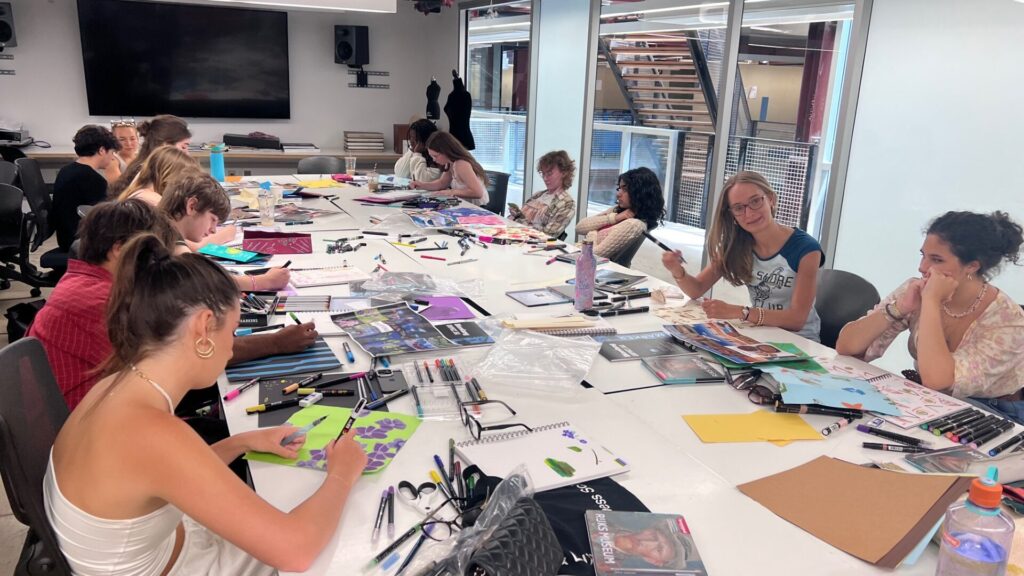
Camp Business at Drexel University introduces you to several areas of business instead of focusing on just one. Over the course of the program, you’ll study accounting, finance, marketing, management, and business strategy while learning how each field fits into the way companies operate. Faculty lead discussions, practical exercises, and business challenges that help you apply what you’re learning to realistic situations.
You’ll also work with financial reports, market information, and other business tools that professionals use every day. Team projects encourage you to think through problems, explain your ideas clearly, and make decisions based on evidence. By the end of the week, you’ll have a much clearer picture of what studying business in college actually involves.
Why it stands out: Drexel builds the program around its practice-oriented business curriculum, giving you exposure to several business disciplines in a single week instead of limiting the experience to one subject.
10. Annenberg Youth Academy for Media and Civic Engagement
Location: Virtual
Cost: Free
Acceptance rate/cohort size: 26 students
Program Dates: June 15th – July 3rd
Application Deadline: Application opens in early March; final deadline April 19th
Eligibility: Open to current high school freshmen, sophomores, and juniors who reside and attend high school in designated communities surrounding the University of Southern California. International students are not eligible
If you’re interested in journalism, media, or public communication, the Annenberg Youth Academy for Media and Civic Engagement offers a thoughtful introduction to all three. Over three weeks, you’ll study how news, media, and public conversations shape the way people understand important issues. USC faculty and media professionals lead workshops on writing, interviewing, public speaking, multimedia storytelling, and critical analysis.
You’ll also examine topics like media representation, civic participation, and the role of journalism in society. As the program progresses, you’ll create your own communication project, which could take the form of an article, podcast, multimedia story, or another digital format.
Why it stands out: Hosted by USC Annenberg, the program combines media studies with hands-on reporting and storytelling, allowing you to build a portfolio under the guidance of journalism and communication faculty.
11. Iowa Young Writers’ Studio
Location: Online
Cost: $475
Acceptance rate/cohort size: Not publicly disclosed
Program Dates: June 14th – July 26th
Application Deadline: Applications open March 1st and close April 20th
Eligibility: Open to students enrolled in high school, including incoming 9th graders through 12th graders. Applicants must demonstrate good academic standing (typically a GPA of 3.0 or equivalent). International students are eligible to apply, and participants must be able to read and write in English
Writing gets better when someone challenges your first draft, and that’s exactly how the Iowa Young Writers’ Studio is structured. Over six weeks, you’ll take online classes in fiction, poetry, nonfiction, or other creative writing genres while completing weekly readings and writing exercises. Your work is discussed in workshops where classmates respond to your writing and instructors offer detailed feedback on everything from structure to word choice.
You’ll revise the same pieces several times, learning how professional writers shape an idea through multiple drafts. Discussion boards and weekly deadlines keep the course active without requiring you to be online at a specific time. By the end, you’ll have a polished portfolio and a much stronger understanding of the writing process.
Why it stands out: Run by the University of Iowa, home to one of the world’s most influential creative writing communities, the program follows the same workshop model used in its renowned writing programs.
12. Princeton Summer Journalism Program
Location: Virtual (online workshops and instruction)
Cost: Free
Acceptance Rate/Cohort Size: Approximately 40 students selected annually
Program Dates: Late June – Early August
Application Deadline: Application opens in early December; final deadline in late January
Eligibility: Applicants must be current high school juniors (11th graders) at the time of application, have a minimum unweighted GPA of 3.5, demonstrate an interest in journalism, and meet specific financial eligibility requirements. Students must have a permanent address in the United States or Puerto Rico and intend to attend a U.S. college. International students and U.S. citizens attending high school abroad are not eligible
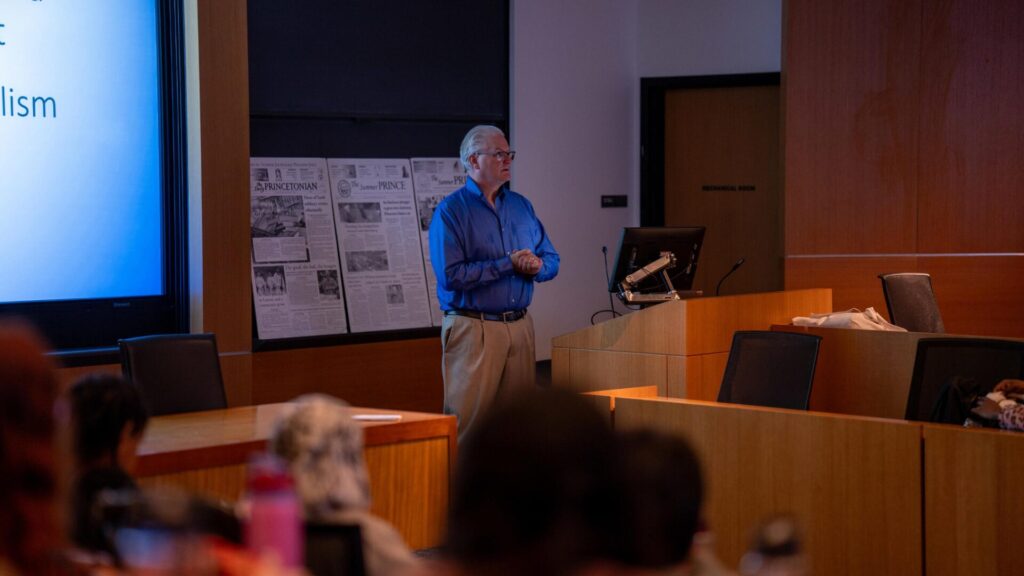
If reporting is something you’ve always wanted to try, the Princeton Summer Journalism Program lets you experience what real journalism looks like. Throughout the program, you’ll learn how to interview sources, verify information, report on current issues, and write news and feature stories under the guidance of professional journalists and Princeton faculty.
Every assignment goes through an editing process, helping you understand how reporters develop a story from the first interview to the final draft. Small group discussions also cover media ethics, college preparation, and the role journalism plays in public life. The program ends with your work being published in the annual Princeton Summer Journal, giving you a published writing sample before college.
Why it stands out: Few high school journalism programs offer the chance to publish your reporting in a professionally edited publication while working closely with experienced journalists.
13. Interlochen Arts Camp
Location: Interlochen, Michigan, USA
Cost: Tuition varies by session length, ranging from approximately $2,050 for one-week intensives to $10,350 for six-week programs. Need-based financial aid and merit scholarships are available for eligible students.
Acceptance rate/cohort size: Not publicly available; more than 3,000 students attend the camp each summer
Program Dates: June 20th – August 9th (dates vary by program and session length)
Application Deadline: Application opens September 1st; priority deadline January 15th; applications may continue on a rolling basis as space remains available.
Eligibility: Open to students in grades 9-12 for high school programs and one-week intensives. International students are eligible to apply. Some programs require an audition or portfolio, while others do not.
For students who want to spend an entire summer making art, Interlochen Arts Camp offers one of the broadest selections of creative programs anywhere. You can study music, theatre, dance, film, creative writing, visual arts, or several other disciplines through daily studio classes, rehearsals, workshops, and masterclasses. Faculty give regular critiques and individual feedback as you develop new work throughout the session.
Depending on your program, you may perform on stage, exhibit your artwork, screen a film, or take part in public readings before the summer ends. Living alongside thousands of young artists also means you’ll constantly exchange ideas with people working in different creative fields. The atmosphere feels much closer to an arts conservatory than a typical summer camp.
Why it stands out: Interlochen brings together thousands of young artists across multiple disciplines, creating an environment where musicians, writers, filmmakers, dancers, and visual artists learn from one another every day.
14. Harvard Summer College Program
Location: Online
Cost: $4,180 for one 4-credit online course; need-based financial aid available
Acceptance rate/cohort size: Not publicly available
Program Dates: June 20th – August 8th
Application Deadline: Applications open in December; early application and priority financial aid deadline in early January, regular application deadline in February, and final deadline in early April (or earlier if courses fill)
Eligibility: Students must be at least 16 years old by the start of the program and not turn 19 before the end of July. Applicants must be scheduled to graduate from high school within the next three years. International students are eligible to apply
As one of the most academically rigorous summer programs for 11th graders, the Harvard Summer College Program lets you enroll in actual Harvard Summer School courses while you’re still in high school. You’ll choose from credit-bearing classes across subjects, including biology, environmental science, genetics, and many other fields, studying alongside students from around the world.
Classes combine live instruction, discussions, independent reading, assignments, and exams that follow the pace of undergraduate coursework. You’ll be expected to manage deadlines, participate in class, and complete college-level academic work throughout the session. Depending on the course, you may also complete research projects, papers, or laboratory-based assignments.
Why it stands out: Unlike many pre-college programs, Harvard places you in the same credit-bearing Summer School courses taken by college students, allowing you to earn official university credit.
15. Notre Dame Summer Scholars
Location: Virtual
Cost: $1,750 – $4,000 depending on course selection; need-based financial aid available
Acceptance rate/cohort size: Not publicly reported
Program Dates: June 6-20 or June 27-11
Application Deadline: Applications open October 15th; final deadline February 18th
Eligibility: Open to current high school sophomores and juniors (rising juniors and seniors) who are at least 16 years old by August 1st. International students may apply, though applicants whose schools do not primarily use English may need to submit proof of English proficiency
Notre Dame Summer Scholars gives you the flexibility to explore college-level subjects while learning directly from University of Notre Dame faculty. Depending on the course you choose, you’ll study areas such as biology, neuroscience, medicine, environmental science, and other STEM fields through lectures, discussions, readings, and applied assignments.
Many courses include case studies, data analysis, or research-based projects that encourage you to think like a university student instead of simply memorizing facts. You’ll also receive feedback during office hours and class discussions as your work develops. The final assignments help bring together everything you’ve learned over the program. It’s a strong option if you want an authentic academic experience without leaving home.
Why it stands out: Notre Dame designs its Summer Scholars courses around faculty teaching and undergraduate-style coursework, giving you an early look at how the university approaches STEM education.
Frequently asked questions: Summer programs for 11th graders
Are summer programs for 11th graders open to international students?
Eligibility is mixed. MITES Summer and the Stanford Medical Youth Science Program both restrict eligibility to US citizens or permanent residents. However, the Research Science Institute at MIT, SUMaC, and Economics for Leaders are all explicitly open to international students. Immerse Education’s Career Insights Programme is also open globally to students aged 15 to 18 across seven locations.
How much do summer programs for 11th graders cost?
Costs range from completely free to over $8,950. Fully funded options include the Research Science Institute, MITES Summer, and the Rockefeller University Summer Science Research Program, which cover tuition, housing, and meals. Tuition-based programs vary widely: Economics for Leaders and B-BAY require a program fee with need-based scholarships available, while SUMaC’s residential option costs $8,950. Financial aid is available for most selective programs, so cost shouldn’t automatically rule out an option.
What is the difference between a research-focused and a career-exploration program for 11th graders?
Research-focused programs, like RSI or the Rockefeller University Summer Science Research Program, have you contribute to an original research project under mentor guidance, typically ending in a formal paper or poster presentation. Career-exploration programs, like Immerse Education’s Career Insights Programme, instead focus on industry exposure, networking, and professional development across a broader range of fields. If you already know you want lab experience, a research-focused program suits you better; if you’re weighing multiple career paths, a career-exploration program offers more breadth.
How selective are summer programs for 11th graders?
Selectivity ranges dramatically. RSI has a 2 to 3% acceptance rate, and MITES Summer admits roughly 80 students from a large national applicant pool. Other programs, like Camp Business at Drexel or Iowa Young Writers’ Studio, don’t publicly disclose acceptance rates and tend to have more available seats. Regardless of selectivity, meeting GPA and demographic eligibility criteria, such as first-generation or low-income status for SMYSP, matters as much as the overall strength of your application.
What subjects can an 11th grader explore in a summer program?
Subject offerings span STEM, business, journalism, and the arts. RSI and MITES Summer focus on advanced mathematics, physics, and life sciences, while B-BAY and Camp Business introduce business fundamentals through case studies and simulations. Journalism-focused options include the Princeton Summer Journalism Program and USC’s Annenberg Youth Academy, and Interlochen Arts Camp offers the broadest creative range across music, theatre, dance, and visual arts.
Is Immerse Education a good option for an 11th grader exploring career paths?
Immerse Education’s Career Insights Programme is a strong choice for 11th graders weighing different career directions, since it spans seven global locations, including Cambridge, London, and Tokyo. The two week program combines project-based learning with established companies, interactive workshops, and weekly 1:1 career coaching sessions with personalized resume feedback. You’ll present your findings to industry experts at the end of the program, giving you concrete material for college applications regardless of which field you’re still deciding between.
From Junior Year Program to College
Choosing among these summer programs for 11th graders gives you a genuine introduction to research, coursework, and university-level academics right when it matters most.
Once the program ends, you can turn that experience into a clearer sense of your academic direction as senior year approaches.
The skills, research exposure, and confidence you built become a strong foundation for the applications you’ll be writing soon.
Keep building on what you started this summer by exploring our University Preparation blogs for guidance on your next steps.