
 Русский (RU)
 Українська (UK)
 Türkçe (TR)
 Italiano (IT)
 Français (FR)
 Português (PT)
 中文 (中国) (ZH)
 Español (ES)
 日本語 (JA)
 ไทย (TH)
 Deutsch (DE)
 Ελληνικά (EL)
 Polski (PL)
 Bahasa Indonesia (ID)
 Nederlands (NL)
 العربية (AR)
 한국어 (KO)

The summer before 10th grade is an excellent time to explore new academic interests, develop practical skills, and gain experiences that can shape your high school journey. As a rising 10th grader, you’ll have access to a wide range of summer programs that go beyond the classroom, allowing you to explore subjects in greater depth while building confidence and preparing for future academic opportunities.
Whether you’re interested in STEM, business, medicine, journalism, finance, architecture, or the social sciences, summer programs offer opportunities to learn through hands-on projects, research, workshops, and mentorship from university faculty and industry professionals. Many programs also provide exposure to college-level learning, helping you develop valuable skills in communication, critical thinking, collaboration, and problem-solving.
What kinds of summer programs are available for rising 10th graders?
With so many options available, finding the right program can feel overwhelming. Some programs focus on a specific field, such as engineering, artificial intelligence, neuroscience, or finance, while others allow you to explore broader academic interests through interdisciplinary coursework and experiential learning. Choosing a program that aligns with your interests and goals can help you make the most of your summer.
Universities, research institutions, and nonprofit organizations offer summer programs that allow rising 10th graders to explore college-level academics, work on real-world projects, connect with like-minded peers, and gain insight into potential career paths. These experiences can strengthen your academic profile while helping you discover new interests before the demands of the later years of high school.
To help you get started, we’ve curated a list of 15 summer programs for rising 10th graders.
For adjacent opportunities, consider the online research program.
Key takeaways
- The Albers Summer Business Institute at Seattle University costs $1,500 plus a $50 registration deposit for a residential, credit-based business program open to 9th through 11th graders.
- Immerse Education’s Academic Insights Programme spans eight locations, including Boston, Cambridge, and Singapore, with small classes of seven to 10 students open to students worldwide aged 13 to 18.
- NYU Steinhardt’s CREATE Lab AI+Art program costs $2,845 in tuition plus $300 in required fees, combining Python programming with generative AI art-making and ethics discussions.
- Columbia University’s Pre-College Programs range from $2,883 to $12,838 depending on format, with the residential option restricted to students who turn 16 by December 31 of the program year.
- Notre Dame’s Summer Scholars program costs $5,200 plus a $75 application fee and $300 enrollment fee, admitting current sophomores and juniors from around the world.
- Penn’s Pre-College Residential Program costs between $15,192 and $23,604 and requires a minimum 3.5 GPA, admitting students as young as 13.
- Boston Architectural College’s Urban Design and Planning Studio costs $3,600 for the not-for-credit option or $4,000 for six college credits, addressing real challenges like climate resilience.
- Program costs for rising 10th grader programs range from free options like NeuroCamp at UCLA to over $23,604 for Penn’s residential Pre-College Program.
15 Summer Programs for Rising 10th Graders
1. NeuroCamp by UCLA
Location: Los Angeles, CA
Cost: None
Dates: Week 1: June 16-18; Week 2: June 22-26
Application Deadline: April 19th
Eligibility: High school students in grades 9-12 who reside in Los Angeles County; U.S. citizens and permanent residents; not open to international students
In this program, you will participate in an intensive introduction to the field of neuroscience. You will explore core scientific topics including molecular neurobiology, neurophysiology, and neuroanatomy. During the program, you will attend instructional courses on fundamental brain concepts, practice basic laboratory techniques, collaborate with like-minded peers, and explore academic career pathways in science.
A unique feature of this competitive, fully free outreach program is its small cohort size, accepting only 15 to 20 motivated students from the Los Angeles area each summer. By participating, you will quickly develop hands-on lab skills, critical scientific thinking, and a foundational understanding of brain functions.
Why it stands out: You will explore the fundamentals of neuroscience through lectures and hands-on laboratory activities while developing foundational knowledge in neuroanatomy, neurophysiology, molecular neurobiology, and neuroscience research.
2. Immerse Education’s Pre-University Summer School
Location: Cambridge, London, Oxford, Singapore, Sydney, Tokyo, and Toronto
Cost: Varies; summer school scholarship available through our bursary programme
Dates: 2 weeks during the summer
Application Deadline: Multiple summer cohorts; rolling admissions
Eligibility: Students across the globe aged 13-18 currently enrolled in middle or high school; open to international students
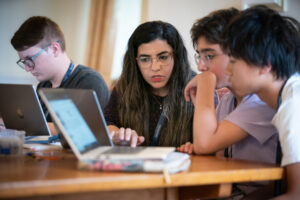
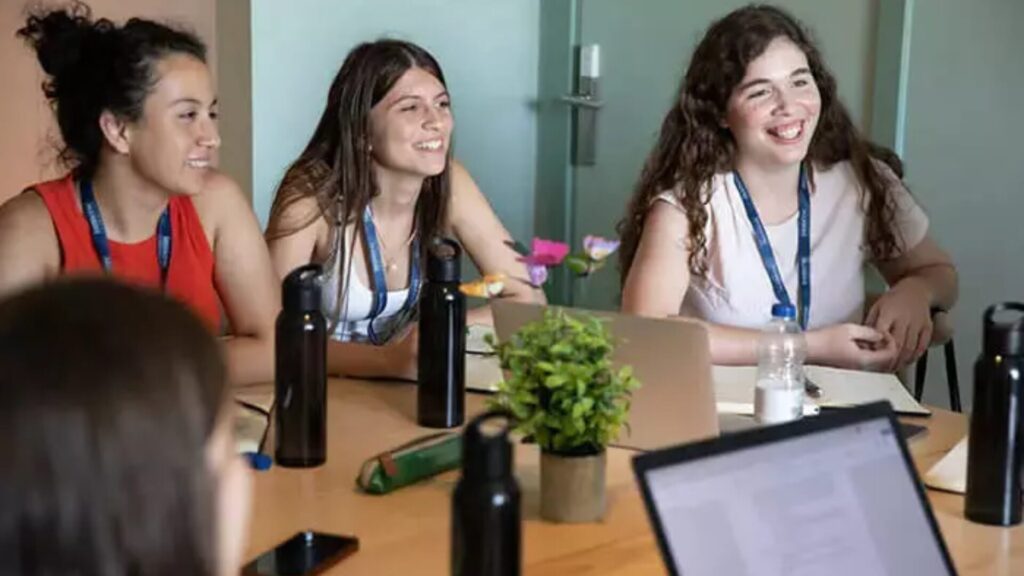
The Academic Insights Program lets high school students experience university life firsthand. You will live on campus and study in small groups of 7-10, and learn from tutors from eminent top universities like Oxford and Cambridge. You can explore a wide range of subjects, spanning over 20 options, including Architecture, AI, Business Management, Computer Science, Economics, Medicine, Philosophy, and more.
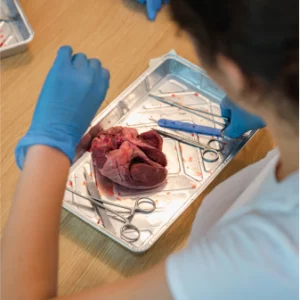
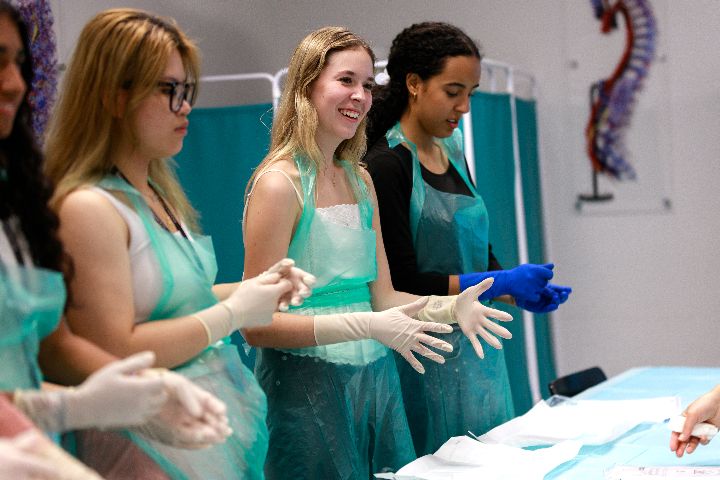
The courses are experiential and focus on hands-on learning. You may find yourself conducting dissections in medicine, designing a robotic arm in engineering, participating in a moot court for law, or building creative writing portfolios and business case studies. By the end of the program, you’ll complete a personal project, receive written feedback, and receive a certificate of completion. You can find more details about the application here.
Why it stands out: You’ll get an early start at university life and academics because the program includes an independent project, discussion-based classes, and living at a college campus.
3. Stanford Medicine – Stanford EXPLORE
Location: Stanford University School of Medicine, Stanford, CA, or Virtual
Cost: In-person: $3,200; Virtual: $2,400; financial aid is available for the virtual program
Dates: July 6-31
Application Deadline: Rolling basis until full
Eligibility: Students in grades 9-12; U.S. citizens or permanent residents; not open to international students
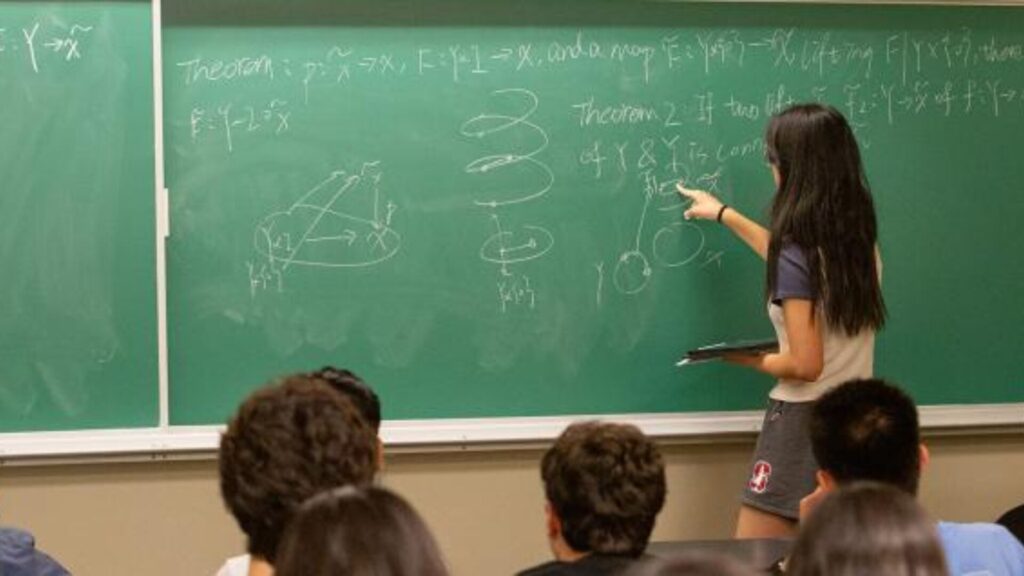
Stanford EXPLORE is an exploratory lecture series for high school students, including rising 10th graders. You will learn about the latest research being conducted in a specific area, along with current research techniques applied in it.
You’ll explore a range of research areas, including bioengineering, immunology, cancer biology, bioinformatics, regenerative and STEM cell medicine, and neuroscience. You’ll attend lectures led by postdoctoral fellows, graduate students, and University faculty. The program is offered both virtually and in person and is a great learning opportunity to explore your interests in biomedical research.
Why it stands out: You will explore biomedical research through expert-led lectures while learning about current research methods and emerging topics such as bioengineering, cancer biology, neuroscience, and regenerative medicine.
4. USC’s Annenberg Youth Academy for Media and Civic Engagement
Location: USC Annenberg, Los Angeles, CA
Cost: None
Dates: June 15th – July 2nd
Application Deadline: April 19th
Eligibility: Current high school freshmen, sophomores, and juniors residing in and attending schools from the communities surrounding the USC University Park and Health Science Campuses; not open to international students
Annenberg Youth Academy for Media and Civic Engagement is a three-week immersive learning opportunity for rising 10th-grade students. You’ll explore first-year college-level courses, learn the impact and role that journalism and media communications play in the formation of thought leaders with an innovative and civic sense.
You’ll develop skills such as critical thinking, multimedia production, writing, interviewing, ethnography, debate, and public speech. You’ll engage in meaningful interactions with scholars and practitioners working on finding interdisciplinary solutions to complex issues. The program offers a great opportunity to explore undergraduate educational pathways and future professions in media and communications.
Why it stands out: You will gain hands-on experience in journalism and media while building skills in multimedia production, communication, debate, and critical thinking through college-level learning.
5. NYU Steinhardt CREATE Lab – AI+Art Summer High School Program
Location: CREATE Lab, Brooklyn, NY
Cost: $2,845 tuition + $300 in required fees + $50 non-refundable application fee; need-based scholarships only are available to New York-based commuter students
Dates: July 27th – August 7th
Application Deadline: Rolling basis
Eligibility: Entering sophomore, junior, or senior year of high school in Fall; residential students must be over 15 years old by the Sunday before check-in; open to international students
In this program, you spend two weeks at NYU’s CREATE Lab in Downtown Brooklyn exploring how artificial intelligence can power creative work. You use generative AI tools to co-create visual art, music, animation, and prose, then learn how large language models, diffusion models, and neural networks actually function.
Through Python programming exercises and guided code notebooks, you fine-tune AI models and build an interactive chatbot around your own character design. You also examine algorithmic bias, artist attribution, and AI policy through real case studies such as the Artists vs. Stable Diffusion lawsuit. Classes run weekdays from 10 am to 4 pm, and the program culminates in a final project presented at a closing art show.
Why it stands out: It pairs hands-on technical work, such as Python coding, fine-tuning generative AI models, and building interactive chatbots, with studio art-making, ethics debates, and policy design, all culminating in a public art show of AI co-created work.
6. University of South Florida – Bulls Finance Camp
Location: University of South Florida (USF), Tampa, FL
Cost: $750
Dates: June 22-26
Application Deadline: Rolling basis
Eligibility: Rising 9th-12th grade students; open to international students
University of South Florida’s Bulls Finance Camp is a hands-on learning opportunity for high school students. You’ll gain knowledge about finance and fintech and learn from experienced professionals at USF. You’ll explore a range of finance-focused concepts, including investments, corporate finance, financial planning, personal finance, and more.
The program curriculum is taught by USF Federal Credit Union experts and the experienced faculty members at USF. You’ll have the chance to learn through a practical approach and gain real-world exposure in finance.
Why it stands out: You will explore investing, personal finance, corporate finance, financial planning, and fintech through hands-on activities while learning from university faculty and finance professionals.
7. Penn’s Summer Academies: Biomedical Research Academy
Location: Penn Arts & Sciences, Market Street, PA
Cost: $10,050 + a $100 non-refundable application fee; scholarships are available exclusively to select students attending a School District of Philadelphia public or charter high school
Dates: July 11th – August 1st
Application Deadline: May 1st
Eligibility: Grades 9th – 11th high school students; one year of high school biology completed before the program begins; minimum 3.5 GPA; international students are welcome
The Biomedical Research Academy offers a three-week residential experience for rising 10th graders involving lectures, lab experiments, guest sessions led by faculty, and group-based research investigations. It covers different topics each year; some of the topics explored by students in the past include vaccine research, genome sequencing, bioethics, antibiotic resistance, CRISPR/Cas-9, and more.
You’ll learn from diverse professionals, including clinicians, faculty members, and scientists. You’ll gain access to wet labs and computational labs, engage in research-based reading, analysis, and interpretation through a journal club, and share your read articles with others as the program concludes.
Why it stands out: You will experience biomedical research through hands-on laboratory work, scientific discussions, and collaborative investigations while learning from researchers, clinicians, and university faculty.
8. NYU’s Summer Program on Machine Learning
Location: NYU Tandon School of Engineering, Brooklyn, NY
Cost: $3,180; an optional $654 for housing and additional meal plan fees
Dates: Session 1: June 15-27; Session 2: July 6-17; Session 3: July 20-31
Application Deadline: Session 1: April 17th; Session 2 & 3: May 1st
Eligibility: Current 9th – 12th grade students; should have completed precalculus and have programming experience; international students are welcome
NYU’s Summer Program on Machine Learning introduces high school students to the fundamentals of ML. You’ll explore a range of areas, including data analysis, artificial intelligence, computer science, and mathematical techniques. The program allows you to learn real-world applications of machine learning while also engaging in ML programming.
You’ll learn about different concepts such as interactive voice controls in homes, real-time traffic control and monitoring, the latest medical technologies helpful in diagnostics, image and video recognition, and many more everyday technologies. The program offers a two-week summer learning experience and gives you the chance to learn from expert faculty and graduate researchers.
Why it stands out: You will explore the fundamentals of machine learning through programming and hands-on learning while developing skills in data analysis, artificial intelligence, and mathematical problem-solving.
9. UCLA Summer Pre-College Focus Series – Introduction to Investments
Location: University of California, Los Angeles, CA
Cost: $3,156 (estimated); financial aid is available
Dates: July 13-31 (Virtual and Commuter)
Application Deadline: July 3rd
Eligibility: 9th – 12th graders; ages 15 and above; minimum 3.2 cumulative GPA; open to international students
This program is a 10-day learning experience for high school students, where they will attend lectures, participate in discussion sessions, and engage in the analysis of case studies. You’ll explore topics such as personal investments, venture capital, money, banking and cycles, careers in finance, stock ownership, bonds, commodities, private equity and hedge funds, international investing, and many more.
The program will help you develop foundational knowledge in financial literacy and learn from UCLA faculty and Economics majors. No prior experience is required for participation.
Why it stands out: You will develop practical knowledge of investing and financial markets through case studies, discussions, and expert-led sessions on personal finance and investment strategies.
10. NYU SPS High School Academy – Finance NYC: An Insider’s View
Location: NYU Washington Square, New York City, NY
Cost: $2,579 per course + $50 nonrefundable application fee; dining charges (Optional); 10% discounts offered to the NYU Faculty/Staff
Dates: Session 1: June 29th – July 2nd; Session 2: July 6-10; Session 3: July 13-17; Session 4: July 20-24; Session 5: July 27-31; Session 6: August 3-7
Application Deadline: Residential: April 29th; Commuter: June 12th; International: March 14th
Eligibility: High school students who have completed grades 9-11; open to international students
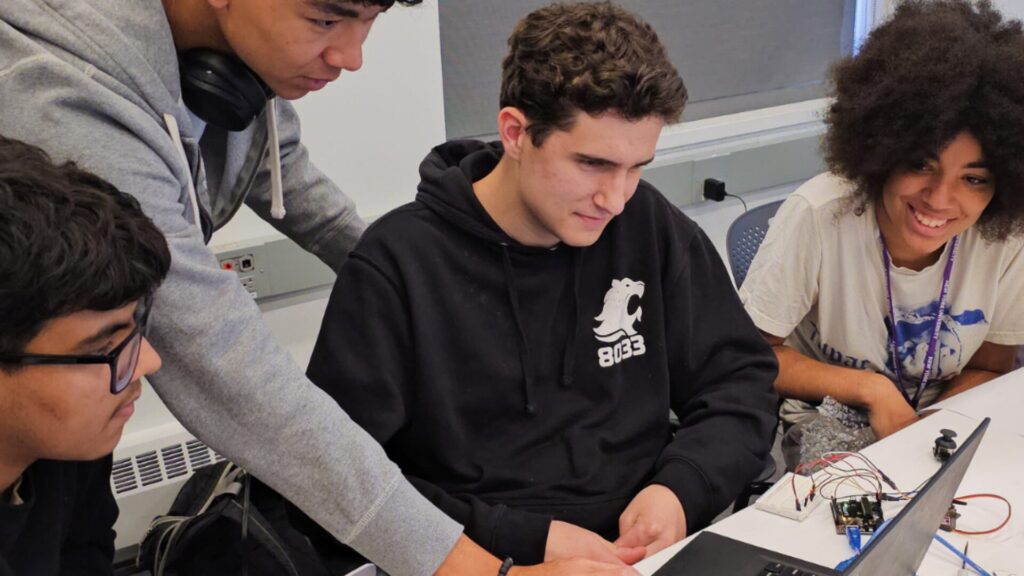
This program introduces high school students to the fundamentals of financial analysis and investment management. Taught by an industry expert, you will explore a range of topics, including types of assets to trade, portfolio risk and return, the nature of the financial system, and more.
The program provides foundational knowledge in finance and allows you to develop confidence in pursuing a college-level education and a professional career in the field. You’ll receive an NYU transcript showing the grades earned by you as the program concludes.
Why it stands out: You will develop foundational finance skills through expert-led instruction while exploring investing, financial analysis, and careers in the financial industry.
11. NYU SPS High School Academy – Investing Like a Wall Street Pro
Location: New York, NY (NYU School of Professional Studies Campus)
Cost: $2,579 + $50 non-refundable application fee; $684 optional housing and dining
Dates: Session 1: June 29th – July 2nd; Session 2: July 6-10; Session 3: July 13-17; Session 4: July 20-24; Session 5: July 27-31; Session 6: August 3-7
Application Deadline: Residential: April 29th; Commuter: June 12th; International: March 14th
Eligibility: High school students who have completed grades 9-11; open to international students
Among summer programs for rising 10th graders, NYU SPS: Investing Like a Wall Street Pro stands out for introducing students to concepts in economics and business models. You’ll gain in-depth knowledge about economic moats and learn how industry behaviour is influenced by the business cycle. You’ll engage in a range of case studies focused on well-known companies such as Snapchat, Disney, Apple, and Nike.
The program will allow you to work on a self-built valuation model either by using a financial website or manually. By the end of the program, you’ll develop the skills and knowledge to read three main financial statements and understand the concepts playing an important role in economic growth, such as the company cycle, competition, business cycle, and cash flow.
Why it stands out: You will explore investing through case studies and financial analysis while developing skills in business valuation, financial statements, cash flow analysis, and economic decision-making.
12. USC Summer Pre-College Program – Exploration of Architecture
Location: University of Southern California, Los Angeles, CA
Cost: Residential: $11,570; Commuter: $8,130; $85 application fee; financial aid and scholarships are available
Dates: June 22nd – July 17th
Application Deadline: International: March 13th; Domestic: May 8th
Eligibility: High school students who will have completed at least 9th grade; open to international students
Exploration of Architecture – USC Summer Pre-College Program offers a hands-on learning experience to high school students. You’ll explore a range of topics in architecture, including design and composition fundamentals, three-dimensional spatial awareness and understanding, design methods and tools, and more.
You’ll work on practical assignments, attend lectures, and learn from experienced faculty. You’ll develop fundamental skills in photography, drawing, sketching, and modelling. The program will allow you to interact with leading faculty and practitioners in the field while also exploring different places of architectural significance in Los Angeles.
Why it stands out: You will explore the fundamentals of architecture through hands-on projects, lectures, and site visits while developing skills in design, spatial thinking, drawing, photography, and modelling.
13. Boston Architectural College (BAC) – Urban Design and Planning Studio
Location: Boston Architectural College, Boston, MA
Cost: Credit-bearing option: $4,000 (6 college credits); Not-for-credit option: $3,600; scholarships and fellowships are offered
Dates: June 29th – August 7th
Application Deadline: June 16th
Eligibility: High school students in grades 9-12; ages 14 or older; not open to international students
This program offers an immersive, hands-on learning opportunity for high school students. You’ll engage in the design process of urban places, receive guidance from Boston professionals, and work on hands-on urban design projects. You’ll develop skills in model making, GIS mapping, and digital fabrication. The program offers a combination of pre-professional training and career-specific guidance.
You’ll address real-world challenges such as equitable community planning, sustainable design, and climate resilience. During the final week of the program, you’ll have the chance to engage in a final showcase and share your work with professionals, Boston City representatives, and the BAC faculty.
Why it stands out: You will explore urban design and planning through hands-on projects while developing skills in model making, GIS mapping, digital fabrication, and sustainable community design.
14. UCLA Summer Sessions – Python for Economics and Finance
Location: Virtual
Cost: $2,770 (estimated); financial aid is available
Dates: June 22nd – July 10th
Application Deadline: June 12th
Eligibility: High school students in grades 9-12; at least 15 years old by June 22nd; minimum 3.2 cumulative GPA; open to international students
This program offers a three-week learning experience to high school students. You’ll have the opportunity to work with the faculty and undergraduate students through lectures and discussion sessions. You’ll explore a range of topics including visualization, data types, flow control, functions and loops, data analysis applications, basic matha nd array functions, and more.
You’ll be graded based on your engagement in the class, one mid-term and one cumulative final examination. The program also helps you learn data analysis for different economic issues by applying Python programming skills.
Why it stands out: You will learn to apply Python programming to economics and finance by developing data analysis and visualization skills through college-level lectures, discussions, and practical coding exercises.
15. University of Washington – Introduction to Data Visualization
Location: Virtual
Cost: $895 + $50 non-refundable registration fee; limited, first-come, first-served assistance covering course and registration fees is available
Dates: June 29th – July 10th
Application Deadline: Rolling basis
Eligibility: Rising 9th – 12th-grade high school students; familiarity with Microsoft Excel is expected; international students are welcome
This program offers a virtual learning opportunity to high school students. You’ll explore the fundamental principles of design along with different types of data visualizations. The program will help you learn about design patterns and engage in the evaluation and interpretation of visualizations.
You’ll gain exposure to basic Tableau functionalities, including color theory, chart types, and dashboards. You’ll learn to automate data prep, apply predictive insights to improve storytelling, and recommend visualizations by integrating the latest AI tools with Tableau.
Why it stands out: You will explore data visualization through hands-on learning while developing skills in Tableau, dashboard design, data storytelling, and AI-assisted data analysis.
Frequently asked questions: Summer programs for rising 10th graders
Are summer programs for rising 10th graders open to international students?
Eligibility varies. NeuroCamp at UCLA and the Annenberg Youth Academy both restrict eligibility to US residents in specific regions. However, NYU Steinhardt’s CREATE Lab, the University of South Florida’s Bulls Finance Camp, and Penn’s Pre-College Residential Program all explicitly welcome international students. Immerse Education’s Academic Insights Programme is also open globally to students aged 13 to 18.
How much do summer programs for rising 10th graders cost?
Costs range from completely free to over $23,000. Free options include NeuroCamp at UCLA and the Annenberg Youth Academy. Mid-range programs like the Bulls Finance Camp cost $750, while NYU SPS High School Academy courses cost around $2,579. Premium options include Penn’s Biomedical Research Academy at $10,050 and Penn’s residential Pre-College Program at up to $23,604. Financial aid is available for many programs.
What is the difference between a research-based and a coursework-based program for rising 10th graders?
Research-based programs, like NeuroCamp or Penn’s Biomedical Research Academy, place you in a lab setting where you learn specific techniques and contribute to ongoing investigations. Coursework-based programs, like NYU SPS’s finance courses or UCLA’s Introduction to Investments, instead follow a structured curriculum with lectures, case studies, and assessments. If you already know you want lab experience, a research-based program suits you better; if you want broad subject exposure, coursework-based options work well.
How selective are summer programs for rising 10th graders?
Selectivity varies considerably. Penn’s Pre-College Residential Program requires a minimum 3.5 GPA, and NeuroCamp at UCLA has a small, competitive cohort. Other programs, like UCLA’s Introduction to Investments or the University of Washington’s Data Visualization course, use more open enrollment with a minimum GPA requirement rather than a highly competitive review. Regardless of selectivity, meeting age and prerequisite coursework requirements matters as much as overall academic strength.
What subjects can a rising 10th grader explore in a summer program?
Subject offerings span finance, technology, architecture, and biomedical research. NYU’s Summer Program on Machine Learning and NYU Steinhardt’s CREATE Lab focus on AI and technology, while USC’s Exploration of Architecture and Boston Architectural College’s Urban Design Studio cover design fields. Finance-focused options include the Bulls Finance Camp, UCLA’s Introduction to Investments, and NYU SPS’s Wall Street-themed courses, useful if you’re drawn to business and economics.
Is Immerse Education a good option for a rising 10th grader exploring academic interests?
Immerse Education’s Academic Insights Programme is well-suited to this age group, spanning eight global locations, including Boston, Cambridge, and Singapore, with classes of seven to 10 students. You’ll work on hands-on projects like designing a robotic arm in engineering or building a business case study, complete a personal project, and receive written feedback along with a certificate of completion. It offers a lower-cost, globally accessible alternative to some of the premium US-based programs listed here.
What This Summer Means For The Years Ahead
Choosing among these summer programs for rising 10th graders gives you a genuine early introduction to college-level academics and independent learning.
Once the program ends, you can turn that early exposure into a clearer sense of your subject interests and future direction.
The confidence, skills, and academic habits you built become a strong foundation for your applications in the years ahead.
Keep building on what you started this summer by exploring our University Preparation blogs for guidance on your next steps.