
 Русский (RU)
 Українська (UK)
 Türkçe (TR)
 Italiano (IT)
 Français (FR)
 Português (PT)
 中文 (中国) (ZH)
 Español (ES)
 日本語 (JA)
 ไทย (TH)
 Deutsch (DE)
 Ελληνικά (EL)
 Polski (PL)
 Bahasa Indonesia (ID)
 Nederlands (NL)
 العربية (AR)
 한국어 (KO)

When you’re in high school, summer often feels like a pause button. You finally get time away from assignments, exams, and packed schedules, but you can also use those weeks to explore interests that regular classes rarely cover. If you are curious about technology, enrolling in tech summer programs for high school students is the perfect way to experiment, build projects, and discover how tech shapes the world. The right program can help you develop practical skills, connect with mentors, and strengthen your college applications at the same time.
Many tech summer programs combine lessons with hands-on projects, so you are not just listening to lectures. You might collaborate on cybersecurity challenges, design a basic video game, or explore areas like data science, machine learning, and digital design. You may learn to code your first app, train a simple artificial intelligence model, or build a small robot with a team of students who share your curiosity.
What tech summer programs are available for high school students?
Finding the right program can feel overwhelming at first. Some options focus heavily on lectures, while others emphasize projects and collaboration. You probably want something that challenges you, teaches real skills, and gives you the chance to create something meaningful by the end of the program.
Many universities, research labs, and technology organizations host summer programs designed specifically for high school students. Some focus on coding and software development, while others explore robotics, artificial intelligence, cybersecurity, game design, or data science. Depending on the program, you might attend workshops, work on team projects, listen to guest speakers from the tech industry, and present your final work to mentors or peers.
These programs push you to solve problems, experiment with ideas, and collaborate with other students who are just as curious about technology as you are. To ease the process and help you choose, we’ve crafted a list of 15 tech summer programs for high school students.
If you’re looking for more options, you can have a look at online coding summer programs for high school students. For a professional experience, you can explore summer tech internship opportunities.
15 Tech Summer Programs for High School Students
1. Immerse Education’s Computer Science School
Location: Cambridge, Oxford, and Online
Cost/Stipend: Varies; summer school scholarship available through our bursary programme
Acceptance rate/cohort size: Selective; small cohort groups for personalized mentoring
Dates: Summer 2026 (multiple two-week sessions across locations and formats)
Application Deadline: Rolling admissions; places are limited
Eligibility: Students worldwide aged 15-18 (14-18 for the virtual programme); strong English proficiency recommended
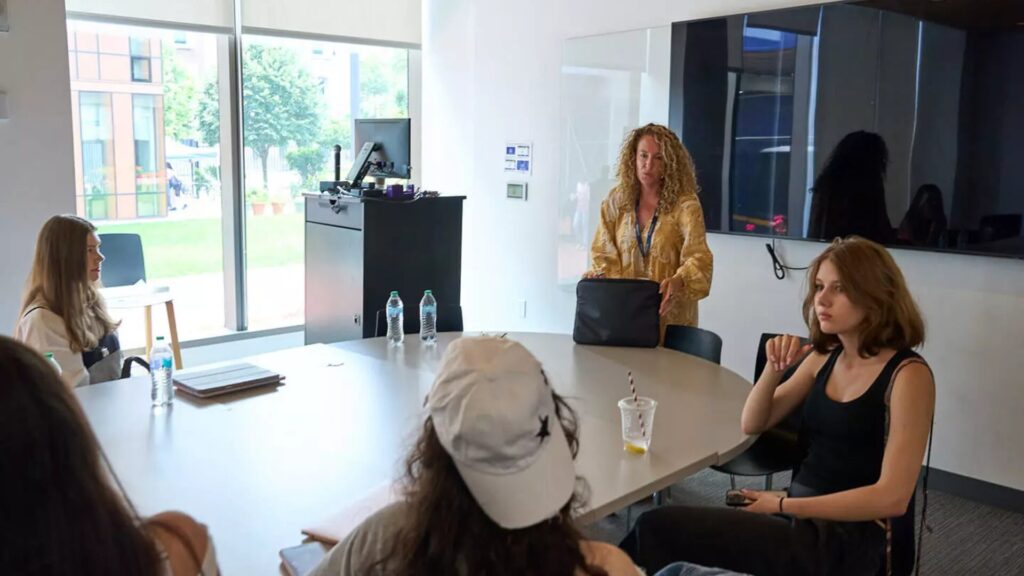
Immerse Education’s Computer Science Summer School places you in an academically structured environment where you study foundational and advanced computing concepts with expert tutors from leading universities. You cover important topics like algorithms, data structures, programming languages, and software engineering principles, as well as applications like machine learning and artificial intelligence. Small classes let you get personalized feedback and talk to tutors and classmates from all over the world on a regular basis.
When you go to a place like Cambridge or Oxford in person, you also get to experience campus life and structured activities that are similar to how you would study at a university. By completing this summer school, you gain clearer insight into how computer science is studied at the tertiary level and develop technical skills that support future academic and career decisions in computing fields. You can find more details about the application here.
Why it stands out: You’ll be taught by top faculty, work on an independent project, and live on campus, giving you a complete experience of future university life.
2. MIT Beaver Works Summer Institute (BWSI)
Location: Massachusetts Institute of Technology, Cambridge, MA; some courses also offered virtually
Cost/Stipend: No cost for families with income under $200,000; $2,400 for higher-income families
Acceptance rate/cohort size: Highly selective; around 370+ students each year
Dates: July 6th – August 2nd
Application Deadline: March 30th
Eligibility: High school students living in and physically attending a U.S. high school
Widely regarded as a premier tech summer program for high school students, the MIT Beaver Works Summer Institute allows you to explore advanced STEM fields through hands-on projects and intensive workshops. Before the summer session begins, you complete prerequisite online courses that build core technical skills.
During the program, you work with instructors and mentors on topics such as artificial intelligence, robotics, autonomous vehicles, cybersecurity, and satellite systems. You learn by building and testing real prototypes while collaborating with a team of motivated peers. The program emphasizes problem solving, engineering design, and applied research.
Why it stands out: You gain exposure to cutting-edge technologies like AI and autonomous systems through project-based learning developed by MIT researchers.
3. Microsoft Discovery Program
Location: Microsoft campuses in Redmond, Washington, or Atlanta, Georgia
Cost/Stipend: Paid internship; approximately $18-$20 per hour, depending on location
Acceptance rate/cohort size: Highly selective; 100-150 students
Dates: Atlanta: July 6-31; Redmond: July 13th – August 7th
Application Deadline: Typically, late February
Eligibility: High school seniors who will graduate before the program begins; applicants must be at least 16 and must attend high school within about 50 miles of Redmond, Washington, or attend eligible school districts around Atlanta, Georgia; must have completed precalculus or an equivalent course
The Microsoft Discovery Program is an elite and highly sought-after tech summer program for high school students that introduces you to how technology products are created inside a global tech company. Over four weeks, you join a small team and work on a project that explores the early design phase of product development.
Along the way, Microsoft engineers and mentors guide you through concepts in software engineering, product management, and UX design. You gain hands-on experience solving real problems while learning how teams collaborate to build technology. The program also includes workshops that strengthen professional and communication skills.
Why it stands out: It gives you early exposure to tech innovation and corporate projects, helping you develop practical skills in software and product thinking.
4. Kode With Klossy – Summer Camps
Location: Virtual (in-person locations announced seasonally; NJ students eligible)
Cost/Stipend: None
Acceptance rate/cohort size: Moderately selective; 20-25 scholars
Dates: Multiple two-week sessions in the Summer
Application Deadline: Typically, early March
Eligibility: Young girls and gender expansive teens worldwide aged 13-18; no prior coding experience required
Kode With Klossy is a two-week, tuition-free summer coding bootcamp designed to introduce you to the tech industry in a supportive, gender-expansive environment. During the program, you will choose one of four specialized tracks covering Web Development, Artificial Intelligence, Mobile App Development, or Data Science.
Depending on your track, you will actively participate in hands-on activities like building a dynamic website, training a functional chatbot, developing an iOS app, or visualizing large datasets. By the end, you will develop concrete technical skills in Python, Swift, SQL, HTML, CSS, JavaScript, and UI/UX design.
Why it stands out: It breaks barriers to entry in the tech industry by offering a completely free, zero-experience-required coding bootcamp exclusively dedicated to young women and gender-expansive youth.
5. Applied Research Innovations in Science and Engineering (ARISE)
Location: Brooklyn, NY
Cost/Stipend: No cost / $2,000 stipend
Acceptance rate/cohort size: Highly selective; ~60 students
Dates: Remote Workshops: June 1-25; In-person lab sessions: July 6th – August 14th
Application Deadline: February 27th
Eligibility: Rising high school juniors and seniors for the upcoming school year, only for full-time NYC residents attending NYC schools
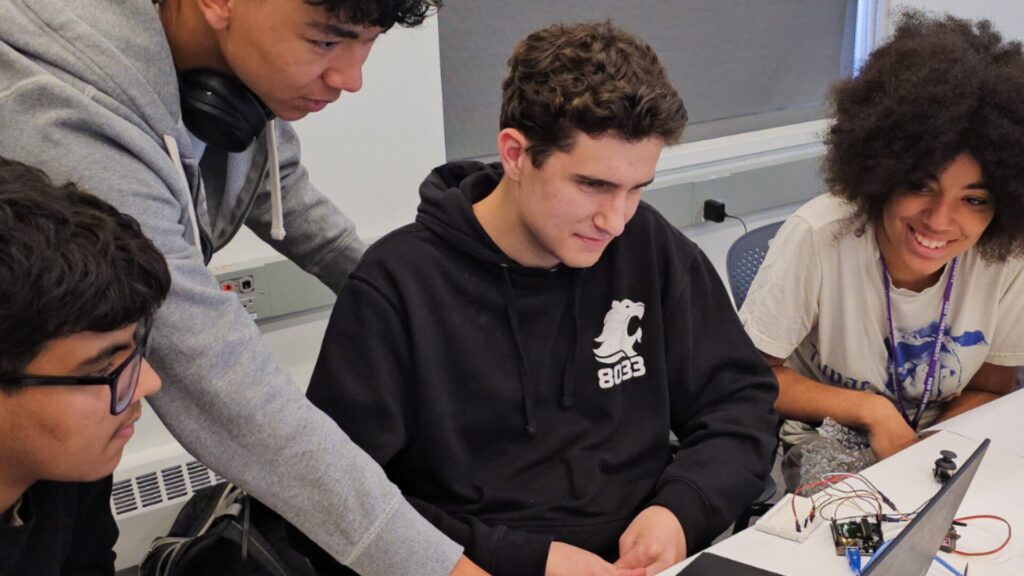
NYU Tandon’s Applied Research Innovations in Science and Engineering (ARISE) is a 10-week summer program where you will conduct authentic college-level research alongside NYU faculty. During the program, you will explore diverse STEM topics, including computer science, robotics, machine learning, bioengineering, and civil engineering.
As part of your experience, you will actively work in a university lab, participate in college-readiness workshops, practice academic writing, and present your findings at a formal colloquium. By the end of the summer, you will have developed highly practical skills in data analysis, scientific writing, coding, and public speaking.
Why it stands out: You’ll get access to NYU’s alumni network with jobs, internships, and research opportunities.
6. Carnegie Mellon University – AI Scholars
Location: Carnegie Mellon University, Pittsburgh, PA
Cost/Stipend: None
Acceptance rate/cohort size: Competitive; project teams of 4-5 students
Dates: June 20th – July 18th
Application Deadline: February 1st
Eligibility: Rising high school seniors who will be between grades 11 and 12 during the summer and at least 16 years old by the start date; applicants must be U.S. citizens or U.S. permanent residents with a valid green card
AI Scholars lets you explore artificial intelligence through an immersive residential experience at Carnegie Mellon. Over four weeks, you attend college-level classes taught by faculty and researchers while learning the fundamentals of computing and AI. You also work with a team to design and present a project that applies AI concepts to real-world problems.
Guest lectures and industry interactions introduce you to how AI is used across different sectors. Along the way, college preparation workshops help you think about admissions, financial aid, and future academic paths.
Why it stands out: You learn AI directly from Carnegie Mellon faculty in a fully funded residential program at one of the world’s leading computer science universities.
7. MITES Summer
Location: Massachusetts Institute of Technology, Cambridge, MA
Cost/Stipend: None
Acceptance rate/cohort size: Highly selective; around 60 students
Dates: 6 weeks between late June and early August
Application Deadline: February 1st
Eligibility: Current high school juniors who are U.S. citizens or permanent residents
Known as one of the most highly accessible tech summer programs for high school students, MITES Summer is a fully-funded, six-week residential experience at MIT that engages you in a rigorous, college-level STEM environment. Throughout the program, you will tackle advanced courses in calculus, physics, and life sciences, alongside specialized tech electives like machine learning or electronics.
You will spend your days attending intensive lectures, conducting hands-on laboratory research, collaborating on team-based engineering challenges, and formally presenting your final project. By the end of the summer, you will have developed advanced quantitative problem-solving skills, practical laboratory techniques, and strong analytical writing abilities.
Why it stands out: You’ll get to join a robust alumni community (90% in selective universities) and potentially obtain career and academic support.
8. Meta Summer Academy (MSA)
Location: Meta Headquarters, Menlo Park, CA
Cost/Stipend: No cost / Stipend paid, amount not publicly disclosed
Acceptance rate/cohort size: Highly competitive; roughly 150 students annually
Dates: June 15th – July 24th
Application Deadline: February 14th
Eligibility: Current high school sophomores who live full-time in East Palo Alto, Belle Haven, North Fair Oaks, or Redwood City in California; minimum 2.0 GPA
Meta Summer Academy is a six-week paid internship that introduces you to the technology industry through hands-on learning and workplace exposure. During the program, you spend about 30 hours each week working on projects that build foundational coding and digital skills.
You also explore topics such as financial literacy, media, and professional communication while attending workshops and speaker sessions. Mentors and Meta employees share insights about different roles in the tech sector and what a typical workday looks like.
Why it stands out: It offers tech- and media-driven summer learning modules helping you build 21st-century skills in coding, design, and innovation.
9. American on Tech – TECH360
Location: Hybrid program with virtual sessions and required in-person sessions in New York City, Los Angeles County, Miami-Dade/Broward County, or Atlanta
Cost/Stipend: No cost/students who complete the program receive a $500 stipend
Acceptance rate/cohort size: Highly competitive; cohort size varies as per location
Dates: Typically a 3-week summer bootcamp; New York, Los Angeles, Miami: 2-week Summer Cycles between June-July | Atlanta: Spring Cycle between February-April
Application Deadline: Varies by location and cycle; around May
Eligibility: Rising high school juniors and seniors currently attending a New York City (all boroughs), Los Angeles County, Miami-Dade/ Broward County, or Atlanta high school are eligible to apply
TECH360 introduces you to core technology concepts through a fast-paced, project-based learning experience. Over about three weeks, you explore topics such as artificial intelligence, web development, and the basics of how modern digital tools are built. You attend workshops led by instructors and industry professionals who guide you through hands-on coding exercises and collaborative projects.
As the program progresses, you work with a small team to develop and present a final project that applies what you learned. Along the way, you also attend career talks and networking sessions with professionals in the tech industry.
Why it stands out: You receive hands-on tech training and a stipend while learning directly from industry professionals in a short, intensive bootcamp.
10. Stanford AIMI Summer Research Internship
Location: Virtual (hosted by the Stanford Center for Artificial Intelligence in Medicine and Imaging)
Cost: $2,400 + $45 application fee; financial aid is available
Acceptance rate/cohort size: Highly selective; around 50 students
Dates: June 15th – June 26th; Session B: July 6th – July 17th
Application Deadline: February 20th
Eligibility: High school students entering grades 9-12 who are at least 14 years old and currently attending a U.S. high school while residing in the U.S.
The Stanford AIMI Summer Research Internship introduces you to how artificial intelligence is used to improve healthcare. During this two-week virtual program, you attend lectures on AI in medicine while learning the technical foundations behind medical imaging and data analysis. You work with a small team to design and develop a research project that explores a real healthcare problem.
Mentors from Stanford guide your project and help you refine your ideas and technical approach. Guest speakers from academia, industry, and public health share how AI is transforming clinical practice.
Why it stands out: It uniquely merges computer science and medicine, allowing you to analyze real-world medical imaging datasets to build machine learning models that address actual healthcare challenges.
11. MIT Women’s Technology Program (WTP)
Location: Massachusetts Institute of Technology, Cambridge, MA
Cost: None for students with a family income of $120,000 or less; for $120,000 – $400,000+ income, cost varies between $2,000 – $20,000
Acceptance rate/cohort size: About 6% acceptance; typically, 20 students
Dates: June 27th – July 25th
Application Deadline: December 15th
Eligibility: Rising female/underrepresented high school seniors living in the U.S. year-round
The MIT Women’s Technology Program introduces you to the fundamentals of engineering through an intensive four-week residential experience. You attend classes taught by MIT graduate students and work through hands-on projects that highlight the engineering design process.
Topics include areas such as materials, thermodynamics, and mechanical systems, while you build and test your own designs. The curriculum moves quickly, so you spend most days in collaborative labs, design challenges, and technical discussions. You also interact with mentors and peers who share a curiosity about engineering and problem-solving.
Why it stands out: It offers deep engineering and design exploration within MIT’s labs, helping you gain hands-on exposure to tech fundamentals and systems thinking.
12. Carnegie Mellon SAMS (Summer Academy for Math and Science)
Location: Pittsburgh, PA
Cost/Stipend: No cost / Stipend paid, amount not publicly disclosed
Acceptance rate/cohort size: Highly selective; around 75-80 students
Dates: Virtual Jumpstart: June 15-16; Main program: June 20th – August 1st
Application Deadline: February 1st
Eligibility: High school students in 11th grade at the time of application submissions; 16+ by the program start date; U.S. citizens or permanent residents
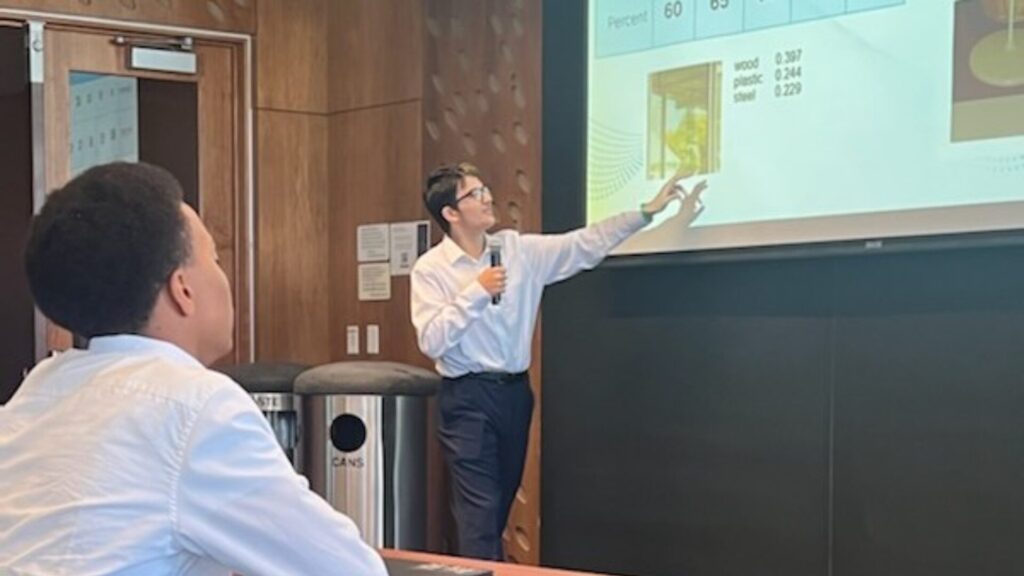
Carnegie Mellon’s Summer Academy for Math and Science (SAMS) is a fully-funded, six-week residential program that immerses you in rigorous, college-level STEM academics. You will tackle challenging coursework covering advanced mathematics, physics, biology, and computational sciences.
During the program, you will attend intensive quantitative seminars, conduct a hands-on STEM research project guided by university faculty, and participate in college-prep writing workshops. By the end of the summer, you will have developed problem-solving capabilities, practical laboratory research techniques, and strong academic writing skills.
Why it stands out: It offers long-term mentoring, helping you better craft competitive applications for selective STEM & math university programs.
13. UPenn Engineering Summer Academy – Computer Science
Location: University of Pennsylvania Campus (Philadelphia, PA)
Cost/Stipend: $9,250; limited financial aid is available
Acceptance rate/cohort size: Highly selective; around 30-35 students
Dates: July 12-31
Application Deadline: February 28th
Eligibility: Rising high school sophomores to seniors; 15+ by the program’s start date; minimum 3.0 GPA or equivalent
The UPenn Engineering Summer Academy (ESAP) Computer Science track is a rigorous and academically prestigious tech summer program for high school students where you earn official college credit while studying directly under university faculty. Throughout the intensive three-week residential course, you will explore theoretical computer science, algorithmic problem-solving, game theory, and discrete probability.
During daily hands-on labs, you will actively write functional Python programs, build a probabilistic Wordle solver, and design an intelligent AI agent for a custom board game. By the end of the academy, you will have developed skills in advanced Python programming, data visualization, and integrating web APIs into a complete capstone software system.
Why it stands out: It introduces you to advanced engineering concepts, preparing you well for competitive STEM applications.
14. Laser & Photonics Summer Camp
Location: CREOL, The College of Optics and Photonics, University of Central Florida, Orlando, FL
Cost/Stipend: Early registration: $550; Regular registration: $650; need-based scholarships are available
Acceptance rate/cohort size: Moderately selective; cohort size not publicly disclosed
Dates: Three one-week sessions: July 6-10; July 13-17; July 20-24
Application Deadline: June 15th
Eligibility: High school students who will be in grades 10-12 during the program year; international applicants can apply
At the Laser & Photonics Summer Camp, you explore how light powers many modern technologies. Over one week, you attend short lectures and interactive lab sessions led by faculty and researchers from the College of Optics and Photonics.
You experiment with concepts related to lasers, fiber optics, and imaging systems while learning how these tools are used in areas such as medical devices and autonomous vehicles. Throughout the program, you work with real equipment and collaborate with peers who share your interest in engineering and physics.
Why it stands out: You get hands-on experience with lasers and optical technologies at one of the few U.S. colleges dedicated entirely to photonics research.
15. UChicago Data Science Institute (DSI) Summer Lab
Location: Ryerson Laboratory, University of Chicago, Hyde Park Campus
Cost/Stipend: No cost / $5,600 stipend
Acceptance rate/cohort size: Highly selective; 20–50 students
Dates: June 15th – August 7th
Application Deadline: January 12th
Eligibility: High school students from the Chicago area
The UChicago Data Science Institute Summer Lab is an eight-week paid research program where you are paired with a university mentor to tackle real-world challenges. Throughout the summer, you will explore interdisciplinary fields like computer science, biomedical research, climate policy, and social sciences.
You will actively engage in hands-on activities such as writing code using data science libraries, attending a weekly speaker series, and presenting your final research findings at a closing symposium. By the end of the internship, you will have developed practical skills in data visualization, algorithm development, Python programming, and academic research methodologies.
Why it stands out: You’ll engage in data science projects that blend statistics, computation, and real datasets, helping you understand how data-driven research works across disciplines.
Unlocking New Potentials in Modern Tech Education
Enrolling in tech summer programs for high school students allows you to move beyond classroom theory into the high-stakes world of modern digital innovation.
These elite programs challenge you to design autonomous systems and solve complex problems alongside industry mentors at top-tier institutions like MIT and Carnegie Mellon.
By mastering these advanced technical skills now, you build a powerful portfolio that stands out to admissions officers and future employers in the tech industry.
Check out our Educational Innovation blogs to discover essential resources, emerging edtech trends, and expert career guidance designed to keep you ahead of the curve!