
 Русский (RU)
 Українська (UK)
 Türkçe (TR)
 Italiano (IT)
 Français (FR)
 Português (PT)
 中文 (中国) (ZH)
 Español (ES)
 日本語 (JA)
 ไทย (TH)
 Deutsch (DE)
 Ελληνικά (EL)
 Polski (PL)
 Bahasa Indonesia (ID)
 Nederlands (NL)
 العربية (AR)
 한국어 (KO)

As a high school student curious about research, winter can feel like an off-season, with fewer structured opportunities to go beyond classroom learning. Winter research programs for high school students change that by offering a focused, academically driven way to build research skills during the school year. Instead of only learning theory, you begin applying real concepts through data analysis, research papers, computational tools, and open-ended problems that require independent thinking.
These programmes are designed to build advanced academic skills early. You develop experience in areas like data analysis, coding, scientific reasoning, and structured problem-solving, while also learning how to communicate ideas through presentations or written work.
Many programmes mirror university-style learning, giving you exposure to seminars, mentorship, and project-based work that reflects how subjects are studied at a higher level. A winter research experience can act as a foundation for a high schooler’s college journey, giving you a real taste of what university life is like at a top institution, in person.
How do you choose the right Winter Research programs for high school students?
Choosing the right program can be challenging. Some options may feel too surface-level, while others require prior experience that not every student has. The key is to find programs that balance rigor with support, where you’re not just passively learning, but actively engaging with material in a meaningful way.
Selectivity and funding also matter. More competitive programs often provide a stronger peer group and deeper experience, and those that are free or offer stipends can make high-quality opportunities more accessible.
Ultimately, the right program should challenge you, support your growth, and give you a clearer sense of how your academic interests translate into real-world research. To help you, we’ve compiled a list of 15 Winter Research Programs for High School Students.
For adjacent opportunities, consider summer programs for high school students.
15 Winter Research Programs for High School Students
1. Partnership for Scientific Inquiry (PSI)
Location: Oregon, USA (virtual lectures; internship typically at OHSU)
Cost: Free
Program Dates: January-May (didactic course); June-August (optional internship)
Deadline: December 1st (applications close; 2026 cycle closed)
Eligibility: High school sophomores, juniors, and seniors in Oregon and the Portland metro area; must be at least 16 for in-person internship; not open to international students
As one of the more structured winter research programs for high school students, the Partnership for Scientific Inquiry (PSI) introduces you to the foundations of biomedical research through a semester-long curriculum. You’ll examine the scientific process and its application in real research settings. The program emphasizes research literacy, including reading scientific literature, analyzing studies, and understanding experimental design. You’ll attend weekly lectures led by researchers and gain exposure to ongoing research projects.
You’ll work with a mentor to present a published paper in a journal club format and develop your own research proposal. You may extend your learning through an optional summer internship involving laboratory or clinical research, followed by a poster symposium. By the end of the program, you’ll build core research skills and clarity on biomedical pathways.
Why it stands out: Structured mentorship and a full research workflow from literature review to proposal and presentation.
2. Immerse Education’s Online Summer School

Location: Online (accessible worldwide)
Cost: Varies; summer school scholarship available through our bursary programme
Program Dates: Flexible (year-round enrollment; student-scheduled)
Deadline: Rolling admissions
Eligibility: Students aged 13-18; international eligibility: Available
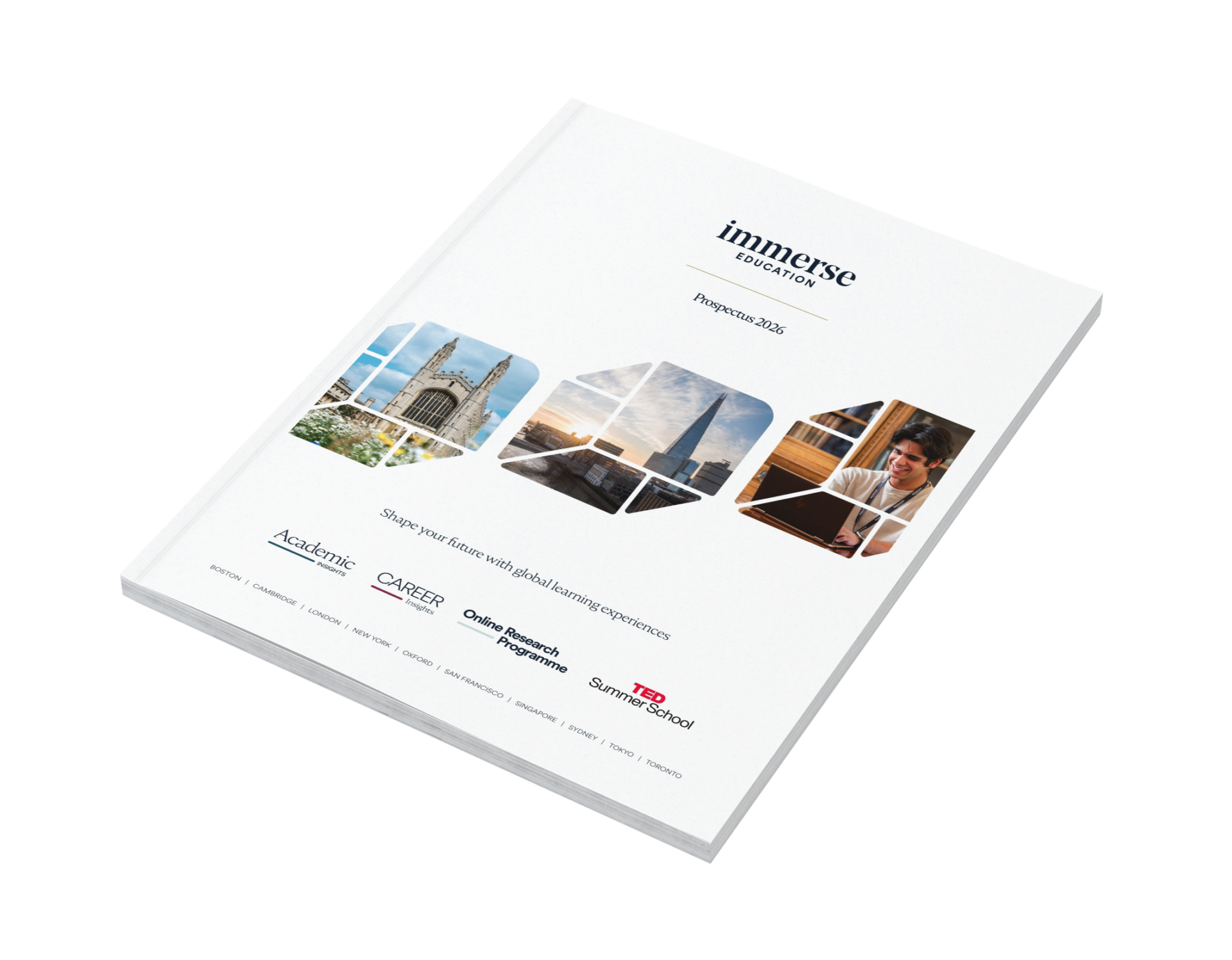
The Online Research Programme by Immerse Education is a 1:1, mentor-led academic experience designed to simulate undergraduate-level research. You’ll work directly with tutors from institutions like the University of Oxford, the University of Cambridge, and Ivy League universities to explore a subject of your choice, ranging from AI and economics to law, medicine, and architecture. Across 10–15 hours of personalised sessions, you’ll develop a structured research project, build academic writing and critical thinking skills, and produce a full-length research paper.
The programme mirrors university-style learning, combining independent study with intensive 1:1 tutorials, feedback, and mentorship. By the end, you’ll have a polished research project, deeper subject clarity, and a strong academic signal for university applications, especially valuable if you lack access to formal research opportunities locally. You can find more details about the application here.
Why it stands out: Highly personalised, 1:1 research mentorship with Oxbridge and Ivy League tutors, offering rare access to undergraduate-style research, flexible scheduling, and options to earn credits or publish your work.
3. Penn State College of Medicine High School Research Internship / Shadowing
Location: Pennsylvania, USA
Cost: No cost paid internship
Program Dates: Flexible (short-term 1-2 days or extended weeks to months)
Deadline: Rolling basis
Eligibility: High school students residing in the United States; must be supervised by a College of Medicine faculty member; not open to international students
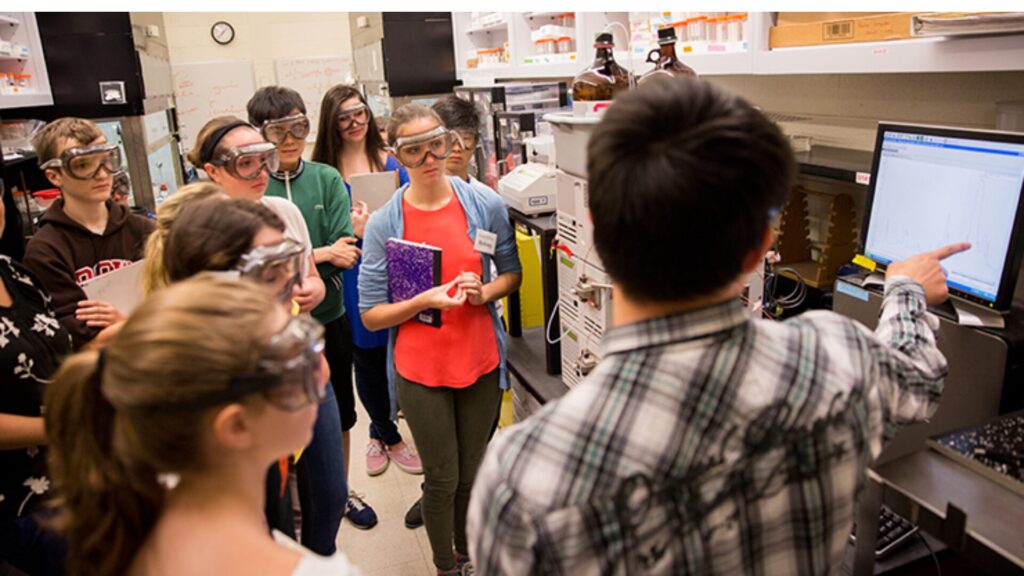
The Penn State College of Medicine High School Research Internship or Shadowing program provides structured access to laboratory environments through supervised placements. You’ll observe or participate in research activities under a faculty mentor, depending on the duration and scope of your placement. The program emphasizes laboratory safety, compliance, and ethical research conduct. You’ll complete the required documentation, training, and approvals before beginning any work.
Activities are strictly regulated, with restrictions on hazardous materials unless prior training is completed. You’ll gain exposure to real research settings while working within defined safety and supervision protocols. By the end of the experience, you’ll understand laboratory procedures, research environments, and professional expectations in biomedical settings.
Why it stands out: A highly regulated structure that prioritizes safety, supervision, and formal training while still providing direct exposure to real laboratory research environments.
4. American Psychological Association (APA) Internal Internship Program
Location: Remote (U.S.-based; specific state restrictions apply)
Cost: No cost (paid and unpaid academic credit options available)
Program Dates: Year-round (spring, summer, fall, winter)
Deadline: Rolling basis
Eligibility: Students enrolled at least part-time in an academic institution; must be eligible to work in the U.S. and reside in an approved state; not open to international students
The APA Internal Internship Program provides structured exposure to applied psychology within a non-profit organizational setting. You’ll examine how psychological principles are used across domains such as policy, research, communications, publishing, and education. The program emphasizes the application of theory to workplace practice through department-specific tasks and supervised projects. You’ll work directly with a supervisor, contributing to ongoing initiatives while developing professional skills.
You may also participate in workshops, discussions, and group activities that expand your understanding of career pathways in psychology. The experience includes opportunities for networking across APA staff. By the end of the internship, you’ll build practical skills, workplace awareness, and insight into non-clinical psychology careers.
Why it stands out: Broad exposure to multiple applied psychology domains within a large professional organization, combined with structured supervision and cross-departmental learning opportunities.
5. Cleveland Clinic Research Summer Internship (High School Students)
Location: Cleveland, Ohio, USA
Cost: Free
Program Dates: 10 weeks (summer); additional independent opportunities year-round
Deadline: January 31, 2026
Eligibility: Local high school students aged 16 or older; must secure placement through formal application or direct lab outreach
The Cleveland Clinic Research Summer Internship provides structured exposure to biomedical research through laboratory-based placements. You’ll examine core research methods while working in active research labs under supervision. The program emphasizes hands-on learning, including laboratory techniques and exposure to ongoing scientific projects. You’ll apply through a formal internship pathway or independently contact Principal Investigators to arrange placement.
The independent route requires identifying labs, communicating research interests, and securing mentorship. You’ll gain experience in research environments and understand expectations in biomedical laboratories. By the end of the program, you’ll build practical lab skills and clarity on research-based career pathways.
Why it stands out: Dual pathway structure that allows both formal application and independent lab outreach, requiring you to actively navigate and secure research placements.
6. Stanford Pre-Collegiate University-Level Online Immersive (ULO-I)
Location: Online
Cost: $3,900 (+ $35 application fee)
Program Dates: January 26th – May 15, 2026
Deadline: January 5, 2026 (applications closed)
Eligibility: High school students (grades 9-12); international eligibility: Available
As one of the more prestigious winter research programs for high school students, the ULO-I program by Stanford Pre-Collegiate Studies offers a rigorous, credit-bearing online experience for students ready to engage with advanced mathematics at a university level. Students earn official continuing studies credit from Stanford University while exploring subjects like Multivariable Calculus & Linear Algebra or Discrete Mathematics.
The curriculum emphasizes conceptual understanding, problem-solving, and real-world applications across fields like data science, economics, and computer science. Topics range from optimization and machine learning foundations to graph theory and combinatorics. The program follows a hybrid format, combining recorded faculty lectures with live, interactive sessions for deeper discussion, along with weekly assignments and exams.
Why it stands out: A rare opportunity to earn Stanford transcript credit while studying genuinely advanced math typically taught at the undergraduate level.
7. UMBC Winter Session (Pre-College / Concurrent Enrollment)
Location: University of Maryland, Baltimore County (UMBC), Maryland, USA
Cost: Ranges from $439 – $6,426
Program Dates: 5th January – 23rd January
Deadline: 15th December
Eligibility: Rising high school juniors and seniors meeting UMBC concurrent enrollment requirements; open to international students
The UMBC Winter Session allows you to take college-level courses for credit while still in high school. You’ll examine academic subjects through standard university coursework alongside other enrolled students. The program emphasizes formal instruction, assignments, and assessments aligned with undergraduate expectations. You’ll apply through concurrent enrollment and follow institutional academic requirements.
Credits earned may be applied toward UMBC degree programs or transferred to other institutions, depending on policies. The experience requires independent study, time management, and active participation in coursework. By the end of the session, you’ll gain exposure to college academics and develop readiness for university-level study.
Why it stands out: Direct integration into a university’s credit-bearing winter term, allowing you to earn transferable college credits through standard undergraduate coursework.
8. Immersion Science Program (Winter Session) – Fox Chase Cancer Center
Location: Philadelphia, Pennsylvania, USA
Cost: Free
Program Dates: Early January-mid March (11 weeks; Saturdays ~3 hours)
Deadline: Early November (application window closes; exact date varies)
Eligibility: High school students aged 16+ in the Philadelphia Tri-State area; must have completed biology and chemistry; parental consent required; not open to international students
The Immersion Science Program is an intensive biomedical research course focused on experimental investigation of nutrient interactions with cancer-related signaling pathways. You’ll examine molecular targets using Drosophila models and contribute to ongoing research on Ras, Hedgehog, and nuclear hormone receptor pathways.
The program emphasizes hands-on laboratory work, data collection, and reproducibility within a structured research framework. You’ll work in a teaching laboratory environment, generating data that may contribute to larger research studies. Sessions require consistent attendance and culminate in a formal presentation of findings. By the end of the program, you’ll build laboratory skills, understand experimental design, and gain exposure to collaborative biomedical research.
Why it stands out: Direct contribution to large-scale, publication-level research through a structured, multi-student experimental model that emphasizes reproducibility and real scientific output.
9. Sandia National Laboratories Year-Round Internship (Winter Term)
Location: Albuquerque, New Mexico, USA; Livermore, California, USA
Cost: Paid internship
Program Dates: Winter term (varies by internship; Part-time year-round internships are offered)
Deadline: Varies by internship
Eligibility: High school students aged 16+ enrolled full-time; must meet GPA requirements (typically 3.0/4.0 for R&D, Technical, or Business roles); U.S. citizenship required for some roles; not open to international students
The Sandia National Laboratories Year-Round Internship provides applied research and technical experience during the academic year, including winter term participation. You’ll examine real-world problems across domains such as engineering, energy systems, cybersecurity, and applied research. The program emphasizes project-based work aligned with your academic background. You’ll work under mentorship from scientists and engineers, contributing to ongoing technical or research initiatives.
You’ll apply classroom knowledge using advanced tools, equipment, and computational systems. Internships require maintaining full-time student status and meeting academic performance criteria. By the end of the internship, you’ll build technical competencies, understand research workflows, and gain exposure to national laboratory environments.
Why it stands out: Integration into active national laboratory projects during the academic year, requiring you to apply theoretical knowledge to technically complex, real-world systems under expert supervision.
10. Cornell Winter Session (Precollege Online)
Location: Online (Cornell University, USA)
Cost: $1,940/credit
Program Dates: January 2-17, 2026
Deadline: December 1, 2025 (registration deadline for pre-college students)
Eligibility: High school juniors and seniors; must meet pre-college enrollment requirements; open to international students
The Cornell Winter Session Pre-College program allows you to take undergraduate-level courses online for academic credit. You’ll examine subjects across disciplines, including science, humanities, business, and technology, through structured university coursework. The program emphasizes academic rigor, with assignments, discussions, and assessments aligned with Cornell standards.
You’ll engage with instructors and peers through digital platforms such as Canvas, discussion boards, and video sessions. Credits earned are recorded on an official Cornell transcript and may be transferable. By the end of the session, you’ll build subject knowledge and readiness for college-level academics.
Why it stands out: Access to official Cornell coursework and transcripted credits within a short, intensive winter term delivered through structured online academic systems.
11. Careers in Science (CiS) Intern Program – Winter Participation
Location: California Academy of Sciences, San Francisco, California, USA
Cost: No cost; paid internship
Program Dates: Year-round (winter participation during school year weekends and afterschool)
Deadline: Applications closed; typically reopen in February
Eligibility: 9th-10th grade students in San Francisco Unified School District; GPA ≥ 2.5; must be authorized to work in the U.S.; not open to international students
The Careers in Science (CiS) Intern Program is a multi-year internship combining scientific research, fieldwork, and science communication. During the winter term, you’ll engage in weekend and after-school sessions focused on applied science activities. You’ll examine scientific concepts through fieldwork, data collection, and public-facing education on the museum floor. The program emphasizes communication skills, requiring you to explain scientific ideas to visitors and participate in structured training.
You’ll also collaborate on research or environmental projects under guidance from Academy staff. Continued participation builds toward leadership roles and mentorship opportunities. By the end of the program, you’ll develop scientific literacy, communication skills, and experience in applied STEM environments.
Why it stands out: Sustained, multi-year structure that combines winter fieldwork, public science communication, and research projects within a museum-based scientific institution.
12. Tufts University College Winter Courses (High School Students)
Location: Medford, Massachusetts, USA (in-person and online options)
Cost: Varies by course
Program Dates: Winter term (dates vary by course)
Deadline: Varies by course
Eligibility: High school students entering grades 10-12; open to international students
The Tufts University College Winter Courses program allows you to enroll in continuing education courses alongside university-level learners. You’ll examine academic subjects through structured coursework, with options for credit, audit, or short-format study. The program emphasizes academic rigor, requiring you to complete assignments, participate in discussions, and meet course-specific requirements.
You’ll study topics that vary by term, which may include areas such as social sciences, health, or applied fields. You’ll engage through in-person or online formats depending on the course. By the end of the program, you’ll gain subject knowledge, academic experience, and exposure to college-level study.
Why it stands out: Flexible enrollment formats within a university winter term, allowing you to choose between credit-bearing, audit, or short-course study based on your academic goals.
13. Girls Who Code Clubs (Winter Participation)
Location: Multiple locations (in-person and online options)
Cost: Free
Program Dates: Ongoing; winter participation during school year (1-2 hours weekly)
Deadline: Rolling enrollment
Eligibility: Students in grades 3-12; high school students eligible; open to international students
Girls Who Code Clubs provide a flexible, project-based introduction to computer science during the school year. In the winter term, you’ll engage in weekly sessions focused on coding fundamentals and applied problem-solving. The program emphasizes computational thinking through guided tutorials and hands-on projects. You’ll build skills in areas such as web development, game design, cybersecurity, and artificial intelligence, depending on your chosen pathway.
Learning is self-paced within a structured curriculum, supported by facilitators and peer collaboration. You’ll also explore emerging technologies through dedicated modules such as AI literacy. By the end of participation, you’ll develop foundational coding skills and experience applying them to real-world challenges.
Why it stands out: Accessible, structured coding curriculum combined with flexible delivery and project-based learning that allows consistent skill development throughout the winter term.
14. Science Winter School
Location: Online
Cost: Free
Program Dates: January 5-16, 2026
Deadline: Closed for 2026, Open in Fall
Eligibility: Students and researchers with an interest in computational and foundational science; international eligibility: Available
The Wolfram Science Winter School, hosted by Wolfram Research (creators of Mathematica and Wolfram Alpha), is a short, intensive program exploring the intersection of computation, physics, mathematics, and philosophy. Participants engage with advanced concepts from Wolfram Science, including simple programs, metamathematics, AI systems, and the foundations of the computational universe.
The program combines lectures, guided readings, discussions, and structured research exercises. A key component is the development of a computational essay, where students apply Wolfram Language to investigate a question and present their findings. No prior experience with the language is required, though familiarity helps.
Why it stands out: Focuses on cutting-edge, unconventional science, training students to think computationally and produce original research-style work in a short, intensive format.
15. Construction + Community (Winter Session) – Girls Garage
Location: Girls Garage, Berkeley, California, USA
Cost: Free
Program Dates: January 20th – March 10, 2026 (Tuesdays, 4:30-6:30 pm)
Deadline: Applications closed (registration opened October 24, 2025)
Eligibility: High school students (grades 9-12); designed for girls and gender-expansive youth; open to international students
The Construction + Community Winter Session is an 8-week, hands-on program focused on construction, design, and applied engineering. You’ll examine building techniques while working on real community-based construction projects. The program emphasizes technical skill development, including the use of tools, materials, and basic construction methods. You’ll apply these skills in a collaborative environment, contributing to projects designed for community use.
Sessions also include guided discussions on teamwork, identity, and the role of construction in shaping communities. The program requires consistent participation in weekly after-school sessions. By the end of the session, you’ll build foundational construction skills and understand how design and engineering apply to real-world environments.
Why it stands out: Direct involvement in community-focused construction projects that combine technical skill-building with applied design and collaborative project execution.
Turning Winter Research Into University Readiness
Winter does not have to be a pause between bigger academic opportunities; it can become the season where you build research momentum.
Through these winter research programs for high school students, you can practise data analysis, coding, scientific reasoning, mentorship, and project-based problem solving.
From credit-bearing courses to biomedical labs, online research papers, and national laboratory placements, each option can reveal how you handle university-style work.
Curious how to turn winter learning into stronger applications and clearer choices? Read our University Preparation blogs for practical guidance on your next step.