

 Русский (RU)
 Українська (UK)
 Türkçe (TR)
 Italiano (IT)
 Français (FR)
 Português (PT)
 中文 (中国) (ZH)
 Español (ES)
 日本語 (JA)
 ไทย (TH)
 Deutsch (DE)
 Ελληνικά (EL)
 Polski (PL)
 Bahasa Indonesia (ID)
 Nederlands (NL)
 العربية (AR)
 한국어 (KO)

If you’re drawn to subjects like economics, finance, business, public policy, or political science, high school is a great time to start exploring how economic systems actually function. Economics summer programs in Japan for high school students can help you understand decisions made by individuals, businesses, and governments while analysing how societies operate.
Imagine spending several weeks examining economic data, debating policy choices, studying international trade, or analysing the factors that influence economic growth. You might explore questions involving inflation, labour markets, technological change, or government spending while learning how economists approach complex real-world problems.
Why pursue economics summer programs in Japan?
Few countries offer as many interesting economic case studies as Japan. The country has experienced periods of rapid economic expansion, technological leadership, demographic change, and evolving monetary policy, making it a frequent subject of discussion in economics classrooms and research.
For students, that creates a unique learning environment. Japan’s economy provides real-world examples of concepts ranging from industrial policy and international trade to innovation and population economics. Studying economics there can help bring abstract ideas to life by connecting them to developments that economists continue to analyse today.
Japan is also home to respected universities and research institutions that contribute to economic scholarship and policy discussions. Combined with the country’s global economic influence, these factors make it a particularly compelling destination for students interested in understanding economics beyond the textbook.
To help you get started, we’ve compiled the 15 best economics summer programs in Japan for high school students!
For related opportunities, consider the online economics program and summer programs in Japan.
15 Economics Summer Programs in Japan for High School Students
1. Temple University Japan Campus High School Summer Program
Location: Temple University Japan Campus, Tokyo, JP-13
Cost: ¥340,000 + ¥20,000 registration fee
Acceptance rate/cohort size: Unspecified
Application Deadline: April 1st (visa), May 1st (no visa)
Dates: July 29th – August 6th
Eligibility: Grades 9-12 high school students around the world
Temple University Japan Campus’s High School Summer Program is one of the most accessible economics summer programs in Japan for high school students, combining university-style coursework with residential life in Tokyo. During the programme, you’ll take classes that may include business, economics, or other social science subjects taught in English.
Cultural excursions around Tokyo and Nikko add another layer to the experience and help place classroom discussions in a broader Japanese context. Living alongside other students also gives you a sense of what studying abroad might feel like in the future.
Why it stands out: Combines economics-adjacent electives with a structured US-style university campus experience in Tokyo.
2. Immerse Education’s Tokyo Economics Summer School
Location: Tokyo, Japan
Cost/Stipend: Varies; summer school scholarship available through our bursary programme
Acceptance rate/cohort size: Selective; an average of 7 participants per class
Dates: 2 weeks during the summer
Application Deadline: Multiple summer cohorts with rolling admissions
Eligibility: Students from all around the world aged 13-18 currently enrolled in middle or high school
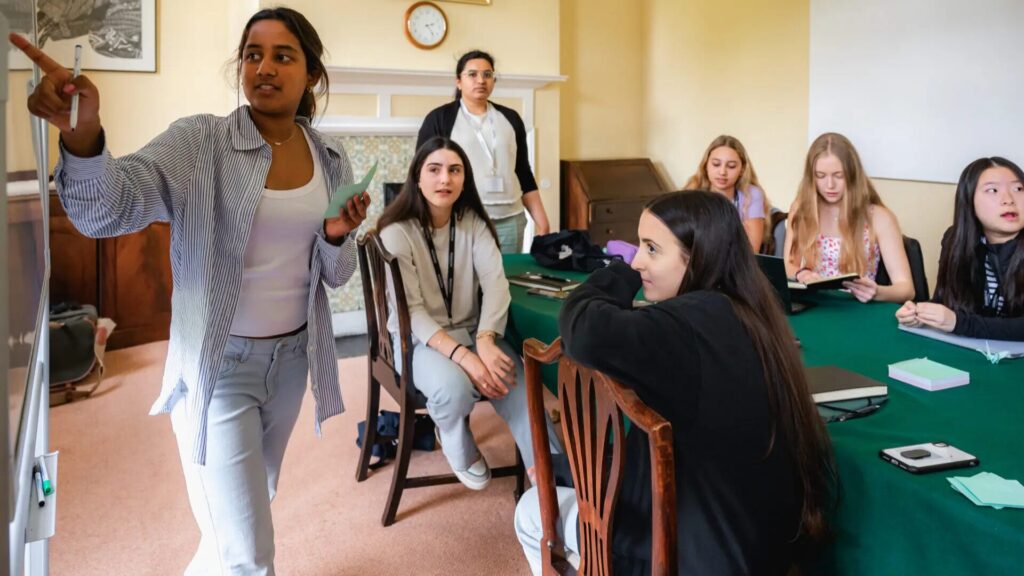
Immerse Education’s Economics Summer School gives you a focused, two-week immersion into economic theory and real-world applications, taught by expert tutors associated with top universities and academic institutions. The program aims to deepen your understanding of fundamental economic principles, global markets, and policy-making. Across lively seminars, workshops, and discussions, you’ll explore core concepts such as market behaviour, inflation, trade, inequality, fiscal and monetary policy, and how these forces shape global economies.
Beyond the classroom, excursions and cultural activities help you connect lessons to the world around you, while living and studying alongside peers from around the globe adds an international perspective. Completion earns you a certificate of achievement and, in some cases, optional UCAS points if you’re looking toward UK university applications. You can find more details about the application here.
Why it stands out: It blends concentrated academic development with an immersive international summer experience, helping you deepen your economics knowledge while engaging with peers in diverse cities worldwide.
3. Tokyo Innovation Summer Program (TISP)
Location: Tokyo + regional Japan (varies), JP-13
Cost: Unspecified
Acceptance rate/cohort size: Mixed international cohort
Application Deadline:
Dates: July – August (tentative)
Eligibility: High school students (international and Japanese)
Tokyo Innovation Summer Program approaches economics through entrepreneurship, innovation, and problem-solving. You’ll work in international teams to investigate real challenges facing communities and organisations, then develop solutions informed by economic reasoning and systems thinking.
Workshops introduce methods used to analyse problems, generate ideas, and evaluate potential outcomes. Fieldwork in Tokyo and other regions of Japan allows you to observe local industries, communities, and economic issues firsthand. Throughout the programme, you’ll collect information, conduct research, and collaborate with teammates to refine your ideas.
Why it stands out: Strong blend of economics, innovation, and field-based regional economic analysis in Japan.
4. Natsu Camp (Natsu Project)
Location: Tokyo, JP-13
Cost: JPY 348,000 (regular), JPY 315,000 (priority)
Acceptance rate/cohort size: Unspecified
Application Deadline: March 29th
Dates: August 1-7
Eligibility: Ages 15-19; international students can apply
Natsu Camp brings together students interested in entrepreneurship, sustainability, international affairs, and economics for a week of project-based learning in Tokyo. You’ll work in teams to examine real-world challenges and develop solutions supported by research, discussion, and economic reasoning. Rather than studying economics as a standalone subject, you’ll use it to understand issues such as sustainability, innovation, and global development.
Mentors from academic and professional backgrounds guide discussions and help teams strengthen their ideas. Field visits around Tokyo add context by exposing you to organisations, businesses, and systems connected to the topics being explored. Throughout the week, you’ll spend as much time debating and refining ideas as you do learning new concepts.
Why it stands out: Strong emphasis on applied economics through entrepreneurship and global issue-based projects.
5. Stanford e-Japan Program (SPICE)
Location: Online (Japan-based participants), JP
Cost: Free
Acceptance rate/cohort size: Selective (Japan-only cohort)
Application Deadline: Varies by cohort
Dates: Varies by cohort
Eligibility: High school students residing in Japan
Stanford’s e-Japan Program runs over several months and focuses on the relationship between economics, public policy, entrepreneurship, and U.S.–Japan relations. You’ll attend online lectures, participate in discussions, and gradually develop an independent research project connected to economic or policy issues. Topics often include trade, innovation, economic systems, and international cooperation.
A large part of the programme involves reading, research, and learning how to evaluate evidence before forming conclusions. Faculty-guided discussions encourage students to connect economic ideas to current events and policy debates. The programme concludes with a formal presentation where you’ll share your research findings.
Why it stands out: Long-form research experience in economics and policy with a Stanford-level academic structure.
6. NUCB International College Summer Camp – Business Case Method
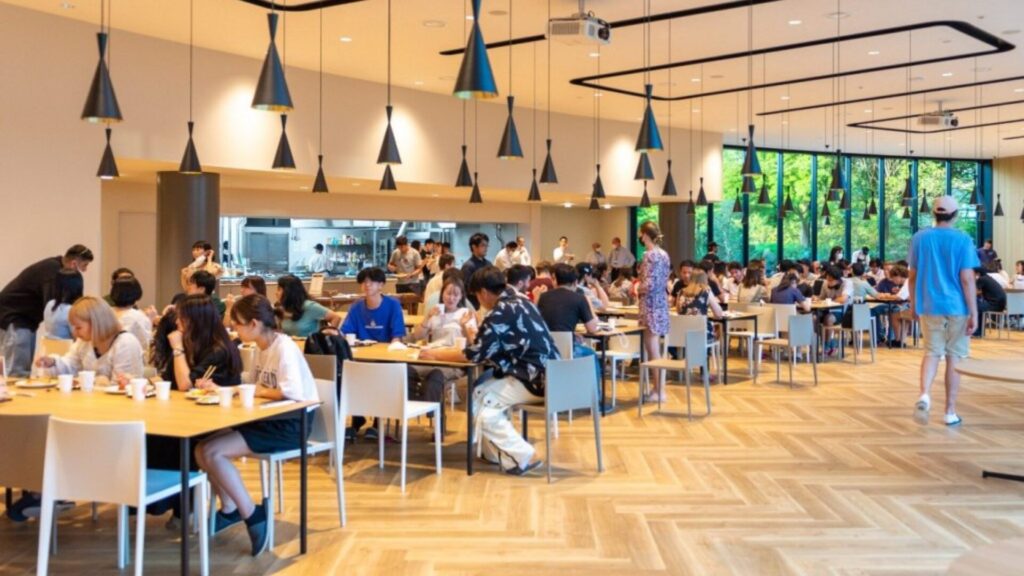
Location: NUCB International College / Nagoya University of Commerce and Business, Nisshin-shi, Aichi Prefecture (near Nagoya)
Cost: ¥275,000 ($1,720); all-inclusive (tuition, accommodation, food, excursions)
Acceptance Rate/Cohort Size: Varies; applications close upon reaching maximum enrollment
Application Deadline: Rolling from January 15th; closes when full
Dates: July 20-28
Eligibility: Ages 13-15 at time of program; at least conversational English proficiency required; international students eligible
NUCB International College’s Summer Camp introduces you to the case method, a teaching approach widely associated with business schools. You’ll spend much of your time discussing real business situations and deciding how you would respond if you were responsible for the outcome. Cases cover management, strategy, decision-making, and economic thinking in practical settings.
Team activities, workshops, and field studies complement classroom discussions and require you to defend your ideas using evidence and reasoning. You’ll also work with classmates from different backgrounds while preparing presentations based on your analysis. The programme ends with teams presenting their findings and recommendations.
Why it stands out: It is the only program in Japan at the high school level that uses the actual Harvard Business School case method in a business curriculum, taught on the campus of an AACSB-accredited institution.
7. GTE® Summer School (Startup & Business Plan Contest)
Location: Chiba Prefecture (Chosei area) & Tokyo (Otemachi Global Business Hub), Japan
Cost: ¥109,000 (all-inclusive of Chiba accommodation, meals, activities, and Tokyo transit)
Acceptance rate/cohort size: Selective; capped at 40 students
Application Deadline: Rolling admissions until filled
Dates: Late July (4 days, 3 nights)
Eligibility: Junior high and high school students from around the world
In this program, you participate in an intensive, bilingual entrepreneurship camp designed to take you from a raw business idea to a professional startup pitch. Under the guidance of experienced founders and corporate mentors with global backgrounds (from Silicon Valley to India), you learn the core frameworks of ideation, marketing, and finance. You collaborate in diverse teams with peers from across Japan and overseas, navigating both English and Japanese to craft a comprehensive business plan.
Alongside intense workshop sessions, the program integrates cultural activities such as dancing a traditional Yosakoi, beach games, and a large communal BBQ to foster global networking and peer-to-peer bonds. On the final day, your team travels to Tokyo’s prestigious Global Business Hub in Otemachi, where you present your startup proposal to a panel of expert judges in a formal business plan contest.
Why it stands out: It is a fast-paced, bilingual startup boot camp in Japan that pushes you to build a complete business model from scratch and pitch it at a premier Tokyo financial district hub.
8. Tokyo Digital Assets, AI & Fintech Experience
Location: Central Tokyo, Japan
Cost: $4,999 (excluding airfare)
Acceptance rate/cohort size: Selective; up to 45 students
Application Deadline: Rolling admissions
Dates: July 11-19 (9 days)
Eligibility: High school students worldwide entering grades 9-12
Tokyo Digital Assets, AI & Fintech Experience is built for students who want to understand where finance and technology are heading. Over nine days, you’ll study topics such as artificial intelligence, blockchain, digital assets, decentralized finance (DeFi), tokenisation, robo-advisors, and algorithmic investing through sessions developed with the New York Institute of Finance. Classes are led by finance professionals and fintech experts who use case studies from major companies across Asia to explain how these technologies are being applied in practice.
You’ll also examine how digital financial products are created, evaluated, and brought to market. Visits to financial institutions and innovation hubs around Tokyo help connect classroom discussions to the wider fintech ecosystem. The programme ends with a Fintech Pitch Challenge where you’ll work with a team to develop and present a financial technology product to an expert panel.
Why it stands out: Few high school programmes combine AI, blockchain, and finance while giving students direct access to professionals from the fintech industry.
9. Soka University Academic Short Program: Business & Innovation
Location: Soka University (Hachioji Campus), Tokyo, JP-13
Cost: ¥180,000 (all-inclusive of Hachioji campus accommodation, activities, airport transfers, and most meals)
Acceptance rate/cohort size: Selective; up to 45 participants per cohort
Application Deadline: Usually mid-spring (e.g., April 24th)
Dates: Early August (7 days)
Eligibility: High school students from all nationalities in grades 10-12; must apply as a school group (minimum 5 students plus 1 chaperone)
Soka University’s Business & Innovation Program is one of the most culturally grounded economics summer programs in Japan for high school students, using Tokyo and Yokohama as case studies for understanding how culture, business, and trade shape modern economies. You’ll attend classes led by the Faculty of International Liberal Arts before heading into the city to investigate economic activity firsthand.
Field visits also take you to Yokohama Port and the Red Brick Warehouses, where you’ll explore Japan’s history of international trade and urban development. Throughout the week, you’ll work closely with Soka University student buddies and collaborate on presentations that bring together your observations and research.
Why it stands out: You study the business side of anime, pop culture, and international trade by observing them directly in the places where they developed.
10. Wharton Global Youth – Financial Decision Making (Online)
Location: Online
Cost: $4,099 + $100 non-refundable application fee
Acceptance Rate/Cohort Size: Selective
Application Deadline: Priority: January 28th; rolling thereafter
Dates: Session I: June 15-26; Session II: July 6-17
Eligibility: High school students currently enrolled in grades 9-12; international students welcome; no prior economics or finance knowledge required
This two-week online program is built around a curriculum developed by Wharton Professor David Musto, an expert in capital markets and equity finance. You attend two hours of daily live lectures led by Wharton instructors and one hour of daily recitation with teaching assistants who are Penn undergraduate and graduate students. Content covers personal finance foundations, corporate finance principles, risk vs. return, investment decision-making, and Excel-based financial analysis.
You collaborate on projects with peers from around the world and present findings as part of the final assessment. Participants who complete all requirements earn a Wharton Global Youth Certificate of Completion. All sessions are held in Eastern Time, which is manageable from Japan (evening/night sessions).
Why it stands out: It is a live, interactive online program — not self-paced video content — built on Wharton faculty research and delivered by Penn instructors with TA-supported small group sessions daily.
11. Harvard Secondary School Program – Online Economics Courses
Location: Harvard University – fully online (7-week option)
Cost: $4,180 (4 credits) or $8,160 (8 credits) + $75 application fee; financial aid available for U.S. citizens/permanent residents
Acceptance Rate/Cohort Size: Selective; 200+ course options
Application Deadline: April 1st
Dates: June 20th – August 8th
Eligibility: Students graduating from high school and entering college in the next three years; international students may take online courses independently (not on a Harvard I-20); a strong academic record is expected
Harvard’s Secondary School Program allows you to take a college-level economics course and earn Harvard credit while studying online from home. Courses are taught by Harvard faculty and follow the same academic expectations used in Harvard Summer School. Depending on the class, you’ll spend your summer reading academic material, participating in discussions, completing written assignments, and analyzing economic problems.
Topics may include microeconomics, macroeconomics, finance, entrepreneurship, or related areas. Classes move quickly, and you’ll be expected to manage your workload independently while keeping pace with university-level coursework. Upon successful completion, you’ll receive an official Harvard transcript showing the credits you’ve earned.
Why it stands out: The online section of Harvard’s SSP is the only program on this list where you can earn transferable Harvard College credit in economics while studying remotely from Japan.
12. Game Theory: A Course in Mathematical Economics
Location: Online (Columbia University)
Cost: $4,018
Acceptance rate/cohort size: Selective; small class sizes to support interactive learning
Application Deadline: April 2nd
Dates: July 6-17
Eligibility: Students entering grades 9-12 with a strong interest in mathematics; no prior economics coursework required; international students welcome
This course introduces game theory as a framework for analyzing decision-making in situations involving competition, cooperation, and uncertainty. You study tools such as payoff matrices, probability distributions, and equilibrium concepts to understand how different agents make choices when outcomes depend on others’ actions.
Through structured problem sets and case-based discussions, you apply these models to scenarios in economics, business strategy, bargaining, pricing, and political decision-making. The course links standard theoretical models to practical situations, showing how assumptions about incentives and rational behavior are used to interpret real-world outcomes.
Why it stands out: You develop a structured way to analyze strategic interactions using formal models that can be applied across economic and social decision-making contexts.
13. Globalisation: Challenges in International Economics & Politics
Location: Online option available
Cost: $4,017
Acceptance rate/cohort size: Selective; small class sizes to support interactive learning
Application Deadline: April 2nd
Dates: July 6-17, July 20-31
Eligibility: Students entering grades 9-12 with a strong interest in mathematics; no prior economics coursework required; international students welcome
This course focuses on the relationship between global economic integration and domestic political priorities, particularly in contexts shaped by trade tensions, shifting alliances, and economic uncertainty. You examine topics such as international trade, capital flows, sovereign debt, foreign aid, energy systems, and the role of institutions like the IMF and World Bank.
You also study how internal political and economic structures influence external policy decisions, including issues such as income distribution, public debt levels, welfare systems, and national security considerations. Through lectures, research assignments, group projects, policy discussions, and peer feedback, you work on connecting economic frameworks with political and institutional outcomes across different countries.
Why it stands out: You examine how international economic systems and domestic political choices interact to shape policy decisions and global outcomes.
14. The Business of Economics – Rice University Precollege Program

Location: Online
Cost: $1,795
Acceptance rate/cohort size: Unspecified
Application Deadline: Varies based on the program dates
Dates: Multi-length courses available throughout the year
Eligibility: Students ages 13 and up; international students welcome
Rice University’s Business of Economics online course introduces how economic principles are applied in business and public policy contexts. You learn through structured video lectures and guided assignments developed by faculty, covering topics such as inflation, interest rates, labor markets, energy markets, and fluctuations in economic activity. The course focuses on how firms and policymakers respond to changes in economic conditions, including shifts in policy, uncertainty in markets, and constraints in production and supply chains.
You complete exercises that connect economic concepts to practical decision-making in business environments. The program concludes with a capstone project where you apply core concepts to a real-world business scenario and receive a Certificate of Completion from Rice University.
Why it stands out: You complete a structured applied project that uses economic concepts to analyse a real business decision or scenario.
15. Brown University Pre-College: Principles of Economics
Location: Online
Cost: $8,973
Acceptance rate/cohort size: Highly selective
Application Deadline: May 8th
Dates: June 15th – July 31st
Eligibility: Rising or recently graduated high school seniors; international students welcome
This seven-week online course provides an introductory overview of core economic concepts at both the microeconomic and macroeconomic levels. You study topics such as supply and demand, pricing mechanisms, market structures, labor markets, inflation, and GDP, along with how economic models are used to interpret real-world situations. The course emphasises basic economic reasoning using data interpretation, graphs, and applied examples from policy and markets.
You work with foundational tools such as marginal analysis, equilibrium models, and comparative statics, which are commonly used in introductory university economics courses. The structure is designed to build familiarity with standard methods used in economic analysis rather than focusing on a single specialisation.
Why it stands out: You build foundational economics skills using standard models and methods commonly taught in early undergraduate courses.
Let Japan Shape How You Understand Economics Abroad
Studying economics in Japan can help you see how markets, policy, innovation, and culture connect in real-world settings.
The 15 economics summer programs in Japan for high school students in this guide introduce finance, trade, entrepreneurship, public policy, and global business.
By learning abroad, you can build independence, compare economic systems, meet international peers, and understand classroom ideas through lived experience.
Ready to make your next academic journey global? Use our Study Abroad blogs for guidance on destinations, applications, culture, planning, and student life.