


 Русский (RU)
 Українська (UK)
 Türkçe (TR)
 Italiano (IT)
 Français (FR)
 Português (PT)
 中文 (中国) (ZH)
 Español (ES)
 日本語 (JA)
 ไทย (TH)
 Deutsch (DE)
 Ελληνικά (EL)
 Polski (PL)
 Bahasa Indonesia (ID)
 Nederlands (NL)
 العربية (AR)
 한국어 (KO)

Tech summer programs in Europe for high school students offer an opportunity to explore some of the most exciting and fast-evolving areas of technology in an immersive academic environment. Through hands-on projects, expert-led teaching, and collaborative learning, students can develop skills that go beyond what is typically covered in school, with subjects such as artificial intelligence, machine learning, robotics, software development, cybersecurity, data science, and engineering design.
Along the way, participants gain experience using industry-relevant tools, programming languages, research methods, and problem-solving frameworks while working on practical challenges that reflect real-world applications. These experiences also introduce students to the pace and expectations of higher education.
By combining academic challenge with campus-based learning, these programmes can support a high schooler’s wider university journey, offering a clearer sense of what studying at a top institution can feel like in person.
Why Europe?
Europe is an especially compelling destination for students interested in technology. Home to some of the world’s leading universities, pioneering research centres, and globally influential technology companies, the region offers a unique combination of academic excellence and innovation. Students can learn in environments shaped by cutting-edge research, entrepreneurial ecosystems, and strong industry connections across fields such as artificial intelligence, engineering, computing, and sustainability.
Beyond the classroom, Europe’s rich cultural diversity, interconnected cities, and international outlook provide an unmatched opportunity to collaborate with peers from around the world, broaden perspectives, and experience different approaches to solving global challenges. This blend of academic rigour, technological innovation, and cultural exposure makes Europe an ideal setting for a Tech Summer experience.
To help you in the process, we’ve created a list of 15 Tech Summer Programs in Europe.
For related opportunities, consider the online computer science program and the online AI program.
Key Takeaways
- Costs range from free, as with Oxford’s UNIQ Summer School and the University of Cambridge’s Sutton Trust Summer School, to £8,950 for Oxford Saïd’s Teen Technology and Innovation Summer Academy.
- Several free programs are restricted to UK state school students, including UNIQ Summer School, the Sutton Trust Summer School at Cambridge, and UCL’s Chemical Engineering Sutton Trust Summer School.
- Program length ranges from three days, as with the University of Surrey’s Engineering Sciences residential, to two weeks, as with Oxford Saïd’s Teen Technology and Innovation Summer Academy.
- Two EPFL programs in Switzerland stand out for their low cost relative to other paid options, charging only CHF 50 for a week of hands-on coding and robotics work.
- Several programs combine technology with adjacent fields, including game theory and AI at EPFL and healthcare technology at King’s College London’s Science, Technology & Engineering course.
- International students are welcomed at a smaller set of paid programs, including Oxford Saïd’s academies, Politecnico di Milano’s TECH CAMP, and InvestIN Summer Experiences.
- Immerse Education’s Computer Science Summer School is one of the few residential options open to students worldwide aged 13 to 18, combining small classes with an independent project and full campus experience at Oxford or Cambridge.
15 Tech Summer Programs in Europe for High School Students
1. University of Oxford – UNIQ Summer School (Computer Science)
Location: Department of Computer Science, Wolfson Building, Parks Road, Oxford, OX1 3QD (UK)
Cost: Free (UNIQ is described as a free summer school covering transport, food, accommodation, and activities)
Dates: July 16- 22
Application Deadline: No specific deadline
Eligibility: Open to Year 12 (or equivalent) students at UK state schools/colleges
The University of Oxford’s UNIQ Summer School in Computer Science is a one-week residential programme for Year 12 students interested in exploring the subject in greater depth. During the programme, you take part in lectures, seminars, and practical sessions that introduce key areas of computer science and demonstrate how the subject is studied at the university level. Alongside academic learning, you stay in Oxford college accommodation, giving you first-hand experience of the daily routines, environment, and community of university life.
The programme also includes group activities and opportunities to meet other students with similar interests, helping you develop connections while learning in a collaborative setting. Through a combination of academic and residential experiences, you gain a clearer understanding of both the discipline and the realities of studying at university.
Why it stands out: You explore computer science through practical workshops and discussions that extend beyond the school curriculum and introduce university-level approaches to the subject.
2. Immerse Education’s Computer Science Summer School
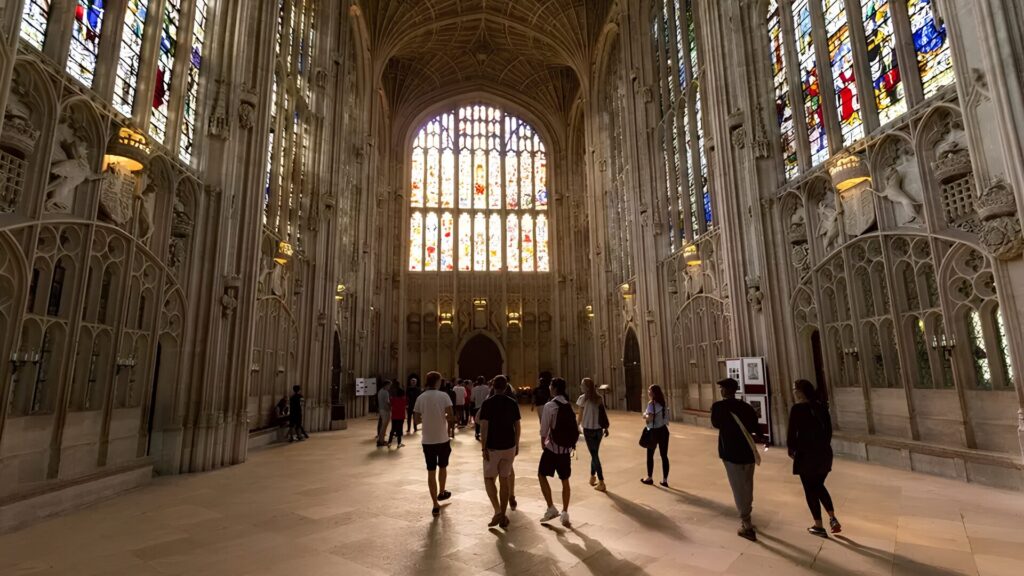
Location: Cambridge or Oxford (campus-based, UK)
Cost: Varies; summer school scholarship available through our bursary programme
Application Deadline: Multiple cohorts with rolling admissions
Program Dates: 2 weeks during the summer
Eligibility: Students worldwide aged 13-18 currently enrolled in middle or high school
Immerse Education’s Computer Science Summer School places you in an academically structured environment where you study foundational and advanced computing concepts with expert tutors from leading universities. You cover important topics like algorithms, data structures, programming languages, and software engineering principles, as well as applications like machine learning and artificial intelligence. Small classes let you get personalized feedback and talk to tutors and classmates from all over the world on a regular basis.
When you go to a place like Cambridge or Oxford in person, you also get to experience campus life and structured activities that are similar to how you would study at a university. By completing this summer school, you gain clearer insight into how computer science is studied at the tertiary level and develop technical skills that support future academic and career decisions in computing fields. You can find more details about the application here.
Why it stands out: You’ll be taught by top faculty, work on an independent project, and live on campus, giving you a complete experience of future university life.
3. University of Cambridge – Sutton Trust Summer School (Computer Science)
Location: University of Cambridge, UK (residential)
Cost: Free
Dates: August 17-21
Application Deadline: February 12th
Eligibility: Year 12 (England & Wales), Year 13 (NI) or S5 (Scotland) | Attend a UK state-funded (non-fee paying) school/college | Meet academic and widening participation criteria (e.g., GCSE grades and contextual markers)
The University of Cambridge Computer Science Sutton Trust Summer School is a residential programme that introduces you to the study of computer science in a university setting. Over the course of the week, you participate in programming sessions, academic workshops, and small-group teaching that encourage analytical thinking and problem-solving. Whether you are new to coding or already have experience, the programme provides opportunities to strengthen your technical skills while exploring how computer science is approached at degree level.
You are also exposed to a range of specialist topics within the discipline, helping you understand the breadth of the field and its applications. By living in college accommodation and spending time with current students and fellow participants, you gain a practical sense of academic and residential life at Cambridge. The programme offers a useful introduction to university study while allowing you to further develop your interest in computing.
Why it stands out: You combine hands-on computing sessions with small-group teaching and a residential experience that reflects day-to-day student life at Cambridge.
4. King’s College London Pre-University Science, Technology & Engineering
Location: King’s College London, London, UK
Cost: £2900 + £60 application fee; Residential package available
Dates: July 6-10 (session one) and July 20-24 (session three)
Application Deadline: April 27th
Eligibility: High-achieving students worldwide who are about to start or who are enrolled in their final two years of high school and are typically aged 16 and 17; Must be aged 16 before the start date of the course; English language level must be at level B2 in the CEFR
This programme introduces you to engineering and technology through topics that reflect current developments in research and industry, making it one of the more interdisciplinary tech summer programs in Europe for high school students. During the course, you explore areas such as artificial intelligence, robotics, computer-aided design, digital systems, medical technologies, and advanced manufacturing techniques. By engaging with these subjects, you develop an understanding of how engineering principles are applied across different sectors and disciplines.
Learning takes place through a combination of lectures, seminars, laboratory activities, and collaborative projects, giving you experience of the varied teaching methods commonly used at university. You also work on presentations and group tasks that help strengthen your ability to analyse information, communicate technical concepts, and work effectively with others. Feedback on assessed work provides further insight into academic expectations and approaches to problem-solving at undergraduate level.
Why it stands out: You explore engineering through a combination of technological and healthcare-focused applications, highlighting the interdisciplinary nature of the field.
5. University of Warwick Pre-University Summer School – Science and Engineering

Location: University of Warwick, Coventry, UK
Cost: £5,250
Dates: July 14-24
Application Deadline: May 31st
Eligibility: Students ages 16-17; international students are welcome to apply
Warwick’s Science and Engineering route gives you the opportunity to examine engineering concepts while exploring their connections to a broader range of STEM subjects. Through academic sessions and subject-focused activities, you investigate topics that extend beyond the school curriculum, including areas related to technology, automation, digital systems, and scientific innovation. This wider perspective can help you understand how engineering interacts with other disciplines and where your interests may fit within the STEM landscape.
Alongside subject learning, the programme develops practical academic skills that are valuable for future study. You take part in workshops focused on research, note-taking, communication, and critical thinking, gaining experience with approaches commonly used in higher education. Guidance on university applications and personal statements also provides insight into the admissions process and helps you prepare for future applications.
Why it stands out: You explore engineering alongside several STEM disciplines, making it useful if you are considering multiple academic pathways within science and technology.
6. King’s College London – Summer School in Data & Computer Science
Location: London, United Kingdom
Cost: Tuition fee: £3,195 | Residential option (tuition + accommodation): £3,965 | Application fee: £65
Dates: July 13-17
Application Deadline: April 10th
Eligibility: High school students around the world enrolled in the final three years | Aged 16-17 before start of course | Personal statement required | English proficiency at least CEFR B2 if English isn’t the first language
King’s College London’s Pre-University Computer Science programme introduces you to the study of computing through a combination of academic teaching and practical application. Over the course of the programme, you examine core concepts such as algorithms, program design, computational thinking, and problem-solving while developing coding skills through Python-based exercises and projects. Sessions are delivered through lectures, workshops, and collaborative activities that reflect the variety of learning formats commonly used in higher education.
In addition to subject knowledge, you gain experience with independent learning, critical analysis, and project-based work. Working alongside other students, you explore how computer science is taught and applied beyond the school curriculum while building skills that are relevant to future academic study. The programme also provides insight into the expectations of university-level coursework and assessment.
Why it stands out: You combine foundational computer science theory with practical Python programming in a learning environment designed to reflect undergraduate study.
7. EPFL Game Theory and Artificial Intelligence
Location: Lausanne, Switzerland (EPFL campus)
Cost: CHF 50 (meals and accommodation not included)
Dates: June 29th – July 3rd
Application Deadline: May 3rd
Eligibility: High school students who have completed their first year of gymnasium (no explicit mention of whether international students are allowed)
Hosted by École Polytechnique Fédérale de Lausanne, the Game Theory and Artificial Intelligence Pre-University Week introduces you to the principles that underpin decision-making, strategy, and intelligent systems. Among the more conceptually focused tech summer programs in Europe for high school students, it lets you examine how mathematical models and computational methods can be used to analyse competitive and cooperative situations, while exploring the role of algorithms in solving complex problems.
The course combines conceptual learning with practical activities, allowing you to apply ideas from game theory and artificial intelligence through coding exercises and project work. As you build and test your own solutions, you gain insight into how machines evaluate choices, respond to changing conditions, and make decisions based on available information. The programme also encourages you to consider how these concepts are applied beyond computer science, including in areas such as economics, public policy, and strategic planning.
Why it stands out: You explore the relationship between game theory and artificial intelligence through hands-on coding projects focused on decision-making and strategy.
8. Oxford Saïd Teen Technology and Innovation Summer Academy

Location: Oxford, UK
Cost: £8,950
Dates: Starting July 18th
Application Deadline: No specific deadline
Eligibility: Students aged 15-18 with B2 English proficiency; open to students worldwide (international students allowed)
The Saïd Business School Teen Technology and Innovation Summer Academy introduces you to the relationship between technology, business, and innovation through a combination of academic sessions and collaborative project work. As a more innovation-led option among tech summer programs in Europe for high school students, it gives you two weeks to examine how emerging technologies influence industries and societies, exploring topics such as artificial intelligence, financial technology, biotechnology, sustainability, and entrepreneurship.
Throughout the programme, you work in teams to investigate challenges, develop ideas, and present potential solutions, applying both analytical and creative thinking. Workshops and discussions provide opportunities to strengthen skills in communication, collaboration, and problem-solving while gaining a broader understanding of how new technologies move from concept to implementation. By living in college accommodation and participating in activities outside the classroom, you also gain first-hand experience of student life in Oxford.
Why it stands out: You explore technology through both an innovation and entrepreneurship lens while developing and presenting your own project-based solutions.
9. Politecnico di Milano – TECH CAMP
Location: Campuses of Politecnico di Milano – Campus Città Studi, Campus Bovisa, and Campus Lecco in Milano, Italy
Cost: €800
Dates: June 15- 19 and June 22-26
Application Deadline: March 31st
Eligibility: Starting from the 2nd year of secondary school (or 1st year in four-year programs); international students are welcome to apply
TechCamp@POLIMI is a summer programme that introduces you to a range of STEM subjects through university-style teaching and practical activities. Delivered by academic staff, researchers, and doctoral students, the programme allows you to explore fields such as programming, robotics, artificial intelligence, cybersecurity, and sustainable technologies while developing both technical knowledge and problem-solving skills.
Across the course, you take part in workshops, demonstrations, and hands-on projects that encourage you to apply concepts in real-world contexts. The programme is designed to help you understand how STEM subjects are studied beyond school and provides insight into the different academic pathways available within science and technology. Hosted across Politecnico di Milano’s campuses, it also gives you exposure to a university learning environment and opportunities to engage with students who share similar interests.
Why it stands out: You can explore a variety of technology-focused disciplines through practical sessions led by researchers and university teaching staff.
10. UCL Chemical Engineering Sutton Trust Summer School
Location: UCL, London, UK
Cost: None
Dates: July 27-31
Application Deadline: March 5th
Eligibility: Year 12 students; Specific academic criteria apply; must be attending a state-funded school in the UK
UCL’s Chemical Engineering summer school introduces you to the principles and methods used to design, analyse, and improve industrial processes. Its applied focus gives this option a distinct place among the many tech summer programs in Europe for high school students. Through a combination of laboratory activities and technical workshops, you investigate how chemical engineers work with materials, energy, and reactions to develop systems that operate effectively and safely. The programme highlights the role of engineering, mathematics, and scientific analysis in solving practical challenges across a range of industries.
Alongside experimental work, you explore computational approaches used in process design and modelling, gaining insight into how engineers predict performance and evaluate different solutions before implementation. Collaborative projects allow you to apply these concepts to broader engineering challenges, encouraging analytical thinking and teamwork. Talks and discussions with academics and industry representatives also provide a wider perspective on the subject and its applications beyond the classroom.
Why it stands out: You experience both experimental and process-modelling approaches, reflecting the balance of practical and analytical work involved in chemical engineering.
11. Taste of Science and Engineering
Location: Warwick, United Kingdom
Cost: £5,250 fee + £50 application fee (no stipend)
Dates: July 14-24
Application Deadline: 31st May
Eligibility: Age 16-17; good English proficiency; no specific subject requirement; international students are welcome to apply
The Science and Engineering course at the University of Warwick Pre-University Summer School introduces you to a range of STEM subjects through teaching designed to reflect university-level study. You explore areas including engineering, computer science, mathematics, physics, and chemistry, with an emphasis on how these disciplines connect when addressing scientific and technical problems. Sessions are delivered through lectures, seminars, and workshops led by Warwick academics, giving you a sense of how STEM subjects are taught at the degree level.
Alongside subject learning, you develop skills in research, communication, and structured problem-solving through guided activities and collaborative tasks. Living on campus with other students and taking part in organised activities also gives you an opportunity to experience a university environment and daily student life in a structured setting.
Why it stands out: You study a range of STEM disciplines together through university-style teaching, helping you understand how different scientific fields interact at the undergraduate level.
12. University of Surrey Residential Summer School – Engineering Sciences
Location: University of Surrey, Guildford, UK
Cost: None
Dates: June 29th – July 2nd
Application Deadline: March 29th
Eligibility: Year 12 students from currently under-represented groups in higher education, who attend a non-selective state school or college in the United Kingdom; Additional criteria apply
Surrey’s Engineering Sciences residential introduces you to core engineering ideas through a combination of lectures, seminars, workshops, and guided academic activities. You examine fundamental principles of engineering while also taking part in a structured project element that encourages you to apply what you are learning in a more independent way.
Alongside the academic content, you gain exposure to university life through interaction with current students, organised social activities, and time spent on campus. Sample lectures and workshops provide a sense of how engineering is taught at the degree level, while the residential format gives context to how academic and social aspects of student life are structured.
Why it stands out: You take part in a structured engineering project that introduces you to independent, university-style academic work.
13. EPFL Pre-University Week – Build Your Own Mobile Robot
Location: EPFF – Swiss Federal Technology Institute of Lausanne, Lausanne, Switzerland
Cost: CHF 50
Dates: June 29th – July 2nd
Application Deadline: May 3rd
Eligibility: Motivated high school students worldwide with some experience in programming (any language)
This EPFL programme introduces you to mobile robotics through a combination of theoretical concepts and practical application. If you’re comparing hands-on tech summer programs in Europe for high school students, this option stands out for its focus on building and refining a robotics project. You work with microcontrollers, electronic components, programming tools, and 3D modelling software to understand how different systems come together in robotic design. The course is structured so that ideas introduced in teaching sessions are applied directly in practical tasks.
As you progress through the week, you develop and refine a small robotics project, working through design choices, testing, and adjustments. Topics such as sensors, movement control, and basic machine learning are introduced to show how robotic behaviour can be improved through different technical approaches. The focus remains on linking core engineering and computing principles with hands-on implementation.
Why it stands out: You learn robotics by combining programming, electronics, and design within a single project that develops step by step through practical application.
14. Imperial College London’s Year 10 Insights Summer School
Location: Imperial College London’s South Kensington Campus, London
Cost: Fully funded (covers tuition, materials, accommodation, meals, and scheduled trips; travel not included)
Dates: July 29th – August 1st
Application Deadline: March 11th; applications open January 12th | References close March 18th | Decisions announced by May 6th
Eligibility: UK Year 10 students who meet the academic criteria
The Year 10 Insights Summer School is a residential programme hosted at Imperial College London that introduces you to science and engineering at university level while you are still in secondary school. The programme is designed to support your understanding of STEM pathways and help you consider further study beyond GCSEs. You choose between two academic strands: Engineering or Science.
In the Engineering strand, you are introduced to areas such as mechanical, civil, electrical, and biomedical engineering through design tasks, demonstrations, and exposure to research-led technologies. In the Science strand, you take part in laboratory-based sessions and workshops covering biology, chemistry, physics, and mathematics, often working in real university lab environments. Alongside academic sessions, the programme provides structured support to help you understand university study and the transition to higher education.
Why it stands out: You choose between science and engineering pathways and take part in structured, university-based learning that introduces both laboratory and design-focused work.
15. InvestIN Summer Experiences
Location: University College London (UCL) and the surrounding University of London campus, London, UK
Cost: 1-week: £2,225 | 2-week: £3,275| 2-week premium: £4,400
Dates: Start dates are July 6th, July 27th, or August 17th
Application Deadline: First-come, first-served basis
Eligibility: High school students worldwide aged 15-18
This programme introduces you to engineering through a series of applied learning activities that reflect how the subject is used in professional contexts. For readers looking at career-focused tech summer programs in Europe for high school students, it offers exposure to civil, aerospace, biomedical, electrical, and materials engineering while you work on simulations, design exercises, and structured problem-solving tasks. The sessions are designed to show how different branches of engineering approach real-world challenges.
You also gain insight into engineering practice through talks from professionals and organised visits, which help you understand how engineering concepts are implemented in industry settings such as transport, manufacturing, and infrastructure. Alongside this, you receive guidance on academic and career pathways, with a final assessed component that encourages you to reflect on what you have learned.
Why it stands out: You experience engineering through applied scenarios and industry exposure that connect academic topics with real professional roles.
Frequently Asked Questions: Tech Summer Programs in Europe for High School Students
What is a tech summer program for high school students?
A tech summer program introduces high school students to fields like AI, robotics, cybersecurity, and software development before college. Programs typically combine lectures, coding workshops, and group projects, often hosted at universities across Europe including Oxford, Cambridge, and EPFL. Most run between three days and two weeks. Many conclude with a group presentation, project demo, or certificate of completion.
Do I need to attend a UK state school to apply?
It depends on the program. Free access programs like Oxford’s UNIQ Summer School, Cambridge’s Sutton Trust Summer School, and UCL’s Chemical Engineering program are specifically restricted to UK state school students. Paid programs, including Oxford Saïd’s academies and Immerse Education’s Computer Science Summer School, are open to students from anywhere in the world.
How much do tech programs in Europe cost?
Costs range from free to £8,950 for Oxford Saïd’s two-week residential academy. EPFL’s programs in Switzerland are notably affordable at CHF 50, while most free UK access programs are restricted to state school students. Immerse Education’s Computer Science Summer School falls in between, offering bursary support to help reduce costs for eligible students.
Can international students attend these programs?
Yes, several programs welcome international students, including Oxford Saïd’s Teen Technology and Innovation Summer Academy, Politecnico di Milano’s TECH CAMP, and EPFL’s coding and robotics programs. Most free, UK government supported access programs, including UNIQ and the various Sutton Trust tracks, are restricted to UK state school students and not open internationally.
What age do I need to be to apply?
Age requirements vary by program, generally falling between 13 and 18. Immerse Education’s Computer Science Summer School accepts students aged 13 to 18 from anywhere in the world, while most UK access programs and Oxford Saïd’s academies target students aged 15 to 17.
Do I need prior coding experience to apply?
It depends on the program. EPFL’s Build Your Own Mobile Robot program expects some prior programming experience in any language, while King’s College London’s Computer Science course introduces Python-based coding from the start. Immerse Education’s Computer Science Summer School is similarly built to introduce algorithms and programming fundamentals from the ground up, regardless of prior experience.
How do these programs help with university applications?
Participating in a tech summer program demonstrates genuine interest in technology and exposure to university-level coursework, both of which admissions officers value. Programs like UCL’s Chemical Engineering Sutton Trust Summer School and Imperial’s Year 10 Insights Summer School include direct guidance on university applications and personal statements. Immerse Education’s Computer Science Summer School provides an independent project and detailed academic feedback that students can reference directly in applications.
From Tech Exploration to University Readiness
A tech programme can help you test whether AI, robotics, engineering, or computer science feels like the right academic direction.
The tech summer programs in Europe for high school students mentioned here include EPFL coding, King’s Python projects, and Oxford and Cambridge teaching.
Building a mobile robot, exploring game theory, or completing an independent project gives you stronger examples for statements, interviews, and supercurricular reflection.
To turn those experiences into readiness, explore our University Preparation blogs for personal statements, interviews, academic writing, entry requirements, and supercurriculars.