
 Русский (RU)
 Українська (UK)
 Türkçe (TR)
 Italiano (IT)
 Français (FR)
 Português (PT)
 中文 (中国) (ZH)
 Español (ES)
 日本語 (JA)
 ไทย (TH)
 Deutsch (DE)
 Ελληνικά (EL)
 Polski (PL)
 Bahasa Indonesia (ID)
 Nederlands (NL)
 العربية (AR)
 한국어 (KO)
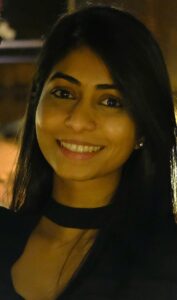
By Dr Aakashi Bhatt who is a specialist paediatric surgeon, Fellow in Robotic Surgery, and super-specialist in Fetal Surgery. She recently completed her DPhil at the University of Oxford, where her research aimed to produce novel surgical protocols for the application of Robotic Surgical Systems in Fetal Surgery. Alongside her clinical and research work, she lectures at the University and at Immerse Education, where she is a member of the Academic Advisory Panel, mentoring aspiring medical students from around the world.
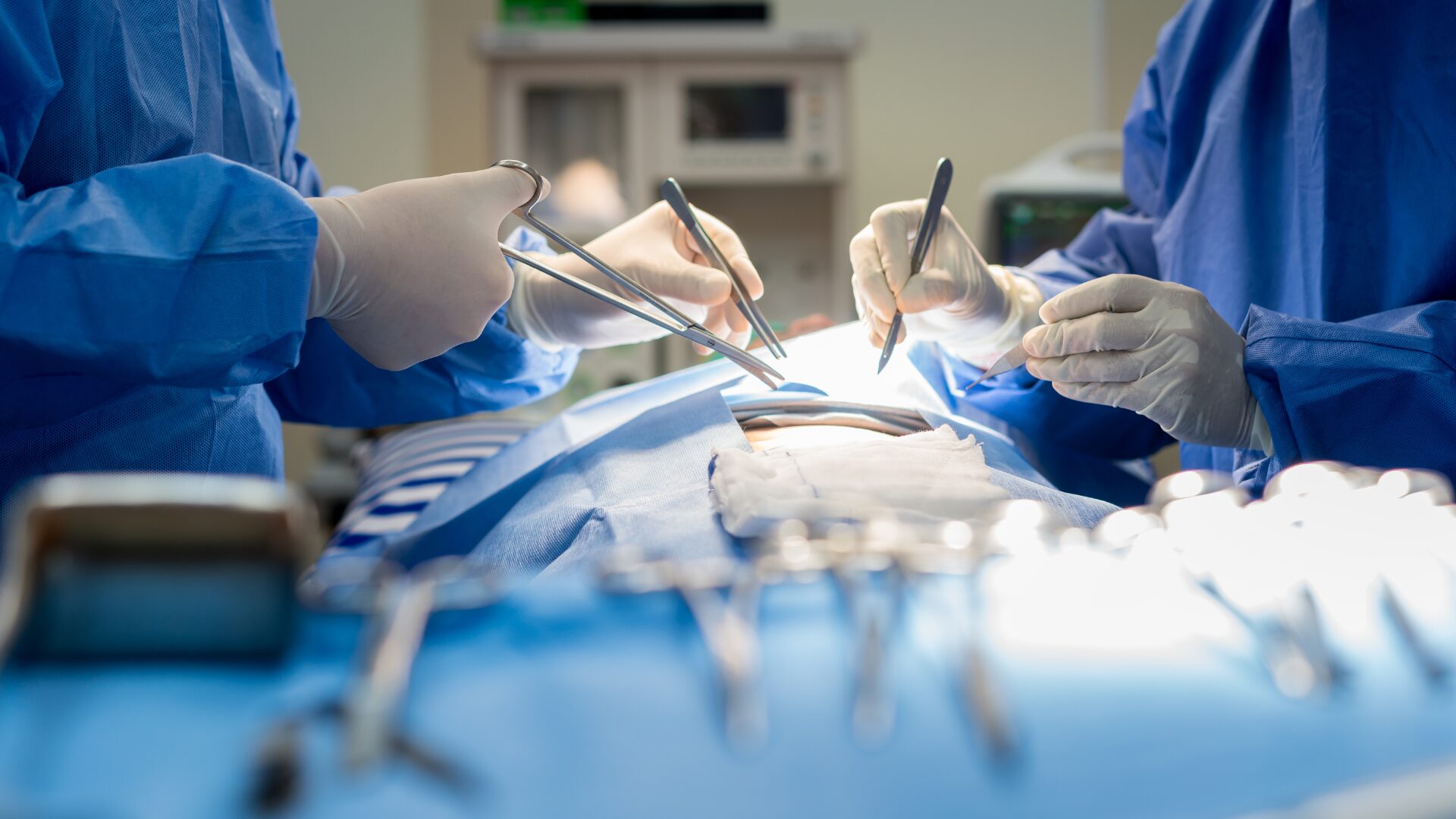
Imagine a patient who has never taken a single breath. Who has never seen light, felt the touch of another hand, or heard a sound outside the rhythmic thrum of a mother’s heartbeat. Now imagine performing surgery on that patient, navigating a robotic instrument through a field smaller than a walnut, correcting a life-threatening defect, and closing the incision before the pregnancy continues as if nothing happened.
That is fetal surgery. That is what I do.
To every student sitting in a classroom right now, wondering whether the effort you are putting in will ever matter, remember this: your future is built long before it arrives.
The operating theatre has taught me a lesson I will carry for the rest of my life. It is a place where knowledge becomes action, preparation becomes responsibility, and years of quiet, unseen effort are ultimately measured in human lives. There is no room for shortcuts there. The operating theatre strips away every illusion about what truly matters. It has convinced me of one profound truth: the work you do today, even when it feels unnoticed, repetitive, or insignificant, is shaping the person others will one day have to trust.
And when that defining moment finally arrives, you do not simply rise to the occasion. You stand on the foundation you built through every lecture you attended, every late night you studied, every mistake you learned from, and every day you chose discipline over convenience.
The future is not created in a single moment of brilliance. It is built, quietly and consistently, long before anyone else can see it.
Questions That Shape the Future
When I teach medicine, whether supervising students at Oxford or working with exceptional young minds through Immerse Education’s summer programmes, I am almost always asked some version of the same question:
What does it take?
What separates the surgeon who simply performs procedures from the one who pioneers them? What distinguishes the doctor who practises medicine from the one who reshapes it?
The answer is rarely what people expect.
It is not simply intelligence, although intelligence matters. Nor is it technical skill, indispensable though it is. The quality that truly separates the extraordinary from the merely excellent is something far harder to teach and far more important to cultivate early: the refusal to accept that the current answer is the final answer.
My DPhil research at Oxford asked a question that, when I first posed it, had no certain answer: can robotic surgical systems, built for adult operative fields, designed for the constraints of conventional surgery, be adapted, re-engineered in technique, and applied to fetal surgery? Could we develop entirely new protocols that would allow a surgeon to intervene on an unborn child with a level of precision, dexterity, and control that the human hand, however gifted, could never achieve alone?
My research focused on applying robotic surgical systems, the kind you might have seen in science fiction, with articulated arms and millimetre-precise movements, to fetal surgery. This had never been done systematically before. There were no reference books to consult.
No senior colleague who had walked this path. No established protocol or consensus to defer. There was the question: can this be done better? And with that question came the responsibility to think critically, rigorously, and creatively, without the comfort of certainty.
That experience is not unusual at Oxford. In many ways, it is exactly what Oxford is designed to cultivate, not simply knowledge, but genuine intellectual curiosity. The students I encountered at Oxford who thrived were not simply the ones who had memorised the most. They were the ones who, when they reached the edge of what was known, leaned forward rather than stepped back.
That habit, the instinct to lean forward, is something you can begin developing right now, years before you set foot in any university. And it may be the single most important thing you can do to prepare yourself.
What University-Level Thinking Actually Looks Like
There is a persistent misconception about elite universities. Many imagine them as places where extraordinary people dispense perfect answers. They are not. They are places where disciplined minds wrestle with imperfect questions.
Over the years, I have had the privilege of teaching medicine in lecture theatres, hospital wards, and through programmes with Immerse Education. I have worked with some of the brightest young people in the world, students whose ability would place them at the very top of almost any classroom. Yet, despite their remarkable talent, I have observed the same pattern emerge with remarkable consistency.
The students who arrive carrying only their grades, even flawless grades, often plateau surprisingly quickly. They possess encyclopaedic knowledge. They can reproduce facts with astonishing accuracy and navigate examinations with ease. But university, and medicine in particular, eventually asks something fundamentally different.
It asks what happens when there is no model answer.
Present a complex clinical case whose symptoms refuse to fit neatly into a textbook diagnosis. Ask not what the answer is, but how they would discover it. Ask what evidence they would trust, which assumptions they would challenge, and how they would reason when certainty is impossible. It is here that memorisation reaches its limits. Many exceptionally accomplished students suddenly find themselves without solid ground.
This is the gulf between school-level achievement and university-level thinking. The encouraging news is that it can be bridged long before you arrive at university.
Whenever you study a topic, resist the temptation to stop at the accepted answer. Instead, ask deeper questions. Who first proposed this idea? What evidence convinced them? Which of their conclusions were later overturned? What assumptions underpin today’s consensus? If those assumptions changed tomorrow, how would our understanding change with them?
These questions transform learning from the accumulation of information into the cultivation of judgement.
The students who arrive carrying genuine questions, questions that are intensely personal, intellectually restless, and impossible for them to ignore, are different altogether. They do not become uncomfortable at the edge of current knowledge; they become energised by it. Again and again, I have watched students at Oxford and on Immerse programmes make connections that took research communities years to uncover. Not because they possessed more facts than everyone else, but because they had developed the habit of thinking independently rather than simply recalling information.
In medicine, this is not an academic luxury. It is a professional necessity.
Every meaningful advance has begun because someone questioned what everyone else accepted. Surgeons who never challenge established techniques rarely transform their field. In specialties evolving as rapidly as robotic surgery, fetal surgery, and regenerative medicine, standing still is simply another way of moving backwards.
So if there is one lesson I hope you remember, let it be this: Your grades may open the door, but they will never define what you become once you walk through it. It is your mind, which is your greatest instrument.
Every article you read critically, every difficult question you pursue beyond the syllabus, every assumption you examine instead of accepting, sharpens that instrument. Every day you settle for passive consumption instead of active inquiry allows it to dull.
The universities that change lives are not looking for students who know everything.
They are looking for students who have learned how to think.
Medicine
In-person
Explore cutting-edge medical science in Cambridge, home to...
Medicine
In-person
Explore careers in Medicine in New York
The Discipline of Preparation – Where Excellence Begins
One of the most important lessons I have learned from robotic fetal surgery has remarkably little to do with surgery itself – It is about preparation.
Long before I sit at the Da Vinci console, before a single instrument enters the operative field, I have already performed the operation countless times in my mind. Every step has been rehearsed. Every complication has been imagined. Every decision point has been questioned. I ask myself, repeatedly and with genuine intellectual humility: What have I assumed? What have I overlooked? What do I still not know about this patient, and how should that uncertainty change my plan?
This is not anxiety. It is preparation at its highest level.
I think of it as pre-emptive mastery: advancing your thinking so far ahead of the moment that, when the moment finally arrives, you are not improvising under pressure. You are executing a plan that has already survived your own scrutiny.
The most impressive students I teach approach learning in exactly the same way.
They do not wait for examinations to discover the limits of their understanding. They create those examinations for themselves. They actively seek the hardest questions they can find. They search for the point where confidence gives way to uncertainty, and then they stay there, because they recognise that the boundary of their knowledge is where the deepest learning occurs.
That instinct cannot be switched on during your first week at university. Every student I have met who possesses it began cultivating it years earlier. Which means the time to develop it is not when you arrive at university, it is now!
Join the Immerse Education 2025 Essay Competition
Follow the instructions to write and submit your best essay for a chance to be awarded a 100% scholarship.
The Power of Thinking Broadly
What often surprises people is that the operating theatre bears little resemblance to the narrow picture many students have of medicine. Alongside robotic surgical systems and advanced ultrasound technology are conversations about artificial intelligence, biomechanics, ethics, computer science, statistics, psychology, and human factors. Every complex operation is an intersection of disciplines.
The finest surgeons I know are not simply experts in anatomy. They think like engineers, reason like physicists, analyse data like computer scientists and wrestle with ethical questions like philosophers. Their expertise comes not from mastering one subject in isolation, but from learning how ideas from many different fields illuminate one another.
That is why I encourage students never to abandon the subjects they love simply because they appear unrelated. If biology fascinates you but so does mathematics, nurture both. If you are captivated by technology and equally driven by compassion, cultivate both. If your interests refuse to fit neatly into a single academic box, resist the temptation to force them there.
The future of medicine belongs to people who can connect disciplines that others keep separate. It belongs to those who can see further because they are willing to think more broadly.