
 Русский (RU)
 Українська (UK)
 Türkçe (TR)
 Italiano (IT)
 Français (FR)
 Português (PT)
 中文 (中国) (ZH)
 Español (ES)
 日本語 (JA)
 ไทย (TH)
 Deutsch (DE)
 Ελληνικά (EL)
 Polski (PL)
 Bahasa Indonesia (ID)
 Nederlands (NL)
 العربية (AR)
 한국어 (KO)

As you step onto the campus of a prestigious university in 2026, the energy of summer is palpable. Summer school programs in 2026 for high school students offer more than academic enrichment, giving you the opportunity to explore advanced skills across engaging subjects in a university environment.
Picture yourself joining interactive classes, tackling real-world problems, collaborating with peers on innovative projects, and receiving mentorship from experienced professionals. You may explore artificial intelligence, environmental science, or creative writing while strengthening critical thinking, teamwork, and communication.
These programmes can provide a strong foundation for your college journey by giving you an in-person taste of university life. Leading institutions are also placing greater emphasis on hands-on research, interdisciplinary learning, and global engagement.
How do you choose the right summer school programs for high school students?
With countless summer school programs available, determining the most suitable option for your interests and aspirations can be daunting. Each program may focus on different skills and subjects, from STEM and the humanities to arts and entrepreneurship, further complicating your selection process.
There is an impressive array of summer school programs offered by top universities and esteemed organizations, all designed to enrich students’ educational journeys. These programs provide opportunities for hands-on learning and the potential for academic credit, allowing students to make the most of their summer.
To help you choose, we’ve drawn up a list of 15 summer school programs in 2026 for high school students.
For adjacent opportunities, consider the online research program.
Key takeaways
- Skidmore College’s Summer Pre-College Program costs between $3,000 and $12,000 and is restricted to students who will not turn 18 during the program.
- Immerse Education’s Academic Insights Programme spans six locations, including Oxford, Cambridge, and Boston, with small classes of seven to 10 students open to students worldwide aged 13 to 18.
- Boston University’s Summer Challenge costs $3,730 in tuition plus service and application fees, letting students sample two entirely different subjects in a single two week session.
- The University of Pennsylvania’s Residential Pre-College Programs cost between $15,192 and $23,604 and require a minimum 3.5 GPA, evaluating students by the same standards as matriculated Penn undergraduates.
- UCLA’s Computer Science Summer Institute costs $3,150 for the certificate track or up to $4,846 for international students choosing the course credit option.
- Stanford Summer Session costs $8,226 for commuters or $18,771 for residential students, placing high schoolers directly alongside university students for official, transcript-backed credit.
- Yale Young Global Scholars costs $7,000 and removes grades and credit entirely, drawing students from over 150 countries into a completely grade-free academic environment.
- Program costs for 2026 summer school programs range from $999 for Columbia’s one-week online course to over $23,604 for Penn’s residential Pre-College Program.
15 Summer School Programs in 2026 for High School Students
1. Skidmore College Summer Pre-College Program
Location: Saratoga Springs, NY
Cost: $3,000 – $12,000; partial scholarships are available
Dates: June 29th – August 1st
Application Deadline: Rolling admission until June 1st
Eligibility: Rising high school sophomores, juniors, or seniors aged 15-17 by the program start date; must not turn 18 during the program; not open to international students
The Skidmore College Summer Pre-College Program offers high school students an opportunity to engage in credit-bearing classes. You select from a variety of subjects tailored to your interests, enhancing your academic experience through participation. The program features hands-on activities that encourage collaboration and creativity, all within a supportive environment.
With both residential and commuting options available, participants will not only earn college credits but also gain valuable insights into college life. By the end of the program, you will develop skills such as time management, critical thinking, and effective communication.
Why it stands out: It offers high school students the chance to earn college credits while participating in hands-on classes, fostering skills such as critical thinking and time management in a genuine college environment.
2. Immerse Education’s Pre-University Summer School
Location: Cambridge, London, Oxford, Singapore, Sydney, Tokyo, Toronto
Cost: Varies; summer school scholarship available through our bursary programme
Application Deadline: Multiple summer cohorts; rolling admissions
Dates: 2 weeks during the summer
Eligibility: Students aged 13-18 currently enrolled in middle or high school; open to international students
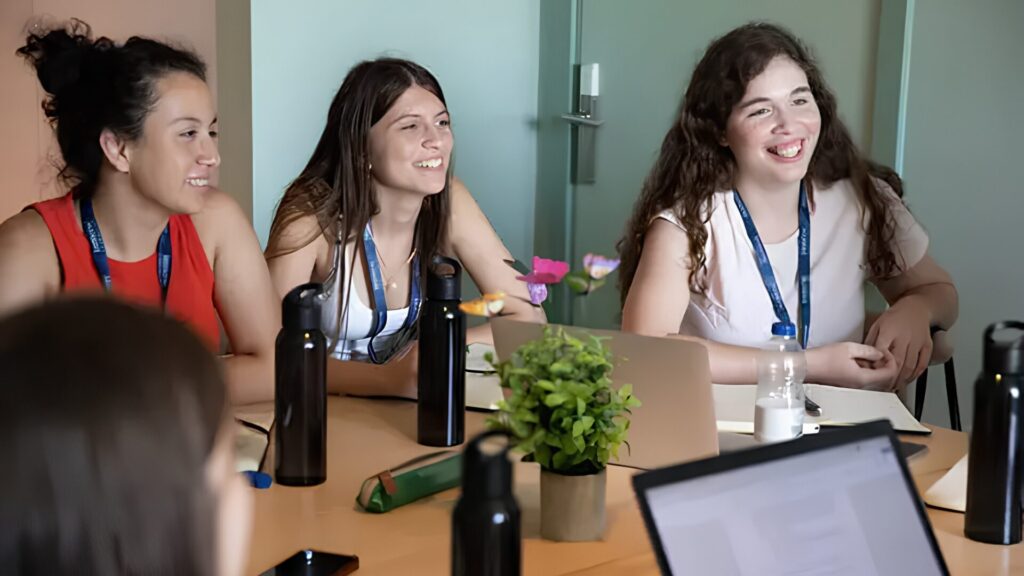
The Academic Insights Program lets high school students experience university life firsthand. You will live on campus and study in small groups of 7–10, learning from tutors from top universities like Oxford and Cambridge. Participants can explore over 20 subjects, including Architecture, AI, Business Management, Computer Science, Economics, Medicine, Philosophy, and more.
The courses are experiential and hands-on — you may find yourself conducting dissections in medicine, designing a robotic arm in engineering, participating in a moot court for law, or building creative writing portfolios and business case studies. By the end of the program, you’ll complete a personal project, receive written feedback, and a certificate of completion. You can find more details about the application here.
Why it stands out: You’ll study under expert academics, be guided daily by a university student mentor, complete a project you can show in future applications, and experience genuine university college life — with other campuses worldwide as alternatives.
3. Vassar Pre-College Summer Program
Location: Poughkeepsie, NY
Cost: $3,850 for a 1-week program; $6,950 for a 2-week program + $45 application fee; limited number of fully funded scholarships are available
Dates: Session 1: July 5-11; Session 2: July 12-18; 2-week program: July 5-18
Application Deadline: May 15th
Eligibility: High school students in grades 9-12 who are at least 14 years old by the start of the program; open to international students
The Vassar Pre-College Summer Program invites high school students to explore their academic interests while experiencing personal growth. Through small, engaging, and discussion-focused classes, you experience interdisciplinary learning that connects various fields of study. The program includes hands-on activities and collaborative projects, where you can apply your knowledge in practical settings.
Set on Vassar’s historic campus, you live alongside peers from diverse backgrounds, enhancing your social experiences and collective learning. This environment not only prepares you for college but also hones skills crucial for your academic journeys. By the end of the program, you’ll develop communication, analytical, and teamwork skills.
Why it stands out: It features an interdisciplinary approach, offering immersive academic experiences where students engage in small, discussion-focused classes while developing essential skills for college success.
4. Boston University Summer Term – Summer Challenge
Location: Boston University, Boston, MA
Cost/Stipend: $3,730 tuition, a $75 service fee, and a $75 nonrefundable application fee, plus $1,440 for housing and dining for residential students or a $184 lunch fee for commuters
Dates: Residential Session 1 June 14-26; Residential Session 2 July 5-17; Residential Session 3 July 19-31; Commuter Session 1 June 15-26; Commuter Session 2 July 6-17; Commuter Session 3 July 20-31
Application Deadline: May 15th
Eligibility: Entering your sophomore, junior, or senior year of high school in fall; age 14 by the program start date for residential participation, while commuter students stay with a family member or other approved adult; open to international students
In this program, you spend two weeks on Boston University’s campus taking two noncredit seminars chosen from 21 introductory options across health sciences, business and law, technology, media, and humanities. You work through lectures, discussions, group assignments, project-based work, and field trips in seminars that typically hold 10 to 30 students. You access all seminar materials through Blackboard Learn, BU’s learning management system, and bring your own laptop or tablet.
Each seminar closes with a final class presentation, and you finish with a certificate of completion and letters of evaluation from both instructors. Outside class, you attend a college admissions workshop offered with BU Admissions and join organized outings around Boston.
Why it stands out: It lets you sample two entirely different college subjects in a single two-week session on a major research university campus, with no grades or credit attached but a certificate of completion and written instructor evaluations at the end.
5. University of Pennsylvania – Residential Pre-College Programs

Location: Philadelphia, PA
Cost: $15,192 – $23,604 depending on number of course units; limited scholarships are available for Philadelphia residents
Dates: June 30th – August 8th
Application Deadline: May 1st
Eligibility: Current 10th-11th grade students with a minimum 3.5 high school GPA; open to international students
The University of Pennsylvania’s Residential Pre-College Program offers you the chance to experience rigorous Ivy League academics while living on a historic campus. As a high school sophomore or junior, you can enroll in credit-bearing undergraduate courses spanning all major topics, including arts, humanities, languages, social sciences, mathematics, and STEM. During your stay, you will attend university lectures, complete hands-on laboratory work, and explore Philadelphia through supervised weekend excursions.
This immersive format uniquely allows you to study under Penn faculty while navigating the social landscape of university dormitories. By managing this advanced workload, you will quickly develop essential skills in independent living, academic research, time management, and critical thinking.
Why it stands out: You actually earn official college credits by taking the same rigorous courses and being evaluated by the exact same academic standards as full-time Penn undergraduates.
6. Duke Pre-College Summer Programs
Location: Durham, NC
Cost: $6,050
Dates: Session 1: June 13-24; Session 2: June 28th – July 9th; Session 3: July 13-24
Application Deadline: June 15th
Eligibility: Current 9th – 12th graders, at least 14 years old by start date, minimum 3.0 GPA, and must have completed one year of high school; open to international students
The Duke Pre-College Summer Programs immerse you in a rigorous university environment designed to accelerate your academic growth. You will explore diverse topics spanning engineering, humanities, mathematics, science, technology, and the social sciences. Throughout the session, you actively engage in analyzing case studies, conducting hands-on laboratory experiments, taking off-campus excursions, and navigating interactive simulations.
The experience features unique access to Duke’s esteemed faculty and PhD instructors. You will also benefit from residential living in campus dormitories and dedicated college readiness workshops. By tackling these college-level challenges, you will build critical thinking, analytical reasoning, teamwork, and leadership skills.
Why it stands out: It offers a true seminar-like focus on highly specialized, niche academic subjects rather than standard high school introductory courses.
7. Emory Pre-College Program
Location: Atlanta, GA
Cost: Varies based on several factors; more information here; financial aid is available to U.S. citizens and U.S. permanent residents
Dates: June 14-27; June 28th – July 11th; July 12-25
Application Deadline: May 1st
Eligibility: Current sophomores and juniors who are at least 15 years old by the start date and hold a minimum 3.0 GPA; open to international students
The Emory Pre-College Program gives you an authentic preview of university life by offering both two-week non-credit and six-week credit-bearing courses. You can explore a diverse array of subjects, including pre-med, public health, business, psychology, STEM, and the humanities. During the program, you will engage in hands-on activities like conducting laboratory experiments, participating in rigorous class discussions, navigating college prep workshops, and exploring Atlanta through Eagle Excursions.
Unique features include living in actual campus housing, having a flexible commuter option, and accessing a specialized Pre-Med Institute. By the end of your session, you will develop essential higher education skills, such as critical thinking, academic research, and effective time management.
Why it stands out: It seamlessly blends rigorous academic coursework taught by actual Emory faculty with a comprehensive residential experience that prepares you for the realities of higher education.
8. UCLA Computer Science Summer Institute (CSSI)
Location: Los Angeles, CA
Cost: Certificate of Completion program: $3,150; Course Credit program: $3,821 (domestic) or $4,846 (international)
Dates: Tracks 1 & 2 (Intro to CS/AI): June 22nd – July 10th; Tracks 3 & 4 (Gen AI/IoT): July 13-31
Application Deadline: Tracks 1 & 2: June 15th; Tracks 3 & 4: July 6th
Eligibility: High school students (grades 9-12), minimum 3.5 GPA, and must be at least 15 years old by the start of the program; open to international students
The UCLA Computer Science Summer Institute (CSSI) is an immersive program designed to deepen your understanding of computer science. You will explore a range of topics, including artificial intelligence and data science, all while receiving personalized mentorship provided by experienced faculty and tutors.
You will engage in hands-on coding projects and collaborate with peers. You will receive a certificate or course credit by the end of the program and will develop essential skills in problem-solving, coding, and teamwork that are valuable in any future career.
Why it stands out: It focuses on personalized mentorship from experienced UCLA faculty and PhD students, coupled with hands-on coding projects that integrate advanced topics like artificial intelligence and data science.
9. The University of Chicago Pre-College Programs
Location: Chicago, IL
Cost: $2,500 – $15,200 depending on the course + $75 application fee; partial, need-based aid is available for students from households earning under $125,000 or $80,000 annually
Dates: Multiple 1-, 2-, 3-, 4-week courses
Application Deadline: March 12th
Eligibility: Students at least 14 years old; open to international students
The University of Chicago Pre-College Programs give you firsthand experience of undergraduate academics at a top research institution. You can explore diverse topics across STEM, the humanities, social sciences, law, and business. During the program, you will dive into hands-on lab experiments, participate in creative writing workshops, and tackle in-depth research projects.
You might also attend educational field trips around the city. Unique features include living on campus in Hyde Park and learning directly from actual UChicago faculty. Ultimately, you will build critical thinking, quantitative analysis, leadership, and civic discourse skills to prepare for your future.
Why it stands out: It enables students to enroll in rigorous undergraduate-level courses alongside UChicago students, providing access to distinguished faculty and a collaborative environment.
10. Harvard Pre-College Summer Program
Location: Cambridge, MA
Cost: $6,100 + $75 application fee; limited need-based scholarships available for U.S. citizens, permanent residents, and DACA recipients
Dates: Session I: June 21st – July 2nd; Session II: July 5-17; Session III: July 19-31
Application Deadline: April 1st
Eligibility: Rising juniors and seniors graduating in the next year or the subsequent one; must be at least 16 years old by June 20th and not turn 19 before July 31st; open to international students
In this program, you experience rigorous college-level academics without the pressure of letter grades. You choose from courses covering speech, literature, and writing; psychology, medicine, and public health; law, politics, philosophy, and history; business and leadership; race, gender, and ethics; and STEAM. Beyond your daily classes, you will participate in college readiness workshops, join talent shows, and explore Boston on group excursions.
Living alongside diverse peers in small classes taught by Ivy League scholars, you quickly build independence, time management, and self-regulation skills. Ultimately, this immersive residential experience lets you safely test-drive potential majors and authentic university life.
Why it stands out: It allows high school students to immerse themselves in a rigorous academic environment, choosing from nearly 30 college-level courses while living on the prestigious Harvard campus.
11. Stanford Summer Session
Location: Stanford, CA
Cost: Commuter: $8,226; Residential: $18,771
Dates: June 20th – August 16th
Application Deadline: March 2nd
Eligibility: Current sophomore, junior, or senior; at least 16 and no more than 19 years old during the program; cannot be matriculating into Stanford as a first-year student; open to international students
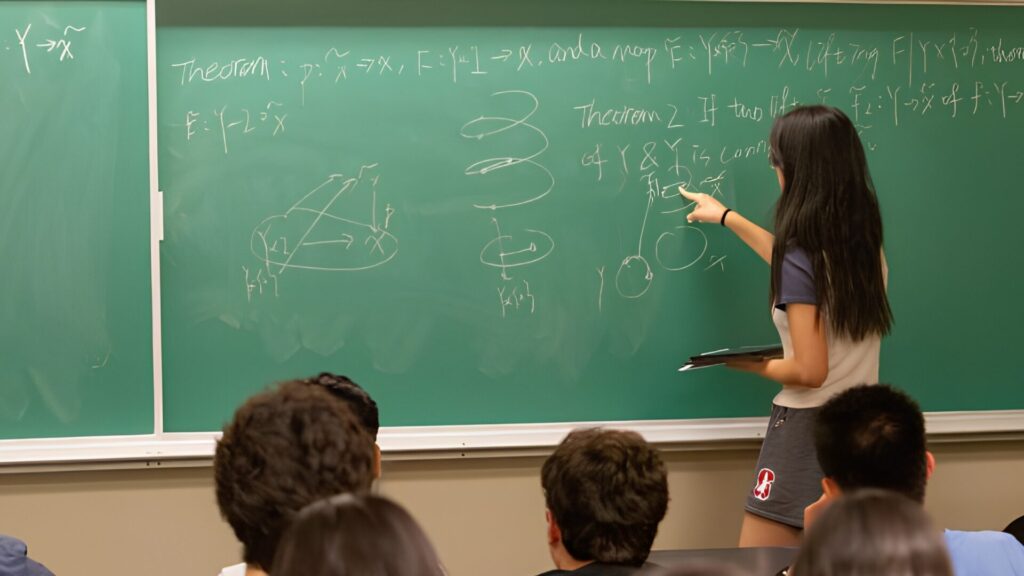
Stanford Summer Session offers you the chance to experience authentic college life by enrolling in real undergraduate courses at one of the world’s leading universities. You will study a wide range of subjects, including computer science, engineering, humanities, arts, and social sciences. During the eight-week program, you will actively attend lectures, participate in hands-on labs, complete collaborative project work, and explore campus facilities.
The program’s unique feature is that you learn directly alongside current university students and earn official, transcript-backed college credit. By navigating this rigorous academic environment, you will develop essential skills in critical thinking, problem-solving, self-directed learning, and effective communication.
Why it stands out: Unlike typical pre-college camps, this program holds you to the same academic standards as Stanford undergraduates while granting you official college credit.
12. Yale Young Global Scholars (YYGS)
Location: New Haven, CT
Cost: $7,000; need-based financial aid is available
Dates: Session I: June 21st – July 3rd; Session II: July 5-17; Session III: July 19-31
Application Deadline: January 7th
Eligibility: Current high school sophomores and juniors; must be between 16 and 18 years old by the first day of Session III; graduating in +1/+2 years; first-time participants; open to international students
Yale Young Global Scholars adds a grade-free, interdisciplinary option to this list of summer school programs in 2026 for high school students. Over two weeks, you can explore science and technology, politics and economics, or global challenges through faculty-led lectures, small-group seminars, hands-on symposiums, and a collaborative capstone project.
A unique feature of the program is its completely grade-free environment, which encourages you to take intellectual risks without the pressure of traditional testing. By working alongside high school students from over 150 countries, you will develop essential cross-cultural communication, analytical reasoning, and collaborative problem-solving skills.
Why it stands out: Unlike traditional academic camps, YYGS removes the stress of grades and credits so you can focus entirely on expanding your worldview alongside peers from over 150 countries.
13. Brown Pre-College Programs
Location: Providence, RI
Cost: Varies by program and length; includes an $80 application fee and a $500 non-refundable deposit upon enrollment; need-based aid and merit-based partner scholarships are available
Dates: Multiple 1- to 6-week sessions run between June 15th and July 25th
Application Deadline: May 15th
Eligibility: Students completing grades 9-12; ages 14-18 by June 14th; open to international students
In this program, you will discover what college life is truly like by exploring nearly 300 grade-free courses modeled after Brown’s open curriculum. You can study a vast array of topics, including biological sciences, business, engineering, medicine, physical sciences, literature, political science, psychology, and visual arts. While attending, you will conduct independent course-based research, attend college success workshops, enjoy off-campus excursions, and participate in social events like campus block parties.
A unique feature of the program is its flexible structure, offering residential, commuter, online, and specialized tracks like the Leadership Institute. By managing your own schedule, you will develop vital skills such as effective time management, independent critical thinking, and socially responsible leadership.
Why it stands out: It empowers you to design your own education without the pressure of formal grades, perfectly mirroring the independent learning philosophy of Brown University itself.
14. Cornell University Precollege Online
Location: Online and residential in Ithaca, NY
Cost: $1,940 per credit plus a $75 application fee, with courses typically ranging from 3 to 12 credits; financial aid is available
Dates: 3-week sessions: June 1-18, June 22nd – July 10th, July 13-31; 6-week session: June 22nd – July 31st
Application Deadline: 3-week sessions: May 12th, June 2nd, June 30th, respectively; 6-week session: June 2nd
Eligibility: Students who have completed their sophomore year of high school; aged between 15 and 19 years; open to international students
Cornell University Precollege Online allows you to take authentic undergraduate courses from home, earning official Ivy League college credits. You can explore diverse topics spanning architecture, humanities, natural sciences, engineering, business, and veterinary medicine. During these intensive sessions, you will participate in Canvas discussion boards, attend virtual lectures, complete rigorous assignments, and interact with global peers.
Its unique feature is condensing 15 weeks of material into just three to six weeks, immersing you in the same rigorous academic environment as actual undergraduates. Ultimately, navigating this fast-paced workload equips you with essential college study habits, exceptional time management, and sharpened critical thinking skills.
Why it stands out: It grants you an official Cornell transcript with transferable college credits, providing a legitimate head start on your undergraduate degree from anywhere in the world.
15. Columbia University Pre-College Programs
Location: New York, NY
Cost: Ranges from $999 for a 1-week online course to $12,764 for a 3-week NYC residential session, plus an $80 application fee; need-based financial aid is available, but it is strictly limited to New York City residents
Dates: NYC Residential runs in 3-week sessions (June 29th – July 17th and July 21st – August 7th); NYC Commuter and Online run in various 1-to-3-week sessions between June 22nd and August 7th
Application Deadline: Mid-to-late March
Eligibility: Students in grades 9-12. For the NYC residential program, students must be at least 15 years old and turn 16 by December 31st of the attendance year; open to international students
Columbia University Pre-College Programs offer you an immersive academic experience designed to challenge high-achieving students with rigorous, non-credit coursework. You will choose from over 70 courses spanning architecture, the arts, biology, business, humanities, law, mathematics, physical sciences, politics, and technology. Outside standard lectures, you will engage in active debates, collaborate in studio sessions, participate in college-prep workshops, and explore New York City through guided outings.
A unique feature of this program is its evaluation method; instead of receiving standard letter grades, you earn a detailed instructor assessment letter to use in your college applications. By the end of the session, you will have developed strong research capabilities, collaborative teamwork, and essential critical thinking skills.
Why it stands out: It pairs intensive Ivy League academic standards with the unmatched cultural and professional backdrop of Manhattan to give you a genuine preview of urban university life.
Frequently asked questions: Summer school programs in 2026 for high school students
Are 2026 summer school programs open to international students?
Most are, including Vassar’s Pre-College Summer Program, Duke’s Pre-College Summer Programs, and Stanford Summer Session. A notable exception is Skidmore College’s Summer Pre-College Program, which is not open to international students. Immerse Education’s Academic Insights Programme is also explicitly open globally to students aged 13 to 18 across six locations.
How much do 2026 summer school programs cost?
Costs range considerably by prestige and format. Lower-cost options include Columbia’s one-week online course at $999, while mid-range programs like Vassar’s one-week session cost $3,850. Premium residential options include Penn’s Residential Pre-College Program at up to $23,604 and Stanford Summer Session’s residential track at $18,771. Financial aid is available for most programs, often with income-based thresholds like UChicago’s aid tiers for households earning under $125,000 or $80,000.
Do 2026 summer school programs award transferable college credit?
Some do, though many instead offer a certificate or instructor evaluation. Stanford Summer Session, Penn’s Residential Pre-College Program, and Cornell University Precollege Online all award official, transcript-backed college credit since you’re enrolled in real undergraduate coursework. Others, like Harvard’s Pre-College Summer Program and Yale Young Global Scholars, are explicitly grade-free and non-credit, emphasizing exploration over formal academic credit.
What is the difference between a grade-free program and a credit-bearing program?
Grade-free programs, like Harvard’s Pre-College Summer Program or Yale Young Global Scholars, let you take intellectual risks and explore subjects without worrying about your GPA, concluding with a written evaluation instead of a transcript grade. Credit-bearing programs, like Stanford Summer Session or Cornell University Precollege Online, place you in real undergraduate courses evaluated by the same standards as matriculated students, resulting in official transferable credit. If you want lower-stakes exploration, a grade-free program suits you better; if you want to build a transcript, a credit-bearing program is the way to go.
How selective are 2026 summer school programs?
Selectivity varies considerably. Penn’s Residential Pre-College Program requires a minimum 3.5 GPA, and UCLA’s CSSI requires the same minimum. Others, like Brown Pre-College Programs, describe themselves in terms of course variety rather than an extremely low acceptance rate. Regardless of selectivity, meeting age and GPA requirements, which vary by institution, matters as much as overall academic strength.
Is Immerse Education a good option among 2026 summer school choices?
Immerse Education’s Academic Insights Programme is a strong choice if you want flexibility in both subject and location, spanning six cities including Oxford, Cambridge, and Boston. The two week program places you in small groups of seven to 10 students, working on hands-on projects like conducting dissections in medicine or building a business case study. You’ll complete a personal project, receive written feedback, and earn a certificate of completion, offering a globally accessible alternative to the often US-restricted, higher-cost programs listed here.
Prepare Today for Tomorrow’s University Challenges
Choosing between grade-free exploration and credit-bearing study can shape your summer, whether you prefer Yale’s seminars, Stanford coursework, or UCLA coding projects in real settings.
These 15 summer school programs in 2026 for high school students also vary sharply in cost, length, selectivity, residential format, and international access across leading institutions worldwide.
Compare course content, assessment style, financial aid, campus life, and final outcomes before deciding which experience best supports your academic direction and future goals.
Ready to prepare strategically? Visit our University Preparation blogs for guidance on applications, study skills, subject choices, and adapting confidently to university expectations before you apply.