
 Русский (RU)
 Українська (UK)
 Türkçe (TR)
 Italiano (IT)
 Français (FR)
 Português (PT)
 中文 (中国) (ZH)
 Español (ES)
 日本語 (JA)
 ไทย (TH)
 Deutsch (DE)
 Ελληνικά (EL)
 Polski (PL)
 Bahasa Indonesia (ID)
 Nederlands (NL)
 العربية (AR)
 한국어 (KO)
Summer camps in Japan for high school students can be more than a memorable way to spend your school vacation. They are an excellent way for you to step out of your regular classroom and learn new topics in an entirely new environment. They engage you in workshops, research projects, design challenges, fieldwork, and experiments, giving you practical exposure to the subjects that interest you. Plus, your involvement helps you gain real-world skills. You will become more confident in your critical thinking, creativity, communication, teamwork, and problem-solving abilities.
They can also act as a foundation for your college journey, giving you a taste of what university life is like at a top institution, in person. You could be attending lectures conducted by professors, working on experiments at university labs and facilities, completing independent or group projects, and more. All of these are activities that college students regularly engage in. Such exposure not only gives you practical academic experience, but it also lets you choose your future career path with more confidence.
Why should you choose Japan for a summer camp?
Japan offers many opportunities worth considering, as it houses several world-renowned universities, cutting-edge research institutions, and more. It also features some globally recognized industries in robotics, engineering, artificial intelligence, medicine, business, and environmental science. Many summer camps also give you access to university campuses, research facilities, industry experts, and more. Plus, you can’t find a better place to learn or develop your Japanese language skills than the country where it is spoken itself.
Japan is also a country that boasts centuries-old traditions and futuristic technology, so participating in a camp in this country also allows you to immerse yourself and learn about a new culture. You will often interact with local students and communities who can expose you to new global perspectives. Ultimately, summer camps in Japan ensure that you develop new skills while challenging yourself to succeed in a new environment.
If you look forward to stepping out of your comfort zone, here are 15 summer camps in Japan for high school students worth exploring.
For adjacent opportunities, consider summer programs in Singapore in 2026.
Key takeaways
- The TUJ High School Summer Program at Temple University Japan costs JPY 340,000 for an eight day program combining Japanese language classes with an elective course and cultural excursions.
- Immerse Education’s Academic Insights Programme includes Tokyo among its eight global locations, with small classes of seven to 10 students open to students worldwide aged 13 to 18.
- The University of Aizu’s Computer Science Summer Camp costs ¥22,000 and lets students choose between JavaScript game programming or 3D computer graphics design tracks.
- Kyoto University’s ELCAS Program is completely free and has a multi-year structure, letting students progress from foundation courses to specialized research inside professional university laboratories.
- The Sakura Science High School Program is completely free and specifically requires first-time visitors to Japan, including special classes taught by Nobel laureates.
- NUCB International College’s Summer Camp costs JPY 275,000 and uses Harvard-style Case Method teaching alongside IB-style inquiry-based learning for students aged 13 to 15.
- Several free university science camps, including Setsunan University’s Science Camp and Mukogawa Women’s University’s 1-day Science Camp, give students access to research-grade laboratory equipment not normally open to the public.
- Program costs for summer camps in Japan range from free options like Setsunan University’s Science Camp and the Sakura Science Program to JPY 340,000 for Temple University’s language and culture program.
15 Summer Camps in Japan for High School Students
1. TUJ High School Summer Program
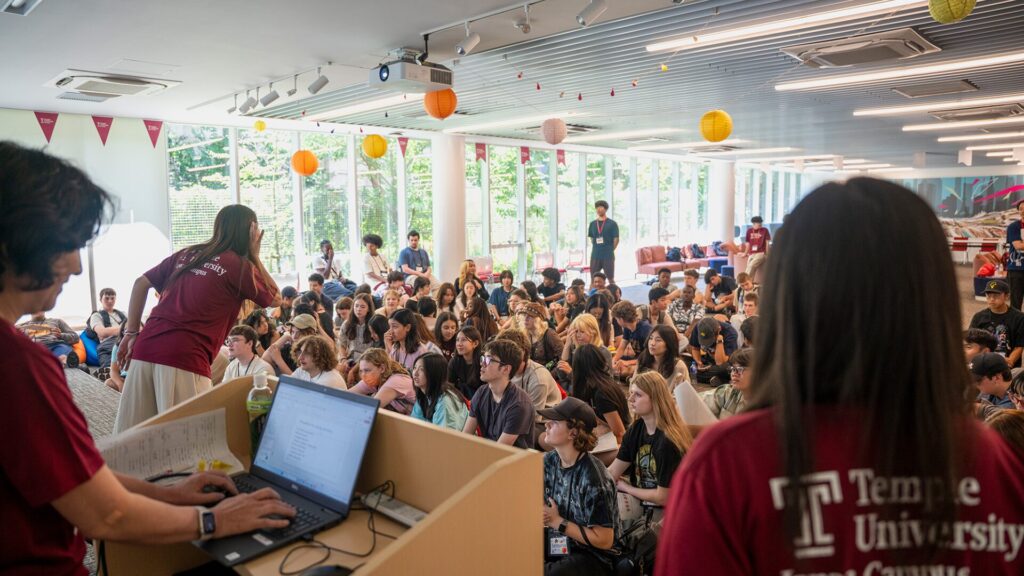
Location: Temple University, Tokyo, Japan
Cost: JPY340,000 ; first 20 participants receive a discount of JPY20,000 if payment made before March 1st
Dates: July 29th – August 6th
Application Deadline: April 1st: students needing a visa; May 1st: not needing a visa
Eligibility: Rising 9th through 12th graders from anywhere in the world
Hosted by Temple University in Japan, this program gives high school students the chance to immerse themselves in the Japanese language and culture. Over the eight days of the program, you will take a Japanese language class. You can choose from beginner, intermediate, and advanced levels, thus making the program suitable regardless of whether you are skilled in the language or not.
You will also enroll in an elective course similar to the undergraduate courses offered at the university. You will have TUJ professors and students supporting you through every aspect of the program. Rather than just sitting in classrooms, you will also go on cultural excursions, including a one-day trip to Tokyo DisneySea.
Why it stands out: The program also hosts a series of activities through which you can interact with local high school students, thereby enhancing your language skills.
2. Immerse Education’s Tokyo Summer School
Location: Tokyo, Japan
Cost: Varies; summer school scholarship available through our bursary programme
Dates: 2 weeks during the summer
Application Deadline: Multiple summer cohorts; rolling admissions
Eligibility: Students across the globe aged 13-18 currently enrolled in middle or high school; open to international students
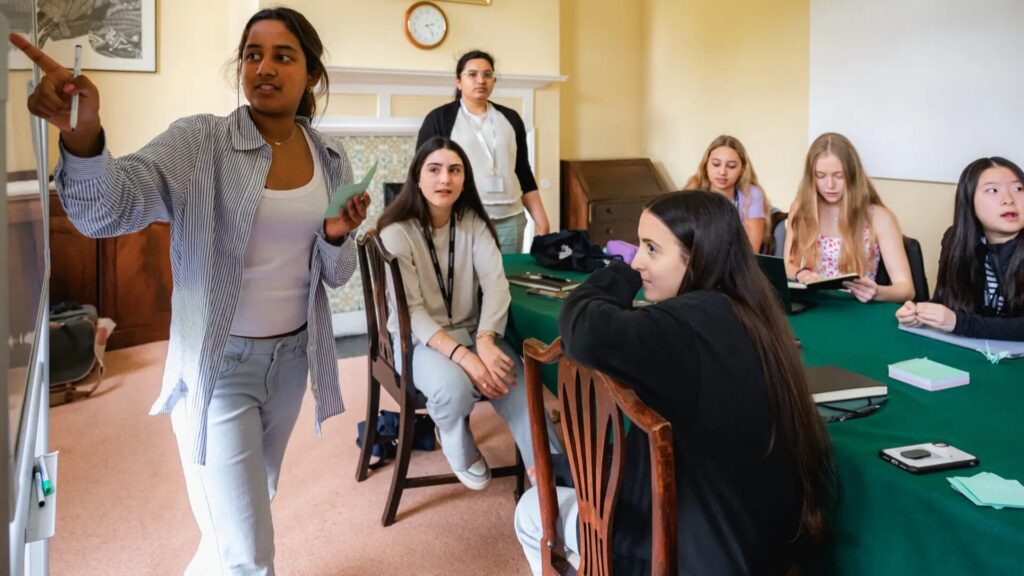
Immerse Education’s Academic Insights Program is for high school students who want to get a taste of studying at a university. You will be able to choose from a wide range of options and attend classes taught by professors from reputable universities. The program offers classes in architecture, AI, business management, computer science, economics, medicine, philosophy, and more.
In addition to lectures, you will participate in interactive activities that give you a practical understanding of your chosen discipline. Some examples include conducting dissections in medicine, designing a robotic arm in engineering, participating in a moot court for law, or building creative writing portfolios and business case studies. You will also get to work on an independent project and receive written feedback for it. You can earn a certificate of completion upon successful completion of the program. You can find more details about the application here.
Why it stands out: You’ll get an early start at university life and academics because the program includes an independent project, discussion-based classes, and living on a college campus.
3. Setsunan University – Setsunan Science Camp
Location: Neyagawa and Hirakata, Osaka Prefecture, Japan
Cost: None
Acceptance rate/cohort size: Non-competitive; 10-20 students
Dates: August 1st
Application Deadline: July 25th
Eligibility: Junior high and high school students; in-person attendance at the Neyagawa or Hirakata campus; international eligibility not explicitly stated
As one of the more research-heavy summer camps in Japan for high school students, the Setsunan Science Camp has you spend one Saturday in university laboratories across two Osaka campuses. Sessions span chemistry, molecular biology, food science, ichthyology and plant science. You synthesise a compound that glows under black light using palladium-catalysed coupling, attempt a manual PCR to identify vegetables from leaf fragments, and make green fluorescent protein in a test tube.
Other options include sketching and dissecting a real fish, ageing it from scales and otoliths, or baking cookies to investigate the Maillard reaction. At the Neyagawa campus, you build a model tree house powered by a photosynthetic fuel cell, based on photosynthesis architecture research invited to Milan’s Salone del Mobile.
Why it stands out: It offers free access to research-grade experiments, including manual PCR, in-vitro GFP synthesis and palladium-catalysed coupling, inside working university laboratories.
4. Tokyo Information University – Nursing Summer Camp
Location: Chiba, Chiba Prefecture
Cost: None
Acceptance rate/cohort size: Selective; cohort size not stated
Dates: August 6-7
Application Deadline: August 3rd or when capacity is reached
Eligibility: Middle and high school students; attendance on both days; international eligibility not explicitly stated
In this cCamp, you explore nursing through a two-day, hands-on introduction at Tokyo Information University. You wear a nursing uniform, take part in a baby-holding activity, and examine vital signs such as temperature, pulse, and respiration. Using VR, you take part in a simulated life-saving nursing experience.
In a trial lesson, you consider how nurses use careful observation to interpret a patient’s condition, building introductory clinical-thinking, communication, and assessment skills. The required two-day structure provides sustained exposure to nursing education and practice, with a food-truck lunch experience included on the second day.
Why it stands out: It combines a VR-enabled emergency simulation with foundational vital-sign observation in a required two-day nursing experience.
5. University of Aizu – Computer Science Summer Camp
Location: Aizuwakamatsu, Fukushima
Cost: ¥22,000
Acceptance rate/cohort size: Selective; cohort size not stated
Dates: August 9-11
Application Deadline: July 6th
Eligibility: High school students; international eligibility not explicitly stated
Among summer camps in Japan for high school students, this camp stands out for immersing you in hands-on technology education at Japan’s premier university dedicated solely to computer science. You will choose between specialized tracks focusing either on JavaScript game programming or 3D computer graphics design.
Throughout the program, you will work within the university’s advanced computing environments to build digital assets or write functional code from scratch. You will receive direct guidance from university student mentors and technical staff, allowing you to develop practical software and design skills regardless of your prior experience level. By the end of the camp, you will have completed a foundational digital project that demonstrates your new computational capabilities.
Why it stands out: It provides high school students with a rare opportunity to learn JavaScript programming or 3D design directly from university mentors inside the advanced computing facilities of Japan’s first public university specializing in ICT.
6. Minami Kyushu University – Food Development Camp
Location: Miyazaki, Miyazaki Prefecture, Japan
Cost: None
Acceptance rate/cohort size: Non-competitive; approximately 15 students
Dates: July; exact session dates not officially published; Spring session also available
Application Deadline: Varies by session
Eligibility: All high school students interested in food development; enrolled students and past-year students of the prefectural agricultural college also eligible; international eligibility not explicitly stated
In this camp, you experience university-level teaching from the Department of Food Development Science as a high school–university articulation course. Across two days, you take four 90-minute periods daily, joining an open campus session, classroom sessions on food development, and hands-on product-development practicals.
Current undergraduates facilitate each small group, and you work with advanced food equipment installed under an MEXT industrial-DX training project. Lunch is retort curry developed by those students, and every participant receives a completion certificate. Completing both the spring and summer camps lets you convert the experience into two first-year credits if you enrol at Minami Kyushu University.
Why it stands out: It is a free, two-day articulation camp whose completion across both seasonal sessions converts into two first-year university credits for students who go on to enrol.
7. Chikushi Jogakuen University – CJ Summer Camp
Location: Dazaifu, Fukuoka Prefecture
Cost/Stipend: ¥2,000 – ¥5,000 travel support for eligible distant participants
Acceptance rate/cohort size: Selective; cohort size not stated
Dates: July 18-19
Application Deadline: July 12th
Eligibility: High school students of any gender or grade; eligible high school graduates considering university admission; international eligibility not explicitly stated
In the CJ Summer Camp, you spend two days exploring one of six university subjects through practical activities. Depending on your track, you may create a literary POP display, collaborate in English with international students, interview visitors in Dazaifu using Chinese or Korean, or use AI for community-design ideas. Psychology participants complete team-building and self-reflection exercises, while education participants design learning materials from elementary, special-needs, and early-childhood perspectives.
You build communication, collaboration, creative-thinking, and presentation skills with support from university students and staff. For designated CJ Inquiry-Based admission fields, participation in the corresponding track during the final high-school year is a formal application requirement. The format combines subject exploration, campus interaction, and a completed presentation.
Why it stands out: It offers six distinct subject tracks and can satisfy a formal admission prerequisite for designated university fields.
8. SAKURA SCIENCE High School Program
Location: Japan Science and Technology Agency (JST), Tokyo, Japan
Cost: None
Dates: Typically 1 week in late July or early August
Application Deadline: April 21st, July 4th, and October 6th
Eligibility: High school students (Grades 10, 11, or 12) who are at least 15 years old; have a strong academic record in science/math; are first-time visitors to Japan; open to international students
In this program, high school students from across the globe come together to be part of this exchange program in Japan. The main goal of the program is to equip you with the skills to help you make useful contributions to the latest advancements in science and technology.
You will acquire skills that are highly valued at universities, research institutions, businesses, and more, preparing you for your future careers. You will attend special classes taught by Nobel laureates and other scientists. You will go on site visits to universities and research institutions and even embassies in Japan.
Why it stands out: Rather than focusing purely on academics, the program will also organize activities that let you explore Japanese culture and interact with local high school students.
9. Kyoto University – The ELCAS Program
Location: Online (Lecture-based) and Kyoto University, Yoshida Campus, and other locations (Exercise-based)
Cost: None
Dates: July 29-30 (Lecture-based) and August 19-21 (Exercise-based)
Application Deadline: July 8th (Lecture-based); June 9th (Exercise-based)
Eligibility: Students in Years 1 and 2 of high school (grades 10-11) anywhere in Japan, and Years 4 and 5 of secondary education schools, as of April 1st; not open to international students
The Kyoto University ELCAS program, one of the most research-intensive summer camps in Japan for high school students, is a hands-on learning initiative where you can explore advanced research alongside leading academics. Throughout the program, you will dive into a wide array of fields, encompassing the natural sciences, social sciences, and humanities.
You will carry out hands-on experiments, attend university-level lectures, collaborate in small research groups, and compile a final research report. A unique feature of this initiative is its multi-year structure, offering you foundation courses initially before advancing to specialized research inside professional university laboratories. By participating, you will develop critical skills in scientific investigation, academic presentation, and innovative problem-solving.
Why it stands out: It gives you the rare opportunity to publish your actual research outcomes in an official university journal.
10. Mukogawa Women’s University – 1-day Science Camp
Location: Nishinomiya, Hyogo
Cost: None
Acceptance rate/cohort size: Selective; 5 students per program
Dates: July 25th
Application Deadline: July 17th
Eligibility: Students in Japanese high school years 1-3, approximately grades 10-12; international eligibility not stated
In the 1-day Science Camp, you explore environmental and life sciences by working inside university laboratories that are usually closed to the public. You engage in hands-on research, using cutting-edge microscopes to observe micro-morphology and advanced analytical equipment to investigate marine microplastics. You also conduct experiments like creating a cloud chamber to track radiation and isolating natural enemy viruses to defeat target bacteria.
Because the program operates in ultra-small groups of five students per research area, you receive highly personalized guidance from university faculty. This close interaction allows you to build technical proficiency in mixing, separating, and decoding complex chemical samples.
Why it stands out: It grants high school students rare access to exclusive university laboratories and cutting-edge analytical tools, offering an authentic, faculty-led research experience in a highly focused setting.
11. National Institute of Fitness and Sports in Kanoya – Sports Science Camp
Location: Kanoya, Kagoshima Prefecture, Japan
Cost: ¥13,036
Acceptance rate/cohort size: Selective; 20 places
Dates: August 19-21
Application Deadline: June 19th
Eligibility: Currently enrolled students as of the application deadline at a Japanese high school, secondary education school latter course (years 4-6), or college of technology (years 1-3); not open to international students
In this program, you attend researcher-led lectures and then run the matching experiments yourself, observing skeletal-muscle microstructure under optical and electron microscopes and using a magnetic stimulation device that induces muscle activity directly from the brain. You also study motor control and learning in a sports psychology practical, then analyse your own movements with optical motion capture and high-speed cameras.
Experiments run inside the university’s biomechanics laboratory and SPORTEC Sports Performance Research Center, and the camp is supported by the Japan Science and Technology Agency. Each experiment closes with a discussion, and a guided tour shows the equipment behind this research.
Why it stands out: It gives high school students direct hands-on use of research-grade equipment at Japan’s only national university specializing in physical education, in a cohort capped at 20.
12. Kagawa University Faculty of Medicine – Science Camp
Location: Miki, Kagawa Prefecture
Cost: None
Acceptance rate/cohort size: Non-competitive; first 12 eligible applicants
Dates: August 6th
Application Deadline: July 27th
Eligibility: High school students; international eligibility not explicitly stated
In this camp, you examine how gene, immune, and health data can help explain disease and guide preventive medicine. You begin with an introductory lecture on using data to understand disease mechanisms and prevention. You then complete a hands-on exercise interpreting graphs and data before discussing the future of preventive healthcare.
These activities develop foundational data literacy, evidence interpretation, scientific reasoning, and communication skills in a public-health context. Led by Kagawa University Faculty of Medicine public-health faculty, the two-hour camp gives a small group of 12 high school students direct exposure to data-driven medical thinking.
Why it stands out: It connects genetic, immune, and health-data interpretation directly with disease prevention and future healthcare.
13. NUCB International College – Summer Camp
Location: NUCB International College, Nagoya, Japan
Cost: JPY 275,000
Dates: July 20-28
Application Deadline: Rolling admissions
Eligibility: Students aged 13-15 at the time of the program, with at least conversational English proficiency; open to international students
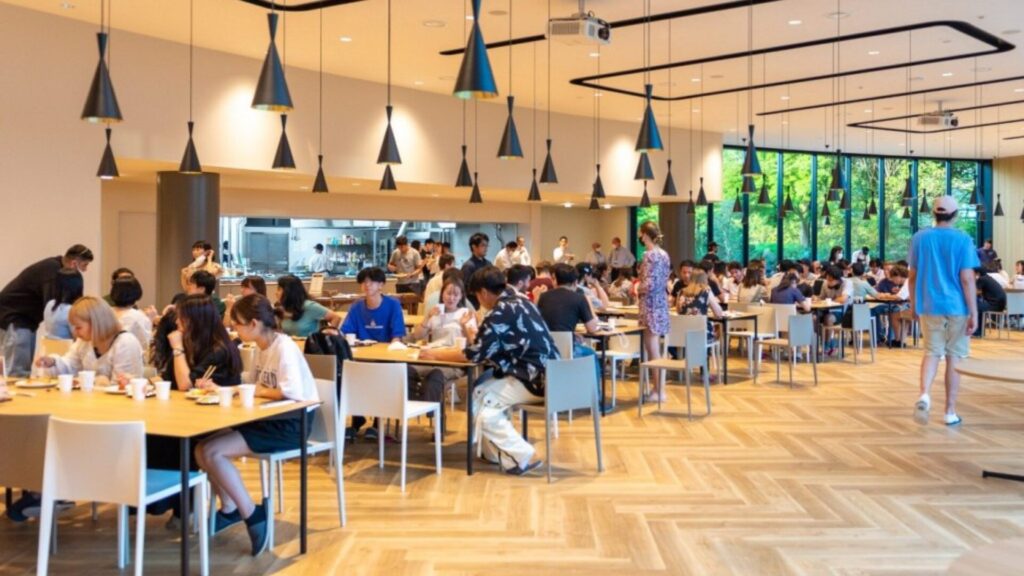
The NUCB International College Summer Camp immerses you in a residential English-speaking environment where you can experience boarding school life firsthand. Throughout the program, you will explore diverse topics such as the United Nations Sustainable Development Goals, scientific concepts in nature, and effective language communication.
To apply these concepts, you will engage in hands-on activities like a multinational corporation field study trip, interactive theatre-sports, and traditional Japanese archery. A unique feature of the camp is its use of the Harvard-style Case Method alongside IB-style inquiry-based learning, which elevates the academic rigor. By the end of the program, you will have developed real-world skills, including leadership, design thinking, problem-solving, and cross-cultural collaboration.
Why it stands out: It combines the prestigious Harvard-style Case Method with a fully immersive international boarding environment.
14. Soka University Academic Short Program for High School Students
Location: Tokyo, Japan
Cost: JPY 180,000
Dates: August 3-9
Application Deadline: April 24th
Eligibility: High school students in grades 10-12; applications must be submitted by a school or institution, not by individual students, and a minimum of five students from the same school and one chaperone are required; open to international students
If you’re weighing your options among the many summer camps in Japan for high school students, this program has you study topics across various disciplines by participating in supervised fieldwork in Tokyo and Yokohama. You will explore concepts in business, globalization, urban development, pop culture, and other subject areas. You will then be part of a group presentation about what you observed and learned in your fieldwork.
The university’s professors will give you feedback on your work. Another important aspect of the program is the opportunity to participate in a range of activities that help you better understand Japanese culture. Some examples include visiting the Tokyo Fuji Art Museum, trying on a yukata, spending a day at Tokyo DisneySea, and many more.
Why it stands out: It combines university-led business and sociology learning with guided fieldwork in Tokyo and Yokohama, giving you a practical look at how culture, commerce, and globalization intersect in Japan.
15. Toho Gakuen School of Music / Toho Gakuen College Music Department – Toho Summer Academy
Location: Chofu, Tokyo
Cost: ¥18,000 per 60-minute lesson for high school students
Acceptance rate/cohort size: Non-competitive; 145 places
Dates: July 31st – August 2nd
Application Deadline: June 14th or earlier if all places are filled
Eligibility: Elementary through high school students of any skill level; current Toho Girls’ High School Music Department students are ineligible; international eligibility not explicitly stated
In the Toho Summer Academy program, you will refine your musical technique through intensive one-on-one masterclasses with esteemed Toho Gakuen faculty. The program allows you to participate in up to two specialized lessons focused on either piano, violin, or cello, receiving tailored feedback on your repertoire and performance mechanics. You will practice advanced musical phrasing and technical precision while experiencing the rigorous instructional environment of one of Japan’s leading music conservatories.
By working directly with accomplished instructors, you will gain invaluable insights into professional performance standards and classical music interpretation. The academy provides a structured opportunity to elevate your playing abilities in a highly focused, short-term setting.
Why it stands out: It offers high school musicians the rare opportunity to receive personalized, world-class instruction directly from the distinguished faculty of a top-tier Japanese music conservatory, regardless of their prior skill level.
Frequently asked questions: Summer camps in Japan for high school students
Are summer camps in Japan open to international students?
Eligibility is mixed. The TUJ High School Summer Program, Sakura Science High School Program, and NUCB International College’s Summer Camp all explicitly welcome international students. However, several Japanese university outreach programs, including Kyoto University’s ELCAS Program and the National Institute of Fitness and Sports’ Sports Science Camp, are restricted to students already enrolled in Japanese schools. Immerse Education’s Academic Insights Programme is also open globally to students aged 13 to 18, with Tokyo as one of its locations.
How much do summer camps in Japan cost?
Costs vary considerably by institution and format. Several university outreach programs are completely free, including Setsunan University’s Science Camp and Kagawa University’s Science Camp, while others charge modest fees like ¥13,036 for the Sports Science Camp or ¥22,000 for the University of Aizu’s Computer Science Camp. Premium options include NUCB’s residential program at JPY 275,000 and Temple University’s language program at JPY 340,000.
What is the difference between a Japanese university outreach camp and an international boarding-style program?
Japanese university outreach camps, like Setsunan University’s Science Camp or Kyoto University’s ELCAS Program, are typically free or low-cost, taught in Japanese, and often restricted to students already in the Japanese school system. International boarding-style programs, like Temple University’s TUJ Summer Program or NUCB International College’s Summer Camp, instead welcome students from anywhere in the world, teach primarily in English, and combine academics with cultural immersion activities. If you’re not yet fluent in Japanese, an international program will be more accessible.
Do summer camps in Japan let you use real research equipment?
Yes, several university-hosted camps give you hands-on access to equipment not normally open to the public. Setsunan University’s Science Camp has you perform manual PCR and synthesize GFP in a test tube, while Mukogawa Women’s University’s Science Camp lets you use advanced microscopes to investigate marine microplastics in ultra-small groups of five students. The National Institute of Fitness and Sports’ Sports Science Camp similarly gives you access to a biomechanics laboratory and motion capture equipment.
How selective are summer camps in Japan?
Selectivity ranges from highly competitive to open enrollment. The Sakura Science High School Program and Mukogawa Women’s University’s Science Camp are both quite selective, admitting small cohorts through a competitive process. Others, like Setsunan University’s Science Camp or Chikushi Jogakuen University’s CJ Summer Camp, use more open, non-competitive enrollment. Regardless of selectivity, meeting specific eligibility details, like grade level or prior Japan travel history, matters as much as academic interest.
Is Immerse Education a good option for exploring Japan specifically?
Immerse Education’s Academic Insights Programme is a strong choice if you want a genuine Japanese university-adjacent experience alongside flexibility to also consider other global locations, since Tokyo is one of its eight sites. The two week program places you in small groups of seven to 10 students, working on hands-on projects across more than 20 subjects. You’ll complete a personal project, receive written feedback, and earn a certificate of completion, with financial aid available through its bursary programme.
Beyond Japan: Planning Your Next Study Abroad Step
Choosing among these summer camps in Japan for high school students gives you a genuine introduction to research, technology, and university-style learning in one of the world’s most academically distinct settings.
Once the camp wraps up, you can start thinking about where else your study abroad journey might take you next.
The independence, cultural fluency, and academic exposure you built become a strong foundation for exploring further study abroad opportunities.
Keep building on what you started in Japan by exploring our Study Abroad blogs for guidance on your next steps.