



 Русский (RU)
 Українська (UK)
 Türkçe (TR)
 Italiano (IT)
 Français (FR)
 Português (PT)
 中文 (中国) (ZH)
 Español (ES)
 日本語 (JA)
 ไทย (TH)
 Deutsch (DE)
 Ελληνικά (EL)
 Polski (PL)
 Bahasa Indonesia (ID)
 Nederlands (NL)
 العربية (AR)
 한국어 (KO)

Whether you find yourself fascinated by courtroom debates, questioning how laws shape everyday life, or imagining a future advocating for others, high school is the perfect time to begin exploring the legal field through law courses for high school students. Law is much more than what we see in movies; it combines critical thinking, persuasive communication, research, ethics, and problem-solving to address complex issues affecting individuals, businesses, and entire communities.
Fortunately, you don’t have to wait until college or law school to discover whether it’s the right path for you. Many universities, legal organizations, and bar associations offer programs specifically designed for high school students. These opportunities provide early exposure to legal concepts through mock trials, internships, seminars, case studies, and mentorship from practicing attorneys, judges, and legal scholars. They can also serve as a foundation for your college journey, giving you a taste of university life at a top institution in person.
How to choose the right law courses for high school students?
The best law course is the one that aligns with your interests and learning goals. Some programs focus on constitutional law, criminal justice, or human rights, while others emphasize legal research, public policy, mock trials, or hands-on internships. Before applying, think about what excites you most and whether you’re looking for an academic classroom experience, practical exposure to the legal profession, or a combination of both.
Many of the strongest law courses for high school students include experiences like courtroom visits, case studies, legal writing, and discussions with attorneys or judges. They give you a realistic understanding of the profession while helping you build transferable skills in critical thinking, communication, and analytical reasoning.
To make your search easier, we’ve curated a list of 15 law courses for high school students.
For adjacent opportunities, consider the online law program.
Key takeaways
- Columbia’s Constitutional Law course costs $12,838 for residential students and centers on reading actual Supreme Court opinions, tested through student debates and moot courts.
- Immerse Education’s Law Summer School spans six locations, including Singapore, Toronto, and Oxford, working in classes of four to 10 students, open to students worldwide aged 13 to 18.
- The University of Oxford’s UNIQ Law course is completely free but restricted to UK state school students, combining introductory Oxford law teaching with a fully funded residential college experience.
- UPenn’s Provost’s Summer Mentorship Program is completely free but restricted to underrepresented Philadelphia youth with a minimum 3.0 GPA, pairing students directly with Penn Carey Law faculty.
- Rhodes College’s Mock Trial Academy costs $2,400 and awards one college credit while being coached by members of the nation’s most successful collegiate mock trial program.
- The Harris County Summer Legal Academy pays a $15 per hour stipend but restricts eligibility to students enrolled at high schools specifically in Harris County, Texas.
- Several mock trial-focused programs, including UGA’s Mock Trial Academy and Stephen F. Austin’s Pre-Law Academy, culminate in a judged trial competition against peers rather than a written assessment.
- Program costs for law courses range from free options like UNIQ Law and Ohio University’s Summer Law & Trial Institute to over $12,838 for Columbia’s residential Constitutional Law course.
15 Law Courses for High School Students
1. Columbia University Pre-College Programs – Constitutional Law
Location: New York, New York
Cost: $12,838 residential or $6,381 commuter per three-week session; $80 application fee; need-based full-cost scholarships for U.S.-based commuter applicants
Dates: Summer A: June 29th – July 17th; Summer B: July 21st – August 7th
Application Deadline: Rolling basis
Eligibility: Rising 9th through current 12th grade students, including graduating seniors; residential participants aged 15 or older and turning 16 by December 31st of the attendance year; commuter participants living in supervised family accommodation; fluency in English; open to international students
In the Constitutional Law course, you study how the U.S. Constitution shapes government power and everyday rights alongside other high school students on Columbia’s Morningside campus. You examine separation of powers, federalism, free speech, civil rights, the death penalty, and gun control, tracing each through the courts.
You learn to read and interpret Supreme Court decisions, which serve as the basis for class discussion. Debates and moot courts push you to build persuasive arguments and sharpen legal reasoning and analytical skills. Guest speakers and field trips connect classroom doctrine to legal practice in New York City, so business casual clothing and photo identification are recommended. Classes meet twice daily, Monday through Friday, across three weeks.
Why it stands out: It builds the course around reading actual Supreme Court opinions and then testing them through student debates and moot courts, taught on Columbia’s Morningside campus in New York City.
2. Immerse Education’s Law Summer School

Location: Law, Oxford, London, Singapore, Sydney, and Toronto
Cost: Varies; summer school scholarship available through our bursary programme
Dates: 2 weeks during the summer
Application Deadline: Multiple cohorts with rolling admissions
Eligibility: Students worldwide aged 13-18 currently enrolled in middle or high school
The Law Academic Insights Program provides school students with an opportunity to take undergraduate-level classes at universities around the world. Participants work with academics from universities like Oxford, Cambridge, and Harvard in classes of 4-10 students. They attend university-style lectures and 1:1 weekly sessions with their tutor.
Through interactive seminars, case studies, and discussions intended to replicate the intellectual rigor of undergraduate law courses, you investigate fundamental topics of law, including contracts, criminal justice, human rights, and constitutional principles. The program helps you develop the abilities necessary for success in legal and related academic fields by emphasizing analytical reasoning, persuasive communication, and disciplined arguments. By the end of the program, you will complete a personal project and receive written feedback and a certificate of completion. You can find more details about the application here.
Why it stands out: You’ll be taught by top faculty, work on an independent project, and live on campus, giving you a complete experience of future university life.
3. University of Oxford, Faculty of Law – UNIQ (Law course)
Location: Oxford, England
Cost: None
Dates: July 6-10 or July 13-17
Application Deadline: January 13th
Eligibility: Year 12 in England or Wales, Year 13 in Northern Ireland, or S5 in Scotland; first year of further education; UK or Islands state school or college; home-fee eligibility; open to international students
In the UNIQ Law course, you explore university-level legal study through a one-week residential at Oxford. You attend taster lectures introducing topics encountered in a law degree and work with material pitched at undergraduate level. You debate real-life issues, analyse difficult problems, develop arguments, and discuss new material with academic staff and peers.
The course also introduces legal careers and strengthens critical reading, writing, reasoning, and communication. You live in an Oxford college for the full residential week while studying law through teaching designed by Oxford lecturers and tutors.
Why it stands out: It combines introductory Oxford law teaching with a fully funded residential college experience and sustained admissions support.
4. UPenn Provost’s Summer Mentorship Program (SMP)
Location: Penn Carey School of Law, University of Pennsylvania, Philadelphia, PA
Cost: None
Dates: July 6-31
Application Deadline: March 22nd
Eligibility: Rising 10th-11th-grade students attending high school in Philadelphia (and surrounding counties) with a minimum 3.0 GPA; not open to international students
In this course, you engage in a four-week legal immersion explicitly designed for underrepresented Philadelphia youth. You will study all the topics it covers, which primarily center on criminal law, immigration law, and foundational legal theory. Throughout the session, you will tackle four core activities: writing legal briefs, preparing oral arguments, observing live trials at the Court of Common Pleas, and visiting a local city solicitor’s office.
The program’s unique feature is its completely free tuition while pairing you directly with Penn Carey Law faculty and active practitioners. Ultimately, you will build critical professional skills in negotiation, persuasive argumentation, and analytical legal reasoning.
Why it stands out: It bridges the gap for local underrepresented students by giving you barrier-free access to Ivy League legal education and professional networking without any tuition costs.
5. Rutgers University – New Brunswick Pre-College Summer Programs – Pre-Law and Mock Trial Summer Academy

Location: New Brunswick, New Jersey
Cost: $2,899
Dates: July 12-18; July 19-25
Application Deadline: Rolling basis until all places are filled, with final deadlines of May 29th (domestic) and April 12th (international)
Eligibility: Currently completing sophomore or junior year of high school; ages 16 to 18; minimum 3.0 GPA; English language proficiency; open to international students
In the Pre-Law and Mock Trial Summer Academy, you immerse yourself in the legal field through an intensive residential experience at Rutgers University. You learn the fundamentals of civil and criminal law by engaging in interactive lessons, guest lectures from legal professionals, and insightful courtroom visits.
Throughout the week, you practice writing direct and cross-examinations, prepare opening and closing statements, and play the role of an effective witness in mock proceedings. You develop critical advocacy and public speaking skills while navigating the structure of case theory and evidentiary objections. You culminate your learning experience by collaborating with your cohort to execute two comprehensive mock trials, applying your legal knowledge in a simulated courtroom environment.
Why it stands out: It offers high school students a realistic preview of a legal education by combining substantive instruction on civil or criminal law with the execution of two full mock trials in a single week.
6. University of Georgia (UGA Georgia Center, Summer Academy Camps) – Mock Trial Academy
Location: Athens, Georgia
Cost: $1,255; financial aid is available
Dates: July 13-17
Application Deadline: First-come, first-served basis; open until filled
Eligibility: Ages 13-17; completed medical form, waivers, and acknowledgments before camp; open to international students
In the Mock Trial Academy, you spend a residential week on the University of Georgia campus exploring courtroom advocacy in partnership with the UGA School of Law. You study trial procedure, build creative arguments, and debate in a real courtroom setting. You are taught by practicing attorneys, law professors, and experienced mock trial competitors, giving you a competitive edge toward a future legal career.
The camp is hosted by the UGA Undergraduate Mock Trial team, whose program has made six National Championship appearances in the past 13 years. You finish the week defending a case against your peers in a full mock trial competition, with no prior experience required to take part.
Why it stands out: It is run by a nationally decorated collegiate mock trial team in collaboration with the UGA School of Law, so you learn courtroom advocacy from championship-level competitors and practicing attorneys before trying a case yourself.
7. Ohio University, Center for Law, Justice & Culture – Summer Law & Trial Institute (SLTI)
Location: Athens, Ohio
Cost: None
Dates: Virtual: June 28th – July 2nd; residential: July 5-10
Application Deadline: Rolling basis; closed at the final deadline on May 25th
Eligibility: High-achieving rising juniors and seniors; outstanding sophomores considered if space permits; Appalachian Ohio applicants preferred; 3.0 GPA preferred; not open to international students
In the Summer Law & Trial Institute (SLTI) program, you study the American legal system through virtual instruction and a residential week at Ohio University. You analyze cases, practice negotiation and public speaking, and learn trial procedure, constitutional law, criminal justice, and legal ethics from attorneys, judges, faculty, and law students.
You culminate the institute by litigating a mock trial, delivering arguments, examining witnesses, making objections, and presenting a case before a judge. You also observe a Supreme Court of Ohio oral argument, visit courts and legal-service organizations, and explore rural access-to-justice issues. The experience builds legal reasoning, advocacy, teamwork, professionalism, and confidence while introducing college and legal-career pathways.
Why it stands out: It combines fully funded legal instruction with courtroom observation, professional mentorship, and a judge-led capstone mock trial.
8. Rhodes College – Mock Trial Academy
Location: Memphis, Tennessee
Cost: $2,400; scholarships are available
Dates: June 21-29
Application Deadline: Early decision: February 15th; regular deadline: April 1st; rolling thereafter
Eligibility: High school students; open to international students
In the Mock Trial Academy, you will engage in an immersive on-campus experience dedicated to developing foundational trial advocacy skills. You will collaborate with experienced collegiate coaches to build practical competencies in public speaking, persuasive argumentation, and evidence analysis. Throughout the week, you will study constitutional laws relevant to the judicial system and explore core principles of criminal law and justice.
Guided by a national championship-winning team, you will ultimately prepare and perform a full mock trial in front of guests. This intensive academic and hands-on coursework earns you one college credit. Furthermore, you will advance your practical understanding of courtroom procedures and legal workflows.
Why it stands out: It allows high school students to earn college credit while being actively coached by members of the nation’s most successful collegiate mock trial program.
9. Stephen F. Austin State University, College of Liberal and Applied Arts – High School Pre-Law Academy
Location: Nacogdoches, Texas
Cost: $850 + a $25 non-refundable application fee; College of Liberal and Applied Arts Scholarship available to students with family income under $50,000
Dates: June 13-19
Application Deadline: Open until filled
Eligibility: High school students in their sophomore, junior, or senior year, including students completing senior year; open to international students
In the High School Pre-Law Academy, you spend a residential week at Stephen F. Austin State University exploring criminal justice, trial practice, and the path to law school. You attend lectures and panel discussions covering law school preparation, trial procedure, and the criminal justice system. You also work a simulated crime scene, debate contemporary court cases and controversies, run mock negotiations, and compete in a mock trial tournament.
Established in 2014, the academy pairs you with some of the state’s top judges and attorneys, who guide your mock trial preparation alongside SFA professors. You build case analysis, oral advocacy, evidence-handling and negotiation skills. You live in an SFA residence hall with counselors on hand throughout.
Why it stands out: It combines a judged mock trial tournament, a simulated crime scene investigation and mock negotiations into a single weeklong residential law immersion led by practicing judges and attorneys.
10. Suit Up for the Future – High School Legal Institute and Intern Program (LSBA)
Location: Louisiana Bar Center, New Orleans, LA (with court and law-office visits around the city)
Cost/Stipend: No cost / Up to $250 stipend
Dates: June 8-26
Application Deadline: May 4th
Eligibility: Rising 11th-12th grade or entering their first year of college in Fall; open to international students
The LSBA Suit Up for the Future is a three-week summer institute that gives you an immersive introduction to the legal profession. You will explore the justice system through abridged law school courses covering core topics like criminal law, legal research, ethics, and professionalism.
During the program, you will shadow working attorneys, draft legal documents based on a mock problem, present oral arguments, and tour courts. These practical activities are carefully designed to sharpen your critical thinking, legal writing, public speaking, and analytical skills. Furthermore, this unique experience provides direct legal mentorship, authentic Socratic method instruction, resume building, and a completion stipend for your participation.
Why it stands out: It bridges the gap between high school and the professional legal world by partnering directly with the Louisiana Supreme Court and local law schools to give you authentic, behind-the-scenes access to the justice system.
11. University of Alabama at Birmingham, Pre-Law Program – Journey to Attorney Summer Camp
Location: Birmingham, Alabama
Cost: $600; scholarships are available
Dates: July 11-17
Application Deadline: June 11th
Eligibility: Rising high school juniors and seniors; international eligibility not explicitly stated
In the Journey to Attorney Summer Camp, you explore legal careers through an intensive seven-day residential experience at UAB. You examine a reimagined version of the Scottsboro Nine case, learn and practice trial skills, prepare your courtroom presentation, and work toward a complete mock trial.
You conclude the camp by presenting the case in a real courtroom before friends and family. Through this process, you develop legal reasoning, persuasive speaking, case preparation, teamwork, and courtroom-performance skills. On-campus housing, daily meals, continuous staff supervision, and exposure to university life support both the law-focused training and the broader college experience.
Why it stands out: It allows you to prepare and perform a complete historical-case mock trial in a real courtroom.
12. University of South Florida, Judy Genshaft Honors College / Summer Scholars Institute – JGHC Mock Trial Intensive (Grades 10-12)
Location: St. Petersburg, Florida
Cost: $695 (commuter); $1,395 (residential)
Dates: July 6-10
Application Deadline: Rolling basis
Eligibility: Rising 10th to 12th-grade students; open to international students
In this program, you will explore the American legal system and courtroom procedures through immersive hands-on training. You will develop critical thinking and persuasive communication skills by practicing opening statements, direct and cross-examinations, and closing arguments.
Working with collegiate mock trial competitors and law students, you will prepare for a culminating showcase by participating in stop-and-go drills and analyzing rules of evidence.
Throughout the week, you will gain exclusive insights into the legal field by attending panels with practicing attorneys and admissions leaders. Finally, you will apply your newly honed advocacy skills by arguing a case in a professional courtroom setting at Stetson University College of Law.
Why it stands out: It offers high school students the exceptional opportunity to argue a complete trial simulation before volunteer judges in a professional courtroom at Stetson University College of Law.
13. Office of the Harris County Attorney – Summer Legal Academy (SLA)
Location: Houston, Texas
Cost/Stipend: No cost / $15 per hour stipend
Dates: July 13-24
Application Deadline: March 23rd
Eligibility: Students enrolled at high schools in Harris County, Texas; entering grades 10 through 12; priority given to first-generation college students, students from low-income backgrounds, and members of groups underrepresented in the legal profession; not open to international students
In the Summer Legal Academy, you spend two weeks inside the Office of the Harris County Attorney learning how the civil justice system works and what a legal career actually requires. You attend morning presentations on specific areas of law, read and review real case studies, and sit in on panel discussions with subject matter experts.
LSAT preparation blocks and workshops on legal writing, argumentation, and resume crafting build the analytical skills law school demands. Courthouse visits and networking lunches connect you with practicing attorneys working in civil law, criminal law, government, and public policy. You are paid a stipend equivalent to $15.00 per hour for the hours you attend.
Why it stands out: It is a paid, county-government-run legal academy where high school students learn directly from the attorneys who represent Harris County in court.
14. Wake Forest University Pre-College – Law Institute (Summer Immersion Program)
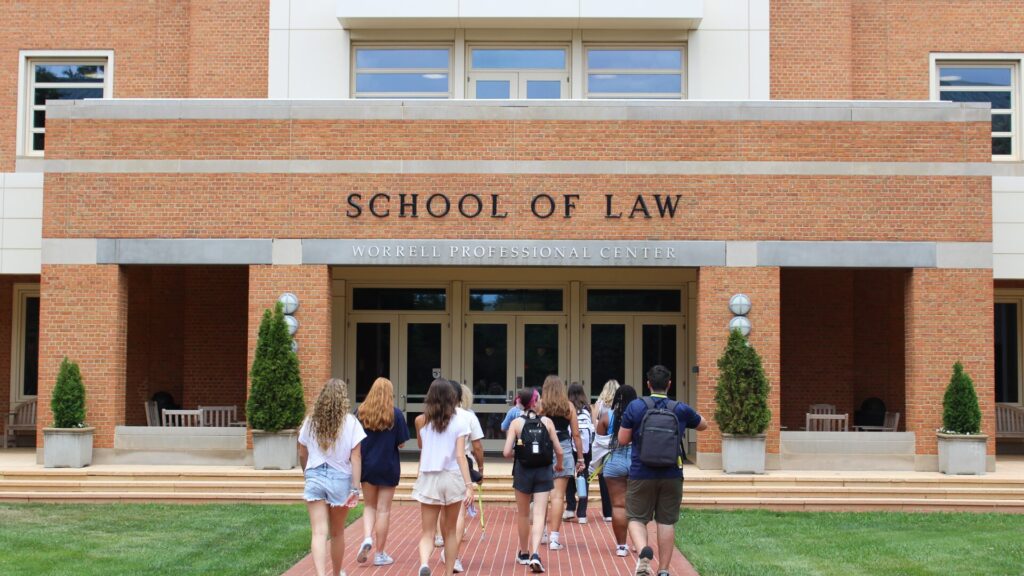
Location: Winston-Salem, North Carolina
Cost: $3,500 +$60 non-refundable application fee
Dates: June 14-19; July 19-24
Application Deadline: Rolling basis until all programs are filled
Eligibility: Current grades 9-12; good academic standing; no school suspensions; English fluency; open to international students
In this program, you explore legal practice, professional ethics, and pathways into law through a week-long residential experience. You examine civil and criminal litigation, family law, government law and lobbying, the judicial system, and transactional law.
You participate in a first-year law class, analyze case studies in teams, argue for a client in a criminal matter, and represent a company in a contract negotiation. You also practice reading legal cases, discuss confidentiality, conflicts, candor, and other ethical duties, and complete a disclosure exercise. Mentoring from law students and young lawyers, together with guest speakers, helps you develop legal reasoning, negotiation, teamwork, communication, and professional awareness.
Why it stands out: It combines simulated criminal advocacy and contract negotiation with a first-year law class and direct mentoring from law students and young lawyers.
15. Georgetown University, School of Continuing Studies – Law Academy (Hoya Summer High School Sessions)
Location: Washington, D.C.
Cost: $3,725 (residential); $3,095 (commuter) + $50 application fee; limited need-based scholarships are available
Dates: June 21-27; July 12-18; July 26th – August 1st
Application Deadline: May 15th
Eligibility: Current or rising high school freshman, sophomore, junior, or senior; minimum 2.0 GPA; open to international students
In this program, you will explore the American legal system and jurisprudence by interacting directly with faculty, legal policy professionals, and attorneys. The one-week experience covers criminal justice debates, constitutional law, and Supreme Court cases through collaborative exercises and group discussions.
You will gain hands-on legal experience by participating in mock trials where you serve as a lawyer in a hypothetical criminal case. You will also attend lectures from distinguished legal experts, engage in off-site visits to Washington, D.C., institutions, and examine pressing contemporary legal issues. The curriculum allows you to hone your advocacy skills and critical thinking workflows while discovering potential careers in the law.
Why it stands out: It provides high school students with an accelerated opportunity to serve as lawyers in mock trials while studying directly under leading legal professionals and faculty in the nation’s capital.
Frequently asked questions: Law courses for high school students
Are law courses for high school students open to international students?
Most are, including Columbia’s Constitutional Law course, Rutgers’ Pre-Law and Mock Trial Summer Academy, and Wake Forest’s Law Institute. A few notable exceptions exist: UPenn’s Provost’s Summer Mentorship Program and the Harris County Summer Legal Academy are both restricted to local students, and Ohio University’s Summer Law & Trial Institute is not open to international students. Immerse Education’s Law Summer School is also open globally to students aged 13 to 18.
How much do law courses for high school students cost?
Costs vary enormously by prestige and funding model. Free options include UPenn’s Provost’s Summer Mentorship Program, Ohio University’s Summer Law & Trial Institute, and the University of Oxford’s UNIQ Law course. Mid-range programs like Stephen F. Austin’s High School Pre-Law Academy cost $850, while premium options include Columbia’s Constitutional Law course at $12,838 and Georgetown’s Law Academy at $3,725. Financial aid is available for most tuition-based programs listed here.
What is the difference between a mock trial program and a classroom-based law course?
Mock trial programs, like UGA’s Mock Trial Academy or Rhodes College’s Mock Trial Academy, center almost entirely on preparing and performing a full courtroom simulation, coached by collegiate advocacy competitors. Classroom-based courses, like Columbia’s Constitutional Law or Oxford’s UNIQ Law course, instead emphasize reading legal opinions, discussion, and analytical writing, sometimes including a smaller moot court component. If you want hands-on advocacy practice, a mock trial program offers deeper engagement; if you want to build legal reasoning and writing skills, a classroom-based course is the better fit.
Do law courses for high school students award college credit?
A few do, though most instead provide a certificate of completion. Rhodes College’s Mock Trial Academy and the University of Connecticut’s Medical Terminology-adjacent programs award real credit, while most law-specific courses, including Georgetown’s Law Academy and Wake Forest’s Law Institute, provide a certificate rather than transferable credit. If earning credit specifically matters to you, confirm this directly with each program, since law courses tend to favor certificates and mock trial experience over formal academic credit.
How selective are law courses for high school students?
Selectivity varies considerably. UPenn’s Provost’s Summer Mentorship Program and the Harris County Summer Legal Academy are both competitive, restricted to specific regional or demographic eligibility criteria. Others, like Rutgers’ Pre-Law and Mock Trial Summer Academy or Wake Forest’s Law Institute, use more open, rolling enrollment. Regardless of selectivity, meeting GPA minimums, which range from 2.0 to 3.0 depending on the program, matters as much as overall application strength.
Is Immerse Education a good option for exploring law before college?
Immerse Education’s Law Summer School is a strong choice if you want structured exposure to contracts, criminal justice, and constitutional principles without needing US residency. The two week program, spanning six locations including Oxford, Cambridge, and Singapore, works in classes of four to 10 students taught by academics connected to top universities. You’ll complete a personal project, receive written feedback, and earn a certificate of completion, giving you concrete material for future applications regardless of where you live.
Where Your Legal Journey Goes From Here
Choosing among these programs gives you a genuine introduction to courtroom advocacy, legal reasoning, and case analysis.
Once one of these 15 law courses for high school students ends, you can turn that experience into a clearer sense of whether law is the right path for you.
The critical thinking, argumentation, and confidence you built become a strong foundation for your college applications ahead.
Keep building on what you started this summer by exploring our University Preparation blogs for guidance on your next steps.