
 Русский (RU)
 Українська (UK)
 Türkçe (TR)
 Italiano (IT)
 Français (FR)
 Português (PT)
 中文 (中国) (ZH)
 Español (ES)
 日本語 (JA)
 ไทย (TH)
 Deutsch (DE)
 Ελληνικά (EL)
 Polski (PL)
 Bahasa Indonesia (ID)
 Nederlands (NL)
 العربية (AR)
 한국어 (KO)
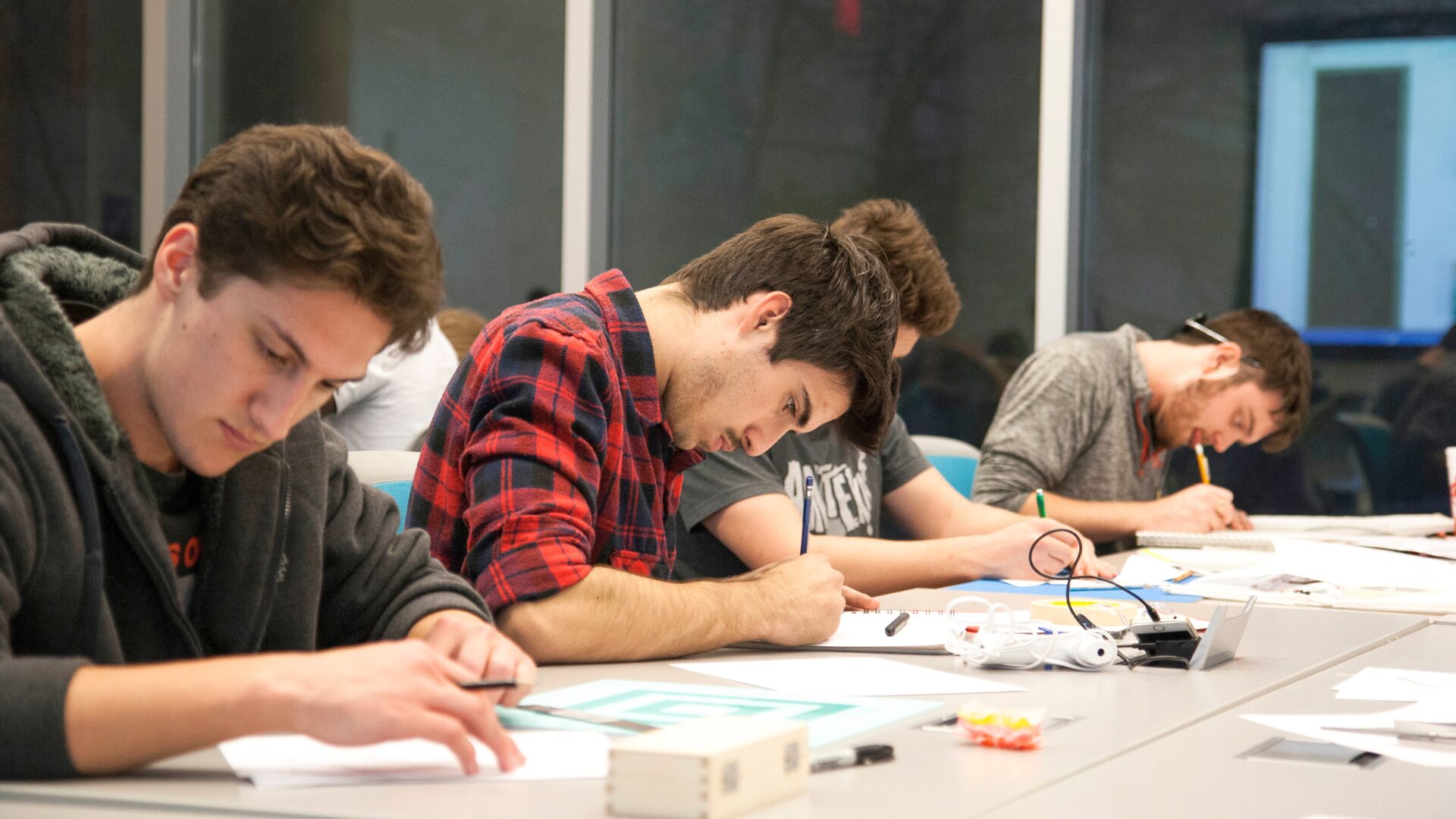
As a high school student, summer can be a great time to dive into immersive experiences that will help you develop valuable skills before college, and fully funded summer programs in 2026 for high school students can help you do just that! These programs let you connect with peers and experienced mentors within a university or professional environment, where you can explore complex concepts, work on collaborative projects, and sharpen your problem-solving skills.
You may find yourself surrounded by like-minded individuals and engaging in stimulating discussions, all while being mentored by experts in their fields. Whether you are delving into cutting-edge research or immersing yourself in advanced coursework, these programs offer early experiences that can prepare you for college and beyond.
Many credible institutions today run these programs, letting you participate in rigorous, advanced learning experiences at no cost! This makes them accessible and meaningful options to explore.
How to choose the right fully funded summer program?
Fully funded summer programs range from rigorous academic courses to hands-on internships, spanning various fields of study, from the arts to medicine. Many of these experiences are designed to provide you with unique insights and experiences that go beyond what you learn in the classroom. You may conduct experiments in a lab, earn credits in a university classroom, explore careers in real workplaces, work with peers on projects, or engage in discussions on cultural phenomena within a diverse cohort of students from around the world.
With so many options available, it can be overwhelming to choose the right program. The best opportunity for you is one that aligns with your preferences, experience level, and goals. To help you choose, we have drawn up a list of 15 fully funded summer programs in 2026 for high school students.
For related options, consider the online research program.
Key takeaways
- The Summer Academy for Math and Science at Carnegie Mellon is completely free and restricted to US citizens or permanent residents between 11th and 12th grade who are at least 16 by June 20, 2026.
- Immerse Education’s Academic Insights Programme spans eight locations, including London, Oxford, and Tokyo, with small classes of seven to 10 students open to students worldwide aged 13 to 18.
- MIT’s Research Science Institute admits about 100 students annually and is free apart from a $75 application fee, with full waivers available, open to high school juniors from around the world.
- The Princeton Summer Journalism Program is completely free and restricted to low-income, first-generation students with a GPA of 3.5 or higher, culminating in a self-published newspaper on the final day.
- The Telluride Association Summer Seminar is free and centers on democratic community living, with students choosing between a track on the African diaspora or one examining power and social structures more broadly.
- Imperial College London’s Year 12 Sutton Trust Summer School is completely free with travel costs covered, restricted to UK state school students choosing from 13 subject streams.
- Wadham College Summer Schools at Oxford are fully funded, including accommodation and meals, restricted to UK state school Year 12 students exploring tracks like Classics or Climate Change.
- Nearly every program in this list is entirely free, with eligibility restrictions tied to citizenship, region, or school type rather than cost being the limiting factor.
15 Fully Funded Summer Programs in 2026 for High School Students
1. Summer Academy for Math and Science (SAMS) @ Carnegie Mellon University
Location: Carnegie Mellon University, Pittsburgh, PA, U.S.
Cost: Free
Program dates: June 20th – August 1st
Application deadline: February 1st
Eligibility: Students between grades 11 and 12 (rising seniors) who will be 16 years of age or older by June 20th; applicants must be U.S. citizens or U.S.-based permanent residents
SAMS lets high schoolers follow a rigorous STEM curriculum over the course of six weeks at Carnegie Mellon University. You will dive into math and science coursework through traditional classroom instruction supplemented by hands-on projects focused on real-world application of concepts.
Under the mentorship of experienced faculty, you will work on complex challenges and collaborate with peers to come up with STEM-based solutions. The program will also include workshops on college preparation strategies, research projects, and credit-bearing college prep classes. The experience will conclude with a research symposium, where you will showcase your projects and findings.
Why it stands out: You will explore STEM research, connect with faculty, and spend six weeks on the Carnegie Mellon campus while also gaining access to virtual support focused on college prep following the program.
2. Immerse Education’s Pre-University Summer School
Location: Cambridge, London, Oxford, Singapore, Sydney, Tokyo, and Toronto
Cost: Varies; summer school scholarship available through the bursary programme
Program dates: Two weeks during the summer
Application deadline: Multiple summer cohorts; rolling admissions.
Eligibility: Students across the globe, ages 13-18, who are currently enrolled in middle or high school
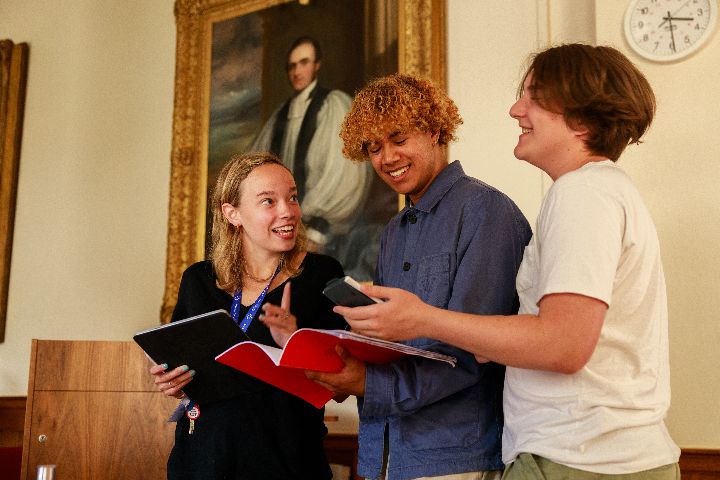
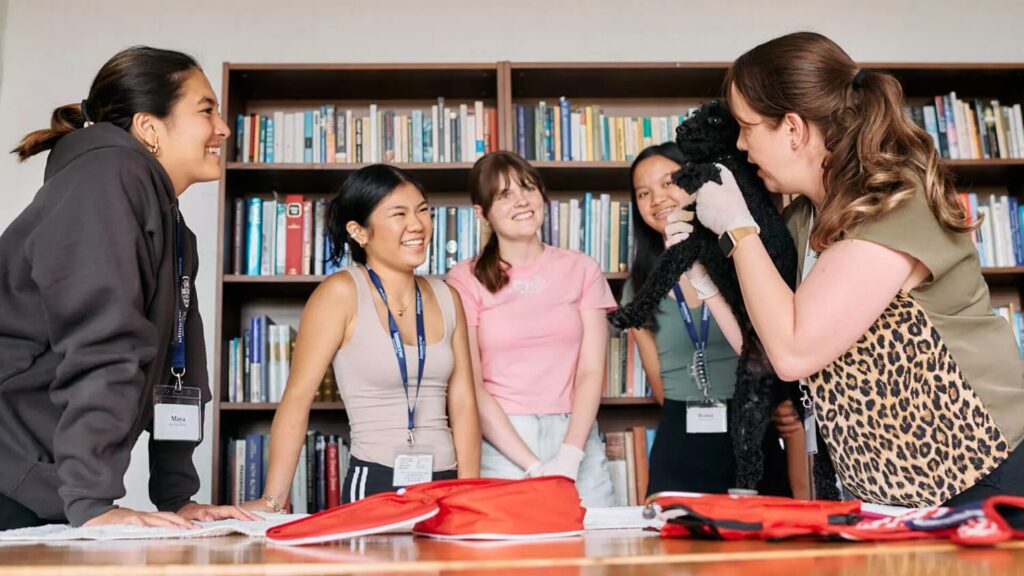
The Academic Insights Program lets high school students experience university life firsthand. You will live on campus and study in small groups of 7 to 10, and learn from tutors from eminent top universities like Oxford and Cambridge. You can explore a wide range of subjects, spanning over 20 options, including Computer Science, Economics, Architecture, AI, Medicine, Philosophy, and Business Management. The courses are experiential, letting you practice what you learn.
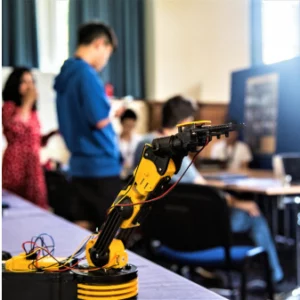
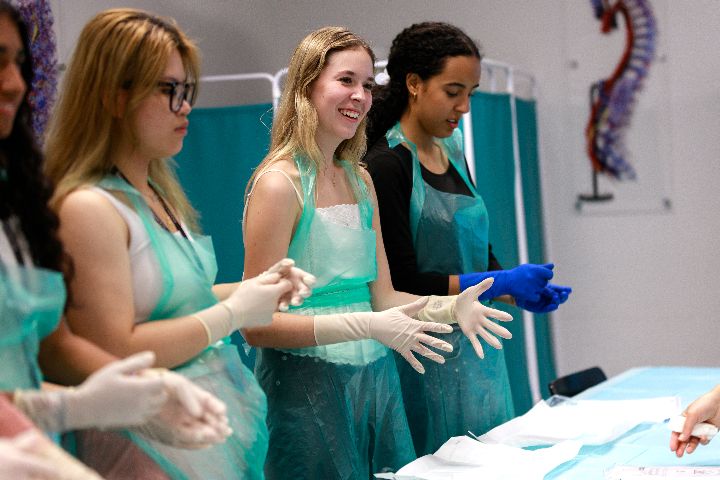
So, you may find yourself participating in a moot court for law, conducting dissections in medicine, designing a robotic arm in engineering, or building creative writing portfolios and business case studies. By the end of the program, you will complete a personal project, receive written feedback, and earn a certificate of completion. You can find more details about the application here.
Why it stands out: It offers an early start at university life and academics through discussion-based classes and a residential campus component along with an opportunity to complete an independent project.
3. MIT Research Science Institute (RSI)
Location: Massachusetts Institute of Technology, Cambridge, MA, U.S.
Cost: Free apart from a non-refundable $75 application fee (full waivers available)
Program dates: Six weeks in the summer
Application deadline: Early to mid-December (tentative)
Eligibility: High school juniors from around the world
RSI is one of the most selective fully funded summer programs in 2026 for high school students, inviting about 100 students each year to engage in rigorous coursework and individualized research work on the MIT campus. You will begin the program with a week of seminars covering research topics in STEM and the humanities. For the next five weeks, you will work with a mentor on a research project.
You will spend time reading scientific literature, collecting and analyzing data, and learning how to present your work. In the final week, you will deliver an oral and written presentation discussing your findings. Field trips to local science and tech organizations will also be part of the experience.
Why it stands out: It lets you design and complete a research project, practice professional science communication, and connect with leading researchers while exploring MIT labs.
4. Summer Internship Program (SIP) @ National Institutes of Health (NIH)
Location: NIH campus, Bethesda, MD + other NIH locations in the U.S.
Cost/Stipend: No cost; stipend available (amount varies by educational level)
Program dates: May 11th – August 31st
Application deadline: Mid-February
Eligibility: Graduating high school seniors who will be 18 or older by September 30th and who are U.S. citizens or U.S. permanent residents; minor applicants must have a permanent address within 40 miles of the assigned NIH campus
SIP at NIH offers students a free opportunity to engage in scientific research and explore real lab workflows. You will work full-time under the mentorship of experienced researchers, contributing to projects in behavioral, biomedical, or social sciences in NIH labs. This program emphasizes hands-on learning, letting you utilize advanced research technologies to practice scientific problem-solving.
You will also access professional development activities, a Graduate and Professional School Fair, and a Summer Poster Day, where you will share your summer work with the NIH community and peers. Through this experience, you will gain firsthand exposure to a professional research ecosystem.
Why it stands out: It combines research exposure with professional development, helping you contribute to scientific investigations as well as develop workplace skills over the summer.
5. Carnegie Mellon University’s AI Scholars
Location: Carnegie Mellon University, Pittsburgh, PA, U.S.
Cost: None
Program dates: June 20th – July 18th
Application deadline: February 1st
Eligibility: 11th-grade students, ages 16 and up, who are U.S. citizens/permanent residents with current U.S. green cards
AI Scholars is a free four-week program that lets high school students learn about computing and artificial intelligence while living on the Carnegie Mellon campus. The schedule combines classroom instruction with collaborative group projects and mentorship from experienced faculty members. Before arriving on campus, you will complete a Python course that covers core programming concepts and prepares you for the academic portion of the program.
During the residential experience, you will learn about AI concepts through project-based activities and collaborative research work focused on real challenges. The experience will culminate in a final symposium where you will present your group projects. Sessions covering college prep, financial aid, application essay writing, and academic and career pathways will also be part of the program.
Why it stands out: You will learn about computing and AI through lectures, projects, and research exposure while also learning how to apply classroom tech concepts to real challenges.
6. Telluride Association Summer Seminar (TASS)
Location: Cornell University, Ithaca, NY, and University of Maryland, College Park, MD, U.S.
Cost: Free
Program dates: June 21st – July 25th
Application deadline: December 3rd
Eligibility: High school sophomores and juniors, ages 15-17; international students must be sophomores to apply
TASS is a free six-week summer program that introduces students to how power and privilege shape social structures through college-level courses in the humanities and social sciences. You will apply to one of two seminar tracks: TASS-CBS, which explores history, politics, literature, and art tied to the African diaspora, or TASS-AOS, which examines how various forms of power shape social structures more broadly. Each weekday, you will attend a three-hour class involving discussions, small-group work, and faculty lectures, along with reading, writing, and other assignments.
Outside of class, you and your peers will live together in the program house, making decisions democratically, planning community activities, and learning practices of transformative justice to work through conflicts. Each seminar is led by two faculty members and supported by resident advisors and teaching assistants who will also lead writing workshops and help build a close-knit residential community.
Why it stands out: You will experience democratic community living and discuss transformative justice practices alongside engaging in academic coursework focused on cultural and social issues.
7. Princeton Summer Journalism Program
Location: Princeton University, Princeton, NJ, U.S.
Cost: None!
Program dates: 10 days in the summer (Late July – August) + academic-year support
Application deadline: January
Eligibility: High school juniors from low-income backgrounds with a GPA of 3.5 or higher who live and attend school in the U.S.; potential first-generation college students will be given priority consideration
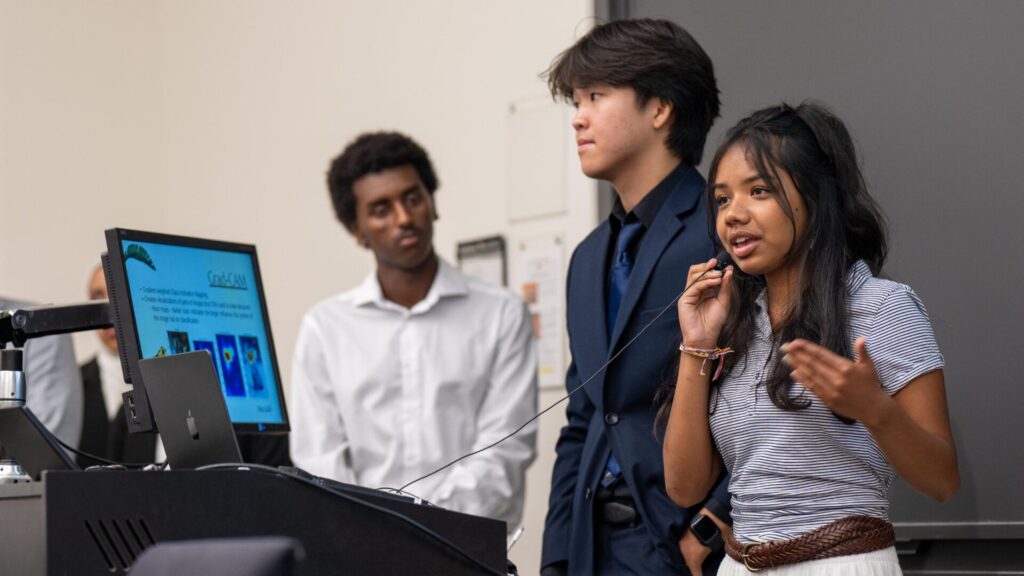
The Princeton Summer Journalism Program is a free program that offers high school students an in-depth introduction to journalism through on-campus and virtual seminars, workshops, and collaborative storytelling activities. You will engage in hands-on media training, learning how to investigate, research, and craft compelling narratives. Sessions led by journalists will add to your understanding of the field. You will tour major news organizations, such as the Huffington Post, The New York Times, and Bloomberg, and also cover a professional sports event.
Throughout the program, you will cover news events in the Princeton area, produce digital content, complete an investigative report, and report, write, edit, and design a newspaper called The Princeton Summer Journal, which will be published on the program’s last day. You will also attend seminars covering the college admissions process and work one-on-one with a college advisor.
Why it stands out: You will practice writing, reporting, editing, and producing digital content, design your own newspaper, and connect with professionals over the course of 10 days in a university environment, while also gaining access to year-round college prep support.
8. Science and Engineering Apprenticeship Program (SEAP)
Location: Various DoN labs across the U.S.
Stipend: $4,000 (first-time participants) | $4,500 (returning students)
Program dates: Eight weeks in the summer
Application deadline: November 1st; applications open on August 1st
Eligibility: U.S. 10th to 12th graders, ages 16 and up, including graduating 12th graders
Among fully funded summer programs in 2026 for high school students, SEAP stands out as a STEM-focused option that places about 300 students across the U.S. in Department of the Navy (DoN) laboratories, where they spend around eight weeks contributing to Naval research. As an intern, you will work closely with scientists and engineers on research projects, gaining exposure to Naval science and technology.
You may work within areas like engineering, chemistry, mathematics, computer science, and robotics. You will get to shadow professionals, attend professional development activities, and work with lab tools and technologies. The program will additionally help you explore careers in DoN science and engineering.
Why it stands out: It lets you shadow researchers as well as work with them on real STEM research while earning a stipend and building an early professional network.
9. MITES Summer
Location: Massachusetts Institute of Technology, Cambridge, MA, U.S.
Cost: Free
Program dates: Late June – early August (six weeks)
Application deadline: Early February
Eligibility: High school juniors who are U.S. citizens or permanent residents
MITES Summer, one of the more research-intensive fully funded summer programs in 2026 for high school students, is a six-week residential program that brings you to the MIT campus to take college-level courses in physics, math, life sciences, and humanities, and explore a project-based elective. Past electives have spanned areas like architecture, machine learning, genomics, and electronics, letting students explore concepts beyond the school curriculum.
Your daily schedule will consist of classes and activities, with evenings and weekends being a mix of office hours, homework, and social events around the Greater Boston area. You will also attend a college fair with admissions counsellors, receive college admissions guidance, and tour MIT labs and local companies. At the end of the summer, you will receive a written evaluation from your instructors, which you can submit as supplemental material with your college applications.
Why it stands out: You will explore rigorous college-level classes, learn advanced STEM concepts, engage in practical problem-solving experiences, and leave with a written evaluation.
10. Imperial College London Year 12 Sutton Trust Summer School
Location: Imperial College London’s South Kensington Campus, London, UK
Cost: Free + travel costs covered
Program dates: July 14-17 | July 21-24
Application deadline: March 5th
Eligibility: Year 12 students in Wales or England, Year 13 students in Northern Ireland, or S5 students in Scotland attending state-funded schools or colleges (non-fee-paying) in the UK who are under 18; course-specific requirements vary
This four-day, three-night residential program at Imperial College London is one of the more subject-diverse fully funded summer programs in 2026 for high school students, designed for Year 12 students interested in getting a taste of life on campus. You can choose from one of 13 subject streams across two sessions, with tracks from Physics and Mathematics to Economics, Finance, and Data Science.
You will attend lectures and lab sessions within your chosen stream, with content designed to go beyond the standard school curriculum and give you a sense of first-year undergraduate academics. In the evenings, you will engage in an off-site trip, team-building activities, and a celebratory meal on the final night. Before the experience begins, you will attend two online webinars to prepare for the week, and following the program you will receive ongoing support including a Year 13 progression webinar, personal statement review, and optional mock interview practice if you get an offer from Imperial.
Why it stands out: You will gain hands-on academic exposure as well as ongoing support after the program ends to prepare for life as a college student.
11. Wadham College Summer Schools
Location: Wadham College, Oxford, UK
Cost: Free + accommodation and meals covered; financial support is available to cover travel costs.
Program dates: August 17-21
Application deadline: May 1st
Eligibility: Year 12 students currently studying in UK state schools or sixth-form colleges; subject-specific requirements apply for each track
This fully funded five-day residential summer school at Wadham College lets you experience life on campus while exploring subjects like Climate Change, Classics, and Modern Languages. In the Classics stream, you will take language classes in Ancient Greek and visit the Ashmolean Museum, while the Modern Languages stream will let you study Spanish, French, or German and experiment with beginner sessions in other languages such as Portuguese and Russian.
In the Climate Change stream, you will explore concepts in Biology and Human Sciences within the context of effects of climate change and approaches for addressing these issues. Each track will offer a seminar series led by Oxford academics and the opportunity to work on an assignment, for which you will receive written feedback from tutors. Throughout the week, you will live in college residential facilities, connect with Oxford student ambassadors, and access guidance on applying to colleges.
Why it stands out: It lets you explore disciplines such as humanities, linguistics, and social sciences while living on campus, attending lectures, and working on projects.
12. √mathroots @ MIT
Location: MIT campus, Cambridge, MA, U.S.
Cost: Free; travel scholarships available
Program dates: July 1-15
Application deadline: March 3rd
Eligibility: Current high school students (not graduating seniors), ages 14-18, who are U.S. citizens or those attending high school in the U.S. with demonstrated academic excellence in math; students must be comfortable with high school trigonometry, exponents, algebra, geometry, and logarithms
√mathroots, one of the more math-focused fully funded summer programs in 2026 for high school students, is a 14-day residential program hosted by MIT PRIMES designed for high school students interested in exploring creative topics in mathematics and problem-solving. You will discover new mathematical ideas and practice problem-solving techniques through group activities and lectures led by instructors with experience in research and competition math.
The program focuses on creative problem-solving outside the standard high school curriculum, exposing you to challenging yet accessible ideas in math and introducing you to proof writing techniques and logical reasoning. You will also live in MIT dorms with residential counselors and engage in activities with peers, mentors, and instructors on campus.
Why it stands out: Instead of exploring a range of math topics, you will engage in in-depth exploration of problem-solving, building skills for tackling challenging math questions.
13. Imperial College London’s Year 10 Insights Summer School
Location: Imperial College London South Kensington Campus, London
Cost: Free
Program dates: July 29th – August 1st
Application deadline: March 11th
Eligibility: Students in Year 10 who live and attend school in the UK; applicants should be on track to achieve at least five GCSEs at grades 7-9, including math and sciences, and at least a grade 5 in GCSE English Language. Students from backgrounds that are underrepresented in higher education will be given priority consideration
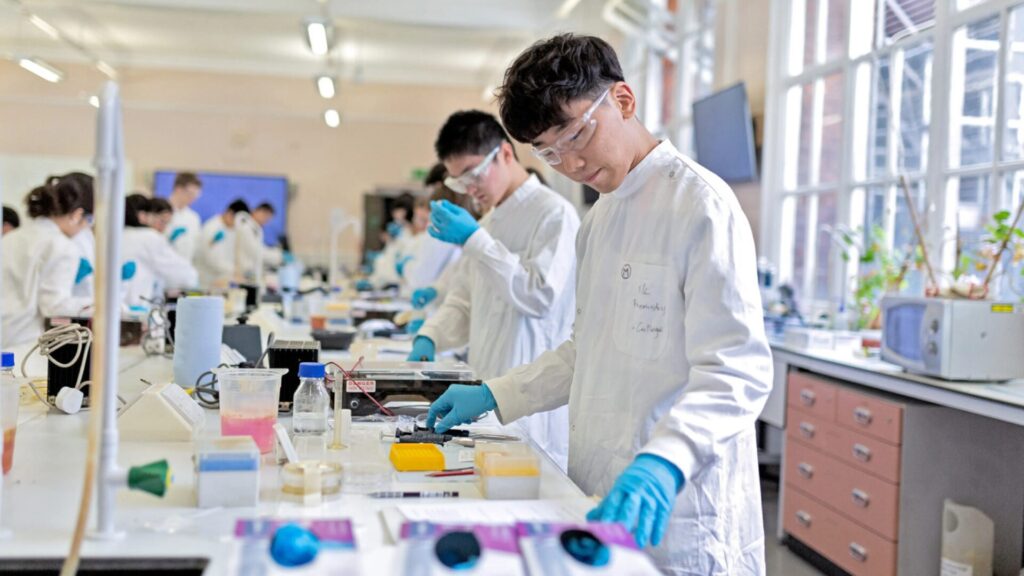
This four-day, three-night residential camp-like program at Imperial College London is designed for Year 10 students who are interested in studying science or engineering after their GCSEs. You will choose between a science stream or an engineering stream based on your interests. In the science stream, you will engage in hands-on practicals and workshops in undergraduate labs, exploring subjects like biology, chemistry, physics, and mathematics.
You can choose the engineering stream to explore various areas in the discipline through hands-on activities and exposure to new tech being developed in labs. You will live on campus and work with undergraduate student mentors throughout. At the end of the week, you will attend an academic-style conference where you will work with peers to present a poster explaining a specific concept you learned during the program.
Why it stands out: You will gain exposure to STEM disciplines as well as life on a campus in Year 10, getting an early start at narrowing down your interests and preparing for college.
14. Oxford Brookes Engage
Location: Oxford Brookes University, Oxford, England, UK
Cost: Free
Program dates: Option 1: June 29th – July 1st | Option 2: July 6-8 + school-year virtual sessions
Application deadline: Varies by track; multiple rounds of applications available
Eligibility: Students in England, ages 16 and up, who are in the first year of a two-year Level 3 qualification (such as A Levels or BTEC) at a non-selective state school or college; applicants must also meet at least one additional criterion listed here
If you’re weighing your options among fully funded summer programs in 2026 for high school students, Brookes Engage offers free subject-based masterclasses and mentoring for students preparing for higher education. You will spend three days engaging in interactive workshops and taster sessions in areas like computer science, biomedical science, law, architecture, and nursing.
Additionally, you will gain insights into the UCAS application process and academic expectations over the course of the program. The program will combine on-campus experiences with online learning for flexibility. Throughout the program, you will also get support from Oxford Brookes students. Successful completion of the program can contribute to contextual offers at Oxford Brookes, providing a significant advantage when applying for admission.
Why it stands out: It combines subject-based masterclasses, personalized mentoring, and academic exploration to offer a head start on college prep at no cost!
15. Suffolk University Summer Entrepreneurship Program for High School Students
Location: Suffolk University, Boston, MA, U.S.
Cost: Free
Program dates: July 7-24
Application deadline: Not specified; registration opens in January.
Eligibility: Rising high school seniors with a GPA of 2.7 or higher living in the metro-Boston area (not open to international students); rising juniors may be considered on a space-available basis
This Suffolk University program is a free, three-week commuter experience where you will explore how entrepreneurs launch ventures and create value within organizations. Through a mix of lectures, sessions led by guest speakers from the Boston business community, and hands-on in-class activities, you will explore topics like pitching, crowdfunding, and building a new concept.
Visits to Boston organizations will also be a part of the experience. The program will conclude with a final presentation where you will pitch your own business idea. In addition to the entrepreneurship curriculum, you will gain exposure to life at Suffolk University, campus resources, and workshops on the college application and financial aid processes. The program will award three college credits upon completion.
Why it stands out: It combines classroom instruction with field trips and hands-on work, offering you a taste of university-level business academics and local entrepreneurial culture over three weeks.
Frequently asked questions: Fully funded summer programs in 2026 for high school students
Are fully funded summer programs in 2026 open to international students?
It varies significantly. MIT’s Research Science Institute and Telluride Association Summer Seminar are both explicitly open to international students despite being fully funded by US institutions. However, several programs restrict eligibility to US citizens or permanent residents, including SAMS at Carnegie Mellon, the NIH’s Summer Internship Program, and Carnegie Mellon’s AI Scholars. UK-based programs like the Imperial College Sutton Trust Summer School and Wadham College Summer Schools are similarly restricted to UK state school students. Immerse Education’s Academic Insights Programme is one of the clearer options open to students worldwide aged 13 to 18.
How are these summer programs able to be completely free?
Funding models vary by program. University-run programs like MITES Summer and RSI at MIT are funded by the host institution specifically to remove financial barriers for high-achieving students. Government-backed programs, like SEAP through the Department of the Navy, are funded federally as part of broader STEM workforce initiatives. UK widening-participation programs, like the Imperial College Sutton Trust Summer School and Wadham College Summer Schools, are funded specifically to support state school students from underrepresented backgrounds.
Do fully funded summer programs pay a stipend on top of covering costs?
Some do, though it’s not universal. SEAP pays $4,000 for first-time participants or $4,500 for returning students, and the NIH’s Summer Internship Program pays a stipend based on educational level. Others, like MITES Summer and RSI at MIT, cover tuition, housing, and meals but don’t provide additional cash compensation. If a stipend specifically matters to you, check each program’s compensation details closely, since “fully funded” typically refers to waived program costs rather than guaranteed pay.
How selective are fully funded summer programs?
Selectivity ranges from extremely competitive to more accessible. RSI at MIT is highly selective, admitting only around 100 students from a large international applicant pool, and Telluride Association Summer Seminar is similarly competitive. Other programs, like Oxford Brookes Engage, are less centrally selective and instead focus on meeting specific academic and background criteria. Regardless of selectivity, meeting precise eligibility requirements, like age cutoffs or specific school affiliations, matters as much as academic strength.
What kind of activities do fully funded summer programs typically include?
The format varies by program focus. Research-based programs, like RSI at MIT and the NIH’s SIP, have you conduct an original research project under mentor guidance, culminating in a formal presentation or poster. Journalism and humanities-focused programs, like the Princeton Summer Journalism Program and Telluride Association Summer Seminar, instead center on discussion-based coursework and creative production, such as publishing a newspaper. STEM-focused academies, like Carnegie Mellon’s SAMS and AI Scholars, combine classroom instruction with collaborative group projects and a final symposium.
Is there a fully funded option similar to Immerse Education’s offerings for students who don’t qualify for these programs?
While this list doesn’t include Immerse Education among its fully funded options, if citizenship or regional restrictions exclude you from many of these programs, Immerse Education’s Academic Insights Programme is worth considering as an alternative. It spans eight global locations and is open to students worldwide aged 13 to 18, though it isn’t free, financial aid is available through its bursary programme, and it offers a similarly rigorous, mentor-guided academic experience regardless of your citizenship or home region.
Your Next Step After a Funded Summer Program
Choosing among these fully funded summer programs 2026 gives you rigorous academic exposure and research experience without any financial barrier.
Once the program ends, you can turn that hands-on experience into a clearer sense of your academic and career direction.
The skills, mentorship, and confidence you built become a strong foundation for stronger university applications ahead.
Keep building on what you started this summer by exploring our University Preparation blogs for guidance on your next steps.