
 Русский (RU)
 Українська (UK)
 Türkçe (TR)
 Italiano (IT)
 Français (FR)
 Português (PT)
 中文 (中国) (ZH)
 Español (ES)
 日本語 (JA)
 ไทย (TH)
 Deutsch (DE)
 Ελληνικά (EL)
 Polski (PL)
 Bahasa Indonesia (ID)
 Nederlands (NL)
 العربية (AR)
 한국어 (KO)

When you’re in high school, summers often feel like a pause button on your classes, exams, and deadlines. But they can be much more than a break from routine. Physics research programs for high school students offer a powerful way to use your summer to explore subjects that truly interest you, push your intellectual limits, and try experiences that shape how you think about your future.
Picture yourself exploring concepts like astrophysics, quantum mechanics, or particle physics, not just through equations, but through actual research. You might work with simulations, analyze experimental data, or assist in laboratory or computational projects under the guidance of scientists and professors. These programs give you a glimpse into how physicists ask questions, test ideas, and uncover patterns that explain the natural world.
Even if you already enjoy physics classes at school, research programs take your interest to another level. You will learn how to think critically, work independently, and communicate complex ideas clearly. It can help you decide whether physics or a related STEM field is something you want to pursue in the long-term.
What kinds of physics research programs for high school students are there?
Finding a strong physics research program can be challenging, as the specific focus of each program can be different. Knowing the different types of programs available can help you choose one that aligns with your interests, learning style, and goals.
Many physics research programs are hosted by universities, where you work closely with faculty members, graduate students, or research mentors. These programs often involve projects in areas like condensed matter physics, astrophysics, nuclear physics, or applied physics. Some emphasize experimental work in laboratories, while there are others where you’ll be focusing on computational modeling, data analysis, or theoretical problem-solving.
Most importantly, good physics research programs will require your commitment and curiosity. To make this process easier and help you find programs that truly stand out, we have put together a list of 15 Physics Research Programs for High School Students. We’ve chosen them for their academic rigor, mentorship quality, and overall learning value.
Additionally, you can have a look at physics summer programs for high school students or online STEM programs.
15 Physics Research Programs for High School Students
1. Research Science Institute (RSI)
Location: Massachusetts Institute of Technology (MIT), Cambridge, MA
Cost/Stipend: No cost for participants
Acceptance rate/cohort size: Selective; ~100 students
Dates: Six weeks during the summer
Application Deadline: Typically in December
Eligibility: High school juniors are eligible (typically entering senior year the following fall); open to both U.S. and international students
The Research Science Institute is a six-week summer experience that blends rigorous classroom learning with genuine research pursuits at one of the world’s top universities, making it one of the most prestigious physics research programs for high school students. You begin with intensive STEM seminars taught by distinguished MIT faculty and then move into a mentored research project in your field of interest.
Over the subsequent weeks, you work side by side with researchers and graduate students to formulate a research question, design and run experiments or models, and analyze results. The program culminates in a formal presentation and written report that mirrors the format of professional scientific research communication. Because RSI covers room, board, and academic resources at no cost to you, it removes financial barriers and lets you focus fully on the intellectual challenge. Alumni often go on to top graduate programs and careers in science, reflecting the program’s deep impact on early research development.
Why it stands out: RSI gives you an immersive, university-level research experience where you contribute to original science at MIT with mentorship from active researchers.
2. Immerse Education’s Physics Online Summer School
Location: Fully remote
Cost/Stipend: Varies; summer school scholarship available through their bursary programme
Acceptance rate/cohort size: 1-on-1 tutoring or small group tutorials available
Dates: Flexible; multiple cohorts in a year.
Application Deadline: Rolling admissions; multiple dates throughout the year
Eligibility: High school students aged approximately 16-18; open to students from the United States and international students worldwide
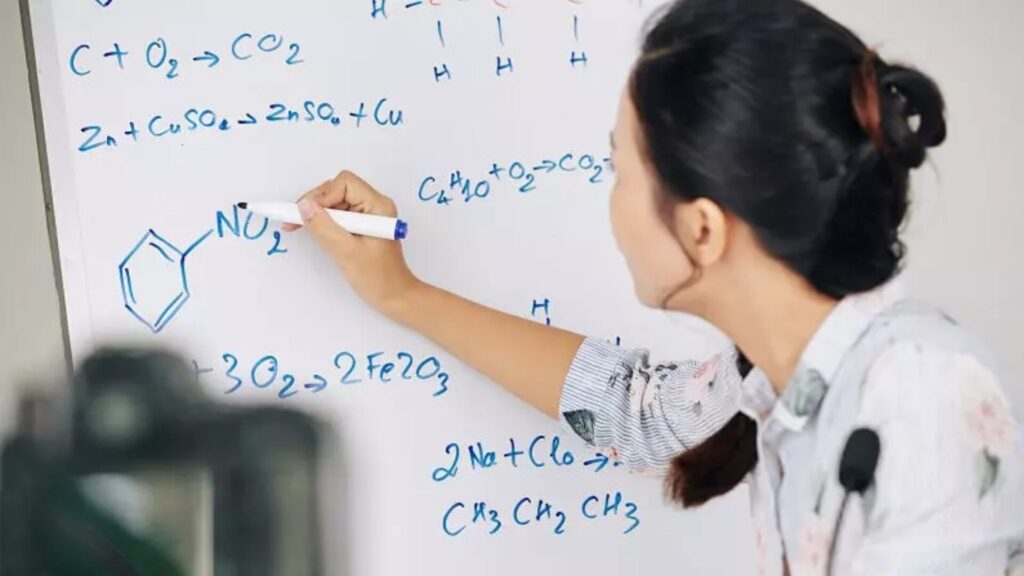
Immerse Education’s Physics Research Programme gives you a chance to dive into physics in a way that echoes real academic study, all from your own computer. You work closely with tutors from top universities to explore advanced physics topics and research skills. Through one-on-one or small group sessions, you’ll learn how to structure an academic project, conduct independent research, and communicate your findings with confidence.
The program also offers optional accreditation, such as UCAS points or college credits, which can strengthen your university applications. Beyond the physics content, you build lasting analytical, writing, and critical thinking skills that are valuable for any science discipline. You can find examples of papers Immerse students have worked on here. You can find more details about the application here.
Why it stands out: It combines personalised research mentoring with flexible online delivery so you can build a university-style project from anywhere in the world.
3. Neubauer Phoenix STEM Summer Scholars
Location: University of Chicago, Chicago, IL
Cost/Stipend: $2,500
Acceptance rate/cohort size: Not specified
Dates: July 26th – July 31st
Application Deadline: Priority and regular deadlines vary annually
Eligibility: Open to current 11th-grade students in high school who are at least 15 years old; U.S. high school enrollment is required
This one-week program at the University of Chicago brings you into contact with professors, industry professionals, and advanced research sites that span fields relevant to physics and related STEM disciplines. During the residential portion, you will meet faculty and alumni who work at leading research institutions and national labs, and you will visit places like Fermilab and Argonne National Laboratory, which are at the forefront of physics and engineering research.
Living on campus also gives you a sense of undergraduate life at a world-class research university while you interact with peers who share your scientific interests. The structured days balance classroom learning, hands-on activities, and discussions that build your research thinking and problem-solving skills. By the end of the week, you will have a deeper understanding of advanced STEM topics and clearer ideas about your academic future.
Why it stands out: You’ll gain early exposure to cutting-edge research facilities and faculty that are at the heart of modern physics and STEM innovation.
4. Penn SAS Experimental Physics Research Academy
Location: University of Pennsylvania, Philadelphia, PA
Cost/Stipend: $10,050
Acceptance rate/cohort size: Highly competitive
Dates: July 11th – August 1st
Application Deadline: Rolling
Eligibility: Current high school students typically in grades 9-11; open to students from the United States and international students worldwide
The Penn SAS Experimental Physics Research Academy invites you to immerse yourself in cutting-edge physics topics over a three-week summer experience on the University of Pennsylvania campus. During the program, you engage deeply with foundational areas such as mechanics, electromagnetism, quantum dynamics, and astrophysics through a blend of lectures, hands-on labs, projects, and discussions that move beyond rote formulas to real scientific reasoning.
Faculty members and experienced instructors lead sessions that emphasize experimental design, cause-and-effect thinking, and the philosophy of scientific inquiry, giving you a fuller appreciation of how physics works in practice. By the end of the academy, you’ll have sharpened both your scientific understanding and your ability to think like a researcher. Here’s the application link.
Why it stands out: It blends rigorous physics exploration to gain a hands-on understanding of cause and effect, which ultimately leads to an appreciation of physics on a higher level.
5. NYU Applied Research Innovations in Science and Engineering (ARISE)
Location: NYU Tandon School of Engineering, Brooklyn, NY
Cost/Stipend: Free participation; participants receive a stipend
Acceptance rate/cohort size: Competitive
Dates: June 1st – August 14th
Application Deadline: February 20th
Eligibility: Rising juniors and seniors who live and attend school in NYC
The ARISE program immerses you in an authentic STEM research experience backed by NYU’s Center for K12 STEM Education and the Pinkerton Foundation, making it one of the most accessible physics research programs for high school students in New York City. Initially, you will build essential research skills like scientific ethics, data analysis, and lab safety, then transition to hands-on research work in NYU faculty laboratories, where you contribute meaningfully to ongoing projects.
Throughout the summer, you receive mentorship from graduate students and faculty, develop professional communication skills, and participate in seminars that deepen your scientific understanding. The structured research component spans multiple disciplines, allowing you to explore areas ranging from engineering and computing to physics and data science. By the end of the program, you’ll have grown both your practical research experience and your confidence in scientific inquiry. Here’s the application link.
Why it stands out: This research immersion lets you conduct real lab work under expert mentorship while building tangible STEM skills.
6. Princeton Plasma Physics Laboratory High School Summer Internship
Location: Princeton Plasma Physics Laboratory, Plainsboro Township, NJ
Cost/Stipend: Free to participate; paid stipend
Acceptance rate/cohort size: Highly competitive
Dates: Varies
Application Deadline: March 15th
Eligibility: Students must be enrolled in an NJ high school/ students who have graduated from NJ high school but have not yet turned 18 by June 15th may apply; students must be US citizens
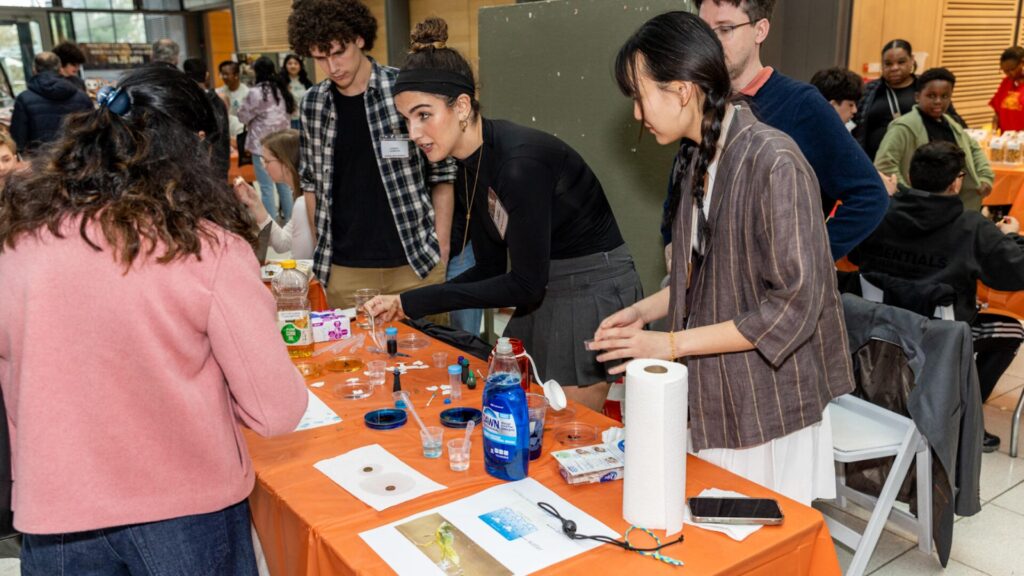
The Princeton Plasma Physics Laboratory (PPPL) High School Summer Internship gives you the chance to spend a full-time summer working alongside researchers and engineers on authentic physics projects related to plasma physics and fusion energy. You’ll join a research team, participate in laboratory experiments, analyze data, and contribute to computational or experimental tasks that scientists at a national lab take seriously.
The program blends hands-on mentoring with professional development, allowing you to develop technical skills and deepen your understanding of how physics research unfolds in real labs. By the end of the internship, you’ll have a meaningful research project to showcase and a clearer idea of what it’s like to pursue physics or engineering at a higher level.
Why it stands out: This internship lets you work directly with scientists on cutting-edge plasma physics and fusion research.
7. Anson L. Clark Scholars Program
Location: Texas Tech University, Lubbock, TX
Cost/Stipend: Free participation; $750 stipend upon research project completion
Acceptance rate/cohort size: Very competitive
Dates: June 21st – August 6th
Application Deadline: February 16th
Eligibility: You must be a high school student (usually at least 17 years old, often rising senior or recent graduate); the program is open to U.S. citizens and U.S. permanent residents only
The Anson L. Clark Scholars Program offers you an immersive research experience at Texas Tech University, where you collaborate directly with faculty mentors across disciplines, including physics. You will design and pursue your own research project, attend weekly seminars, participate in discussions about academic inquiry, and join field trips that broaden your view of scholarly life.
Alongside your research, you develop practical skills in scientific communication, critical thinking, and independent problem solving that go beyond typical classroom work. You also attend professional development sessions that help clarify your future academic and career goals. Culminating in a research report and presentation, this experience prepares you for college-level study and gives you confidence in conducting real research.
Why it stands out: You get to pursue a faculty-mentored research project of your own design within a tight, supportive cohort, giving you a true taste of university research life.
8. Aspiring Scientists Summer Internship Program (ASSIP)
Location: George Mason University, Fairfax, VA
Cost/Stipend: $1,299 for 3 college credits (fee waivers available based on financial need)
Acceptance rate/cohort size: Competitive
Dates: June 18th – August 12th
Application Deadline: February 15th
Eligibility: High school students (minimum age usually 15+; 16+ for laboratory placements); the program is open to students from the United States and international students worldwide
The Aspiring Scientists Summer Internship Program (ASSIP) gives you a research experience alongside faculty and graduate mentors at George Mason University. You dive into hands-on scientific research using real lab equipment or computational tools, develop your ability to write and present scientific results, and explore STEM career paths through discussions with established researchers.
While physics is one of many fields you can explore, the program’s breadth lets you tailor your internship to your interests, from astrophysics and modeling to environmental or data science. ASSIP also emphasizes scientific communication and innovation, pushing you to think creatively as you solve real research questions. With multiple formats and a large network of mentors, you build confidence in your technical and analytical skills. Here’s the application link.
Why it stands out: You work on genuine research projects with experienced scientists and have the chance to earn university credit while shaping your scientific identity.
9. Summer Science Program (SSP) in Astrophysics
Location: Multiple host campuses across the U.S.
Cost/Stipend: Fee is scaled to what each family can afford; no one pays more than $11,800
Acceptance rate/cohort size: Competitive selection
Dates: Varies by campus
Application Deadline: January 29th for international students; February 19th for domestic students
Eligibility: You must be a current high school junior (age ~15-18) who has completed or is completing the required coursework (physics + precalculus or calculus) by June; open to both U.S. and international students
The Summer Science Program in Astrophysics gives you a chance to work like an astronomer and is widely recognized among top physics research programs for high school students. After learning celestial coordinate systems and observational techniques, you join a small team to choose an asteroid, capture telescope images, and then use programming and calculus to compute its orbit.
Faculty mentors and teaching assistants guide you through professional-level methods such as Python programming and data reduction while you apply what you’ve learned to a real research project. Beyond your daily research work, the program includes lectures, social events, and collaborative activities that build tight bonds with peers who share your passion for science.
Why it stands out: This program lets you engage in authentic astrophysics research that feeds into international scientific tracking of asteroids and deep scientific exploration.
10. Yale Young Global Scholars: Innovations in Science & Technology (IST)
Location: Yale University, New Haven, CT
Cost/Stipend: ~ $7,000 tuition; need-based financial aid and scholarships available
Acceptance rate/cohort size: Competitive
Dates: Three 2-week sessions in June and July
Application Deadline: Early action deadline is Oct 15th; regular decision deadline is Jan 7th
Eligibility: You must be between 16 and 18 years old and a current high school sophomore or junior by the program start; applications are open to students from all countries
The Innovations in Science & Technology track of the Yale Young Global Scholars program offers a two-week university-level exploration of STEM fields, including key physics topics alongside biology, engineering, astronomy, and the applied sciences. Living on Yale’s campus, you attend lectures from Yale faculty and work in small seminars guided by undergraduates and graduate students, creating space for deep discussion and collaborative learning.
You tackle real scientific questions through simulation activities, team projects, and analytical thinking tasks that push you beyond typical high school study. While this track does not focus exclusively on physics, it includes physics principles in interdisciplinary modules: from motion and energy concepts to exploring space or technology design.
Why it stands out: You live and learn on one of the world’s most prestigious university campuses while engaging with cutting-edge science and peers from around the globe.
11. Los Alamos National Laboratory Summer Physics Camp
Location: New Mexico School for the Arts, Santa Fe, NM
Cost/Stipend: Free for participants; a stipend is provided upon completing the full program
Acceptance rate/cohort size: Competitive selection
Dates: June 2-13
Application Deadline: Typically around early April
Eligibility: High school students residing in New Mexico, tribal communities in New Mexico, or East Hawaii who have completed Algebra I or a higher-level math course
The Los Alamos National Laboratory Summer Physics Camp is a two-week, hands-on program that invites high school students to explore core scientific concepts and real-world applications through experiments, demonstrations, and STEM activities. You’ll dive into topics related to energy and energy security, physics principles, computer programming, and engineering, guided by volunteer scientists, engineers, and researchers from Los Alamos and partner institutions.
Alongside interactive science sessions, the camp includes tours of scientific facilities, talks that highlight different STEM careers, and collaborative projects that help you see how physics connects to broader technological challenges. Designed to be accessible and engaging, this camp offers both foundational exploration and inspiration for future scientific study.
Why it stands out: This free, immersive physics camp lets you work directly with scientists and engineers while building practical STEM skills and exploring real laboratory settings.
12. Rockefeller University Summer Science Research Program (SSRP)
Location: The Rockefeller University, New York City, NY
Cost/Stipend: Free to participate
Acceptance rate/cohort size: 32 students selected annually; very competitive selection
Dates: June 22nd – August 6th
Application Deadline: January 2nd
Eligibility: Current high school juniors or seniors who are at least 16 years old by program start; open to students from the United States and international students worldwide
The Summer Science Research Program at Rockefeller University gives you a seven-week opportunity to work in a hands-on research environment alongside scientists and trainees from one of the world’s leading biomedical research institutions. You join a small cohort of peers and are placed on a research team where you explore open scientific questions under mentorship, gaining experience with laboratory techniques, data analysis, and experimental design.
The program mirrors real research team structures, which helps you understand how scientists collaborate to advance knowledge and solve problems. In addition to laboratory work, SSRP includes elective sessions, workshops, seminar talks, and networking events that build your professional and communication skills.
Why it stands out: You get authentic laboratory research experience with mentorship in a world-class research setting.
13. Imperial Global Summer School — Physics Summer School
Location: Imperial College London, South Kensington, London, UK
Cost/Stipend: ~£7,695
Acceptance rate/cohort size: Selective
Dates: Two session options: June 29th – July 10th or August 3-14
Application Deadline: Applications open in January
Eligibility: You must be 16 or 17 years old (and not turn 18 before or during the program), demonstrate excellent academic ability and strong English language skills; be open to students from the United Kingdom and international students worldwide
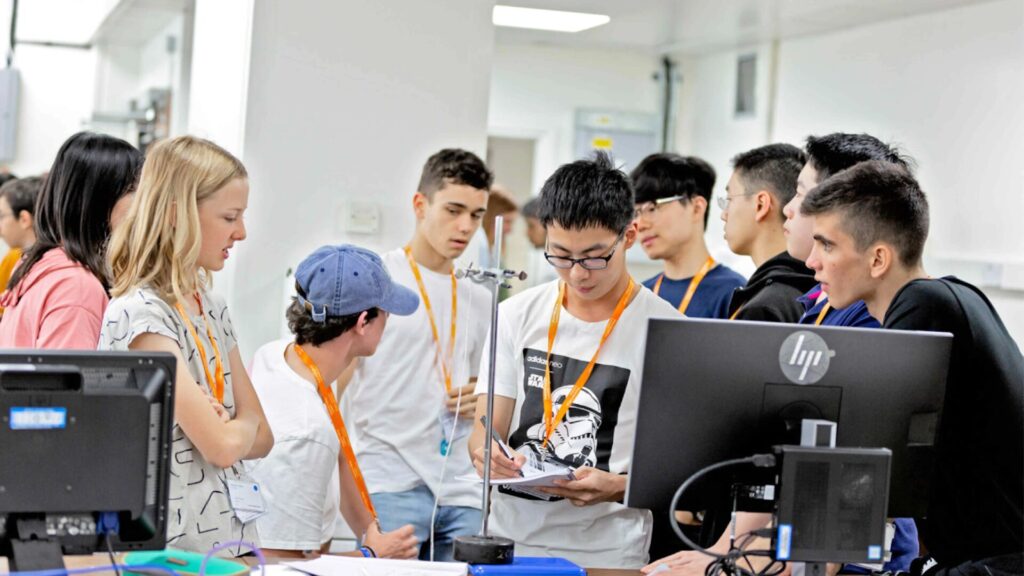
The Imperial College London Global Summer School: Physics Summer School invites you to deepen your grasp of physics through an immersive two-week residential experience at one of the United Kingdom’s top research universities. You’ll begin with an intensive academic phase where lecturers from Imperial’s Department of Physics guide you through core concepts like oscillations, experimental design, and data analysis grounded in calculus and computational thinking.
Alongside lectures, you’ll engage in hands-on lab experiments, learn basic Python programming relevant to scientific computing, and apply your new skills in collaborative group work. In the program’s second week, you join peers from different subject areas for an interdisciplinary Innovation Challenge that mirrors real research and problem-solving scenarios. By the end of the session, you’ll not only strengthen your physics toolkit but also gain confidence in presenting scientific findings and thinking like a researcher.
Why it stands out: This programme blends rigorous physics study with real practical work and a collaborative challenge while you live and learn on a world-class university campus.
14. Michigan Math and Science Scholars (MMSS)
Location: University of Michigan, Ann Arbor, MI
Cost/Stipend: $1,400 tuition
Acceptance rate/cohort size: Competitive
Dates: Three 2-week sessions
Application Deadline: Rolling admissions until sessions fill
Eligibility: You must be a rising high school sophomore, junior, or senior who has completed at least one year of high school but has not yet graduated before the program starts; applications are open to students from the United States and international students worldwide
The Michigan Math and Science Scholars (MMSS) program is a summer enrichment experience that brings you into an academic setting at the University of Michigan to explore advanced topics in math and science with faculty and researchers. For each two-week session, you take one focused course, which can span areas like astronomy, physics, or data science, and engage in classes, labs, and discussions designed to mirror collegiate study.
You’ll spend your days in small, faculty-led seminars where you dive deeper into current scientific work and make connections between theory and real-world applications. By the end of your session, you’ll have sharpened your analytical skills and gained familiarity with how academic inquiry unfolds in higher education environments.
Why it stands out: MMSS blends rigorous, university-level STEM learning with hands-on engagement and a flexible choice of courses, giving you a personalized academic experience.
15. Quantum Information Science and Engineering (QISE)
Location: University of California, Santa Cruz, CA
Cost/Stipend: Tuition applies
Acceptance rate/cohort size: Competitive
Dates: July 5th – August 1st
Application Deadline: February 6th
Eligibility: You must be a high school student completing grades 8–12 by the summer of the program and a resident of California (U.S.)
As part of the COSMOS program at UC Santa Cruz focuses on Quantum Information Science and Engineering, giving you an edge in one of physics’ most exciting frontiers. You’ll study both the hardware and software foundations of quantum systems, from understanding wave functions and quantum gates to exploring physical platforms like superconducting circuits and trapped particle systems. The cluster also includes a transferable skills component, so you strengthen your communication and presentation abilities alongside your technical knowledge.
Each student works closely with faculty and peers in a small group setting, fostering collaboration and deeper insight into how quantum technologies could shape computing and secure communication. Beyond classroom time, COSMOS integrates a final research-oriented project and opportunities to connect with scientists and thinkers from various STEM fields.
Why it stands out: You’ll gain early exposure to cutting-edge quantum physics concepts and research tools in a small, immersive cohort while living on a university campus.
Build Your Physicist’s Toolkit Early
Exploring physics beyond the classroom transforms curiosity into capability. Early research exposure sharpens analytical thinking, mathematical confidence, and problem-solving resilience beyond textbook learning.
Structured research environments allow you to test theories, analyze authentic data, and experience how discovery unfolds inside real laboratories and institutions.
The 15 physics research programs for high school students mentioned here show how early immersion helps you design models, interpret results, and present findings with clarity. These experiences strengthen university applications while building habits essential for long-term academic success.
Ready to go further? Open our Physics Top Books Guide and discover the essential titles ambitious future physicists read to think deeper, faster, and smarter before university even begins.