
 Русский (RU)
 Українська (UK)
 Türkçe (TR)
 Italiano (IT)
 Français (FR)
 Português (PT)
 中文 (中国) (ZH)
 Español (ES)
 日本語 (JA)
 ไทย (TH)
 Deutsch (DE)
 Ελληνικά (EL)
 Polski (PL)
 Bahasa Indonesia (ID)
 Nederlands (NL)
 العربية (AR)
 한국어 (KO)

If you’re looking for a meaningful way to spend the summer before ninth grade, summer programs for incoming high school freshmen can be a strong place to start. These programmes give you the chance to explore subjects you care about, from research, coding, and engineering to public policy, medicine, and the humanities, while learning directly from professors, researchers, and industry professionals.
Through lectures, collaborative projects, lab work, and mentorship, you’ll gain hands-on experience with the tools, concepts, and academic expectations that shape university-level learning.
Why should incoming high school freshmen opt for a summer program?
Summer programs can act as a foundation for a high schooler’s college journey, giving them a taste of what university life is like at a top institution, in person. Beyond strengthening your college applications, these opportunities can help you explore potential majors, develop practical academic experience, and connect with peers who share your interests.
For incoming freshmen, these programs offer a fun, low-pressure environment to explore new interests, build confidence, and keep their minds active before the heavier coursework begins. You get a chance to meet kids who share your hobbies, learn how to manage your time a bit better, and get a feel for what high school expectations will be like. It’s less about building a college resume right out of middle school and more about giving you a safe space to grow socially and academically, so you walk into your first day of ninth grade feeling prepared and excited rather than completely overwhelmed.
For this list, we focused only on programs hosted by universities or government organisations, prioritising highly selective opportunities that are free or offer stipends whenever possible. Below are 15 summer programs for incoming high school freshmen.
For adjacent options, consider online programs for freshmen.
15 Summer Programs for Incoming High School Freshmen
1. Brown University – Brown Pre-College: STEM for Rising 9th and 10th Graders
Location: Brown University campus in Providence, Rhode Island
Cost: $6,052; need-based scholarships are available
Acceptance rate/cohort size: Selective; cohort size not specified
Dates: July 12-24
Application Deadline: May 15th
Eligibility: Students completing grades 8-9 by summer; ages 13 to 15 by June 14th; cannot be concurrently enrolled in Summer@Brown or Leadership Institute on-campus programs prior to STEM 9/10; open to international students
In this program, you spend 12 days on Brown’s Providence campus focusing on a single STEM discipline of your choice, with each course combining rigorous academic content, laboratory or field exercises, and a research project or design-build challenge as the anchor of your work. Mornings center on academic instruction, while twice-weekly afternoon sessions give you access to a dedicated project workspace to advance your research.
You may also engage with Brown graduate students and learn about graduate-level research projects, gaining exposure to how scholars approach scientific inquiry and experimentation. On the final day, you present your project at a Presentation of Learning showcase attended by peers, instructors, and families.
Why it stands out: It pairs rigorous Ivy League STEM coursework with a highly structured residential experience designed specifically for 13–15-year-olds, culminating in a Presentation of Learning project showcase that can form the beginning of a portfolio for future college admissions.
2. Immerse Education’s Pre-University Summer School
Location: Cambridge, London, Oxford, Singapore, Sydney, Tokyo, and Toronto
Cost/Stipend: Varies; summer school scholarship available through our bursary programme
Acceptance rate/cohort size: Selective; an average of 7 participants per class
Dates: 2 weeks during the summer
Application Deadline: Multiple summer cohorts; rolling admissions
Eligibility: Students aged 13-18 currently enrolled in middle or high school; open to international students
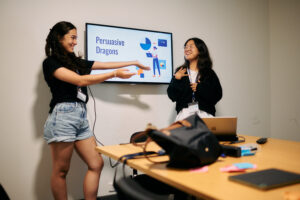
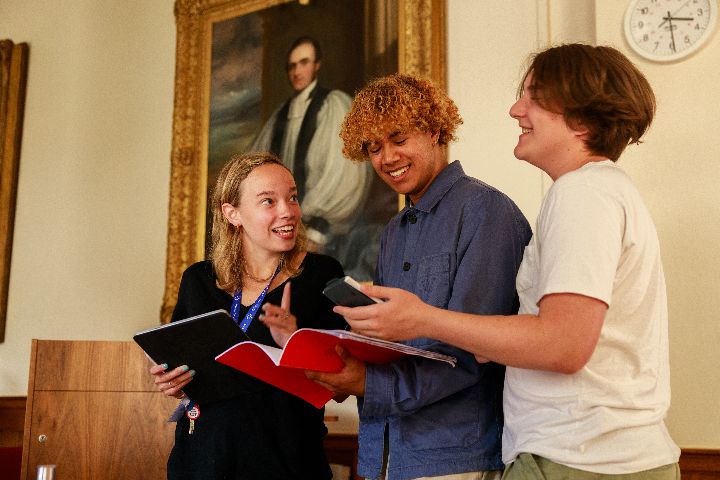
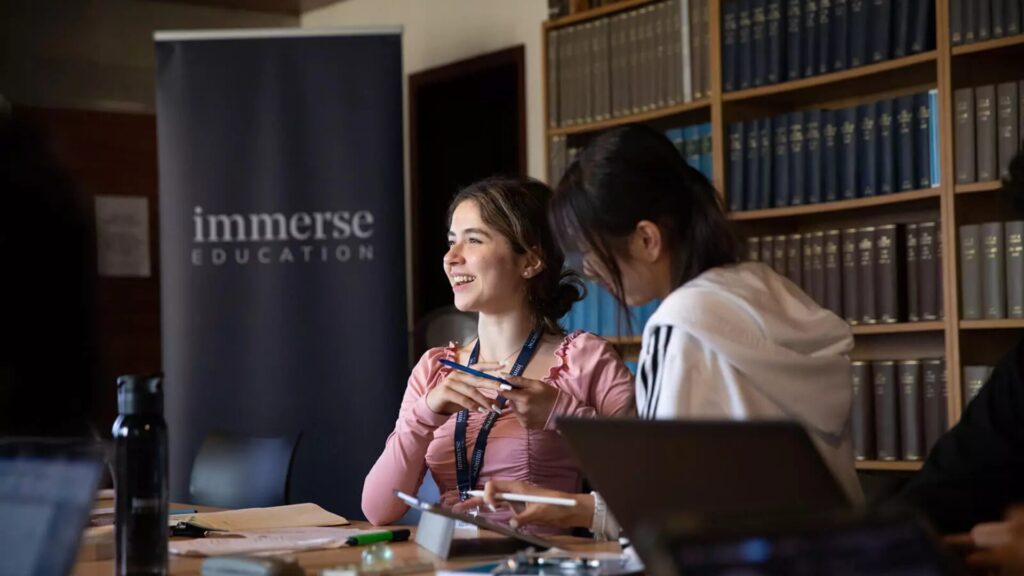
The Academic Insights Program lets high school students experience university life firsthand. You will live on campus and study in small groups of 7–10, learning from tutors from top universities like Oxford and Cambridge. Participants can explore over 20 subjects, including Architecture, AI, Business Management, Computer Science, Economics, Medicine, Philosophy, and more.
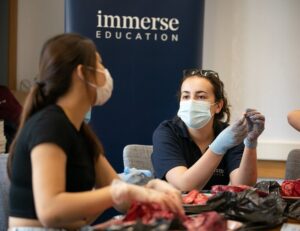
The courses are experiential and hands-on: you may find yourself conducting dissections in medicine, designing a robotic arm in engineering, participating in a moot court for law, or building creative writing portfolios and business case studies. By the end of the program, you’ll complete a personal project, receive written feedback, and a certificate of completion.
Why it stands out: You’ll study under expert academics, be guided daily by a university student mentor, complete a project you can show in future applications, and experience genuine university college life — with other campuses worldwide as alternatives.
3. MIT Edgerton Center – MIT You GO Girl
Location: MIT campus, Cambridge, Massachusetts; in-person commuter program
Cost: $100 suggested materials donation
Acceptance rate/cohort size: Selective; current cohort size not stated
Dates: Session One: August 4-7; Session Two: August 18-21
Application Deadline: Not specified
Eligibility: Rising 9th grade students from the greater Boston area; able to commute to the MIT campus; open to eligible students of any sex/gender; not open to international students
In this program, you get a four-day, on-campus MIT summer program that introduces science and engineering through low-pressure, hands-on work rather than a software-specific curriculum. Among summer programs for incoming high school freshmen, it offers practical STEM exposure through activities like building motorized LEGO cars, using strobe-light photography, and modelling genetics with LEGO fish cells. You also join small-group activities, high-school preparatory sessions, and near-peer mentoring with MIT college students.
The workflow emphasizes experimenting with physical systems, observing results, discussing designs, and connecting engineering or biology concepts to real objects. Because it is commuter-only and local, it fits students who can attend daily on MIT’s Cambridge campus.
Why it stands out: It gives local rising 9th graders a short, MIT-campus introduction to hands-on engineering and science through small-group projects and near-peer mentoring.
4. University of Chicago College of Engineering – Engineering Summer Camp
Location: UIC campus, Chicago, Illinois
Cost: $500; 10% discount for children of University of Illinois (UIC, UIUC, UIS, or System Office) employees
Acceptance rate/cohort size: Non-competitive; maximum of 30 students per group
Dates: July 20-24
Application Deadline: Rolling registration until tracks reach capacity
Eligibility: Rising 8th or 9th graders; not open to international students
In this camp, you spend five days on the UIC campus in Chicago exploring a different engineering discipline each day. Sub-groups are capped at 30 students, and you complete more than 15 hands-on challenges developed by UIC faculty and graduate students in real research labs. You work in teams of two to three on activities that may include writing computer code, robotics, or biomechanics.
You explore UIC’s Chemical Engineering, Mechanical and Industrial Engineering, Computer Science, and Civil, Materials, and Environmental Engineering departments. You also learn about engineering careers in fields such as nanotechnology, autonomous vehicles, and organ transplantation. Track 2’s curriculum targets ABET-aligned outcomes including problem analysis, design iteration, data interpretation, teamwork, and communication.
Why it stands out: It rotates participants through five engineering disciplines in a single week inside real UIC research labs, with project challenges designed by UIC faculty and graduate students that are never reused from previous years.
5. University of Connecticut, School of Computing – UConn AI Summer Camp
Location: UConn Storrs Campus, Storrs, Connecticut
Cost/Stipend: $250 program fee; 50% or 100% financial assistance available for students with demonstrated financial need
Acceptance rate/cohort size: Selective; capped at 30 students due to lab capacity
Dates: July 27-31
Application Deadline: June 15th; rolling admissions till July 18th
Eligibility: Rising 9th-12th grade students; younger students who have completed Algebra I are also eligible; neurodivergent students welcome with accommodations; not open to international students
In this program, you spend five days at UConn’s Storrs campus working through hands-on AI fundamentals with School of Computing faculty and PhD student instructors, using high-performance UConn lab computers. You learn basic Python programming, build and train your own machine learning models, explore neural network visualizations, and probe large language models through activities like “Hacking ChatGPT.”
Sessions cover supervised and unsupervised learning, randomized algorithms, and AI ethics and social impact, layered with games such as AI Bingo and a Human-Operated Regression activity on the Student Union Mall. You also tour UConn’s Autonomous Driving Lab and test-run autonomous prototype vehicles. By the end, you leave with foundational machine learning literacy and stronger computational thinking.
Why it stands out: It pairs introductory AI and Python instruction with on-site access to UConn’s Autonomous Driving Lab and prototype autonomous vehicles, all delivered directly by the School of Computing faculty alongside PhD student instructors.
6. NC State University, College of Engineering – NC State Imagine Engineering Camp (Rising 9th–10th Grade Day Camp)
Location: NC State College of Engineering campuses, Raleigh, North Carolina
Cost: $550; limited need-based financial aid may be available
Acceptance rate/cohort size: Interest-based application; exact cohort size not stated
Dates: June 22-26
Application Deadline: February 27th
Eligibility: Students entering 9th or 10th grade in Fall; home-schooled students eligible; out-of-state students eligible; open to international students
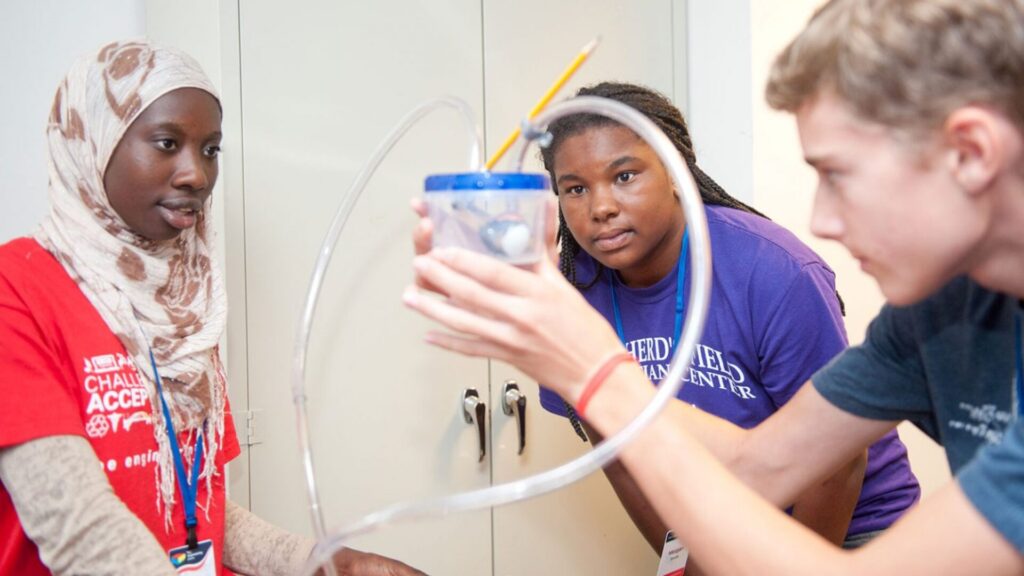
In this program, you experience engineering through a week-long day camp designed specifically for rising 9th and 10th graders. The program emphasizes multidisciplinary engineering through introductory activities, hands-on projects, investigations, and a collaborative team challenge. It gives you exposure to how computer scientists affect the world, alongside engineering problem-solving and entrepreneurship.
You work in teams on new yearly challenges while building practical problem-solving, collaboration, design-thinking, and career-awareness skills. Campers are supported by area teachers, undergraduate and graduate students, and some visits with NC State faculty, with an approximately 1:8 staff-to-student ratio.
Why it stands out: It gives younger high school students a structured NC State engineering experience with hands-on projects, team challenges, computer science exposure, and access to university-connected staff before they reach upper-grade residential programs.
7. Rice University Tapia Center – Techniques of a Pro Mathematician
Location: Rice University, Houston, TX
Cost/Stipend: Early Bird (before February 1st): $2,200; Regular (before May 1st): $2,500; limited number of scholarships are available; discounts are also offered for Rice alumni/staff (10%) and siblings (5%)
Acceptance rate/cohort size: Selective; limited spots
Dates: Session 1: July 5-10; Session 2: July 12-17; Session 3: July 19-24
Application Deadline: Rolling until spots fill
Eligibility: Rising 8th – 12th grade students who excel at mathematics and have completed a high school geometry course; must be familiar with sine, cosine, and tangent (SOHCAHTOA), including the ability to sketch graphs of sin(x) and cos(x) by hand by June; open to international students
This camp focuses on how mathematicians think and communicate, making it one of the more academically focused summer programs for incoming high school freshmen with strong interests in mathematics. You’ll practice organising mathematical ideas, writing and explaining proofs, solving difficult problems, and working collaboratively with other students. The curriculum also includes presentations, peer feedback, and revision-based learning to help students improve their reasoning and communication skills.
Campers live on campus and spend the week learning alongside other students who are interested in advanced mathematics and STEM. The program’s curriculum was developed by Dr Paul Hand, whose work includes applied mathematics, image processing, and artificial intelligence.
Why it stands out: It focuses on teaching how mathematicians think, through communication, structured reasoning, revision, and problem-solving, rather than simply teaching advanced formulas or competition math.
8. University of Connecticut, Vergnano Institute for Impact – UConn Explore Engineering
Location: Storrs, Connecticut
Cost/Stipend: Standard: $4,000; Early Bird: $3,500; financial aid is available
Acceptance rate/cohort size: Competitive; approximately 18-25 students per Grand Challenge group
Dates: July 12-24
Application Deadline: March 1st (early bird); May 1st (standard)
Eligibility: Students entering 9th – 11th grade in September; open to international students
In this camp, you will gain hands-on exposure to engineering majors by tackling technology-driven design challenges. You will work in small groups with university faculty and undergraduate students to apply electrical and mechanical engineering principles to real-world problems. Throughout the program, you will develop technical skills by soldering circuit boards, prototyping mechanical joints, and using 3D modeling tools to design functional devices.
You can choose to build an underwater remotely operated vehicle with waterproof electronics or construct a working prosthetic hand utilizing mechanical linkages and circuitry. By testing and iterating on these designs during the two-week Grand Challenge project, you will experience the complete engineering workflow from conceptualization to competitive demonstration.
Why it stands out: It immerses high school students in university-level technical workflows by having them build complex functional systems like underwater robotics and circuitry-powered prosthetics under the direct guidance of undergraduate engineering leaders.
9. Carnegie Mellon University, College of Engineering – Carnegie Mellon Summer Engineering Experience (SEE): Maker Camp
Location: Carnegie Mellon University, College of Engineering, Pittsburgh, Pennsylvania
Cost/Stipend: None
Acceptance rate/cohort size: Selective; cohort size not officially published
Dates: July 13-17
Application Deadline: March 23rd
Eligibility: Rising 8th and 9th graders; U.S. applicants only; daily commuting distance to CMU’s Pittsburgh campus required since no residential housing is offered; not open to international students
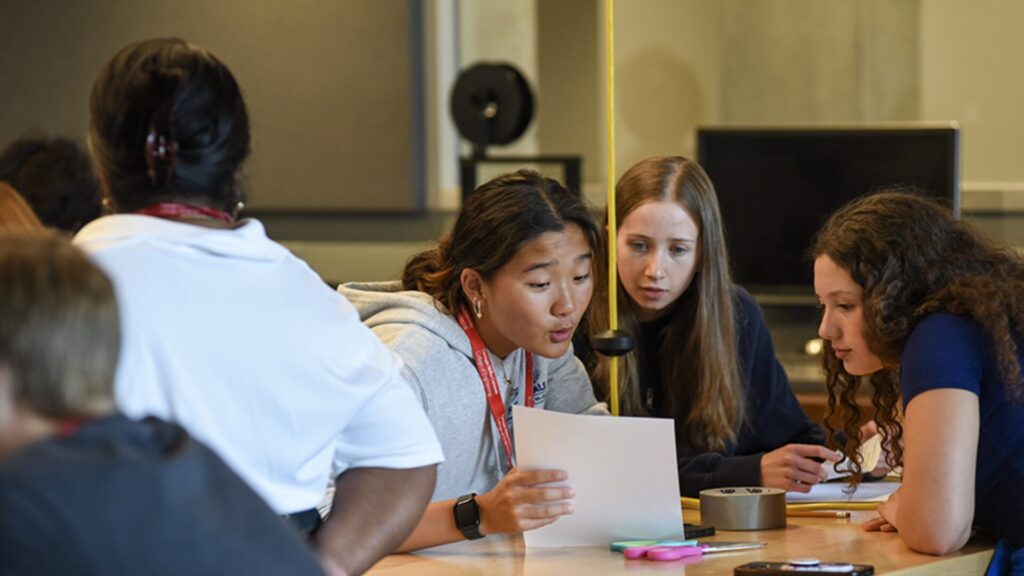
In this program, you spend a week on Carnegie Mellon’s College of Engineering campus learning how engineers move from an idea to a working prototype through the discipline of design. You attend educational presentations introducing different engineering disciplines, then apply those concepts in two hands-on projects: a structured group assignment carried out by the entire cohort across the week, and a smaller team-based project that gives you room to be innovative and creative.
You build primarily with items readily available in your household, which trains you to iterate within real-world material constraints rather than relying on specialized lab equipment. The experience is led by the College of Engineering’s Engineering Outreach Office.
Why it stands out: It is a tuition-free, application-selective week at Carnegie Mellon’s College of Engineering that introduces rising 8th and 9th-graders to the engineering design process through structured group work and an individual creative project, using only everyday household materials.
10. Kode With Klossy Summer Camps
Location: Virtual globally, with select in-person camps in cities including New York City, San Francisco, Seattle, Chicago, and London
Cost/Stipend: None
Acceptance rate/cohort size: Competitive; cohort size not specified
Dates: Multiple 2-week sessions from June to August
Application Deadline: Late March
Eligibility: Young women and gender expansive teens ages 13-18; open to international students
This program includes beginner-friendly tracks in areas such as artificial intelligence and machine learning, data science, and web development. Depending on the track you choose, you’ll learn coding tools and languages like Python, SQL, JavaScript, HTML, and CSS while working on hands-on projects and activities. You also explore topics connected to technology, including AI ethics, machine learning bias, user experience design, and data visualisation.
The camps focus on collaboration, creativity, and building confidence in STEM while connecting students with a broader community of peers and alumni from around the world. Both virtual and select in-person options are available, making the program accessible to students in different locations.
Why it stands out: it offers completely free, beginner-friendly coding camps that combine technical training, inclusivity, and a strong community for young women and gender expansive teens in STEM.
11. United States Naval Academy – US Naval Academy Summer STEM (Session 1 – Rising 9th Graders)
Location: Annapolis, Maryland
Cost: $450; financial aid is available
Acceptance rate/cohort size: Highly competitive; cohort size varies by session
Dates: June 1-6
Application Deadline: March 31st
Eligibility: Rising 9th graders during the summer; demonstrated strong academic performance including GPA and test scores; strong record of extracurricular accomplishments; not open to international students
At the US Naval Academy Summer STEM camp, you engage in technology-focused workshops at one of the military’s premier educational institutions. For students comparing summer programs for incoming high school freshmen, this option adds a distinctive leadership-focused setting to hands-on activities in coding, game development, and digital robotics. You collaborate with midshipmen mentors to test automated systems and practice foundational programming through naval-inspired design challenges.
The camp immerses you in problem-solving exercises where you apply computational workflows and tech tools to complete creative team projects. Beyond the technical workshops, you experience daily life in Bancroft Hall and build leadership skills alongside peers from across the country. By the conclusion, you gain practical technology exposure and a valuable preview of Academy expectations.
Why it stands out: It blends rigorous hands-on software and technology exploration with a realistic preview of midshipman life and military leadership development.
12. University of Washington Youth & Teen Programs – Coding in Python I
Location: Online or the University of Washington Seattle campus
Cost: $895–$995 + nonrefundable $50 registration fee; financial aid is available
Acceptance rate/cohort size: Open enrollment; cohort size not specified
Dates: Summer (1B): June 29th – July 10th; Summer (2B): July 13-24; Summer (3A & 3B): Jul 27th – August 7th
Application Deadline: Two weeks before the start date of each respective course
Eligibility: Incoming 9th – 12th graders; open to international students
This program introduces high school students to programming through Python. In the course, you’ll learn core coding concepts such as variables, loops, conditionals, functions, lists, dictionaries, debugging, and file handling while working on interactive exercises and small projects.
The program focuses on problem-solving, computational thinking, and good coding practices in a beginner-friendly learning environment. As a final project, students create their own text-based game to apply the programming skills they learned during the course. Both online and in-person formats are available, and students receive a digital badge after successfully completing the program.
Why it stands out: This program stands out for offering beginners a structured, project-based introduction to Python through a university-led course specifically designed for high school students.
13. Arizona State University, Ira A. Fulton Schools of Engineering – ASU Fulton Schools of Engineering – Barrett Summer Scholars (BSS)
Location: ASU Tempe campus, Tempe, Arizona, residential
Cost: $800 + $50 nonrefundable deposit; limited need-based scholarships are available
Acceptance rate/cohort size: Highly competitive; ~450+ total students across the entire BSS program
Dates: May 31st – June 3rd
Application Deadline: Typically late February to early March
Eligibility: Applicants entering 9th – 10th grades in Fall; academically motivated and/or high-achieving students; unweighted GPA of 3.0 or higher; open to international students
The Barrett Summer Scholars program at Arizona State University is a residential summer experience giving you an early taste of college life, featuring specialized academic tracks from the Ira A. Fulton Schools of Engineering. You will explore challenging topics like smart city engineering, artificial intelligence, sustainability, healthcare, and the humanities.
Throughout the program, you will engage in discussion-based seminars like “The Human Event,” collaborate on hands-on engineering design projects, and participate in team-building campus activities. By the end, you will develop vital college-ready habits, collaborative problem-solving abilities, and advanced critical thinking skills.
Why it stands out: It combines Barrett-style college-level academic enrichment with Fulton Schools engineering career exploration in a short residential ASU campus experience.
14. University of Arizona, College of Engineering – University of Arizona Summer Engineering Academy (SEA) – Day Camps
Location: University of Arizona campus, Tucson, Arizona
Cost: $350 + $50 non-refundable registration fee; need-based scholarships are available
Acceptance rate/cohort size: First-come, first-served; approximately 300 students
Dates: June 8-11 (Engineering Our Energy and Water); June 29th – July 3rd (Women in Engineering); July 6-9 (Semiconductor Design, Fabrication and Application); July 20-23 (Challenge Accepted)
Application Deadline: June 30th or until sessions fill
Eligibility: Rising 9th through 12th graders; open to public, private, charter, and homeschool students; not open to international students
In this program, you spend four days on the University of Arizona campus working with engineering professors, graduate students, and industry partners on hands-on design projects in a themed track of your choice. Depending on your session, you might design and fabricate circuits in the semiconductor camp, build an infinity mirror using reflection, refraction, and circuitry, prototype renewable energy and water-conservation solutions, or tackle team challenges in the Women in Engineering track.
You follow a daily 9 AM–4 PM schedule with two guided lab workshops and lunch provided. The semiconductor track caps off with an industry field trip, potentially to a Phoenix-area partner.
Why it stands out: It pairs a short four-day commitment with discipline-specific commuter tracks, including a semiconductor camp featuring a potential field trip to a leading industry partner.
15. Georgia Institute of Technology, Center for Education Integrating Science, Mathematics, and Computing (CEISMC) – Georgia Tech CEISMC “No Cap: Truth in the Age of AI”
Location: Atlanta, Georgia
Cost: $550
Acceptance rate/cohort size: Selective; capacity varies by session
Dates: June 1-5
Application Deadline: May 20th
Eligibility: Rising 9th through 12th grade students; open to international students
In this camp, you explore the intersection of artificial intelligence and computer science on the Georgia Tech campus. Hosted by CEISMC, this programme brings an AI-focused option to this list of summer programs for incoming high school freshmen, helping you build foundational technology skills for navigating modern digital systems. You engage directly with computational concepts, gaining exposure to practical areas like text-based coding and application development.
Working alongside peers, you investigate the mechanics of AI and its role in shaping factual digital content. You also complete guided activities that count toward a specialized computer science certificate recognized by the institution. Ultimately, you develop a stronger understanding of intelligent technologies and build essential problem-solving skills for future computing pathways.
Why it stands out: It provides high school students with early exposure to artificial intelligence while allowing them to earn credit toward a specialized Georgia Tech CEISMC Computer Science Certificate.
From Freshman Summer to University Readiness
Your freshman summer can do more than fill a holiday. It can help you explore interests, build confidence, and start high school prepared.
Summer programs for incoming high school freshmen give you a supportive space to try new subjects, meet peers, and practise independent learning early.
Whether you choose STEM, engineering, coding, or academic enrichment, each experience can reveal strengths and questions you can keep exploring throughout high school.
Ready to turn your summer experience into a stronger plan? Explore our University Preparation blogs for guidance on study choices, applications, academic skills, and university life.