
 Русский (RU)
 Українська (UK)
 Türkçe (TR)
 Italiano (IT)
 Français (FR)
 Português (PT)
 中文 (中国) (ZH)
 Español (ES)
 日本語 (JA)
 ไทย (TH)
 Deutsch (DE)
 Ελληνικά (EL)
 Polski (PL)
 Bahasa Indonesia (ID)
 Nederlands (NL)
 العربية (AR)
 한국어 (KO)

In high school, summers are a time to step beyond the classroom and apply your scientific curiosity. Summers can be more than a break; they can allow you to develop lab skills, observe ecosystems, and engage in real research projects. Participating in a biology summer school helps you clarify interests, explore scientific methods, and prepare for advanced studies in life sciences.
Biology summer schools enable you to conduct experiments in genetics, microbiology, or cellular biology, collecting and analyzing field data, or using computational tools to model biological systems. You could combine hands-on research with mentorship, seminars, and collaborative projects. Many programs also include interdisciplinary exposure or cultural elements that broaden your perspective on science.
Biology summer schools help you gain practical laboratory skills, understand experimental design, and develop insight into research careers and academic pathways in biological sciences.
What kinds of biology summer schools are available for high school students?
Finding rigorous and valuable biology programs can be challenging. You don’t want a program that only involves lectures or one that ignores hands-on research entirely. That’s where careful selection matters, because not all programs are academically equivalent.
Various universities and educational institutes offer programs focusing on molecular biology, ecology, genetics, biotechnology, neuroscience, and more. You could deepen an existing interest or explore a new area of biology. You will be guided by expert instructors, participate in laboratory experiments, fieldwork, and research projects, and collaborate with peers who share similar scientific interests.
No matter which program you choose, you will engage fully with the material. To simplify your search, we’ve curated a list of 15 biology summer schools for high school students, selected for their academic rigor, hands-on experience, and research-focused learning.
For more options, you can check out online biology programs. To get a taste of research, you can consider biology research opportunities.
15 Biology Summer Schools for High School Students
1. Immerse Education’s Biology Summer School
Location: Oxford, and Cambridge
Cost: Varies; summer school scholarship available through our bursary programme
Dates: 2 weeks during the summer
Application Deadline: Multiple summer cohorts; rolling admissions
Eligibility: Students around the world aged 13-18 currently enrolled in middle or high school
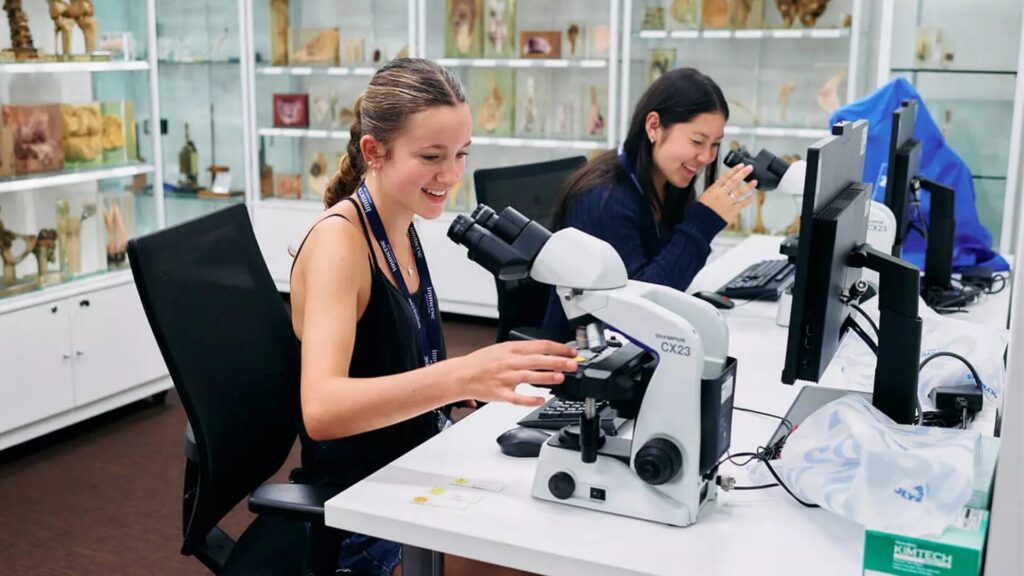
The Biology Academic Insights Programme allows high school students to take undergraduate-level classes in biology at universities around the world. The programme pairs you with academics from universities such as Oxford, Cambridge, and Harvard in classes of 4–10 students.
You’ll attend university-style lectures and 1:1 weekly sessions with your tutor, exploring key biological concepts and scientific thinking. The programme includes practical experiences such as analysing biological case studies, investigating cellular and molecular processes, and applying scientific reasoning to real-world challenges. You can study biology alongside related subjects such as medicine, biotechnology, and environmental science within a broad academic curriculum.
By the programme’s end, you will complete a personal project and receive written feedback and a certificate of completion. You can find more details about the application here.
Why it stands out: You’ll get an early start at university life and academics because the program includes an independent project, discussion-based classes, and living at a college campus.
2. Summer Science Program (SSP) – Biochemistry Track
Location: Hendrix College (Arkansas), Chadron State College (Nebraska), College of Wooster (Ohio), Indiana University (Indiana), Purdue University (Indiana), United States
Cost: $11,800; financial aid is available
Dates: June 8th – August 1st (varies by campus)
Application Deadline: February 19th (domestic students); January 29th (international students)
Eligibility: Current high school juniors worldwide; must have completed or be completing biology and chemistry for credit by June; must be 15-18 years old during the program
The Summer Science Program in Biochemistry is a research-focused summer program where you investigate enzyme structure, function, and evolution. You’ll examine how biochemical properties influence enzyme activity and apply this knowledge to design inhibitors that target fungal pathogens affecting crops. The program emphasizes hypothesis-driven research and collaborative scientific inquiry.
Working in teams of three, you’ll combine laboratory experiments with computational analysis to characterize an enzyme and construct a molecular model. You’ll apply biochemical techniques such as enzyme assays, affinity chromatography, and gel electrophoresis. You’ll also use computational tools, including molecular modeling, ligand docking, and bioinformatics analysis.
Why it stands out: You combine laboratory biochemistry with computational modeling to design enzyme inhibitors, linking experimental research with real-world agricultural and biochemical challenges.
3. Dartmouth Precollege – Biology: Transforming the Future of Science
Location: Online (Dartmouth College)
Cost: $1,895; need-based scholarships are available
Dates: Multi-length sessions throughout the year
Application Deadline: One week before the program starts
Eligibility: Students ages 13 and up; open to international students
This course provides a detailed exploration of systems biology at the cellular level. You’ll examine interactions among genes, proteins, and cells, applying computational tools to analyze complex biological networks. You’ll build skills in genomics, proteomics, and immune system analysis while exploring applications in personalized medicine, drug development, and aging research. The program emphasizes practical learning through a final capstone project, supported by mentorship from Dartmouth instructors.
You’ll gain exposure to current research, experimental design, and computational modeling, developing critical thinking and problem-solving abilities. By the end of the course, you’ll be able to interpret biological networks and apply systems biology techniques to real-world challenges.
Why it stands out: Personalized mentorship and a capstone project allow you to apply cutting-edge systems biology concepts to real-world biological challenges.
4. King’s College London Pre-University Summer School – Bioscience
Location: London, United Kingdom
Cost: £3,195 for one course; £6,180 for two courses; £9,375 for three courses; application fee: £65
Dates: Session 1: July 6-10; Session 2: July 13-17; Session 3: July 20-24; Session 4: July 27-31
Application Deadline: April 10th
Eligibility: Students aged 16-17 years; open to international students
In this program, you’ll examine specialized academic subjects through one-week courses at King’s College London. You’ll engage in structured lessons, practical exercises, and access course materials, including lab or building supplies. The program emphasizes hands-on application, allowing you to build skills in your chosen discipline.
You’ll gain exposure to campus facilities such as libraries, classrooms, and laboratories. You’ll receive guidance and supervision from dedicated staff throughout the academic day. By the end of the program, you will have enhanced subject-specific knowledge, practical experience with academic tools and methodologies, and clearer preparation for future pre-university or undergraduate study.
Why it stands out: It offers intensive, one-week courses that combine hands-on academic practice with access to King’s College London’s campus resources and dedicated mentorship.
5. Research in the Biological Sciences (RIBS)
Location: University of Chicago, Chicago, Illinois
Cost: $15,200; need-based financial aid is available
Dates: June 13th – July 11th
Application Deadline: March 12th
Eligibility: High school sophomores and juniors; completed a year of high school biology
In the RIBS program, you will dive into topics like molecular biology, microbiology, genetics, and cancer biology. You will spend most of your day actively working at a lab bench, which is a unique chance to experience the daily life of a scientist. During the four weeks, you will practice basic lab experiments, keep a detailed lab notebook, read real science papers, and give group presentations.
Because the course is project-based, you eventually get to focus on your own independent research project. By the time you finish, you will learn hands-on lab techniques, improve your communication skills, and build the confidence to work in a professional research lab.
Why it stands out: It places you in a real lab setting for almost the entire day, letting you transition from learning basic science skills to running your own independent experiment.
6. NIH Summer Internship Program
Location: NIH campuses including Hamilton, MT
Cost: No cost / $2,530 stipend
Dates: Eight weeks in the Summer; typically June-August
Application Deadline: February 18th
Eligibility: Graduating high school students enrolled at least half-time as a senior in high school; U.S. citizens or permanent residents; 17+ by June 1; permanent home address within 40 miles of an NIH campus
In the NIH High School Summer Internship Program, you will explore exciting topics like biomedicine, genetics, and neuroscience. During your time there, you will work on active research projects, analyze real data in the lab, attend helpful career training sessions, and present your own findings at a special Summer Poster Day.
A unique feature of this program is that you get to work side-by-side with top federal scientists at a world-renowned health organization. By the end of the summer, you will learn hands-on laboratory techniques, improve your scientific communication, and build strong data analysis skills.
Why it stands out: It pays you a stipend to do real, professional-level medical research while you are still a high school student.
7. Stanford Institutes of Medicine Summer Research Program (SIMR)
Location: Stanford University, United States
Cost: $50 application fee (can be waived); limited stipends are given on a needs-based system from special grants
Dates: June 8th – July 30th
Application Deadline: February 21st
Eligibility: High school juniors or seniors; must be 16 or older by June 2026; must live in and attend high school in the U.S.; must be U.S. citizens or permanent residents
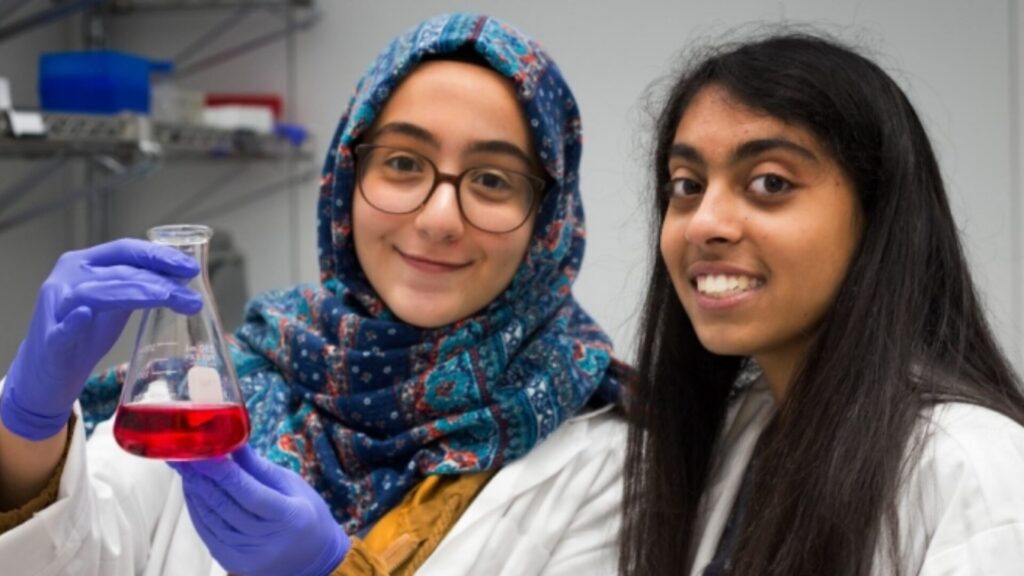
In this biology summer school, you’ll work on a medically oriented research project alongside Stanford faculty, postdoctoral fellows, researchers, and students. The program emphasizes understanding how scientific research is conducted within biomedical laboratories. You’ll examine research questions, observe experimental processes, and contribute to ongoing research discussions.
Through direct interaction with research mentors, you’ll gain exposure to laboratory environments and the scientific method used in biomedical investigations. The program also encourages engagement with the broader goals of biomedical research and science identity. By the end of the program, you’ll develop a clearer understanding of research workflows and how biological science contributes to medical discovery.
Why it stands out: Its deep connections to Silicon Valley make it easier to transition to interdisciplinary courses such as biomedical entrepreneurship or AI-driven health research.
8. Carnegie Mellon University Pre-College Computational Biology Program
Location: Pittsburgh, PA (Carnegie Mellon University)
Cost: Residential: $10,750; Commuter: $8,041 + $50 application fee; scholarships are available
Dates: June 20th – July 18th
Application Deadline: March 1st
Eligibility: High school students in grades 10-12; aged 16 by June 20th; have an academic average of ‘B’ (3.0/4.0) or better; open to international students
This program provides an in-depth exploration of computational biology at the interface of laboratory experimentation and data analysis. You’ll examine microbial ecosystems, DNA sequencing, genome assembly, and evolutionary tree construction. You’ll build coding skills to analyze biological datasets, applying computational tools to interpret experimental results. The program emphasizes hands-on experience, combining lab work with hackathon-style coding challenges.
You’ll gain exposure to robotic laboratory equipment and automated science platforms, learning how AI and machine learning support modern biological research. By the end of the course, you’ll complete a research-inspired capstone project, demonstrating your ability to integrate lab-generated data with computational analysis.
Why it stands out: It introduces you to the intersection of computing and life sciences, helping you build analytical and bioinformatics skills early.
9. Jackson Laboratory Summer Student Program
Location: Bar Harbor, ME (The Jackson Laboratory)
Cost/Stipend: No cost / $7,500 stipend
Dates: Bar Harbor: May 30th – August 7th; Farmington: May 30th – August 10th
Application Deadline: January 26th
Eligibility: Students must be at least 18 years old by the start of the program and have completed 12th grade | U.S. citizens or lawful Permanent Residents
This program immerses you in genetics and genomics research through a combination of laboratory discovery and computational analysis. You’ll examine gene function, genomic datasets, and experimental techniques in ongoing research projects and build skills in genetic testing, data visualization, science communication, and peer review.
The program emphasizes mentorship, allowing you to progress toward independent research while integrating feedback from experienced scientists. You’ll gain exposure to diverse career paths through interactions with faculty, trainees, and professional staff, including grant writers, veterinarians, and legal specialists. By the end of the program, you’ll present your research findings.
Why it stands out: You’ll be working alongside scientists whose research shapes national standards and fuels international collaborations, and gain hands-on experience with techniques ordinarily reserved for undergraduates.
10. Future Physicians America (FPA)
Location: Orlando, FL (University of Central Florida)
Cost: $1,600-$2,900 per course; housing $450/week; scholarships available for multiple course enrollment
Dates: 5-day courses between June 1st and July 31st (dates vary by course)
Application Deadline: Rolling basis
Eligibility: High school students; international and out-of-state students welcome; for the Medical Writing & Publishing course, students must enroll in at least 3 clinical courses
The FPA High School Program provides an in-depth exploration of medical and clinical sciences through multiple courses in cardiology, trauma, neurology, psychiatry, dermatology, obstetrics, and clinical research. You’ll examine patient care techniques, diagnostic testing, surgical skills, and research methodology, and build practical competence through hands-on labs, simulations, procedural exercises, and supervised clinical cases.
The program emphasizes applied learning with certifications from medical organizations, journal publications, and presentations at research meetings. You’ll gain exposure to medical equipment, clinical data analysis, and professional mentorship. By the end of the program, you’ll develop analytical, technical, and communication skills.
Why it stands out: It offers clinical observation and medical exposure experiences helping you clarify your interest in healthcare careers.
11. Hutton Junior Fisheries Biology Program
Location: U.S., Canada, Mexico, or Puerto Rico
Cost/Stipend: No cost / $3,000 stipend
Dates: June – August (8 weeks; dates flexible with mentor)
Application Deadline: January 25th
Eligibility: Rising and graduating high school seniors from Canada, Mexico, United States, and Puerto Rico, ages 16 and up
The Hutton Junior Fisheries Biology Program provides an immersive biology summer school experience through a summer internship in fisheries and aquatic science. You’ll examine population sampling, habitat assessment, and conservation practices alongside professional fisheries scientists and build field and laboratory skills, including fish identification, data collection, and environmental monitoring.
The program allows you to collaborate directly with experienced professionals and apply scientific methods to local aquatic ecosystems. You’ll gain exposure to research planning, data analysis, and professional communication in applied fisheries projects. By the end of the program, you’ll have practical experience in fisheries research and a deeper understanding of aquatic ecosystems.
Why it stands out: It immerses you in fisheries biology and ecological fieldwork, giving real-world exposure to conservation, marine biology, and environmental research.
12. Broad Summer Scholars Program
Location: Cambridge, MA (Broad Institute)
Cost/Stipend: No cost / $3,600 stipend
Dates: June 29th – August 7th
Application Deadline: January 21st
Eligibility: Rising high school seniors; B or better in science and math; US citizens, permanent residents, or authorized non-US citizens; attend high school in Massachusetts or are within commuting distance from the Broad Institute
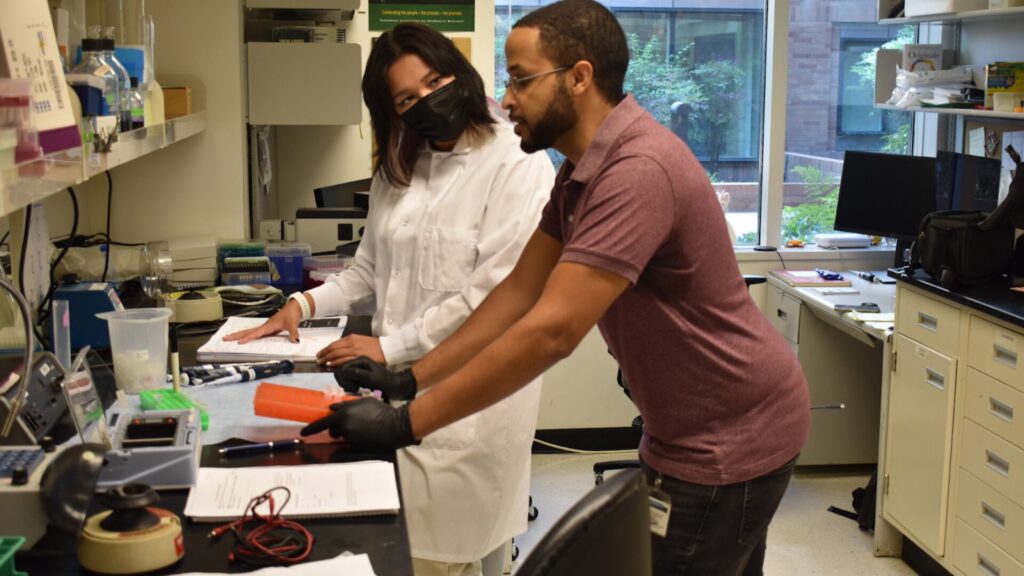
The Broad Summer Scholars Program provides a six-week, research-intensive experience in biomedical science. You’ll examine areas such as cancer biology, infectious disease, psychiatric disease, chemical biology, and computational biology. You’ll build experimental and computational skills while conducting original research under Broad scientists’ mentorship.
The program emphasizes professional practices, including scientific poster creation, research presentation, and concept review with an on-staff tutor. You’ll gain exposure to both laboratory and computational techniques and engage in team-building and networking with peers.
Why it stands out: You’ll join cutting-edge genomics projects, giving you access to computational tools, lab technologies, and mentorship from world-class scientists.
13. Rockefeller University Summer Science Research Program
Location: New York, NY (The Rockefeller University)
Cost/Stipend: No cost / need-based travel stipend available to select students
Dates: June 22nd – August 6th
Application Deadline: January 2nd
Eligibility: High school juniors or seniors, age 16+ at program start; open to international students
The Summer Science Research Program provides a team-based, mentored laboratory research experience. You’ll examine scientific questions guided by research team leaders and scientific trainees and learn, including laboratory techniques, data collection, and analysis.
You’ll design and explore a research question within your team, participate in elective courses, guest lectures, and workshops, and gain exposure to professional scientific practices. You’ll also apply rigorous experimental methods, analyze data, and prepare a research poster for the program symposium.
Why it stands out: It places students into a department-free culture of a world-class institute with more Nobel Prizes per faculty than any other, where they conduct high-level, original research alongside graduate students and postdocs.
14. University of Pennsylvania – Penn Summer Biomedical Research Academy
Location: University of Pennsylvania, Philadelphia, PA (Residential)
Cost/Stipend: $10,050; limited scholarships available for eligible local students
Dates: July 11th – August 1st
Application Deadline: Rolling basis
Eligibility: Current 9th, 10th, and 11th-grade students worldwide who have completed one year of high school biology and one year of chemistry; minimum 3.5 GPA
In the Penn Biomedical Research Academy, you will explore the genetic and molecular foundations of human diseases. You will cover advanced topics like genome sequencing, CRISPR, vaccine research, and bioethics.
During the program, you will attend daily faculty lectures, perform hands-on experiments like PCR in a wet lab, analyze biological data using Python, and critique peer-reviewed articles in a journal club. The program blends traditional wet lab work with modern computational biology, requiring absolutely no prior coding experience.
Why it stands out: It perfectly balances experimental lab work with bioinformatics, giving you a comprehensive look at how modern medical research is actually done.
15. The Wistar Institute: High School Program in Biomedical Research
Location: Philadelphia, Pennsylvania (The Wistar Institute)
Cost/Stipend: No cost / $1,500 stipend + SEPTA passes
Dates: July 6-30
Application Deadline: March 20th
Eligibility: Domestic high school students around the world aged 16+ by program start; must have completed at least one high school science course
In this program, you will learn about biomedical research, cancer biology, and infectious diseases. You will spend your days working in a modern training lab, reading real science papers, and presenting your final project to others, actively contributing to real science projects happening at the institute.
The program teaches you everything from scratch in a shared lab setting, meaning you do not need any past experience to join. By the end of the summer, you will build strong skills in handling DNA and cells, lab safety, and scientific reading. You will also learn how to think like a real scientist and communicate your ideas clearly.
Why it stands out: It pays you a stipend to learn advanced lab techniques from top scientists, even if you are a complete beginner.
Turning Laboratory Hours Into Winning Admissions Essays
By attending a prestigious biology summer school, you transform from a classroom spectator into an active scientific contributor on a global stage.
Your immersive experience offers rare access to sophisticated laboratories and expert mentorship, enabling you to tackle complex genomic or ecological challenges at world-class institutions.
Stepping into this high-level environment fosters the intellectual maturity and technical fluency you need to articulate a unique scientific voice and stay ahead of university trends.
Check out our University Preparation blogs to discover essential resources, emerging admission trends, and expert guidance designed to help you navigate the process and arrive ahead of the curve!