

 Русский (RU)
 Українська (UK)
 Türkçe (TR)
 Italiano (IT)
 Français (FR)
 Português (PT)
 中文 (中国) (ZH)
 Español (ES)
 日本語 (JA)
 ไทย (TH)
 Deutsch (DE)
 Ελληνικά (EL)
 Polski (PL)
 Bahasa Indonesia (ID)
 Nederlands (NL)
 العربية (AR)
 한국어 (KO)

Summer can pass quietly, or it can give you the chance to look at a subject without the pressure of finishing a syllabus. Psychology fits well into that space. You read an idea, sit with it, question it, and sometimes realise you don’t fully agree with it anymore. In school, there isn’t always enough time for that kind of thinking. Psychology summer programs in Europe for high school students give you that room, where learning feels less like covering content and more like working through ideas properly.
Picture yourself in a session where a simple topic turns into a longer discussion. You start with a concept, then begin to unpack it from different angles. You might look at how a study was designed, what its limitations are, or how the same result can be interpreted differently. Some sessions involve reading and analysis, others are built around discussion, but the rhythm stays the same. You are expected to think, respond, and sometimes change your mind.
What kinds of psychology summer programs in Europe are there?
Europe brings together a range of academic environments that don’t all approach psychology in the same way. That variation becomes part of the learning. Universities across the region are involved in research areas like cognitive science, mental health, and behavioural studies, so the subject is not just taught; it is actively developed.
Studying in cities like Prague or Edinburgh also places you in environments where culture, history, and social context are part of everyday life. This matters in psychology, since behaviour and thinking are influenced by surroundings. Classroom discussions often deepen when students bring varied perspectives into the same space.
Most programs follow a university-style structure with lectures, discussions, and case-based work. You will be expected to take part actively rather than just listen. At the same time, living in a new place requires managing time differently and becoming more independent in learning. The impact stays with you, not only in what you study, but in how you approach learning.
Without further ado, here are 15 psychology summer programs in Europe for high school students!
For adjacent opportunities, check out the online psychology program and summer programs in Europe.
15 Psychology Summer Programs in Europe for High School Students
1. Immerse Education’s Psychology Summer School
Location: Cambridge, Sydney, Singapore, Oxford, Toronto, and London
Cost: Varies; summer school scholarship available through our bursary programme
Application Deadline: Multiple summer cohorts; rolling admissions
Program Dates: 2 weeks during the summer
Eligibility: Students worldwide aged 13-18 currently enrolled in middle or high school
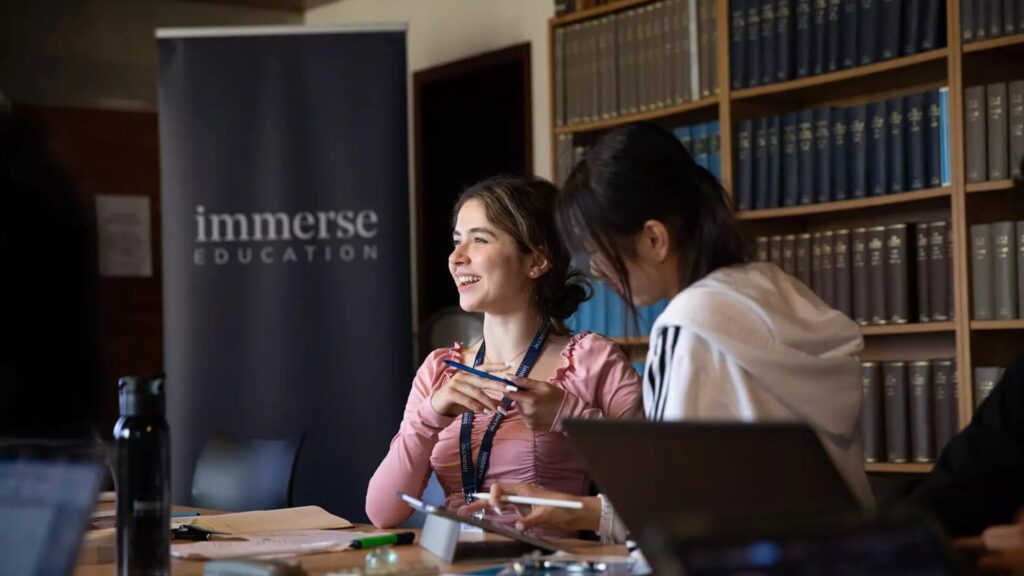
The Academic Insights Program lets high school students experience university life firsthand. You will live on campus and study in small groups of 7–10, learning from tutors from top universities like Oxford and Cambridge. You can explore over 20 subjects, including Architecture, AI, Business Management, Computer Science, Economics, Medicine, Philosophy, and more.
You may find yourself conducting dissections in medicine, designing a robotic arm in engineering, participating in a moot court for law, or building creative writing portfolios and business case studies. By the end of the program, you’ll complete a personal project, receive written feedback, and receive a certificate of completion. You can find more details about the application here.
Why it stands out: You’ll study under expert academics, be guided daily by a university student mentor, complete a project you can show in future applications, and experience genuine university college life — with other campuses worldwide as alternatives.
2. Pre-University Psychology (Session 1) – King’s College London
Location: King’s College London, London, UK
Cost: £3,195 tuition; £3,965 residential; £65 application fee
Acceptance Rate/Cohort Size: Not specified
Program Dates: July 6th – July 10th
Application Deadline: April 10th
Eligibility: Students around the world aged 16-17 in their final years of high school; English proficiency at CEFR B2
This program allows you to experience a condensed version of a first-year psychology course through full-day academic sessions that run from morning to evening. You’ll attend lectures, seminars, and workshops that introduce key psychological theories, research methods, and clinical applications drawn directly from the university’s degree curriculum.
The program includes assignments where you conduct independent research and present your work, which mirrors the expectations of undergraduate study. The pace is fast and structured, requiring you to keep up with both content and academic tasks. Along the way, you’ll build subject knowledge, research skills, and experience with academic-style learning.
Why it stands out: You experience a condensed version of a top-ranked psychology degree, with structured assignments and full-day academic immersion.
3. Pre-University Honours Programme: Psychology – University of Amsterdam
Location: University of Amsterdam, Amsterdam, Netherlands
Cost: €1,675 tuition; €800 housing required
Acceptance Rate/Cohort Size: Not specified
Program Dates: June 30th – July 9th
Application Deadline: February 15th
Eligibility: High school students aged 16+; open to international students
With its focus on mental health, sleep, memory, and technology’s impact on wellbeing, this is one of the more contemporary psychology summer programs in Europe for high school students. You’ll explore these topics through lectures, discussions, and interactive sessions that encourage you to think critically about how psychology connects to everyday life.
The structure moves beyond theory by linking concepts to real-world challenges, so you are constantly applying what you learn. Guest lectures from researchers and professionals bring in different perspectives and current research insights. You’ll build critical thinking, subject understanding, and the ability to connect psychology to real-world contexts.
Why it stands out: It focuses on mental health and real-world psychological challenges, helping you connect academic concepts to current global issues.
4. Sutton Trust – UCL Psychology and Human Development
Location: University College London (UCL), London, UK
Cost: Free (fully funded)
Acceptance Rate/Cohort Size: 25 participants
Program Dates: July 27th – July 31st
Application Deadline: Typically early in the year
Eligibility: Year 12 students at UK state schools meeting Sutton Trust widening participation criteria
This one-week residential program introduces you to how psychology is applied within educational settings, so the focus goes beyond theory into real-world impact. You’ll take part in interactive sessions where you explore questions like procrastination, bullying, language development, and well-being, all through a research-based lens. The program includes hands-on experiments and exposure to research tools, helping you understand how psychologists measure behaviour, thoughts, and emotions.
You’ll also spend time evaluating the reliability of different methods and debating their strengths and limitations in group discussions. You’ll actively engage in experiments and discussions rather than just listening to lectures, which makes the learning process more applied and analytical.
Why it stands out: It connects psychology directly to education and real-world issues, giving you a clearer sense of how research translates into practical applications in schools and society.
5. Sutton Trust Summer School – University of Cambridge: Psychological and Behavioural Sciences
Location: University of Cambridge, Cambridge, UK
Cost: Free (fully funded)
Acceptance Rate/Cohort Size: 20 participants
Program Dates: August 17th – August 21st
Application Deadline: Typically in February
Eligibility: Year 12 students at UK state schools meeting Sutton Trust criteria; strong background in Maths or Biology required
This is a highly academic, fast-paced program where you engage with psychology as an interdisciplinary subject that overlaps with areas like neuroscience, computer science, and sociology. Over the week, you’ll attend lectures covering topics such as cognitive, social, developmental, and biological psychology, alongside seminar-style discussions with faculty and peers. A key part of the experience is the small-group supervision session, which mirrors Cambridge’s teaching style and requires preparation and active participation.
You’ll be encouraged to explore complex questions about human behavior, differences between individuals, and how group dynamics work. The inclusion of supervision sessions means you experience a core part of Cambridge’s undergraduate teaching method, which is more discussion-driven and personalised than typical classroom learning.
Why it stands out: It offers direct exposure to Cambridge’s supervision system and a highly academic environment, giving you insight into both the content and teaching style of a competitive psychology degree.
6. Psychology and Neuroscience – University of St Andrews Summer Academic Experience
Location: University of St Andrews, St Andrews, Scotland, UK
Cost: £6,850
Acceptance Rate/Cohort Size: Selective
Program Dates: July 11th – August 1st
Application Deadline: Closes when capacity is reached
Eligibility: Students from all nationalities aged 16-18 with a strong academic record, transcript, reference, short personal statement, and at least CEFR B2 English proficiency, if applicable.
This course introduces psychology and neuroscience as they are actually studied, not as separate ideas but as fields that overlap and inform each other. You move between biological explanations of the brain and broader questions about behavior, seeing how both sides connect and where they don’t fully align.
Teaching happens through lectures, seminars, and smaller group sessions led by university researchers, so you are not just listening but also expected to respond, question, and keep up with discussions. Alongside this, there is time set aside for independent study, which becomes a key part of how you manage the course. By the end, you’ll receive a certificate confirming your participation and completion.
Why it stands out: It combines psychology and neuroscience in one course while giving you hands-on experience with the full research process.
7. Pre-University: Social Sciences – University of Edinburgh
Location: University of Edinburgh, Holyrood Campus, Edinburgh, UK
Cost: £5,250, includes tuition; accommodation details provided separately
Acceptance Rate/Cohort Size: Not specified
Program Dates: June 29th – July 10th
Application Deadline: May 19th, tentatively
Eligibility: Students worldwide aged 16-18 in penultimate or final year of high school; IELTS 6.5 recommended
This two-week course introduces you to multiple social science disciplines, including areas closely connected to psychology, such as social behaviour and human development. You’ll attend lectures and small-group tutorials in subjects like economics, politics, social policy, and social anthropology, learning how different fields approach the study of human behaviour. Tutorials focus on discussion and collaboration, helping you build skills in academic writing, reading, and critical analysis.
The program also includes educational visits, such as to the Scottish Parliament, which connect classroom ideas to real-world contexts. You’ll experience both lectures and tutorial-style teaching, giving you a realistic sense of how undergraduate learning works in the UK. Alongside academics, you’ll also get guidance on university applications and studying in the UK.
Why it stands out: It offers an interdisciplinary approach to understanding human behavior, helping you see how psychology connects with broader social sciences.
8. Sutton Trust Summer School – Durham University: Psychology
Location: Durham University, Durham, UK
Cost: Free (fully funded)
Acceptance Rate/Cohort Size: 20 participants
Program Dates: July 27th – July 31st
Application Deadline: Typically in March
Eligibility: Year 12 students at UK state schools; GCSE Maths grade 4 (C) required
This one-week residential program gives you a structured introduction to psychology through sessions led by university faculty and researchers. You’ll spend time in the department learning how psychology is taught at Durham, while also exploring different areas within the subject at degree level. The program includes opportunities to interact with lecturers and PhD students, which helps you understand both academic pathways and research work.
Sessions are designed to reflect university-style learning, combining subject exploration with discussion and engagement. You’ll get direct exposure to academics and current students, which adds context to what studying psychology at university actually involves. The experience is designed to give you a clearer sense of the subject and whether it aligns with your interests.
Why it stands out: It provides direct interaction with researchers and PhD students, giving you insight into both academic study and research pathways in psychology.
9. UNIQ Experimental Psychology
Location: University of Oxford, Oxford, UK
Cost: Free, implied as part of UNIQ access programme
Acceptance Rate/Cohort Size: Not specified
Program Dates: July, one week; exact dates vary by subject
Application Deadline: January
Eligibility: Year 12, or equivalent, UK state school students meeting academic and contextual criteria
UNIQ Experimental Psychology at the University of Oxford allows you to experience how psychology is taught at Oxford through a combination of lectures and small-group discussions. You’ll study topics such as human behaviour, development, and psychological disorders, then work through these ideas in more interactive settings where you are expected to ask questions and analyse concepts.
The teaching is led by university academics, giving you direct exposure to current research and academic approaches. The structure encourages you to think critically rather than just absorb information. You’ll build analytical thinking, subject knowledge, and an understanding of academic psychology.
Why this program stands out: It’s closely tied to Oxford’s actual undergraduate teaching style and includes continued support after the summer school, which is rare for short programs.
10. Psychological Science
Location: Nottingham Trent University, Nottingham, UK
Cost: £545, accommodation separate
Acceptance Rate/Cohort Size: Minimum 14 students, exact size not specified
Program Dates: July 27th – July 31st
Application Deadline: Not specified
Eligibility: Ages 15-17 with an interest in psychology; international students are welcome to apply
Psychological Science at Nottingham Trent University allows you to explore psychology through a mix of seminars and practical workshops. You will work on everyday topics like body image, sport psychology, and addiction, and also work with basic statistical coding using R, which introduces a technical aspect to the subject.
The program involves designing studies, analysing behaviour, and using research tools that are part of university-level psychology. You’ll engage with both qualitative and quantitative methods, gaining experience with data and interpretation. Along the way, you’ll build research skills, technical understanding, and applied knowledge of psychology.
Why this program stands out: It combines psychology content with technical skills like coding, which is less common in short pre-college programs.
11. Behavioural Economics & Psychology (Prague Summer Schools)
Location: Prague, Czech Republic
Cost: €890
Acceptance Rate/Cohort Size: Not specified
Program Dates: July 4th – July 11th
Application Deadline: Not specified
Eligibility: Graduating high school students around the world can apply
Behavioural Economics & Psychology at Prague Summer Schools brings a decision-making angle to the various psychology summer programs in Europe for high school students. You’ll explore how psychological factors influence choices in business, policy, and everyday life, while studying irrational behaviour, emotional responses, and real-world applications.
A key part of the program involves designing and running your own experiments, then presenting and discussing your findings with others. The structure encourages active participation rather than passive learning. You’ll build analytical thinking, research skills, and an understanding of how psychology connects to decision-making.
Why this program stands out: It connects psychology to policy and business decisions while giving you hands-on experience running your own experiments.
12. Warwick Pre-University Summer School

Location: University of Warwick, Coventry, UK
Cost: £5,250 all-inclusive, with tuition, accommodation, meals, social programme, and Oxford excursion included
Acceptance Rate/Cohort Size: Not specified
Program Dates: July 14th – July 24th, 10 nights
Application Deadline: Rolling admissions; early application recommended
Eligibility: Students aged 16-17; open to international students
Warwick Pre-University Summer School allows you to explore psychology as part of the Health, Medical and Life Sciences track, which covers psychology alongside biomedical sciences, biochemistry, and health sciences through lectures, seminars, and skills workshops totalling 29 hours across the programme. You will encounter psychology in direct conversation with adjacent sciences, seeing how psychological research overlaps with biology, medicine, and human health.
Sessions are led by university faculty, and the format is designed to reflect how ideas connect across academic disciplines at the degree level. The all-inclusive fee covers accommodation, meals, and the social programme, so there are no high additional costs once you’re enrolled.
Why it stands out: Psychology here is studied in an explicitly scientific context alongside biomedical and health sciences, which gives you a clearer picture of how psychological research sits within the wider life sciences.
13. Constructor University Summer Camp: Human Behavior & Society
Location: Constructor University, Bremen, Germany
Cost: €4,600, fully inclusive
Acceptance Rate/Cohort Size: Selective international cohort
Program Dates: July 24th – August 4th
Application Deadline: May 1st
Eligibility: High school students aged 16-18; instruction in English; open to international students
Constructor University International Summer Camp: Human Behavior & Society allows you to study human thought and action through a multidisciplinary lens. You’ll cover core areas such as decision-making, social influence, and the psychological impact of media through interactive lectures and exercises on a modern research campus.
A key part of the program is the hands-on project work, where you collaborate with peers from across the globe to apply behavioral theories to complex societal challenges. The structure includes 12 days of academic and cultural immersion, featuring daily sports activities and excursions to major German cities like Hamburg. You’ll build analytical abilities, teamwork skills, and a global network of motivated peers while experiencing university life in the heart of Europe.
Why it stands out: It provides a good opportunity to explore psychology within a broad bio-psycho-social framework at one of Germany’s leading private research universities.
14. European Summer School Prague: Psychology for Study and Life
Location: Prague, Czech Republic
Cost: €950
Acceptance Rate/Cohort Size: Not specified
Program Dates: Typically in July
Application Deadline: Typically late April
Eligibility: Young professionals around the world with at least intermediate English (B1/B2)
European Summer School Prague’s Psychology for Study and Life introduces you to psychology as both an academic discipline and a practical lens for understanding everyday experience. The programme covers major fields within psychology alongside key concepts and research methods, giving you a broad orientation to the subject rather than focusing on a single area.
Prague’s setting as a historically significant European city adds a distinctive context for exploring psychology beyond the typical UK academic campus environment. The course is structured to connect psychological ideas to real-life situations, reinforcing learning through applied discussion and reflection.
Why it stands out: It places psychology in a continental European setting outside the UK, and takes an explicitly applied approach, connecting academic concepts to daily life, which distinguishes it from the more theory-driven formats of most other programmes.
15. Step into Bath – Humanities & Social Sciences Stream
Location: University of Bath, Bath, UK
Cost: £365, approximately $470 USD; covers accommodation, meals, and scheduled activities
Dates: July 29th – July 31st, two-night residential
Application Deadline: No official deadline published; early application is recommended due to limited spaces
Eligibility: Current Year 12/Lower Sixth students planning to start university in future years; UK and international students are eligible, though travel arrangements are your responsibility
As a shorter residential option, Step into Bath adds a university-preparation focus to the different psychology summer programs in Europe for high school students. It gives you a structured introduction to Humanities and Social Sciences, including areas linked to psychology such as social behaviour and human development, through taster lectures and interactive workshops led by University of Bath academic staff.
You’ll also participate in sessions with admissions tutors and current students, which help you understand how degree-level study is assessed and how to prepare for competitive applications. The program includes social activities and opportunities to network with peers, giving a balanced sense of both academic expectations and student life.
Why it stands out: It combines faculty-led academic tasters with support on university applications and collegiate life, helping you assess both your subject interest and readiness for higher education study.
Turn Psychology Experience Into University Readiness
The best programme should help you see how psychology works beyond school, from Oxford-style discussions to Prague-based experiments and research tasks.
The 15 psychology summer programs in Europe for high school students featured here cover neuroscience, mental health, behavioural economics, education, and social science.
As you compare these options, start noting the ideas, skills, and academic moments that could shape how you prepare for university.
Want to make that experience count? Our University Preparation blogs show you how to turn your ideas into stronger personal statements, interviews, and supercurricular choices.