
 Русский (RU)
 Українська (UK)
 Türkçe (TR)
 Italiano (IT)
 Français (FR)
 Português (PT)
 中文 (中国) (ZH)
 Español (ES)
 日本語 (JA)
 ไทย (TH)
 Deutsch (DE)
 Ελληνικά (EL)
 Polski (PL)
 Bahasa Indonesia (ID)
 Nederlands (NL)
 العربية (AR)
 한국어 (KO)

If you’re a high school student looking to explore your interests while experiencing one of the world’s most innovative regions, summer programs in the Bay Area for high school students can give you access to academic and hands-on opportunities across STEM, business, medicine, and the arts. Home to leading universities, cutting-edge research labs, and global tech companies, the Bay Area is an incredible place to spend your summer.
Imagine spending your summer in places like San Francisco or Palo Alto, attending university-style classes, working on research projects, or building your own startup idea. Picture learning directly from researchers, collaborating with ambitious peers, and gaining exposure to industries that shape the future in a globally recognized innovation hub.
How do you choose the right summer programs in the Bay Area for high school students?
With so many options available, it’s important to look for programs that go beyond lectures and offer hands-on learning, mentorship, and real-world exposure. Many programs in the Bay Area are hosted by top institutions and research centers, giving students access to advanced facilities and expert guidance.
Across the Bay Area, these programs often include lectures, lab work, group projects, and mentorship. You might analyze data, build prototypes, conduct experiments, or present your ideas, experiences that closely mirror university-level learning and professional environments.
You’ll learn from experienced instructors and researchers, collaborate with peers who share your interests, and develop essential skills such as problem-solving, communication, and independent thinking. Along the way, you’ll gain a clearer understanding of potential career paths and what studying your chosen field at a higher level might involve.
To help you get started, we’ve curated a list of 15 Summer Programs in the Bay Area for High School Students. They’ve been selected for their academic quality, hands-on learning opportunities, and strong connections to leading universities and industries.
For more options, you can consider the online research program and summer programs in other locations.
15 Summer Programs in the Bay Area for High School Students
1. Genomics Research Internship Program at Stanford (GRIPS)
Location: Stanford University, Stanford, CA
Cost: Free, application fee of $55
Acceptance rate/cohort size: Selective
Application deadline: February 28th
Dates: June 15th – August 6th
Eligibility: Open to local students from Alameda, San Francisco, San Mateo, Santa Clara, or Santa Cruz counties. Must be 16+ by start date, have prior knowledge in biology, chemistry, or programming, and hold a minimum 3.0 unweighted GPA
The Genomics Research Internship Program at Stanford University is an eight-week summer opportunity for high school students in the Bay Area who are interested in genetics, biology, and data science. In this program, you are placed within a research lab where you contribute to ongoing work in computational genetics and genomics.
Each day, you spend several hours in the lab working with genomic datasets and learning how to apply computational methods to biological questions. In addition to lab work, you join weekly group sessions with other participants, attend seminars on biomedical fields, and take part in discussions with researchers about their work and career paths. You also meet regularly with a mentor who guides your progress and helps you understand how research projects are designed and carried out.
Why it stands out: You gain direct exposure to lab-based research while building skills in both biology and computational analysis.
2. Immerse Education’s San Francisco Summer School
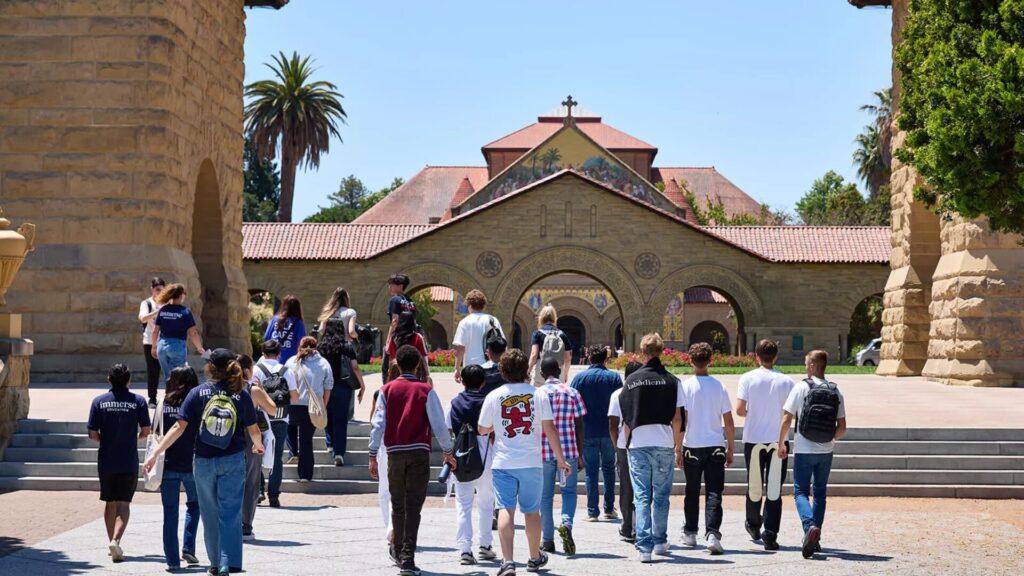
Location: University of California, Berkeley, San Francisco
Cost: Varies; summer school scholarship available through our bursary programme
Acceptance rate/cohort size: Selective; an average of 7 participants per class
Application Deadline: Multiple summer cohorts with rolling admissions
Dates: 2 weeks during the summer
Eligibility: High school students around the world aged 15-18
The Career Insights Program gives you a structured way to explore different career paths by placing you in major global industry environments. Much of the program is built around project-based learning, where you work with peers on real-world tasks while engaging with established companies. You also attend workshops and visit workplaces such as offices and production facilities to observe how teams operate day to day.
During the program, you meet regularly for one-on-one guidance focused on your academic and career interests, along with detailed feedback on your resume and overall profile. At the end of the program, you present your work and key takeaways to industry professionals, giving you the chance to reflect on your experience and consider how it relates to your future studies or career direction. You can find more details about the application here.
Why it stands out: You’ll gain direct industry exposure, build a professional network, and receive a certificate you can include in your college applications and work profile.
3. Stanford’s Science, Humanities, Technology, Engineering, and Mathematics (SHTEM) Summer Internship
Location: Stanford University, Stanford (San Francisco Bay Area), CA
Cost/Stipend: $95 non-refundable application fee; no stipend, but financial assistance may be available if required
Acceptance rate/cohort size: Selective
Application deadline: February 1st
Dates: June 22nd – August 14th
Eligibility: High school juniors and seniors who are at least 14 years old, as well as full-time community college students within their first three years, between the ages of 17 and 21; applicants must be U.S. citizens/permanent residents
The SHTEM Summer Internship at Stanford University is an eight-week, on-campus program for high school juniors, seniors, and early community college students. It brings together subjects across science, humanities, technology, engineering, and mathematics through interdisciplinary research projects.
During the program, you are placed in a small group and matched with a project that reflects your interests. You work with mentors from the Stanford Compression Forum, including faculty, staff, and students, and take part in ongoing meetings, assigned research tasks, and group discussions. The weekly time commitment is moderate, allowing you to engage consistently with the project while managing other responsibilities.
Why it stands out: You explore how different academic fields intersect through collaborative, project-based research.
4. Experiences in Research (EinR) @ Berkeley Lab
Location: Hybrid or virtual, with required in-person events at Berkeley Lab, Berkeley (San Francisco Bay Area), CA
Cost/Stipend: No cost; stipend of $500/week
Acceptance rate/cohort size: Not publicly available
Application deadline: March 22nd
Dates: June 15th – July 24th
Eligibility: Students, ages 16 and up, in 10th, 11th, or 12th grade enrolled in a public high school in Northern California, preferably within Alameda, Contra Costa, or San Francisco counties; a minimum GPA of 3.0 and prior experience in independent STEM work is recommended
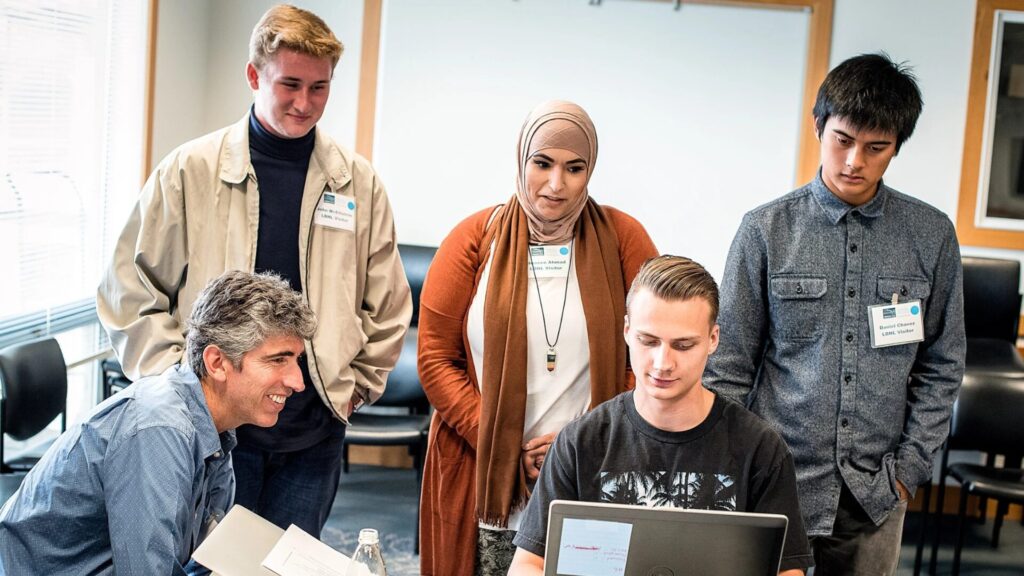
The EinR Internship is a six-week, paid program for high school students in Northern California interested in STEM and related fields. In this program, you are assigned to a project based on your background and interests, with options that may include experimental research, data analysis, coding, science communication, or administrative support.
You work in small teams under the guidance of mentors from Lawrence Berkeley National Laboratory, contributing to ongoing projects while building practical skills. Alongside project work, you attend workshops, networking sessions, and other activities focused on professional development. Although some work may be conducted remotely, the program includes in-person components such as orientation and final presentations. You are expected to commit around 30 to 35 hours per week.
Why it stands out: You gain paid, hands-on experience while working on projects connected to an active research environment.
5. UCSF Summer Student Research Program
Location: San Francisco, CA, and Oakland, CA
Cost/Stipend: None; Summer stipends range from $3,000 for high school students
Acceptance rate/cohort size: Not publicly available
Application Deadline: February
Program Dates: June 15th – July 31st
Eligibility: High school juniors or seniors, age 16+ by June 1st, with at least one year of completed math and biology; must be U.S. citizens
The Summer Student Research Program at the University of California, San Francisco, gives high school students the chance to take part in research related to health and biomedical sciences. In this program, you are matched with a faculty mentor and join an ongoing project in areas such as molecular biology, clinical research, neuroscience, or public health.
Depending on your placement, you may spend time in a lab or work with clinical data, learning fundamental research techniques. These can include methods like pipetting, PCR, gel electrophoresis, or organizing and analyzing study data. Your role may involve assisting with experiments, reviewing patient information, or preparing summaries of findings, based on the needs of the project.
Why it stands out: You gain early exposure to biomedical research through direct involvement in active projects.
6. Norman Mineta High School Summer Academy
Location: Online and Bay Area Metro Center, San Francisco, CA, for the capstone project
Cost/Stipend: Stipends provided
Acceptance rate/cohort size: Limited slots
Application Deadline: April 27th (tentatively)
Dates: Required online sessions are held on Thursdays in July, and the capstone project is held on August 1st
Eligibility: High school students who have completed 9th grade, are at least 15 years old, and live and attend a high school in the Bay Area
This summer academy is designed for high school students, especially those in the Bay Area, who want to explore roles within the public sector. Over the course of the program, you take part in structured activities that introduce you to topics such as transportation planning, housing policy, environmental justice, and air quality management through work with regional agencies.
You learn directly from organizations including the Metropolitan Transportation Commission, Association of Bay Area Governments, Bay Conservation and Development Commission, and the Bay Area Air Quality Management District. These sessions provide insight into how policy decisions are made and implemented at a regional level. At the end of the program, you can receive a certificate of completion and take part in a capstone project or competition.
Why it stands out: You explore how public policy is developed and applied through direct interaction with regional government agencies.
7. Pacific Summer High School Institute
Location: University of the Pacific, Stockton, CA
Cost/Stipend: $3800 cost
Acceptance rate/cohort size: Varies by subject track
Application Deadline: November – May (exact dates vary by subject track)
Dates: June 1-11 for Session 1 and June 16-26 for Session 2
Eligibility: 9th to 12th graders worldwide (including high school students from San Francisco)
This two-week residential program gives you a structured introduction to college life, combining academic coursework with campus-based activities. During your stay, you attend lectures on current topics and spend time in labs or studios, depending on your area of study.
When applying, you select a subject track aligned with one of five broad disciplines: Arts and Humanities, Business and Society, Engineering and Technology, Health and Science, or Athletics. Your schedule and session dates are determined by this choice, as some tracks are only offered during specific program periods.
Why it stands out: You experience both academic and residential aspects of university life within a short, focused timeframe.
8. Internships at Sandia National Laboratories
Location: Livermore, CA | Albuquerque, NM | other Sandia sites
Cost/Stipend: No cost. Students will receive a stipend based on their earned credit hours, classification, and degree level
Acceptance rate/cohort size: Not specified
Application Deadline: Rolling deadline, internship openings are continuously updated
Dates: The summer program typically runs from May to the last Thursday in August. Summer interns work 40 hours per week
Eligibility: U.S. citizens, full-time students in high school or college, age 16+, with a minimum 3.0 GPA for R&D, technical, or business roles
Internships at Sandia National Laboratories are available during the summer and throughout the year, giving you the chance to work in areas such as cybersecurity, mechanical engineering, electrical engineering, and computer science. Your responsibilities vary by project but may include writing code in Python or Java, testing electronic circuits, creating prototypes with CAD software, or running simulations using tools like MATLAB or COMSOL.
You are paired with a mentor who guides you through your assigned work and helps you become familiar with relevant tools and systems. Depending on your placement, you might contribute to projects involving energy storage, network security, sensor data analysis, system testing, or engineering design.
Why it stands out: You apply technical skills to ongoing projects in a professional research and engineering environment.
9. Stanford STaRS Internship
Location: Stanford University Campus, Stanford, CA
Cost/Stipend: Free; information about stipend not available
Acceptance rate/cohort size: Not specified
Application Deadline: Not specified
Dates: June 15th – August 7th
Eligibility: High school or community college students, age 16+, interested in biomedical, biological sciences, or healthcare careers; must be U.S. citizens
The Science, Technology, and Reconstructive Surgery Internship Program at Stanford University introduces you to research at the intersection of reconstructive surgery and biotechnology. In this program, you work with surgeons and researchers to understand areas such as tissue engineering, regenerative medicine, and the development of medical devices.
Your work includes time in the lab, where you learn techniques like cell culture, testing biomaterials, and using 3D printing for medical purposes. You may also review surgical case studies, become familiar with imaging methods such as MRI and CT scans, and contribute to early-stage design work for reconstructive solutions.
Why it stands out: You engage with both clinical and lab-based aspects of biomedical innovation in a single program.
10. Meta Summer Academy
Location: Meta headquarters, Menlo Park (San Francisco Bay Area), CA
Cost/Stipend: No cost. Stipend paid + breakfast, lunch, and transportation to central pickup sites covered
Acceptance rate/cohort size: Not specified
Application deadline: February 14th
Dates: June 15th – July 24th
Eligibility: High school sophomores who live in East Palo Alto, Belle Haven, North Fair Oaks, and Redwood City and have a minimum GPA of 2.0
As one of the more well-known summer programs in the Bay Area for high school students, the Meta Summer Academy (MSA) is a six-week, paid internship that introduces you to both technical and non-technical career paths. Over the course of the program, you spend about 30 hours per week working on structured activities that include introductory coding, basic financial concepts, and creative projects involving media or design.
You take part in guided assignments and group work that reflect how teams operate in a workplace environment. The program also includes sessions with guest speakers and opportunities to interact with employees across different roles at Meta. These activities are designed to give you exposure to both technical and non-technical career paths within a large organization.
Why it stands out: You gain exposure to different types of work while participating in structured, team-based projects in a corporate setting.
11. California Academy of Sciences Careers in Science (CiS) Intern Program
Location: California Academy of Sciences, San Francisco, CA
Cost/Stipend: None; stipend paid (above minimum wage)
Acceptance rate/cohort size: Not specified
Application deadline: TBA in February
Dates: Starts in June for rising sophomores and juniors, and continues through high school graduation
Eligibility: High school freshmen and sophomores enrolled full-time in an SFUSD school with a minimum GPA of 2.5 and a C grade or higher in science and math; applicants must be able to obtain a valid U.S. work permit
The CiS Intern Program is a paid, multi-year opportunity for high school students in San Francisco. It is run by the California Academy of Sciences and continues throughout the school year and summer. During the academic year, you attend sessions after school and on weekends, while summer work takes place on weekdays. Most students join as rising sophomores or juniors and remain in the program until they graduate from high school.
As an intern, you take part in a range of activities depending on program needs, which may include interacting with museum visitors, supporting fieldwork, or contributing to environmental or science-related projects. You also attend regular training sessions that cover topics such as science communication, STEM career pathways, financial literacy, and college preparation.
Why it stands out: You stay involved over multiple years while gaining experience in science education, outreach, and field-based projects.
12. Stanford AIMI Summer Research Internship
Location: Virtual (Hosted by Stanford University)
Cost: $2,400 + $45 application fee; financial aid available
Acceptance rate/cohort size: ~50 students/session
Application deadline: February 20th
Dates: Session A: June 15th – June 26th | Session B: July 6-17
Eligibility: High school students, ages 14 and older, who are U.S. citizens; preference is given to students with strong math/computer programming skills and/or prior experience working on healthcare projects
The Stanford AIMI Summer Research Internship at Stanford University is a two-week virtual program focused on how artificial intelligence is used in healthcare. In this program, you are introduced to work happening in areas such as medical imaging, diagnostics, and disease prediction through guided sessions with faculty and AI research engineers.
You work with healthcare-related datasets and learn basic machine learning workflows, which may include training simple models for image recognition and reviewing how AI tools are applied in clinical contexts such as radiology and decision support. The program includes coding exercises, research discussions, and short project tasks that help you apply AI methods to medical problems. You also spend time discussing ethical considerations related to the use of AI in healthcare.
Why it stands out: You explore how machine learning techniques are applied to real healthcare datasets and clinical use cases.
13. SAGE Camp at SLAC (Science Accelerating Growth and Engagement)
Location: SLAC National Accelerator Laboratory and Stanford campuses in Menlo Park & Palo Alto, CA
Cost: None
Acceptance rate/cohort size: Not specified
Application Deadline: March 17th
Dates: June 21-27
Eligibility: High school students in 9th-11th grade | Under age 18 during the program, attending a public high school in Northern California
SAGE Camp is a one-week residential program where you are introduced to research environments at SLAC National Accelerator Laboratory and Stanford University. During the week, you observe and shadow scientists and engineers in laboratory settings, take part in group STEM activities, and learn about ongoing work in areas such as physics, engineering, and computing.
Alongside lab exposure, you participate in sessions focused on professional skills, campus visits, and discussions that connect science with broader topics in society. The schedule also includes structured evening activities where you explore how scientific fields can relate to personal interests such as art, sports, or music.
Why it stands out: You observe real research environments while taking part in introductory STEM projects and discussions across disciplines.
14. Academy of Art University’s Pre-College Art & Design Experience (PCADE)
Location: Academy of Art University, San Francisco, CA
Cost/Stipend: Free
Acceptance rate/cohort size: Varies by the subject track
Application Deadline: June
Dates: June 15 -24 (Mondays to Thursdays); Spring and Fall cohorts are also available
Eligibility: Domestic and international high school students who are below 19 years old
This pre-college program is designed for students who are interested in exploring visual and creative disciplines, whether you are new to art or already have some experience. You choose a focus area from options such as animation, game design, fashion, fine art, photography, or filmmaking.
You take part in college-level classes led by instructors with experience in your selected field. Throughout the program, you complete assignments and projects that help you build basic skills and understand common creative processes. Your work may be included in a final exhibition held on June 25, depending on the program structure.
Why it stands out: You develop foundational skills in a chosen creative field through structured, project-based learning.
15. Nueva Summer Camp: Upper School Parliamentary and Public Forum Debate Camp
Location: The Nueva School | Hillsborough Campus, Hillsborough, CA
Cost: $850/week + $50 registration fee per student
Acceptance rate/cohort size: Highly competitive; seats are limited
Application Deadline: Opens March 3rd
Dates: July 13-24
Eligibility: Rising 9th to 12th graders from around the world
The Nueva Summer program offers a range of courses across subjects such as literature, art, debate, design, and engineering. As a high school student, you can choose to join the debate track, which focuses on parliamentary-style debate. The debate camp is open to both beginners and students with prior experience. You work on core debate skills such as argument development, case structure, and speaking practice through guided instruction and practice rounds.
Some participants use the camp as preparation for competitive tournaments like Invitationals and CHSSA States. The program is structured as two separate one-week sessions, and you can attend either one or both depending on your schedule.
Why it stands out: You build structured debate skills through focused practice in parliamentary-style formats.
Turn Your Experience Into Career Direction
The Bay Area gives you more than a summer activity; it gives you exposure to research labs, startups, universities, and creative industries.
These summer programs in the Bay Area for high school students help you test real interests through coding, lab work, design projects, policy discussions, or debate.
You can start to see which environments suit you best, from biomedical research and AI to public service, engineering, business, or the arts.
Wondering where that experience could lead next? Explore our Career Exploration blogs for career pathways, key skills, industry insights, and study routes.