
 Русский (RU)
 Українська (UK)
 Türkçe (TR)
 Italiano (IT)
 Français (FR)
 Português (PT)
 中文 (中国) (ZH)
 Español (ES)
 日本語 (JA)
 ไทย (TH)
 Deutsch (DE)
 Ελληνικά (EL)
 Polski (PL)
 Bahasa Indonesia (ID)
 Nederlands (NL)
 العربية (AR)
 한국어 (KO)

As a high school student interested in STEM, you might enjoy solving problems in class, but research takes that curiosity further. STEM research programs for high school students give you the chance to ask questions, test ideas, and work through uncertainty in a more structured academic setting. Instead of only learning concepts, you begin applying them through experiments, data analysis, and tools that help explain how things work in real-world contexts.
Picture yourself working in a lab, using scientific equipment, writing code to analyse datasets, or collaborating with peers on a research question. These experiences introduce you to core skills such as the scientific method, experimental design, data interpretation, and the use of lab tools or computational platforms. You also practise presenting your findings, which is central to both academic and professional research.
You begin to experience what university-level STEM looks like, where learning is more independent, inquiry-driven, and project-based. A structured research experience can act as a foundation for your college journey, giving you a clearer taste of academic life at a top institution, in person.
How do you choose the right STEM research programs for high school students?
Not all programs offer the same level of depth or hands-on experience. Some may focus more on lectures, while others emphasize lab work, coding, or independent research projects, so it’s important to evaluate what kind of experience you’re looking for.
Across universities and research institutions, STEM research programs can cover areas like biology, engineering, computer science, environmental science, and more. You may work on experiments, analyze data, or build models, often with guidance from mentors or faculty.
To help you choose, we’ve curated a list of 15 STEM Research Programs for High School Students. They’ve been selected for their academic rigor, hands-on learning, and research opportunities.
For adjacent opportunities, have a look at the online biology program, the online chemistry program, and the online computer science program.
15 STEM Research Programs for High School Students
1. MIT’s Research Science Institute (RSI)
Location: Massachusetts Institute of Technology, Cambridge, MA
Cost: Free except an application fee of $75 (fee waiver available)
Acceptance rate/cohort size: Highly selective (> 2.5%)
Dates: 6 weeks, specific dates to be announced
Application Deadline: Application deadline falls around mid-December
Eligibility: High school juniors who are at least 16 years of age, and international students are eligible
As one of the most rigorous STEM research programs for high school students, the Research Science Institute is a six-week residential program where you combine advanced STEM coursework with a full-cycle independent research project. You begin with intensive classes in subjects like mathematics, computer science, and engineering, then transition into conducting original research under the guidance of professional scientists.
Your work involves reviewing academic literature, designing experiments or models, analyzing data, and interpreting results using standard scientific methods. The program culminates in a formal research paper and a conference-style presentation evaluated by experts. Through this process, you gain hands-on experience with how real scientific research is conducted from start to finish.
Why it stands out: A complete, end-to-end research experience with both a publishable paper and a formal presentation.
2. Immerse Education’s Pre-University Summer School

Location: Cambridge, London, Oxford, Singapore, Sydney, Tokyo, Toronto
Cost/Stipend: Varies; summer school scholarship available through our bursary programme
Dates: 2 weeks during the summer
Application Deadline: Multiple summer cohorts; rolling admissions
Eligibility: Students worldwide aged 13-18 currently enrolled in middle or high school
The Academic Insights Program provides school students with an opportunity to take undergraduate-level classes at universities around the world. Participants work with academics from universities like Oxford, Cambridge, and Harvard in classes of 4-10 students. They attend university-style lectures and 1:1 weekly sessions with their tutor.
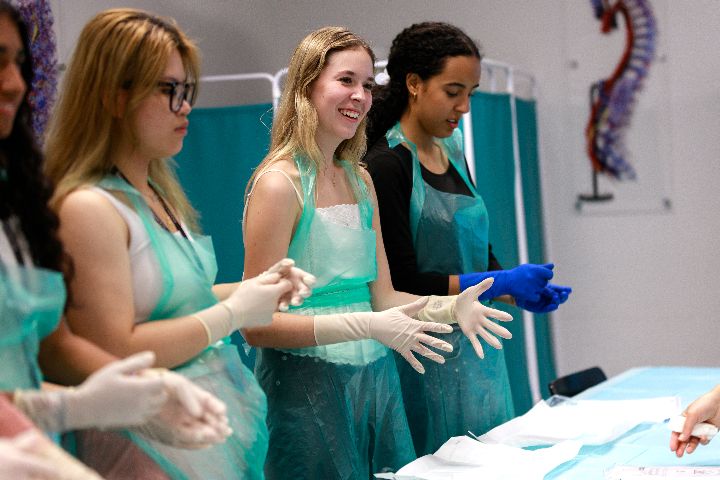
The program includes practical experiences such as dissections in medicine, robotic arm building in engineering, or moot courts for law. You can choose from several STEM subjects, including artificial intelligence, biology, chemistry, physics, engineering, mathematics, and more. By the end of the program, you will complete a personal project and receive written feedback and a certificate of completion. You can find more details about the application here.
Why it stands out: You’ll study under expert academics, be guided daily by a university student mentor, complete a project you can show in future applications, and experience genuine university college life, with other campuses worldwide as alternatives.
3. MIT’s MITES Summer Program
Location: MIT Campus, Cambridge, MA
Cost/Stipend: None
Acceptance rate/cohort size: Selective
Dates: Late June through early August
Application Deadline: Applications typically close in February
Eligibility: High school juniors (U.S. citizens or permanent residents)
The MITES Summer Program is a six-week residential program where you take a rigorous set of courses in math, science, and humanities while experiencing college life at MIT. You complete multiple classes simultaneously, covering advanced topics and real-world STEM applications that go beyond the typical high school curriculum.
Alongside academics, you participate in lab tours, seminars with STEM professionals, and structured college admissions guidance. The program also includes collaborative assignments, problem sets, and discussions that build both technical understanding and academic skills. Through this immersive environment, you develop a stronger foundation in STEM while gaining insight into college-level expectations.
Why it stands out: A full “semester-style” academic experience combined with direct exposure to MIT labs and college admissions support.
4. Anson L. Clark Scholar Program
Location: Texas Tech University, Lubbock, TX
Cost/Stipend: None except a $25 application fee / $750 stipend
Acceptance rate/cohort size: 12 students
Dates: June 21st – August 6th
Application Deadline: February 16th
Eligibility: High school students who are at least 17 years old by the start of the program; U.S. citizens or permanent residents
The Anson L. Clark Scholar Program is a seven-week residential research program where you work one-on-one with faculty at Texas Tech University on an independent project. You can pursue research across fields such as biology, chemistry, engineering, computer science, or the humanities, depending on your interests.
Your work typically involves designing experiments or analyses, collecting and interpreting data, and developing a structured research outcome under close mentorship. In addition to lab or academic work, you attend weekly seminars, discussions, and field trips that expose you to broader research areas and career paths. The program concludes with a formal presentation of your research.
Why it stands out: Extremely small cohort with direct faculty mentorship, allowing for highly personalized, independent research.
5. Stanford Institutes of Medicine Summer Research Program (SIMR)
Location: Stanford University, Stanford, CA
Cost/Stipend: $40 application fee; The application fee will be waived if your gross family income is under $80,000. All students are given a $500 minimum stipend. Stipends of $2500 and above are given on a needs-based system from special grants.
Acceptance rate/cohort size: 50 students
Dates: June 8th – July 30th
Application Deadline: February 21st
Eligibility: Must be juniors or seniors in the graduating class of this or next year, at least 16 years old by the program’s start date, and currently living in the U.S. while attending high school as U.S. citizens or permanent residents with a green card
The Stanford Institutes of Medicine Summer Research Program is an eight-week research program where you work in a Stanford School of Medicine lab on a medically focused project. You are placed in a specific research area, such as bioengineering, genetics, or neurobiology, and contribute to ongoing lab work alongside faculty, postdocs, and researchers.
Your work involves learning lab techniques, assisting with experiments, and analyzing and interpreting data within a professional research setting. You also gain exposure to experimental design, lab safety, and scientific workflows through structured training and weekly meetings. The program concludes with a formal poster presentation where you communicate your research findings.
Why it stands out: One-on-one mentorship in a real biomedical research lab with a final poster presentation, closely mirroring undergraduate research experiences.
6. Johns Hopkins’ ASPIRE Program
Location: Johns Hopkins University Campus, Baltimore, MD
Cost/Stipend: None
Acceptance rate/cohort size: >10%
Dates: June 23rd, 24th, 25th – August 21st
Application Deadline: February 15th
Eligibility: High school junior or senior who is at least 15 years of age with a minimum 2.8 GPA. Permanent residents of one of the Maryland counties. Check more details here
The ASPIRE Program is a summer internship where you work on-site with Applied Physics Laboratory mentors on real STEM projects. You spend 30–40 hours per week contributing to technical work in areas like Python programming, robotics, software development, or engineering design. Your tasks involve problem-solving, building or testing systems, and collaborating with teams while learning how projects develop in a professional environment.
Throughout the program, you also develop skills in technical communication, independent work, and iterative design. The experience gives you a practical understanding of how research and engineering teams operate day to day.
Why it stands out: Focuses more on problem-solving ability and initiative than prior experience, while placing you in a full-time, real-world STEM work environment.
7. Science and Engineering Apprenticeship Program (SEAP) at the Department of the Navy (DoN)
Location: Multiple lab locations are available across the country
Cost/Stipend: No cost / Stipend of $4,000 for new participants, $4,500 for returning participants
Acceptance rate/cohort size: Selective
Dates: Eight weeks during the summer, with the option to extend for up to two more weeks
Application Deadline: November 1st
Eligibility: High school students who have completed at least 9th grade, are at least 16 years old, and are U.S. citizens. Students should check the specific lab’s additional requirements or exceptions
The Science and Engineering Apprenticeship Program is an eight-week summer research internship where you work inside the Department of the Navy laboratories alongside scientists and engineers. You contribute to active projects in areas like computer science, robotics, cybersecurity, AI, and engineering, depending on your placement.
Your work can include tasks such as coding, data analysis, modeling systems, or assisting with experimental and technical workflows, all under mentor supervision. You also document your work, learn how research is conducted in federal labs, and engage with real-world problem-solving in a structured environment. Through this experience, you gain exposure to applied research and the role of technology in national defense and large-scale systems.
Why it stands out: Direct placement inside government research labs working on real, ongoing technical projects.
8. NYU’s Applied Research Innovations in Science and Engineering (ARISE)
Location: NYU Tandon School of Engineering, Brooklyn, NY
Cost: No cost; $2,000 stipend
Acceptance rate/cohort size: Not specified
Dates: June 1st – August 14th
Application Deadline: February 27th
Eligibility: Rising high school juniors and seniors who live and attend school in NYC
The NYU ARISE is a 10-week summer research program where you begin with structured training in lab safety, data analysis, and scientific writing before transitioning into mentored research at NYU labs. You spend about six weeks working on active projects in fields like neuroscience, robotics, or environmental science, contributing to ongoing research.
Your work involves assisting with experiments, analyzing data, documenting findings, and learning how research workflows operate in a professional lab setting. Alongside lab work, you attend workshops on public speaking, college applications, and professional development. The program concludes with a formal research presentation at a symposium.
Why it stands out: Combines structured pre-research training with substantial lab placement, making it more accessible if you’re new to research.
9. Carnegie Mellon University’s Summer Academy for Math and Science (SAMS) Pre-College Program
Location: Carnegie Mellon University, Pittsburgh, PA
Cost/Stipend: None
Acceptance rate/cohort size: Selective
Dates: June 20th – August 1st
Application Deadline: February 1st
Eligibility: 11th-grade students at the time of application;16 years old; U.S. citizen or permanent resident
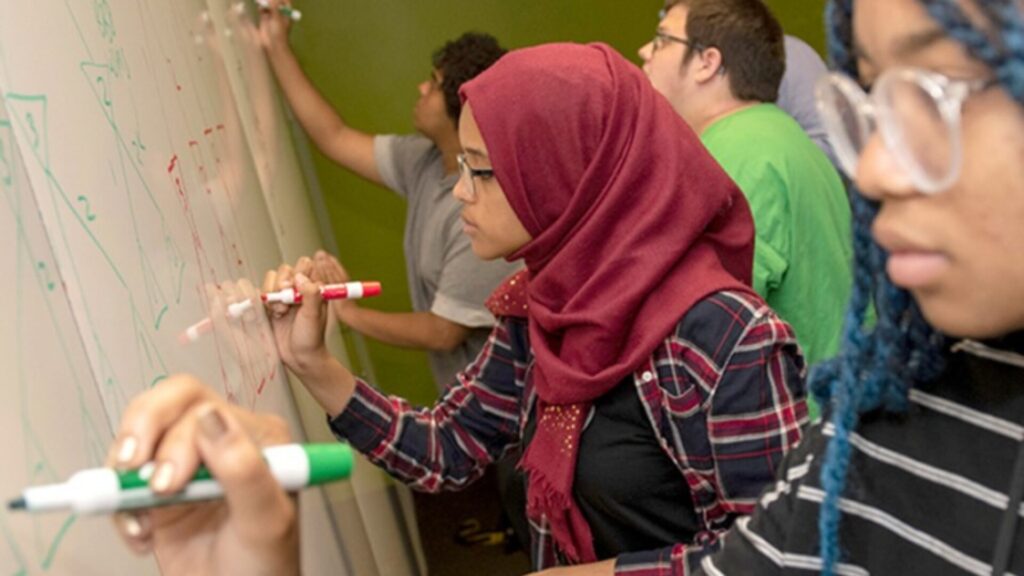
The Summer Academy for Math and Science is a multi-phase pre-college program where you build STEM skills through coursework, projects, and mentorship from Carnegie Mellon faculty. You begin with a virtual “jumpstart” focused on foundational skill-building, followed by a six-week in-person session with full-day classes, workshops, and collaborative projects.
During the residential phase, you work on hands-on assignments and team-based projects that apply concepts from math, science, and engineering. You also engage with faculty, graduate mentors, and peers while developing problem-solving and academic skills in a structured environment. The program concludes with a symposium where you present your project work.
Why it stands out: Combines preparatory virtual training with an intensive in-person experience, making the transition into rigorous STEM coursework more structured and supportive.
10. Simons Summer Research Program
Location: Stony Brook University, Stony Brook, NY
Cost/Stipend: No cost / Students will receive a stipend
Acceptance rate/cohort size: Selective
Dates: June 29th – August 7th
Application Deadline: February 5th
Eligibility: High school juniors who are at least 16 years old and U.S. citizens or permanent residents
The Simons Summer Research Program stands out among the many STEM research programs for high school students because you are paired with a faculty mentor at Stony Brook University and placed within an active research group. You take responsibility for a defined project in fields like biochemistry, computer science, geoscience, or engineering, contributing to ongoing research.
Your work involves using lab techniques or computational tools, collecting and analyzing data, and engaging with the research process in a structured environment. Alongside lab work, you attend faculty talks, workshops, and academic events that provide broader exposure to scientific research. The program concludes with a written abstract and a research poster presented at a symposium.
Why it stands out: Integrates you directly into an existing research group, giving you a more realistic, team-based research experience.
11. NIST Summer High School Intern Program
Location: NIST campuses in Gaithersburg, MD, and Boulder, CO
Cost/Stipend: None
Acceptance rate/cohort size: Selective
Dates: June 22nd – August 7th
Application Deadline: January 26th
Eligibility: U.S. citizens who are current high school juniors or seniors at the time of application, with a minimum GPA of 3.0
The NIST Summer High School Intern Program is a research internship where you work with scientists and engineers at the National Institute of Standards and Technology on active scientific problems. You are placed in a lab, such as materials science, physics, IT, or engineering, and contribute to ongoing projects through tasks like coding, data analysis, experimental design, or electronics work.
Your role involves applying technical tools (e.g., Python, lab instrumentation) while learning how measurement, testing, and standards are developed in research settings. You also document your work, communicate with mentors, and engage with how research teams structure and evaluate experiments. The experience is designed to mirror real research workflows, requiring independent thinking and problem-solving.
Why it stands out: Strong focus on measurement science and standards, offering a different angle on research compared to typical university lab programs.
12. Garcia Research Scholar Program
Location: Stony Brook University, Stony Brook, NY
Cost/Stipend: $4,000 + $50 registration fee + other optional costs; No stipend
Acceptance rate/cohort size: Competitive
Dates: June 24th – August 7th
Application Deadline: Typically in March
Eligibility: High school students who are 16 years and older with an unweighted GPA of 95/100 (3.8/4.0). Check more details here
The Garcia Research Scholar Program is a seven-week research program where you conduct hands-on lab work in polymer materials science alongside faculty and research teams. You design and carry out an original research project, learning techniques related to materials, experimentation, and data analysis in a lab setting.
You will be collaborating with mentors, documenting results, and refining your project for formal presentation. Students are encouraged to submit their research to competitions, journals, or even pursue patents, extending the impact of their work beyond the program. There is also an option to continue research during the academic year through a structured mentorship program.
Why it stands out: Emphasizes producing publishable or competition-level research, with opportunities for long-term continuation beyond the summer.
13. Stanford University Mathematics Camp (SUMaC)
Location: Residential at Stanford University, CA, or Virtual
Cost/Stipend: Online: $3,750, Residential: $8,950; No stipend
Acceptance rate/cohort size: Selective
Dates: Session One: Online- June 15th – July 3rd, Session One: Residential- June 21st – July 17th, Session Two: Online- July 6th – July 24th
Application Deadline: February 2nd
Eligibility: Students worldwide in grades 10-11
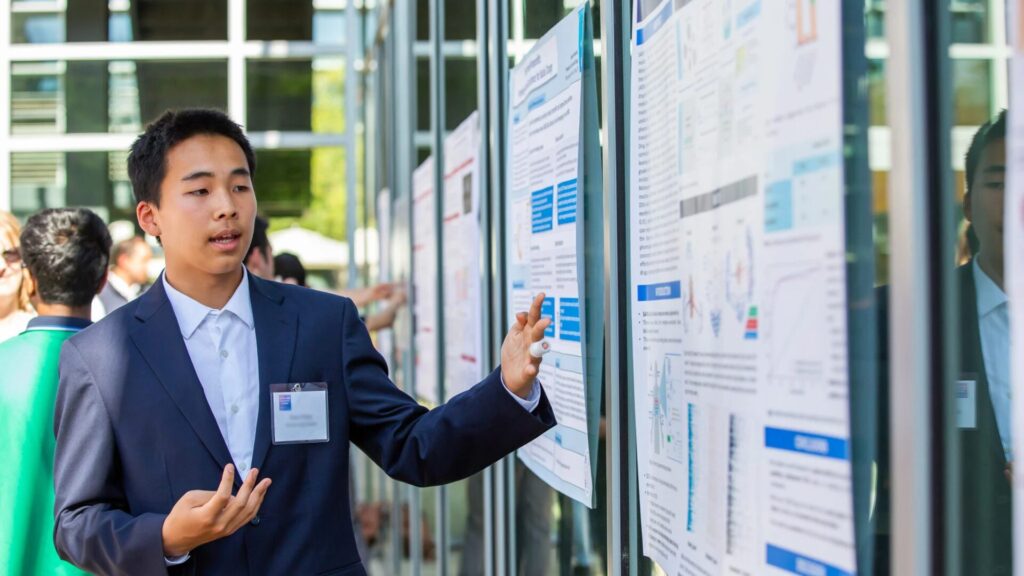
The Stanford University Mathematics Camp is a summer program where you study advanced mathematics through lectures, problem-solving sessions, and guided research projects. You explore topics beyond the standard curriculum, such as abstract algebra, number theory, or other higher-level mathematical concepts.
The program involves a rigorous workload with regular assignments and collaborative problem-solving with peers who share a strong interest in math. You also engage with the aspitheoretical foundations of mathematics, including its development and applications across disciplines. Through this, you build deeper mathematical reasoning and experience working with complex, abstract ideas.
Why it stands out: Focuses on pure, proof-based mathematics at an advanced level, rather than applied or introductory STEM topics.
14. Aspiring Scientists Summer Internship Program (ASSIP)
Location: Virtual option available; in person at George Mason University
Cost: $1299 + $25 application fee
Acceptance rate/cohort size: Not specified
Dates: June 18th – August 12th
Application Deadline: February 15th
Eligibility: High school students around the world aged 15 years or older
The Aspiring Scientists Summer Internship Program is a summer research program where you work with faculty mentors at George Mason University on projects across fields like neuroscience, cybersecurity, climate science, and bioengineering. You are involved in designing and conducting research, which may include experimentation, coding, data collection, or modeling, depending on your project area.
Your work also includes analyzing results, maintaining research documentation, and developing scientific writing and communication skills. Throughout the program, you engage with advanced tools and technologies while interacting with researchers and professionals in STEM. Many projects extend to presentations at conferences or potential publication.
Why it stands out: Wide range of research areas combined with opportunities for publication or conference-level work.
15. California State Summer School for Mathematics and Science (COSMOS)
Location: The program is hosted by the University of California system and is offered at multiple campuses throughout the state
Cost: $5,518 + $44 application fee (financial aid available)
Acceptance rate/cohort size: Competitive admissions (200-250 participants each campus)
Dates: July 5th – August 1st
Application Deadline: February 6th
Eligibility: Students in grades 8-12. Limited to California students only
The California State Summer School for Mathematics and Science is a four-week residential program where you study an intensive STEM “cluster” at a University of California campus. You focus on a specific subject area, such as engineering, computer science, or physics, through lab-based learning, problem-solving, and project work guided by faculty and researchers.
In engineering clusters, for example, you may explore concepts like mechanics, thermodynamics, and materials by applying them to real-world systems or prototypes. The program emphasizes depth over breadth, allowing you to engage with advanced topics in a sustained, structured way. Through this, you gain exposure to university-level coursework, research environments, and collaborative technical work.
Why it stands out: Its cluster model lets you dive deeply into one STEM field, rather than rotating through multiple short topics.
Taking Your STEM Ambitions Beyond the Summer
After exploring labs, coding projects, data analysis, engineering design, and faculty mentorship, you can start seeing which STEM environments fit you best.
Through these 15 STEM research programs for high school students, you gain more than summer experience, building evidence of curiosity, discipline, and academic direction.
Whether you present findings, write a research paper, or join a project team, each experience can clarify what university-level study may involve.
Curious how a summer research experience can support your next academic move? Explore our University Preparation blogs for practical guidance.