
 Русский (RU)
 Українська (UK)
 Türkçe (TR)
 Italiano (IT)
 Français (FR)
 Português (PT)
 中文 (中国) (ZH)
 Español (ES)
 日本語 (JA)
 ไทย (TH)
 Deutsch (DE)
 Ελληνικά (EL)
 Polski (PL)
 Bahasa Indonesia (ID)
 Nederlands (NL)
 العربية (AR)
 한국어 (KO)

If you’re a high school student interested in research, summer programs in 2026 can give you the opportunity to move beyond classroom learning and experience how real academic research works. Whether you’re interested in science, medicine, AI, social sciences, or mathematics, research programs allow you to investigate complex questions, work with mentors, and develop skills that are valuable for both college and future careers.
Imagine spending your summer conducting experiments, analyzing data, reading academic papers, or collaborating on projects with students who share your interests. Picture yourself presenting findings, working in university labs, or exploring advanced topics alongside researchers and professors. Summer research programs for high school students in 2026 combine academic rigor with hands-on learning, helping you experience what research truly looks like in professional and university settings.
How do you choose the right summer research programs for high school students in 2026?
With many options available, it’s important to look for programs that provide meaningful mentorship, structured projects, and opportunities to actively participate in research rather than simply observe. Some programs focus on laboratory science, while others emphasize computational research, engineering, or interdisciplinary studies.
Across these programs, students often take part in experiments, coding projects, literature reviews, presentations, and collaborative research. You might build models, analyze datasets, conduct scientific investigations, or develop original research questions, experiences that closely mirror university-level academic work.
You’ll learn from researchers, professors, and professionals while collaborating with motivated peers from different backgrounds. Along the way, you’ll strengthen essential skills such as critical thinking, communication, data analysis, and independent learning.
To help you get started, we’ve curated a list of 15 Summer Research Programs for High School Students in 2026. They’ve been selected for their academic rigor, mentorship opportunities, and ability to provide meaningful hands-on research experience.
For adjacent opportunities, consider the online research program.
15 Summer Research Programs for High School Students in 2026
1. Research Science Institute
Location: Massachusetts Institute of Technology, Cambridge, MA
Cost/Stipend: None
Acceptance rate/cohort size: ~2.5%; 100 students/year
Dates: June 28th – August 8th
Application Deadline: December 10th
Eligibility: High school juniors who meet the RSI academic prerequisites
As one of the most rigorous summer research programs for high school students in 2026, the Research Science Institute gives you an unusually intensive introduction to STEM research, beginning with advanced academic lectures before moving into an independent project. You spend most of the program working under the guidance of experienced scientists or researchers, developing a research question, reviewing current literature, and carrying out a detailed plan.
Depending on your placement, your project may involve experimental work, computational analysis, theoretical modeling, or applied scientific investigation. You also learn how to analyze findings, organize evidence, and communicate results clearly. By the end of the program, you will have completed both a formal research paper and a conference-style presentation, giving you a strong academic output to show from the experience.
Why it stands out: RSI stands out for combining advanced STEM coursework with a full independent research cycle at MIT, making it one of the most rigorous and selective research programs available to high school students.
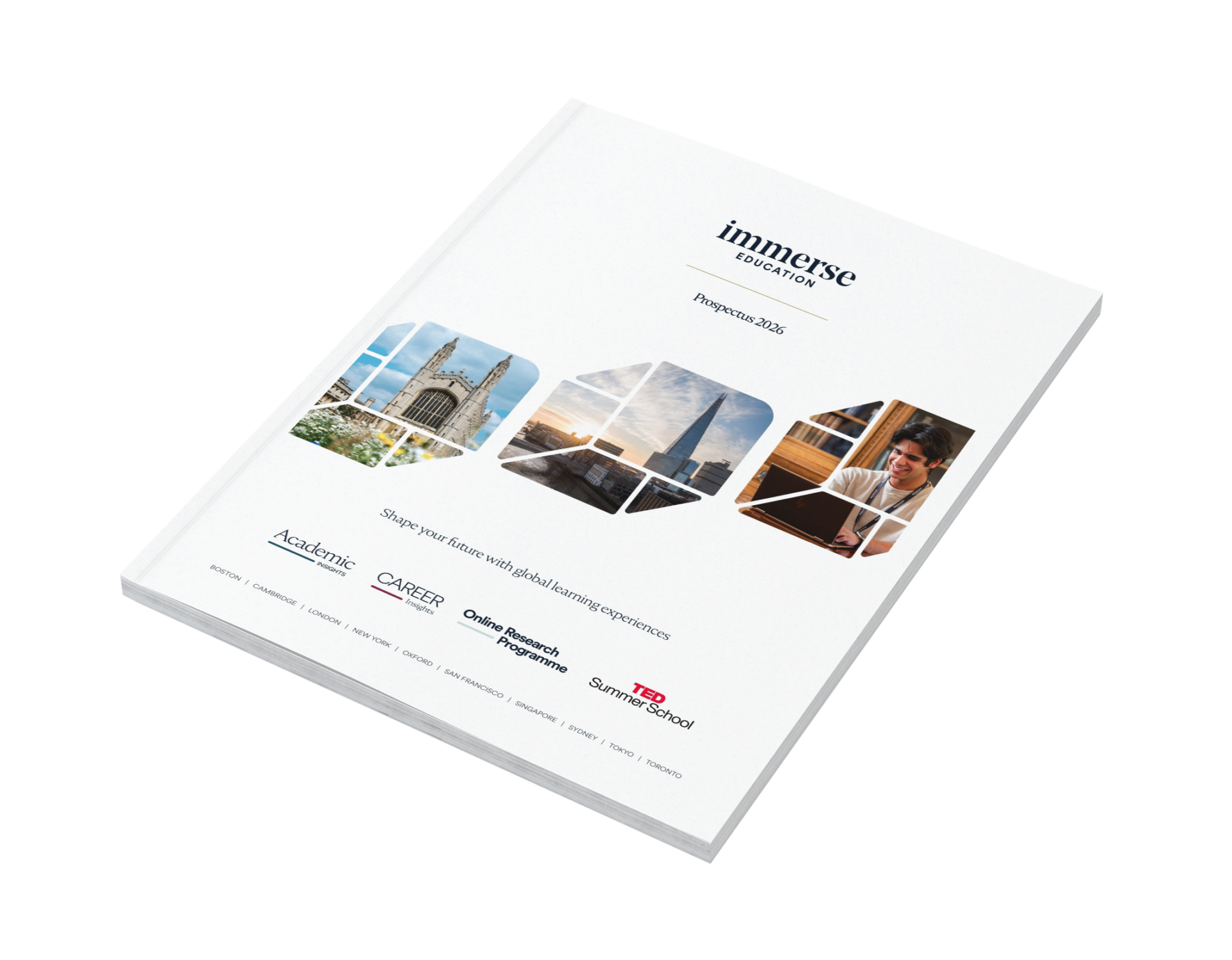
2. Immerse Education’s Pre-University Summer School
Location: Cambridge, London, Oxford, Singapore, Sydney, Tokyo, and Toronto
Cost: Varies; summer school scholarship available through our bursary programme
Application Deadline: Multiple summer cohorts; rolling admissions
Program Dates: 2 weeks during the summer
Eligibility: Students worldwide aged 13-18 currently enrolled in middle or high school
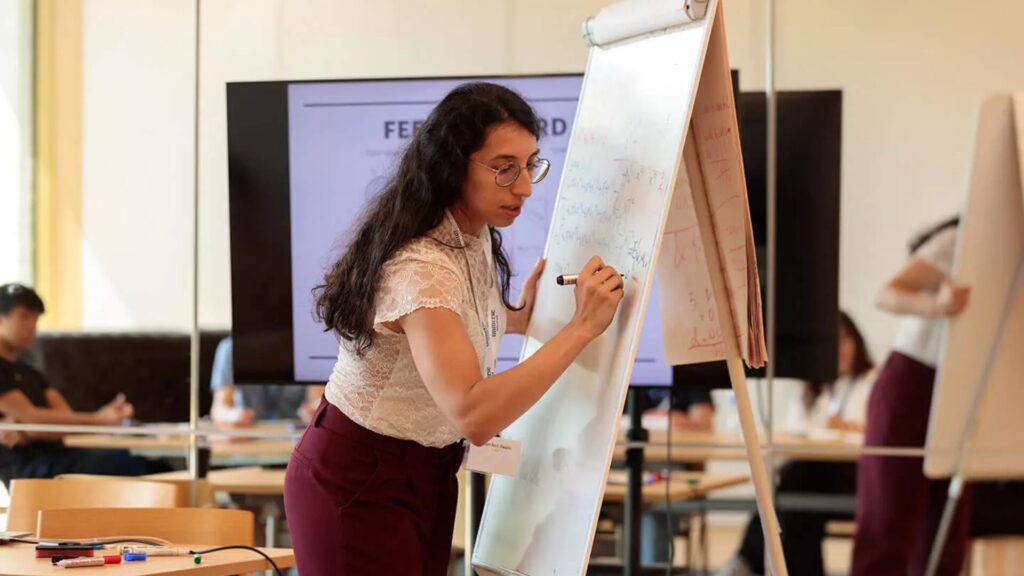
The Academic Insights Program lets high school students experience university life firsthand. You will live on campus and study in small groups of 7–10, learning from tutors from top universities like Oxford and Cambridge. Participants can explore over 20 subjects, including Architecture, AI, Business Management, Computer Science, Economics, Medicine, Philosophy, and more.
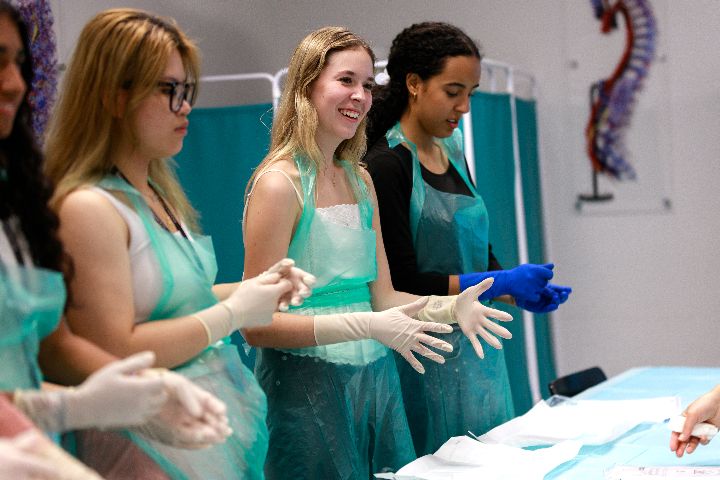
The courses are experiential and hands-on — you may find yourself conducting dissections in medicine, designing a robotic arm in engineering, participating in a moot court for law, or building creative writing portfolios and business case studies. By the end of the program, you’ll complete a personal project, receive written feedback, and a certificate of completion. You can find more details about the application here.
Why it stands out: You’ll study under expert academics, be guided daily by a university student mentor, complete a project you can show in future applications, and experience genuine university college life, with other campuses worldwide as alternatives.
3. Science and Engineering Apprenticeship Program (SEAP)
Location: Various Department of the Navy laboratories across the country
Stipend: Paid
Acceptance rate/cohort size: Highly selective; ~300
Dates: Typically May to June
Application Deadline: November 1st
Eligibility: High school students in grades 10-12 who are 16 years old by the start of the program and are U.S. citizens
SEAP gives you direct exposure to applied science and engineering through a research placement in a Navy laboratory. Your work depends on the lab and mentor you are matched with, but projects may involve electronics, computer modeling, materials science, environmental testing, or other technical areas connected to naval research.
As an intern in this prestigious government research program, you contribute to real projects under the supervision of experienced researchers. This helps you understand how federal laboratories approach technical problem-solving, data collection, and applied experimentation. Along the way, you build professional habits such as communicating with mentors, documenting progress, and working within a research team.
Why it stands out: Places high school students inside Department of the Navy laboratories, where they get to contribute to active federal research alongside professional scientists and engineers.
4. Texas Tech University’s Anson L. Clark Scholars Program
Location: Texas Tech University, Lubbock, TX
Cost/Stipend: Free except for a $25 application fee | $750
Acceptance rate/cohort size: Selective; 12 students
Dates: June 21st – August 6th
Application Deadline: February 16th
Eligibility: High school juniors and seniors (i.e., students graduating high school in the program year or the next) who are at least 17 by the start date and U.S. citizens or permanent residents
The Anson L. Clark Scholars Program gives you a highly personalized research experience within a small residential cohort. Each scholar is matched with a faculty mentor and develops an independent project in a chosen academic area, which may range from biology, chemistry, and engineering to business, humanities, or the fine arts.
Your daily work can include laboratory investigation, data analysis, computational modeling, archival research, or scholarly writing, depending on your field. The program also includes seminars, discussions, and field trips that broaden your understanding of academic research beyond your individual topic. At the end, you submit a formal written report, giving you a substantial research product from the experience.
Why it stands out: The program offers a very small cohort, one-on-one faculty mentorship, and openness to research across STEM, humanities, business, and the arts.
5. University of Chicago: Chicago EYES on Cancer
Location: University of Chicago, Chicago, IL
Stipend: $5,000
Acceptance rate/cohort size: Competitive
Dates: Two 8-week summer sessions (June – August) + Monthly enrichment activities
Application Deadline: Varies (released each fall)
Eligibility: High school sophomores, juniors, or seniors, or college freshmen/sophomores ages 16+; High school applicants must be residents of Cook, Lake, Will or DuPage counties in Illinois or Lake County in Indiana
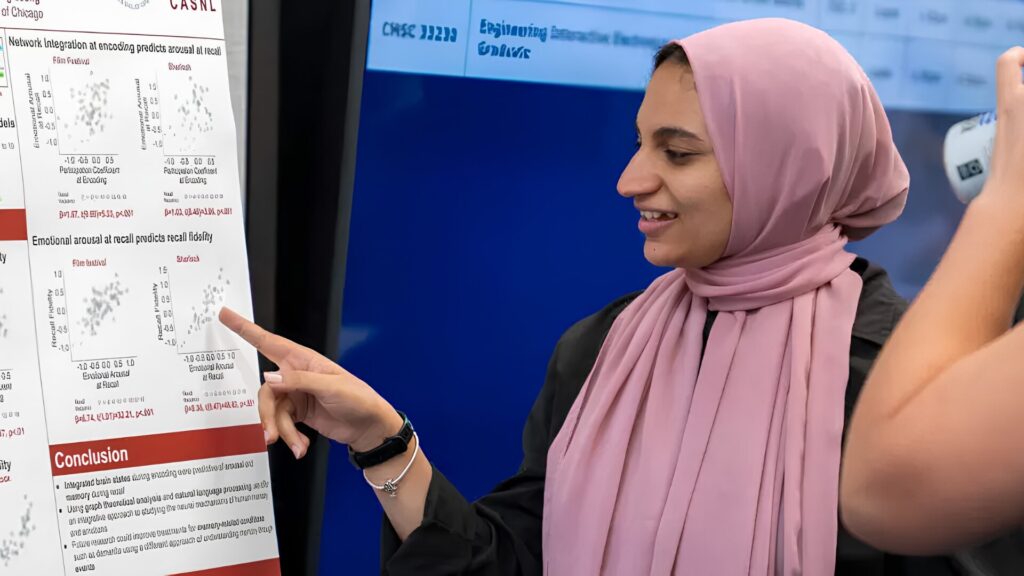
Chicago EYES on Cancer is built for students who want sustained exposure to cancer research rather than a short-term lab experience. Participants work in university research settings across areas such as basic science, translational research, clinical studies, and population health. The program combines lab or research group work with a cancer-focused lecture series, helping you understand how scientific discoveries connect to medicine and public health.
Year-round workshops support your growth in academic planning, research communication, and career readiness. Faculty, research professionals, program staff, and peers provide ongoing mentorship, and the program concludes with a research symposium where you present your work and reflect on your development as a young researcher.
Why this stands out: It extends beyond one summer, combining hands-on cancer research with continued mentorship, career development, and skill-building support.
6. Johns Hopkins’ ASPIRE
Location: Online or in-person at Johns Hopkins Applied Physics Laboratory, Laurel, MD
Cost/Stipend: None
Acceptance rate/cohort size: Less than 10%
Dates: June 23rd – August 21st
Application Deadline: February 15th
Eligibility: High school juniors and seniors who are 15 or older by June 1 of the program year, have a minimum 2.8 GPA, and are U.S citizens and residents of specific regions in Maryland, Virginia, and the District of Columbia
Johns Hopkins’ ASPIRE program allows you to explore STEM careers through project-based work at the Applied Physics Laboratory. You are paired with an APL staff mentor and matched to a project based on research needs, availability, and your interests. Depending on your placement, you may work on coding, lab tasks, hardware development, research analysis, simulations, or technical communication.
You also gain insight into how large applied research organizations solve technical problems across fields like aerospace engineering, environmental science, cybersecurity, and artificial intelligence. At the end, you document your progress and present your work through a digital research poster.
Why it stands out: ASPIRE stands out for placing students in a professional research environment at Johns Hopkins Applied Physics Laboratory, with projects spanning high-level STEM fields such as AI, cybersecurity, aerospace, and physics.
7. University of Texas MD Anderson Cancer Center – Carl B. & Florence E. King Foundation High School Summer Program
Location: MD Anderson Cancer Center, Houston, TX
Stipend: $6,800
Acceptance rate/cohort size: Highly selective; Small cohort
Dates: June 1st – August 7th
Application Deadline: January
Eligibility: Current Texas public, private, or charter high school seniors; At least 18 years old by the program start; U.S. citizen or permanent resident
The Carl B. & Florence E. King Foundation High School Summer Program places you in an intensive cancer research environment at MD Anderson. You work under the guidance of a faculty mentor on a biomedical research project, gaining experience with laboratory techniques, data collection, and scientific investigation. Much of the program is centered on hands-on work, helping you understand the daily expectations of a professional research setting.
Faculty seminars introduce you to different areas of cancer science, allied health, and clinical research. You also build communication skills through activities such as abstract writing, poster preparation, and short research presentations. The experience ends with a final presentation, allowing you to share what you learned and developed during the program.
Why this stands out: This program stands out for offering full-time placement at a leading cancer center, giving you a realistic view of biomedical research, lab discipline, and allied health career pathways.
8. Washington University – Young Scientist Program: Summer Focus
Location: Washington University in St. Louis, MO
Stipend: $4,800 (pre-tax)
Acceptance rate/cohort size: 15-18 students
Dates: June 1st – July 24th
Application Deadline: January 26th
Eligibility: Students from any high school in the Greater St. Louis area (Missouri and Illinois) in 11th grade
Washington University’s Summer Focus program places you inside an active biomedical research lab, where you contribute to a focused project under close supervision. Interns are paired with a mentor who guides their lab work and a tutor who supports their overall research experience.
This helps you build confidence as you learn how experiments are designed, how data is interpreted, and how research questions evolve. Alongside lab work, you take courses that strengthen scientific writing, research communication, and college preparation. The program concludes with a symposium where you present your research to peers, mentors, and members of the scientific community.
Why it stands out: This stands out for pairing each student with both a mentor and a tutor, giving you strong research guidance along with academic and college-readiness support.
9. Stony Brook University’s Simons Summer Research Program
Location: Stony Brook University, Stony Brook, NY (less than 1.5 hours away from NYC)
Cost/Stipend: No tuition, but a residential fee of $2,450 applies to students who need university housing | Paid
Acceptance rate/cohort size: ~5%
Dates: June 29th – August 7th
Application Deadline: February 5th
Eligibility: High school juniors who are U.S. citizens or permanent residents and at least 16 when the program starts
Stony Brook University’s Simons Summer Research Program gives you the chance to join a research team in science, mathematics, or engineering. You are matched with a faculty mentor and take responsibility for a defined project within an active lab or research group.
Research areas may include astronomy, physics, geoscience, chemistry, computer science, artificial intelligence, engineering, or applied mathematics. In addition to hands-on project work, you attend faculty lectures, workshops, tours, and research events that introduce you to life at a major research university. At the end, you write a research abstract and present your work at a closing poster symposium.
Why it stands out: This program embeds students in active university research groups and requires both a written abstract and a formal poster presentation.
10. Air Force Research Laboratory (AFRL) Scholars Program
Location: Various locations across the U.S.
Stipend: $615.60 – $861.60/week (based on education level and credits earned)
Acceptance rate/cohort size: Highly competitive
Dates: 8-12 weeks (late May/early June – August)
Application Deadline: January 10th
Eligibility: U.S. citizens who are at least 16 years old and have a minimum CGPA of 3.0/4.0
The AFRL Scholars Program brings an applied aerospace and defence angle to this list of summer research programs for high school students in 2026. Depending on your site and project, you may contribute to areas such as aerospace engineering, artificial intelligence, physics, data science, materials research, autonomous systems, or space technology.
Your responsibilities could include analyzing datasets, supporting simulations, assisting with experimental design, or contributing to software development. Working with AFRL scientists and engineers helps you understand how applied research moves from technical questions to practical systems. Mentorship is a central part of the experience, giving you guidance as you develop both technical and professional skills.
Why it stands out: AFRL Scholars stands out for giving students paid access to applied research inside federal laboratory teams working on advanced aerospace, defense, data, and technology projects.
11. National Institute of Standards and Technology (NIST) – Summer High School Intern Program (SHIP)
Location: NIST laboratory at Gaithersburg, MD, or Boulder, CO
Cost/Stipend: None
Acceptance rate/cohort size: Highly competitive
Dates: June 22nd – August 7th
Application Deadline: January 26th
Eligibility: High school juniors and seniors with a minimum GPA of 3.0 and U.S. citizenship
NIST’s Summer High School Intern Program introduces you to scientific research inside a federal laboratory environment. Participants work alongside scientists and engineers on projects that may involve advanced computing, cybersecurity, artificial intelligence, quantum science, materials measurement, or related technical fields. Daily tasks vary by placement, but you may assist with programming, experimental testing, data analysis, or refinement of measurement systems.
Seminars and professional development sessions add context to your lab work and expose you to different STEM career paths. The program ends with a poster presentation where you summarize your research and share your outcomes with the NIST community.
Why it stands out: NIST SHIP gives students access to federal science labs where research supports national standards in computing, measurement, materials, cybersecurity, and emerging technologies.
12. Princeton University – Laboratory Learning Program
Location: Princeton University main campus, NJ
Cost/Stipend: None
Acceptance rate/cohort size: Highly competitive
Dates: 5 weeks during the summer (exact dates vary)
Application Deadline: March 15th
Eligibility: U.S. citizens or legal permanent residents enrolled in a US high school who are 16 years old by June 15 (specific research opportunities may have additional eligibility criteria)
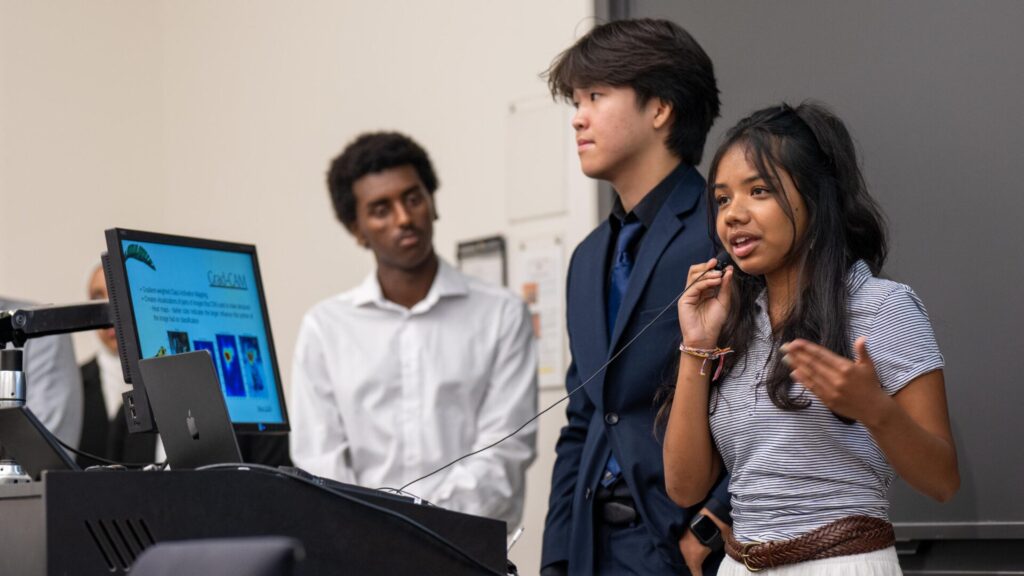
As one of the more university-focused summer research programs for high school students in 2026, Princeton’s Laboratory Learning Program allows you to spend several weeks working within a university research laboratory. You are assigned to a science or engineering project based on lab availability, mentor needs, and your background. Past placements have included areas such as renewable energy systems, genetic disease mechanisms, molecular biology, biomedical engineering, and advanced materials.
Your day-to-day responsibilities are determined by the research team, but may involve experimentation, modeling, data analysis, or reviewing scientific literature. By the end, you will complete a written research summary that outlines your objectives, methods, and findings.
Why it stands out: Princeton’s Laboratory Learning Program stands out for giving local students full-time research exposure in university labs, with projects shaped by active faculty research needs.
13. Emory University’s Winship Cancer Institute’s Summer Scholars Research Program
Location: Emory University’s Winship Cancer Institute, Atlanta, GA
Stipend: $2,400
Acceptance rate/cohort size: 10-12 students
Dates: June 8th – July 17th
Application Deadline: February 6th
Eligibility: Rising and graduating high school seniors who are U.S. citizens or permanent residents and 16 or older when the program begins
Winship Cancer Institute’s Summer Scholars Research Program gives you direct exposure to cancer research through close mentorship from a physician or laboratory-based researcher. You contribute to an ongoing project in cancer biology, oncology, patient care, or a related research area. Faculty lectures help you understand how cancer research moves from lab discoveries to clinical applications.
The program also includes field experiences and discussions that introduce you to medical facilities, treatment approaches, and survivor perspectives. At the end, you present your project at a symposium attended by researchers, doctors, graduate students, and invited guests.
Why this stands out: Winship’s program stands out for combining one-on-one cancer research mentorship with clinical exposure, field visits, survivor discussions, and a final research symposium.
14. Magee-Womens Research Institute (MWRI)’s High School Summer Internship Program
Location: Magee-Womens Research Institute, Pittsburgh
Stipend: $1800 (if household qualifies for the National School Breakfast and Lunch Program for Pennsylvania)
Acceptance rate/cohort size: Selective
Dates: June 15th – July 24th
Application Deadline: February 9th
Eligibility: High school students currently in their sophomore or junior year and 16 years old by the program start date; Permanent/primary residence in the local southwest Pennsylvania region
Magee-Womens Research Institute’s High School Summer Internship Program gives you the opportunity to participate in biomedical research connected to women’s health, reproductive science, infant health, and clinical medicine. You work on a defined project under the guidance of an investigator and research staff at MWRI or Magee-Womens Hospital.
Depending on your placement, your project may involve basic science, translational research, clinical research methods, data collection, or interpretation of findings. The program also includes Lunch & Learn sessions where investigators discuss their career paths and research areas. At the end, you present your findings through a formal PowerPoint presentation to interns, faculty, staff, and invited guests.
Why it stands out: MWRI stands out for focusing specifically on women’s health, infant health, reproductive biology, and related biomedical questions, areas that high school students rarely get to explore in depth.
15. University of Pittsburgh Schools of the Health Sciences Research Training Program (RTP)
Location: University of Pittsburgh Schools of the Health Sciences, Pittsburgh
Cost/Stipend: None
Acceptance rate/cohort size: Selective
Dates: 10-12 weeks in the summer; May be extended in the school year
Application Deadline: Not specified
Eligibility: RTP stands out for its flexible structure, allowing students to explore clinical or basic science research across health fields such as medicine, public health, pharmacy, and nursing; international students are welcome to apply
The University of Pittsburgh Schools of the Health Sciences Research Training Program introduces you to biomedical and health sciences research in a university setting. You work under the guidance of a faculty mentor, with your experience shaped around your interests, academic goals, and available research opportunities.
Depending on your placement, you may gain exposure to laboratory-based research, clinical research, data interpretation, or health-related inquiry. You may also learn how faculty approach patient care, biomedical questions, and the broader health professions.
Why it stands out: It focuses on lab work and provides high-quality equipment, so you’ll better understand various theoretical concepts.
Taking Your Summer Research Beyond the Lab
Research is not just about what happens in a lab; it is about learning how to question, test, revise, and explain ideas clearly.
Through these summer research programs for high school students in 2026, you can experience that process across medicine, engineering, AI, cancer research, and applied science.
The value is not only the final poster or paper, but the confidence you build when handling complex problems with guidance and independence.
To make that experience count, read our University Preparation blogs for guidance on shaping your interests into stronger academic choices and applications.