
 Русский (RU)
 Українська (UK)
 Türkçe (TR)
 Italiano (IT)
 Français (FR)
 Português (PT)
 中文 (中国) (ZH)
 Español (ES)
 日本語 (JA)
 ไทย (TH)
 Deutsch (DE)
 Ελληνικά (EL)
 Polski (PL)
 Bahasa Indonesia (ID)
 Nederlands (NL)
 العربية (AR)
 한국어 (KO)

Fifteen is often the age when students begin asking bigger questions about what comes after high school. Summer programs for 15 year olds give you the chance to explore subjects such as engineering, medicine, business, law, or psychology before making decisions about future classes or college majors.
You might work alongside university faculty, exchange ideas with students from different countries, build projects, solve case studies, or carry out research beyond your regular school curriculum. These experiences can make an academic subject feel more tangible than reading about it in a textbook.
With several years of high school still ahead, what you learn during one summer can influence the electives you choose, the extracurricular activities you pursue, and the direction of your college applications. Exploring different subjects now can make later academic decisions clearer and more informed.
What should you look for when choosing a summer program at 15?
Not every summer program is designed with the same goal. Some introduce students to university life, while others focus on research, career exploration, leadership, or a specific academic subject. Before applying, think about what you want from the experience. Are you trying to explore a possible college major? Build practical skills? Experience life on a university campus? Answering those questions will help narrow your options.
It’s also worth looking beyond the program title. The strongest programs usually include workshops, projects, discussions, mentoring, or hands-on activities rather than relying only on lectures. If you’re already interested in a particular field, choose a program that lets you work on real projects and interact with faculty or professionals. Those experiences often leave students with a much clearer understanding of both the subject and whether they’d enjoy studying it in college.
To help you explore your options, we’ve compiled a list of 15 summer programs for 15-year-olds!
For related opportunities, also have a look at the online research program.
Key takeaways
- Johns Hopkins’ ASPIRE program has less than a 10 percent acceptance rate, connecting students with an Applied Physics Laboratory mentor for projects in areas like cybersecurity and aerospace.
- Immerse Education’s Academic Insights Programme spans six locations, including Oxford, Cambridge, and Boston, with classes of four to 10 students open to students aged 13 to 18.
- MIT’s Beaver Works Summer Institute is free for students with family income under $200,000, or $2,350 otherwise, and requires completing an online prerequisite course before the in-person summer program.
- NYU’s Innovation, Entrepreneurship and the Science of Smart Cities program is highly competitive, admitting just 38 high school students, and is restricted to NYC and Nassau County residents.
- UC Berkeley’s Business Academy for Youth costs $7,450 for California residents or $7,950 for out-of-state residents, admitting approximately 50 students across two summer sessions.
- Wharton’s Global Youth Program Essentials of Entrepreneurship costs $8,299 plus a $100 application fee, running across four separate summer sessions between June and August.
- Iowa State University’s AgDiscovery is free but highly selective, admitting just 16 students aged 14 to 17 for a program covering veterinary medicine, wildlife ecology, and conservation.
- Stanford’s Pre-Collegiate Summer Institutes offer residential, commuter, and online formats ranging from $3,000 to $8,250, open to students currently in grades 8 through 11.
15 Summer Programs for 15 Year Olds
1. Johns Hopkins’ ASPIRE
Location: Online or in-person at Johns Hopkins Applied Physics Laboratory, Laurel, MD
Cost: None
Acceptance rate/cohort size: Less than 10%
Dates: June 23rd – August 21st
Application Deadline: February 15th
Eligibility: High school juniors and seniors who are 15 or older by June 1st of the program year, have a minimum 2.8 GPA, and are U.S citizens and residents of specific regions in Maryland, Virginia, and the District of Columbia; not open to international students
Johns Hopkins’ ASPIRE connects you with applied STEM research through the Johns Hopkins Applied Physics Laboratory. You work with an APL mentor on a project that may involve coding, data analysis, simulations, engineering design, cybersecurity, aerospace, or technical communication, depending on the available research area. The program is especially useful if you want to see how professional scientists and engineers approach real technical problems outside a standard classroom.
Along the way, you are expected to work independently, communicate clearly with your mentor, and document your progress in a structured way. The experience concludes with a digital research poster that helps you present your work and reflect on what you learned.
Why it stands out: Offers a rare chance to contribute to mentor-guided research connected to a major applied research laboratory, with project areas that span several advanced STEM fields.
2. Immerse Education’s Pre-University Summer School
Location: Cambridge, London, Oxford, Singapore, Sydney, Tokyo, and Toronto
Cost: Varies; summer school scholarship available through our bursary programme
Application Deadline: Multiple summer cohorts; rolling admissions.
Program Dates: 2 weeks during the summer
Eligibility: Students across the globe aged 13-18 currently enrolled in middle or high school; open to international students
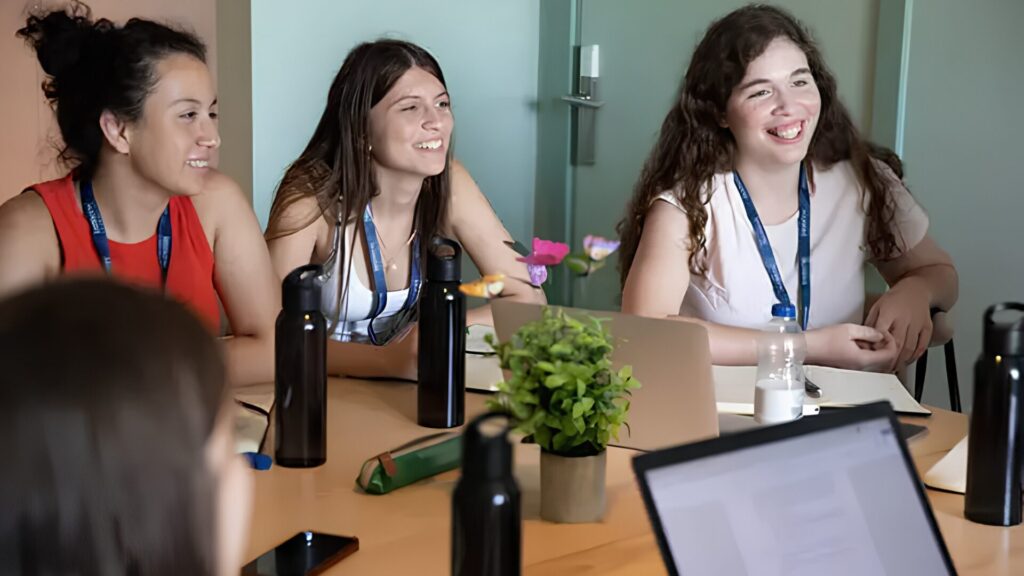
As one of the most university-based summer programs for 15 year olds, the Academic Insights Programme lets you experience university life firsthand. You will live on campus, study in small groups of 7-10, and learn from tutors from leading universities such as Oxford and Cambridge. You can explore more than 20 subjects, including Architecture, AI, Business Management, Computer Science, Economics, Medicine, and Philosophy. The courses are experiential and focus on hands-on learning.
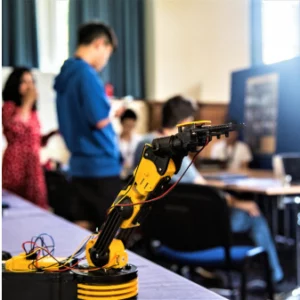
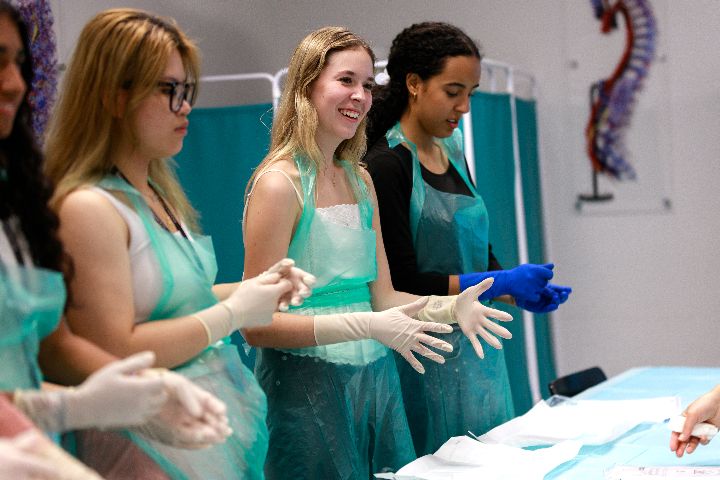
You may find yourself conducting dissections in medicine, designing a robotic arm in engineering, participating in a moot court for law, or building creative writing portfolios and business case studies. By the end of the program, you’ll complete a personal project, receive written feedback, and receive a certificate of completion. You can find more details about the application here.
Why it stands out: You’ll get an early start at university life and academics because the program includes an independent project, discussion-based classes, and living at a college campus.
3. MIT’s Beaver Works Summer Institute
Location: Virtual and in-person at Massachusetts Institute of Technology, Cambridge, MA
Cost: Free pre-requisite course | Summer program fee is $2,350 for students with family income $200,000 or greater, or free otherwise
Acceptance rate/cohort size: Not specified
Dates: Online Courses: Starts February 2nd | In-person Summer Program: July 6th – August ½
Application Deadline: March 31st
Eligibility: High school students, in grades 9-11, who live in the U.S. or will live in the U.S. during the program; not open to international students
Among the STEM-focused summer programs for 15 year olds, MIT’s Beaver Works Summer Institute is designed for students ready to tackle advanced technical challenges through project-based learning. Before the main experience, you complete online preparation covering the tools, concepts, and expectations of your chosen track. Options include autonomous systems, artificial intelligence, cybersecurity, quantum software, wearable technology, and game development.
Much of the work happens through design, testing, iteration, and collaboration, so you learn how technical ideas are developed into functioning systems. The final capstone gives you a structured way to apply your skills to a real engineering or computing challenge.
Why it stands out: Engages students in high-level technical work through MIT-connected instruction, team-based problem-solving, and capstone projects in emerging STEM fields.
4. NYU’s Innovation, Entrepreneurship and the Science of Smart Cities
Location: NYU Tandon School of Engineering, Brooklyn, NY
Cost: None
Acceptance rate/cohort size: Highly competitive; 38 high school students
Dates: ieSoSC I: July 6th – August 7th; ieSoSC II (by invitation only): July 13th – August 7th
Application Deadline: May 15th
Eligibility: Current 9th to graduating 12th-grade students who are at least 15 years of age and are residents of NYC and Nassau County; not open to international students
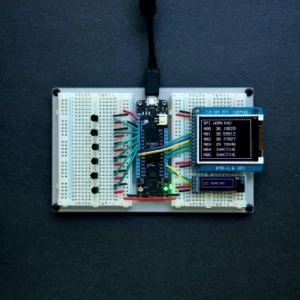
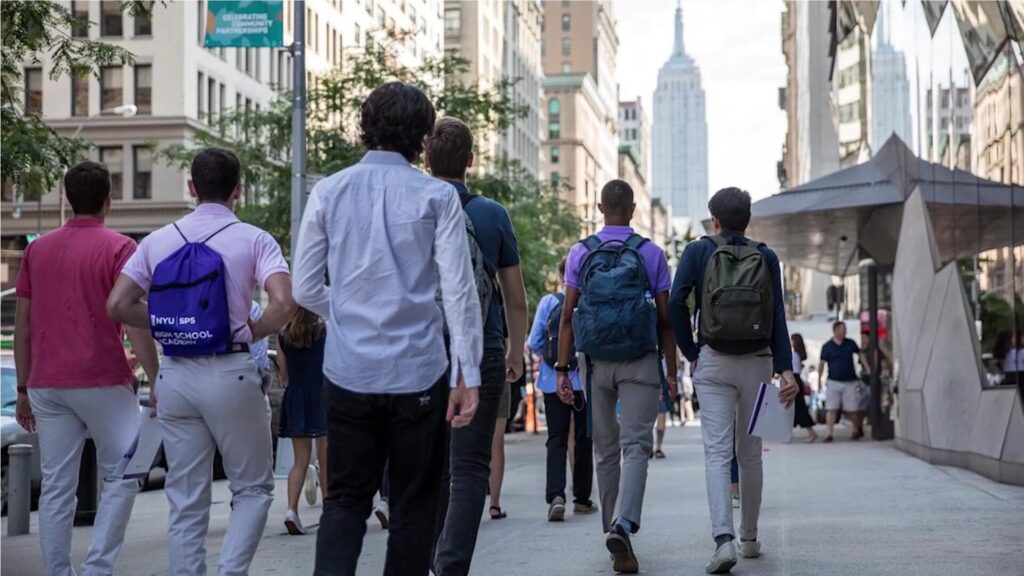
NYU’s Innovation, Entrepreneurship and the Science of Smart Cities helps you connect technology, business thinking, and urban problem-solving. You learn how tools such as coding, circuits, microcontrollers, and sensors can be used to design practical solutions for future cities. The program also introduces the entrepreneurial side of innovation, including product development, branding, project management, economics, intellectual property, and pitching.
Communication workshops help you explain your ideas more clearly, which is especially useful when presenting technical concepts to different audiences. By the end, you work toward a prototype or product concept tied to smart city innovation.
Why this stands out: It blends entrepreneurship with hands-on technology, giving you the chance to prototype and pitch an innovation for future cities.
5. Quinnipiac University’s Pre-College Summer Programs – Data Sciences Lab
Location: Quinnipiac University, Hamden, CT
Cost: Residential: $3,600 | Commuter: $2,600
Acceptance rate/cohort size: 30 participants
Dates: July 6-17
Application Deadline: June 1st
Eligibility: High school students ages 15-18; international student eligibility not specified
Quinnipiac University’s Data Sciences Lab introduces you to the foundations of data science through practical questions in areas such as business, healthcare, public policy, technology, and artificial intelligence. You learn how data professionals use math, statistics, and programming to detect patterns, interpret evidence, and support better decisions.
The coursework balances introductory theory with hands-on analysis, allowing you to work with datasets rather than only discussing concepts. You also explore how data science is used in different careers, from medical decision-making to product development and government policy.
Why it stands out: This program makes data science approachable by connecting statistics, coding, and real-world decision-making across multiple industries.
6. UC Berkeley’s Business Academy for Youth – High School Entrepreneurship
Location: University of California, Berkeley, CA
Cost: California Resident: $7,450; Out-of-State Resident: $$7,950 + $100 nonrefundable application fee; limited needs-based scholarships are available
Acceptance rate/cohort size: Highly competitive; approximately 50 students
Dates: July 5-18 (Session I); July 19th – August 1st (Session II)
Application Deadline: Rolling basis
Eligibility: Rising 10th, 11th, and 12th grade students; open to international students
UC Berkeley’s Business Academy for Youth introduces you to entrepreneurship by guiding you through the process of building a business plan from the ground up. You work in teams to identify an idea, research your market, shape a strategy, and prepare a final presentation. The curriculum covers key business areas such as marketing, finance, accounting, leadership, negotiation, management, and corporate social responsibility.
Instruction from Berkeley Haas faculty and guest speakers adds both academic depth and real-world perspective to the experience. The program also gives you a closer look at college life through campus-based learning, admissions sessions, student panels, and collaborative project work.
Why it stands out: Combines Berkeley Haas instruction with team-based business plan development, giving students a structured introduction to entrepreneurship and college-level business learning.
7. Wharton’s Global Youth Program – Essentials of Entrepreneurship
Location: Philadelphia, PA
Cost: $8,299 + $100 non-refundable application fee; needs-based scholarships available
Acceptance rate/cohort size: Competitive; cohort size not publicly disclosed
Dates: June 7-19 (session 1); June 21st – July 3rd (session 2); July 12-25 (session 3); July 26th – August 8th (session 4)
Application Deadline: Final deadline March 18th (Priority Jan 28th)
Eligibility: High school students currently enrolled in grades 9 to 11; open to international students
Wharton’s Essentials of Entrepreneurship is designed for students who want to understand how startup ideas are created, tested, and presented. You study idea generation, customer discovery, market research, branding, business models, early financing, and pitch development through lectures, activities, and team collaboration.
The program encourages you to identify a real problem, evaluate its urgency and market potential, and develop a possible solution through research and feedback. You may use tools such as customer interviews, A/B testing, low-fidelity prototypes, and pitch decks to refine your concept. The final venture presentation gives you a formal setting to explain your startup idea and receive feedback.
Why it stands out: Offers a Wharton-led startup curriculum that takes students from problem identification to prototype development and final pitch presentation.
8. Northwestern University’s National High School Institute (NHSI) Film & Video Program
Location: Northwestern University, Evanston, IL
Cost: $8,000 (including tuition, fees, room, and board) + $50 application fee; financial aid available
Acceptance rate/cohort size: Not specified
Dates: June 28th – August 1st
Application deadline: Early: January 9th; Regular: March 13th
Eligibility: Students currently enrolled in their sophomore or junior year of high school who rank academically in or near the top 30% of their high school class; open to international students
Northwestern University’s NHSI Film & Video Program introduces you to filmmaking as a collaborative creative process. You choose a concentration in acting on camera, production, or screenwriting, then build skills through focused instruction, practice, and project-based work. Electives broaden the experience by exposing you to other parts of the filmmaking pipeline, including cinematography, editing, directing actors, and television writing.
As projects develop, you collaborate with students across different concentrations, which helps you understand how story, performance, production, and post-production fit together. The program concludes with a showcase where completed work is presented to an audience.
Why it stands out: This program gives students access to a serious film-school-style environment where collaboration, story development, and hands-on production are central to the experience.
9. Iowa State University’s AgDiscovery
Location: Iowa State University, Ames, IA
Cost: Free
Acceptance rate/cohort size: Highly Selective; 16 students
Dates: July 13-26
Application Deadline: April 3rd
Eligibility: Students in grades 9-11, ages 14-17; international student eligibility not specified
Iowa State University’s AgDiscovery introduces you to veterinary medicine, animal science, laboratory technology, wildlife ecology, and conservation through a hands-on university setting. You explore how animal health connects with agriculture, diagnostics, research, public health, and environmental systems. Activities may include lab work, diagnostic testing, bacterial culture, farm visits, conservation field experiences, and exposure to animal-care or research facilities.
You learn from university faculty, government scientists, agricultural professionals, and animal welfare organizations, giving you a broad view of careers in the field. The program also includes team-based activities and professional development.
Why it stands out: Engages students in a distinctive mix of veterinary science, wildlife conservation, laboratory work, and agriculture-focused career exploration.
10. Georgetown University’s Global Business Academy

Location: Georgetown University campus, Washington, D.C.
Cost: $9,085 (residential); $7,085 (commuter); limited scholarships are available
Acceptance rate/cohort size: Selective; cohort size not publicly disclosed
Dates: June 7-26
Application Deadline: May 15th
Eligibility: Current 9th-12th graders with at least a 2.0 GPA; open to international students
Georgetown University’s Global Business Academy helps you understand how business works across countries, markets, technologies, and institutions. You study international business through lectures, case studies, simulations, workshops, group discussions, and field-based learning. The curriculum covers topics such as globalization, emerging economies, international institutions, technology, market entry, financing, and global marketing strategy.
Through investment challenges, presentations, and business simulations, you practice applying business concepts to practical scenarios. Access to Georgetown faculty and Washington, D.C.-based professionals add a strong policy and global affairs dimension to the experience.
Why it stands out: This program connects business education with international affairs, giving students a practical look at how companies operate in a global economy.
11. FAU’s Criminal Justice Summer Camp
Location: FAU Campus, Boca Raton, FL
Cost: $950
Acceptance rate/cohort size: 25 students
Dates: Session 1: June 14-19; Session 2: July 12-17
Application Deadline: Applications typically close in the Spring
Eligibility: Students entering grades 9 to 12 in the coming fall; international student eligibility not specified
FAU’s Criminal Justice Summer Camp introduces you to the justice system through classroom learning, demonstrations, and field-based experiences. You practice crime scene investigation techniques, examine forensic evidence, and observe how specialized public safety teams operate.
Visits to agencies and professional sites help you understand how investigations move from evidence collection to legal and procedural decision-making. Sessions may also cover law enforcement careers, FBI investigations, court-related topics, forensic work, and public safety operations.
Why it stands out: Offers direct exposure to criminal justice work through investigative activities, professional demonstrations, and off-campus visits connected to public safety careers.
12. Wake Forest University’s Summer Immersion Program – Law Institute
Location: Wake Forest University, Winston-Salem, NC
Cost: $3,500 + $60 non-refundable application fee; Limited need-based scholarship funding available
Acceptance rate/cohort size: Highly selective; Law Institute frequently waitlists
Dates: June 14-19 or July 19-24
Application Deadline: Rolling, starting in November
Eligibility: Current 9th-12th grade students; open to international students
Wake Forest University’s Law Institute is designed to show you what legal work looks like across different practice areas. You explore civil and criminal litigation, family law, government law, lobbying, the judicial system, and transactional law, helping you see that law careers extend far beyond courtroom arguments. Activities such as case discussions, negotiations, and a simulated law school class help you practice legal reasoning in an active way.
The program also introduces professional responsibilities such as confidentiality, candor, conflicts of interest, and ethical decision-making. Mentorship from law students, young lawyers, and guest speakers gives you a clearer view of law school, legal careers, and professional expectations.
Why it stands out: Combines legal theory with practical exercises, mentorship, and exposure to multiple areas of law, making it useful for students considering pre-law pathways.
13. Stetson University’s Young Scholars Pre-Law Camps
Location: Stetson University, DeLand, FL
Cost: $1,000 (includes a non-refundable registration fee); need-based scholarships available
Acceptance rate/cohort size: Up to 15 students per camp
Dates: Mock Trial Camp: July 7-11 | Mock Trial Camp: July 21-25 | Moot Court Camp: July 14-18
Application Deadline: Not specified
Eligibility: High school students residing in the U.S.; not open to international students
Stetson University’s Young Scholars Pre-Law Camps give you targeted training in legal advocacy through mock trial or moot court. In the mock trial format, you learn how to build opening statements, conduct direct and cross-examinations, introduce evidence, and deliver closing arguments. The moot court option shifts the focus to appellate law, where you work on written briefs and oral arguments before a panel.
Both formats help you understand how legal reasoning changes depending on whether you are arguing facts at trial or interpreting legal issues on appeal. Instruction from practicing attorneys, retired professionals, and members of Stetson’s advocacy community gives you feedback as you build confidence in public speaking and argumentation.
Why it stands out: Gives students a focused advocacy experience with small-group instruction in either trial strategy or appellate argument.
14. DePaul University’s The Game, Cinema, & Animation Summer Academy
Location: DePaul University, Loop Campus, Chicago, IL
Cost: Deposit: $150; Total: $750
Acceptance rate/cohort size: Not specified
Dates: July 13-17
Application Deadline: Priority: May 20th; Final: June 1st
Eligibility: Students must have completed their freshman year of high school by July 1st; graduating seniors are also eligible; international student eligibility not specified
Featured among the creative summer programs for 15 year olds, DePaul University’s Game, Cinema, & Animation Summer Academy covers film, television, games, animation, screenwriting, and sound design. You choose a track that matches your interests and develop practical skills through project-based work and instruction from DePaul faculty. Depending on your track, you may write, shoot, and edit short films; design and program a game; create hand-drawn animation; model 3D assets; develop scripts; or record and mix sound for media projects.
Several tracks include collaboration with students in other areas, reflecting how creative industries rely on teams with different technical and artistic strengths. The experience is especially useful if you want to test a specific creative pathway before pursuing more advanced study in media or design.
Why it stands out: Combines specialized creative tracks with hands-on production, allowing students to explore film, games, animation, writing, and sound within one media-focused program.
15. Stanford Pre-Collegiate Summer Institutes
Location: Stanford University, Stanford, CA (or Online)
Cost: Residential: $8,250 | Commuter: $7,250 | Online: $3,000 (varies by course)
Acceptance rate/cohort size: Competitive; varies by course
Dates: Multiple sessions throughout the summer
Application Deadline: Early application usually in February; final deadline in early April
Eligibility: Current students in grades 8-11 (varies by course; some courses have additional prerequisites); open to international students
Stanford Pre-Collegiate Summer Institutes offers academically motivated high school students the opportunity to study a single subject in depth through live online courses taught by expert instructors. Each two-week course focuses on one discipline, with options spanning artificial intelligence, biomedical engineering, business strategy, innovation and entrepreneurship, data science, psychology, mathematics, engineering, philosophy, and many other fields.
Classes are discussion-based and intentionally small, allowing you to engage directly with instructors and classmates during daily live sessions while completing projects and assignments outside class. Because the program emphasizes intellectual exploration over grades, you can focus on mastering challenging concepts and interacting with peers from around the world who share your academic interests.
Why it stands out: It allows you to access Stanford’s world-class faculty and curriculum while still in the early years of high school, providing a rigorous academic environment that avoids the age-gating common in many other “pre-college” programs.
Frequently asked questions: Summer programs for 15 year olds
Are summer programs for 15 year olds open to international students?
Eligibility varies significantly. Johns Hopkins’ ASPIRE and NYU’s Innovation, Entrepreneurship and the Science of Smart Cities both restrict eligibility to US residents in specific regions. However, UC Berkeley’s Business Academy for Youth and Stanford’s Pre-Collegiate Summer Institutes are explicitly open to international students. Immerse Education’s Academic Insights Programme is also open globally to students aged 13 to 18 across six locations, making it a strong option if you don’t qualify for the more geographically restricted US programs.
How much do summer programs for 15 year olds cost?
Costs range from free to over $9,000. Free options include Johns Hopkins’ ASPIRE and Iowa State’s AgDiscovery, while mid-range programs like Quinnipiac’s Data Sciences Lab cost $2,600 to $3,600. On the higher end, Wharton’s Essentials of Entrepreneurship costs $8,299, and Georgetown’s Global Business Academy costs up to $9,085 for the residential option. Financial aid and needs-based scholarships are available for several programs, so cost shouldn’t automatically rule out an option.
What subjects can a 15 year old explore in a summer program?
Subject offerings span STEM, business, law, and the arts. Programs like MIT’s Beaver Works Summer Institute and Johns Hopkins’ ASPIRE focus on advanced STEM fields like cybersecurity and applied research, while Wharton’s and UC Berkeley’s programs focus on entrepreneurship and business strategy. Law-focused options exist too, like Wake Forest’s Law Institute and Stetson University’s Pre-Law Camps. Immerse Education’s Academic Insights Programme offers the broadest range, covering more than 20 subjects if you’re still deciding on a direction.
How selective are summer programs for 15 year olds?
Selectivity varies considerably. Johns Hopkins’ ASPIRE has less than a 10 percent acceptance rate, and NYU’s Innovation, Entrepreneurship and the Science of Smart Cities admits just 38 students. Other programs, like Rice University’s or Susquehanna’s online courses, use open enrollment rather than a competitive review. Regardless of selectivity, meeting age, GPA, and residency requirements precisely matters just as much as the strength of your application.
Can a 15 year old do a research-based summer program, or are most coursework-based?
Both types exist, and it depends on the specific program. Johns Hopkins’ ASPIRE and Iowa State’s AgDiscovery are genuinely research or hands-on lab-based experiences with mentor guidance. Coursework-based programs, like Stanford’s Pre-Collegiate Summer Institutes or Quinnipiac’s Data Sciences Lab, instead follow a structured curriculum without an independent research component. If you already have a research interest, look specifically for mentor-guided programs; if you want broad exposure to a subject, a coursework-based option is the gentler starting point.
Is Immerse Education a good option for a 15 year old exploring future majors?
Immerse Education’s Academic Insights Programme is a strong choice at 15, since it’s specifically designed for students aged 13 to 18 across six global locations, including Oxford, Cambridge, and Boston. You’ll study in small classes of four to 10 students, working with academics from top universities and completing hands-on experiences like dissections in medicine or robotic arm building in engineering. You’ll finish with a personal project, written feedback, and a certificate of completion, giving you concrete material for college applications well before you need to commit to a major.
Start Preparing for University at Fifteen
At fifteen, exploring university-level subjects can clarify your interests, strengthen independence, and help you make more informed choices about future study pathways with greater confidence.
The 15 summer programs for 15 year olds featured here offer practical exposure to STEM, business, law, research, entrepreneurship, and creative disciplines before applications begin.
Instead of choosing by prestige alone, focus on where you will build, create, collaborate, and receive feedback that genuinely develops your academic confidence.
Ready to prepare with purpose? Explore our University Preparation blogs for practical guidance on applications, study skills, subject choices, planning, and university readiness with confidence.