

 Русский (RU)
 Українська (UK)
 Türkçe (TR)
 Italiano (IT)
 Français (FR)
 Português (PT)
 中文 (中国) (ZH)
 Español (ES)
 日本語 (JA)
 ไทย (TH)
 Deutsch (DE)
 Ελληνικά (EL)
 Polski (PL)
 Bahasa Indonesia (ID)
 Nederlands (NL)
 العربية (AR)
 한국어 (KO)

If you’re a high school student, summer is one of the few times in the year when you have the freedom to explore subjects beyond your regular classes. There are plenty of ways to spend those weeks, but joining one of the law summer programs in Australia for high school students is one of the most rewarding. Whether you’re thinking about studying law at university or simply curious about how courts, governments, and the legal system work, this is a great place to begin.
Picture yourself spending two weeks on a university campus, sitting in on mock court proceedings, listening to practising lawyers explain real cases, and learning how judges reach decisions. You might analyse a landmark case, argue both sides of a legal dispute, or work with other students to prepare for a moot court. By the end of the programme, you’ll have a much clearer picture of what studying and practising law actually looks like.
What kind of law summer programmes are available to high school students in Australia?
Australia has a wide range of law summer programmes, and they vary quite a bit in what they offer. Some programmes introduce students to the foundations of the legal system through university-style lectures and seminars. Others are built around practical activities such as mock trials, client interviews, negotiation exercises, and legal debates, allowing students to apply what they learn as they go.
Many programmes also let students explore specific areas of law. Depending on the programme, you might study criminal law, constitutional law, international law, commercial law, or human rights. This makes it easier to discover which parts of the subject genuinely interest you before making university decisions.
Most importantly, these programmes give you an early look at what studying law is actually like. You’ll spend time learning from academics, practising lawyers, and legal professionals while meeting other students who share similar interests. If you’re considering a law degree, that experience can help you make a much more informed decision.
To help you get started, we’ve compiled a list of 15 law summer programmes in Australia for high school students!
For adjacent opportunities, consider the online law course and summer courses in Australia.
Key takeaways
- The High Court of Australia’s School Program is completely free, giving you a one-hour tour of both High Court courtrooms in Canberra to learn about constitutional law and the appeals process.
- Immerse Education’s Law Summer School takes place in Sydney over two weeks, working with academics from Oxford, Cambridge, and Harvard in classes of four to 10 students, open to students worldwide aged 13 to 18.
- The Law Society of Western Australia’s Mock Trial Competition runs six rounds between March and October, awarding WACE accreditation to anyone who completes at least three rounds.
- QUT’s High School Moot Competition offers regional travel bursaries up to $1,500 and ICSEA subsidies, letting you argue a legal case before actual lawyers and judges.
- The Victoria Department of Justice’s Student Placements pay a minimum of $5 per day for one to two weeks of work experience across justice and community safety departments.
- The Bond University National High School Mooting Competition allows Year 10 students to participate as third team members in the Instructing Solicitor role, alongside Year 11 and 12 teammates.
- Nearly all law programs in Australia are completely free, since most are run by courts, government departments, or universities as outreach and education initiatives rather than paid summer schools.
- Program eligibility for Australian law programs is overwhelmingly restricted to domestic students, with Immerse Education’s Law Summer School standing out as the primary option open to international students.
15 Law Summer Programs in Australia for High School Students
1. High Court of Australia – “The Highest Court in the Land” School Program
Location: Parkes Place, Parkes, Canberra
Cost: None
Acceptance rate/cohort size: 30 students per group
Dates: Available on weekdays year-round
Application Deadline: No formal deadline; booking via Book Canberra Excursions required
Eligibility: Currently enrolled in Year 11, Year 12, or a tertiary program; studying legal studies or law; not open to international students
Few law summer programs in Australia for high school students offer a closer look at the judiciary than the High Court of Australia’s “The Highest Court in the Land” School Program, which gives you an introduction to Australia’s highest court and its role in the legal system. During the one-hour visit, you’ll tour both High Court courtrooms and learn how the Court interprets the Australian Constitution and serves as the country’s final court of appeal.
The programme uses discussions of real High Court cases to explain constitutional law, judicial decision-making, and the appeals process. By seeing the court in action and exploring its role through actual cases, you’ll gain a clearer understanding of how Australia’s legal system operates in practice.
Why it stands out: You’ll visit both courtrooms of Australia’s highest court while learning how constitutional theory and appellate cases move through the legal system.
2. Immerse Education’s Sydney Law Summer School

Location: Sydney
Cost: Varies; summer school scholarship available through our bursary programme
Application Deadline: Multiple cohorts with rolling admissions.
Program Dates: 2 weeks during the summer
Eligibility: Students worldwide aged 13-18 currently enrolled in middle or high school
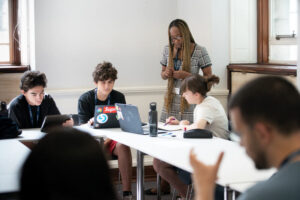
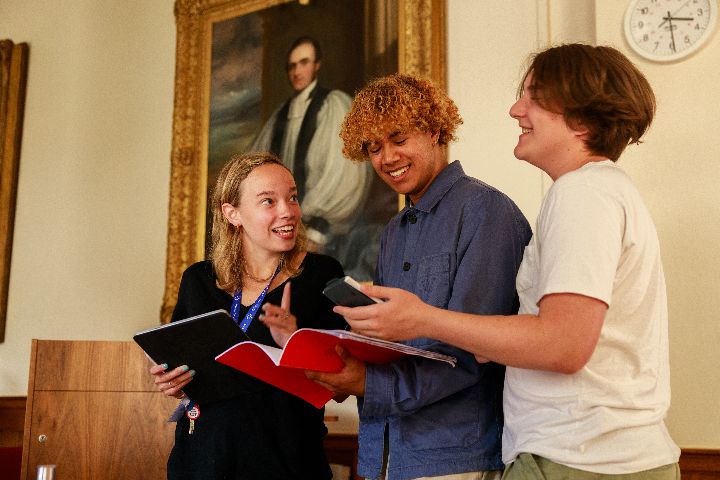
The Law Academic Insights Program provides school students with an opportunity to take undergraduate-level classes at universities around the world. Participants work with academics from universities like Oxford, Cambridge, and Harvard in classes of 4-10 students. They attend university-style lectures and 1:1 weekly sessions with their tutor. Through interactive seminars, case studies, and discussions intended to replicate the intellectual rigor of undergraduate law courses, you investigate fundamental topics of law, including contracts, criminal justice, human rights, and constitutional principles.
The program helps you develop the abilities necessary for success in legal and related academic fields by emphasizing analytical reasoning, persuasive communication, and disciplined arguments. By the end of the program, you will complete a personal project and receive written feedback and a certificate of completion. You can find more details about the application here.
Why it stands out: You’ll be taught by top faculty, work on an independent project, and live on campus, giving you a complete experience of future university life.
3. Legal Aid NSW – Community Legal Education Workshops for Schools and Young People
Location: New South Wales, Australia
Cost: None
Acceptance rate/cohort size: Open enrolment
Dates: Ongoing throughout the school year
Application Deadline: No fixed Application Deadline; workshop requests accepted on an ongoing basis
Eligibility: High school students in NSW (Years 7-12, with specific workshops suited to particular year groups); open to primary and secondary school students, teachers, and community workers; workshops tailored on request; not open to international students
Legal Aid NSW’s Community Legal Education Workshops bring practising lawyers into schools to introduce you to legal issues that affect everyday life. Depending on the workshop, you’ll explore topics such as criminal law, police powers, consent, cyberbullying, contracts, workplace rights, and financial literacy through case studies, role plays, and interactive discussions.
Each session is tailored to different year groups and aligns with the NSW curriculum, making the legal concepts both practical and relevant. The workshops also encourage you to think critically about how the law applies in real situations while learning directly from legal professionals.
Why it stands out: The workshops are led by Legal Aid NSW lawyers and are tailored to different year groups while aligning with the NSW curriculum.
4. Supreme Court Library Queensland Education Programs – Judicial Talk
Location: Brisbane, Queensland
Cost: None
Acceptance rate/cohort size: Selective; strictly limited to 1 group per day (10-40 participants for Supreme/District Court, 10-20 for Magistrates Court)
Dates: Year-round; subject to judicial officer availability
Application Deadline: Booking required
Eligibility: Year 11 and 12 students; international student eligibility is not specified
The Supreme Court Library Queensland Judicial Talk allows you to meet a judicial officer before court proceedings begin and learn about the Australian court system from someone working within it, making it one of the more personal law summer programs in Australia for high school students. During the 30 to 45-minute session, you’ll explore the responsibilities of judges, different court jurisdictions, and how court proceedings are conducted.
You’ll also have time to ask questions about the legal profession and the operation of the courts. The programme is aligned with the QCAA Legal Studies General Senior Syllabus and the Certificate IV in Crime and Justice, making it particularly relevant if you’re studying law in senior secondary school.
Why it stands out: It offers the opportunity to interact with a judicial officer before a court day starts, a unique opportunity not easily found.
5. Law Society of New South Wales Young Justice Program
Location: Dubbo, NSW
Cos/: Not specified
Acceptance rate/cohort size:
Dates: July 20th
Application deadline: Not specified
Eligibility: Years 9 and 10 students; international student eligibility is not specified
The Law Society of New South Wales Young Justice Program is a one-day event that introduces you to contemporary legal issues and careers in the justice system. Throughout the programme, you’ll take part in interactive discussions, legal activities, and workshops led by practising legal professionals while exploring how the Australian legal system works.
You’ll also strengthen your public speaking, critical thinking, and problem-solving skills through collaborative activities based on real legal issues. The programme brings together young people from different schools, giving you the opportunity to exchange ideas while learning more about legal education and future careers in law.
Why it stands out: You will discuss real legal issues and pathways with legal professionals, build public speaking and problem-solving skills, and explore careers in law.
6. Law Society of Western Australia Mock Trial Competition
Location: 1903 Supreme Court building, Stirling Gardens, Barrack Street, Perth. Some rounds may also be held at the Mandurah Courthouse.
Cost: Schools with an ICSEA value of 1,000 or less are eligible for the Student Access Program and receive subsidised fees
Acceptance rate/cohort size: Selective
Dates: Six rounds between March and October
Application Deadline: Not specified
Eligibility: Years 10, 11, and 12; international student eligibility is not specified
The Law Society of Western Australia’s Mock Trial Competition allows you to experience courtroom advocacy by arguing both criminal and civil cases in simulated court hearings. Working in teams, you’ll prepare case materials, examine witnesses, and take on roles such as barristers and witnesses while presenting arguments for both sides of a case.
Throughout the competition, volunteer lawyers and legal professionals act as judges and advocacy coaches, providing detailed feedback after each round. Teams compete across six rounds between March and October, and anyone who completes at least three rounds receives WACE accreditation, with additional recognition for teams that progress further in the competition.
Why it stands out: You’ll argue both criminal and civil cases from each side of the courtroom while receiving feedback from practising lawyers and judges throughout the competition.
7. Courts Administration Authority South Australia – School Visits
Location: Adelaide, South Australia (Magistrates Court, Sir Samuel Way Building, and Supreme Court)
Cost: None
Acceptance rate/cohort size:
Dates: Available during school terms
Application Deadline: No fixed deadline; bookings made by emailing schoolvisits@courts.sa.gov.au with preferred dates
Eligibility: School groups at any year level with a supervising teacher; booking confirmation required before attending; international student eligibility is not specified
The Courts Administration Authority South Australia School Visits programme introduces you to the state’s legal system through visits to the Magistrates Court, Sir Samuel Way Building, and the Supreme Court in Adelaide. During the visit, you’ll observe working courtrooms and learn how different courts and jurisdictions operate within South Australia’s justice system.
The programme helps connect classroom learning with real legal proceedings by showing how cases move through the courts and how different judicial bodies perform their roles. Schools can choose guided or self-guided visits, allowing teachers to tailor the experience to their legal studies curriculum.
Why it stands out: You’ll visit multiple working courts in a single program and see how South Australia’s court system operates in practice.
8. QUT High School Moot Competition
Location: Brisbane, Queensland
Cost: Free entry; regional travel bursaries up to $1,500 and ICSEA subsidies available
Acceptance rate/cohort size: Not specified
Dates: Written submissions due: July 15th, Preliminary rounds on campus: July 31st and August 1st, Semi and grand final rounds on campus: August 2nd
Application Deadline: June 1st
Eligibility: Years 11 and 12; international student eligibility is not specified. For complete details, read here
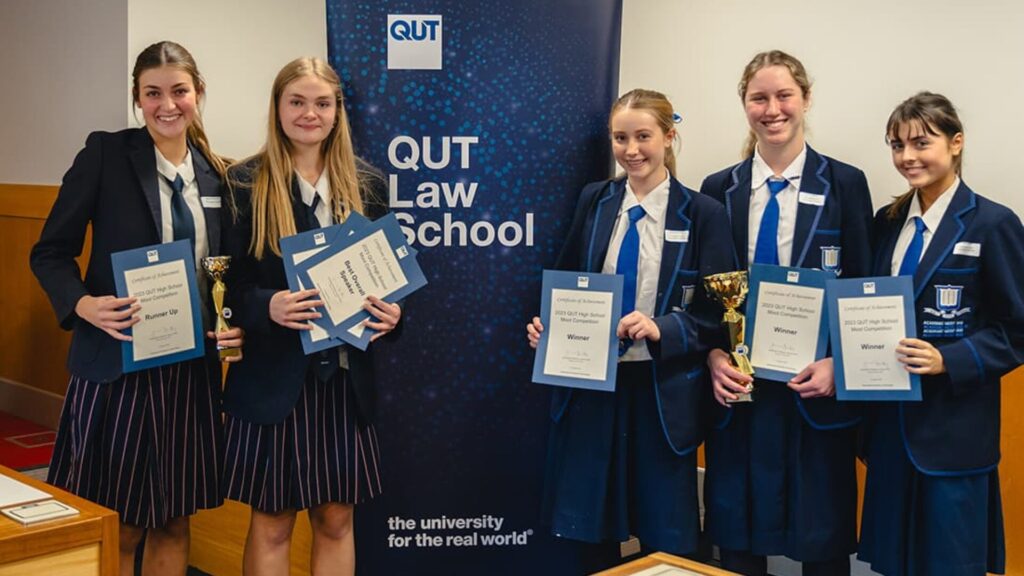
Queensland University of Technology’s High School Moot Competition is one of the most competitive law summer programs in Australia for high school students, introducing you to legal advocacy through a realistic court simulation. Working in teams of two or three, you’ll research a fictional legal dispute, prepare written legal submissions, and argue your case in front of lawyers, judges, legal academics, and QUT law student mentors.
Throughout the competition, you’ll receive feedback on your legal reasoning, courtroom advocacy, and oral arguments while refining your research and presentation skills. The programme also includes opportunities to learn about legal careers and interact with professionals working across different areas of the legal profession.
Why it stands out: You’ll argue a realistic legal case before lawyers and judges while receiving feedback from legal professionals and QUT law student mentors.
9. Victoria State Government: Department of Justice and Community Safety Student Placements
Location: Victoria
Stipend: Minimum $5 per day
Acceptance rate/cohort size: Not specified
Dates: 1-2 weeks, scheduled flexibly with the school
Application Deadline: At least one month before the desired start date
Eligibility: Age 15+ studying at a Victorian secondary school; not open to international students
The Victoria Department of Justice and Community Safety Student Placements offer a one to two-week work experience programme for anyone interested in law, justice, and public service. During your placement, you’ll observe how different teams operate, contribute to suitable workplace projects, and learn about the responsibilities of government departments involved in the justice system.
You’ll also gain an understanding of professional conduct, confidentiality, and workplace expectations while meeting people working across different areas of justice and community safety. The placement provides a practical introduction to how public institutions support courts, corrections, emergency management, and community services across Victoria.
Why it stands out: You’ll observe the day-to-day work of a government department responsible for justice and community safety, an experience that’s difficult to access through a classroom alone.
10. Supreme Court Library Queensland Education Programs – Legal Research Programs
Location: Brisbane, Queensland
Cost: None
Acceptance rate/cohort size: Not specified
Dates: Year-round
Application Deadline: Advanced booking required
Eligibility: Year 10 and 11 for the Legal Research Workshop; Year 11 and 12 for Independent Legal Research; international student eligibility is not specified
The Supreme Court Library Queensland Legal Research Programs teach you the research methods used by legal professionals through two specialised workshops. In the Legal Research Workshop, you’ll learn how to locate reliable legal information, identify primary and secondary legal sources, build effective search strategies, and use professional legal databases.
The Independent Legal Research workshop gives you dedicated time to investigate your own legal topic with guidance from expert librarians. Together, the workshops provide practical experience in finding, evaluating, and organising legal information using many of the same research tools introduced in law school and professional legal practice.
Why it stands out: You’ll develop practical legal research skills and use the same databases as legal professionals, an opportunity that most students don’t have until law school.
11. Magistrates’ Court of Victoria – School Visits / Education Program
Location: Melbourne, Victoria, Australia
Cost: None
Acceptance rate/cohort size: Not specified
Dates: Available during school terms
Application Deadline: December 10th for February sessions and January 27th for March – June sessions (tentative, based on previous years)
Eligibility: VCE Legal Studies classes; bookings required by a school teacher; adherence to courtroom behavioural and dress standards expected; not open to international students
The Magistrates’ Court of Victoria Education Program introduces you to the Victorian justice system through a visit to the Melbourne Magistrates’ Court. During the programme, you’ll meet magistrates, tour active courtrooms, and observe live criminal and civil court proceedings to see how cases are managed in practice.
You’ll also learn about courtroom procedures, the responsibilities of magistrates, lawyers, and court staff, and the daily operation of one of Australia’s busiest courts. Seeing real hearings alongside discussions with judicial officers helps connect legal concepts from the classroom with the way the justice system operates in everyday practice.
Why it stands out: You’ll observe live court proceedings and speak directly with magistrates inside a working courthouse.
12. Bond University National High School Mooting Competition
Location: Bond University campus, Gold Coast, Queensland
Cost: Not specified
Acceptance rate/cohort size: Not specified
Dates: Preliminary rounds: May 18-22; Finals on campus: June 13th (tentative, based on previous years)
Application Deadline: Rolling; first-come, first-served enrollment (check details here)
Eligibility: Year 11 and 12 high school students in Australia; teams of two to three students accompanied by a teacher (Year 10 students allowed as third members, taking on the role of Instructing Solicitor)
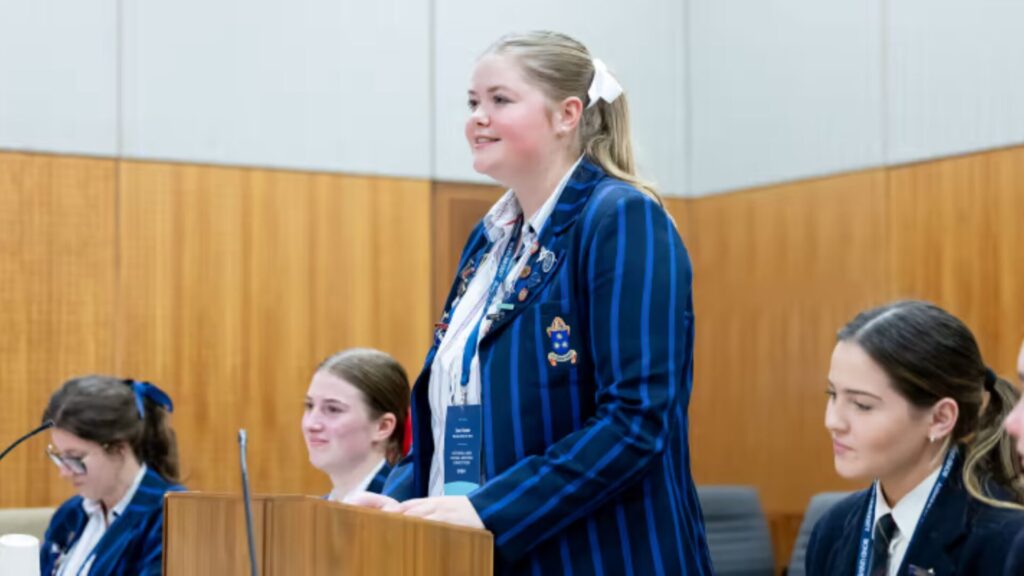
The Bond University National High School Mooting Competition allows you to experience university-level courtroom advocacy through a fictional legal dispute. Working in teams of two or three, you’ll research the relevant law, prepare written legal submissions, and present oral arguments before moot judges in a simulated court hearing.
During the competition, you’ll respond to questions from the bench while defending your legal reasoning and interpreting case law. The programme closely reflects the structure of university mooting competitions, making it an excellent introduction to legal research, advocacy, and courtroom procedure.
Why it stands out: You’ll experience a university-level moot competition and present legal arguments before judges in a simulated courtroom.
13. Parliament of Victoria: Work Experience
Location: Melbourne, Victoria
Stipend: Minimum of $5 for each day
Acceptance rate/cohort size:
Dates: Sitting Program runs during Parliamentary sitting weeks; Services Program runs year-round
Application Deadline: EOIs reopen in early September each year for the following year’s terms
Eligibility: Victorian secondary school students aged 15 or older at the time of placement; not open to international students
The Parliament of Victoria Work Experience Program gives you a behind-the-scenes look at how Victoria’s legislature functions, setting it apart from more traditional law summer programs in Australia for high school students. You can choose between the Sitting Program, where you’ll work with teams supporting parliamentary proceedings, or the Services Program, which places you with professional departments based on your interests.
Depending on your placement, you’ll learn about committee work, parliamentary procedure, broadcasting, legislative services, and public administration, while observing how Parliament operates during sitting weeks. Some placements also include the opportunity to meet your local Member of Parliament and gain a practical understanding of the legislative process.
Why it stands out: You’ll work alongside the teams that support Victoria’s Parliament and gain firsthand insight into how the legislative process operates during a sitting week.
14. Queensland Parliament – Education Program, Year 10 to Tertiary
Location: Parliament House, Brisbane, Australia
Cost: None
Acceptance rate/cohort size: Group size: 70 students
Dates: 3-hour sessions on select dates from February to November
Application Deadline: Bookings open January 23rd
Eligibility: Year 10, 11, or 12 students studying Legal Studies or Social and Community Studies; university or TAFE tertiary students; school or group excursion booking required; international student eligibility is not specified
The Queensland Parliament Education Program introduces you to Australia’s parliamentary system through a three-hour interactive visit to Parliament House in Brisbane. You’ll explore topics such as representative government, responsible government, the separation of powers, and the law-making process through guided activities and role-play exercises.
The programme also includes a tour of Parliament House, and on sitting days, you’ll have the opportunity to observe the Legislative Assembly in session. Subject to availability, you may also meet your local Member of Parliament, giving you additional insight into how elected representatives work within Queensland’s parliamentary system.
Why it stands out: You’ll learn how laws are made inside Queensland Parliament through role play and, on sitting days, watch the Legislative Assembly in session.
15. Supreme Court of Victoria – Courts Education Program
Location: Melbourne, Victoria
Cost: None
Acceptance rate/cohort size: All sessions have a 25-student cap
Dates: Sessions run weekly on-site throughout the school year
Application Deadline: Bookings for February sessions open in early December; March – June bookings open in late January
Eligibility: VCE Legal Studies students, year 11 and 12; international student eligibility is not specified
The Supreme Court of Victoria Courts Education Program gives Year 11 and 12 Legal Studies learners the opportunity to explore a working superior court while connecting classroom topics with real legal proceedings. During the visit, you’ll meet a judicial officer, tour the courtrooms, and sit in the public gallery to observe live court cases.
The programme also includes a visit to the Supreme Court Law Library, where you’ll learn about the legal research resources used by judges and legal professionals. By combining live court observations with discussions about the Victorian legal system, the programme offers a practical introduction to how courts, judges, and legal research work together in the administration of justice.
Why it stands out: It gives you access to a real, active courtroom as a high school student.
Frequently asked questions: Law summer programs in Australia for high school students
Are law summer programs in Australia open to international students?
Almost none of the Australian law programs in this list are open to international students, since most are run by state courts, parliaments, or law societies specifically for domestic Year 10 through 12 students. Immerse Education’s Law Summer School in Sydney is the clear exception, open globally to students aged 13 to 18. If you’re an international student hoping for legal exposure in Australia, Immerse Education’s program is likely your strongest option among those listed here.
Do law summer programs in Australia cost money?
Nearly all of them are completely free, since most are run as court or government education initiatives rather than commercial summer schools. Programs like the High Court’s School Program, Legal Aid NSW’s workshops, and the Magistrates’ Court of Victoria’s School Visits Program cost nothing to attend. A few competitive programs, like QUT’s High School Moot Competition, are also free with added travel bursaries. Immerse Education’s Law Summer School is one of the only paid options, though bursary support is available.
What is the difference between a court visit program and a mooting competition?
Court visit programs, like the Supreme Court Library Queensland’s Judicial Talk or the Courts Administration Authority South Australia’s School Visits, have you observe real court proceedings and speak with judicial officers without actively participating. Mooting competitions, like the Bond University National High School Mooting Competition or QUT’s High School Moot Competition, instead have you actively research and argue a fictional legal case before judges. If you want passive observation, a court visit suits you better; if you want hands-on advocacy practice, a mooting competition offers that instead.
How selective are law summer programs in Australia?
Selectivity varies by program type. Competitive mooting programs like QUT’s High School Moot Competition and the Law Society of Western Australia’s Mock Trial Competition require team preparation and written submissions. Court visit and education programs, like those run by the Supreme Court Library Queensland or Legal Aid NSW, are generally open to any school that books a session. Regardless of format, most programs require booking through a supervising teacher rather than individual student application.
What year level do you need to be in for a law program in Australia?
Eligibility varies by program. Some, like the Law Society of NSW’s Young Justice Program, target Years 9 and 10, while others, like the Supreme Court of Victoria’s Courts Education Program, are restricted to VCE Legal Studies students in Years 11 and 12. Check each program’s specific year requirements closely, since a mismatch in year level is a common reason schools can’t book a particular session.
Is Immerse Education a good option for exploring law in Australia?
Immerse Education’s Law Summer School in Sydney is a strong choice if you want a genuine university-level introduction to law without needing Australian residency. The two week program covers contracts, criminal justice, human rights, and constitutional principles through seminars and case studies taught by academics connected to universities like Oxford, Cambridge, and Harvard. You’ll complete a personal project, receive written feedback, and earn a certificate of completion, giving you concrete material for future applications regardless of where you live.
From Mock Trials to Global Classrooms
Choosing among these law summer programs in Australia for high school students gives you a genuine introduction to courtrooms, advocacy, and legal reasoning.
Once the program ends, you can start looking beyond Australia toward legal study opportunities in other countries and academic systems.
The research, argumentation, and courtroom skills you built become a strong foundation for exploring law on a more global scale.
Keep building on what you started this summer by exploring our Study Abroad blogs for guidance on your next steps.