

 Русский (RU)
 Українська (UK)
 Türkçe (TR)
 Italiano (IT)
 Français (FR)
 Português (PT)
 中文 (中国) (ZH)
 Español (ES)
 日本語 (JA)
 ไทย (TH)
 Deutsch (DE)
 Ελληνικά (EL)
 Polski (PL)
 Bahasa Indonesia (ID)
 Nederlands (NL)
 العربية (AR)
 한국어 (KO)

If you’re interested in subjects like politics, debate, history, or global affairs, law is probably already somewhere on your radar. But beyond reading headlines or learning legal concepts in class, you might still be wondering what legal education actually feels like in practice. How do lawyers build arguments? How are laws interpreted differently across countries? Law summer programs in Europe for high school students give you a chance to explore these questions in a much more hands-on academic setting.
Imagine spending part of your day discussing legal cases, taking part in mock negotiations, or debating topics connected to human rights and international justice. You might analyse legal decisions, study how courts interpret laws, or work through simulations that mirror university-style legal discussions.
Why consider law summer programs in Europe?
Europe is one of the most interesting places to study law because many global legal and political discussions are deeply connected to the region. International courts, human rights frameworks, and cross-border legal systems all play a major role in shaping European politics and governance, which gives students direct exposure to legal issues that extend beyond one country.
Many law summer programs in Europe are hosted by universities and academic organisations. They often include lectures, seminars, legal debates, group discussions, and case-study analysis. You may explore areas such as criminal law, international law, constitutional systems, or European governance while working alongside peers from different backgrounds.
These programs also help students experience a more international style of learning. You develop stronger analytical and communication skills, become more comfortable discussing complex issues, and gain a better understanding of what studying law at the university level might actually involve.
To help you explore your options, we’ve curated a list of 15 law summer programs in Europe for high school students!
For more opportunities, consider the online law program.
15 Law Summer Programs in Europe for High School Students
1. Immerse Education’s Law Summer School
Location: Cambridge, Oxford, London
Cost: Varies; summer school scholarship available through our bursary programme
Acceptance rate/cohort size: Selective; small groups, typically 7 participants per class
Dates: Multiple 2-week sessions across June-August
Application Deadline: Rolling admissions
Eligibility: Students aged 13-18; open to international students
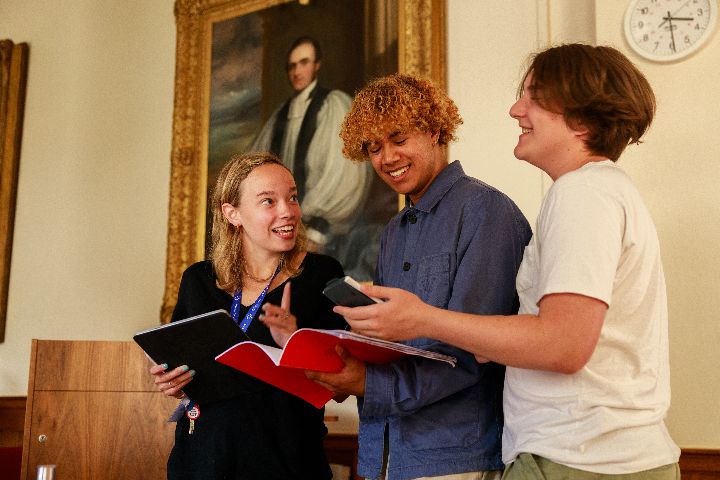
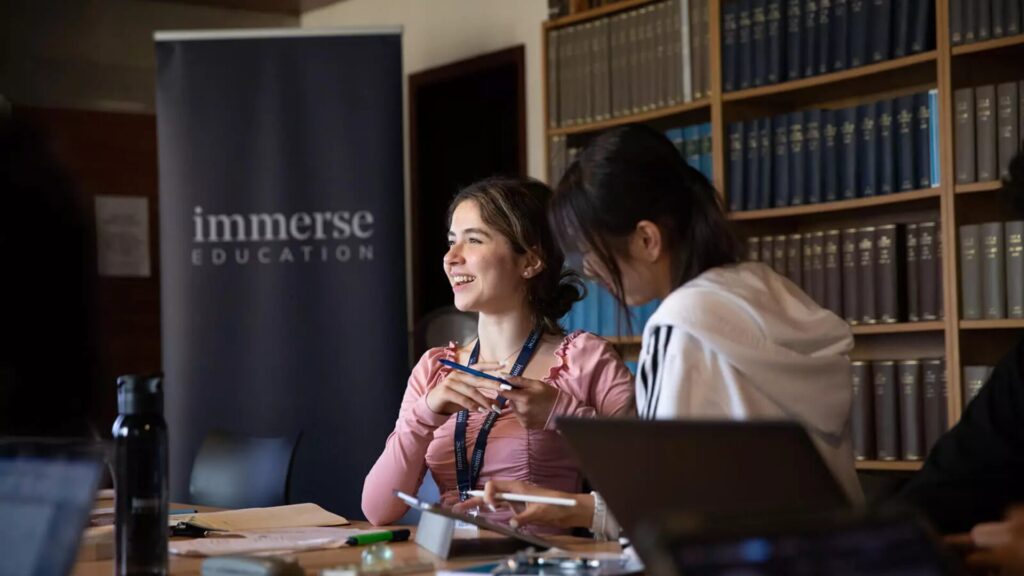
With its small-group teaching, case studies, and guided debates, Immerse Education’s Pre-Law Summer Programme earns its place among law summer programs in Europe for high school students that focus on active legal reasoning. It introduces you to the foundations of legal systems through a structured, university-style learning experience. You explore topics such as criminal law, human rights, contract law, and legal theory, guided by subject-specialist tutors.
You also engage in activities such as mock trials and discussions that simulate real legal processes. The in-person experience allows you to live and study in a Cambridge college environment, giving you a realistic preview of studying law at university. By the end, you receive a certificate and personalised feedback, supporting your future academic and career decisions. You can find more details about the application here.
Why it stands out: It offers a case-based, discussion-driven introduction to law in a small-group setting, combining academic theory with practical exposure to legal reasoning and argumentation.
2. IE University’s Pre-Law Summer Program
Location: Madrid, Spain
Cost: €5,900
Program Dates: July 5-17
Deadline: Details available on the website
Eligibility: High school students worldwide who are graduating in the next two years; must be under 18 at the start of the program
IE University’s pre-law program approaches law through current issues like social media regulation, data privacy, youth protection, and misinformation. Instead of focusing mainly on legal theory, the course looks at how legal systems respond to real technological and social challenges happening right now. You also study different legal traditions, including civil law, common law, and international law, while working through debates and collaborative case studies.
The final project asks your group to propose a legal or policy solution to a modern issue and present it directly to IE Law School faculty. Since the program is held in Madrid, discussions also bring in European and international legal perspectives throughout the two weeks.
Why it stands out: The final presentation to IE Law School faculty is the real differentiator; you’re not just completing a course, you’re defending a legal argument in front of people who teach at a professional law school.
3. Bocconi Summer School’s Law Track
Location: Milan, Italy
Cost: €2,700
Program Dates: July 6-17
Deadline: April 9th
Eligibility: Students in the third-to-last or second-to-last year of high school, in Italy or abroad
Bocconi’s law summer school focuses heavily on how legal systems interact with technology, business, and digital economies. The structure is flexible, so you choose two subjects across two weeks, which allows you to combine law with areas like economics or business if you want a broader perspective.
The law sessions examine how regulation changes around emerging technologies and modern commercial systems rather than focusing only on traditional legal doctrine. Since Bocconi is strongly known for law and economics, the environment feels more academically competitive than many general summer programs. The teaching style is workshop-based and discussion-heavy throughout the course.
Why it stands out: You’re studying at Bocconi in Milan, a university consistently ranked among Europe’s best for law and economics, which means the academic environment, guest speakers, and peer cohort are high-calibre.
4. ESADE Global Governance & Law Experience
Location: Barcelona, Spain
Cost: €3,200
Program Dates: June 29th – July 17th
Deadline: May 15th
Eligibility: Pre-university students around the world; ages 15 to 17
For students drawn to law, politics, and international relations, this is one of the more practically grounded law summer programs in Europe for high school students. The three-week Global Governance & Law Experience gives you an early look at how these subjects connect in real settings. Classes are small and participatory, built around real-world scenarios. You’ll take part in mock trials, work through live case studies, and visit actual courthouses, which keeps the content closely tied to practice.
The academic content spans introductory law, economics, politics, and international relations, with an emphasis on how each discipline connects to the others. Esade Law School has its own mock courtroom and one of Europe’s most impressive law libraries, giving you a professional-grade environment that most high school programs cannot replicate.
Why it stands out: Between the courthouse visits, the mock courtroom, and the law library access, this is one of the rare high school programs where legal education happens in professional settings rather than a classroom approximation of them.
5. University of Warwick Pre-University Summer School

Location: Coventry, UK
Cost: £5,250
Program Dates: July 14-24
Deadline: May 31st
Eligibility: Ages 16-17; strong English language required for international students
Warwick’s Pre-University Summer School runs across five subject streams, and the Social Sciences track is where you’ll find the law content. The legal module focuses specifically on Contract Law, which turns a set of promises into something legally binding and walks you through the four core elements of contract formation: offer, acceptance, intention to create legal relations, and consideration.
Sessions are split between a lecture and a hands-on workshop where you apply those principles to real-life scenarios, practising the basics of legal problem-solving from the ground up. The broader Social Sciences track places that law module alongside introductions to Education Studies, Philosophy, Politics, and Sociology, which is useful if you’re still figuring out which direction to pursue.
Why it stands out: The contract law workshop is built around applying legal principles to real scenarios, where you leave having actually worked through problems, not just having been introduced to how contracts work in theory.
6. Durham University Global Futures Summer School
Location: Durham, UK
Cost: £5,000
Program Dates: July 19-28
Deadline: May 8th
Eligibility: Ages 16-17; minimum B2 English; international students are welcome to apply
Durham’s Global Futures Summer School introduces law through broader questions around politics, power, and society rather than starting with memorising legal rules. The program runs in small seminar groups where you discuss how laws shape institutions, influence social systems, and sometimes fail to protect people equally.
Since law is taught alongside subjects like Government and International Affairs, Sociology, and Anthropology, the discussions constantly move between legal ideas and the societies they operate within. Sessions are structured like undergraduate seminars, so most classes revolve around debate, discussion, and argument instead of lectures alone. The residential setting also gives you a closer sense of what studying social sciences at a UK university actually feels like, day to day.
Why it stands out: The format puts Law side by side with Politics, Sociology, and Government and International Affairs in a single program, which makes it a practical tool for anyone weighing those disciplines before committing to a degree.
7. Geneva School of Diplomacy Junior Leadership Academy
Location: Geneva, Switzerland
Cost: CHF 3,950 (one-week program), CHF 7,100 (two-week full program)
Program Dates: July 19-25 (one week); July 19th – August 2nd (full program)
Deadline: April 30th
Eligibility: Ages 16-18; international students are welcome to apply
The Junior Leadership Academy program is built around giving you a working understanding of international relations, diplomacy, and global governance as fields with actual rules, institutions, and disputes. Topics covered include human rights and global justice, peace and conflict resolution, international cooperation, AI and global governance, and public speaking and advocacy, delivered through short lectures, case studies, teamwork challenges, and public speaking exercises.
The centrepiece of the program is The Summit, a full diplomatic negotiation simulation where you’ll apply what you’ve learned in a scenario modelled on real international negotiations. Visits to international organisations in Geneva are built into the schedule, giving you direct contact with the institutions where international law and diplomacy are actually practised.
Why it stands out: Geneva is where many of the world’s most significant international legal and governance decisions are made. The program puts you in that physical environment and connects the academic material to the organisations that actually apply it.
8. Sciences Po Paris Pre-College Programme
Location: Paris, France
Cost: Not Specified
Program Dates: July 4-21
Deadline: Rolling admissions
Eligibility: Currently enrolled in secondary school and will remain enrolled in the Fall of the following year; must be under 18 at the time of the program; international students can apply
Sciences Po’s pre-college program introduces international law through the broader lens of political science, diplomacy, and global institutions. Alongside core social science classes, you can choose the International Law and Dispute Resolution elective, where you examine how treaties, international courts, and arbitration systems operate during global conflicts.
The course also looks at state responsibility, international disputes, and how legal systems attempt to enforce compliance between countries. Since classes are kept small, most sessions revolve around discussion and argument rather than lecture-style teaching. The wider Sciences Po environment also shapes the experience strongly, especially because many discussions connect law directly to politics and international affairs.
Why it stands out: Sciences Po has historically been the training ground for France’s legal, diplomatic, and policy elite; the International Law elective gives you an early window into how that world approaches the subject.
9. Debate Chamber Law Summer School
Location: London, United Kingdom
Cost: £845
Program Dates: July 27-31
Deadline: Not specified
Eligibility: Students worldwide aged 15-18
Few law summer programs in Europe for high school students are as focused on courtroom practice as the Debate Chamber Law Summer School. This week-long, in-person program offers two separate five-day courses you can take individually or back-to-back. Part 1 covers criminal law, family law, and jurisprudence, from assault and sentencing to divorce, assisted reproduction, and the limits of free speech. Part 2 takes you through civil law, including contract, negligence, corporate liability, client interviewing, and defamation.
Both courses build toward a mock trial: a Crown Court setting in Part 1 and a County Court in Part 2, where you’ll step into the role of barrister, witness, or judge and argue a live case from opening speech to verdict. Sessions are built around real and hypothetical scenarios where you’ll break down offences, negotiate contracts, interview clients, and cross-examine witnesses rather than simply reviewing rules.
Why it stands out: The dual-course format means you can cover both criminal and civil law in a single summer, and each course ends with its own full mock trial, so you’ll leave having actually argued a legal case.
10. UCL Laws Summer School (Sutton Trust)
Location: University College London, London, UK
Cost: Free (tuition, accommodation, travel, and meals all covered)
Program Dates: August 17-21
Deadline: Applications typically close in early spring
Eligibility: Year 12 students from state schools in England and Wales (equivalent: S5 in Scotland, Year 13 in Northern Ireland)
The UCL Laws Summer School is a five-day residential programme that introduces you to what studying law at university level actually looks and feels like, taught directly inside one of the world’s top law schools. Sessions cover criminal law, contract law, family law, public law, and employment law through a combination of lectures, small-group teaching, and interactive workshops. Beyond the classroom, you visit the UK Supreme Court and engage with UCL’s Integrated Legal Advice Clinic, so you’re seeing how law is practised in real institutions rather than studied in isolation.
The programme is run in partnership with the Sutton Trust, which means it’s deliberately designed for high-achieving students from non-privileged backgrounds who are seriously considering a future in law, and it’s fully funded with no cost to attend.
Why it stands out: This is one of the very few university-hosted law programmes in Europe that is completely free, run directly by UCL’s Faculty of Laws, and gives you actual access to the UK Supreme Court in the same week. The combination of genuine university teaching, zero cost, and institutional credibility makes it exceptionally hard to beat.
11. University of Glasgow Common Law Summer School (Sutton Trust)
Location: University of Glasgow, Glasgow, UK
Cost: Free (all costs covered by the Sutton Trust)
Program Dates: June 29th – July 3rd
Deadline: Applications typically open in January
Eligibility: Students in their penultimate year of secondary school from England, Wales, and Northern Ireland; must be from a state school
The University of Glasgow’s Common Law summer school is a week-long residential programme designed for students who are seriously interested in pursuing a legal career in common law jurisdictions. It gives you a direct taste of the Common Law LLB degree programme through university-style seminars and lectures delivered by Glasgow Law School staff, alongside pastoral support from current student mentors throughout the week.
The programme begins with an online induction day before moving into a three-night residential on campus, so you’re fully immersed in university life by the end of the week. Glasgow is one of the UK’s oldest and most highly regarded law schools, and the Sutton Trust partnership means the cohort is academically strong and comes from across the country.
Why it stands out: The programme is specifically structured around the Common Law LLB pathway, so the content is directly aligned with what you’d study if you accepted a place — it functions less like a general enrichment course and more like a genuine preview of a law degree.
12. Sciences Po Paris Pre-College Programme – International Law & Dispute Resolution
Location: Sciences Po, Paris, France
Cost: Not publicly listed
Program Dates: July 4-21
Deadline: Rolling admissions
Eligibility: Currently enrolled in secondary school and will remain enrolled in the following autumn; must be under 18 at the time of the programme; international students can apply
Sciences Po’s Pre-College Programme runs over two and a half weeks on campus in Paris and delivers around 35 contact hours split between core social sciences courses and an elective of your choice. The International Law and Dispute Resolution elective is where the law content lives: you examine how international courts, arbitration systems, and treaty frameworks function when states come into conflict, covering state responsibility, enforcement, and the mechanics of international dispute resolution at an introductory level.
Classes are kept small and discussion-based throughout, and the wider Paris environment shapes the experience considerably, given how much of European legal and political history is literally embedded in the city around you.
Why it stands out: Getting into that intellectual environment as a secondary school student, studying international law in the institution that shaped the people who wrote it, is a genuinely different kind of experience from most summer programmes.
13. Penn Arts and Sciences- High School Programs (Introduction to International Relations)

Location: Online (University of Pennsylvania Pre-College Online Program)
Cost/Stipend: Not specified
Dates: Summer Session I – May 26th to July 1st
Application Deadline: Not specifically stated (rolling admissions until programs fill)
Eligibility: Open to academically motivated high school students, typically current 10th-11th graders. The program welcomes international students, and participants join online from anywhere in the world
In this course, you can explore the foundations of international relations while examining how global political systems operate and interact. You will study key theories that explain how states behave, how conflicts emerge, and how cooperation develops in the international arena. Through discussions and coursework, you can analyse major topics such as war and security, global economic systems, and emerging international challenges.
The course encourages you to think critically about global politics by applying theoretical frameworks to real-world issues and historical events. By engaging with college-level academic material and participating in analytical discussions, you can strengthen your understanding of global affairs while developing the research and reasoning skills needed for future studies in political science, international studies, or related fields.
Why it stands out: This program allows you to take a credit-bearing Ivy League political science course online, studying core international relations theories and global issues while learning alongside undergraduate students in a rigorous academic environment.
14. William & Mary – Pre-College Online Program Constitutional Law
Location: Online
Cost/Stipend: $1,595 tuition
Dates: 4 weeks- May 17th to June 14th | 2 Weeks- June 7th to June 21st | 2 Weeks- June 14th to June 28th
Application Deadline: 4 weeks- May 10th | 2 weeks- May 31st | 2 weeks- 7th June
Eligibility: Open to students aged 13 and above. The program is conducted fully online and is open to motivated high school students globally, meaning international students
You can explore the foundations of constitutional law and understand how the U.S. Constitution continues to shape modern governance and legal debates. Through guided instruction and interactive coursework, you will examine how lawyers and judges interpret constitutional rights and how differing viewpoints influence legal arguments.
The course introduces you to key constitutional principles, including the development of the Constitution, the role of the judiciary, and debates surrounding federal versus state authority. By completing discussions, assignments, and a final project, you can strengthen your analytical reasoning, legal writing, and critical thinking skills while gaining insight into careers in law, politics, and public policy.
Why it stands out: This program stands out for giving you an insider’s view of constitutional interpretation through instruction from legal scholars while allowing you to complete a final project that demonstrates your legal reasoning and understanding of major constitutional debates.
15. Brown University – Brown Pre-College Online (Comparative Legal Systems & International Criminal Justice)
Location: Hosted by Brown University, Providence, Rhode Island, United States (online or on-campus, depending on the course section)
Cost/Stipend: Approx. $3,000–$10,000+ depending on course length and format (no stipend)
Dates: June 29th – July 10th
Application Deadline: May 8th
Eligibility: Open to high school students completing grades 9-12 (typically ages 14-18). The program welcomes both U.S. and international students, provided they meet the age and English-language requirements
Through this course in the Brown Pre-College program, you can explore a specialised academic topic while experiencing the intellectual environment of an Ivy League university. You engage with challenging course material designed to mirror college-level learning, guided by instructors who encourage curiosity, discussion, and independent thinking.
The program allows you to dive deeply into a focused subject area through readings, projects, and interactive coursework that build analytical and communication skills. Along the way, you collaborate with motivated peers from around the world who share similar academic interests. By participating, you gain exposure to advanced academic ideas and develop greater confidence in tackling complex subjects.
Why it stands out: You learn in a rigorous Ivy League academic environment while exploring college-level topics alongside peers from around the world, gaining early exposure to the collaborative, discussion-driven learning style that defines the Brown undergraduate experience.
From Case Studies to Confident Applications
A mock trial, a contract law problem, a courthouse visit, or a debate on human rights can give you far more than a line on your CV.
Law summer programs in Europe for high school students help you test how legal thinking works in practice, from building arguments to interpreting evidence and responding to opposing views.
Those details matter when you write about law, because they show what you actually did, questioned, analysed, and learned from the experience.
Want to turn case studies, legal debates, and mock trial experience into a stronger university application? Use our University Preparation blogs to prepare with more clarity and confidence.