

 Русский (RU)
 Українська (UK)
 Türkçe (TR)
 Italiano (IT)
 Français (FR)
 Português (PT)
 中文 (中国) (ZH)
 Español (ES)
 日本語 (JA)
 ไทย (TH)
 Deutsch (DE)
 Ελληνικά (EL)
 Polski (PL)
 Bahasa Indonesia (ID)
 Nederlands (NL)
 العربية (AR)
 한국어 (KO)

If you’re a high school student fascinated by coding, algorithms, or artificial intelligence, computer science may already be one of your favourite subjects. But beyond classroom exercises and online tutorials, you may still wonder what studying computer science at a deeper, university-level actually looks like. One of the best ways to explore this field is through a computer science summer school in Europe.
Imagine spending your summer on a university campus in cities like London, Cambridge, Amsterdam, or Barcelona, attending seminars on programming, machine learning, robotics, or data science. Picture working through coding challenges, collaborating with peers from around the world, and developing projects that apply computer science concepts to real-world problems. Computer science summer schools in Europe combine academic learning with hands-on experimentation, giving you a meaningful glimpse into both university study and tech careers.
How do you choose the right computer science summer schools in Europe for high school students?
With many options available, it’s important to identify programs that offer genuine academic depth rather than surface-level introductions. Some programs emphasise lectures and theoretical learning, while others focus on building apps, designing algorithms, or creating AI models through hands-on workshops. Thoughtful research helps ensure you find a program that matches your experience level and interests.
Across Europe, universities and educational organisations offer computer science summer schools covering topics such as artificial intelligence, machine learning, robotics, cybersecurity, software engineering, and data science. These programs often combine seminars, coding labs, group projects, and mentorship from experienced instructors. Some even simulate startup-style environments where students work in teams to develop innovative solutions.
You’ll learn from academics and industry professionals, collaborate with motivated peers from different countries, and strengthen your logical thinking and technical skills. Along the way, you’ll gain a clearer sense of what studying computer science at the university level might look like.
To help you get started, we’ve curated a list of 15 Computer Science Summer Schools in Europe for High School Students. They’ve been selected for their academic rigour, hands-on learning experiences, and ability to inspire the next generation of tech innovators.
For adjacent opportunities, you can explore summer programs in Europe for teens or consider engineering summer schools in the UK.
15 Computer Science Summer Schools in Europe for High School Students
1. University of Oxford – UNIQ Summer School (Computer Science)
Location: Department of Computer Science, Wolfson Building, Parks Road, Oxford, OX1 3QD (UK)
Cost/Stipend: Free (UNIQ is described as a free summer school covering transport, food, accommodation, activities)
Dates: 16th to 22nd July
Application Deadline: No specific deadline
Eligibility: Open to Year 12 (or equivalent) students at UK state schools/colleges
The University of Oxford’s UNIQ Summer School in Computer Science is a week-long academic programme designed to immerse Year 12 students in the study of computer science at one of the world’s leading universities. You’ll attend lectures, seminars, and interactive workshops that introduce core computing concepts while also gaining insight into university-level learning. You live in college accommodations, allowing you to experience both the academic and social aspects of life at Oxford.
In addition to subject-focused sessions, the programme includes social activities that help build community and enrich the overall experience. It offers a valuable opportunity for motivated learners to explore their interests in computing and university study.
Why it stands out: It gives younger students hands-on, interactive workshops led by academics and industry speakers that explore real computer science topics beyond the school curriculum and spark early interest in the field.
2. Immerse Education Computer Science Summer School
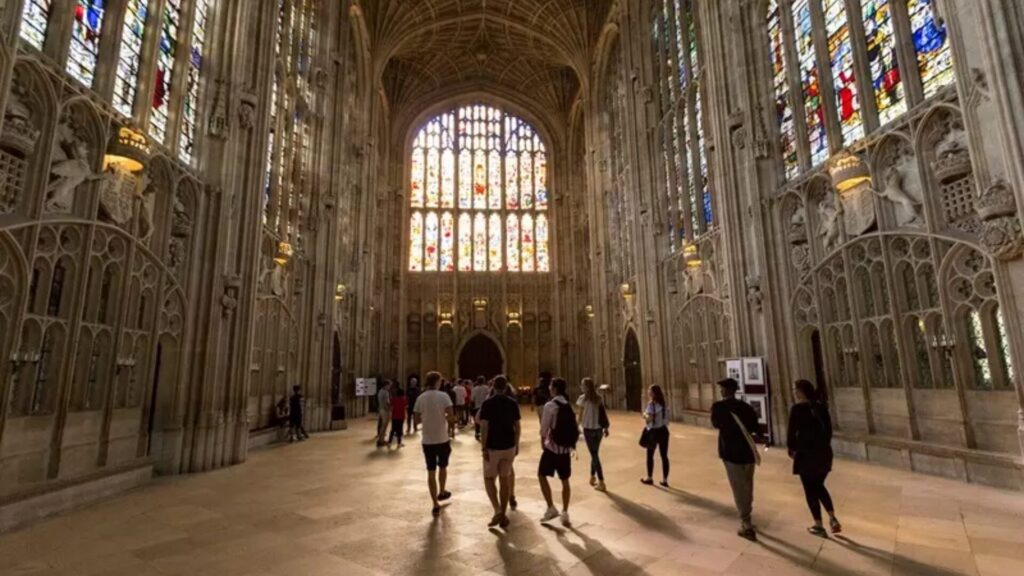
Location: Cambridge, Oxford
Cost/Stipend: £5,995 (non-residential); £7,495+ residential options. Summer school scholarship available through their bursary programme
Dates: Multiple sessions
Application Deadline: Rolling admissions
Eligibility: Open to international high school students aged 13-18 from around the world; no prior coding experience required.
Immerse Education offers one of the most academically immersive computer science summer school in Europe by placing you in a structured learning environment where you study both foundational and advanced computing concepts with expert tutors from leading universities. You cover important topics like algorithms, data structures, programming languages, and software engineering principles, as well as applications like machine learning and artificial intelligence.
Small classes let you get personalised feedback and talk to tutors and classmates from all over the world on a regular basis. When you go to a place like Cambridge or Oxford in person, you also get to experience campus life and structured activities that are similar to how you would study at a university. By completing this summer school, you gain clearer insight into how computer science is studied at the tertiary level and develop technical skills that support future academic and career decisions in computing fields. You can find more details about the application here.
Why it stands out: It connects you with university-level tutors and small-group classes abroad, helping you gain early exposure to rigorous academic thinking and global peer networks.
3. University of Cambridge – Sutton Trust Summer School (Computer Science)
Location: University of Cambridge, UK (residential)
Cost/Stipend: Free
Dates: 17-21 August
Application Deadline: 12th February
Eligibility: Year 12 (England & Wales), Year 13 (NI) or S5 (Scotland) | Attend a UK state-funded (non-fee paying) school/college | Meet academic and widening participation criteria (e.g., GCSE grades and contextual markers)
The University of Cambridge Computer Science Sutton Trust Summer School offers high-achieving students a unique week-long opportunity to explore university-level computing within one of the world’s leading departments. Throughout the programme, you engage in programming labs suitable for beginners and more advanced coders, and take part in small-group supervisions that deepen your problem-solving skills.
You also gain insight into diverse areas of the field, from cybercrime to quantum computing, and may participate in enriching field trips. Beyond academics, the summer school helps you experience life at Cambridge by living in college and interacting with peers with similar interests. Upon completion, participants leave with practical skills in coding and a clearer sense of what studying computer science at a top university entails.
Why it stands out: It gives participants a rare, fully funded chance to experience world-class Computer Science teaching, while living and learning on a Cambridge college campus.
4. Summer Camp 2026 at Constructor University
Location: Bremen, Germany
Cost/Stipend: €4600 (includes tuition, accommodation, meals, activities)
Dates: July 24th – August 4th
Application Deadline: May 1st
Eligibility: High school students aged 16-18 from all over the world (international students allowed); English proficiency at around the B2 level required.
The Constructor University Summer Camp offers high school students an immersive academic experience that blends rigorous learning with international cultural exposure. The 12-day program allows you to explore subjects such as computer science, natural sciences, economics, and entrepreneurship through lectures, tutorials, and collaborative activities. You select courses aligned with your interests while working alongside peers from around the world in an engaging, English-taught environment.
Beyond the classroom, the program includes excursions, social events, and campus life experiences that encourage cultural exchange and personal growth. The camp provides a meaningful introduction to university-level study while helping participants build academic confidence and global connections.
Why it stands out: It combines interdisciplinary STEM learning with an international residential experience in Germany, allowing you to explore subjects like computer science, physics, biology, and entrepreneurship while collaborating with peers from over 40 countries.
5. King’s College London – Summer School in Data & Computer Science
Location: London, United Kingdom
Cost/Stipend: Tuition fee: £3,195 | Residential option (tuition + accommodation): £3,965 | Application fee: £65
Dates: 13th July – 17th July
Application Deadline: 10th April
Eligibility: High school students enrolled in the final three years | Aged 16-17 before start of course | Personal statement required | English proficiency at least CEFR B2 if English isn’t the first language
King’s College London’s Pre-University Computer Science (Session 2) offers motivated high school students a unique opportunity to engage with university-level computer science study in the heart of London. Over one week, you explore key computing principles, including program design, efficiency, and problem-solving, guided by experienced King’s academics through a mix of lectures, interactive workshops, and group projects. The course is designed to mirror first-year undergraduate learning and emphasises both theoretical understanding and practical coding skills using Python.
Alongside academic growth, you gain valuable insight into university study expectations and develop critical thinking and independent research abilities. This immersive experience also supports students in building confidence, collaboration skills, and a competitive edge for future study.
Why it stands out: It offers a university-level introduction to computing in a central London setting, letting students engage directly with academic teaching methods, develop practical Python skills and experience the academic expectations of a leading global institution before applying to degree programmes.
6. Year 9 Girls Engineering Summer School

Location: London, United Kingdom (South Kensington campus)
Cost/Stipend: Fully funded (free; course fees, materials, and lunch included). No stipend.
Dates: 4-7 August
Application Deadline: 18th March
Eligibility: Year 9 girls studying in the UK; must be able to travel to campus daily. International students are not eligible.
The Imperial College London Girls’ Engineering Summer School introduces young students to the diverse possibilities within engineering through a series of hands-on activities, collaborative projects, and engaging talks led by university staff. The programme allows you to explore disciplines such as bioengineering, civil engineering, and materials science while learning how science and mathematics are applied to real-world challenges. You take part in practical sessions and team-based tasks that build confidence, creativity, and problem-solving skills.
The programme concludes with a group poster presentation, where you showcase what you have learned about engineering concepts and careers. By combining academic exploration with mentorship and teamwork, the summer school offers an encouraging first step for girls interested in pursuing STEM pathways.
Why it stands out: It introduces students to multiple engineering disciplines through hands-on activities, team projects, and mentoring from Imperial academics, helping you explore real-world engineering applications early in your STEM journey.
7. Game Theory and Artificial Intelligence
Location: Lausanne, Switzerland (EPFL campus)
Cost/Stipend: CHF 50 (meals and accommodation not included)
Dates: 29th June – 3rd July
Application Deadline: 3rd May
Eligibility: High school students who have completed their first year of gymnasium (no explicit mention of whether international students are allowed).
Hosted by École Polytechnique Fédérale de Lausanne, the Game Theory and Artificial Intelligence Pre-University Week introduces high school students to the strategic and computational foundations behind intelligent systems. You explore how algorithms and game theory can be used to analyse complex decision-making scenarios, from classic strategy games to real-world problems.
Through guided sessions, you design and code your own game prototypes while learning how artificial intelligence can evaluate countless possible outcomes to determine optimal moves. The program also highlights how these concepts extend beyond gaming, with applications in fields such as economics and geopolitics. By combining theory with hands-on experimentation, the experience offers an engaging first look into computer science and AI research.
Why it stands out: It combines algorithmic thinking and game theory to help you design and code your own game-playing AI, offering an early glimpse into how strategic decision-making and artificial intelligence intersect in fields like economics, geopolitics, and computer science.
8. Data Science and Artificial Intelligence
Location: London, United Kingdom (South Kensington Campus)
Cost/Stipend: £7,695 programme fee
Dates: 3rd August – 14th August
Application Deadline: No specific application
Eligibility: Open to students aged 16-17 with strong academic ability and good English proficiency; international students can apply.
The Data Science and Artificial Intelligence stream at Imperial College London Global Summer School offers high school students an immersive introduction to the rapidly evolving fields of data science and AI. The programme combines lectures, hands-on tutorials, and collaborative projects to help you understand how data is collected, analysed, and applied to real-world problems. You explore topics such as machine learning, computer vision, and natural language processing while gaining practical experience using tools like Python.
Over two weeks, you also collaborate in a cross-disciplinary Innovation Challenge that develops teamwork and problem-solving skills. Alongside the academic sessions, the residential experience provides insight into university life in London and connects students with peers from around the world.
Why it stands out: It immerses you in real-world AI applications through hands-on Python sessions, machine learning concepts, and collaborative projects taught by Imperial’s Data Science Institute.
9. 2026-27 CBYX Vocational Application
Location: Germany
Cost/Stipend: Fully funded scholarship; includes major program costs and a modest monthly stipend for personal expenses.
Dates: Academic year (approx. August 2026 – June 2027)
Application Deadline: December
Eligibility: Open to U.S. citizens only (primarily graduating U.S. high school seniors interested in vocational training); not open to international students.
The Congress-Bundestag Youth Exchange (CBYX) Vocational Scholarship, administered by Nacel Open Door, offers graduating high school seniors a unique opportunity to spend a fully funded year in Germany while gaining international experience. You live with carefully selected host families, study the German language, and immerse yourself in the country’s culture and daily life.
Alongside academic learning, you also take part in vocational training or internships in fields such as engineering, business, or design, helping you explore potential career paths. The program is jointly funded by the U.S. Congress and the German Bundestag and is designed to strengthen cultural ties between the two nations. Through this immersive exchange, students develop independence, global awareness, and valuable professional skills.
Why it stands out: It offers a fully funded year abroad in Germany where you live with a host family, attend school or training programs, and gain real-world work or academic experience while developing cross-cultural and language skills.
10. AI and Machine Learning Pioneers Summer School
Location: Oxford, United Kingdom
Cost/Stipend: From £8,995 (no stipend mentioned)
Dates: 19th July – 1st August
Application Deadline: No specific deadline
Eligibility: Students aged 16-18 from all nationalities (international students eligible); no prior coding experience required, but interest in AI/data science recommended.
The AI and Machine Learning Pioneers Summer School at the Saïd Business School, part of the University of Oxford, introduces high school students to the rapidly evolving world of artificial intelligence and data science through an intensive two-week academic experience.
The programme combines foundational theory with practical coding workshops and project-based learning. You explore key topics such as machine learning, neural networks, data analysis, and the ethical implications of AI while working collaboratively on real-world challenges.
It emphasises mentorship and global collaboration, connecting you with leading academics, industry experts, and peers from around the world. By the end of the programme, students gain valuable technical knowledge, critical thinking skills, and insight into future pathways in AI-driven industries.
Why it stands out: It uniquely integrates artificial intelligence with biology, giving participants real experience in using modern computational methods to solve biological problems.
12. Oxford Saïd Teen Technology and Innovation Summer Academy
Location: Oxford, UK
Cost/Stipend: £8,950
Dates: 5th July or 18th July
Application Deadline: No specific deadline
Eligibility: Students aged 15-18 with B2 English proficiency; open to students worldwide (international students allowed).
The Saïd Business School Teen Technology and Innovation Summer Academy at the University of Oxford offers ambitious high school students a two-week introduction to emerging technologies, entrepreneurship, and innovation. The program combines expert-led lectures with hands-on, project-based learning that encourages participants to develop real-world tech solutions. You explore topics such as artificial intelligence, sustainability technology, fintech, biotechnology, and startup creation while working collaboratively on innovation projects.
Saïd Business School faculty, alumni, and industry professionals guide you through workshops that strengthen critical thinking, teamwork, and communication skills. Alongside the academic experience, you live in Oxford college accommodation and take part in cultural activities, offering a deeper insight into student life at one of the world’s most historic universities.
Why it stands out: It combines cutting-edge technology themes with project-based learning, allowing students to design and pitch real innovation ideas while studying in an Oxford college environment.
13. Summer School for High School Students
Location: Milan, Italy
Cost/Stipend: €2,700 participation fee (no stipend)
Dates: July 6th – July 17th
Application Deadline: No specific deadline
Eligibility: High school students in their third-to-last or second-to-last year, minimum age 15; open to students in Italy and abroad (international students allowed).
The Bocconi University Summer School for High School Students offers a rigorous introduction to fields such as economics, management, law, and emerging technologies through an engaging two-week academic experience in Milan. You select two subjects from a wide range of interactive labs, allowing you to explore diverse interests while experiencing Bocconi’s distinctive teaching approach.
The program emphasises collaborative learning, real-world case studies, and project-based activities that strengthen analytical and problem-solving skills. You also study alongside an international cohort, creating a multicultural academic environment that reflects the university’s global outlook.
Why it stands out: It combines university-level labs in fields like economics, AI, and strategy with an international classroom in Milan, allowing students to experience real-world business thinking and collaborative projects led by Bocconi faculty.
13. Politecnico di Milano – TECH CAMP
Location: Campuses of Politecnico di Milano – Campus Città Studi, Campus Bovisa, and Campus Lecco in Milan, Italy.
Cost/Stipend: €800
Dates: June 15-19 and June 22-26
Application Deadline: March 31st
Eligibility: Starting from the 2nd year of secondary school (or 1st year in four-year programs).
TechCamp@POLIMI is an intensive summer school hosted by the Politecnico di Milano designed to introduce high school students to university-level STEM subjects. Each week-long course is taught entirely by professors, researchers, and PhD students, offering hands-on experience in areas such as coding, robotics, cybersecurity, AI, green energy, and more. You can explore your interests while developing practical and theoretical skills in a vibrant academic setting.
The program welcomes students starting from their second year of high school (or first year in four-year programs) and takes place across several campuses in Milan and Lecco in June. With a limited number of places and a focus on innovation, TechCamp gives students an early taste of future academic and career pathways.
Why it stands out: It gives students hands-on exposure to future-focused STEM topics taught by university professors and researchers at Italy’s largest technical university, helping bridge the gap between high school and real university-level technological study.
14. Taste of Science and Engineering
Location: Warwick, United Kingdom
Cost/Stipend: £5,250 fee + £50 application fee (no stipend)
Dates: 14th July – 24th July
Application Deadline: 31st May
Eligibility: Age 16-17; good English proficiency; no specific subject requirement
The Science and Engineering course in the University of Warwick Pre-University Summer School introduces high school students to a broad range of STEM disciplines through engaging, university-level teaching. You explore subjects such as engineering, computer science, mathematics, physics, and chemistry while learning how these fields intersect to solve real-world challenges. The programme includes lectures, seminars, and skills workshops delivered by Warwick faculty, offering you insight into what studying STEM at a degree level looks like.
Alongside academic learning, you develop essential research, communication, and problem-solving skills. Living on campus with peers from around the world and participating in cultural excursions creates a dynamic and collaborative learning environment.
Why it stands out: It introduces you to multiple STEM disciplines through university-level lectures and seminars taught by Warwick academics, helping you explore subjects beyond the school curriculum while gaining a realistic experience of undergraduate study.
15. Trinity College Dublin – Summer School in Computer Science
Location: Trinity College Dublin, Dublin, Ireland
Cost/Stipend: Free of charge
Dates: Runs each June for one week
Application Deadline: Not specified
Eligibility: For 5th-year secondary students going into 6th year, and only available to students from TAP-linked secondary schools.
The Trinity Access Programmes Summer School at Trinity College Dublin is a free week-long initiative designed for senior secondary students to explore academic life at a leading university. Hosted each June, the programme gives you the chance to choose a main module of study and experience working and learning in a college setting. Beyond classroom activities, you take part in campus tours, social events, workshops, and talks tailored to enrich your understanding of university culture and opportunities.
Delivered by Trinity Access staff and faculty, the Summer School also offers practical guidance on higher education pathways. By the end of the week, students leave with deeper insight into college life and a stronger connection to the Trinity community.
Why it stands out: It gives students from under-represented and TAP-linked schools a free, immersive college experience where they explore academic modules, engage with faculty and peers, and get a deeper understanding of university life in Ireland’s oldest university.
From Future Coders to Future-Ready Learning
What begins as a few weeks of coding can quickly become something bigger: a clearer sense of how technology shapes ideas, industries, and the future.
The right summer school computer science in Europe experience does more than teach syntax or tools. It shows you how logic, creativity, and collaboration work together.
That shift matters, because once you see computer science in action, university study feels less abstract and your next academic steps become more intentional.
Don’t get left behind by change, and read our Educational Innovation blogs now to discover the ideas and innovations transforming education in real time.